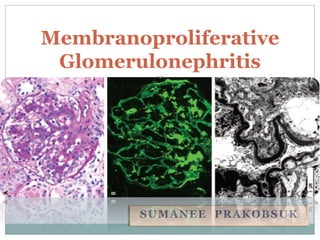
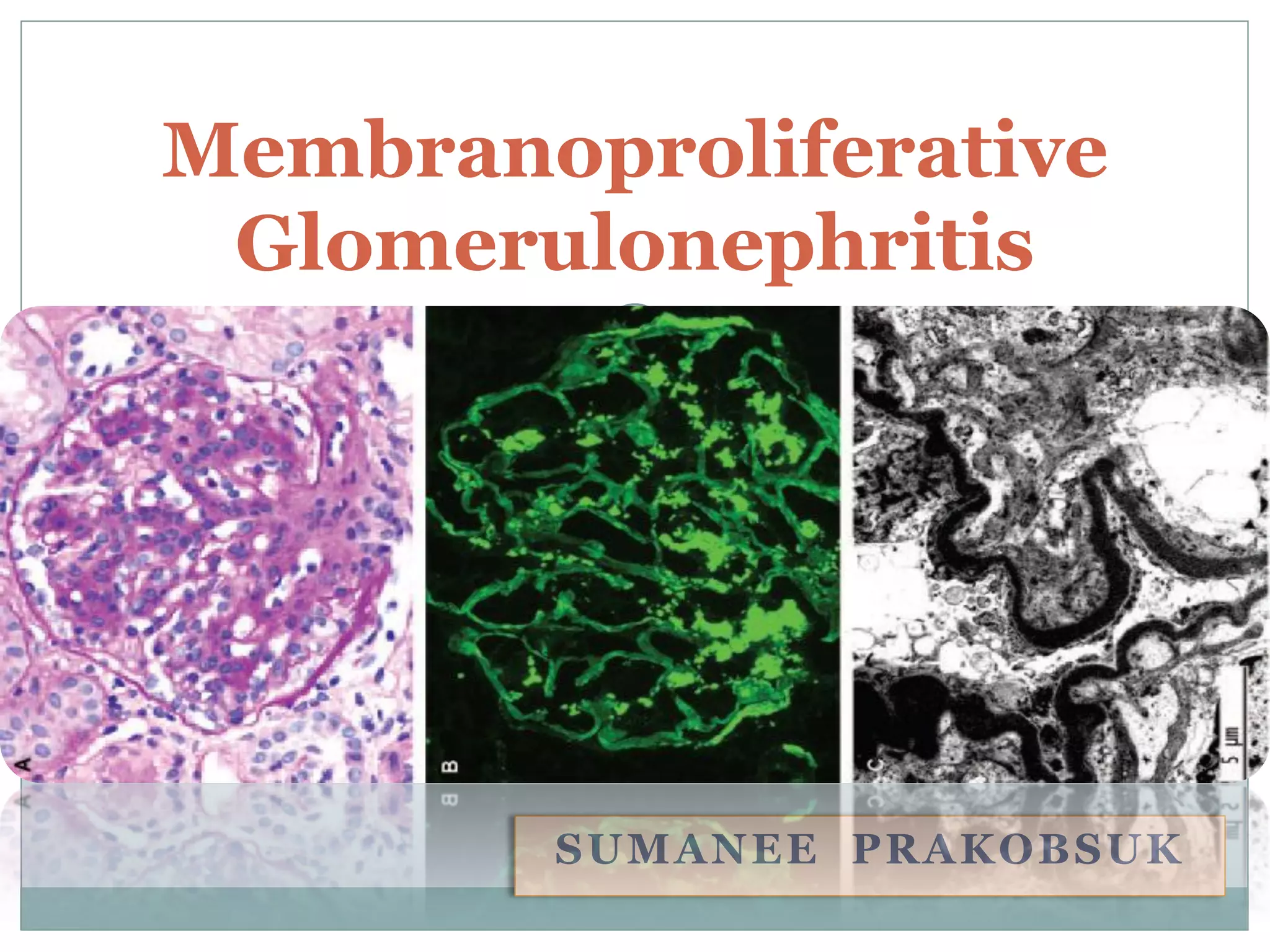
Membranoproliferative
 Glomerulonephritis


        SUMANEE PRAKOBSUK
Scopes


 Classification

 Pathophysiology

 Pathology

 Clinical features

 Treatment
Overview

 Also termed mesangiocapillary glomerulonephritis.


 MPGN accounts for approximately 7 to 10% of all cases of
 biopsy-confirmed glomerulonephritis.


                         Brenner&Rector’s: The Kidney 9th Edition
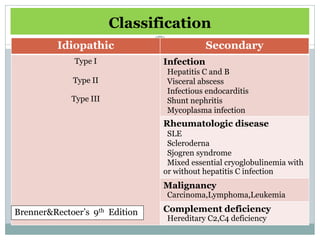
Classification
          Idiopathic                        Secondary
              Type I            Infection
                                 Hepatitis C and B
             Type II             Visceral abscess
                                 Infectious endocarditis
             Type III            Shunt nephritis
                                 Mycoplasma infection
                                Rheumatologic disease
                                 SLE
                                 Scleroderna
                                 Sjogren syndrome
                                 Mixed essential cryoglobulinemia with
                                or without hepatitis C infection
                                Malignancy
                                 Carcinoma,Lymphoma,Leukemia

Brenner&Rectoer’s 9th Edition   Complement deficiency
                                 Hereditary C2,C4 deficiency
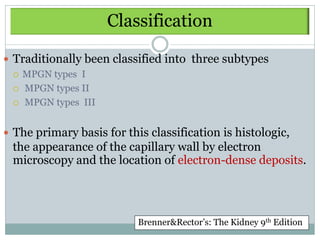
Classification

 Traditionally been classified into three subtypes
   MPGN types I

   MPGN types II

   MPGN types III


 The primary basis for this classification is histologic,
 the appearance of the capillary wall by electron
 microscopy and the location of electron-dense deposits.


                           Brenner&Rector’s: The Kidney 9th Edition
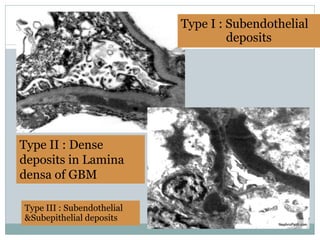
Type I : Subendothelial
                                     deposits


Type II : Dense
deposits in Lamina
densa of GBM

Type III : Subendothelial
&Subepithelial deposits
Membranoproliferative Glomerulonephritis Type I


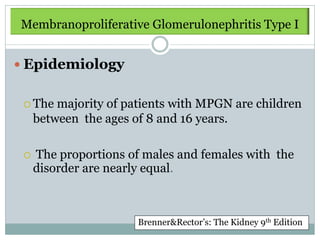
 Epidemiology


  The   majority of patients with MPGN are children
     between the ages of 8 and 16 years.

    The proportions of males and females with the
     disorder are nearly equal.


                       Brenner&Rector’s: The Kidney 9th Edition
IMMUNE-COMPLEX-MEDIATED MPGN
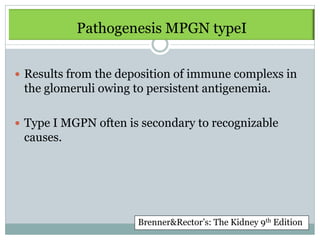
      Pathogenesis MPGN typeI


 Results from the deposition of immune complexs in
 the glomeruli owing to persistent antigenemia.

 Type I MGPN often is secondary to recognizable
 causes.


                      Brenner&Rector’s: The Kidney 9th Edition
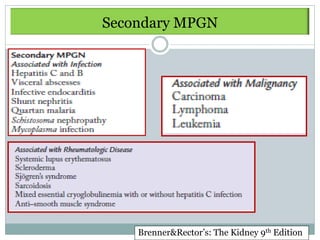
Secondary MPGN


    Brenner&Rector’s: The Kidney 9th Edition
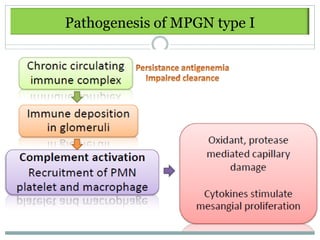
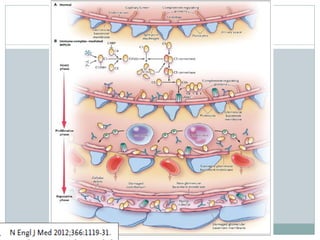
Pathogenesis of MPGN type I
Pathology of MPGN Type I

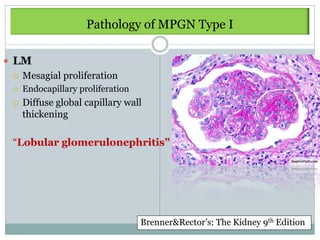
 LM
    Mesagial proliferation
    Endocapillary proliferation
    Diffuse global capillary wall
     thickening

 “Lobular glomerulonephritis”


                                   Brenner&Rector’s: The Kidney 9th Edition
Pathology of MPGN Type I

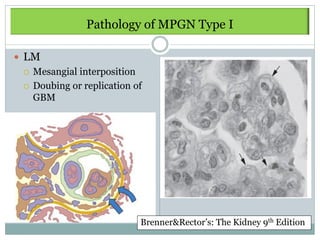
 LM
    Mesangial interposition
    Doubing or replication of
     GBM


                             Brenner&Rector’s: The Kidney 9th Edition
Pathology of MPGN Type I

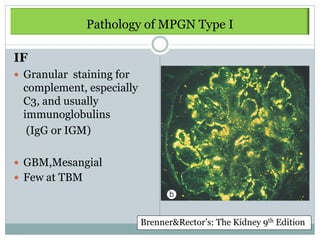
IF
 Granular staining for
 complement, especially
 C3, and usually
 immunoglobulins
  (IgG or IGM)

 GBM,Mesangial
 Few at TBM


                          Brenner&Rector’s: The Kidney 9th Edition
Pathology of MPGN Type I

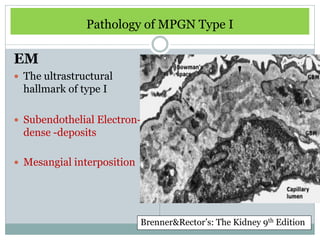
EM
 The ultrastructural
  hallmark of type I

 Subendothelial Electron-
  dense -deposits

 Mesangial interposition


                            Brenner&Rector’s: The Kidney 9th Edition
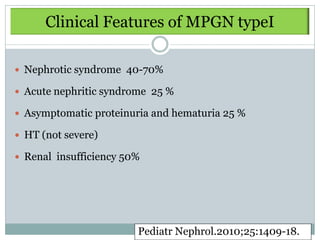
Clinical Features of MPGN typeI

 Nephrotic syndrome 40-70%

 Acute nephritic syndrome 25 %

 Asymptomatic proteinuria and hematuria 25 %

 HT (not severe)

 Renal insufficiency 50%


                        Pediatr Nephrol.2010;25:1409-18.
Membranoproliferative
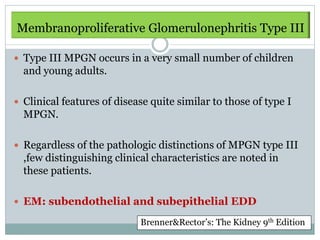
Membranoproliferative Glomerulonephritis Type III

 Type III MPGN occurs in a very small number of children
  and young adults.

 Clinical features of disease quite similar to those of type I
  MPGN.

 Regardless of the pathologic distinctions of MPGN type III
  ,few distinguishing clinical characteristics are noted in
  these patients.

 EM: subendothelial and subepithelial EDD

                            Brenner&Rector’s: The Kidney 9th Edition
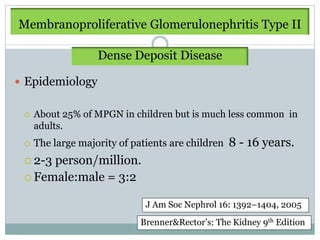
Membranoproliferative Glomerulonephritis Type II

                   Dense Deposit Disease

 Epidemiology


    About 25% of MPGN in children but is much less common in
     adults.
    The large majority of patients are children   8 - 16 years.
  2-3person/million.
  Female:male = 3:2


                              J Am Soc Nephrol 16: 1392–1404, 2005
                             Brenner&Rector’s: The Kidney 9th Edition
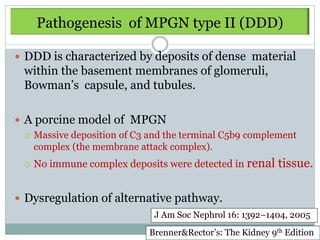
Pathogenesis of MPGN type II (DDD)

 DDD is characterized by deposits of dense material
  within the basement membranes of glomeruli,
  Bowman’s capsule, and tubules.

 A porcine model of MPGN
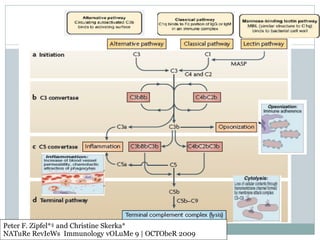
   Massive deposition of C3 and the terminal C5b9 complement
    complex (the membrane attack complex).
     No immune complex deposits were detected in renal tissue.


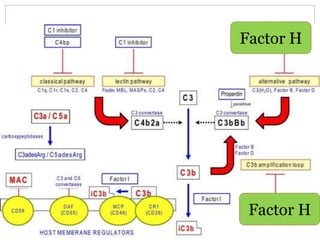
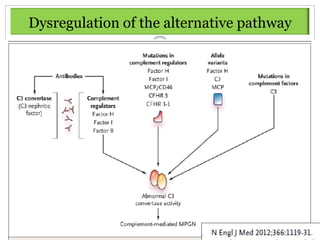
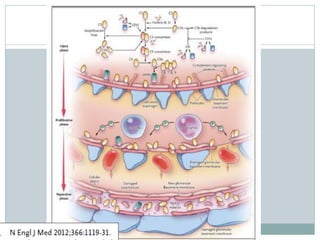
 Dysregulation of alternative pathway.
                              J Am Soc Nephrol 16: 1392–1404, 2005
                             Brenner&Rector’s: The Kidney 9th Edition
Peter F. Zipfel*‡ and Christine Skerka*
NATuRe RevIeWs Immunology vOLuMe 9 | OCTObeR 2009
Factor H


 Factor H
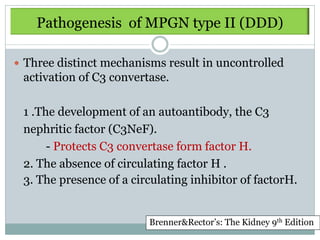
Pathogenesis of MPGN type II (DDD)

 Three distinct mechanisms result in uncontrolled
 activation of C3 convertase.

 1 .The development of an autoantibody, the C3
 nephritic factor (C3NeF).
      - Protects C3 convertase form factor H.
 2. The absence of circulating factor H .
 3. The presence of a circulating inhibitor of factorH.


                         Brenner&Rector’s: The Kidney 9th Edition
Dysregulation of the alternative pathway
 To investigate causes for AP dysregulation
 32 patients with DDD (renal Bx C3+ and
    intramembranous electron-dense deposits by EM)
    C3Nef detection assays
   Factor H antoantibodies(FHAA)
   Factor B autoantibodies (FBAA)
   Factor H Mutation screening.
Results

 C3Nef detection assays:
   25 patiests (78%)

 Factor H antoantibodies(FHAA)
   1 patients (3%)

 Factor B autoantibodies (FBAA)
   3 patiests (9%)

 Factor H Mutation screening.
   26 patiests(81%) carried at least one copy of the FH His402
    polymorphism.
Pathology :MPGN II( DDD)

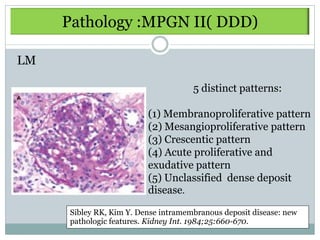
LM

                                     5 distinct patterns:

                         (1) Membranoproliferative pattern
                         (2) Mesangioproliferative pattern
                         (3) Crescentic pattern
                         (4) Acute proliferative and
                         exudative pattern
                         (5) Unclassified dense deposit
                         disease.

     Sibley RK, Kim Y. Dense intramembranous deposit disease: new
     pathologic features. Kidney Int. 1984;25:660-670.
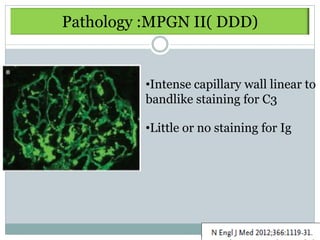
Pathology :MPGN II( DDD)


          •Intense capillary wall linear to
          bandlike staining for C3

          •Little or no staining for Ig
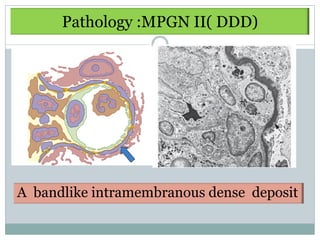
Pathology :MPGN II( DDD)


A bandlike intramembranous dense deposit
Clinical Features :MPGN type II (DDD)

 ¾ of patients have all of the components of
 nephrotic syndrome on presentation.
 ¼ of patients have acute nephritic syndrome.

 HT is typically mild, but may be severe in some
 cases.
 Renal dysfunction occurs in at least half of cases and
 is more common in adults han in children.

                          Brenner&Rector’s: The Kidney 9th Edition
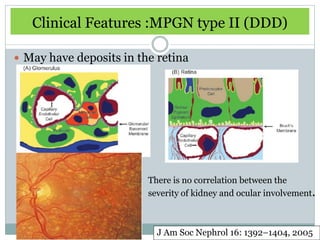
Clinical Features :MPGN type II (DDD)

 May have deposits in the retina


                         There is no correlation between the
                         severity of kidney and ocular involvement.


                           J Am Soc Nephrol 16: 1392–1404, 2005
Clinical Features :MPGN type II (DDD)

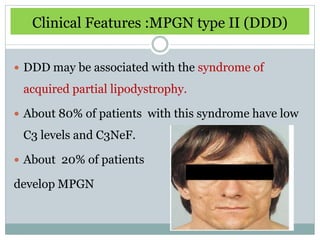
 DDD may be associated with the syndrome of

 acquired partial lipodystrophy.

 About 80% of patients with this syndrome have low

 C3 levels and C3NeF.

 About 20% of patients

develop MPGN
Prognosis:MPGN II (DDD)

 The prognosis for type II is worse than that for type I,

 worse in adults than in children.

 Clinical remissions are rare,occurring in fewer than 5%

 of children.

 Patients generally reach ESRD in 8 to 12 years from the

 onset of disease.


                          Brenner&Rector’s: The Kidney 9th Edition
Proposal for A new classification of MPGN


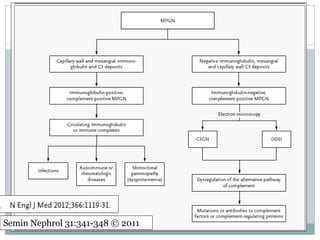
Proposal of a New classification

 Immune complex mediated MPGN.


 Complement mediated MPGN.


      Sanjeev Sethi, Fernando C. Semin Nephrol 31:341-348 © 2011
Semin Nephrol 31:341-348 © 2011
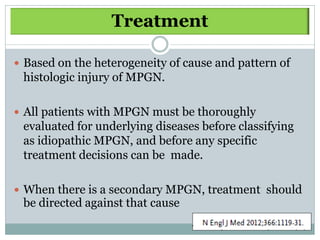
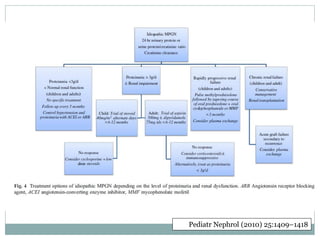
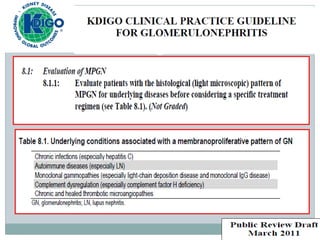
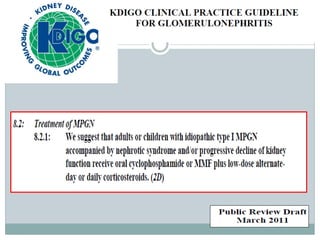
Treatment

 Based on the heterogeneity of cause and pattern of
 histologic injury of MPGN.

 All patients with MPGN must be thoroughly
 evaluated for underlying diseases before classifying
 as idiopathic MPGN, and before any specific
 treatment decisions can be made.

 When there is a secondary MPGN, treatment should
 be directed against that cause
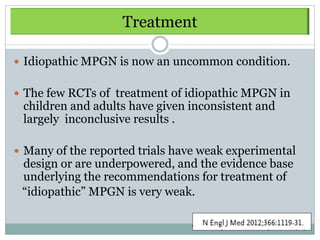
Treatment

 Idiopathic MPGN is now an uncommon condition.


 The few RCTs of treatment of idiopathic MPGN in
 children and adults have given inconsistent and
 largely inconclusive results .

 Many of the reported trials have weak experimental
 design or are underpowered, and the evidence base
 underlying the recommendations for treatment of
 “idiopathic” MPGN is very weak.
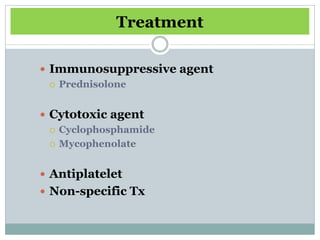
Treatment

 Immunosuppressive agent
   Prednisolone


 Cytotoxic agent
   Cyclophosphamide

   Mycophenolate


 Antiplatelet
 Non-specific Tx
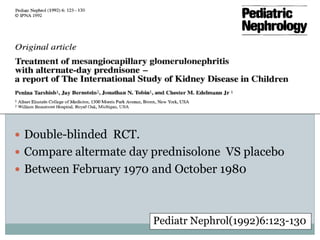
 Double-blinded RCT.
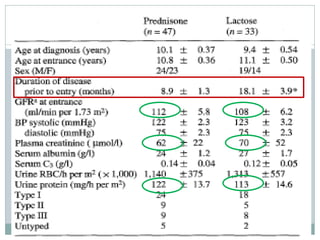
 Compare altermate day prednisolone VS placebo
 Between February 1970 and October 1980


                        Pediatr Nephrol(1992)6:123-130
Treatment of mesangiocapillary
             glomerulonephritis
        with alternate-day prednisone

     Inclusion criteria
Inclusion criteria
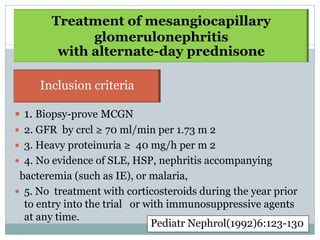
 1. Biopsy-prove MCGN
 2. GFR by crcl ≥ 70 ml/min per 1.73 m 2
 3. Heavy proteinuria ≥ 40 mg/h per m 2
 4. No evidence of SLE, HSP, nephritis accompanying
 bacteremia (such as IE), or malaria,
 5. No treatment with corticosteroids during the year prior
  to entry into the trial or with immunosuppressive agents
  at any time.
                              Pediatr Nephrol(1992)6:123-130
Treatment of mesangiocapillary
         glomerulonephritis
    with alternate-day prednisone
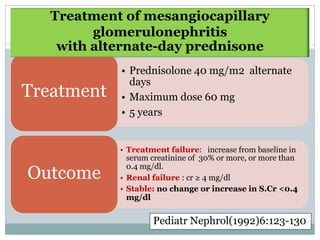
            • Prednisolone 40 mg/m2 alternate
              days
Treatment   • Maximum dose 60 mg
            • 5 years


            • Treatment failure: increase from baseline in
              serum creatinine of 30% or more, or more than
              0.4 mg/dl.
Outcome     • Renal failure : cr ≥ 4 mg/dl
            • Stable: no change or increase in S.Cr <0.4
              mg/dl


                    Pediatr Nephrol(1992)6:123-130
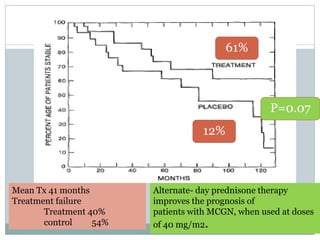
61%


                                                   P=0.07
                                   12%


Mean Tx 41 months       Alternate- day prednisone therapy
Treatment failure       improves the prognosis of
       Treatment 40%    patients with MCGN, when used at doses
       control    54%   of 40 mg/m2.
Prednisolone for Idiopathic MPGN

 There has been no systematic evaluation of
 glucocorticoid therapy for idiopathic MPGN in
 adults.

 Retrospective studies showed no clear benefit from
 glucocorticoid therapy, but treatment was not as
 prolonged in adults as it was in children.


          Kidney International,Vol55(1999)pps41-s46
Cytotoxic Agent


 Cyclophosphamide

 Mycophenolate
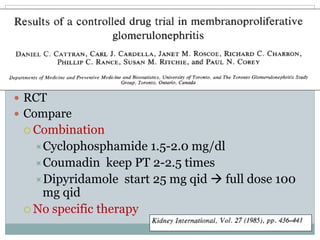
 RCT
 Compare
  Combination
   Cyclophosphamide   1.5-2.0 mg/dl
   Coumadin keep PT 2-2.5 times
   Dipyridamole start 25 mg qid  full dose 100
    mg qid
  No specific therapy
Cyclo


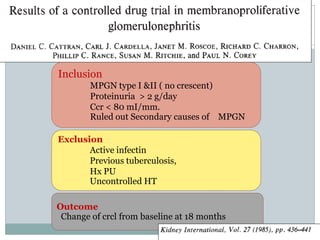
Inclusion
        MPGN type I &II ( no crescent)
        Proteinuria > 2 g/day
        Ccr < 80 mI/mm.
        Ruled out Secondary causes of MPGN

Exclusion
       Active infectin
       Previous tuberculosis,
       Hx PU
       Uncontrolled HT

Outcome
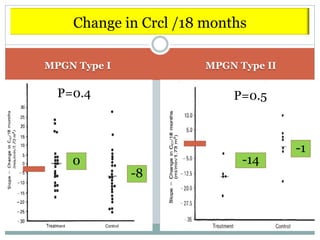
 Change of crcl from baseline at 18 months
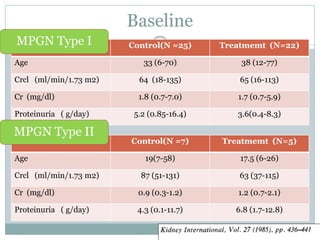
Baseline
MPGN Type I             Control(N =25)     Treatmemt (N=22)

Age                        33 (6-70)           38 (12-77)

Crcl (ml/min/1.73 m2)     64 (18-135)          65 (16-113)

Cr (mg/dl)                1.8 (0.7-7.0)       1.7 (0.7-5.9)

Proteinuria ( g/day)     5.2 (0.85-16.4)      3.6(0.4-8.3)

MPGN Type II
                        Control(N =7)      Treatmemt (N=5)

Age                         19(7-58)           17.5 (6-26)

Crcl (ml/min/1.73 m2)      87 (51-131)         63 (37-115)

Cr (mg/dl)                0.9 (0.3-1.2)       1.2 (0.7-2.1)

Proteinuria ( g/day)      4.3 (0.1-11.7)      6.8 (1.7-12.8)
Change in Crcl /18 months

MPGN Type I            MPGN Type II

  P=0.4                    P=0.5


                                      -1
    0                        -14
              -8
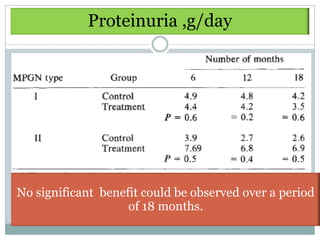
Proteinuria ,g/day


No significant benefit could be observed over a period
                    of 18 months.
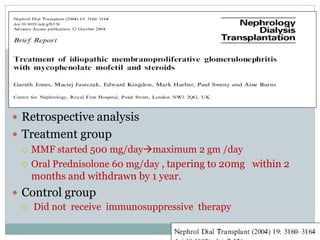
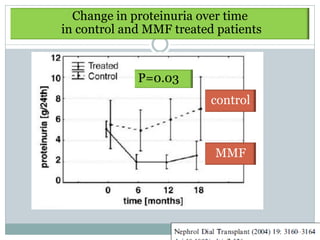
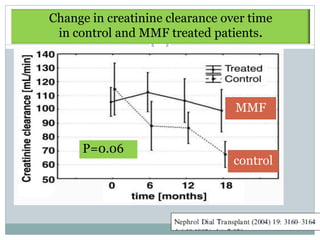
 Retrospective analysis
 Treatment group
   MMF started 500 mg/daymaximum 2 gm /day

   Oral Prednisolone 60 mg/day , tapering to 20mg within 2
    months and withdrawn by 1 year.
 Control group
   Did not receive immunosuppressive therapy
Change in proteinuria over time
in control and MMF treated patients


             P=0.03
                          control


                          MMF
Change in creatinine clearance over time
 in control and MMF treated patients.


                                 MMF


      P=0.06
                                 control
Antiplatelete

 Rationale

  Demonstrations   of platelet activation and
   deposition of platele antigen are invole in initiating
   or contributing to glomerular injury .


          Glomerular prostaglandin and thromboxane systesis in rat
          nephrotoxic serum nephritis.J Clin Invest 1983;72:1439-48
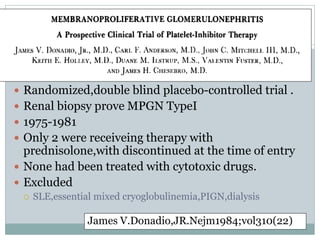
 Randomized,double blind placebo-controlled trial .
 Renal biopsy prove MPGN TypeI
 1975-1981
 Only 2 were receiveing therapy with
  prednisolone,with discontinued at the time of entry
 None had been treated with cytotoxic drugs.
 Excluded
    SLE,essential mixed cryoglobulinemia,PIGN,dialysis

                 James V.Donadio,JR.Nejm1984;vol310(22)
 Treatment
   Dipyridamole 75 mg

   Aspirin 325 mg

   12 months

 Outcome
   Treatment failure: decline of 25% Iotalamate clearance from
    pre treatment.


                 James V.Donadio,JR.Nejm1984;vol310(22)
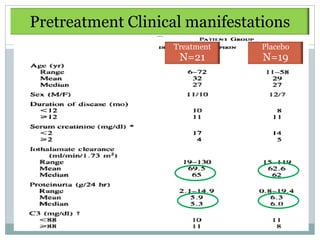
Pretreatment Clinical manifestations
                   Treatment    Placebo
                    N=21        N=19
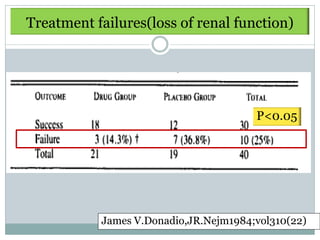
Treatment failures(loss of renal function)


                                       P<0.05


           James V.Donadio,JR.Nejm1984;vol310(22)
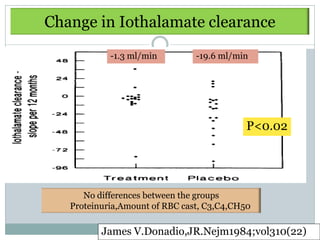
Change in Iothalamate clearance
            -1.3 ml/min         -19.6 ml/min


                                            P<0.02


      No differences between the groups
   Proteinuria,Amount of RBC cast, C3,C4,CH50

          James V.Donadio,JR.Nejm1984;vol310(22)
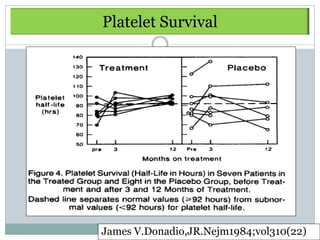
Platelet Survival


James V.Donadio,JR.Nejm1984;vol310(22)
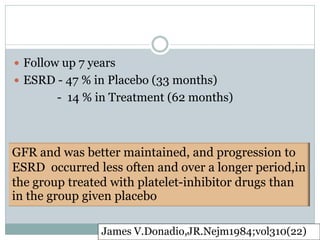
 Follow up 7 years
 ESRD - 47 % in Placebo (33 months)
        - 14 % in Treatment (62 months)


GFR and was better maintained, and progression to
ESRD occurred less often and over a longer period,in
the group treated with platelet-inhibitor drugs than
in the group given placebo

                James V.Donadio,JR.Nejm1984;vol310(22)
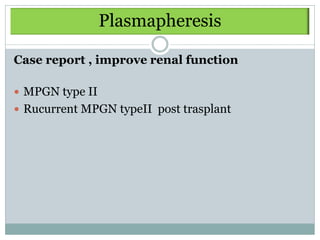
Plasmapheresis

Case report , improve renal function

 MPGN type II
 Rucurrent MPGN typeII post trasplant
Immunosuppressive drugs
Level of       Author   Design        N                Rx             Duration           Results/Comments
Evidence                           [Rx : C]


1
           Tarshish RCT           80
                                  [47/33]
                                              Pred 40 mg/m2           130 mo      Children only, predomly
                                                                                  MPGN I, stable renal fn
                                              AD vs pcb
           Pred                                                                   61% [Rx] vs 12% [C]

                                                                                  No difference found,

1
           Cattran      RCT       59          CY + coumadin           18 mo
                                  [27/32]     + dipyridamole                      mixed MPGN I > II

           CY                                 vs No Rx
           1985
3          Strife       UCT       17          Pred 2 mk AD            2y          MPGN III only, nephrotic range
                                  [16/1]                                          did worse, 3/16 dvled RF

3          Davis        CT        27          Pred+IS [NS]            -           No effect
                                  [19/8]
3          Orlowski     UCT       50          P/AZA/CP/chlorambucil   79 mo       10 y F/U, ↓ Uprot c triple drug
                                              in combi                            Rx
3          Ford         UCT       19          PO/IV pred 2 mk +       8-10 wk,    Children; 6.5 y F/U, early Rx,
                                              ACEI                    then x2-3   shorter course,
                                                                      y tapered   ↓ glom prolif
                                                                      dose

3          Faedda       UCT       19
                                              IV/PO CY+P              10 mo       15/19 remission, 7 y F/U
           1994                               [different
                                              combinations]


                              Adeera Levin., Mx of MPGN; Evidence based recommendations; KI 1999; 55: S41-S46
Antiplatelet
Level     Author    Design                  Rx               Durati          Results/Comments
of evi             N [Rx : C]                                 on


1
         Donadio
         1984
                   RCT           Dipyridamole
                                 75mg/d + ASA 325
                                                            12 mo     -Tx : significantly delay
                                                                      rate of GFR ↓
                   Prospective   mg/d vs Pcb
                                                                      [Sig difference at 7 y]
                   40 [21/19]
                                                                      -No change in Uprot,
                                                                      hematuria, Complement

                                                                      -Mild bleeding complication
                                                                      required discontinuation 15%


1
         Zimmer
         man
                   RCT           Warfarin [INR 1.5-2]
                                 + dipyridamole [75-100
                                                            12 mo
                                                            [2 y
                                                                      Prot restriction & HTN control
                                                                      standardized.
                   Crossover     mg qid] vs Pcb             study]    Sig reduction in proturia
                   18 [8/10]
                                                                      NS diff in renal fn
                                                                      Significantly ↓ Uprot
1
         Zauner
         1994
                   RCT           ASA 500 mg/d +
                                 dipyridamole 75
                                                            36 mo
                                                                      [1 g Tx vs 8 g control] [Sig]
                   18 [9/9]      mg/d
                                                                      PR : Tx 7/10 vs Control
                   [I 15 + III   [both : prot restriction             2/8
                   3]            & HTN control]
                                                                      -Comment : short F/U
                                 SCr 1.8, Uprot 7 g/d

                            Adeera Levin., Mx of MPGN; Evidence based recommendations; KI 1999; 55: S41-S46
Evidence based recommendations : KI 1999
                                         Idiopathic MPGN

                                           24 h Uprot & CCr
                                <3 g                            >3 g


    Normal renal function        Abn renal function    Normal renal function   Abn renal fn


 Grade C;                             Grade A;                          Grade B;
 Child : trial of steroid x 3       Child : trial of               Adult : trial of ASA
 mo [AD; IV or PO 1 mk]          steroids 40 mg/m2                    325 mg/d &
 Or                                 AD x 6-12 mo                  Dipyridamole 75-100
 Adult : no Rx, observe                                             mg tid x 6-12 mo

 F/U q 3 mo;
 BP, Lipid monitoring
 -No change : continued
 F/U, ↓ frequency
 - Increase cr or
 proteinuria  Rx

       Adeera Levin., Mx of MPGN; Evidence based recommendations; KI 1999; 55: S41-S46
Pediatr Nephrol (2010) 25:1409–1418
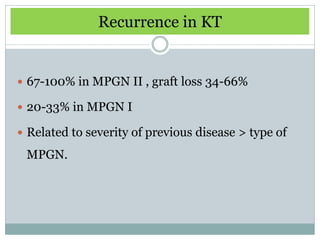
Recurrence in KT


 67-100% in MPGN II , graft loss 34-66%

 20-33% in MPGN I

 Related to severity of previous disease > type of

 MPGN.
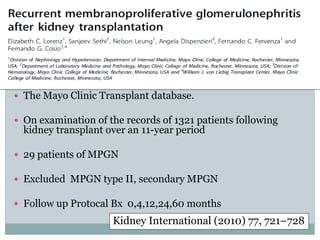
 The Mayo Clinic Transplant database.

 On examination of the records of 1321 patients following
  kidney transplant over an 11-year period

 29 patients of MPGN

 Excluded MPGN type II, secondary MPGN

 Follow up Protocal Bx 0,4,12,24,60 months
                     Kidney International (2010) 77, 721–728
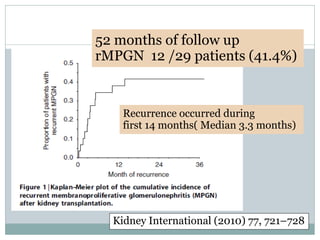
52 months of follow up
rMPGN 12 /29 patients (41.4%)


    Recurrence occurred during
    first 14 months( Median 3.3 months)


  Kidney International (2010) 77, 721–728
MPGN  Pam

MPGN Pam

  • 1.
  • 2.
    Scopes  Classification  Pathophysiology Pathology  Clinical features  Treatment
  • 3.
    Overview  Also termedmesangiocapillary glomerulonephritis.  MPGN accounts for approximately 7 to 10% of all cases of biopsy-confirmed glomerulonephritis. Brenner&Rector’s: The Kidney 9th Edition
  • 4.
    Classification Idiopathic Secondary Type I Infection Hepatitis C and B Type II Visceral abscess Infectious endocarditis Type III Shunt nephritis Mycoplasma infection Rheumatologic disease SLE Scleroderna Sjogren syndrome Mixed essential cryoglobulinemia with or without hepatitis C infection Malignancy Carcinoma,Lymphoma,Leukemia Brenner&Rectoer’s 9th Edition Complement deficiency Hereditary C2,C4 deficiency
  • 5.
    Classification  Traditionally beenclassified into three subtypes  MPGN types I  MPGN types II  MPGN types III  The primary basis for this classification is histologic, the appearance of the capillary wall by electron microscopy and the location of electron-dense deposits. Brenner&Rector’s: The Kidney 9th Edition
  • 6.
    Type I :Subendothelial deposits Type II : Dense deposits in Lamina densa of GBM Type III : Subendothelial &Subepithelial deposits
  • 7.
    Membranoproliferative Glomerulonephritis TypeI  Epidemiology  The majority of patients with MPGN are children between the ages of 8 and 16 years.  The proportions of males and females with the disorder are nearly equal. Brenner&Rector’s: The Kidney 9th Edition
  • 8.
    IMMUNE-COMPLEX-MEDIATED MPGN Pathogenesis MPGN typeI  Results from the deposition of immune complexs in the glomeruli owing to persistent antigenemia.  Type I MGPN often is secondary to recognizable causes. Brenner&Rector’s: The Kidney 9th Edition
  • 9.
    Secondary MPGN Brenner&Rector’s: The Kidney 9th Edition
  • 10.
  • 12.
    Pathology of MPGNType I  LM  Mesagial proliferation  Endocapillary proliferation  Diffuse global capillary wall thickening “Lobular glomerulonephritis” Brenner&Rector’s: The Kidney 9th Edition
  • 13.
    Pathology of MPGNType I  LM  Mesangial interposition  Doubing or replication of GBM Brenner&Rector’s: The Kidney 9th Edition
  • 14.
    Pathology of MPGNType I IF  Granular staining for complement, especially C3, and usually immunoglobulins (IgG or IGM)  GBM,Mesangial  Few at TBM Brenner&Rector’s: The Kidney 9th Edition
  • 15.
    Pathology of MPGNType I EM  The ultrastructural hallmark of type I  Subendothelial Electron- dense -deposits  Mesangial interposition Brenner&Rector’s: The Kidney 9th Edition
  • 16.
    Clinical Features ofMPGN typeI  Nephrotic syndrome 40-70%  Acute nephritic syndrome 25 %  Asymptomatic proteinuria and hematuria 25 %  HT (not severe)  Renal insufficiency 50% Pediatr Nephrol.2010;25:1409-18.
  • 17.
    Membranoproliferative Membranoproliferative Glomerulonephritis TypeIII  Type III MPGN occurs in a very small number of children and young adults.  Clinical features of disease quite similar to those of type I MPGN.  Regardless of the pathologic distinctions of MPGN type III ,few distinguishing clinical characteristics are noted in these patients.  EM: subendothelial and subepithelial EDD Brenner&Rector’s: The Kidney 9th Edition
  • 18.
    Membranoproliferative Glomerulonephritis TypeII Dense Deposit Disease  Epidemiology  About 25% of MPGN in children but is much less common in adults.  The large majority of patients are children 8 - 16 years.  2-3person/million.  Female:male = 3:2 J Am Soc Nephrol 16: 1392–1404, 2005 Brenner&Rector’s: The Kidney 9th Edition
  • 19.
    Pathogenesis of MPGNtype II (DDD)  DDD is characterized by deposits of dense material within the basement membranes of glomeruli, Bowman’s capsule, and tubules.  A porcine model of MPGN  Massive deposition of C3 and the terminal C5b9 complement complex (the membrane attack complex).  No immune complex deposits were detected in renal tissue.  Dysregulation of alternative pathway. J Am Soc Nephrol 16: 1392–1404, 2005 Brenner&Rector’s: The Kidney 9th Edition
  • 20.
    Peter F. Zipfel*‡and Christine Skerka* NATuRe RevIeWs Immunology vOLuMe 9 | OCTObeR 2009
  • 21.
  • 22.
    Pathogenesis of MPGNtype II (DDD)  Three distinct mechanisms result in uncontrolled activation of C3 convertase. 1 .The development of an autoantibody, the C3 nephritic factor (C3NeF). - Protects C3 convertase form factor H. 2. The absence of circulating factor H . 3. The presence of a circulating inhibitor of factorH. Brenner&Rector’s: The Kidney 9th Edition
  • 23.
    Dysregulation of thealternative pathway
  • 24.
     To investigatecauses for AP dysregulation  32 patients with DDD (renal Bx C3+ and intramembranous electron-dense deposits by EM)  C3Nef detection assays  Factor H antoantibodies(FHAA)  Factor B autoantibodies (FBAA)  Factor H Mutation screening.
  • 25.
    Results  C3Nef detectionassays:  25 patiests (78%)  Factor H antoantibodies(FHAA)  1 patients (3%)  Factor B autoantibodies (FBAA)  3 patiests (9%)  Factor H Mutation screening.  26 patiests(81%) carried at least one copy of the FH His402 polymorphism.
  • 27.
    Pathology :MPGN II(DDD) LM 5 distinct patterns: (1) Membranoproliferative pattern (2) Mesangioproliferative pattern (3) Crescentic pattern (4) Acute proliferative and exudative pattern (5) Unclassified dense deposit disease. Sibley RK, Kim Y. Dense intramembranous deposit disease: new pathologic features. Kidney Int. 1984;25:660-670.
  • 28.
    Pathology :MPGN II(DDD) •Intense capillary wall linear to bandlike staining for C3 •Little or no staining for Ig
  • 29.
    Pathology :MPGN II(DDD) A bandlike intramembranous dense deposit
  • 30.
    Clinical Features :MPGNtype II (DDD)  ¾ of patients have all of the components of nephrotic syndrome on presentation.  ¼ of patients have acute nephritic syndrome.  HT is typically mild, but may be severe in some cases.  Renal dysfunction occurs in at least half of cases and is more common in adults han in children. Brenner&Rector’s: The Kidney 9th Edition
  • 31.
    Clinical Features :MPGNtype II (DDD)  May have deposits in the retina There is no correlation between the severity of kidney and ocular involvement. J Am Soc Nephrol 16: 1392–1404, 2005
  • 32.
    Clinical Features :MPGNtype II (DDD)  DDD may be associated with the syndrome of acquired partial lipodystrophy.  About 80% of patients with this syndrome have low C3 levels and C3NeF.  About 20% of patients develop MPGN
  • 33.
    Prognosis:MPGN II (DDD) The prognosis for type II is worse than that for type I, worse in adults than in children.  Clinical remissions are rare,occurring in fewer than 5% of children.  Patients generally reach ESRD in 8 to 12 years from the onset of disease. Brenner&Rector’s: The Kidney 9th Edition
  • 34.
    Proposal for Anew classification of MPGN Proposal of a New classification  Immune complex mediated MPGN.  Complement mediated MPGN. Sanjeev Sethi, Fernando C. Semin Nephrol 31:341-348 © 2011
  • 35.
  • 36.
    Treatment  Based onthe heterogeneity of cause and pattern of histologic injury of MPGN.  All patients with MPGN must be thoroughly evaluated for underlying diseases before classifying as idiopathic MPGN, and before any specific treatment decisions can be made.  When there is a secondary MPGN, treatment should be directed against that cause
  • 37.
    Treatment  Idiopathic MPGNis now an uncommon condition.  The few RCTs of treatment of idiopathic MPGN in children and adults have given inconsistent and largely inconclusive results .  Many of the reported trials have weak experimental design or are underpowered, and the evidence base underlying the recommendations for treatment of “idiopathic” MPGN is very weak.
  • 38.
    Treatment  Immunosuppressive agent  Prednisolone  Cytotoxic agent  Cyclophosphamide  Mycophenolate  Antiplatelet  Non-specific Tx
  • 39.
     Double-blinded RCT. Compare altermate day prednisolone VS placebo  Between February 1970 and October 1980 Pediatr Nephrol(1992)6:123-130
  • 40.
    Treatment of mesangiocapillary glomerulonephritis with alternate-day prednisone Inclusion criteria Inclusion criteria  1. Biopsy-prove MCGN  2. GFR by crcl ≥ 70 ml/min per 1.73 m 2  3. Heavy proteinuria ≥ 40 mg/h per m 2  4. No evidence of SLE, HSP, nephritis accompanying bacteremia (such as IE), or malaria,  5. No treatment with corticosteroids during the year prior to entry into the trial or with immunosuppressive agents at any time. Pediatr Nephrol(1992)6:123-130
  • 41.
    Treatment of mesangiocapillary glomerulonephritis with alternate-day prednisone • Prednisolone 40 mg/m2 alternate days Treatment • Maximum dose 60 mg • 5 years • Treatment failure: increase from baseline in serum creatinine of 30% or more, or more than 0.4 mg/dl. Outcome • Renal failure : cr ≥ 4 mg/dl • Stable: no change or increase in S.Cr <0.4 mg/dl Pediatr Nephrol(1992)6:123-130
  • 43.
    61% P=0.07 12% Mean Tx 41 months Alternate- day prednisone therapy Treatment failure improves the prognosis of Treatment 40% patients with MCGN, when used at doses control 54% of 40 mg/m2.
  • 44.
    Prednisolone for IdiopathicMPGN  There has been no systematic evaluation of glucocorticoid therapy for idiopathic MPGN in adults.  Retrospective studies showed no clear benefit from glucocorticoid therapy, but treatment was not as prolonged in adults as it was in children. Kidney International,Vol55(1999)pps41-s46
  • 45.
  • 46.
     RCT  Compare  Combination Cyclophosphamide 1.5-2.0 mg/dl Coumadin keep PT 2-2.5 times Dipyridamole start 25 mg qid  full dose 100 mg qid  No specific therapy
  • 47.
    Cyclo Inclusion MPGN type I &II ( no crescent) Proteinuria > 2 g/day Ccr < 80 mI/mm. Ruled out Secondary causes of MPGN Exclusion Active infectin Previous tuberculosis, Hx PU Uncontrolled HT Outcome Change of crcl from baseline at 18 months
  • 48.
    Baseline MPGN Type I Control(N =25) Treatmemt (N=22) Age 33 (6-70) 38 (12-77) Crcl (ml/min/1.73 m2) 64 (18-135) 65 (16-113) Cr (mg/dl) 1.8 (0.7-7.0) 1.7 (0.7-5.9) Proteinuria ( g/day) 5.2 (0.85-16.4) 3.6(0.4-8.3) MPGN Type II Control(N =7) Treatmemt (N=5) Age 19(7-58) 17.5 (6-26) Crcl (ml/min/1.73 m2) 87 (51-131) 63 (37-115) Cr (mg/dl) 0.9 (0.3-1.2) 1.2 (0.7-2.1) Proteinuria ( g/day) 4.3 (0.1-11.7) 6.8 (1.7-12.8)
  • 49.
    Change in Crcl/18 months MPGN Type I MPGN Type II P=0.4 P=0.5 -1 0 -14 -8
  • 50.
    Proteinuria ,g/day No significantbenefit could be observed over a period of 18 months.
  • 51.
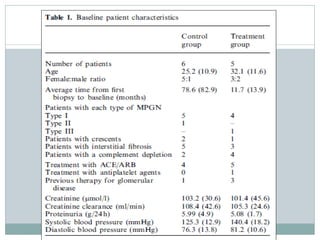
     Retrospective analysis Treatment group  MMF started 500 mg/daymaximum 2 gm /day  Oral Prednisolone 60 mg/day , tapering to 20mg within 2 months and withdrawn by 1 year.  Control group  Did not receive immunosuppressive therapy
  • 53.
    Change in proteinuriaover time in control and MMF treated patients P=0.03 control MMF
  • 54.
    Change in creatinineclearance over time in control and MMF treated patients. MMF P=0.06 control
  • 55.
    Antiplatelete  Rationale Demonstrations of platelet activation and deposition of platele antigen are invole in initiating or contributing to glomerular injury . Glomerular prostaglandin and thromboxane systesis in rat nephrotoxic serum nephritis.J Clin Invest 1983;72:1439-48
  • 56.
     Randomized,double blindplacebo-controlled trial .  Renal biopsy prove MPGN TypeI  1975-1981  Only 2 were receiveing therapy with prednisolone,with discontinued at the time of entry  None had been treated with cytotoxic drugs.  Excluded  SLE,essential mixed cryoglobulinemia,PIGN,dialysis James V.Donadio,JR.Nejm1984;vol310(22)
  • 57.
     Treatment  Dipyridamole 75 mg  Aspirin 325 mg  12 months  Outcome  Treatment failure: decline of 25% Iotalamate clearance from pre treatment. James V.Donadio,JR.Nejm1984;vol310(22)
  • 58.
    Pretreatment Clinical manifestations Treatment Placebo N=21 N=19
  • 59.
    Treatment failures(loss ofrenal function) P<0.05 James V.Donadio,JR.Nejm1984;vol310(22)
  • 60.
    Change in Iothalamateclearance -1.3 ml/min -19.6 ml/min P<0.02 No differences between the groups Proteinuria,Amount of RBC cast, C3,C4,CH50 James V.Donadio,JR.Nejm1984;vol310(22)
  • 61.
  • 62.
     Follow up7 years  ESRD - 47 % in Placebo (33 months) - 14 % in Treatment (62 months) GFR and was better maintained, and progression to ESRD occurred less often and over a longer period,in the group treated with platelet-inhibitor drugs than in the group given placebo James V.Donadio,JR.Nejm1984;vol310(22)
  • 63.
    Plasmapheresis Case report ,improve renal function  MPGN type II  Rucurrent MPGN typeII post trasplant
  • 64.
    Immunosuppressive drugs Level of Author Design N Rx Duration Results/Comments Evidence [Rx : C] 1 Tarshish RCT 80 [47/33] Pred 40 mg/m2 130 mo Children only, predomly MPGN I, stable renal fn AD vs pcb Pred 61% [Rx] vs 12% [C] No difference found, 1 Cattran RCT 59 CY + coumadin 18 mo [27/32] + dipyridamole mixed MPGN I > II CY vs No Rx 1985 3 Strife UCT 17 Pred 2 mk AD 2y MPGN III only, nephrotic range [16/1] did worse, 3/16 dvled RF 3 Davis CT 27 Pred+IS [NS] - No effect [19/8] 3 Orlowski UCT 50 P/AZA/CP/chlorambucil 79 mo 10 y F/U, ↓ Uprot c triple drug in combi Rx 3 Ford UCT 19 PO/IV pred 2 mk + 8-10 wk, Children; 6.5 y F/U, early Rx, ACEI then x2-3 shorter course, y tapered ↓ glom prolif dose 3 Faedda UCT 19 IV/PO CY+P 10 mo 15/19 remission, 7 y F/U 1994 [different combinations] Adeera Levin., Mx of MPGN; Evidence based recommendations; KI 1999; 55: S41-S46
  • 65.
    Antiplatelet Level Author Design Rx Durati Results/Comments of evi N [Rx : C] on 1 Donadio 1984 RCT Dipyridamole 75mg/d + ASA 325 12 mo -Tx : significantly delay rate of GFR ↓ Prospective mg/d vs Pcb [Sig difference at 7 y] 40 [21/19] -No change in Uprot, hematuria, Complement -Mild bleeding complication required discontinuation 15% 1 Zimmer man RCT Warfarin [INR 1.5-2] + dipyridamole [75-100 12 mo [2 y Prot restriction & HTN control standardized. Crossover mg qid] vs Pcb study] Sig reduction in proturia 18 [8/10] NS diff in renal fn Significantly ↓ Uprot 1 Zauner 1994 RCT ASA 500 mg/d + dipyridamole 75 36 mo [1 g Tx vs 8 g control] [Sig] 18 [9/9] mg/d PR : Tx 7/10 vs Control [I 15 + III [both : prot restriction 2/8 3] & HTN control] -Comment : short F/U SCr 1.8, Uprot 7 g/d Adeera Levin., Mx of MPGN; Evidence based recommendations; KI 1999; 55: S41-S46
  • 66.
    Evidence based recommendations: KI 1999 Idiopathic MPGN 24 h Uprot & CCr <3 g >3 g Normal renal function Abn renal function Normal renal function Abn renal fn Grade C; Grade A; Grade B; Child : trial of steroid x 3 Child : trial of Adult : trial of ASA mo [AD; IV or PO 1 mk] steroids 40 mg/m2 325 mg/d & Or AD x 6-12 mo Dipyridamole 75-100 Adult : no Rx, observe mg tid x 6-12 mo F/U q 3 mo; BP, Lipid monitoring -No change : continued F/U, ↓ frequency - Increase cr or proteinuria  Rx Adeera Levin., Mx of MPGN; Evidence based recommendations; KI 1999; 55: S41-S46
  • 67.
    Pediatr Nephrol (2010)25:1409–1418
  • 70.
    Recurrence in KT 67-100% in MPGN II , graft loss 34-66%  20-33% in MPGN I  Related to severity of previous disease > type of MPGN.
  • 71.
     The MayoClinic Transplant database.  On examination of the records of 1321 patients following kidney transplant over an 11-year period  29 patients of MPGN  Excluded MPGN type II, secondary MPGN  Follow up Protocal Bx 0,4,12,24,60 months Kidney International (2010) 77, 721–728
  • 72.
    52 months offollow up rMPGN 12 /29 patients (41.4%) Recurrence occurred during first 14 months( Median 3.3 months) Kidney International (2010) 77, 721–728