Membranoproliferative
Glomerulonephritis
Chaken Maniyan M.D.
Fellow Nephrology
Phramongkutklao Hospital
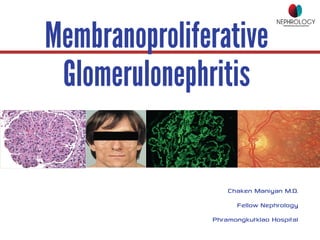
MPGN
§ Pattern of glomerular injury on renal biopsy
§ Thickening of GBM
§ Mesangial hypercellularity
§ Endocapillary proliferation
§ Double-contour along glomerular capillary walls
§ Lobulation glomerulonephritis
MPGN : Epidemiology
§ 2–10% of all cases of GN confirmed by renal
biopsy.
§ Common age group 8-16 yr
§ 5th leading cause of ESRD among primary
glomerular diseases
§ ‘idiopathic’ MPGN is more commonly seen in
pediatric age than older adults.
Nat. Rev. Nephrol. 11, 14–22 (2015)
Outline
§Complement activation system
§Classification of MPGN
§Clinical presentation
§Pathology
§Treatment
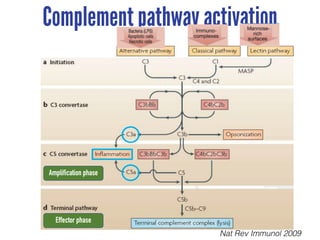
Complement pathway activation
Nat Rev Immunol 2009
Amplification phase
Effector phase
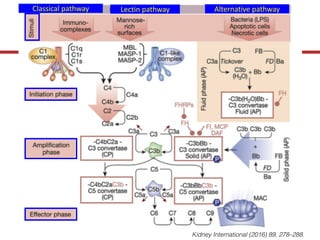
Kidney International (2016) 89, 278–288.
Classical	pathway Lectin pathway Alternative	pathway
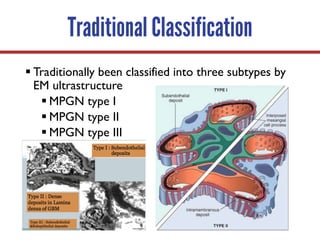
Traditional Classification
§ Traditionally been classified into three subtypes by
EM ultrastructure
§ MPGN type I
§ MPGN type II
§ MPGN type III
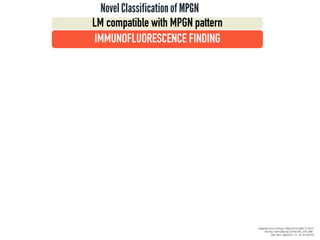
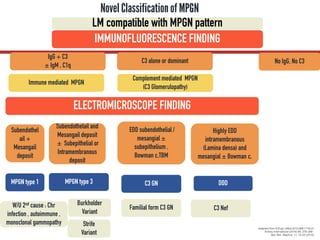
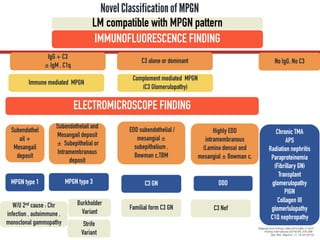
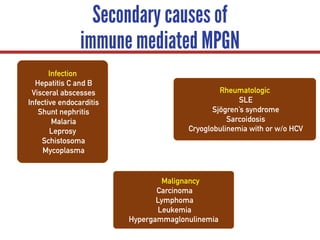
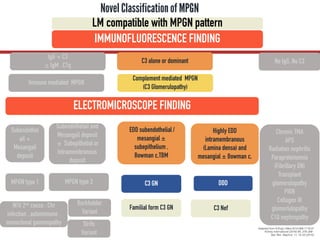
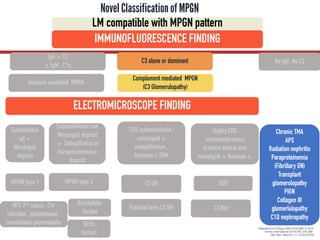
Novel Classificationof MPGN
IMMUNOFLUORESCENCE FINDING
Adapted from N Engl J Med 2012;366:1119-31
Kidney International (2016) 89, 278–288.
Nat. Rev. Nephrol. 11, 14–22 (2015)
LM compatible with MPGN pattern
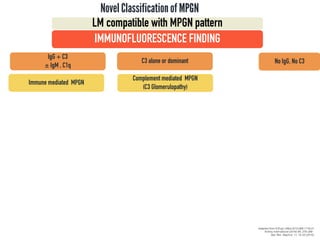
Novel Classificationof MPGN
IMMUNOFLUORESCENCE FINDING
IgG + C3
± IgM , C1q
C3 alone or dominant
Immune mediated MPGN
Complement mediated MPGN
(C3 Glomerulopathy)
Adapted from N Engl J Med 2012;366:1119-31
Kidney International (2016) 89, 278–288.
Nat. Rev. Nephrol. 11, 14–22 (2015)
LM compatible with MPGN pattern
No IgG, No C3
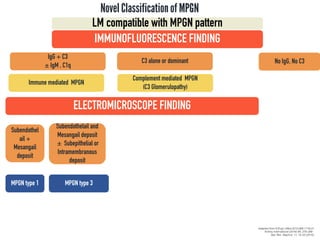
Novel Classificationof MPGN
IMMUNOFLUORESCENCE FINDING
IgG + C3
± IgM , C1q
C3 alone or dominant
Immune mediated MPGN
Complement mediated MPGN
(C3 Glomerulopathy)
ELECTROMICROSCOPE FINDING
Subendothel
ail +
Mesangail
deposit
MPGN type 1
Subendothelail and
Mesangail deposit
± Subepithelial or
Intramembranous
deposit
MPGN type 3
Adapted from N Engl J Med 2012;366:1119-31
Kidney International (2016) 89, 278–288.
Nat. Rev. Nephrol. 11, 14–22 (2015)
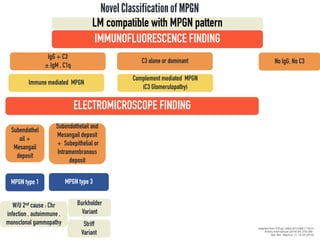
LM compatible with MPGN pattern
No IgG, No C3
Novel Classificationof MPGN
IMMUNOFLUORESCENCE FINDING
IgG + C3
± IgM , C1q
C3 alone or dominant
Immune mediated MPGN
Complement mediated MPGN
(C3 Glomerulopathy)
ELECTROMICROSCOPE FINDING
Subendothel
ail +
Mesangail
deposit
MPGN type 1
Subendothelail and
Mesangail deposit
+ Subepithelial or
Intramembranous
deposit
MPGN type 3
Burkholder
Variant
Striff
Variant
W/U 2nd cause : Chr
infection , autoimmune ,
monoclonal gammopathy
Adapted from N Engl J Med 2012;366:1119-31
Kidney International (2016) 89, 278–288.
Nat. Rev. Nephrol. 11, 14–22 (2015)
LM compatible with MPGN pattern
No IgG, No C3
Novel Classificationof MPGN
IMMUNOFLUORESCENCE FINDING
IgG + C3
± IgM , C1q
C3 alone or dominant
Immune mediated MPGN
Complement mediated MPGN
(C3 Glomerulopathy)
ELECTROMICROSCOPE FINDING
Subendothel
ail +
Mesangail
deposit
Highly EDD
intramembranous
(Lamina densa) and
mesangial ± Bowman c,
MPGN type 1
Subendothelail and
Mesangail deposit
± Subepithelial or
Intramembranous
deposit
MPGN type 3 DDD
EDD subendothelial /
mesangial ±
subepithelium ,
Bowman c,TBM
C3 GN
Burkholder
Variant
Strife
Variant
W/U 2nd cause : Chr
infection , autoimmune ,
monoclonal gammopathy
Familial form C3 GN
Adapted from N Engl J Med 2012;366:1119-31
Kidney International (2016) 89, 278–288.
Nat. Rev. Nephrol. 11, 14–22 (2015)
LM compatible with MPGN pattern
No IgG, No C3
C3 Nef
Novel Classificationof MPGN
IMMUNOFLUORESCENCE FINDING
IgG + C3
± IgM , C1q
C3 alone or dominant
Immune mediated MPGN
Complement mediated MPGN
(C3 Glomerulopathy)
ELECTROMICROSCOPE FINDING
Subendothel
ail +
Mesangail
deposit
Highly EDD
intramembranous
(Lamina densa) and
mesangial ± Bowman c,
MPGN type 1
Subendothelail and
Mesangail deposit
± Subepithelial or
Intramembranous
deposit
MPGN type 3 DDD
EDD subendothelial /
mesangial ±
subepithelium ,
Bowman c,TBM
C3 GN
Burkholder
Variant
Strife
Variant
W/U 2nd cause : Chr
infection , autoimmune ,
monoclonal gammopathy
Familial form C3 GN
Adapted from N Engl J Med 2012;366:1119-31
Kidney International (2016) 89, 278–288.
Nat. Rev. Nephrol. 11, 14–22 (2015)
LM compatible with MPGN pattern
No IgG, No C3
Chronic TMA
APS
Radiation nephritis
Paraproteinemia
(Fibrillary GN)
Transplant
glomerulopathy
PIGN
Collagen III
glomerlulopathy
C1Q nephropathy
C3 Nef
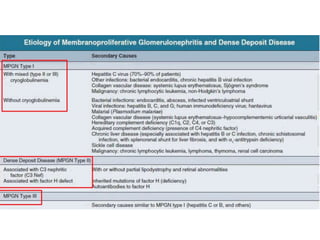
Secondary causes of
immune mediated MPGN
Infection
Hepatitis C and B
Visceral abscesses
Infective endocarditis
Shunt nephritis
Malaria
Leprosy
Schistosoma
Mycoplasma
Malignancy
Carcinoma
Lymphoma
Leukemia
Hypergammaglonulinemia
Rheumatologic
SLE
Sjögren’s syndrome
Sarcoidosis
Cryoglobulinemia with or w/o HCV
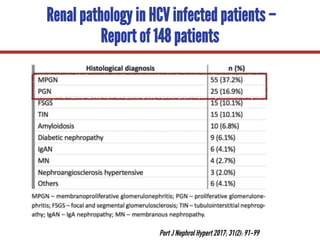
Renal pathology in HCV infected patients –
Report of 148 patients
Port J Nephrol Hypert 2017; 31(2): 91-99
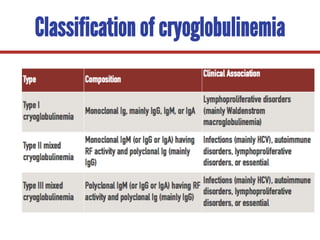
Classification of cryoglobulinemia
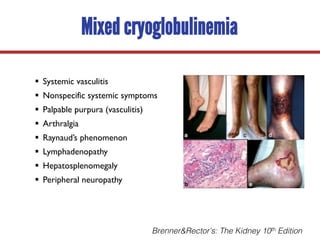
Mixed cryoglobulinemia
§ Systemic vasculitis
§ Nonspecific systemic symptoms
§ Palpable purpura (vasculitis)
§ Arthralgia
§ Raynaud’s phenomenon
§ Lymphadenopathy
§ Hepatosplenomegaly
§ Peripheral neuropathy
Brenner&Rector’s: The Kidney 10th Edition
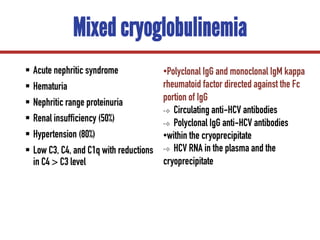
Mixed cryoglobulinemia
§ Acute nephritic syndrome
§ Hematuria
§ Nephritic range proteinuria
§ Renal insufficiency (50%)
§ Hypertension (80%)
§ Low C3, C4, and C1q with reductions
in C4 > C3 level
•Polyclonal IgG and monoclonal IgM kappa
rheumatoid factor directed against the Fc
portion of IgG
•❖ Circulating anti-HCV antibodies
•❖ Polyclonal IgG anti-HCV antibodies
•within the cryoprecipitate
•❖ HCV RNA in the plasma and the
cryoprecipitate
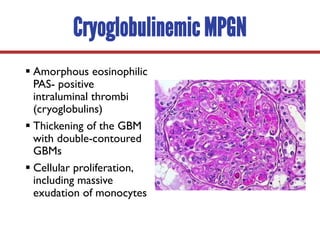
Cryoglobulinemic MPGN
§ Amorphous eosinophilic
PAS- positive
intraluminal thrombi
(cryoglobulins)
§ Thickening of the GBM
with double-contoured
GBMs
§ Cellular proliferation,
including massive
exudation of monocytes
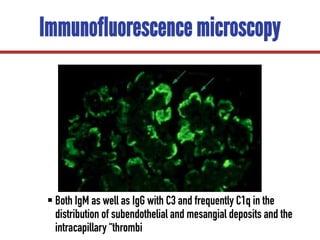
Immunofluorescence microscopy
§ Both IgM as well as IgG with C3 and frequently C1q in the
distribution of subendothelial and mesangial deposits and the
intracapillary “thrombi
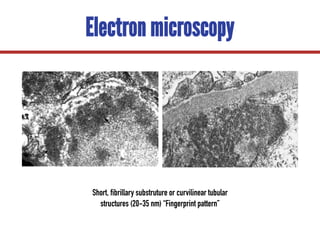
Electron microscopy
Short, fibrillary substruture or curvilinear tubular
structures (20-35 nm) “Fingerprint pattern”
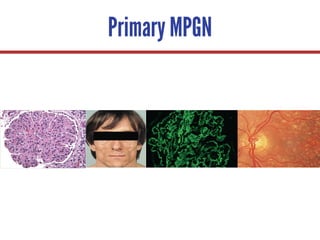
Primary MPGN
Clinical presentation
§ Most commonly presents in childhood but can occur
at any age.
§ Clinical presentation and course are extremely
variable :
§ From benign and slowly to rapidly progressive.
§ Asymptomatic hematuria and proteinuria,AGN,
nephrotic syndrome, CKD or RPGN.
§ Varied clinical presentation is caused by
§ Different pathogenesis
§ Timing of biopsy relative to clinical course.
N Engl J Med 2012;366:1119-31.
Clinical presentation
§ In early disease, kidney biopsy shows :
§ Proliferative lesion : nephritic phenotype
§ Crescentic lesion : RPGN
§ In advanced disease, kidney biopsy shows :
§ Both repair and sclerosis : nephrotic phenotype
§ Classic MPGN : both nephritonephrotic phenotype.
N Engl J Med 2012;366:1119-31.
Pathogenesis
§ Two primary mechanisms have been described :
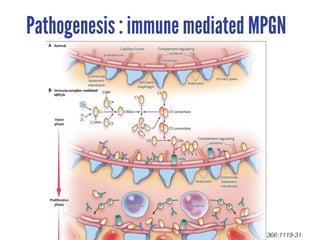
§ Immune complex deposition (immune complex-
mediated)
§ Activation of complement via classical pathway
§ Typically : mildly decreased serum C3 and low C4
§ Dysregulation and persistent activation of alternative
pathway (complement-mediated)
§ usually low C3 and normal C4 levels (80% of cases )
§ normal serum C3 is not excluded complement-
mediated MPGN
N Engl J Med 2012;366:1119-31.
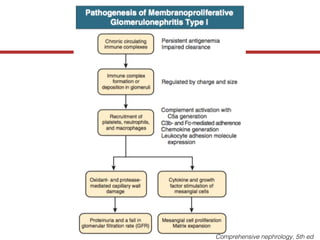
Comprehensive nephrology, 5th ed
N Engl J Med 2012;366:1119-31.
Pathogenesis : immune mediated MPGN
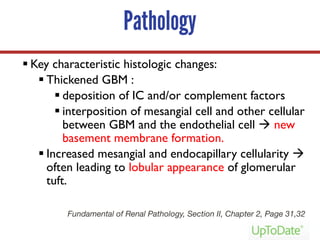
Pathology
§ Key characteristic histologic changes:
§ Thickened GBM :
§ deposition of IC and/or complement factors
§ interposition of mesangial cell and other cellular
between GBM and the endothelial cell à new
basement membrane formation.
§ Increased mesangial and endocapillary cellularity à
often leading to lobular appearance of glomerular
tuft.
Fundamental of Renal Pathology, Section II, Chapter 2, Page 31,32
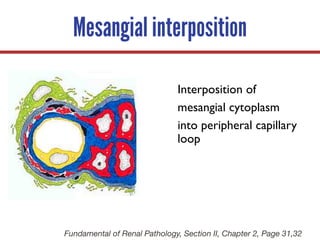
Mesangial interposition
Interposition of
mesangial cytoplasm
into peripheral capillary
loop
Fundamental of Renal Pathology, Section II, Chapter 2, Page 31,32
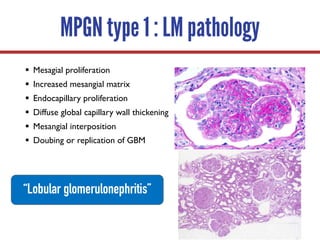
MPGN type 1 : LM pathology
§ Mesagial proliferation
§ Increased mesangial matrix
§ Endocapillary proliferation
§ Diffuse global capillary wall thickening
§ Mesangial interposition
§ Doubing or replication of GBM
“Lobular glomerulonephritis”
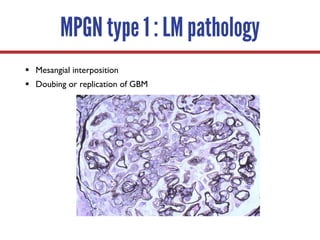
MPGN type 1 : LM pathology
§ Mesangial interposition
§ Doubing or replication of GBM
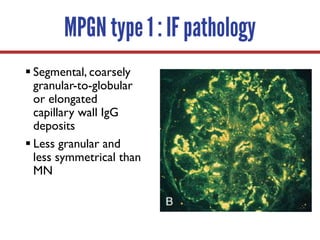
MPGN type 1 : IF pathology
§ Segmental, coarsely
granular-to-globular
or elongated
capillary wall IgG
deposits
§ Less granular and
less symmetrical than
MN
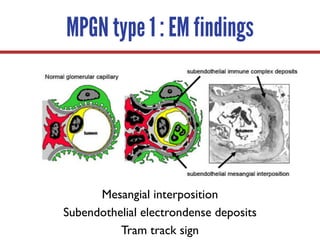
MPGN type 1 : EM findings
Mesangial interposition
Subendothelial electrondense deposits
Tram track sign
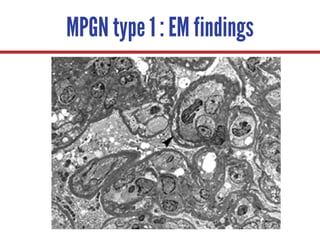
MPGN type 1 : EM findings
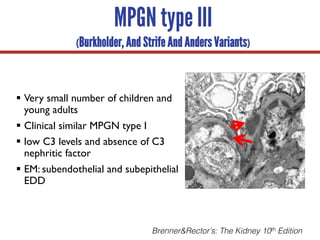
§ Very small number of children and
young adults
§ Clinical similar MPGN type I
§ low C3 levels and absence of C3
nephritic factor
§ EM: subendothelial and subepithelial
EDD
Brenner&Rector’s: The Kidney 10th Edition
MPGN type III
(Burkholder, And Strife And Anders Variants)
Some Key Pathology to differentiate
Primary VS Secondary MPGN
§ IF :
§ HCV
§ IgM, IgG, C3, kappa and lambda
§ IgG may not be present
§ C1q is typically negative
§ Monoclonal gammopathy
§ monotypic kappa or lambda light-chain
§ Autoimmune diseases : "full house" pattern
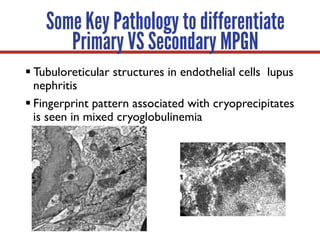
§ Tubuloreticular structures in endothelial cells lupus
nephritis
§ Fingerprint pattern associated with cryoprecipitates
is seen in mixed cryoglobulinemia
Some Key Pathology to differentiate
Primary VS Secondary MPGN
Complement mediated MPGN
Novel Classificationof MPGN
IMMUNOFLUORESCENCE FINDING
IgG + C3
± IgM , C1q
C3 alone or dominant
Immune mediated MPGN
Complement mediated MPGN
(C3 Glomerulopathy)
ELECTROMICROSCOPE FINDING
Subendothel
ail +
Mesangail
deposit
Highly EDD
intramembranous
(Lamina densa) and
mesangial ± Bowman c,
MPGN type 1
Subendothelail and
Mesangail deposit
± Subepithelial or
Intramembranous
deposit
MPGN type 3 DDD
EDD subendothelial /
mesangial ±
subepithelium ,
Bowman c,TBM
C3 GN
Burkholder
Variant
Strife
Variant
W/U 2nd cause : Chr
infection , autoimmune ,
monoclonal gammopathy
Familial form C3 GN
Adapted from N Engl J Med 2012;366:1119-31
Kidney International (2016) 89, 278–288.
Nat. Rev. Nephrol. 11, 14–22 (2015)
LM compatible with MPGN pattern
No IgG, No C3
Chronic TMA
APS
Radiation nephritis
Paraproteinemia
(Fibrillary GN)
Transplant
glomerulopathy
PIGN
Collagen III
glomerlulopathy
C1Q nephropathy
C3 Nef
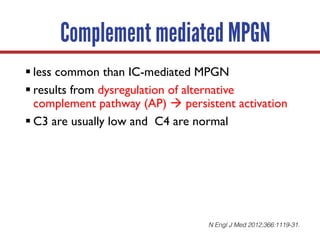
§ less common than IC-mediated MPGN
§ results from dysregulation of alternative
complement pathway (AP) à persistent activation
§ C3 are usually low and C4 are normal
N Engl J Med 2012;366:1119-31.
Complement mediated MPGN
N	Engl J	Med	2012;366:1119-31.	
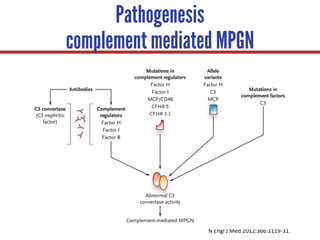
Pathogenesis
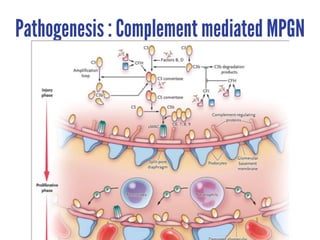
complement mediated MPGN
Pathogenesis
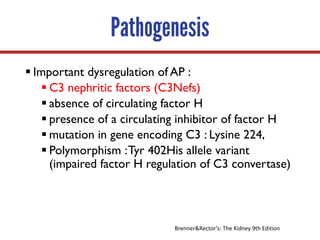
§ Important dysregulation of AP :
§ C3 nephritic factors (C3Nefs)
§ absence of circulating factor H
§ presence of a circulating inhibitor of factor H
§ mutation in gene encoding C3 : Lysine 224,
§ Polymorphism :Tyr 402His allele variant
(impaired factor H regulation of C3 convertase)
Brenner&Rector’s:	The	Kidney	9th	Edition
Pathogenesis : Complement mediated MPGN
Complement-mediated MPGN
§ In many patients, complement abnormalities does not
develop MPGN, suggests that
§ genetic risk factors are not enough to trigger the
disease
§ additional ‘hit(s)’ are required
§ Activate complement and overwhelm the
regulatory mechanism resulting in high levels of
complement factors then deposited in glomeruli.
Nephrol Dial Transplant (2012) 27: 4288–4294
Dense deposit disease
§ Clinical Features
§ 1/3 of patients : nephrotic syndrome
§ 1/4 of patients : nephritic syndrome
§ Mild HT
§ > 50% Renal dysfunction
§ more common in adults than in children
§ Onset is preceded by acute URI , with high ASO
titers in 20-40%.
§ 80 - 90% low C3 levels
§ Depressed C4 levels “uncommon”
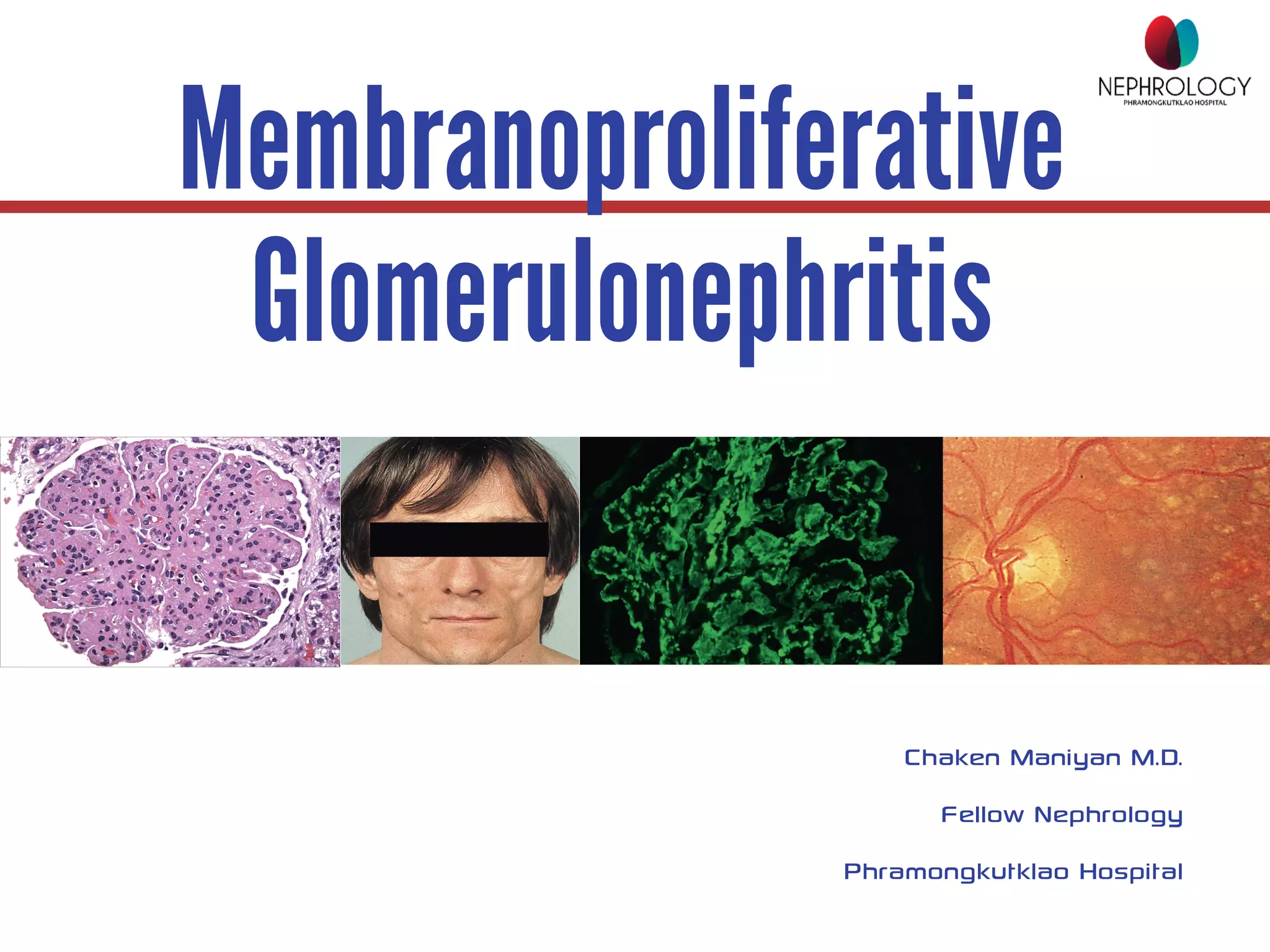
§ Syndrome of acquired partial lipodystrophy
Brenner&Rector’s: The Kidney 10th Edition
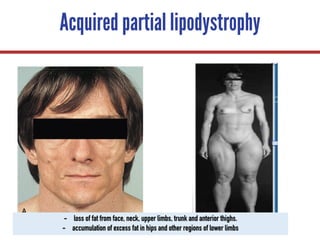
Acquired partial lipodystrophy
- loss of fat from face, neck, upper limbs, trunk and anterior thighs.
- accumulation of excess fat in hips and other regions of lower limbs
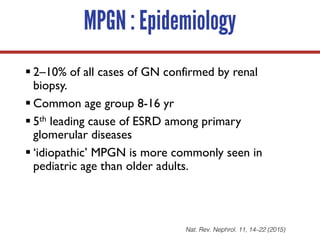
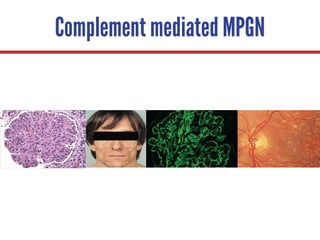
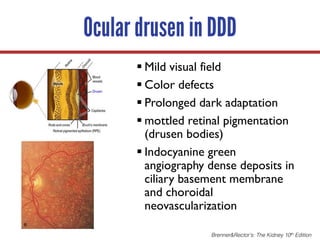
Ocular drusen in DDD
§ Mild visual field
§ Color defects
§ Prolonged dark adaptation
§ mottled retinal pigmentation
(drusen bodies)
§ Indocyanine green
angiography dense deposits in
ciliary basement membrane
and choroidal
neovascularization
Brenner&Rector’s: The Kidney 10th Edition
Dense deposit disease
§ Prognosis is worse than type I
§ Clinical remissions <5%
§ Worse in adults than in children
§ 50% turn to ESRD in 10 years from the onset
Brenner&Rector’s: The Kidney 10th Edition
Pathology
Light microscopy
§ Both DDD and C3GN
§ Typical MPGN patern
§ ⬆ mesangial matrix and cell
§ GBM thickening with double contour
§ Glomerular lobulation
§ Some cases infiltration of macrophages or
neutrophils. Similar to postinfectious GN
§ Crescent formation may be present
§ In a series of 69 patients with DDD, the incidence
of di erent histologic patterns was
§ membranoproliferative (25%)
§ mesangioproliferative (45%)
§ crescentic (18%)
§ acute proliferative and exudative (12%)
Light microscopy
N Engl J Med 2012;366:1119-31.
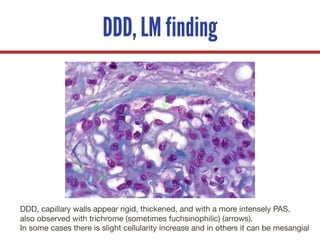
DDD, LM finding
DDD, capillary walls appear rigid, thickened, and with a more intensely PAS,
also observed with trichrome (sometimes fuchsinophilic) (arrows).
In some cases there is slight cellularity increase and in others it can be mesangial
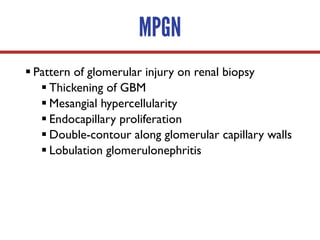
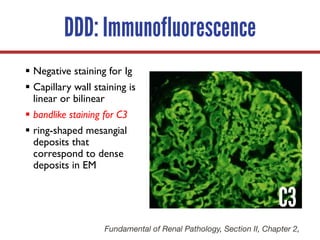
C3
§ Negative staining for Ig
§ Capillary wall staining is
linear or bilinear
§ bandlike staining for C3
§ ring-shaped mesangial
deposits that
correspond to dense
deposits in EM
C3DDD: Immunofluorescence
Fundamental of Renal Pathology, Section II, Chapter 2,
DDD: Electronmicroscope
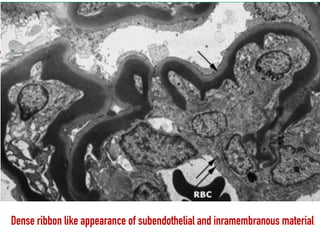
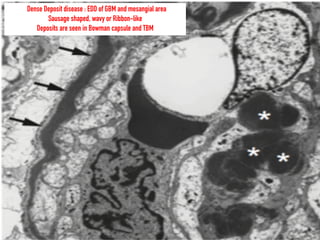
§ DDD shows typical osmiophilic , highly densed
electron deposition in glomerular basement
membrane (Ribbon like)
§ EDD can be seen in Mesangium , Bowman capsule
and tubular basement membranes.
Fundamental of Renal Pathology, Section II, Chapter 2
Dense ribbon like appearance of subendothelial and inramembranous material
Dense Deposit disease : EDD of GBM and mesangial area
Sausage shaped, wavy or Ribbon-like
Deposits are seen in Bowman capsule and TBM
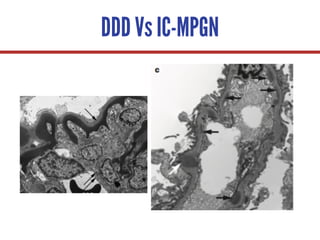
DDD Vs IC-MPGN
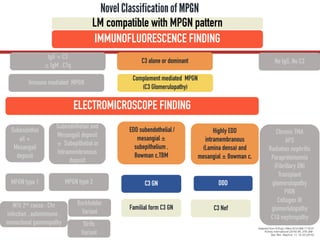
Novel Classificationof MPGN
IMMUNOFLUORESCENCE FINDING
IgG + C3
± IgM , C1q
C3 alone or dominant
Immune mediated MPGN
Complement mediated MPGN
(C3 Glomerulopathy)
ELECTROMICROSCOPE FINDING
Subendothel
ail +
Mesangail
deposit
Highly EDD
intramembranous
(Lamina densa) and
mesangial ± Bowman c,
MPGN type 1
Subendothelail and
Mesangail deposit
± Subepithelial or
Intramembranous
deposit
MPGN type 3 DDD
EDD subendothelial /
mesangial ±
subepithelium ,
Bowman c,TBM
C3 GN
Burkholder
Variant
Strife
Variant
W/U 2nd cause : Chr
infection , autoimmune ,
monoclonal gammopathy
Familial form C3 GN
Adapted from N Engl J Med 2012;366:1119-31
Kidney International (2016) 89, 278–288.
Nat. Rev. Nephrol. 11, 14–22 (2015)
LM compatible with MPGN pattern
No IgG, No C3
Chronic TMA
APS
Radiation nephritis
Paraproteinemia
(Fibrillary GN)
Transplant
glomerulopathy
PIGN
Collagen III
glomerlulopathy
C1Q nephropathy
C3 Nef
C3 glomerulonephritis
(glomerulonephritis with isolated C3
deposit)
C3 Glomerulonephritis
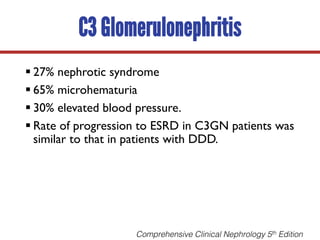
§ 27% nephrotic syndrome
§ 65% microhematuria
§ 30% elevated blood pressure.
§ Rate of progression to ESRD in C3GN patients was
similar to that in patients with DDD.
Comprehensive Clinical Nephrology 5th Edition
C3 Glomerulonephritis
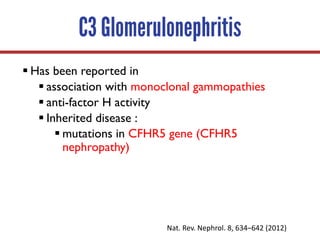
§ Has been reported in
§ association with monoclonal gammopathies
§ anti-factor H activity
§ Inherited disease :
§ mutations in CFHR5 gene (CFHR5
nephropathy)
Nat.	Rev.	Nephrol.	8,	634–642	(2012)
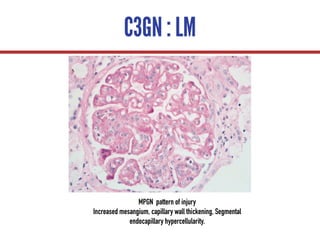
C3GN : LM
MPGN pattern of injury
Increased mesangium, capillary wall thickening, Segmental
endocapillary hypercellularity.
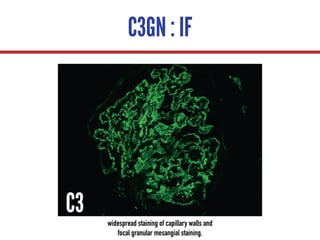
C3GN : IF
widespread staining of capillary walls and
focal granular mesangial staining.
C3
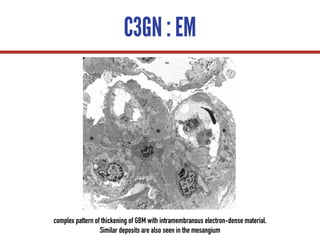
C3GN : EM
complex pattern of thickening of GBM with intramembranous electron-dense material.
Similar deposits are also seen in the mesangium
CFHR5 nephropathy
§ Familial form of C3GN, autosomal dominant
§ Described in Cypriot origin
§ Mutation in gene that encodes complement factor-H-
related protein 5 (CFHR5).
§ compete with factor H on surfaces such as the GBM
and
§ interfere factor H to inhibit alternative pathway
activation
Nat. Rev. Nephrol. 8, 634–642 (2012)
CFHR5 nephropathy
§ Clinical :
§ Hematuria (90%)
§ Proteinuria (38%)
§ often episodes of synpharyngitic haematuria
§ Men > Women to develop CKD (80 vs 21%) and
ESRD (78 vs 4 %)
Nat. Rev. Nephrol. 8, 634–642 (2012)
Novel Classificationof MPGN
IMMUNOFLUORESCENCE FINDING
IgG + C3
± IgM , C1q
C3 alone or dominant
Immune mediated MPGN
Complement mediated MPGN
(C3 Glomerulopathy)
ELECTROMICROSCOPE FINDING
Subendothel
ail +
Mesangail
deposit
Highly EDD
intramembranous
(Lamina densa) and
mesangial ± Bowman c,
MPGN type 1
Subendothelail and
Mesangail deposit
± Subepithelial or
Intramembranous
deposit
MPGN type 3 DDD
EDD subendothelial /
mesangial ±
subepithelium ,
Bowman c,TBM
C3 GN
Burkholder
Variant
Strife
Variant
W/U 2nd cause : Chr
infection , autoimmune ,
monoclonal gammopathy
Familial form C3 GN
Adapted from N Engl J Med 2012;366:1119-31
Kidney International (2016) 89, 278–288.
Nat. Rev. Nephrol. 11, 14–22 (2015)
LM compatible with MPGN pattern
No IgG, No C3
Chronic TMA
APS
Radiation nephritis
Paraproteinemia
(Fibrillary GN)
Transplant
glomerulopathy
PIGN
Collagen III
glomerlulopathy
C1Q nephropathy
C3 Nef
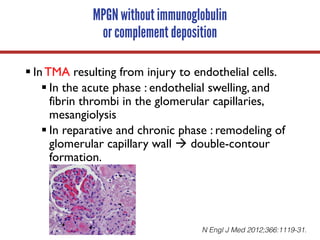
MPGN without immunoglobulin
or complement deposition
§ In TMA resulting from injury to endothelial cells.
§ In the acute phase : endothelial swelling, and
fibrin thrombi in the glomerular capillaries,
mesangiolysis
§ In reparative and chronic phase : remodeling of
glomerular capillary wall à double-contour
formation.
N Engl J Med 2012;366:1119-31.
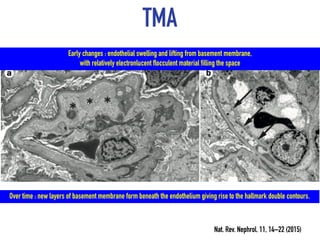
TMA
Nat. Rev. Nephrol. 11, 14–22 (2015)
Early changes : endothelial swelling and lifting from basement membrane,
with relatively electronlucent flocculent material filling the space
Over time : new layers of basement membrane form beneath the endothelium giving rise to the hallmark double contours.
Treatment of Primary MPGN
§ Idiopathic MPGN is now an uncommon condition.
§ The few RCTs of treatment of idiopathic MPGN in
children and adults have given inconsistent and
largely inconclusive results .
§ Many of the reported trials have weak experimental
design or are underpowered, and the evidence base
underlying the recommendations for treatment of
§ “idiopathic” MPGN is very weak.
N Engl J Med 2012;366:1119-31.
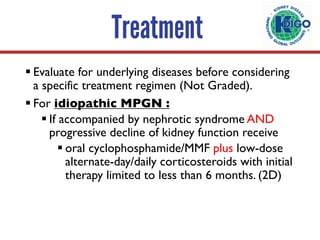
Treatment
§ Evaluate for underlying diseases before considering
a specific treatment regimen (Not Graded).
§ For idiopathic MPGN :
§ If accompanied by nephrotic syndrome AND
progressive decline of kidney function receive
§ oral cyclophosphamide/MMF plus low-dose
alternate-day/daily corticosteroids with initial
therapy limited to less than 6 months. (2D)
Treatment of Primary MPGN
§ Immunosuppressive agent
§ Prednisolone
§ Cytotoxic agent
§ Cyclophosphamide
§ Mycophenolate
§ Antiplatelet
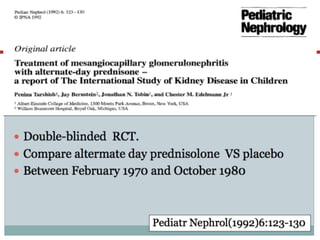
Corticosteroid
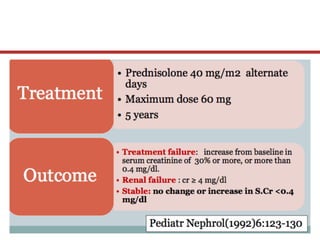
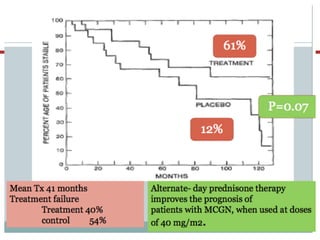
§ No systematic evaluation of glucocorticoid therapy
for idiopathic MPGN in adults.
§ Retrospective studies showed no clear benefit.
Cyclophosphamide
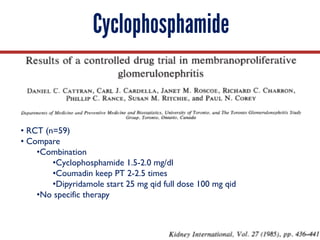
• RCT (n=59)
• Compare
•Combination
•Cyclophosphamide 1.5-2.0 mg/dl
•Coumadin keep PT 2-2.5 times
•Dipyridamole start 25 mg qid full dose 100 mg qid
•No specific therapy
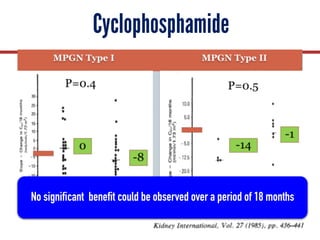
No significant benefit could be observed over a period of 18 months
Cyclophosphamide
MMF
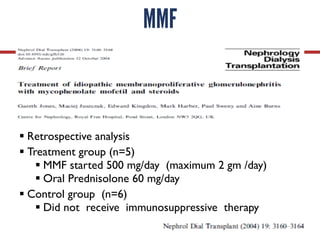
§ Retrospective analysis
§ Treatment group (n=5)
§ MMF started 500 mg/day (maximum 2 gm /day)
§ Oral Prednisolone 60 mg/day
§ Control group (n=6)
§ Did not receive immunosuppressive therapy
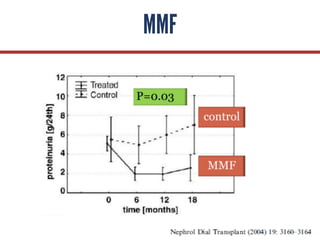
MMF
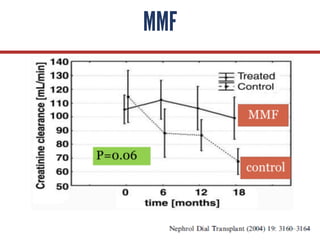
MMF
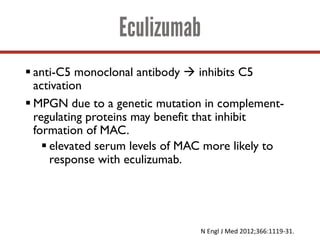
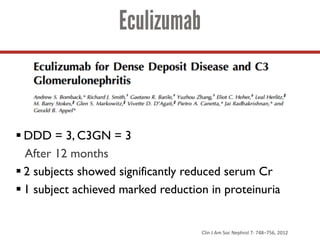
Eculizumab
§ anti-C5 monoclonal antibody à inhibits C5
activation
§ MPGN due to a genetic mutation in complement-
regulating proteins may benefit that inhibit
formation of MAC.
§ elevated serum levels of MAC more likely to
response with eculizumab.
N	Engl J	Med	2012;366:1119-31.
Eculizumab
§ DDD = 3, C3GN = 3
After 12 months
§ 2 subjects showed significantly reduced serum Cr
§ 1 subject achieved marked reduction in proteinuria
Clin J	Am	Soc	Nephrol 7:	748–756,	2012
Membranoproliferative Glomerulonephritis  MPGN chaken

Membranoproliferative Glomerulonephritis MPGN chaken

  • 1.
  • 2.
    MPGN § Pattern ofglomerular injury on renal biopsy § Thickening of GBM § Mesangial hypercellularity § Endocapillary proliferation § Double-contour along glomerular capillary walls § Lobulation glomerulonephritis
  • 3.
    MPGN : Epidemiology §2–10% of all cases of GN confirmed by renal biopsy. § Common age group 8-16 yr § 5th leading cause of ESRD among primary glomerular diseases § ‘idiopathic’ MPGN is more commonly seen in pediatric age than older adults. Nat. Rev. Nephrol. 11, 14–22 (2015)
  • 4.
    Outline §Complement activation system §Classificationof MPGN §Clinical presentation §Pathology §Treatment
  • 5.
    Complement pathway activation NatRev Immunol 2009 Amplification phase Effector phase
  • 6.
    Kidney International (2016)89, 278–288. Classical pathway Lectin pathway Alternative pathway
  • 7.
    Traditional Classification § Traditionallybeen classified into three subtypes by EM ultrastructure § MPGN type I § MPGN type II § MPGN type III
  • 8.
    Novel Classificationof MPGN IMMUNOFLUORESCENCEFINDING Adapted from N Engl J Med 2012;366:1119-31 Kidney International (2016) 89, 278–288. Nat. Rev. Nephrol. 11, 14–22 (2015) LM compatible with MPGN pattern
  • 9.
    Novel Classificationof MPGN IMMUNOFLUORESCENCEFINDING IgG + C3 ± IgM , C1q C3 alone or dominant Immune mediated MPGN Complement mediated MPGN (C3 Glomerulopathy) Adapted from N Engl J Med 2012;366:1119-31 Kidney International (2016) 89, 278–288. Nat. Rev. Nephrol. 11, 14–22 (2015) LM compatible with MPGN pattern No IgG, No C3
  • 10.
    Novel Classificationof MPGN IMMUNOFLUORESCENCEFINDING IgG + C3 ± IgM , C1q C3 alone or dominant Immune mediated MPGN Complement mediated MPGN (C3 Glomerulopathy) ELECTROMICROSCOPE FINDING Subendothel ail + Mesangail deposit MPGN type 1 Subendothelail and Mesangail deposit ± Subepithelial or Intramembranous deposit MPGN type 3 Adapted from N Engl J Med 2012;366:1119-31 Kidney International (2016) 89, 278–288. Nat. Rev. Nephrol. 11, 14–22 (2015) LM compatible with MPGN pattern No IgG, No C3
  • 11.
    Novel Classificationof MPGN IMMUNOFLUORESCENCEFINDING IgG + C3 ± IgM , C1q C3 alone or dominant Immune mediated MPGN Complement mediated MPGN (C3 Glomerulopathy) ELECTROMICROSCOPE FINDING Subendothel ail + Mesangail deposit MPGN type 1 Subendothelail and Mesangail deposit + Subepithelial or Intramembranous deposit MPGN type 3 Burkholder Variant Striff Variant W/U 2nd cause : Chr infection , autoimmune , monoclonal gammopathy Adapted from N Engl J Med 2012;366:1119-31 Kidney International (2016) 89, 278–288. Nat. Rev. Nephrol. 11, 14–22 (2015) LM compatible with MPGN pattern No IgG, No C3
  • 12.
    Novel Classificationof MPGN IMMUNOFLUORESCENCEFINDING IgG + C3 ± IgM , C1q C3 alone or dominant Immune mediated MPGN Complement mediated MPGN (C3 Glomerulopathy) ELECTROMICROSCOPE FINDING Subendothel ail + Mesangail deposit Highly EDD intramembranous (Lamina densa) and mesangial ± Bowman c, MPGN type 1 Subendothelail and Mesangail deposit ± Subepithelial or Intramembranous deposit MPGN type 3 DDD EDD subendothelial / mesangial ± subepithelium , Bowman c,TBM C3 GN Burkholder Variant Strife Variant W/U 2nd cause : Chr infection , autoimmune , monoclonal gammopathy Familial form C3 GN Adapted from N Engl J Med 2012;366:1119-31 Kidney International (2016) 89, 278–288. Nat. Rev. Nephrol. 11, 14–22 (2015) LM compatible with MPGN pattern No IgG, No C3 C3 Nef
  • 13.
    Novel Classificationof MPGN IMMUNOFLUORESCENCEFINDING IgG + C3 ± IgM , C1q C3 alone or dominant Immune mediated MPGN Complement mediated MPGN (C3 Glomerulopathy) ELECTROMICROSCOPE FINDING Subendothel ail + Mesangail deposit Highly EDD intramembranous (Lamina densa) and mesangial ± Bowman c, MPGN type 1 Subendothelail and Mesangail deposit ± Subepithelial or Intramembranous deposit MPGN type 3 DDD EDD subendothelial / mesangial ± subepithelium , Bowman c,TBM C3 GN Burkholder Variant Strife Variant W/U 2nd cause : Chr infection , autoimmune , monoclonal gammopathy Familial form C3 GN Adapted from N Engl J Med 2012;366:1119-31 Kidney International (2016) 89, 278–288. Nat. Rev. Nephrol. 11, 14–22 (2015) LM compatible with MPGN pattern No IgG, No C3 Chronic TMA APS Radiation nephritis Paraproteinemia (Fibrillary GN) Transplant glomerulopathy PIGN Collagen III glomerlulopathy C1Q nephropathy C3 Nef
  • 14.
    Secondary causes of immunemediated MPGN Infection Hepatitis C and B Visceral abscesses Infective endocarditis Shunt nephritis Malaria Leprosy Schistosoma Mycoplasma Malignancy Carcinoma Lymphoma Leukemia Hypergammaglonulinemia Rheumatologic SLE Sjögren’s syndrome Sarcoidosis Cryoglobulinemia with or w/o HCV
  • 16.
    Renal pathology inHCV infected patients – Report of 148 patients Port J Nephrol Hypert 2017; 31(2): 91-99
  • 17.
  • 18.
    Mixed cryoglobulinemia § Systemicvasculitis § Nonspecific systemic symptoms § Palpable purpura (vasculitis) § Arthralgia § Raynaud’s phenomenon § Lymphadenopathy § Hepatosplenomegaly § Peripheral neuropathy Brenner&Rector’s: The Kidney 10th Edition
  • 19.
    Mixed cryoglobulinemia § Acutenephritic syndrome § Hematuria § Nephritic range proteinuria § Renal insufficiency (50%) § Hypertension (80%) § Low C3, C4, and C1q with reductions in C4 > C3 level •Polyclonal IgG and monoclonal IgM kappa rheumatoid factor directed against the Fc portion of IgG •❖ Circulating anti-HCV antibodies •❖ Polyclonal IgG anti-HCV antibodies •within the cryoprecipitate •❖ HCV RNA in the plasma and the cryoprecipitate
  • 20.
    Cryoglobulinemic MPGN § Amorphouseosinophilic PAS- positive intraluminal thrombi (cryoglobulins) § Thickening of the GBM with double-contoured GBMs § Cellular proliferation, including massive exudation of monocytes
  • 21.
    Immunofluorescence microscopy § BothIgM as well as IgG with C3 and frequently C1q in the distribution of subendothelial and mesangial deposits and the intracapillary “thrombi
  • 22.
    Electron microscopy Short, fibrillarysubstruture or curvilinear tubular structures (20-35 nm) “Fingerprint pattern”
  • 23.
  • 24.
    Clinical presentation § Mostcommonly presents in childhood but can occur at any age. § Clinical presentation and course are extremely variable : § From benign and slowly to rapidly progressive. § Asymptomatic hematuria and proteinuria,AGN, nephrotic syndrome, CKD or RPGN. § Varied clinical presentation is caused by § Different pathogenesis § Timing of biopsy relative to clinical course. N Engl J Med 2012;366:1119-31.
  • 25.
    Clinical presentation § Inearly disease, kidney biopsy shows : § Proliferative lesion : nephritic phenotype § Crescentic lesion : RPGN § In advanced disease, kidney biopsy shows : § Both repair and sclerosis : nephrotic phenotype § Classic MPGN : both nephritonephrotic phenotype. N Engl J Med 2012;366:1119-31.
  • 26.
    Pathogenesis § Two primarymechanisms have been described : § Immune complex deposition (immune complex- mediated) § Activation of complement via classical pathway § Typically : mildly decreased serum C3 and low C4 § Dysregulation and persistent activation of alternative pathway (complement-mediated) § usually low C3 and normal C4 levels (80% of cases ) § normal serum C3 is not excluded complement- mediated MPGN N Engl J Med 2012;366:1119-31.
  • 27.
  • 28.
    N Engl JMed 2012;366:1119-31. Pathogenesis : immune mediated MPGN
  • 29.
    Pathology § Key characteristichistologic changes: § Thickened GBM : § deposition of IC and/or complement factors § interposition of mesangial cell and other cellular between GBM and the endothelial cell à new basement membrane formation. § Increased mesangial and endocapillary cellularity à often leading to lobular appearance of glomerular tuft. Fundamental of Renal Pathology, Section II, Chapter 2, Page 31,32
  • 30.
    Mesangial interposition Interposition of mesangialcytoplasm into peripheral capillary loop Fundamental of Renal Pathology, Section II, Chapter 2, Page 31,32
  • 31.
    MPGN type 1: LM pathology § Mesagial proliferation § Increased mesangial matrix § Endocapillary proliferation § Diffuse global capillary wall thickening § Mesangial interposition § Doubing or replication of GBM “Lobular glomerulonephritis”
  • 32.
    MPGN type 1: LM pathology § Mesangial interposition § Doubing or replication of GBM
  • 33.
    MPGN type 1: IF pathology § Segmental, coarsely granular-to-globular or elongated capillary wall IgG deposits § Less granular and less symmetrical than MN
  • 34.
    MPGN type 1: EM findings Mesangial interposition Subendothelial electrondense deposits Tram track sign
  • 35.
    MPGN type 1: EM findings
  • 36.
    § Very smallnumber of children and young adults § Clinical similar MPGN type I § low C3 levels and absence of C3 nephritic factor § EM: subendothelial and subepithelial EDD Brenner&Rector’s: The Kidney 10th Edition MPGN type III (Burkholder, And Strife And Anders Variants)
  • 37.
    Some Key Pathologyto differentiate Primary VS Secondary MPGN § IF : § HCV § IgM, IgG, C3, kappa and lambda § IgG may not be present § C1q is typically negative § Monoclonal gammopathy § monotypic kappa or lambda light-chain § Autoimmune diseases : "full house" pattern
  • 38.
    § Tubuloreticular structuresin endothelial cells lupus nephritis § Fingerprint pattern associated with cryoprecipitates is seen in mixed cryoglobulinemia Some Key Pathology to differentiate Primary VS Secondary MPGN
  • 39.
  • 40.
    Novel Classificationof MPGN IMMUNOFLUORESCENCEFINDING IgG + C3 ± IgM , C1q C3 alone or dominant Immune mediated MPGN Complement mediated MPGN (C3 Glomerulopathy) ELECTROMICROSCOPE FINDING Subendothel ail + Mesangail deposit Highly EDD intramembranous (Lamina densa) and mesangial ± Bowman c, MPGN type 1 Subendothelail and Mesangail deposit ± Subepithelial or Intramembranous deposit MPGN type 3 DDD EDD subendothelial / mesangial ± subepithelium , Bowman c,TBM C3 GN Burkholder Variant Strife Variant W/U 2nd cause : Chr infection , autoimmune , monoclonal gammopathy Familial form C3 GN Adapted from N Engl J Med 2012;366:1119-31 Kidney International (2016) 89, 278–288. Nat. Rev. Nephrol. 11, 14–22 (2015) LM compatible with MPGN pattern No IgG, No C3 Chronic TMA APS Radiation nephritis Paraproteinemia (Fibrillary GN) Transplant glomerulopathy PIGN Collagen III glomerlulopathy C1Q nephropathy C3 Nef
  • 41.
    § less commonthan IC-mediated MPGN § results from dysregulation of alternative complement pathway (AP) à persistent activation § C3 are usually low and C4 are normal N Engl J Med 2012;366:1119-31. Complement mediated MPGN
  • 42.
  • 43.
    Pathogenesis § Important dysregulationof AP : § C3 nephritic factors (C3Nefs) § absence of circulating factor H § presence of a circulating inhibitor of factor H § mutation in gene encoding C3 : Lysine 224, § Polymorphism :Tyr 402His allele variant (impaired factor H regulation of C3 convertase) Brenner&Rector’s: The Kidney 9th Edition
  • 44.
  • 45.
    Complement-mediated MPGN § Inmany patients, complement abnormalities does not develop MPGN, suggests that § genetic risk factors are not enough to trigger the disease § additional ‘hit(s)’ are required § Activate complement and overwhelm the regulatory mechanism resulting in high levels of complement factors then deposited in glomeruli. Nephrol Dial Transplant (2012) 27: 4288–4294
  • 46.
    Dense deposit disease §Clinical Features § 1/3 of patients : nephrotic syndrome § 1/4 of patients : nephritic syndrome § Mild HT § > 50% Renal dysfunction § more common in adults than in children § Onset is preceded by acute URI , with high ASO titers in 20-40%. § 80 - 90% low C3 levels § Depressed C4 levels “uncommon” § Syndrome of acquired partial lipodystrophy Brenner&Rector’s: The Kidney 10th Edition
  • 47.
    Acquired partial lipodystrophy -loss of fat from face, neck, upper limbs, trunk and anterior thighs. - accumulation of excess fat in hips and other regions of lower limbs
  • 48.
    Ocular drusen inDDD § Mild visual field § Color defects § Prolonged dark adaptation § mottled retinal pigmentation (drusen bodies) § Indocyanine green angiography dense deposits in ciliary basement membrane and choroidal neovascularization Brenner&Rector’s: The Kidney 10th Edition
  • 49.
    Dense deposit disease §Prognosis is worse than type I § Clinical remissions <5% § Worse in adults than in children § 50% turn to ESRD in 10 years from the onset Brenner&Rector’s: The Kidney 10th Edition
  • 50.
  • 51.
    Light microscopy § BothDDD and C3GN § Typical MPGN patern § ⬆ mesangial matrix and cell § GBM thickening with double contour § Glomerular lobulation § Some cases infiltration of macrophages or neutrophils. Similar to postinfectious GN § Crescent formation may be present
  • 52.
    § In aseries of 69 patients with DDD, the incidence of di erent histologic patterns was § membranoproliferative (25%) § mesangioproliferative (45%) § crescentic (18%) § acute proliferative and exudative (12%) Light microscopy N Engl J Med 2012;366:1119-31.
  • 53.
    DDD, LM finding DDD,capillary walls appear rigid, thickened, and with a more intensely PAS, also observed with trichrome (sometimes fuchsinophilic) (arrows). In some cases there is slight cellularity increase and in others it can be mesangial
  • 54.
    C3 § Negative stainingfor Ig § Capillary wall staining is linear or bilinear § bandlike staining for C3 § ring-shaped mesangial deposits that correspond to dense deposits in EM C3DDD: Immunofluorescence Fundamental of Renal Pathology, Section II, Chapter 2,
  • 55.
    DDD: Electronmicroscope § DDDshows typical osmiophilic , highly densed electron deposition in glomerular basement membrane (Ribbon like) § EDD can be seen in Mesangium , Bowman capsule and tubular basement membranes. Fundamental of Renal Pathology, Section II, Chapter 2
  • 56.
    Dense ribbon likeappearance of subendothelial and inramembranous material
  • 57.
    Dense Deposit disease: EDD of GBM and mesangial area Sausage shaped, wavy or Ribbon-like Deposits are seen in Bowman capsule and TBM
  • 58.
  • 59.
    Novel Classificationof MPGN IMMUNOFLUORESCENCEFINDING IgG + C3 ± IgM , C1q C3 alone or dominant Immune mediated MPGN Complement mediated MPGN (C3 Glomerulopathy) ELECTROMICROSCOPE FINDING Subendothel ail + Mesangail deposit Highly EDD intramembranous (Lamina densa) and mesangial ± Bowman c, MPGN type 1 Subendothelail and Mesangail deposit ± Subepithelial or Intramembranous deposit MPGN type 3 DDD EDD subendothelial / mesangial ± subepithelium , Bowman c,TBM C3 GN Burkholder Variant Strife Variant W/U 2nd cause : Chr infection , autoimmune , monoclonal gammopathy Familial form C3 GN Adapted from N Engl J Med 2012;366:1119-31 Kidney International (2016) 89, 278–288. Nat. Rev. Nephrol. 11, 14–22 (2015) LM compatible with MPGN pattern No IgG, No C3 Chronic TMA APS Radiation nephritis Paraproteinemia (Fibrillary GN) Transplant glomerulopathy PIGN Collagen III glomerlulopathy C1Q nephropathy C3 Nef
  • 60.
  • 61.
    C3 Glomerulonephritis § 27%nephrotic syndrome § 65% microhematuria § 30% elevated blood pressure. § Rate of progression to ESRD in C3GN patients was similar to that in patients with DDD. Comprehensive Clinical Nephrology 5th Edition
  • 62.
    C3 Glomerulonephritis § Hasbeen reported in § association with monoclonal gammopathies § anti-factor H activity § Inherited disease : § mutations in CFHR5 gene (CFHR5 nephropathy) Nat. Rev. Nephrol. 8, 634–642 (2012)
  • 63.
    C3GN : LM MPGNpattern of injury Increased mesangium, capillary wall thickening, Segmental endocapillary hypercellularity.
  • 64.
    C3GN : IF widespreadstaining of capillary walls and focal granular mesangial staining. C3
  • 65.
    C3GN : EM complexpattern of thickening of GBM with intramembranous electron-dense material. Similar deposits are also seen in the mesangium
  • 66.
    CFHR5 nephropathy § Familialform of C3GN, autosomal dominant § Described in Cypriot origin § Mutation in gene that encodes complement factor-H- related protein 5 (CFHR5). § compete with factor H on surfaces such as the GBM and § interfere factor H to inhibit alternative pathway activation Nat. Rev. Nephrol. 8, 634–642 (2012)
  • 67.
    CFHR5 nephropathy § Clinical: § Hematuria (90%) § Proteinuria (38%) § often episodes of synpharyngitic haematuria § Men > Women to develop CKD (80 vs 21%) and ESRD (78 vs 4 %) Nat. Rev. Nephrol. 8, 634–642 (2012)
  • 68.
    Novel Classificationof MPGN IMMUNOFLUORESCENCEFINDING IgG + C3 ± IgM , C1q C3 alone or dominant Immune mediated MPGN Complement mediated MPGN (C3 Glomerulopathy) ELECTROMICROSCOPE FINDING Subendothel ail + Mesangail deposit Highly EDD intramembranous (Lamina densa) and mesangial ± Bowman c, MPGN type 1 Subendothelail and Mesangail deposit ± Subepithelial or Intramembranous deposit MPGN type 3 DDD EDD subendothelial / mesangial ± subepithelium , Bowman c,TBM C3 GN Burkholder Variant Strife Variant W/U 2nd cause : Chr infection , autoimmune , monoclonal gammopathy Familial form C3 GN Adapted from N Engl J Med 2012;366:1119-31 Kidney International (2016) 89, 278–288. Nat. Rev. Nephrol. 11, 14–22 (2015) LM compatible with MPGN pattern No IgG, No C3 Chronic TMA APS Radiation nephritis Paraproteinemia (Fibrillary GN) Transplant glomerulopathy PIGN Collagen III glomerlulopathy C1Q nephropathy C3 Nef
  • 69.
    MPGN without immunoglobulin orcomplement deposition § In TMA resulting from injury to endothelial cells. § In the acute phase : endothelial swelling, and fibrin thrombi in the glomerular capillaries, mesangiolysis § In reparative and chronic phase : remodeling of glomerular capillary wall à double-contour formation. N Engl J Med 2012;366:1119-31.
  • 70.
    TMA Nat. Rev. Nephrol.11, 14–22 (2015) Early changes : endothelial swelling and lifting from basement membrane, with relatively electronlucent flocculent material filling the space Over time : new layers of basement membrane form beneath the endothelium giving rise to the hallmark double contours.
  • 71.
    Treatment of PrimaryMPGN § Idiopathic MPGN is now an uncommon condition. § The few RCTs of treatment of idiopathic MPGN in children and adults have given inconsistent and largely inconclusive results . § Many of the reported trials have weak experimental design or are underpowered, and the evidence base underlying the recommendations for treatment of § “idiopathic” MPGN is very weak. N Engl J Med 2012;366:1119-31.
  • 72.
    Treatment § Evaluate forunderlying diseases before considering a specific treatment regimen (Not Graded). § For idiopathic MPGN : § If accompanied by nephrotic syndrome AND progressive decline of kidney function receive § oral cyclophosphamide/MMF plus low-dose alternate-day/daily corticosteroids with initial therapy limited to less than 6 months. (2D)
  • 73.
    Treatment of PrimaryMPGN § Immunosuppressive agent § Prednisolone § Cytotoxic agent § Cyclophosphamide § Mycophenolate § Antiplatelet
  • 74.
    Corticosteroid § No systematicevaluation of glucocorticoid therapy for idiopathic MPGN in adults. § Retrospective studies showed no clear benefit.
  • 78.
    Cyclophosphamide • RCT (n=59) •Compare •Combination •Cyclophosphamide 1.5-2.0 mg/dl •Coumadin keep PT 2-2.5 times •Dipyridamole start 25 mg qid full dose 100 mg qid •No specific therapy
  • 79.
    No significant benefitcould be observed over a period of 18 months Cyclophosphamide
  • 80.
    MMF § Retrospective analysis §Treatment group (n=5) § MMF started 500 mg/day (maximum 2 gm /day) § Oral Prednisolone 60 mg/day § Control group (n=6) § Did not receive immunosuppressive therapy
  • 81.
  • 82.
  • 83.
    Eculizumab § anti-C5 monoclonalantibody à inhibits C5 activation § MPGN due to a genetic mutation in complement- regulating proteins may benefit that inhibit formation of MAC. § elevated serum levels of MAC more likely to response with eculizumab. N Engl J Med 2012;366:1119-31.
  • 84.
    Eculizumab § DDD =3, C3GN = 3 After 12 months § 2 subjects showed significantly reduced serum Cr § 1 subject achieved marked reduction in proteinuria Clin J Am Soc Nephrol 7: 748–756, 2012