Presented by:
BHARATESHA.S
9th semester
13th october,2015
Guided by:
Dr. Amruthavalli
“To develop a sufficient accurate model of
the system so that physical experiment may
not be necessary”
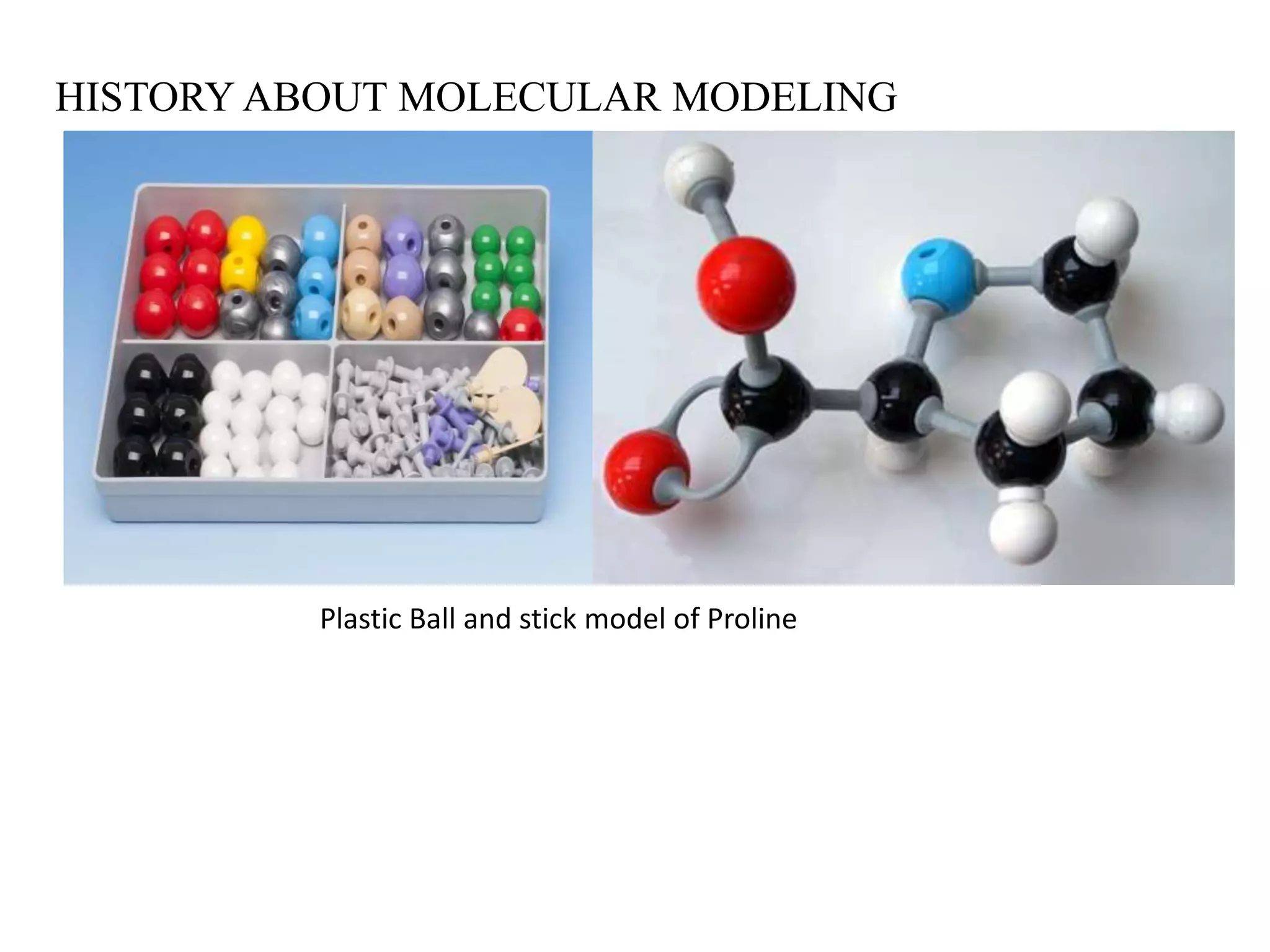
HISTORY ABOUT MOLECULAR MODELING
Plastic Ball and stick model of Proline
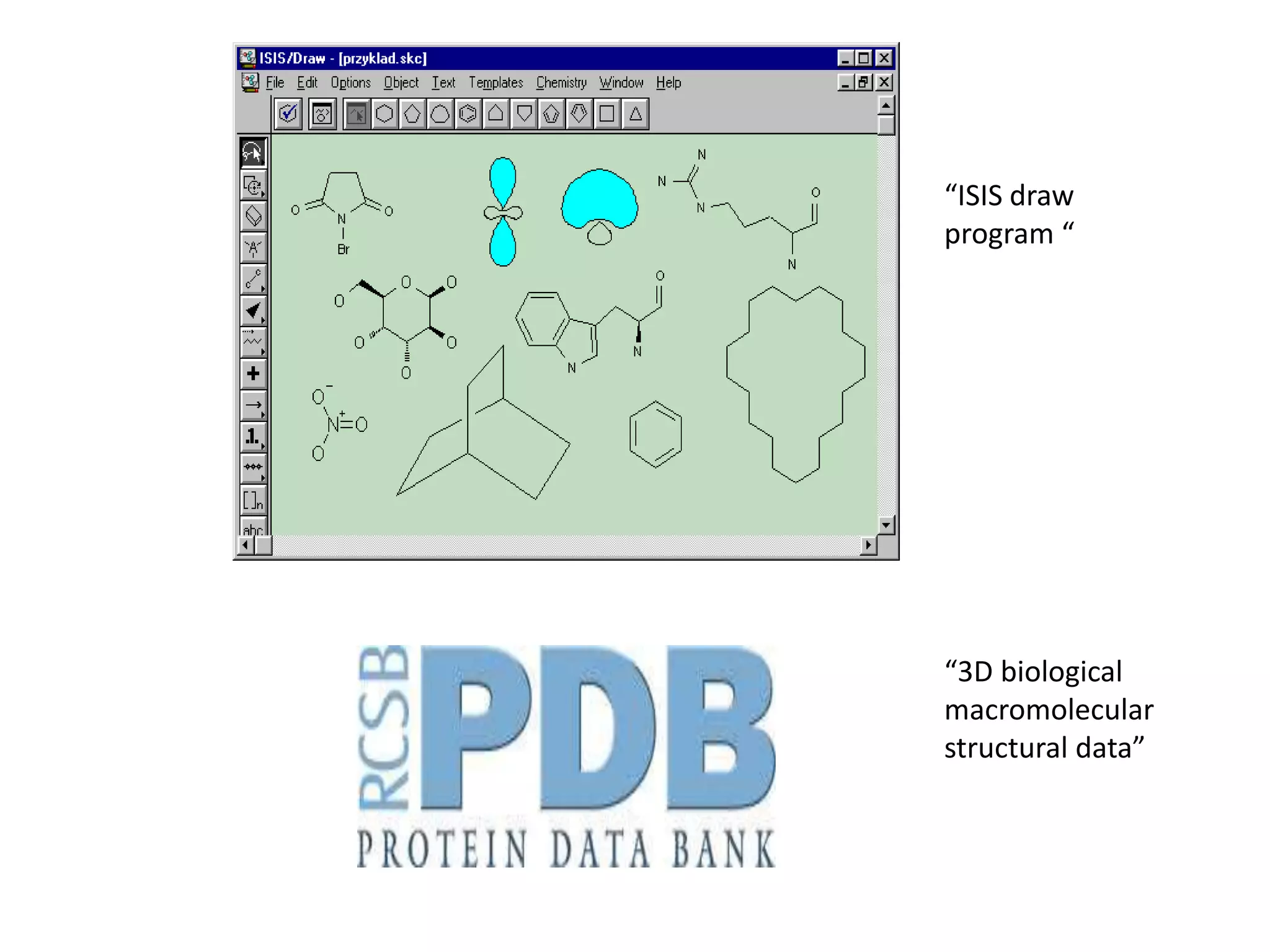
“ISIS draw
program “
“3D biological
macromolecular
structural data”
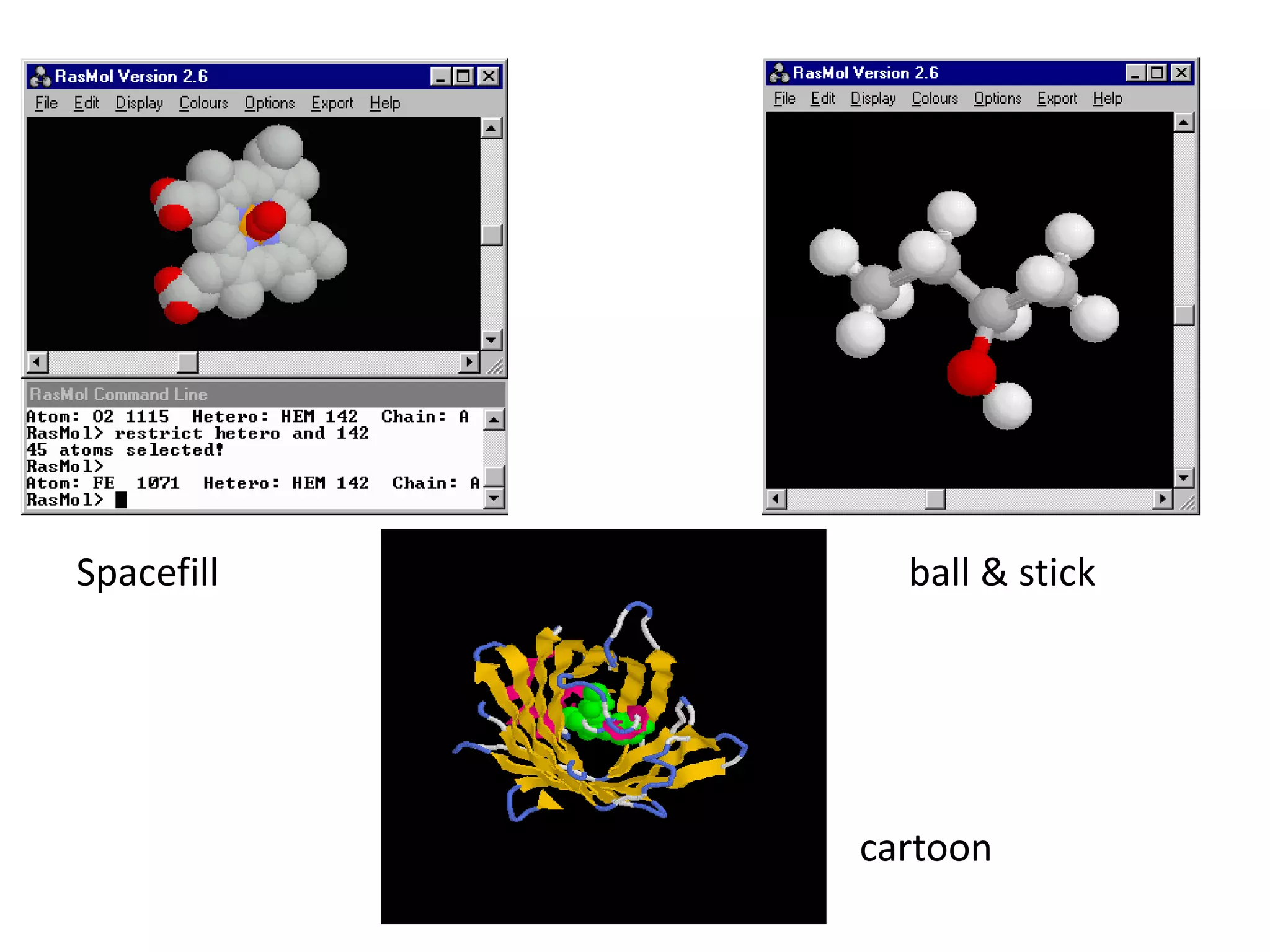
Spacefill ball & stick
cartoon
CONTENTS
• INTRODUCTION
• HISTORY ABOUT MOLECULAR MODELING
• TEMPLATE MODELING
-Homology modeling
-Threading
• TEMPLATE FREE MODELING(ab initio methods)
• CONCLUSION
• REFERENCES
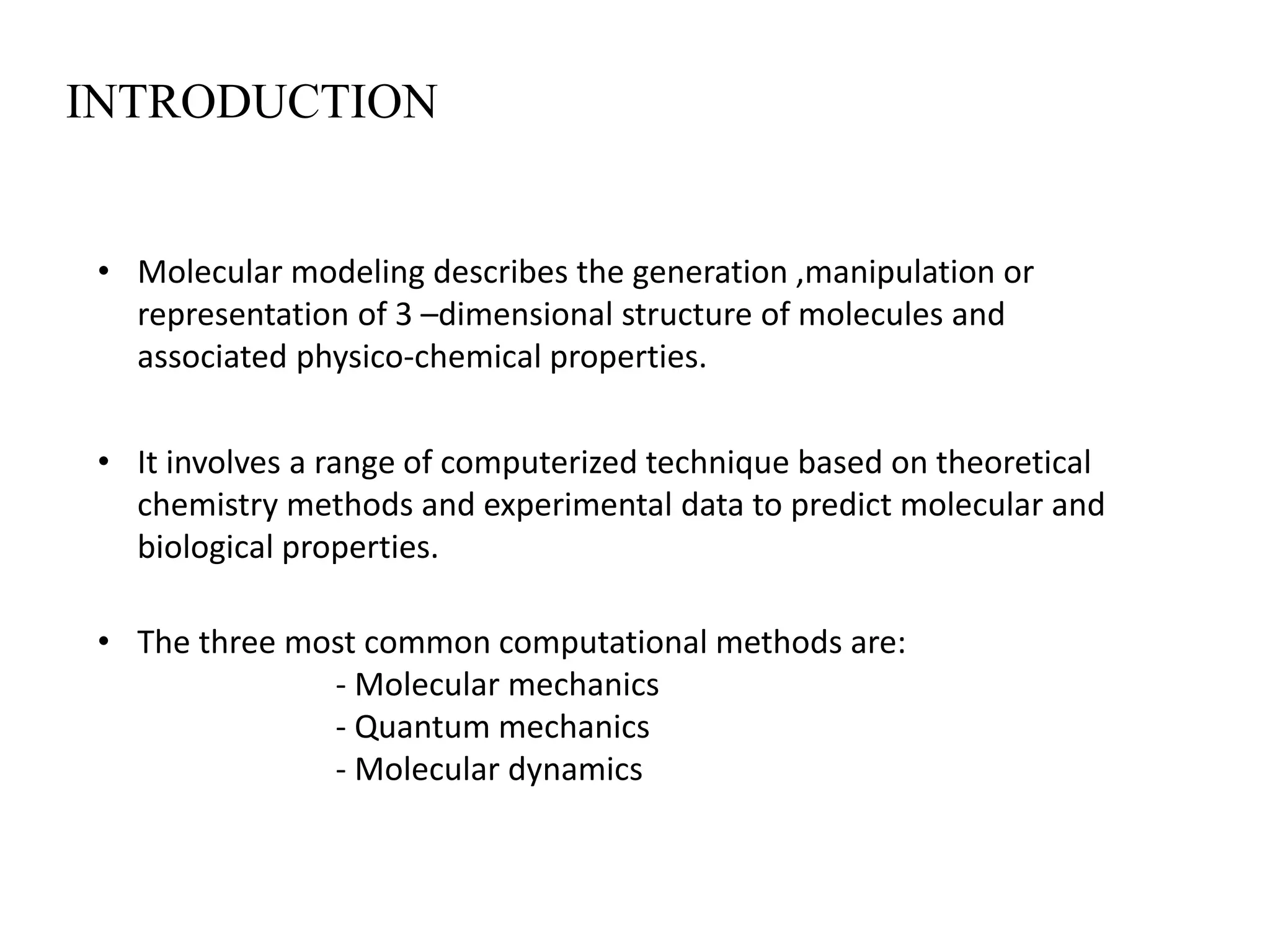
INTRODUCTION
• Molecular modeling describes the generation ,manipulation or
representation of 3 –dimensional structure of molecules and
associated physico-chemical properties.
• It involves a range of computerized technique based on theoretical
chemistry methods and experimental data to predict molecular and
biological properties.
• The three most common computational methods are:
- Molecular mechanics
- Quantum mechanics
- Molecular dynamics
Homology modeling
Protein Threading
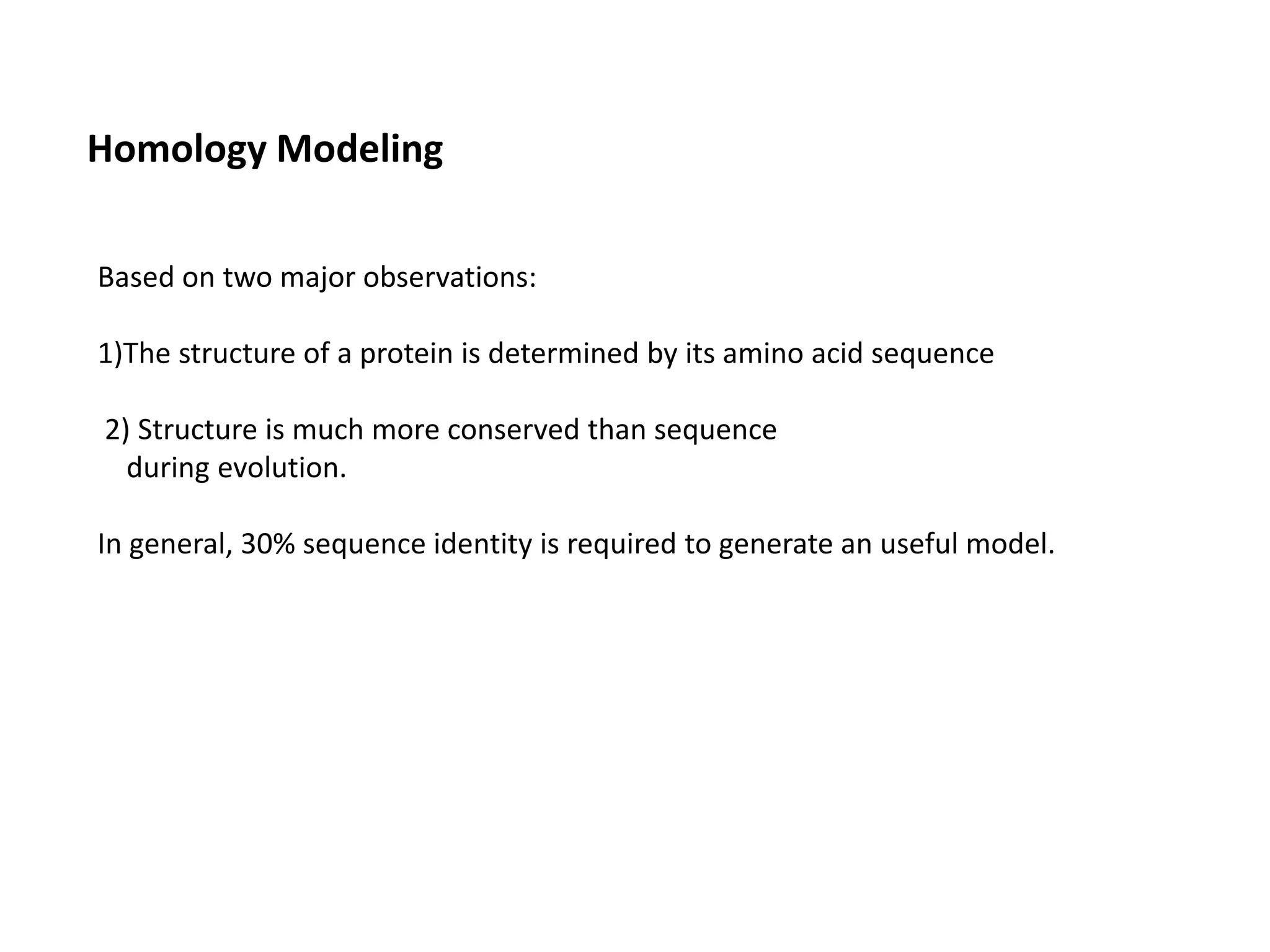
Homology Modeling
Based on two major observations:
1)The structure of a protein is determined by its amino acid sequence
2) Structure is much more conserved than sequence
during evolution.
In general, 30% sequence identity is required to generate an useful model.
Steps in Homology Modeling
Step 1: Template Recognition and Initial Alignment
In practice, one just feeds the query sequence to one of the countless BLAST
servers on the web, selects a search of the PDB, and obtains a list of hits—the
modeling templates and corresponding alignments
Step 2: Alignment Correction
Sometimes it may be difficult to align two sequences in a region where the
percentage sequence identity is very low.
One can then use other sequences from homologous proteins to find a solution.
Known structure FDICRLPGSAEAV
Model FNVCRMP---EAI
Model FNVCR---MPEAI
S
G
P
L
A
E
R
C
I V
C
R
M
P
E
V
C
R M
P
E
 Correct alignment
F-D-
-A-V
Step 3: Backbone Generation
• One simply copies the coordinates of those template residues that
show up in the alignment with the model sequence.
• If two aligned residues differ, only the backbone coordinates
(N,Cα,C and O) can be copied.
• If they are the same, one can also include the side chain.
Step 4: Loop Modeling
There are two main approaches to loop modeling:-
1). Knowledge based: one searches the PDB for known loops with
endpoints that match the residues between which the loop has to be
inserted and simply copies the loop conformation.
2). Energy based: as in true ab initio fold prediction, an energy function
is used to judge the quality of a loop
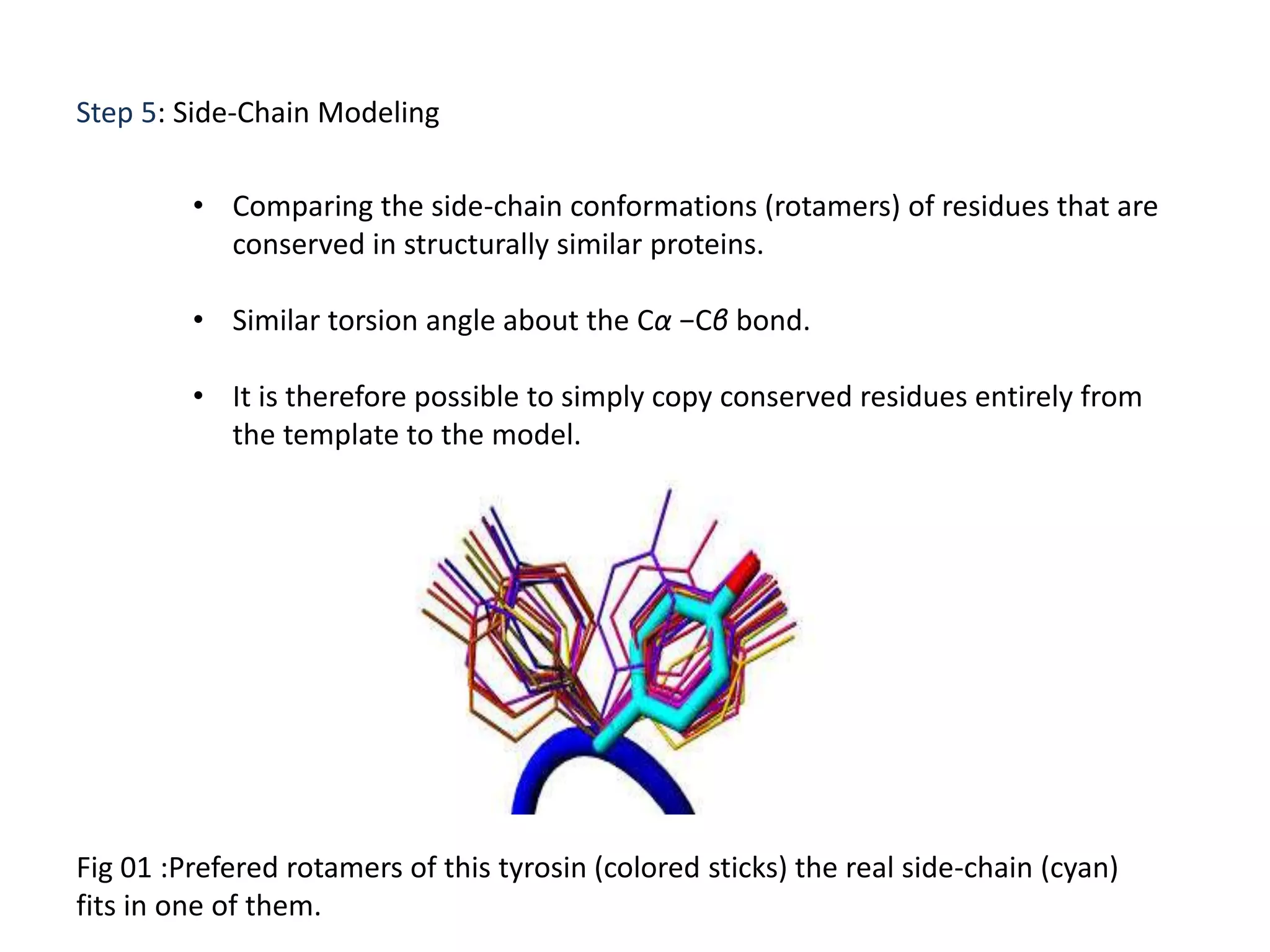
Step 5: Side-Chain Modeling
• Comparing the side-chain conformations (rotamers) of residues that are
conserved in structurally similar proteins.
• Similar torsion angle about the Cα −Cβ bond.
• It is therefore possible to simply copy conserved residues entirely from
the template to the model.
Fig 01 :Prefered rotamers of this tyrosin (colored sticks) the real side-chain (cyan)
fits in one of them.
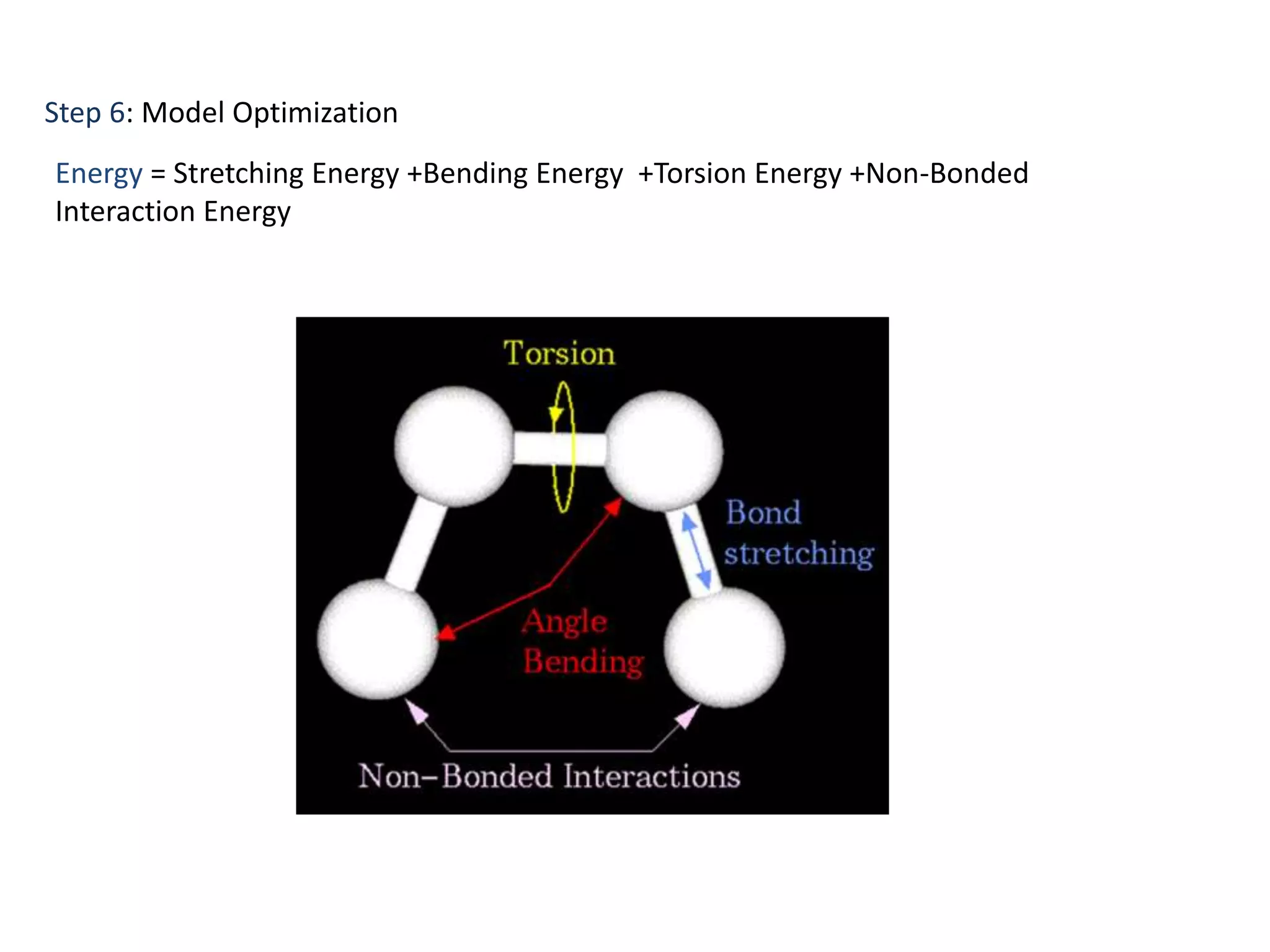
Step 6: Model Optimization
Energy = Stretching Energy +Bending Energy +Torsion Energy +Non-Bonded
Interaction Energy
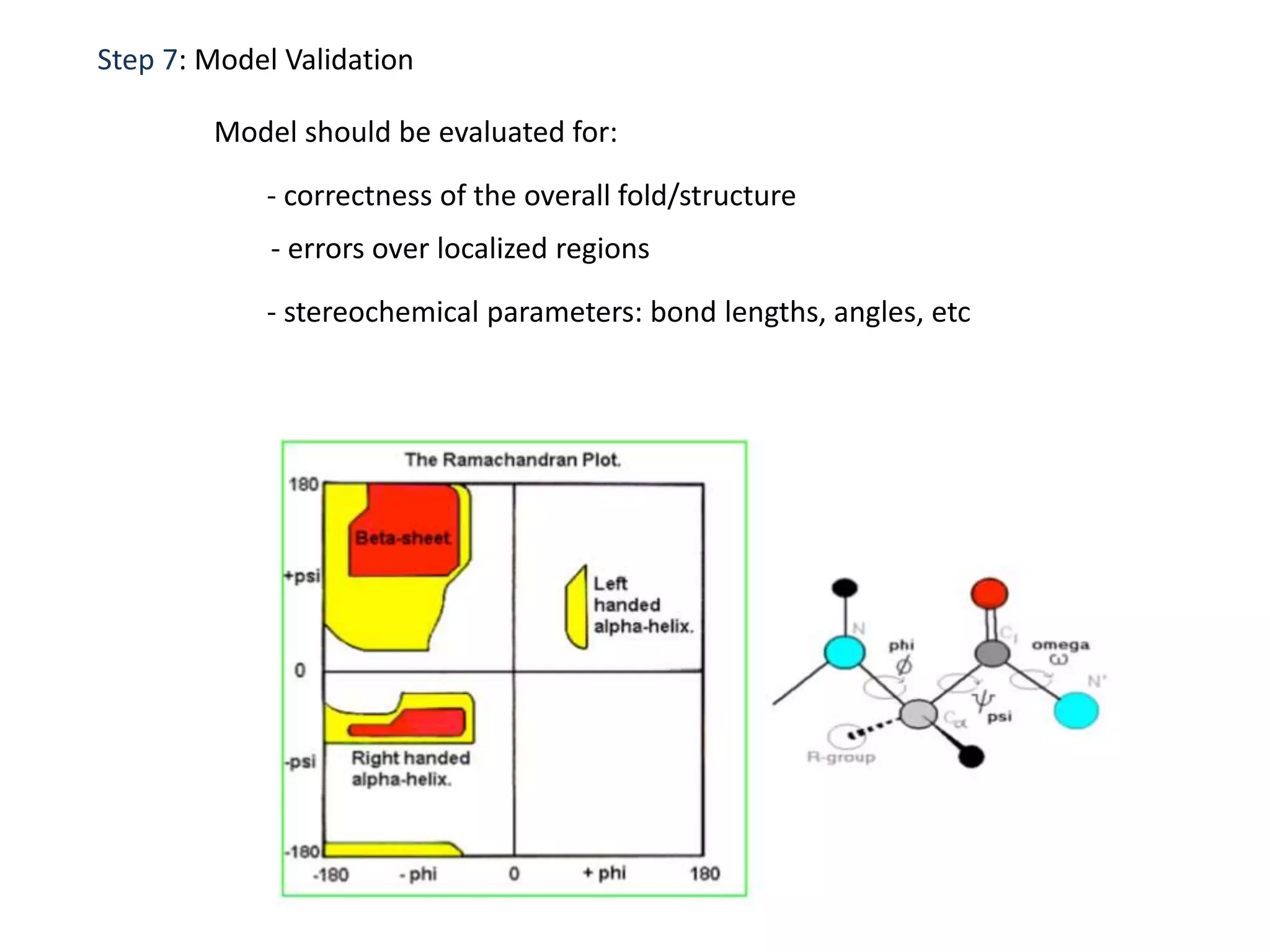
Step 7: Model Validation
Model should be evaluated for:
- correctness of the overall fold/structure
- errors over localized regions
- stereochemical parameters: bond lengths, angles, etc
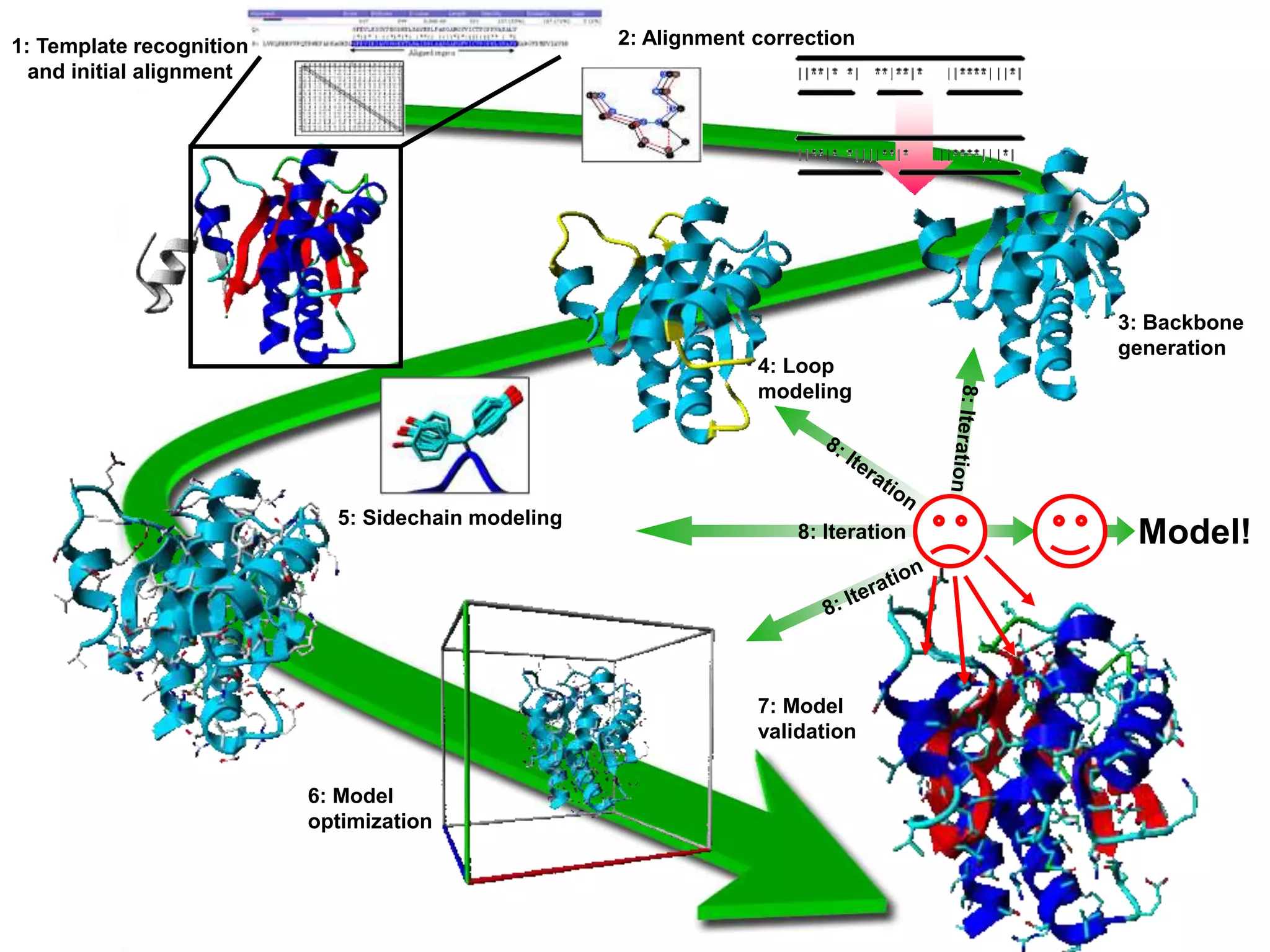
Model!
1: Template recognition
and initial alignment
2: Alignment correction
3: Backbone
generation
4: Loop
modeling
5: Sidechain modeling
6: Model
optimization
7: Model
validation
8: Iteration
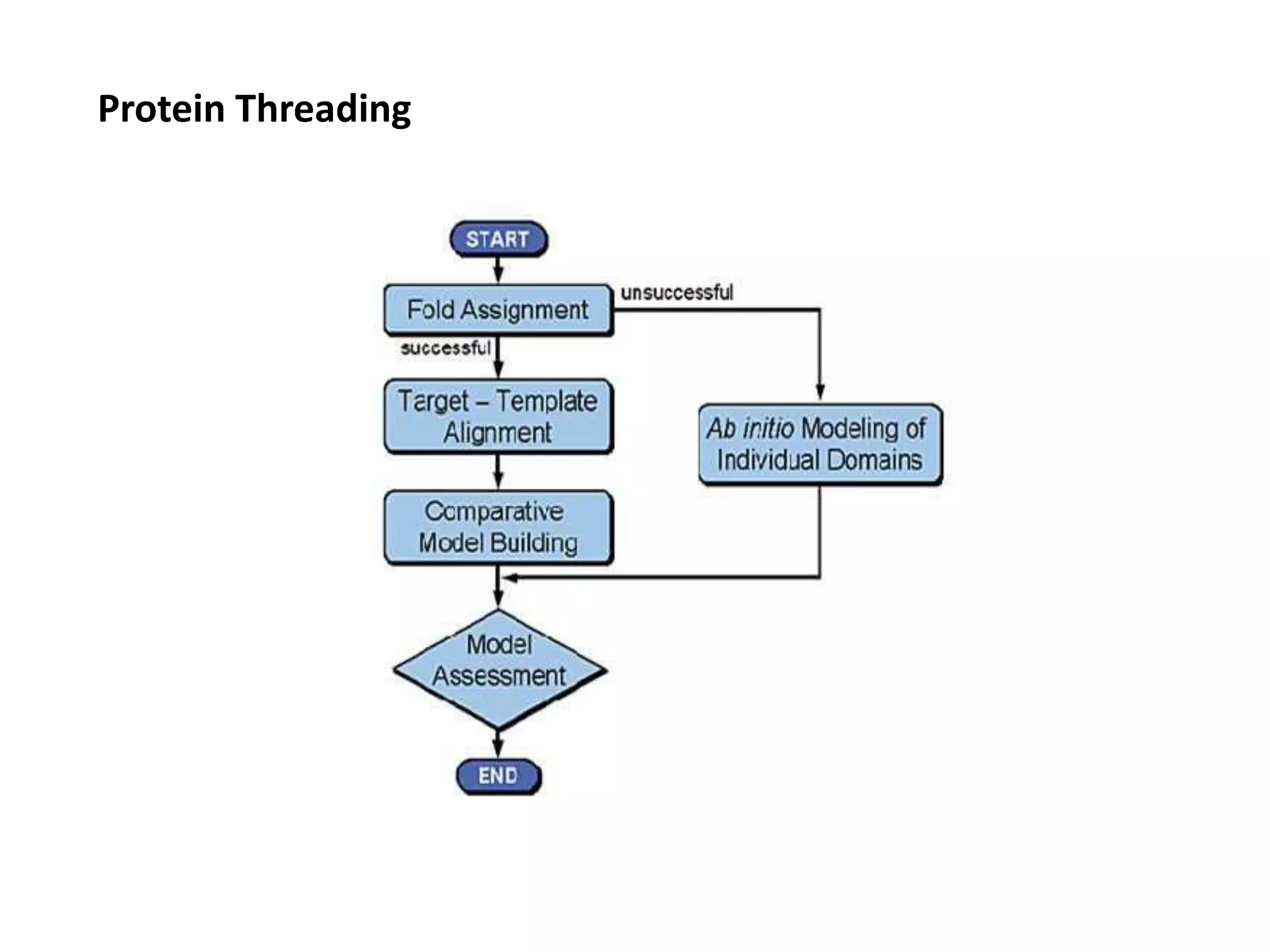
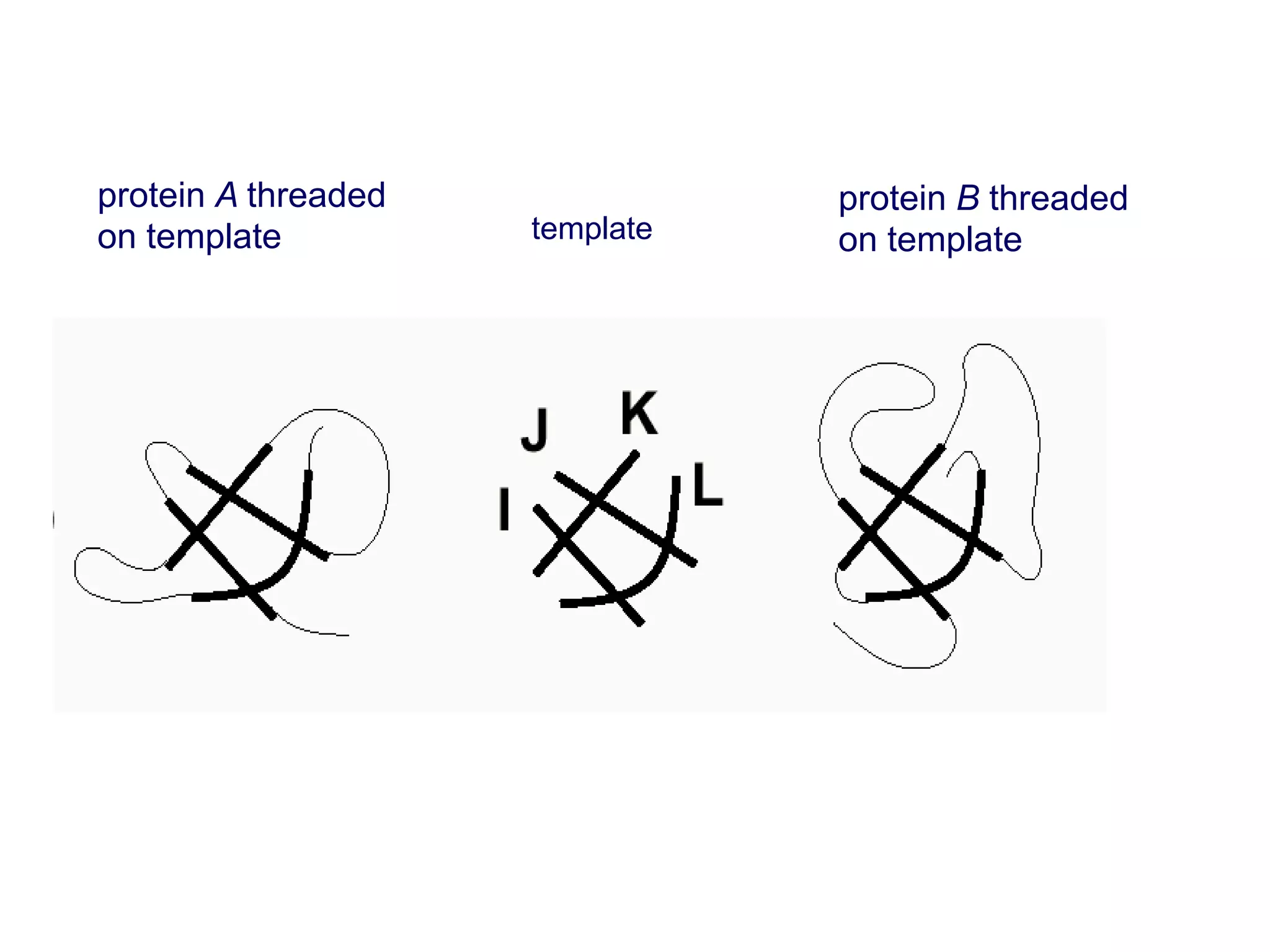
Protein Threading
protein A threaded
on template template
protein B threaded
on template
 Ab initio methods
• Physics Based
• Knowledge Based
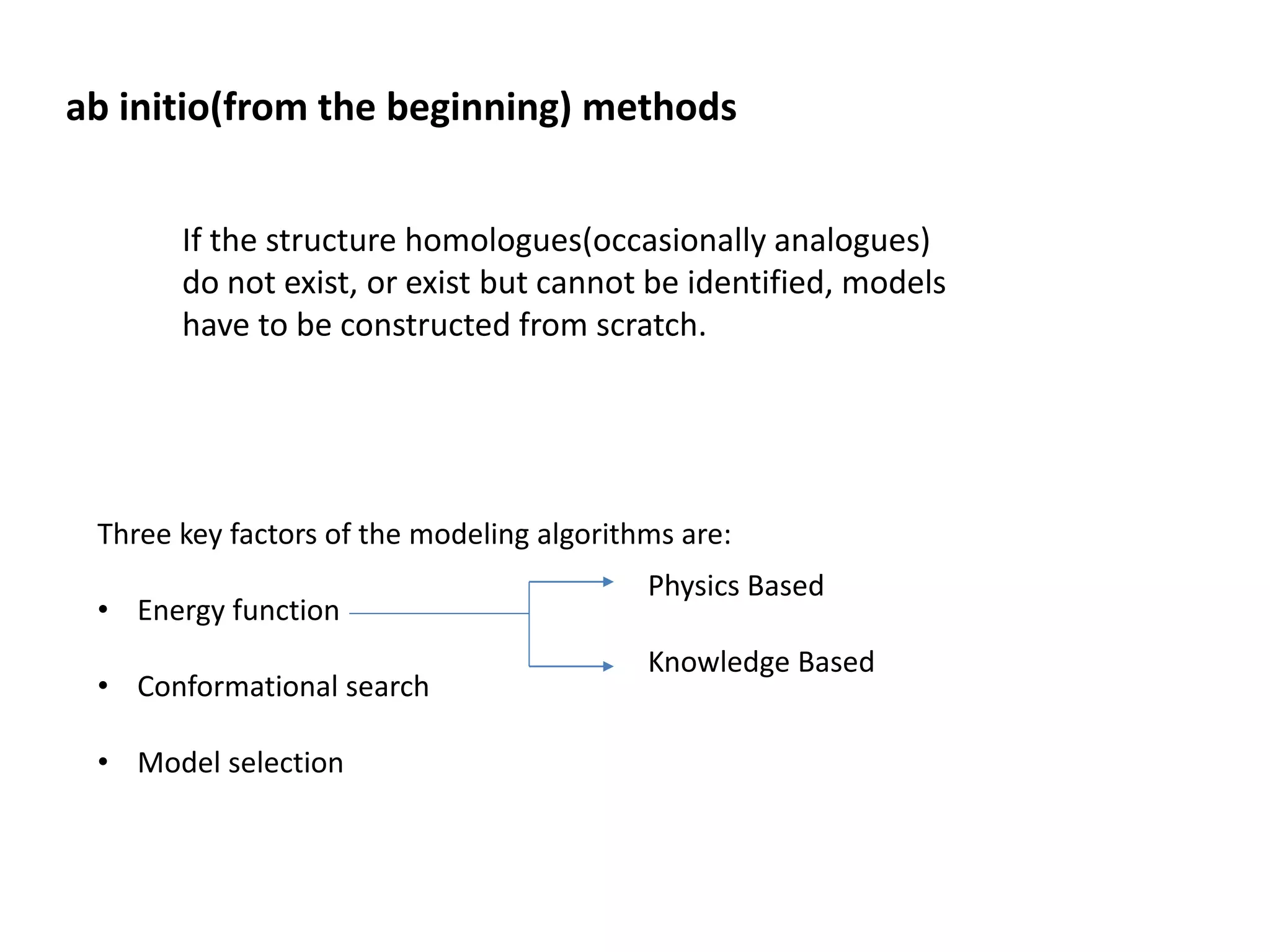
ab initio(from the beginning) methods
If the structure homologues(occasionally analogues)
do not exist, or exist but cannot be identified, models
have to be constructed from scratch.
Three key factors of the modeling algorithms are:
• Energy function
• Conformational search
• Model selection
Physics Based
Knowledge Based
QUANTUM MECHANICS
• It provides information about the nuclear position and distribution.
• It is based on study of arrangement and interaction of electrons and nuclei of a
molecular system.
• It is based on the wave properties of electrons and material particles.
Total energy= Potential energy + Kinetic energy
• To calculate the value of potential, electron affinities, heat of
formation, dipole moment.
• To find the electron density in a structure.
• To determine the point at which a structure will react with
electrophiles and nucleophiles.
Physics based energy function
MOLECULAR MECHANICS
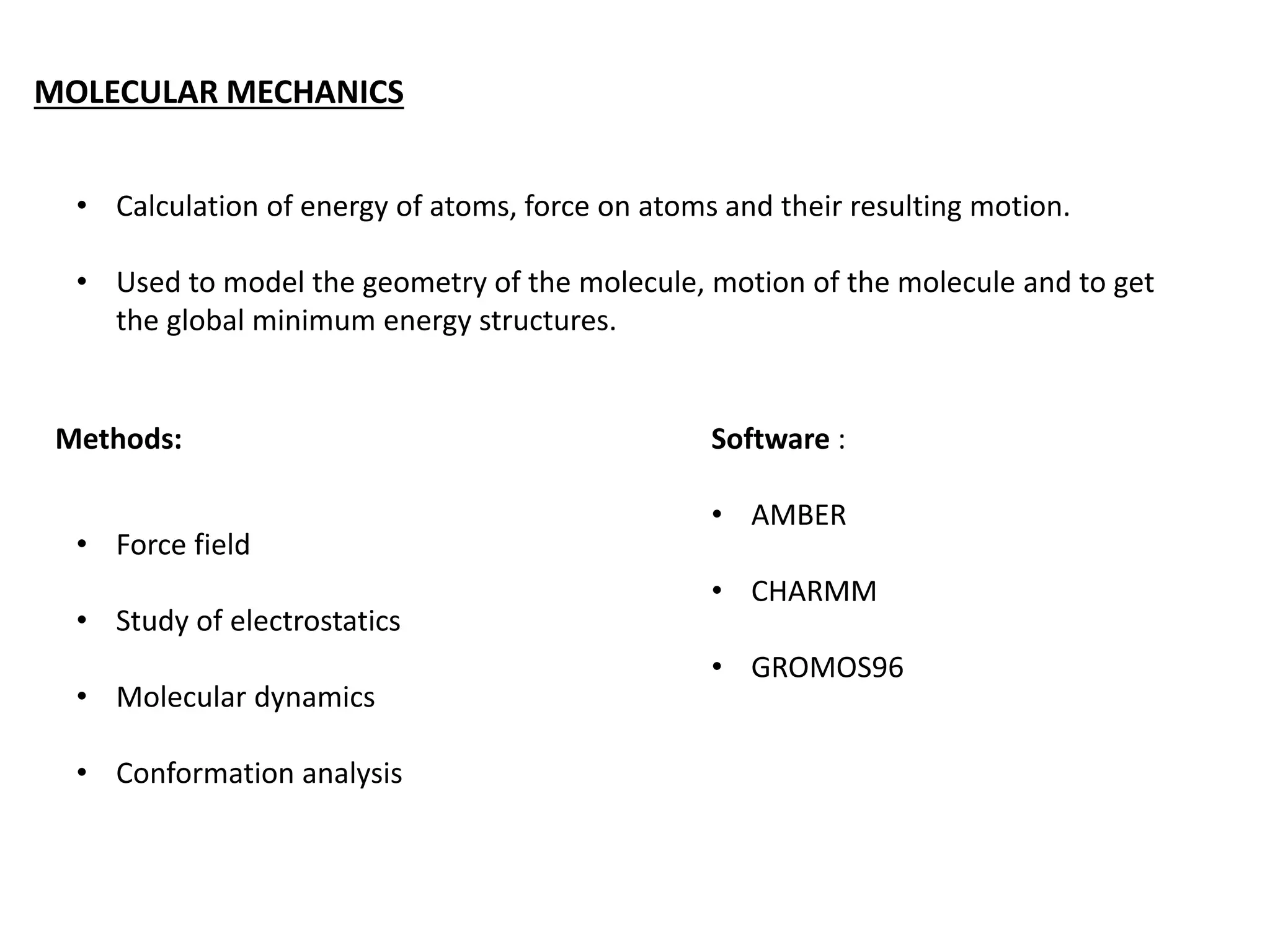
• Calculation of energy of atoms, force on atoms and their resulting motion.
• Used to model the geometry of the molecule, motion of the molecule and to get
the global minimum energy structures.
Methods:
• Force field
• Study of electrostatics
• Molecular dynamics
• Conformation analysis
Software :
• AMBER
• CHARMM
• GROMOS96
Knowledge based energy function
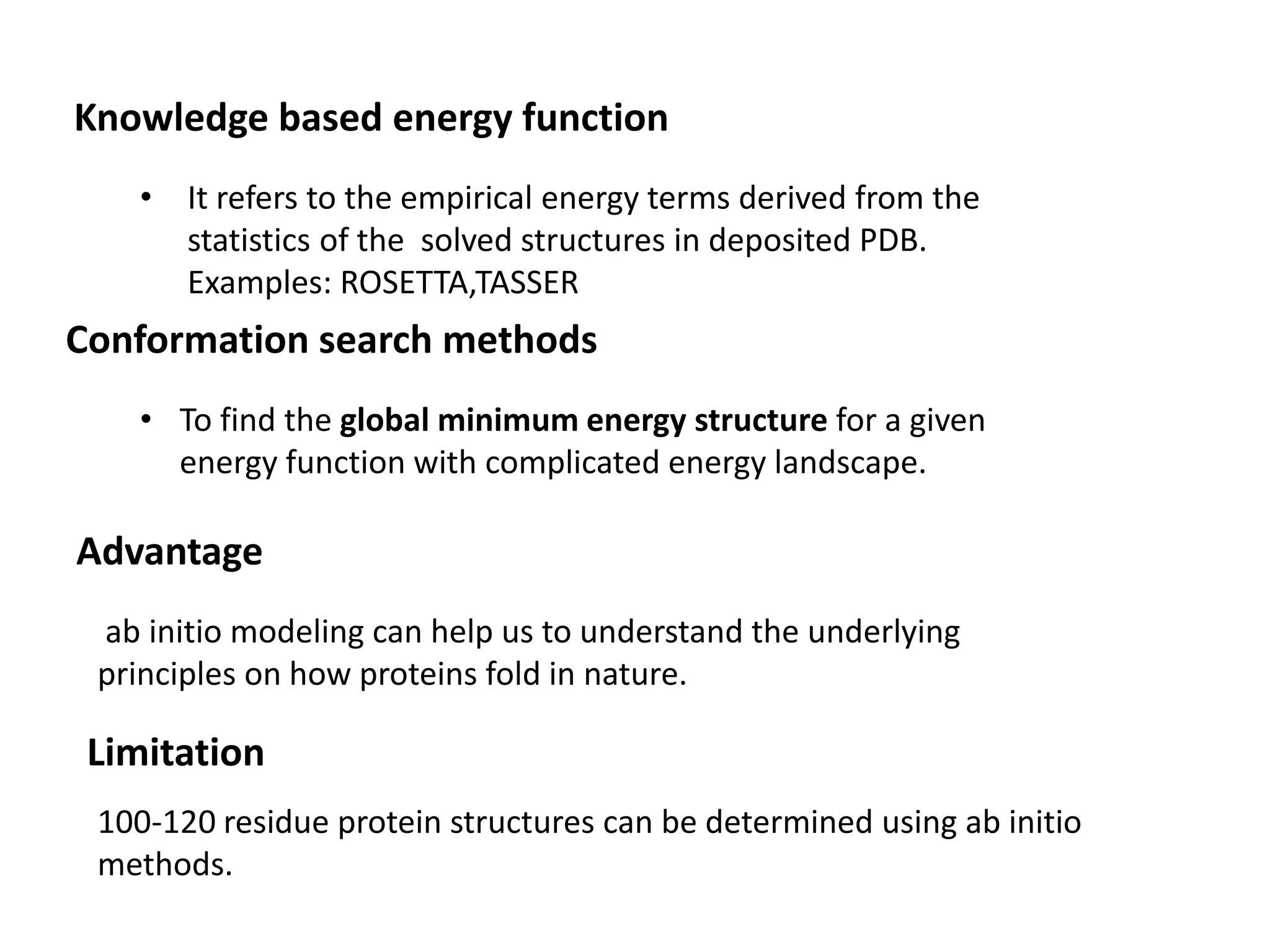
• It refers to the empirical energy terms derived from the
statistics of the solved structures in deposited PDB.
Examples: ROSETTA,TASSER
Conformation search methods
• To find the global minimum energy structure for a given
energy function with complicated energy landscape.
Advantage
ab initio modeling can help us to understand the underlying
principles on how proteins fold in nature.
Limitation
100-120 residue protein structures can be determined using ab initio
methods.
CONCLUSION
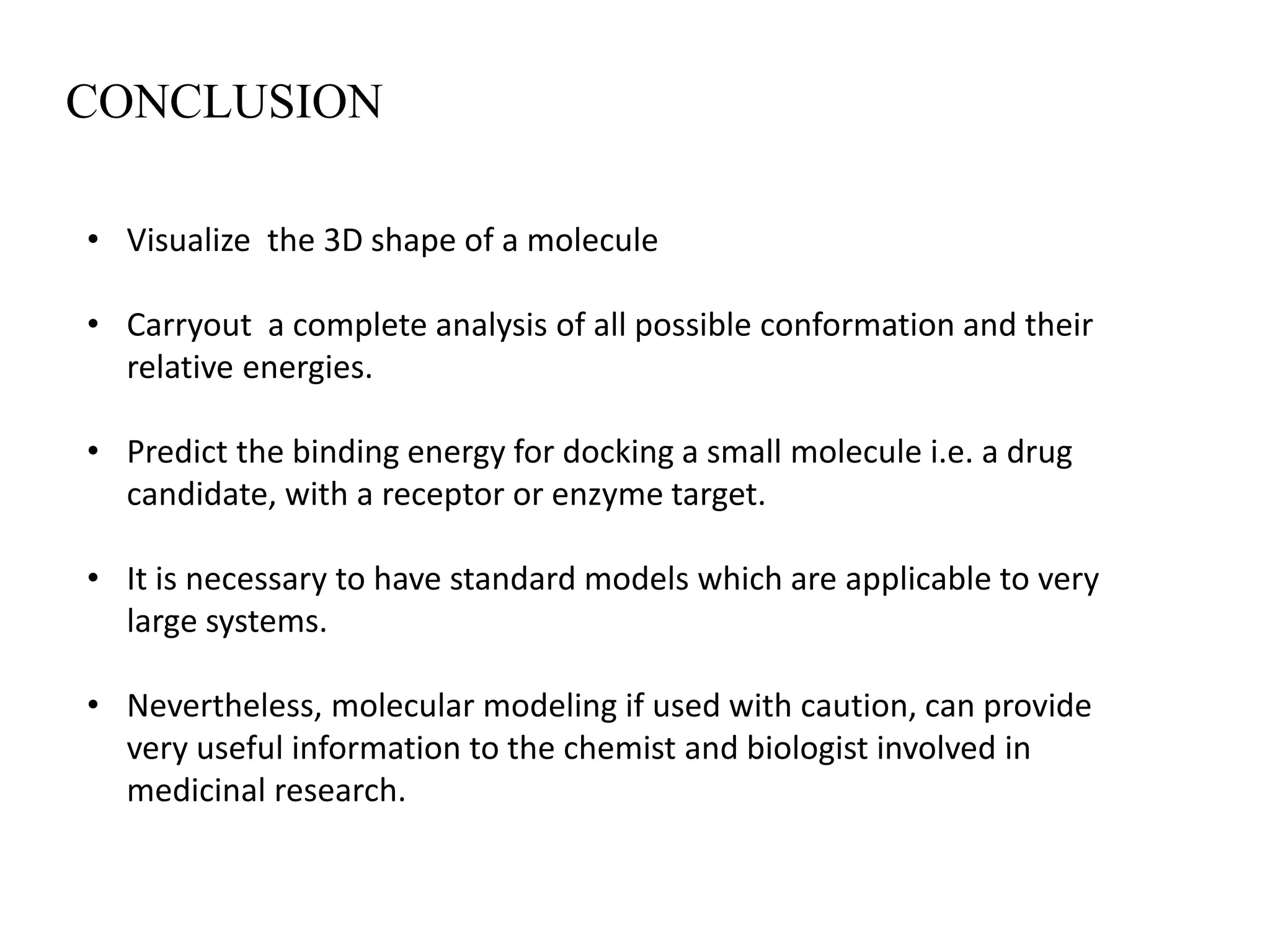
• Visualize the 3D shape of a molecule
• Carryout a complete analysis of all possible conformation and their
relative energies.
• Predict the binding energy for docking a small molecule i.e. a drug
candidate, with a receptor or enzyme target.
• It is necessary to have standard models which are applicable to very
large systems.
• Nevertheless, molecular modeling if used with caution, can provide
very useful information to the chemist and biologist involved in
medicinal research.
REFERENCES
• Alan Hinchliffe,(2003)
Molecular modeling for beginners,
John wiley &sons ltd,England-407pp.
• Ramachandran, Gopakumar Deepa,(2008)
Computational chemistry and molecular modeling,
Springer science and business media,398pp.
• Holtje.H.D. Folkers(1996)
Molecular modeling ,Basic principle and applications,
VCH publishers,Newyork-177pp.
Molecular modelling (1)

Molecular modelling (1)

  • 1.
    Presented by: BHARATESHA.S 9th semester 13thoctober,2015 Guided by: Dr. Amruthavalli “To develop a sufficient accurate model of the system so that physical experiment may not be necessary”
  • 2.
    HISTORY ABOUT MOLECULARMODELING Plastic Ball and stick model of Proline
  • 3.
    “ISIS draw program “ “3Dbiological macromolecular structural data”
  • 4.
    Spacefill ball &stick cartoon
  • 5.
    CONTENTS • INTRODUCTION • HISTORYABOUT MOLECULAR MODELING • TEMPLATE MODELING -Homology modeling -Threading • TEMPLATE FREE MODELING(ab initio methods) • CONCLUSION • REFERENCES
  • 6.
    INTRODUCTION • Molecular modelingdescribes the generation ,manipulation or representation of 3 –dimensional structure of molecules and associated physico-chemical properties. • It involves a range of computerized technique based on theoretical chemistry methods and experimental data to predict molecular and biological properties. • The three most common computational methods are: - Molecular mechanics - Quantum mechanics - Molecular dynamics
  • 7.
  • 8.
    Homology Modeling Based ontwo major observations: 1)The structure of a protein is determined by its amino acid sequence 2) Structure is much more conserved than sequence during evolution. In general, 30% sequence identity is required to generate an useful model.
  • 9.
    Steps in HomologyModeling Step 1: Template Recognition and Initial Alignment In practice, one just feeds the query sequence to one of the countless BLAST servers on the web, selects a search of the PDB, and obtains a list of hits—the modeling templates and corresponding alignments Step 2: Alignment Correction Sometimes it may be difficult to align two sequences in a region where the percentage sequence identity is very low. One can then use other sequences from homologous proteins to find a solution.
  • 10.
    Known structure FDICRLPGSAEAV ModelFNVCRMP---EAI Model FNVCR---MPEAI S G P L A E R C I V C R M P E V C R M P E  Correct alignment F-D- -A-V
  • 11.
    Step 3: BackboneGeneration • One simply copies the coordinates of those template residues that show up in the alignment with the model sequence. • If two aligned residues differ, only the backbone coordinates (N,Cα,C and O) can be copied. • If they are the same, one can also include the side chain. Step 4: Loop Modeling There are two main approaches to loop modeling:- 1). Knowledge based: one searches the PDB for known loops with endpoints that match the residues between which the loop has to be inserted and simply copies the loop conformation. 2). Energy based: as in true ab initio fold prediction, an energy function is used to judge the quality of a loop
  • 12.
    Step 5: Side-ChainModeling • Comparing the side-chain conformations (rotamers) of residues that are conserved in structurally similar proteins. • Similar torsion angle about the Cα −Cβ bond. • It is therefore possible to simply copy conserved residues entirely from the template to the model. Fig 01 :Prefered rotamers of this tyrosin (colored sticks) the real side-chain (cyan) fits in one of them.
  • 13.
    Step 6: ModelOptimization Energy = Stretching Energy +Bending Energy +Torsion Energy +Non-Bonded Interaction Energy
  • 14.
    Step 7: ModelValidation Model should be evaluated for: - correctness of the overall fold/structure - errors over localized regions - stereochemical parameters: bond lengths, angles, etc
  • 15.
    Model! 1: Template recognition andinitial alignment 2: Alignment correction 3: Backbone generation 4: Loop modeling 5: Sidechain modeling 6: Model optimization 7: Model validation 8: Iteration
  • 16.
  • 18.
    protein A threaded ontemplate template protein B threaded on template
  • 19.
     Ab initiomethods • Physics Based • Knowledge Based
  • 20.
    ab initio(from thebeginning) methods If the structure homologues(occasionally analogues) do not exist, or exist but cannot be identified, models have to be constructed from scratch. Three key factors of the modeling algorithms are: • Energy function • Conformational search • Model selection Physics Based Knowledge Based
  • 21.
    QUANTUM MECHANICS • Itprovides information about the nuclear position and distribution. • It is based on study of arrangement and interaction of electrons and nuclei of a molecular system. • It is based on the wave properties of electrons and material particles. Total energy= Potential energy + Kinetic energy • To calculate the value of potential, electron affinities, heat of formation, dipole moment. • To find the electron density in a structure. • To determine the point at which a structure will react with electrophiles and nucleophiles. Physics based energy function
  • 22.
    MOLECULAR MECHANICS • Calculationof energy of atoms, force on atoms and their resulting motion. • Used to model the geometry of the molecule, motion of the molecule and to get the global minimum energy structures. Methods: • Force field • Study of electrostatics • Molecular dynamics • Conformation analysis Software : • AMBER • CHARMM • GROMOS96
  • 23.
    Knowledge based energyfunction • It refers to the empirical energy terms derived from the statistics of the solved structures in deposited PDB. Examples: ROSETTA,TASSER Conformation search methods • To find the global minimum energy structure for a given energy function with complicated energy landscape. Advantage ab initio modeling can help us to understand the underlying principles on how proteins fold in nature. Limitation 100-120 residue protein structures can be determined using ab initio methods.
  • 24.
    CONCLUSION • Visualize the3D shape of a molecule • Carryout a complete analysis of all possible conformation and their relative energies. • Predict the binding energy for docking a small molecule i.e. a drug candidate, with a receptor or enzyme target. • It is necessary to have standard models which are applicable to very large systems. • Nevertheless, molecular modeling if used with caution, can provide very useful information to the chemist and biologist involved in medicinal research.
  • 25.
    REFERENCES • Alan Hinchliffe,(2003) Molecularmodeling for beginners, John wiley &sons ltd,England-407pp. • Ramachandran, Gopakumar Deepa,(2008) Computational chemistry and molecular modeling, Springer science and business media,398pp. • Holtje.H.D. Folkers(1996) Molecular modeling ,Basic principle and applications, VCH publishers,Newyork-177pp.