Lecture 4- Ligand based drugdesign
BTT- 516– Drug Designing and Development
 Introduction
 Pharmacophore Approach
 QSAR
 Types of QSAR
 Scaffold Hoping
 Psudo receptors
Topics to be covered today
In the absence of an experimentally determined 3D structure of the receptor, computational
methodologies based on an analysis of the physicochemical and pharmacological properties
of known ligands may be used for the design/discovery of new ligands. This computational
procedure is called “ligand-based drug design”.
The most important and powerful method in ligand-based drug design is “pharmacophore
modeling,” which is used to develop a pharmacophore model describing the interactions
between ligands and the target receptor from the ligand point of view
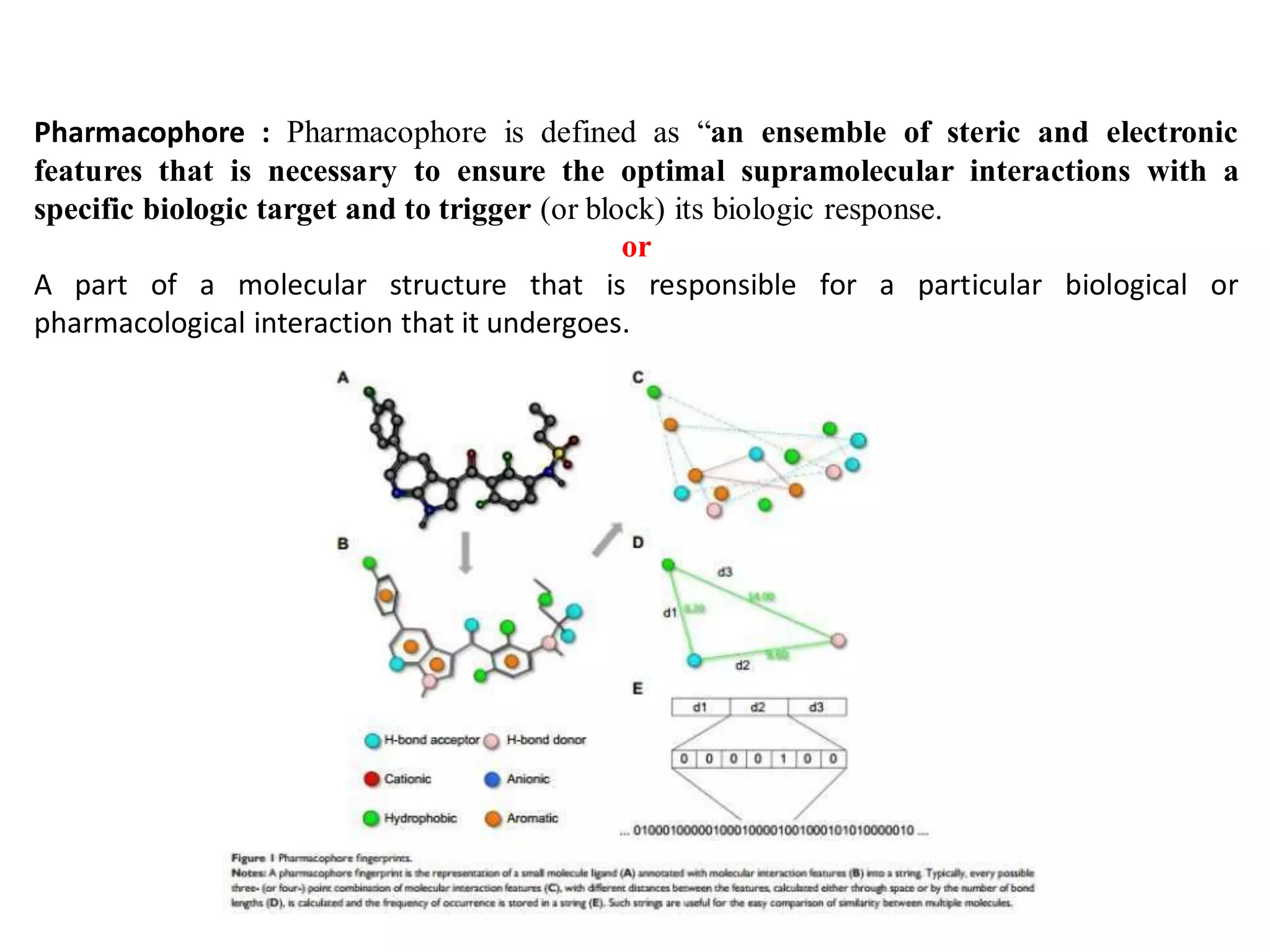
Pharmacophore : Pharmacophore is defined as “an ensemble of steric and electronic
features that is necessary to ensure the optimal supramolecular interactions with a
specific biologic target and to trigger (or block) its biologic response.
or
A part of a molecular structure that is responsible for a particular biological or
pharmacological interaction that it undergoes.
Ligand based drug design
Ligand-based drug design (or indirect drug design) relies on knowledge of other
molecules that bind to the biological target of interest.
These other molecules may be used to derive a pharmacophore model which
defines the minimum necessary structural characteristics a molecule must
possess in order to bind to the target.
In other words, a model of the biological target may be built based on the
knowledge of what binds to it and this model in turn may be used to design new
molecular entities that interact with the target.
Alternatively, a quantitative structure-activity relationship (QSAR) in which a
correlation between calculated properties of molecules and their experimentally
determined biological activity may be derived. These QSAR relationships in turn
may be used to predict the activity of new analogs.
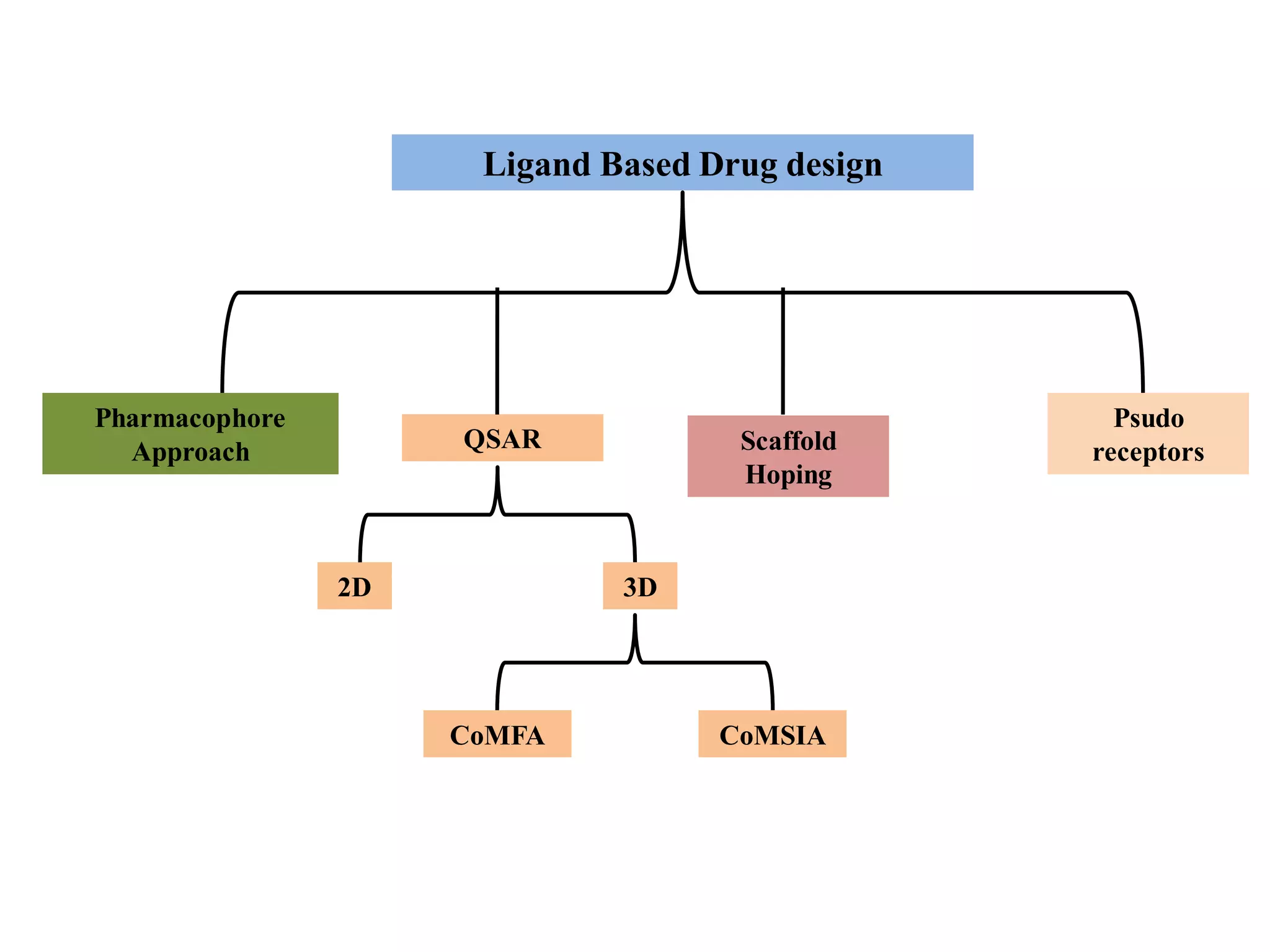
Ligand Based Drug design
Pharmacophore
Approach QSAR Scaffold
Hoping
Psudo
receptors
2D 3D
CoMFA CoMSIA
Pharmacophore : Pharmacophore is defined as “an ensemble of steric and electronic
features that is necessary to ensure the optimal supramolecular interactions with a
specific biologic target and to trigger (or block) its biologic response.
or
A part of a molecular structure that is responsible for a particular biological or
pharmacological interaction that it undergoes.
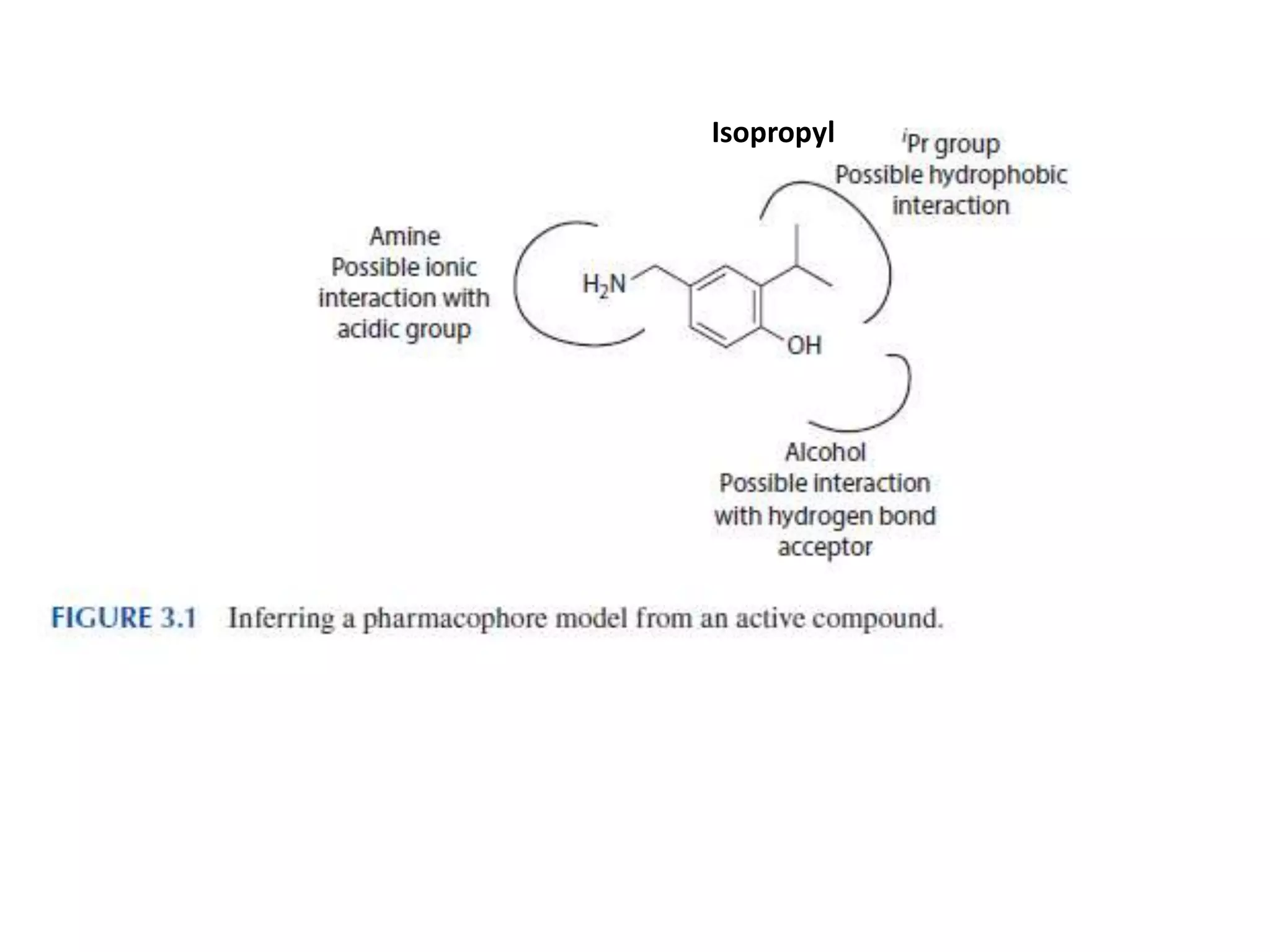
Isopropyl
Thank you
Er. Rajan Rolta
Faculty of Applied Sciences and Biotechnology
Shoolini University,
Village Bhajol, Solan (H.P)
+91-7018792621 (Mob No.)
rajanrolta@shooliniuniversity.com

Lecture 4 ligand based drug design

  • 1.
    Lecture 4- Ligandbased drugdesign BTT- 516– Drug Designing and Development
  • 2.
     Introduction  PharmacophoreApproach  QSAR  Types of QSAR  Scaffold Hoping  Psudo receptors Topics to be covered today
  • 3.
    In the absenceof an experimentally determined 3D structure of the receptor, computational methodologies based on an analysis of the physicochemical and pharmacological properties of known ligands may be used for the design/discovery of new ligands. This computational procedure is called “ligand-based drug design”. The most important and powerful method in ligand-based drug design is “pharmacophore modeling,” which is used to develop a pharmacophore model describing the interactions between ligands and the target receptor from the ligand point of view Pharmacophore : Pharmacophore is defined as “an ensemble of steric and electronic features that is necessary to ensure the optimal supramolecular interactions with a specific biologic target and to trigger (or block) its biologic response. or A part of a molecular structure that is responsible for a particular biological or pharmacological interaction that it undergoes. Ligand based drug design
  • 4.
    Ligand based drugdesign Ligand-based drug design (or indirect drug design) relies on knowledge of other molecules that bind to the biological target of interest. These other molecules may be used to derive a pharmacophore model which defines the minimum necessary structural characteristics a molecule must possess in order to bind to the target. In other words, a model of the biological target may be built based on the knowledge of what binds to it and this model in turn may be used to design new molecular entities that interact with the target. Alternatively, a quantitative structure-activity relationship (QSAR) in which a correlation between calculated properties of molecules and their experimentally determined biological activity may be derived. These QSAR relationships in turn may be used to predict the activity of new analogs.
  • 5.
    Ligand Based Drugdesign Pharmacophore Approach QSAR Scaffold Hoping Psudo receptors 2D 3D CoMFA CoMSIA
  • 6.
    Pharmacophore : Pharmacophoreis defined as “an ensemble of steric and electronic features that is necessary to ensure the optimal supramolecular interactions with a specific biologic target and to trigger (or block) its biologic response. or A part of a molecular structure that is responsible for a particular biological or pharmacological interaction that it undergoes.
  • 7.
  • 8.
    Thank you Er. RajanRolta Faculty of Applied Sciences and Biotechnology Shoolini University, Village Bhajol, Solan (H.P) +91-7018792621 (Mob No.) rajanrolta@shooliniuniversity.com