MODULE 6
LEARNERS WITH
EXCEPTIONALITIES
--------------------------------------------------------------------------------------------------------------------------------
Objectives
Describe the basic categories of exceptional
learners
Define and distinguish the terms disability
and handicap
Demonstrate “people first” language when
referring to exceptional learners and
advocate for its use
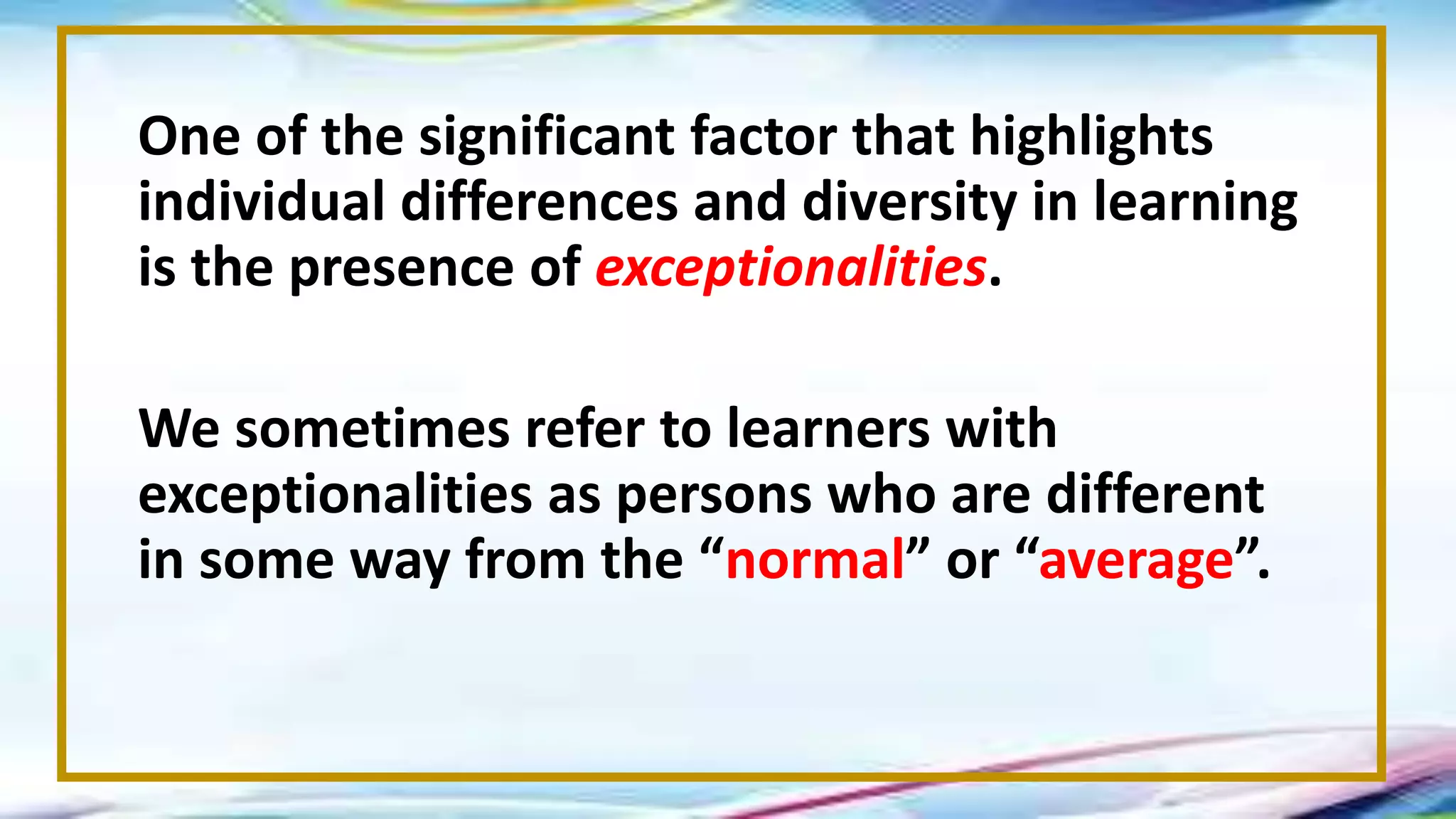
One of the significant factor that highlights
individual differences and diversity in learning
is the presence of exceptionalities.
We sometimes refer to learners with
exceptionalities as persons who are different
in some way from the “normal” or “average”.
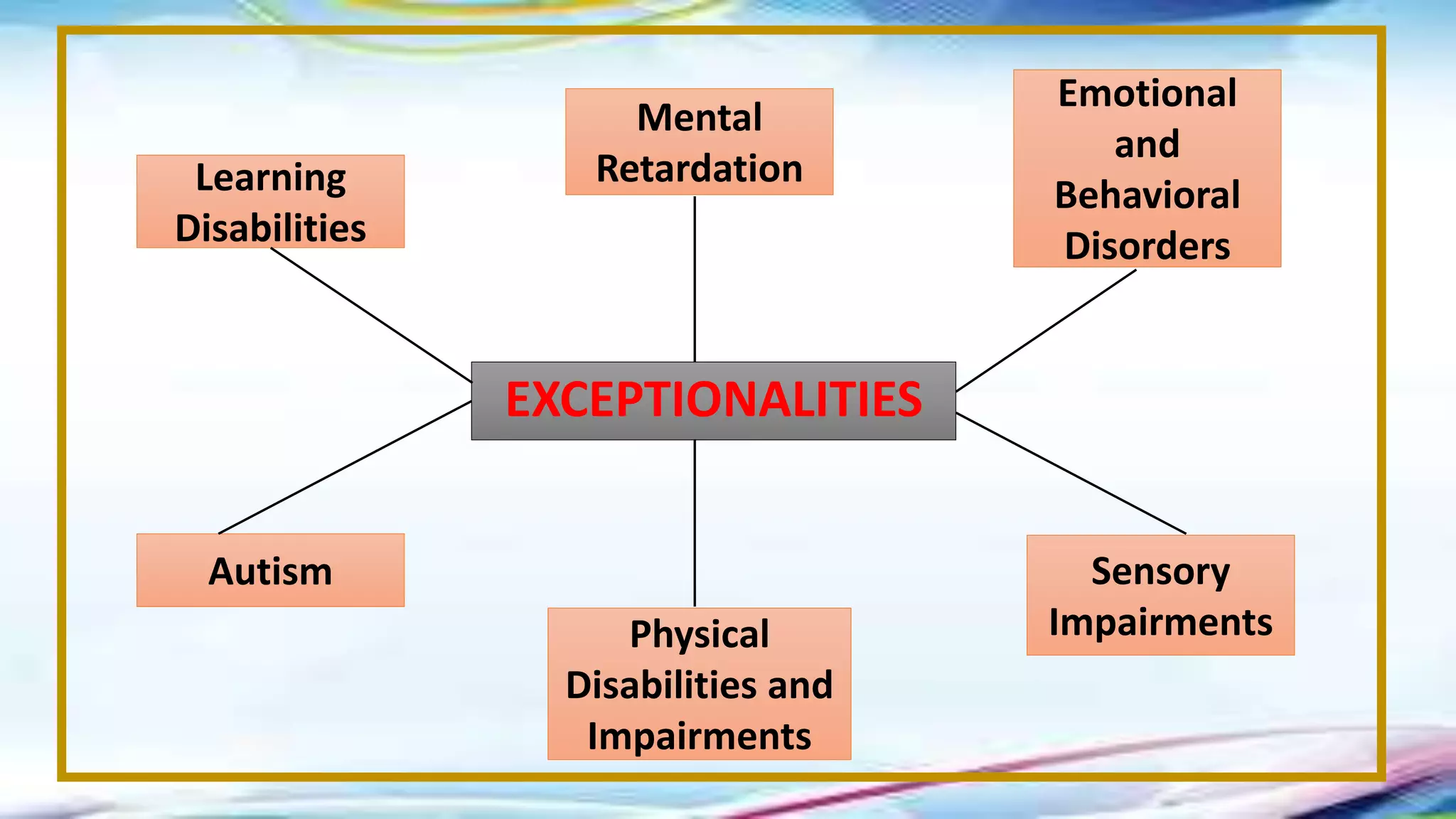
EXCEPTIONALITIES
Learning
Disabilities
Emotional
and
Behavioral
Disorders
Autism
Physical
Disabilities and
Impairments
Sensory
Impairments
Mental
Retardation
We probably encounter learners
with special needs. Therefore, it is
necessary that we have both the
right information and proper
attitude in dealing with special
learners.
Disability
It is an impairment or limitation that
“interferes” with person’s with disability, for
example, to walk, lift, hear, or learn. It may
refer to a physical, sensory, or mental
condition” (Schiefelbush Institute, 1996).
Handicap
 The word handicap does not have the same
meaning as disability. It is a disadvantage
that occurs as a result of disability or
impairment.
1. Specific Cognitive or Academic Difficulties
1.1. Learning Disabilities
1.2. Attention Deficit Hyperactivity Disorder (ADHD)
1.3. Speech and Communication Disorders
2. Social/Emotional and behavioral Difficulties
2.1. Autism
2.2. Mental Retardation
2.3. Emotional/Conduct Disorders
Categories of Exceptionalities
Physical Disabilities and Health Impairments
1.Physical and Health Impairments
● limited energy and strength
● reduced mental alertness
● little muscle control
2. Severe and Multiple Disabilities
Sensory Impairments
1.Visual Impairments
2.Hearing Impairments
Giftedness
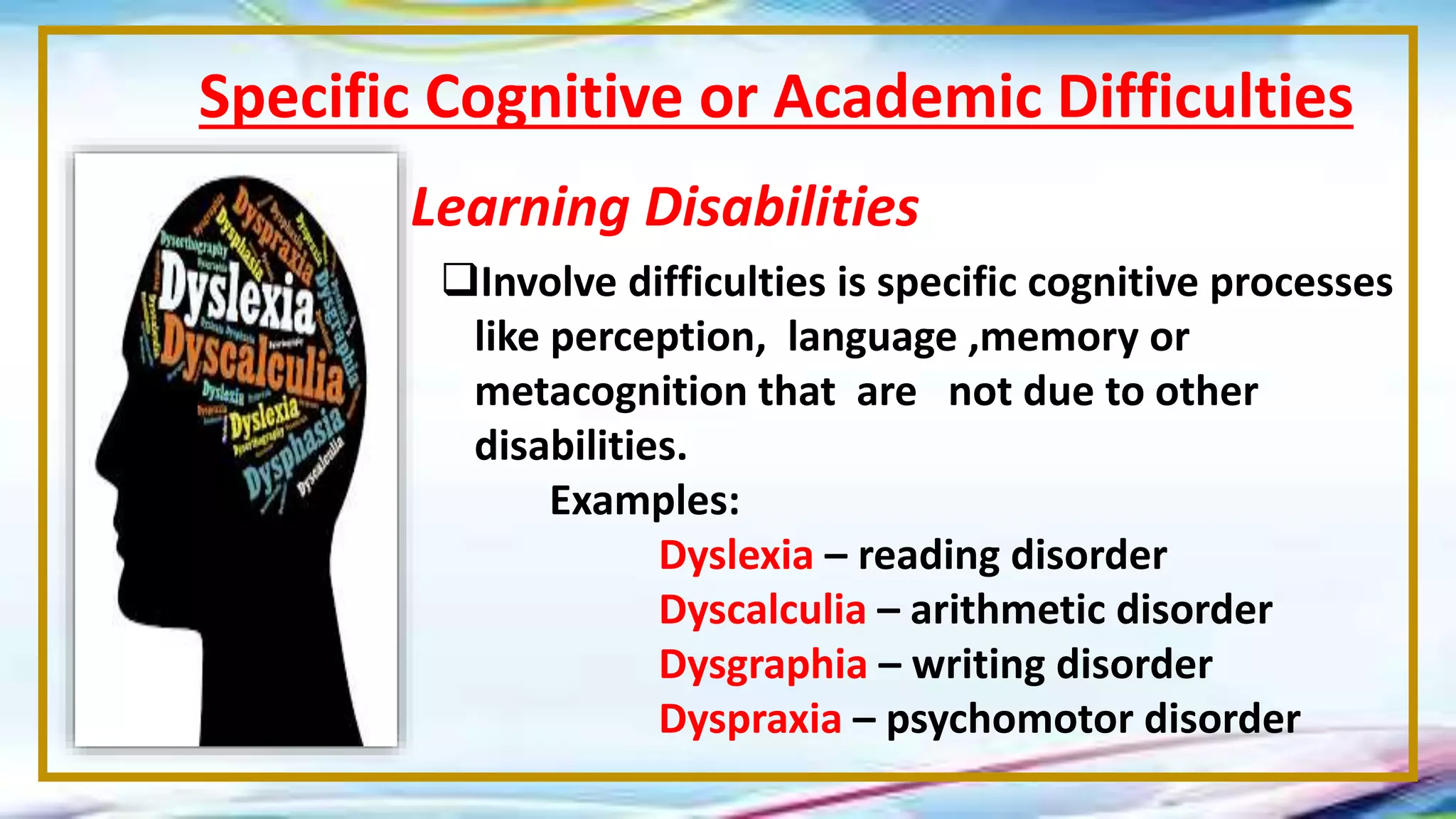
Specific Cognitive or Academic Difficulties
Learning Disabilities
Involve difficulties is specific cognitive processes
like perception, language ,memory or
metacognition that are not due to other
disabilities.
Examples:
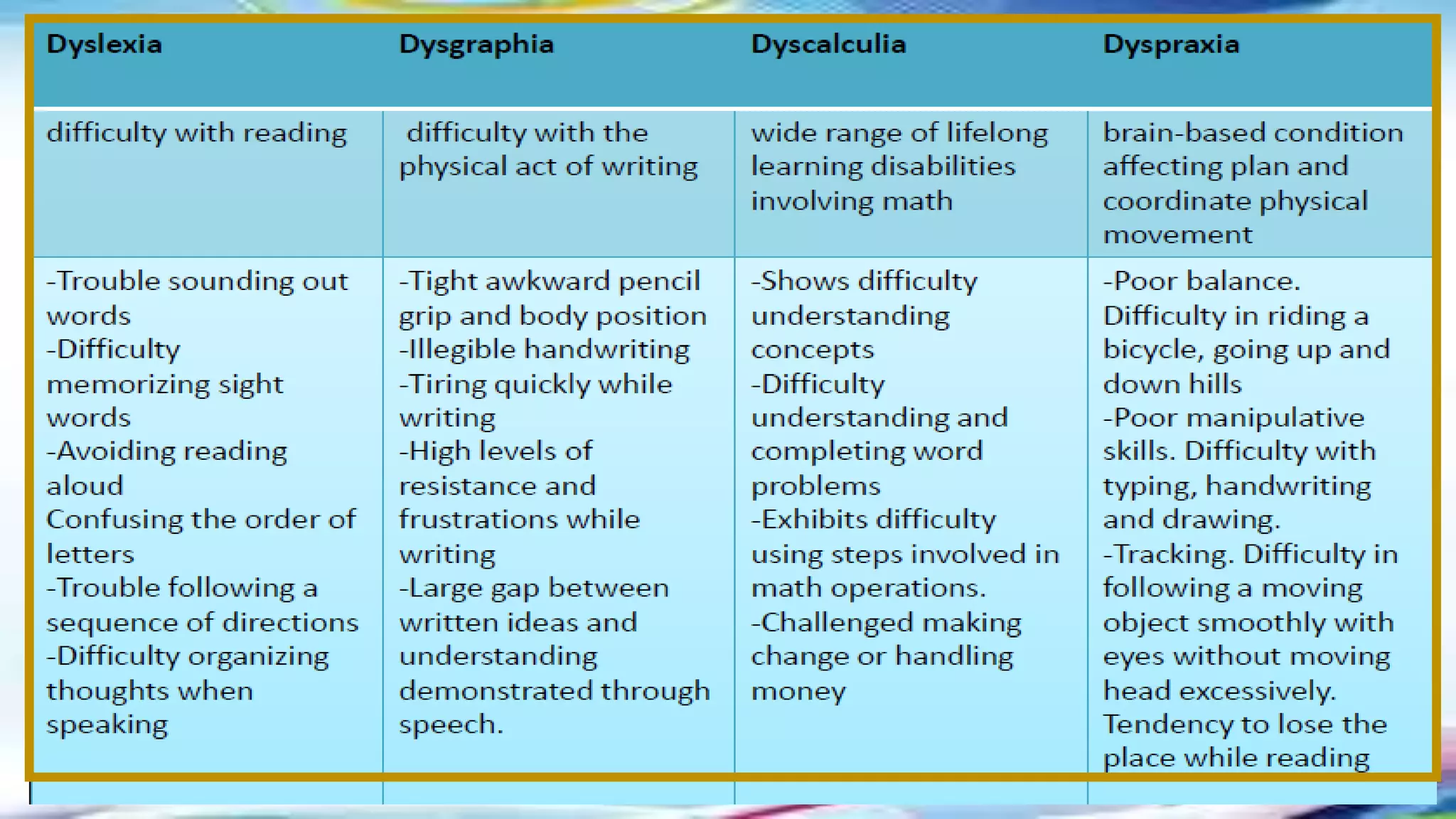
Dyslexia – reading disorder
Dyscalculia – arithmetic disorder
Dysgraphia – writing disorder
Dyspraxia – psychomotor disorder
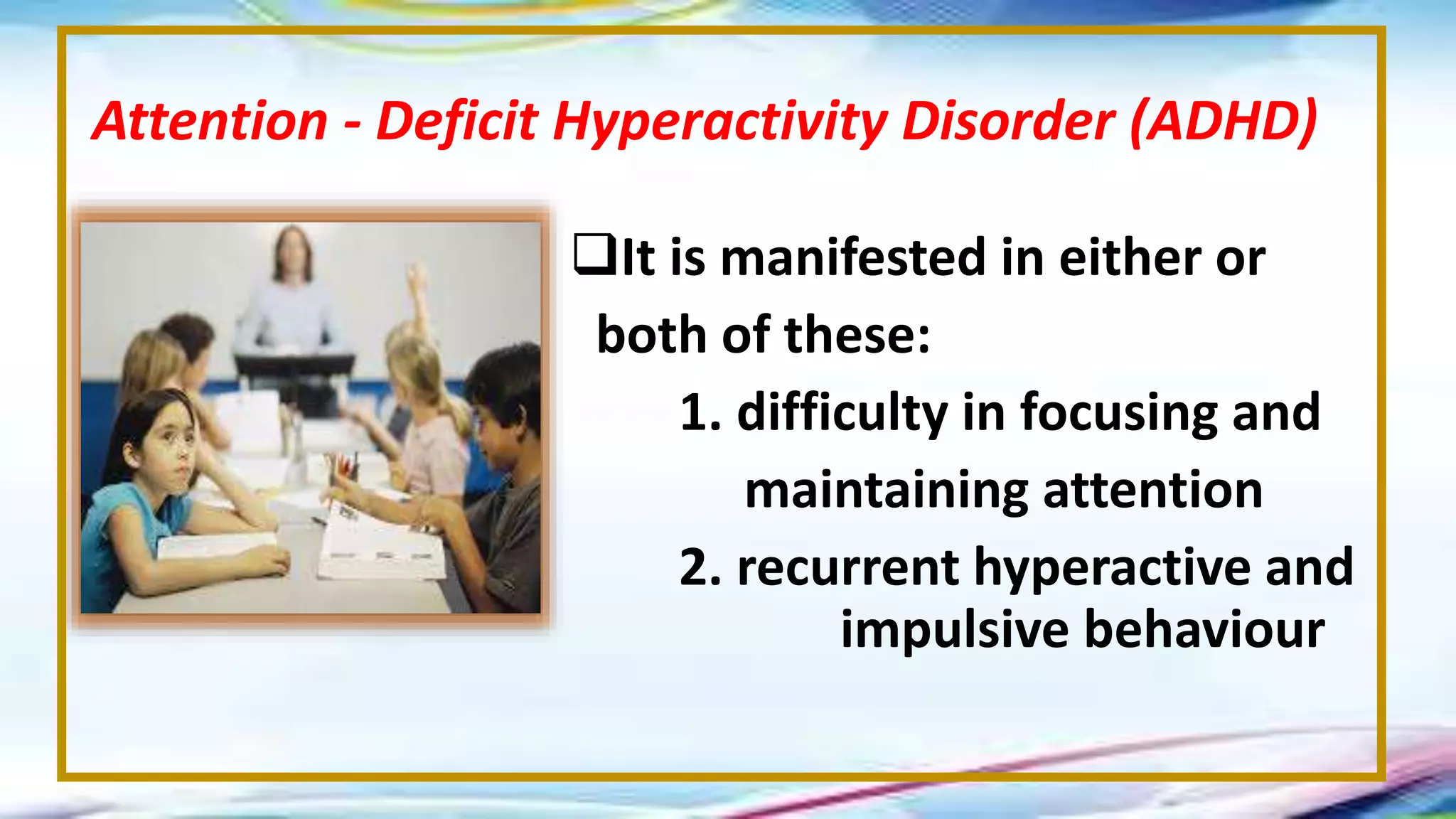
It is manifested in either or
both of these:
1. difficulty in focusing and
maintaining attention
2. recurrent hyperactive and
impulsive behaviour
Attention - Deficit Hyperactivity Disorder (ADHD)
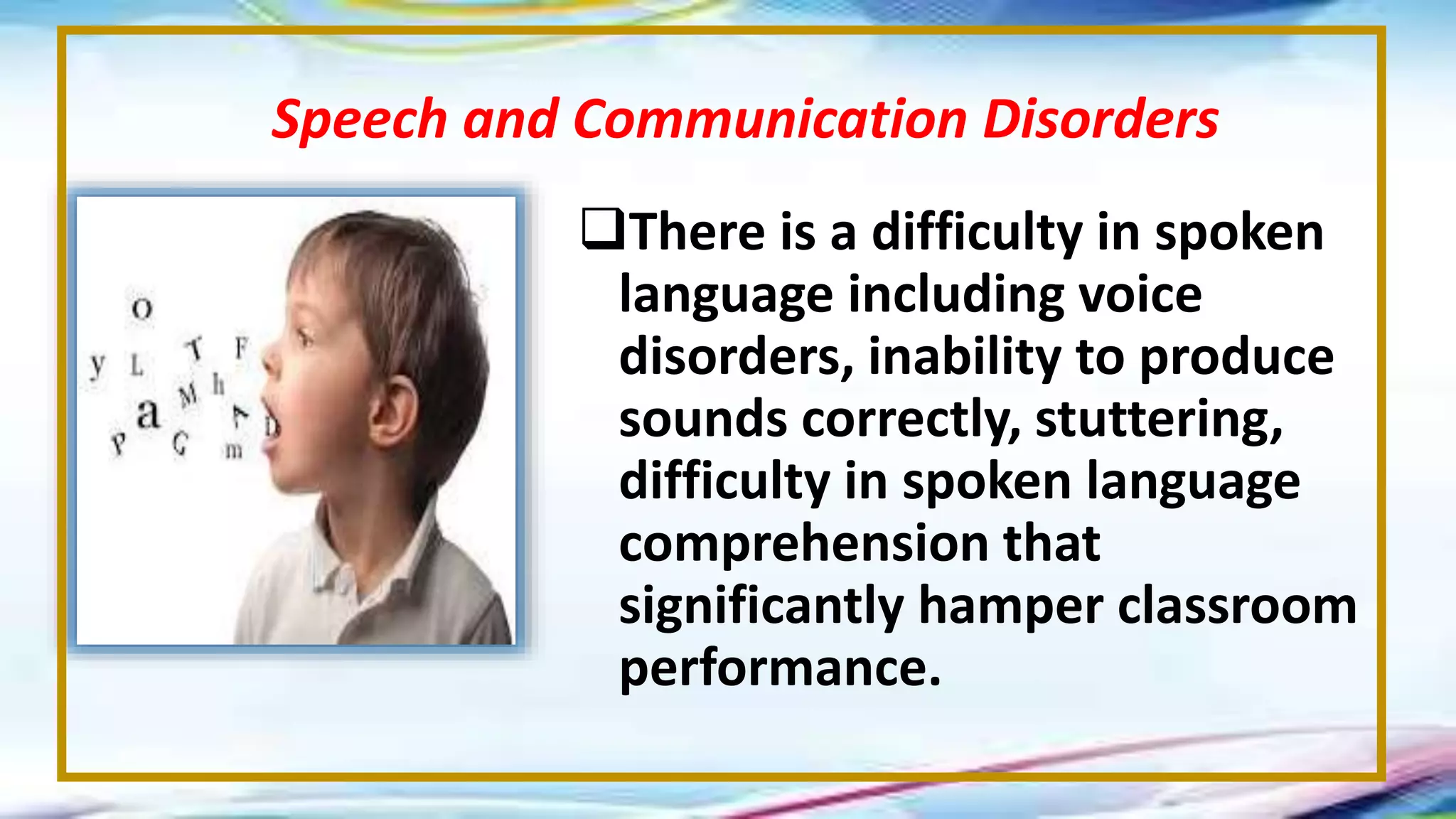
There is a difficulty in spoken
language including voice
disorders, inability to produce
sounds correctly, stuttering,
difficulty in spoken language
comprehension that
significantly hamper classroom
performance.
Speech and Communication Disorders
It manifested by different
levels of impaired social
interaction and
communication, repetitive
behaviors and limited interest
They usually have an intense
need for routine and
predictable environment
Social/Emotional and Behavioral Difficulties
Autism
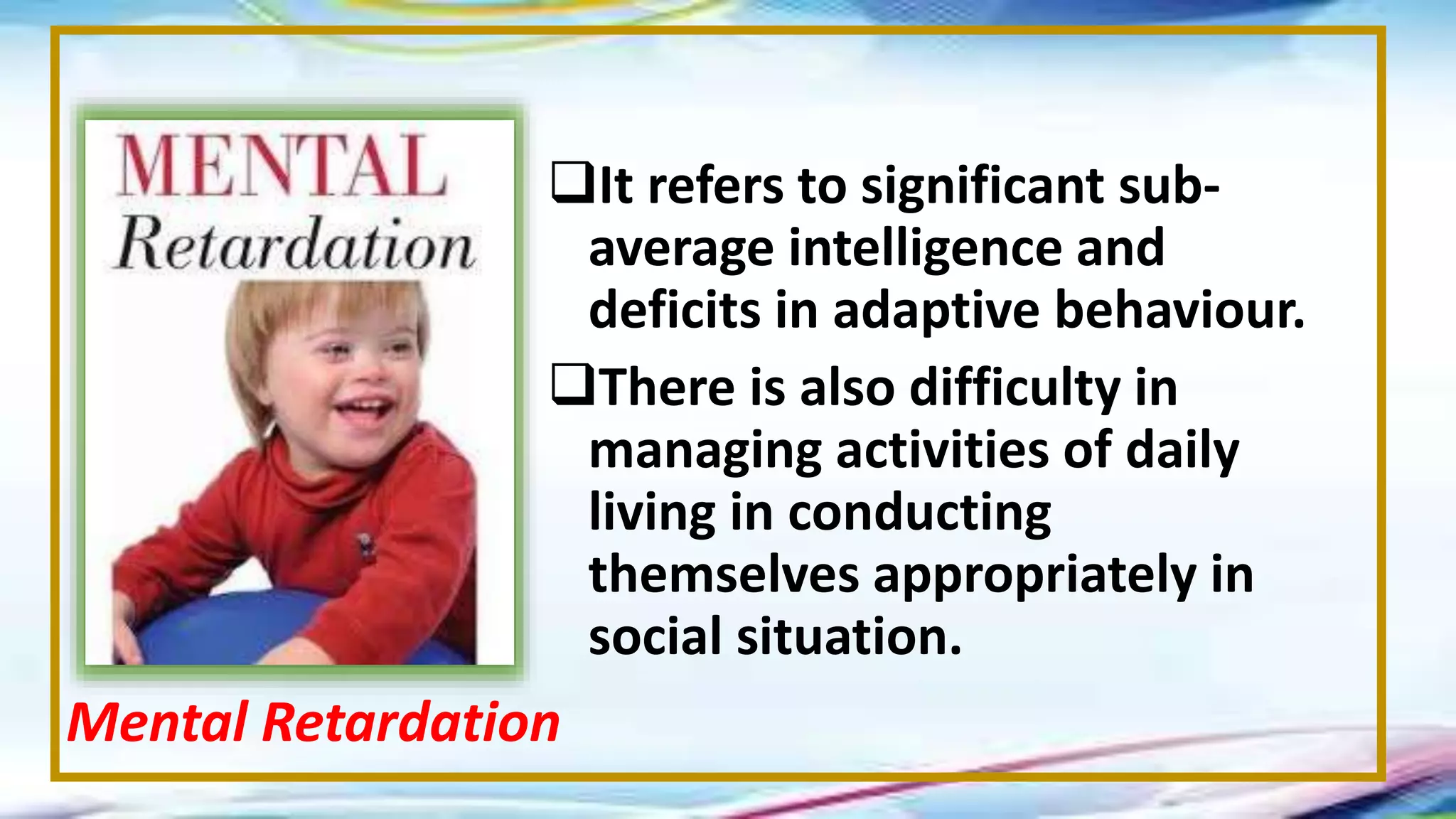
It refers to significant sub-
average intelligence and
deficits in adaptive behaviour.
There is also difficulty in
managing activities of daily
living in conducting
themselves appropriately in
social situation.
Mental Retardation
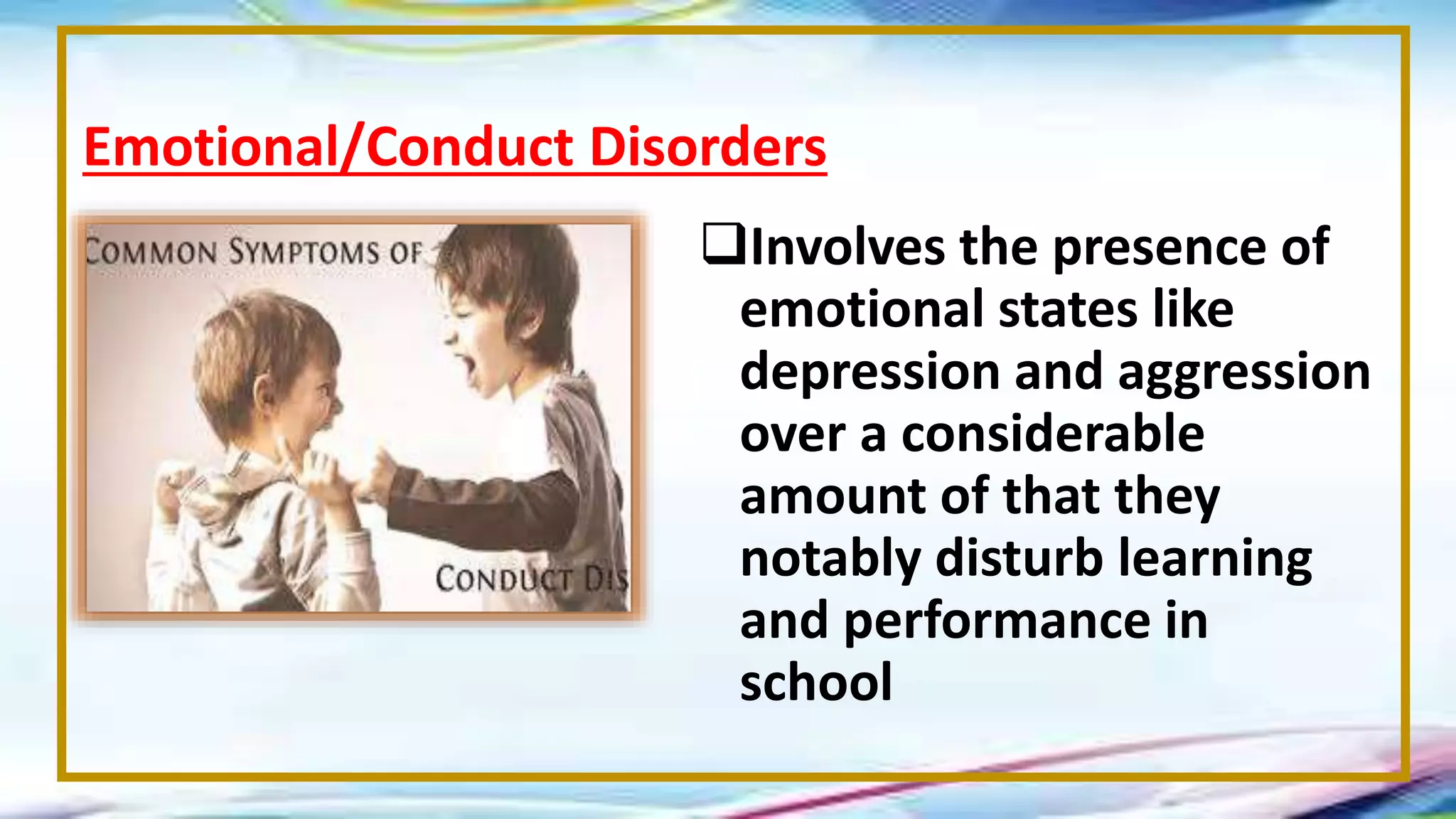
Involves the presence of
emotional states like
depression and aggression
over a considerable
amount of that they
notably disturb learning
and performance in
school
Emotional/Conduct Disorders
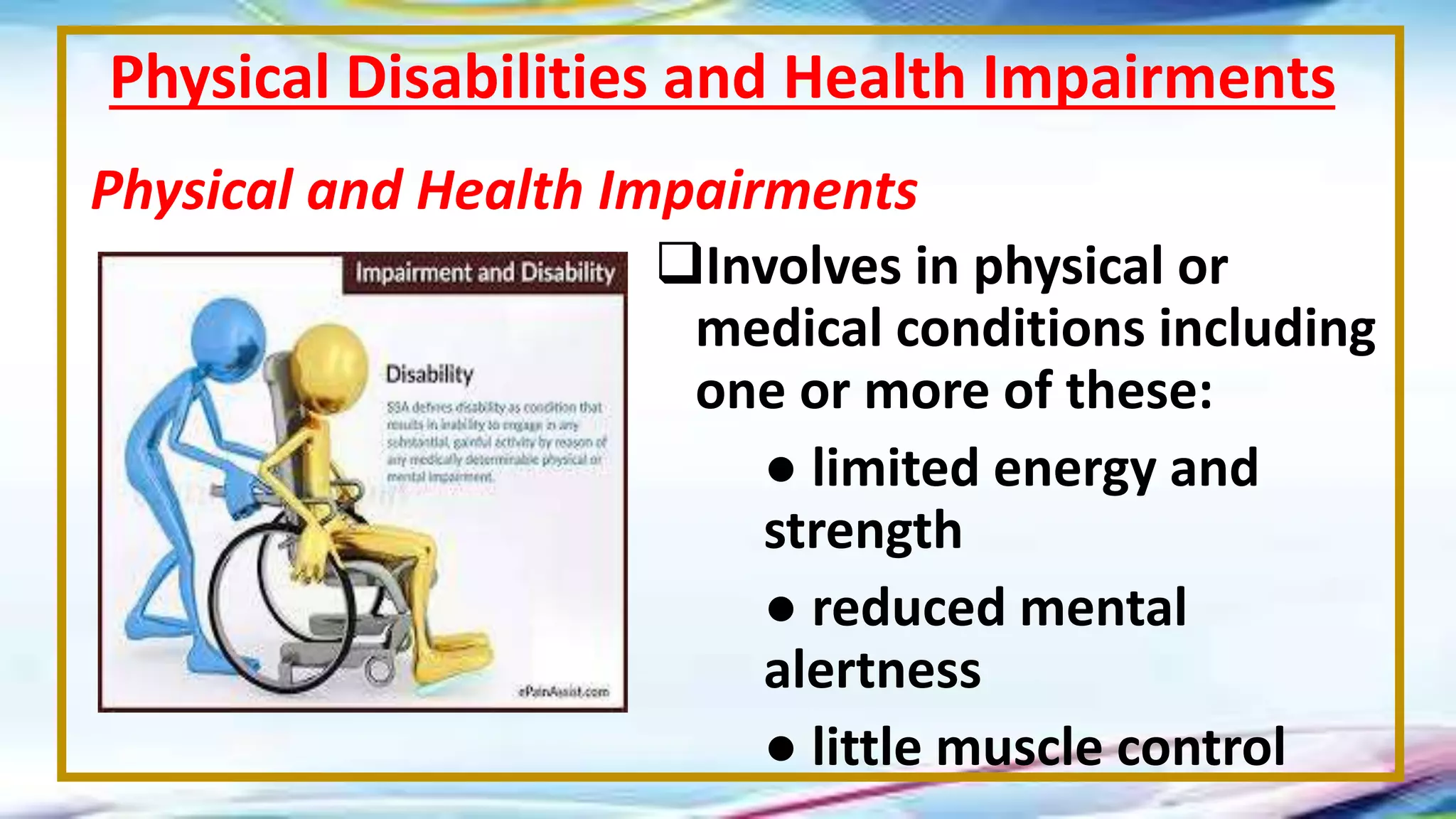
Involves in physical or
medical conditions including
one or more of these:
● limited energy and
strength
● reduced mental
alertness
● little muscle control
Physical Disabilities and Health Impairments
Physical and Health Impairments
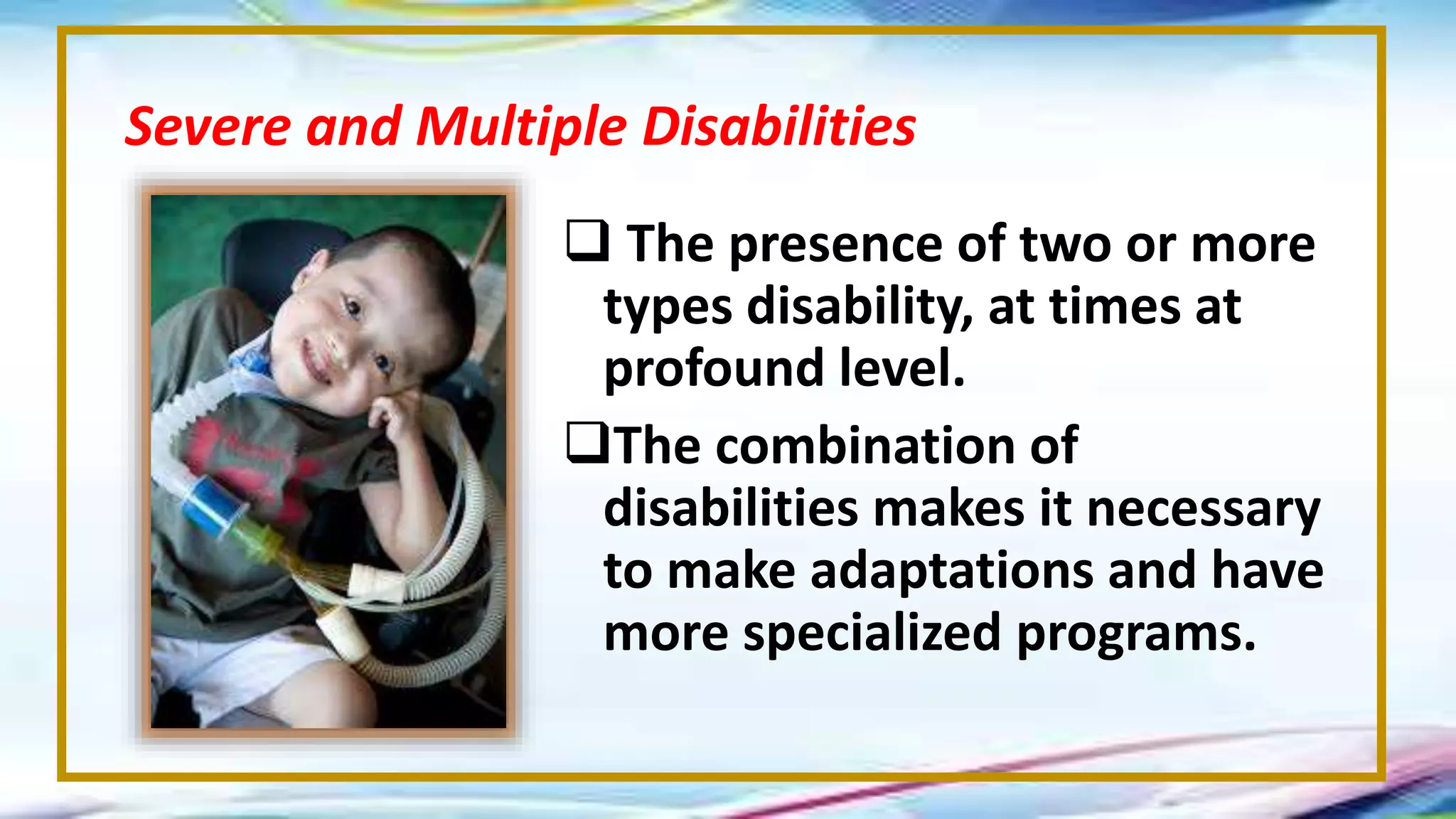
 The presence of two or more
types disability, at times at
profound level.
The combination of
disabilities makes it necessary
to make adaptations and have
more specialized programs.
Severe and Multiple Disabilities
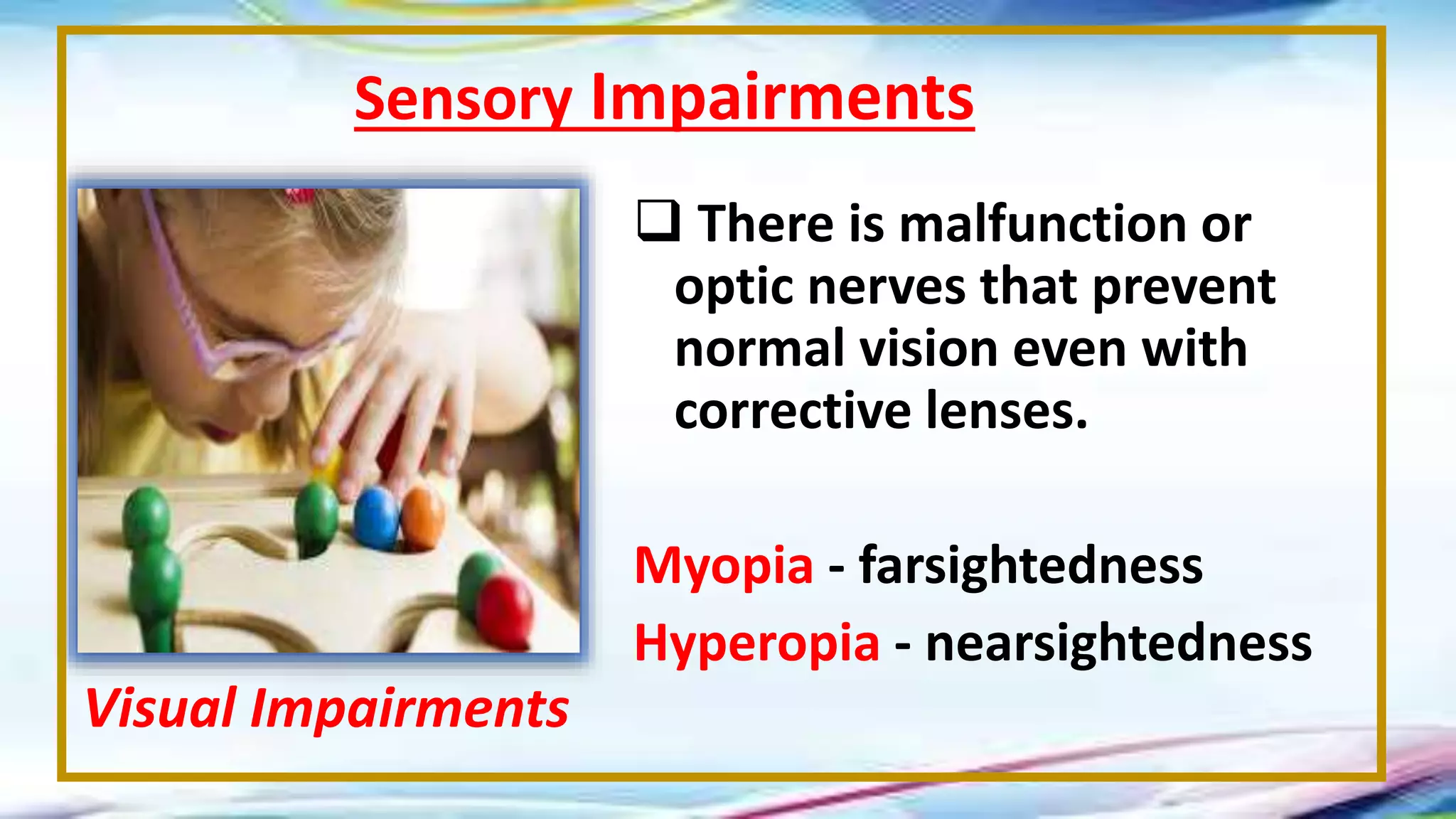
 There is malfunction or
optic nerves that prevent
normal vision even with
corrective lenses.
Myopia - farsightedness
Hyperopia - nearsightedness
Sensory Impairments
Visual Impairments
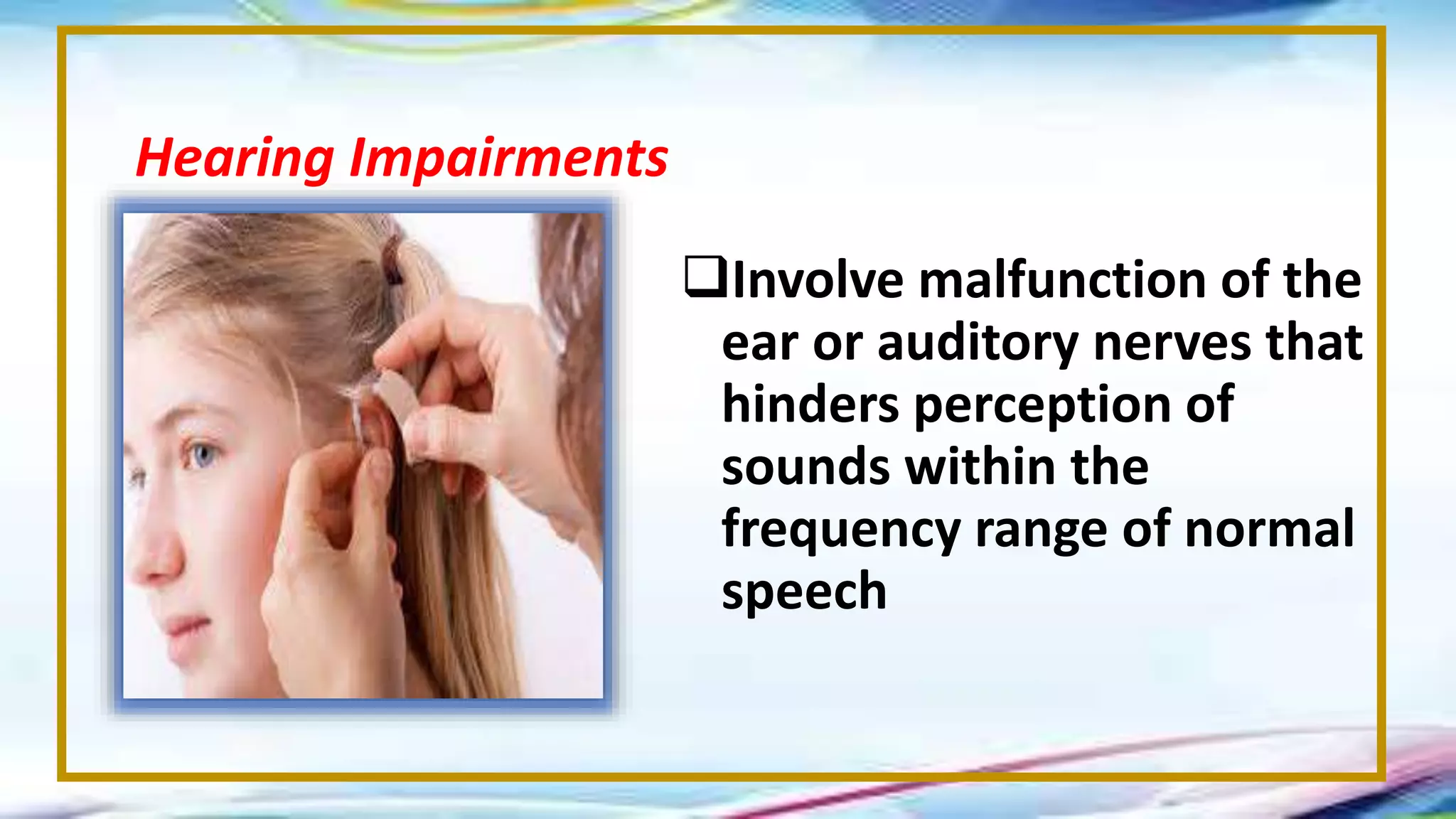
Involve malfunction of the
ear or auditory nerves that
hinders perception of
sounds within the
frequency range of normal
speech
Hearing Impairments
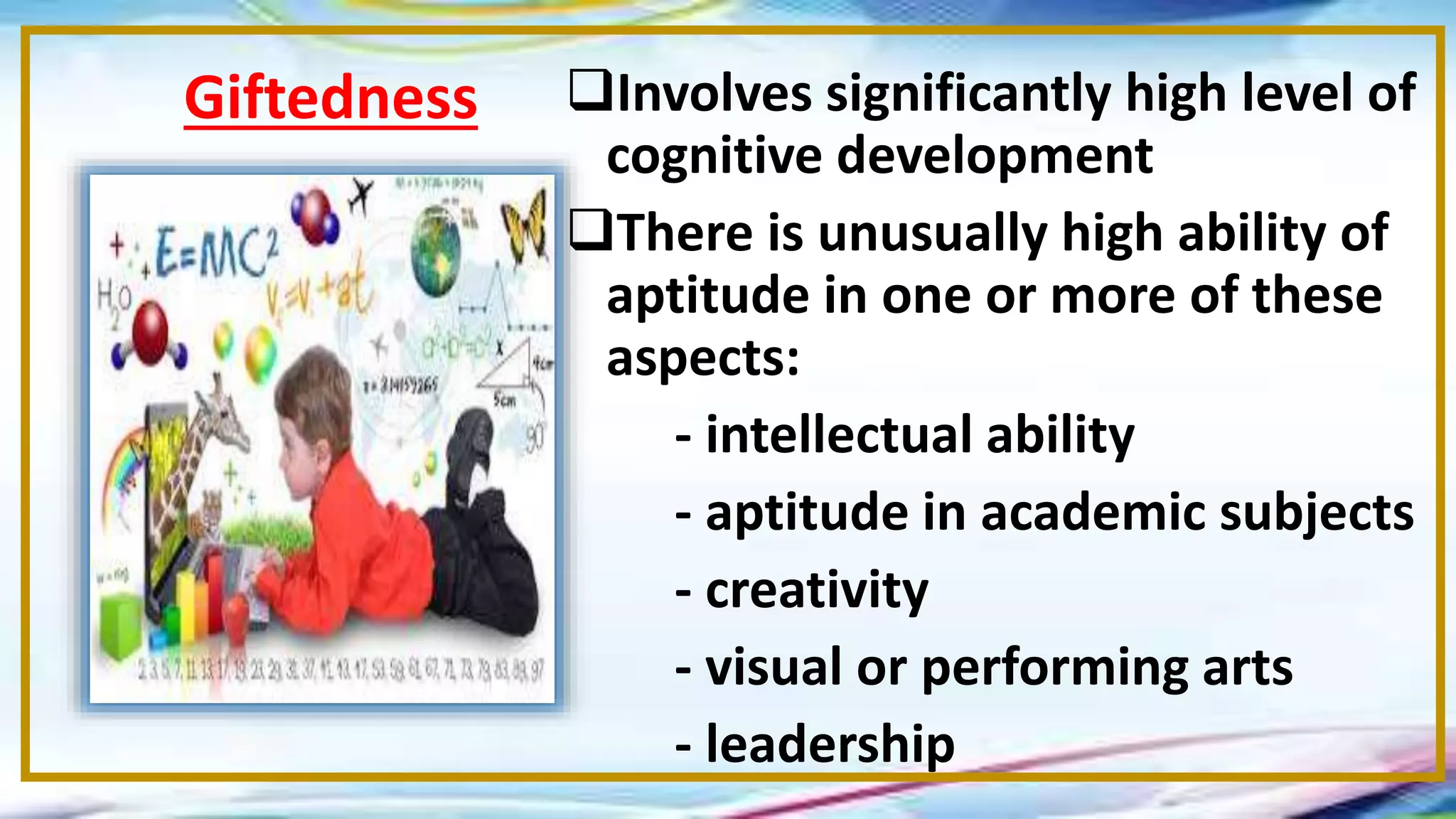
Involves significantly high level of
cognitive development
There is unusually high ability of
aptitude in one or more of these
aspects:
- intellectual ability
- aptitude in academic subjects
- creativity
- visual or performing arts
- leadership
Giftedness
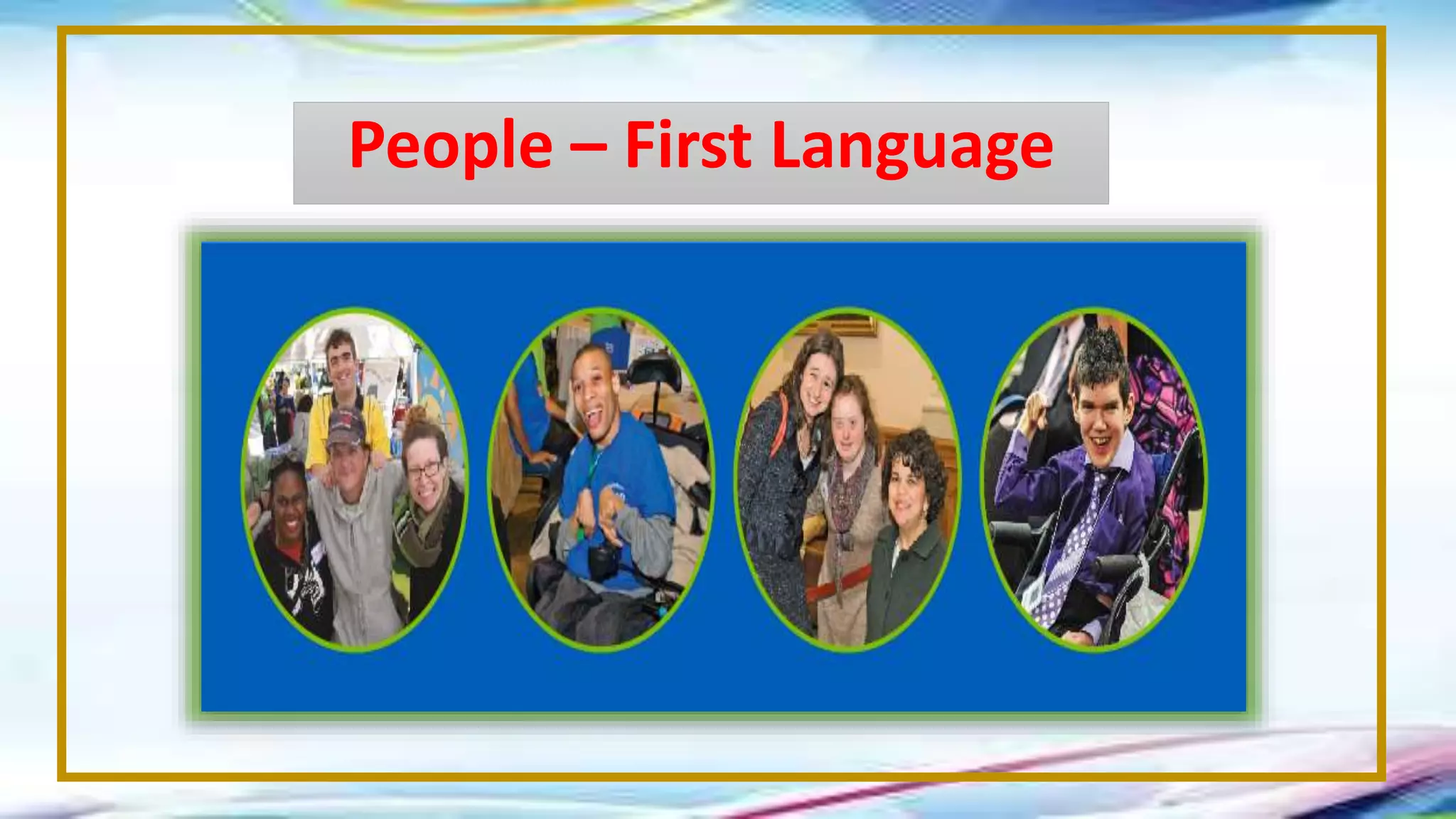
People – First Language
 It is a way of communicating that reflects
knowledge and respect for people with
disabilities by choosing words that
recognize the person first and foremost
as the primary reference and not his or
her disability.
This language trend involves putting
the person first, not the disability.
Thus, people first language tells us
what conditions people have, not what
they are (Schiefelbush Institute, 1996)
Example:
• A person with a disability not a disabled person.
• Person with AIDS, rather than “AIDS victim”.
• “John is the writer who has a disability” rather
than “John is a disabled writer.”
Avoid generic labels ( people with mental retardation is
preferable to the mentally retarded);
Emphasizing abilities, not limitations (for instance, uses
a wheelchair is preferable to confined to a wheelchair);
Avoiding euphemisms (such as physically-challenged)
which are regarded as a condescending and avoid the
real result from disability; and
Avoiding implying illness or suffering (had a polio is
preferable to is polio victim, and has multiple sclerosis is
preferable to suffers from multiple sclerosis).
Using people first language and applying the
guidelines will remind us to have a more respectful and
accepting attitude toward learners with
exceptionalities.
The presence of impairments requires them to exert
more effort to do things that others like us to find quite
easy to do. They are the who may turn to us for
assistance.
Beginning with the right attitude, will make us a good
and effective teacher, one with the hand and the heart
who can facilitate their learning and adjustment.
The End

MODULE 6.pptx

  • 1.
  • 2.
    Objectives Describe the basiccategories of exceptional learners Define and distinguish the terms disability and handicap Demonstrate “people first” language when referring to exceptional learners and advocate for its use
  • 3.
    One of thesignificant factor that highlights individual differences and diversity in learning is the presence of exceptionalities. We sometimes refer to learners with exceptionalities as persons who are different in some way from the “normal” or “average”.
  • 4.
  • 5.
    We probably encounterlearners with special needs. Therefore, it is necessary that we have both the right information and proper attitude in dealing with special learners.
  • 6.
    Disability It is animpairment or limitation that “interferes” with person’s with disability, for example, to walk, lift, hear, or learn. It may refer to a physical, sensory, or mental condition” (Schiefelbush Institute, 1996).
  • 7.
    Handicap  The wordhandicap does not have the same meaning as disability. It is a disadvantage that occurs as a result of disability or impairment.
  • 8.
    1. Specific Cognitiveor Academic Difficulties 1.1. Learning Disabilities 1.2. Attention Deficit Hyperactivity Disorder (ADHD) 1.3. Speech and Communication Disorders 2. Social/Emotional and behavioral Difficulties 2.1. Autism 2.2. Mental Retardation 2.3. Emotional/Conduct Disorders Categories of Exceptionalities
  • 9.
    Physical Disabilities andHealth Impairments 1.Physical and Health Impairments ● limited energy and strength ● reduced mental alertness ● little muscle control 2. Severe and Multiple Disabilities
  • 10.
  • 11.
    Specific Cognitive orAcademic Difficulties Learning Disabilities Involve difficulties is specific cognitive processes like perception, language ,memory or metacognition that are not due to other disabilities. Examples: Dyslexia – reading disorder Dyscalculia – arithmetic disorder Dysgraphia – writing disorder Dyspraxia – psychomotor disorder
  • 13.
    It is manifestedin either or both of these: 1. difficulty in focusing and maintaining attention 2. recurrent hyperactive and impulsive behaviour Attention - Deficit Hyperactivity Disorder (ADHD)
  • 14.
    There is adifficulty in spoken language including voice disorders, inability to produce sounds correctly, stuttering, difficulty in spoken language comprehension that significantly hamper classroom performance. Speech and Communication Disorders
  • 15.
    It manifested bydifferent levels of impaired social interaction and communication, repetitive behaviors and limited interest They usually have an intense need for routine and predictable environment Social/Emotional and Behavioral Difficulties Autism
  • 16.
    It refers tosignificant sub- average intelligence and deficits in adaptive behaviour. There is also difficulty in managing activities of daily living in conducting themselves appropriately in social situation. Mental Retardation
  • 17.
    Involves the presenceof emotional states like depression and aggression over a considerable amount of that they notably disturb learning and performance in school Emotional/Conduct Disorders
  • 18.
    Involves in physicalor medical conditions including one or more of these: ● limited energy and strength ● reduced mental alertness ● little muscle control Physical Disabilities and Health Impairments Physical and Health Impairments
  • 19.
     The presenceof two or more types disability, at times at profound level. The combination of disabilities makes it necessary to make adaptations and have more specialized programs. Severe and Multiple Disabilities
  • 20.
     There ismalfunction or optic nerves that prevent normal vision even with corrective lenses. Myopia - farsightedness Hyperopia - nearsightedness Sensory Impairments Visual Impairments
  • 21.
    Involve malfunction ofthe ear or auditory nerves that hinders perception of sounds within the frequency range of normal speech Hearing Impairments
  • 22.
    Involves significantly highlevel of cognitive development There is unusually high ability of aptitude in one or more of these aspects: - intellectual ability - aptitude in academic subjects - creativity - visual or performing arts - leadership Giftedness
  • 25.
  • 26.
    People – FirstLanguage  It is a way of communicating that reflects knowledge and respect for people with disabilities by choosing words that recognize the person first and foremost as the primary reference and not his or her disability.
  • 27.
    This language trendinvolves putting the person first, not the disability. Thus, people first language tells us what conditions people have, not what they are (Schiefelbush Institute, 1996)
  • 28.
    Example: • A personwith a disability not a disabled person. • Person with AIDS, rather than “AIDS victim”. • “John is the writer who has a disability” rather than “John is a disabled writer.”
  • 29.
    Avoid generic labels( people with mental retardation is preferable to the mentally retarded); Emphasizing abilities, not limitations (for instance, uses a wheelchair is preferable to confined to a wheelchair); Avoiding euphemisms (such as physically-challenged) which are regarded as a condescending and avoid the real result from disability; and Avoiding implying illness or suffering (had a polio is preferable to is polio victim, and has multiple sclerosis is preferable to suffers from multiple sclerosis).
  • 30.
    Using people firstlanguage and applying the guidelines will remind us to have a more respectful and accepting attitude toward learners with exceptionalities. The presence of impairments requires them to exert more effort to do things that others like us to find quite easy to do. They are the who may turn to us for assistance. Beginning with the right attitude, will make us a good and effective teacher, one with the hand and the heart who can facilitate their learning and adjustment.
  • 31.