Hydro-Climatic Disasters in Water Resources  Management 30 Nov - 02 Dec 2009, Georgetown, Guyuna
Understand correlation between hazard, vulnerability and risks Evaluate disaster risk reduction initiatives Appreciate use of knowledge and information sharing to build safe and resilient communities
Hazards  are part of natural environmental and normal life   Disasters  reflect  the ways societies structure themselves and manage hazards  Vulnerability is the measure of effect of hazards upon the society DRR - reducing the vulnerability to the effect of environmental hazards to a manageable and acceptable level by enhancing risk management initiatives
What section of the population is most affected by disasters?   Why?


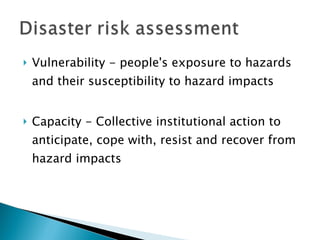
Vulnerability - people's exposure to hazards and their susceptibility to hazard impacts Capacity - Collective institutional action to anticipate, cope with, resist and recover from hazard impacts
 
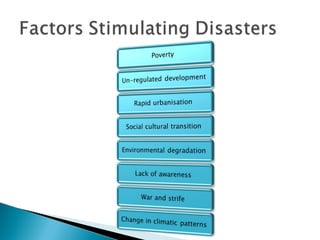
What are the important dynamics propagating disasters in Guyana?
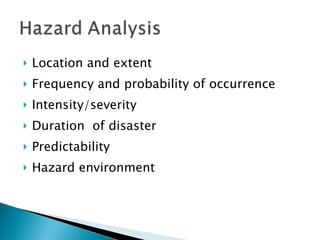
Location and extent Frequency and probability of occurrence Intensity/severity Duration  of disaster  Predictability Hazard environment
Successful disaster response plan require information and mobilisation Challenges reaching people in different locations quickly and simultaneously Right message, timely, sufficient and accurate Maps a good medium for communicating hazards information to non-specialists Formats and symbols should be kept familiar
 
Suggest some measures to reduce mitigate water related disasters
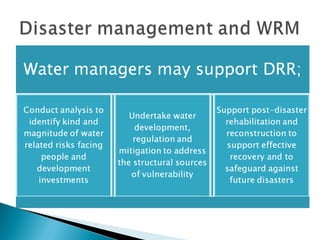
Seen in light of multi-thematic and multi-sectoral approach in the DRR process  Sound background knowledge on hydro-climatic hazard, risk and vulnerability Incorporate disaster risk management in WRM framework
 
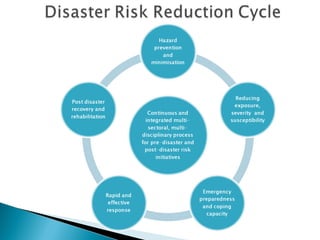
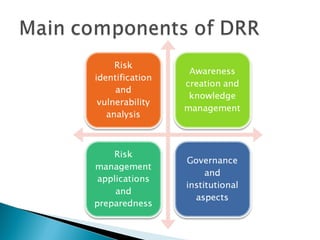
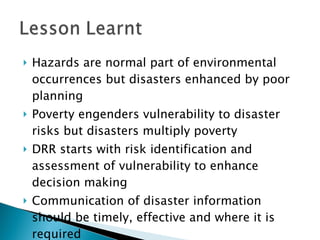
Hazards are normal part of environmental occurrences but disasters enhanced by poor planning  Poverty engenders vulnerability to disaster risks but disasters multiply poverty  DRR starts with risk identification and assessment of vulnerability to enhance decision making Communication of disaster information should be timely, effective and where it is required

Disaster Risk Reduction

  • 1.
    Hydro-Climatic Disasters inWater Resources Management 30 Nov - 02 Dec 2009, Georgetown, Guyuna
  • 2.
    Understand correlation betweenhazard, vulnerability and risks Evaluate disaster risk reduction initiatives Appreciate use of knowledge and information sharing to build safe and resilient communities
  • 3.
    Hazards arepart of natural environmental and normal life   Disasters reflect the ways societies structure themselves and manage hazards Vulnerability is the measure of effect of hazards upon the society DRR - reducing the vulnerability to the effect of environmental hazards to a manageable and acceptable level by enhancing risk management initiatives
  • 4.
    What section ofthe population is most affected by disasters? Why?
  • 5.
  • 6.
  • 7.
  • 8.
    Vulnerability - people'sexposure to hazards and their susceptibility to hazard impacts Capacity - Collective institutional action to anticipate, cope with, resist and recover from hazard impacts
  • 9.
  • 10.
    What are theimportant dynamics propagating disasters in Guyana?
  • 11.
    Location and extentFrequency and probability of occurrence Intensity/severity Duration of disaster Predictability Hazard environment
  • 12.
    Successful disaster responseplan require information and mobilisation Challenges reaching people in different locations quickly and simultaneously Right message, timely, sufficient and accurate Maps a good medium for communicating hazards information to non-specialists Formats and symbols should be kept familiar
  • 13.
  • 14.
    Suggest some measuresto reduce mitigate water related disasters
  • 15.
    Seen in lightof multi-thematic and multi-sectoral approach in the DRR process Sound background knowledge on hydro-climatic hazard, risk and vulnerability Incorporate disaster risk management in WRM framework
  • 16.
  • 17.
    Hazards are normalpart of environmental occurrences but disasters enhanced by poor planning Poverty engenders vulnerability to disaster risks but disasters multiply poverty DRR starts with risk identification and assessment of vulnerability to enhance decision making Communication of disaster information should be timely, effective and where it is required