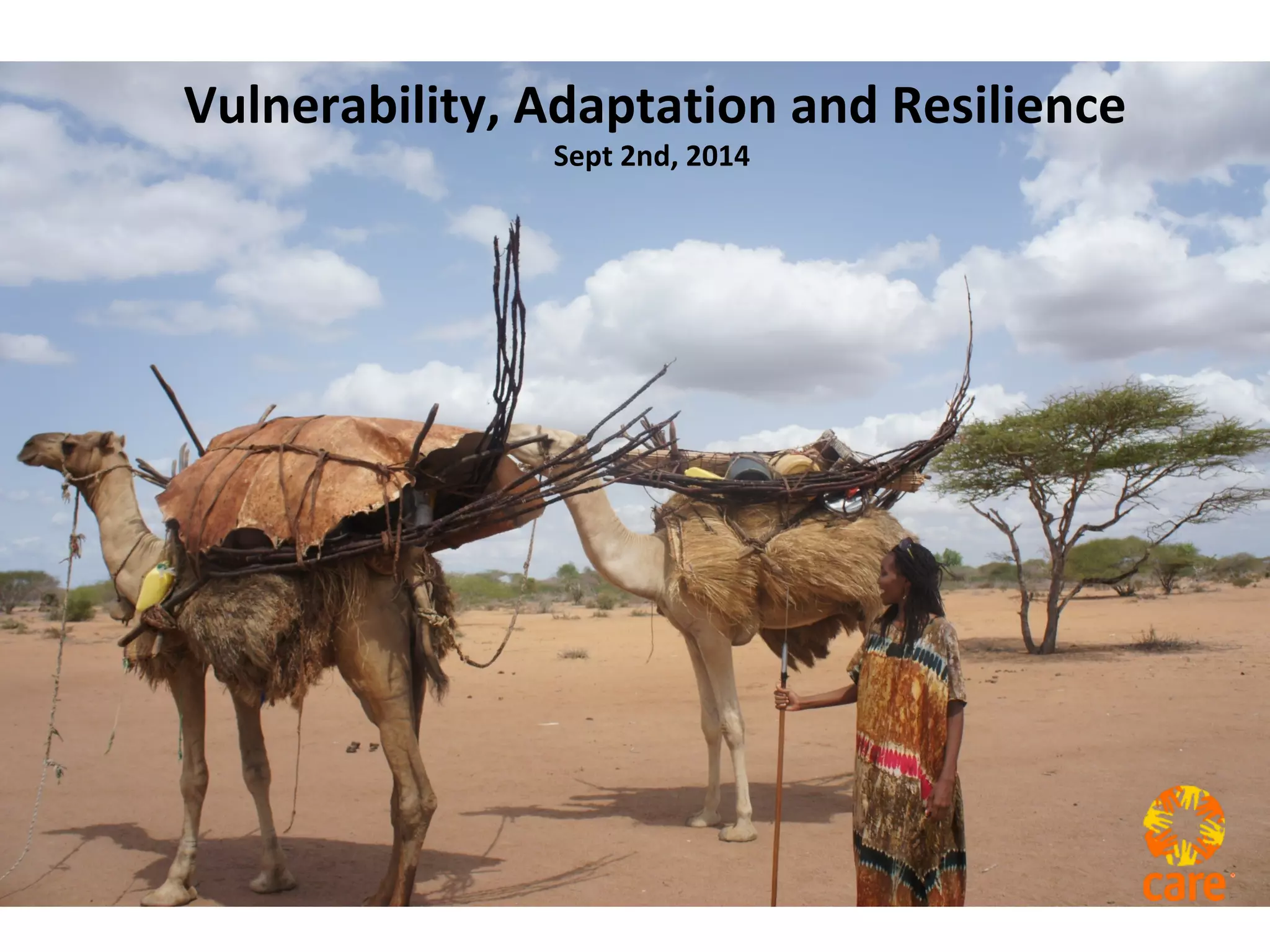
Vulnerability, Adaptation and Resilience 
Sept 2nd, 2014
‘Climate change affects us all, but it does 
not affect us all equally. 
The poorest and most vulnerable – those 
who have done the least to contribute to 
global warming – are bearing the brunt of 
the impact.’ 
UN Secretary General Ban Ki Moon 
WWW.CARECLIMATECHANGE.ORG
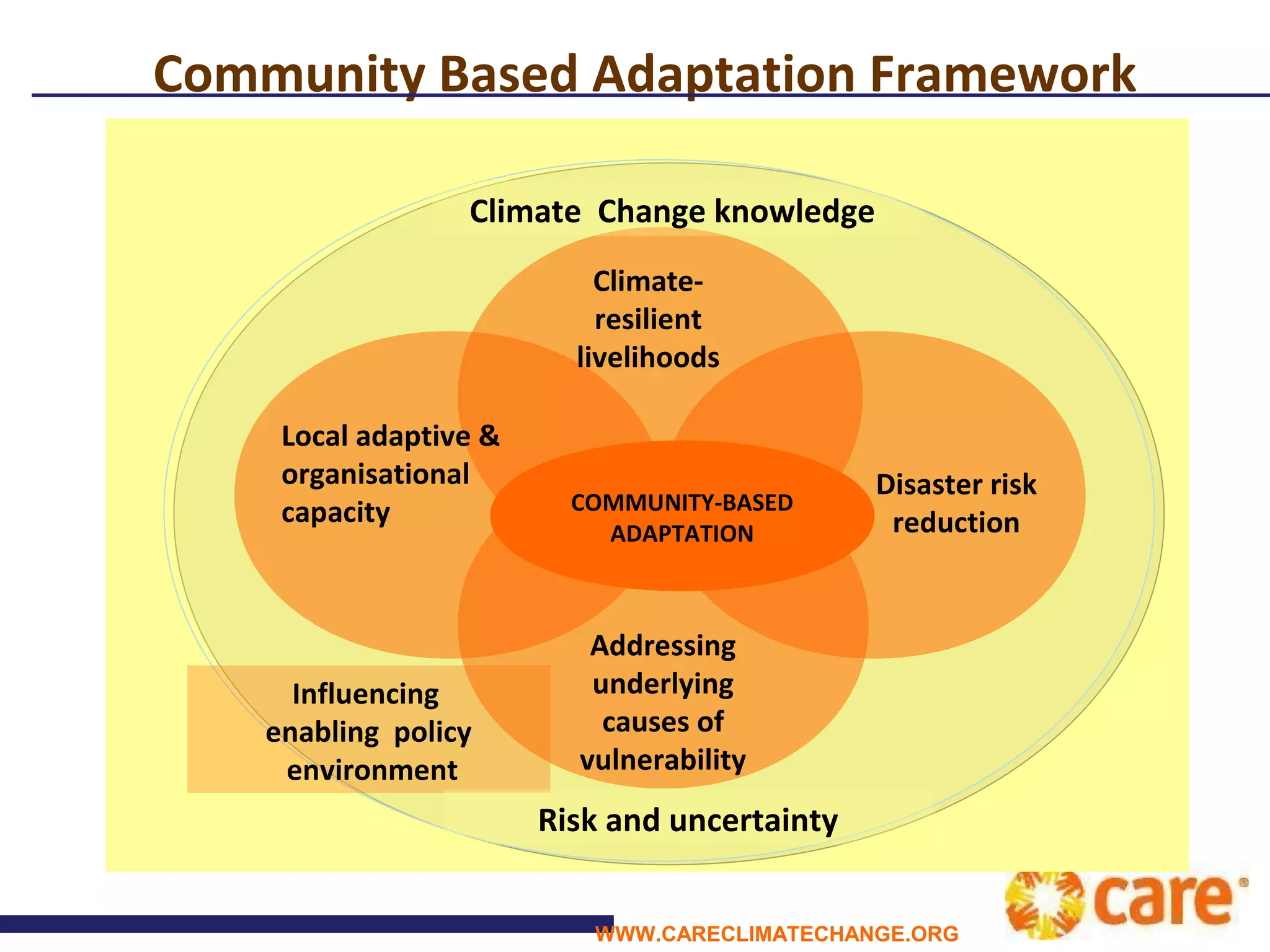
Community Based Adaptation Framework 
Climate Change knowledge 
COMMUNITY-BASED 
ADAPTATION 
WWW.CARECLIMATECHANGE.ORG 
Local adaptive & 
organisational 
capacity 
Addressing 
underlying 
causes of 
vulnerability 
Disaster risk 
reduction 
Climate-resilient 
livelihoods 
Influencing 
enabling policy 
environment 
Risk and uncertainty
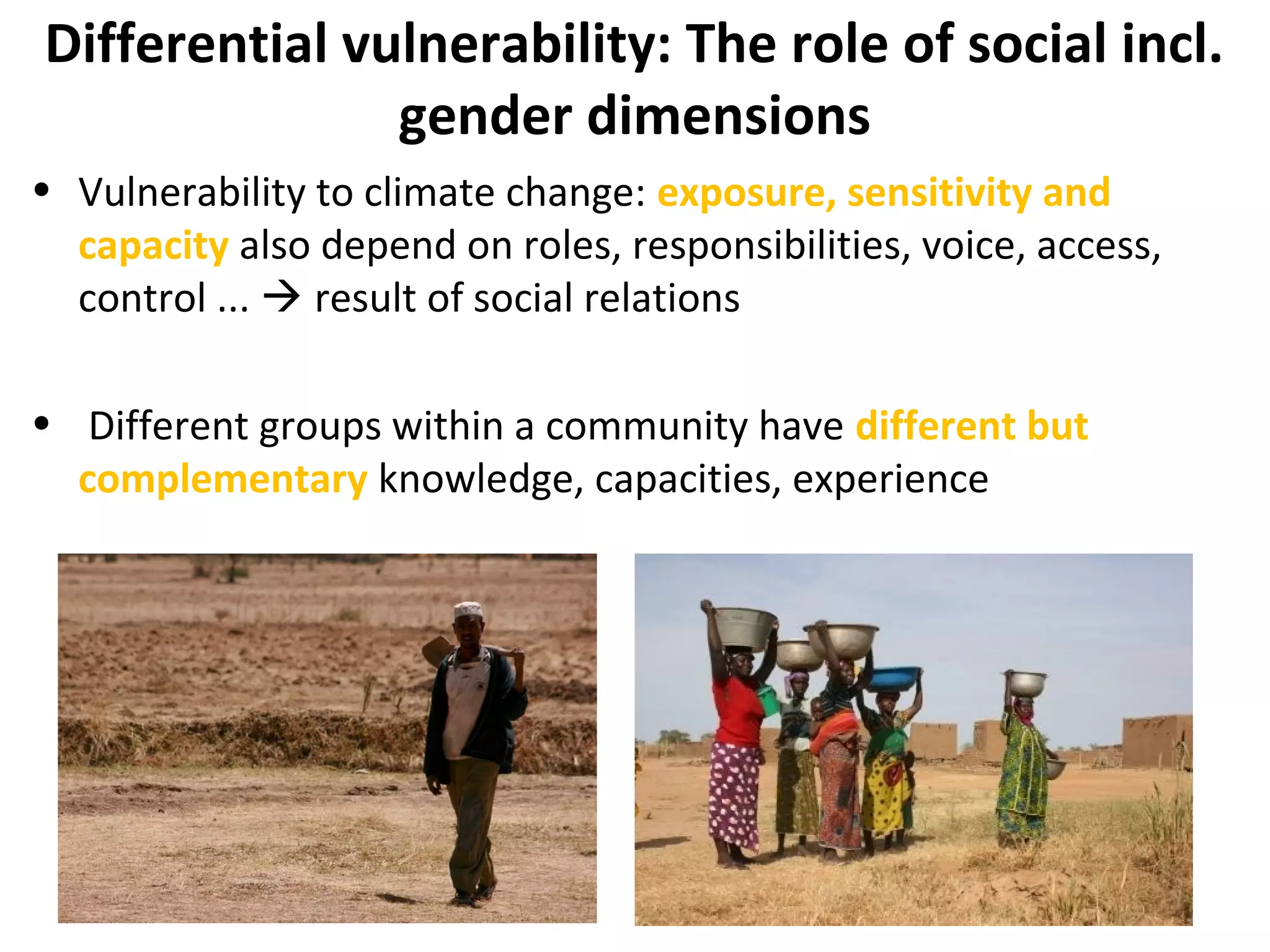
Differential vulnerability: The role of social incl. 
gender dimensions 
• Vulnerability to climate change: exposure, sensitivity and 
capacity also depend on roles, responsibilities, voice, access, 
control ...  result of social relations 
• Different groups within a community have different but 
complementary knowledge, capacities, experience
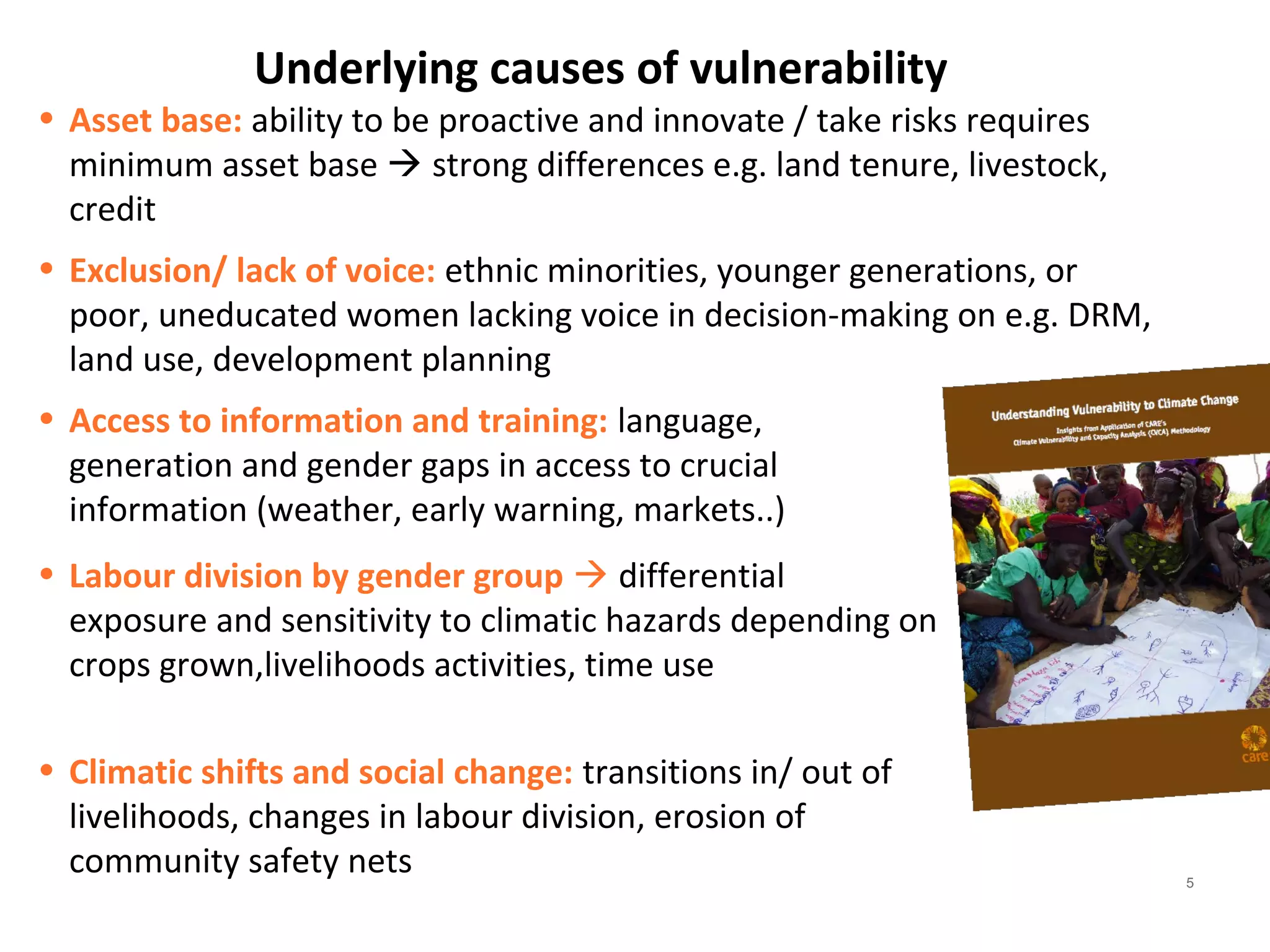
Underlying causes of vulnerability 
• Asset base: ability to be proactive and innovate / take risks requires 
minimum asset base  strong differences e.g. land tenure, livestock, 
credit 
• Exclusion/ lack of voice: ethnic minorities, younger generations, or 
poor, uneducated women lacking voice in decision-making on e.g. DRM, 
land use, development planning 
• Access to information and training: language, 
generation and gender gaps in access to crucial 
information (weather, early warning, markets..) 
• Labour division by gender group  differential 
exposure and sensitivity to climatic hazards depending on 
crops grown,livelihoods activities, time use 
• Climatic shifts and social change: transitions in/ out of 
livelihoods, changes in labour division, erosion of 
community safety nets 
5
What can be done? 
• Understand who is vulnerable to climate 
change and how they feel its impacts 
• Recognise vulnerable people as owners of 
knowledge and agents of change 
• Strengthen their capacity and empower 
them to adapt in different and 
complementary ways 
• Support adaptation to the impacts of 
climate change at all levels 
WWW.CARECLIMATECHANGE.ORG
Some Points of Reflection 
1. How do we really include the most vulnerable? 
2. Is there more to addressing vulnerability than adding some 
members of the various groups? 
3. Is it enough to isolate them and do something ‘special’ with them, or 
are there opportunities for more meaningful interaction and 
engagement more with others? 
4. When is it most useful/ appropriate to focus on the ‘differences’ and 
how or look at how better or worse off; more less the groups have? 
5. Is it enough to focus on just the supply, but not the demand or the 
impacts? 
6. Is it useful to also look at the intra relations/ processes? 
7. How community based are the our community based approaches? 
8. Are vulnerability assessments and gender assessments/ issues in 
conflict with pastoralism? Can they co-exist?
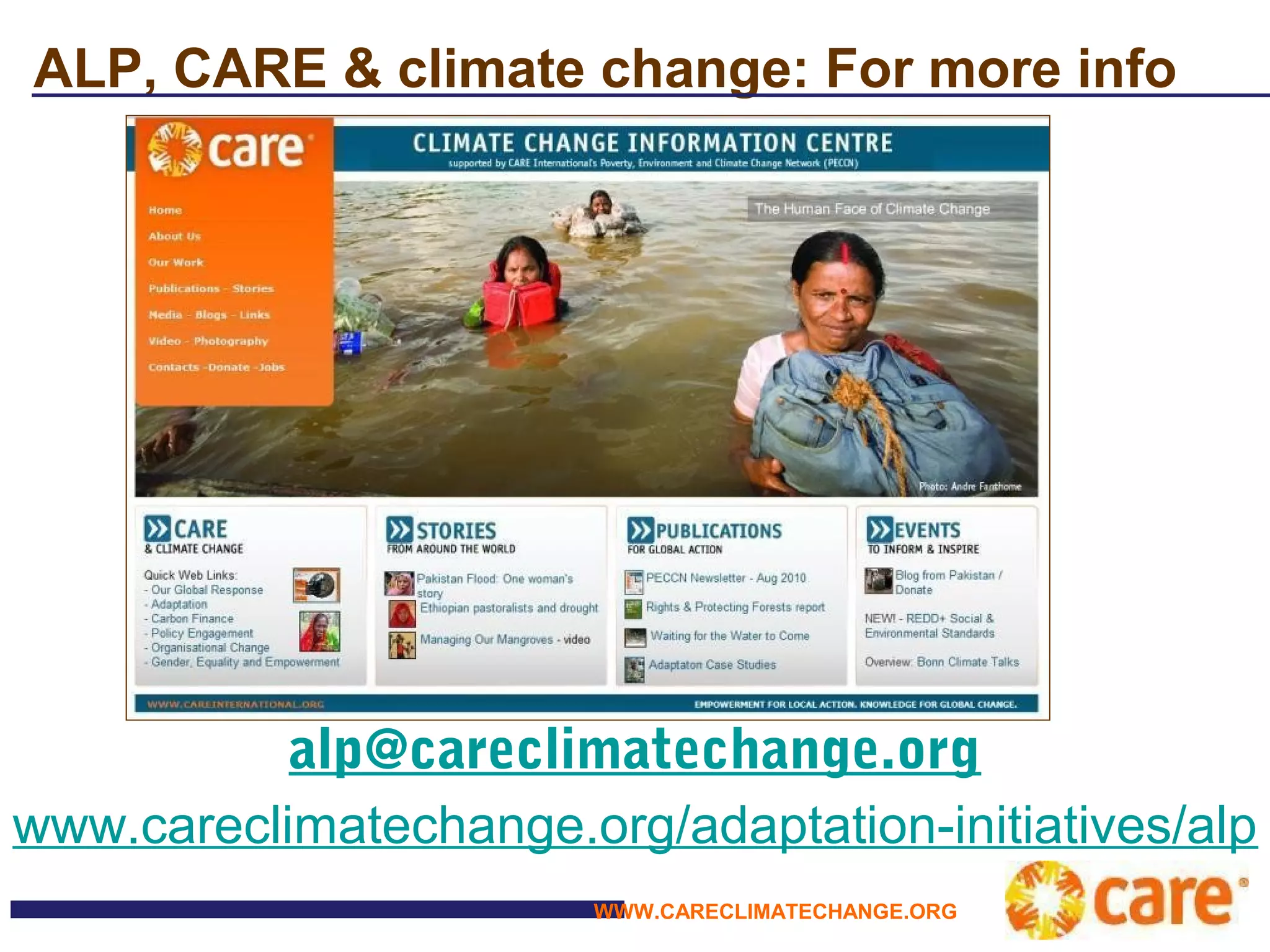
ALP, CARE & climate change: For more info 
alp@careclimatechange.org 
www.careclimatechange.org/adaptation-initiatives/alp 
WWW.CARECLIMATECHANGE.ORG

Vulnerability, Adaptation and Resilience

  • 1.
    Vulnerability, Adaptation andResilience Sept 2nd, 2014
  • 2.
    ‘Climate change affectsus all, but it does not affect us all equally. The poorest and most vulnerable – those who have done the least to contribute to global warming – are bearing the brunt of the impact.’ UN Secretary General Ban Ki Moon WWW.CARECLIMATECHANGE.ORG
  • 3.
    Community Based AdaptationFramework Climate Change knowledge COMMUNITY-BASED ADAPTATION WWW.CARECLIMATECHANGE.ORG Local adaptive & organisational capacity Addressing underlying causes of vulnerability Disaster risk reduction Climate-resilient livelihoods Influencing enabling policy environment Risk and uncertainty
  • 4.
    Differential vulnerability: Therole of social incl. gender dimensions • Vulnerability to climate change: exposure, sensitivity and capacity also depend on roles, responsibilities, voice, access, control ...  result of social relations • Different groups within a community have different but complementary knowledge, capacities, experience
  • 5.
    Underlying causes ofvulnerability • Asset base: ability to be proactive and innovate / take risks requires minimum asset base  strong differences e.g. land tenure, livestock, credit • Exclusion/ lack of voice: ethnic minorities, younger generations, or poor, uneducated women lacking voice in decision-making on e.g. DRM, land use, development planning • Access to information and training: language, generation and gender gaps in access to crucial information (weather, early warning, markets..) • Labour division by gender group  differential exposure and sensitivity to climatic hazards depending on crops grown,livelihoods activities, time use • Climatic shifts and social change: transitions in/ out of livelihoods, changes in labour division, erosion of community safety nets 5
  • 6.
    What can bedone? • Understand who is vulnerable to climate change and how they feel its impacts • Recognise vulnerable people as owners of knowledge and agents of change • Strengthen their capacity and empower them to adapt in different and complementary ways • Support adaptation to the impacts of climate change at all levels WWW.CARECLIMATECHANGE.ORG
  • 7.
    Some Points ofReflection 1. How do we really include the most vulnerable? 2. Is there more to addressing vulnerability than adding some members of the various groups? 3. Is it enough to isolate them and do something ‘special’ with them, or are there opportunities for more meaningful interaction and engagement more with others? 4. When is it most useful/ appropriate to focus on the ‘differences’ and how or look at how better or worse off; more less the groups have? 5. Is it enough to focus on just the supply, but not the demand or the impacts? 6. Is it useful to also look at the intra relations/ processes? 7. How community based are the our community based approaches? 8. Are vulnerability assessments and gender assessments/ issues in conflict with pastoralism? Can they co-exist?
  • 8.
    ALP, CARE &climate change: For more info alp@careclimatechange.org www.careclimatechange.org/adaptation-initiatives/alp WWW.CARECLIMATECHANGE.ORG

Editor's Notes

  • #4 Underpins the work of ALP, together with CBA methods/tools ALP developing deeper understanding of each element, especially adaptive capacity and organisational capacity Before moving on, let’s look at what CBA is: The goal of Community-based Adaptation is to enable individuals, households, communities and societies from the ground up to achieve positive development gains even as climate changes around them Action is based on local priorities (taking into account social heterogeneity) It provides for recognition of local knowledge and creates space for all actors to combine their knowledge into decision-making processes It operates at multiple levels and can be large scale, so long as communities remain at the centre of planning and action To be effective, adaptation efforts should be long-term, and must target the most vulnerable people and empower them with information, resources and opportunities for action. CARE’s CBA approach is composed of four interrelated action areas and provides a holistic analytical approach for communities to plan adaptation actions that are informed by climate science and local observation of climate change.  The approach recognizes that four key elements are required for successful adaptation at community level, each of which is informed by climate analysis and planning and the national policy context. Brief description of each element
  • #5 Access and control to information, resources…
  • #6 Results from CVCA meta analysis across Peru, Vietnam and Ghana; and separate study from ALP Niger. Peru, Ghana, Niger work with funding from DFID (PRAA; ALP)
  • #9 For publications, event updates, stories, and more information about our climate change work, please visit our website at www.careclimatechange.org. Thank you.