“Modeling System behaviors”….A better Paradigm on
                                       prototyping


                              -Nilesh Ranpura
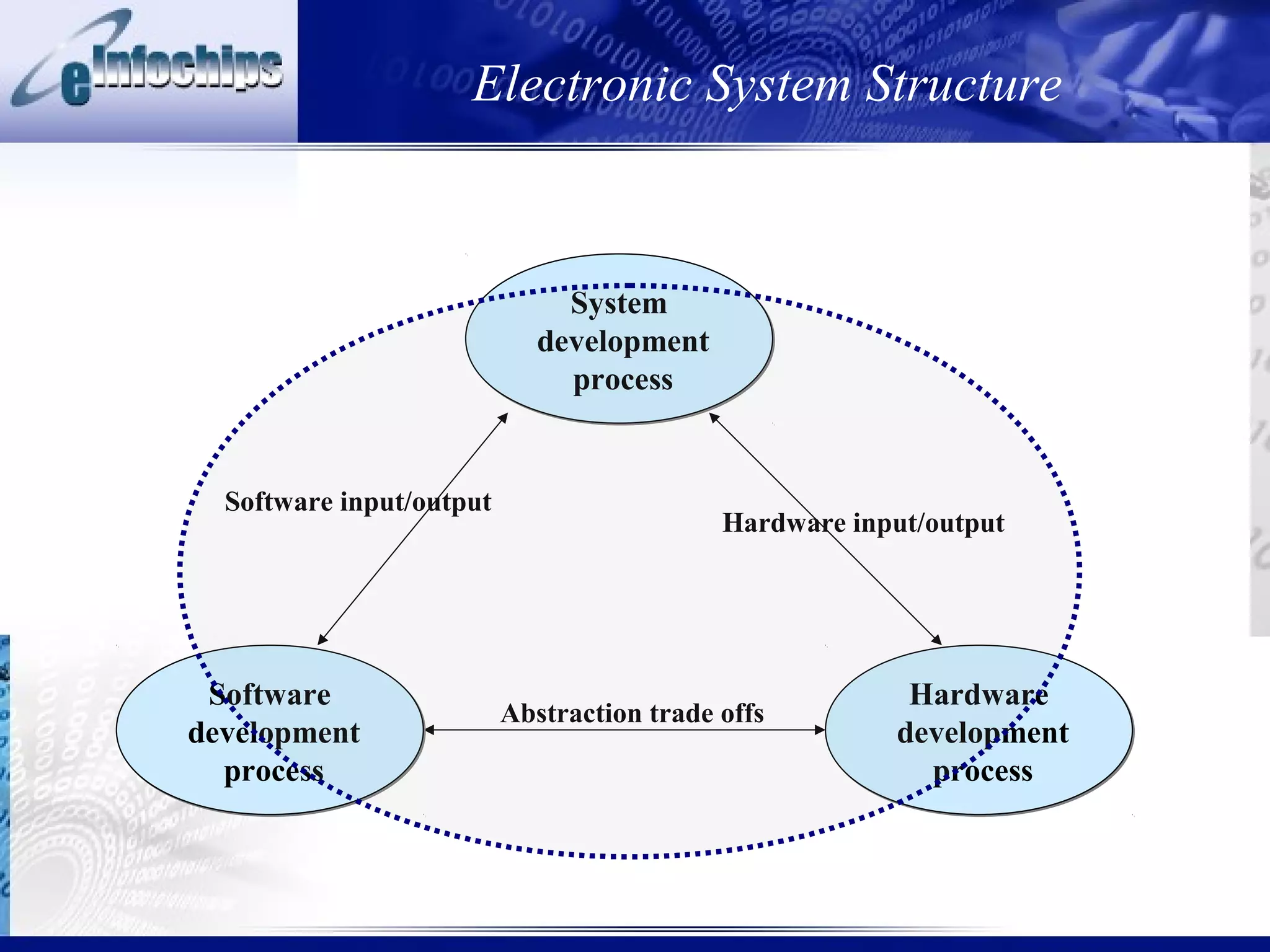
Electronic System Structure


                               System
                             development
                               process


  Software input/output
                                            Hardware input/output


 Software                                                Hardware
                          Abstraction trade offs
development                                             development
  process                                                 process
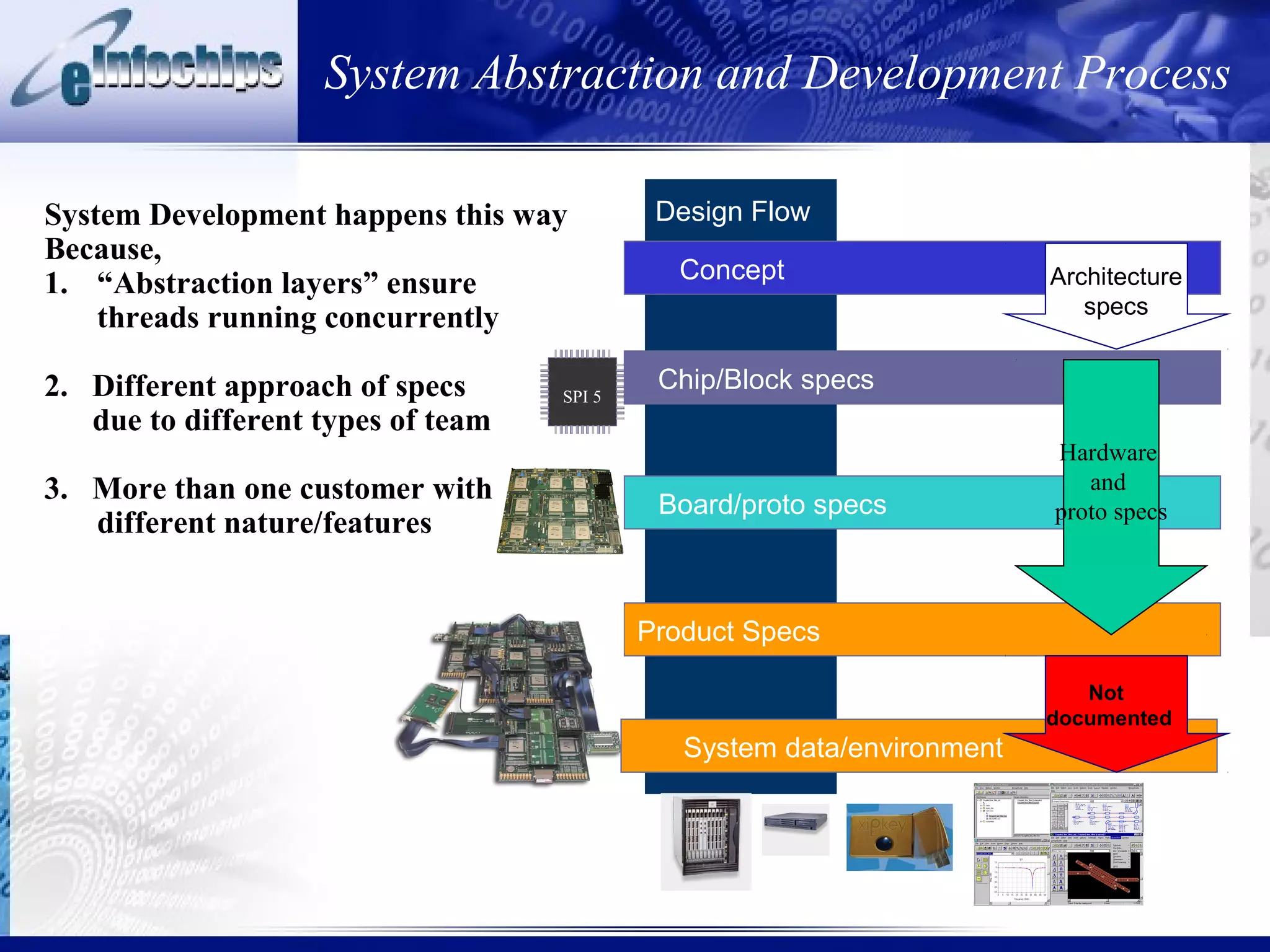
System Abstraction and Development Process

System Development happens this way          Design Flow
Because,
1. “Abstraction layers” ensure                 Concept                   Architecture
                                                                            specs
    threads running concurrently

2. Different approach of specs      SPI 5
                                             Chip/Block specs
   due to different types of team
                                                                         Hardware
3. More than one customer with                                              and
                                             Board/proto specs           proto specs
   different nature/features


                                            Product Specs

                                                                            Not
                                                                         documented
                                               System data/environment


                                            Reference Platforms
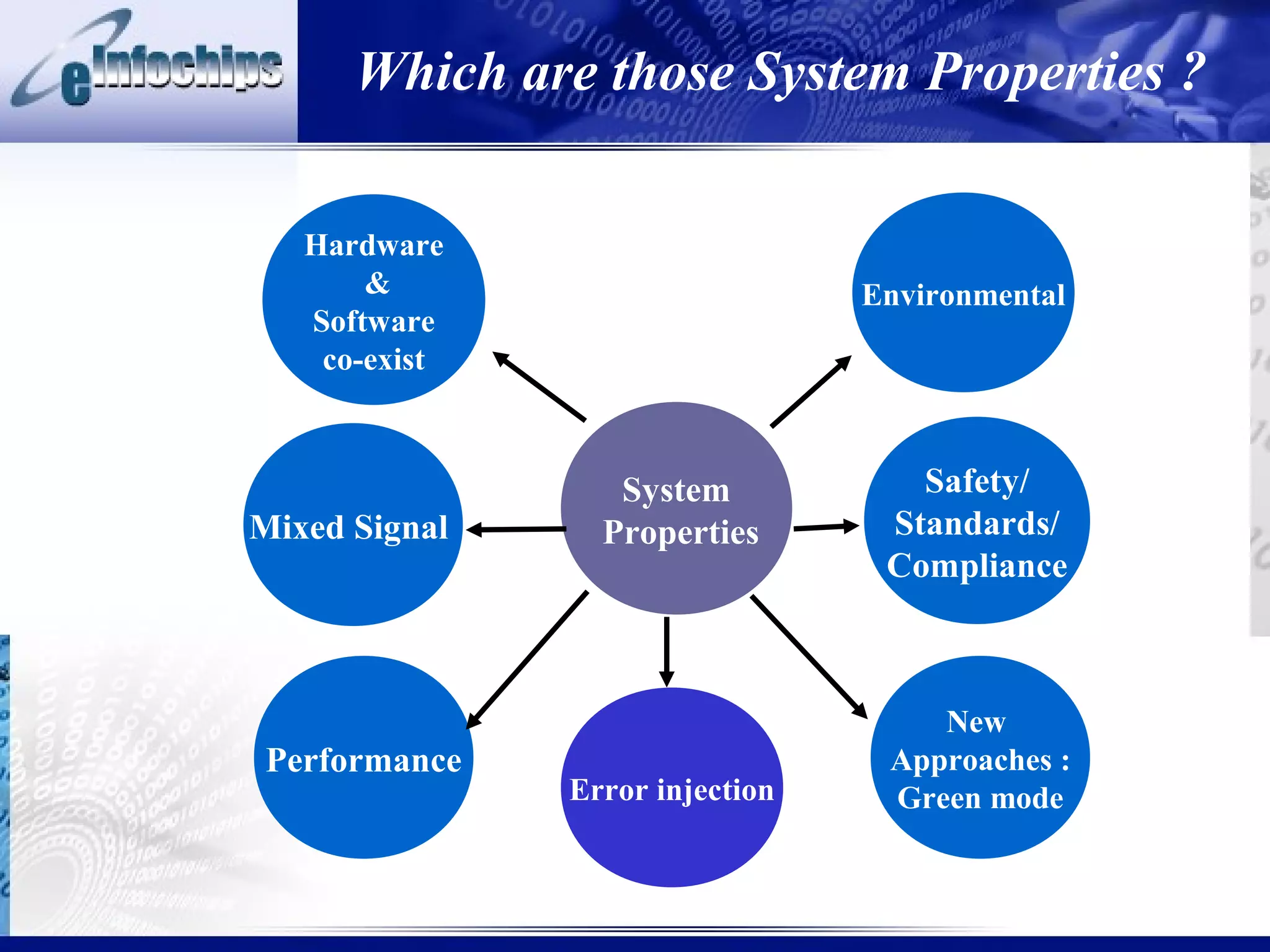
Which are those System Properties ?

   Hardware
       &                         Environmental
   Software
    co-exist


                  System            Safety/
Mixed Signal     Properties       Standards/
                                  Compliance


                                     New
Performance                       Approaches :
               Error injection    Green mode
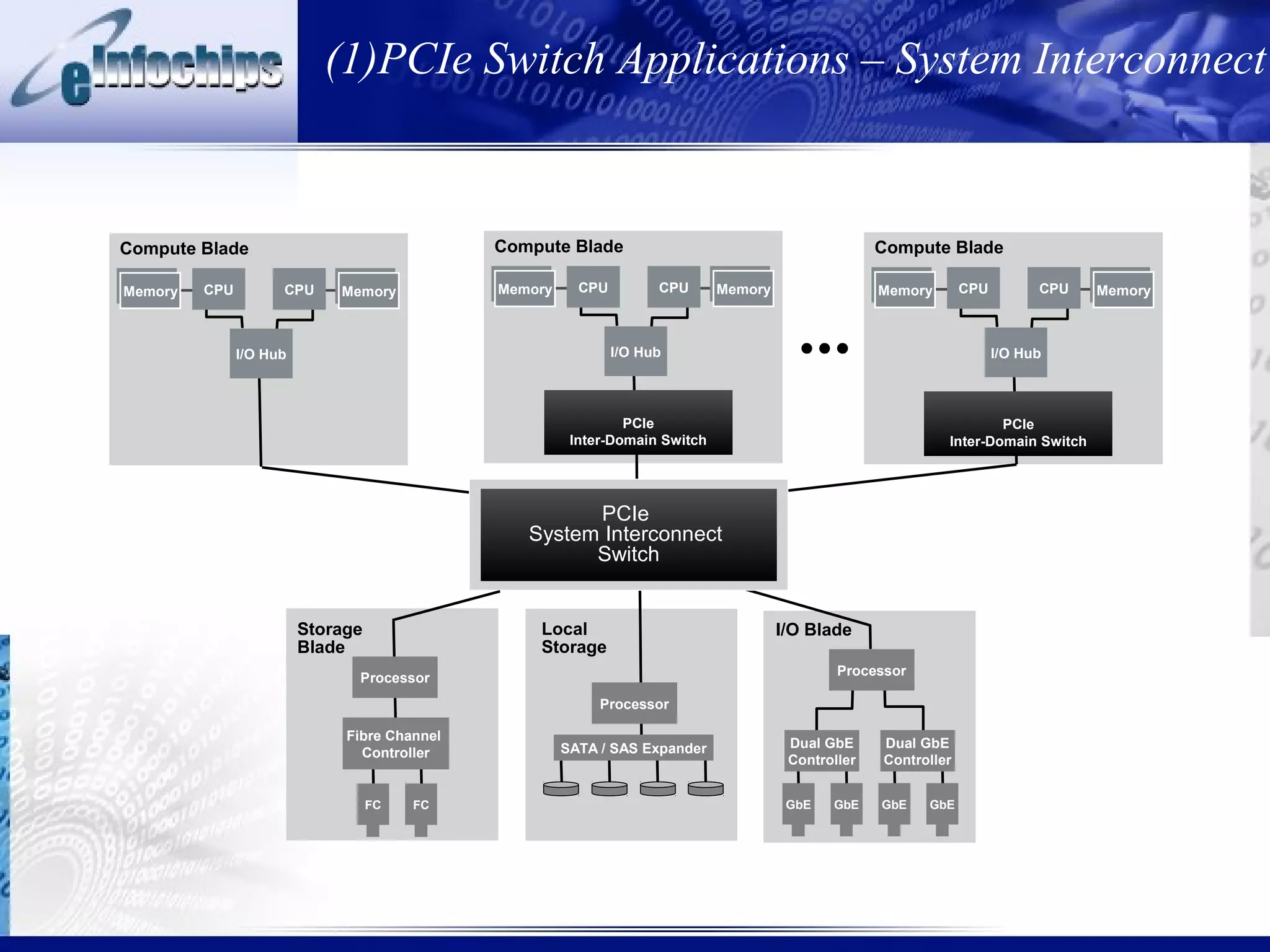
(1)PCIe Switch Applications – System Interconnect


Compute Blade                                 Compute Blade                                          Compute Blade

Memory
Memory   CPU         CPU     Memory
                             Memory           Memory
                                              Memory     CPU         CPU      Memory
                                                                              Memory                 Memory
                                                                                                     Memory       CPU         CPU   Memory
                                                                                                                                    Memory


               I/O Hub                                         I/O Hub                                                  I/O Hub


                                                                PCIe                                                  PCIe
                                                        Inter-Domain Switch                                   Inter-Domain Switch


                                                       PCIe
                                                 System Interconnect
                                                       Switch


                         Storage                  Local                                I/O Blade
                         Blade                    Storage
                                                                                               Processor
                               Processor
                                                            Processor

                              Fibre Channel
                                                       SATA / SAS Expander              Dual GbE     Dual GbE
                                Controller
                                                                                        Controller   Controller


                                   FC   FC                                              GbE   GbE    GbE   GbE
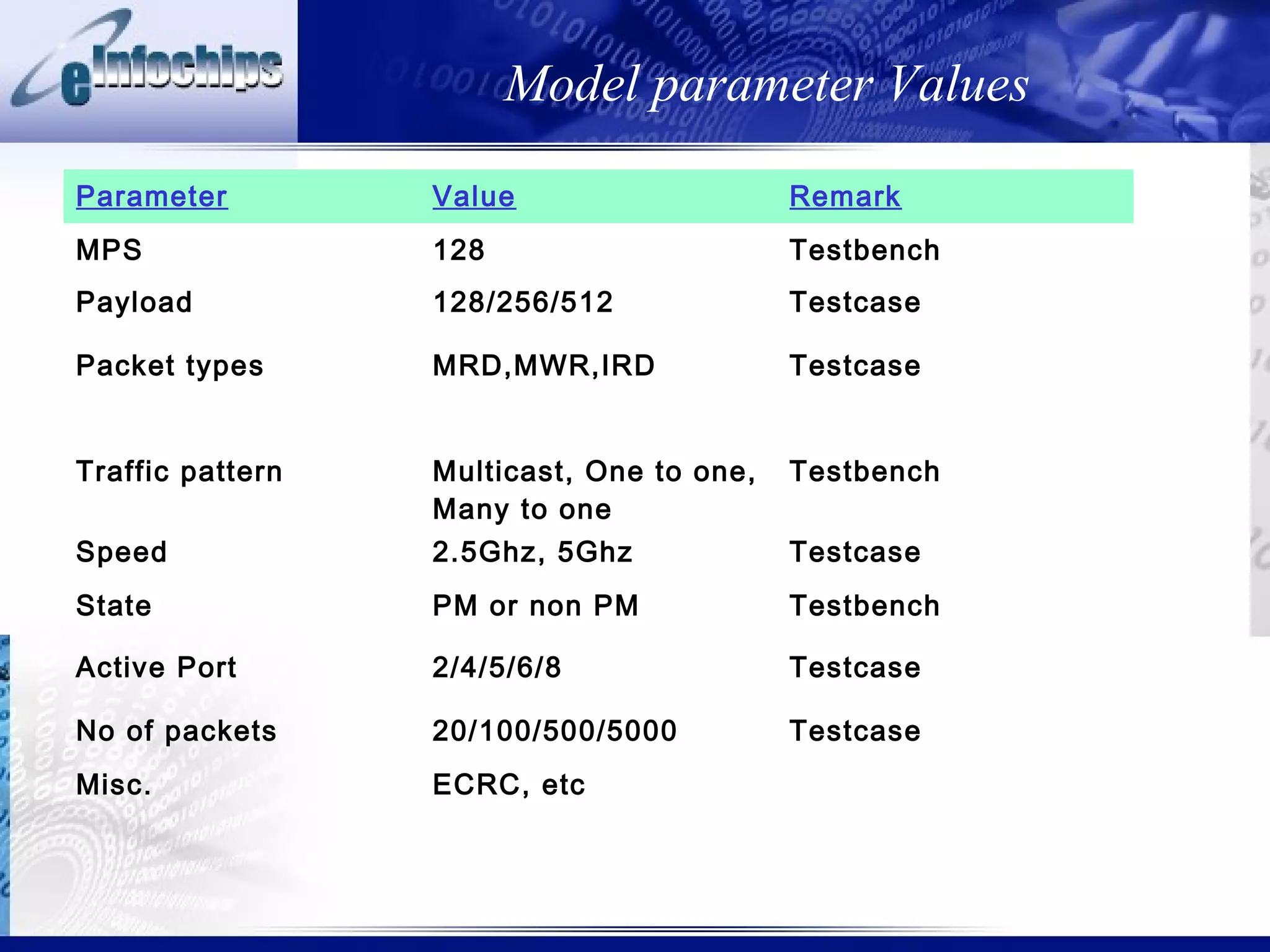
Model parameter Values
Parameter         Value                    Remark
MPS               128                      Testbench
Payload           128/256/512              Testcase

Packet types      MRD,MWR,IRD              Testcase


Traffic pattern   Multicast, One to one,   Testbench
                  Many to one
Speed             2.5Ghz, 5Ghz             Testcase
State             PM or non PM             Testbench

Active Port       2/4/5/6/8                Testcase

No of packets     20/100/500/5000          Testcase
Misc.             ECRC, etc
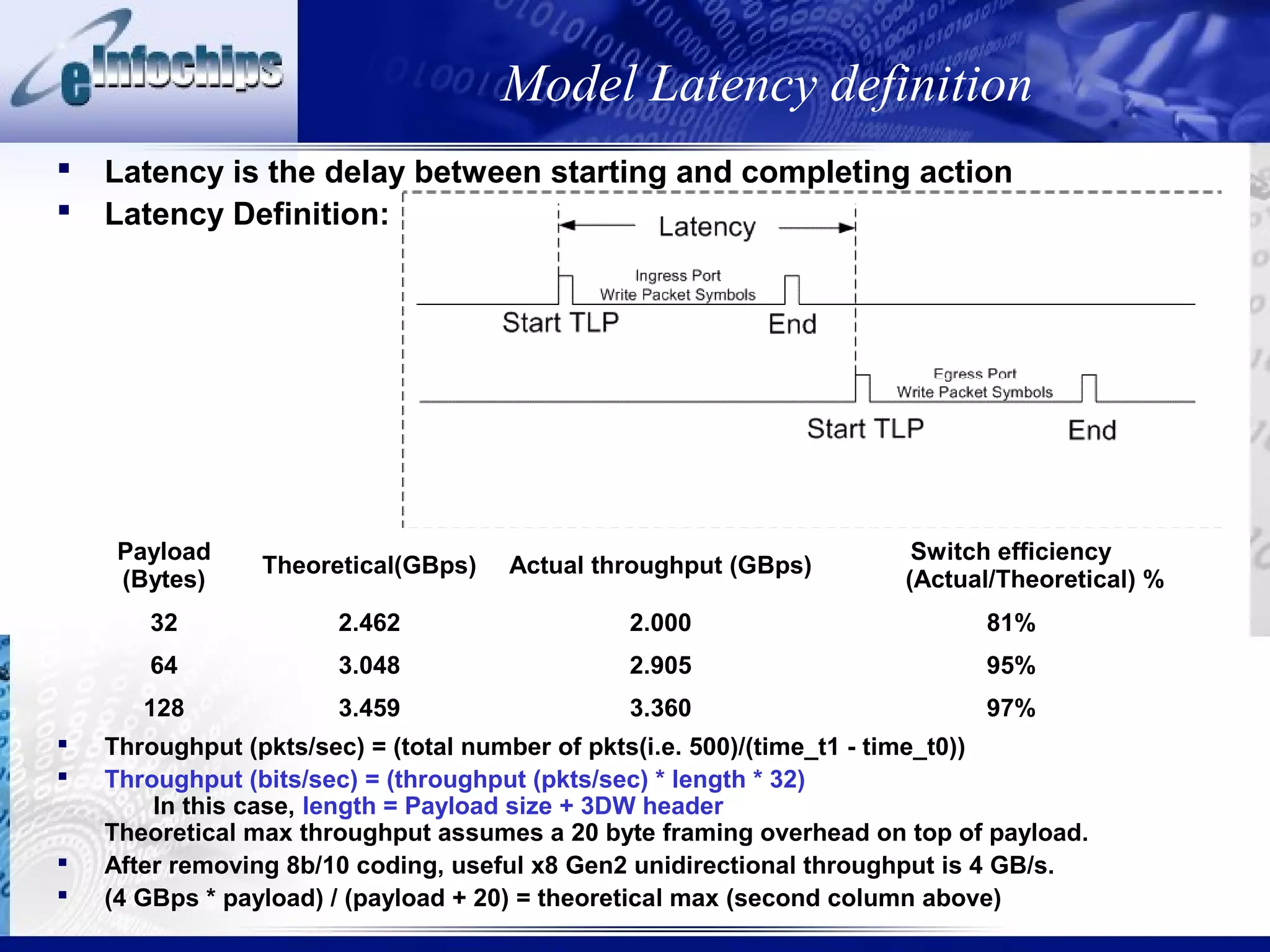
Model Latency definition
   Latency is the delay between starting and completing action
   Latency Definition:


     Payload                                                          Switch efficiency
                Theoretical(GBps)   Actual throughput (GBps)
     (Bytes)                                                         (Actual/Theoretical) %
       32              2.462                  2.000                        81%
       64              3.048                  2.905                        95%
       128             3.459                  3.360                        97%
   Throughput (pkts/sec) = (total number of pkts(i.e. 500)/(time_t1 - time_t0))
   Throughput (bits/sec) = (throughput (pkts/sec) * length * 32)
        In this case, length = Payload size + 3DW header
    Theoretical max throughput assumes a 20 byte framing overhead on top of payload.
   After removing 8b/10 coding, useful x8 Gen2 unidirectional throughput is 4 GB/s.
   (4 GBps * payload) / (payload + 20) = theoretical max (second column above)
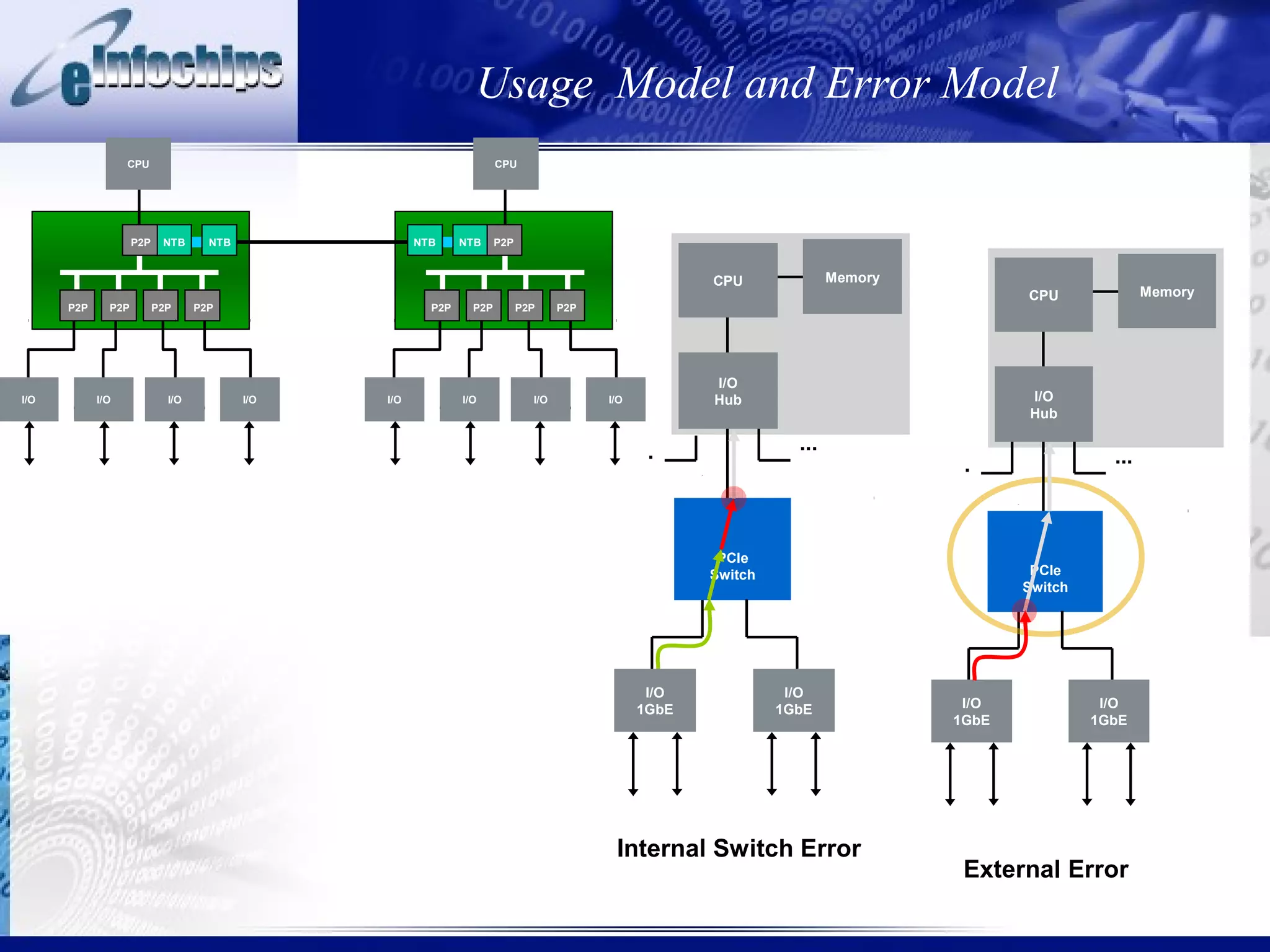
Usage Model and Error Model
                  CPU                                                 CPU


                    P2P    NTB      NTB               NTB     NTB     P2P


                                                                                                       CPU              Memory
                                                                                                                                        CPU              Memory
      P2P     P2P         P2P     P2P                   P2P     P2P         P2P     P2P


                                                                                                       I/O
I/O         I/O             I/O           I/O   I/O           I/O             I/O         I/O          Hub                              I/O
                                                                                                                                        Hub

                                                                                                                  ...
                                                                                                 .
                                                                                                                                  .
                                                                                                                                  .
                                                                                                                                  .                ...


                                                                                                        PCIe
                                                                                                       Switch                            PCIe
                                                                                                                                        Switch


                                                                                                 I/O             I/O
                                                                                                1GbE            1GbE              I/O             I/O
                                                                                                                                 1GbE            1GbE


                                                                                           Internal Switch Error
                                                                                                                                  External Error
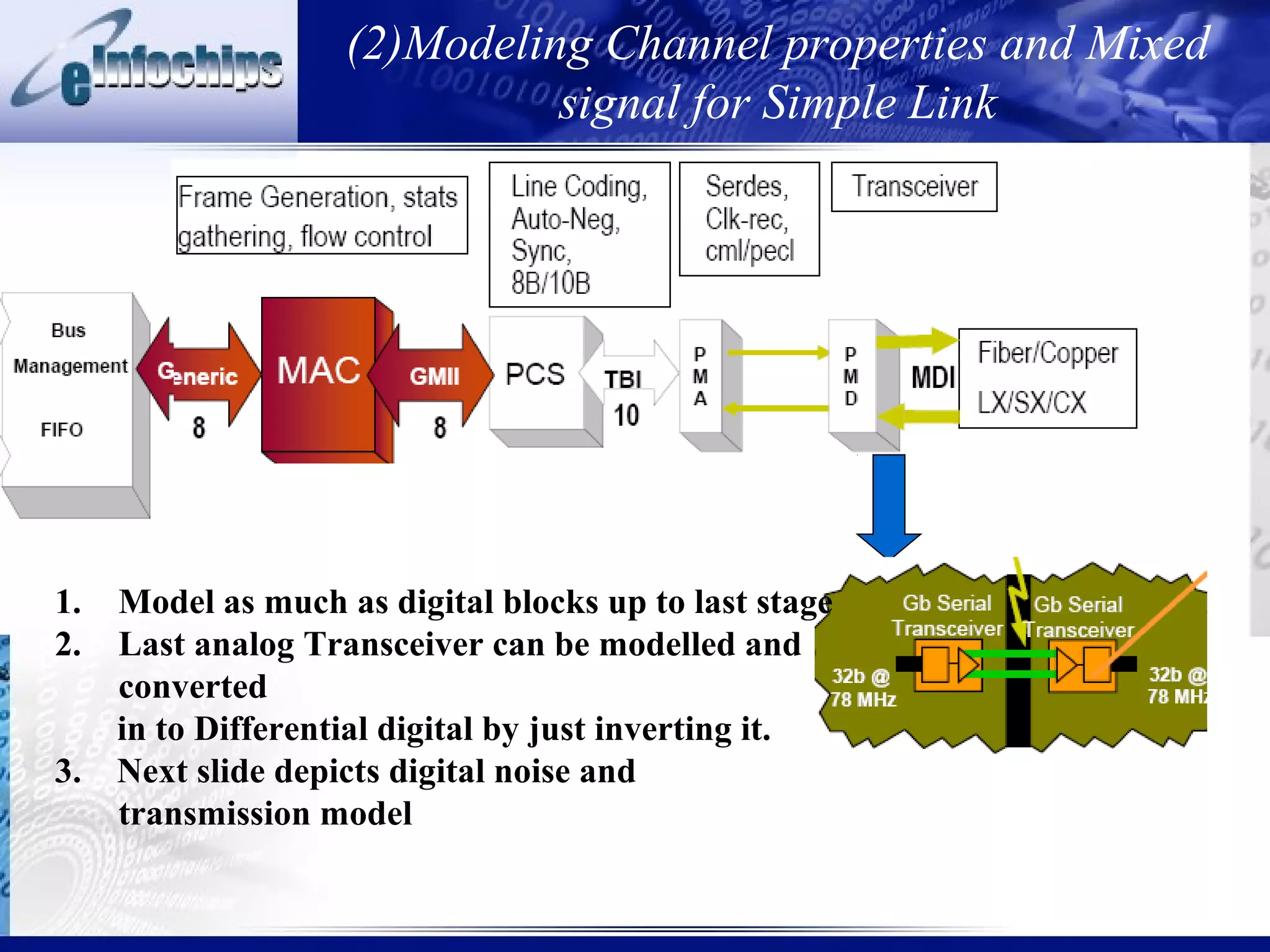
(2)Modeling Channel properties and Mixed
                              signal for Simple Link


1.   Model as much as digital blocks up to last stage
2.   Last analog Transceiver can be modelled and
     converted
     in to Differential digital by just inverting it.
3.   Next slide depicts digital noise and
     transmission model
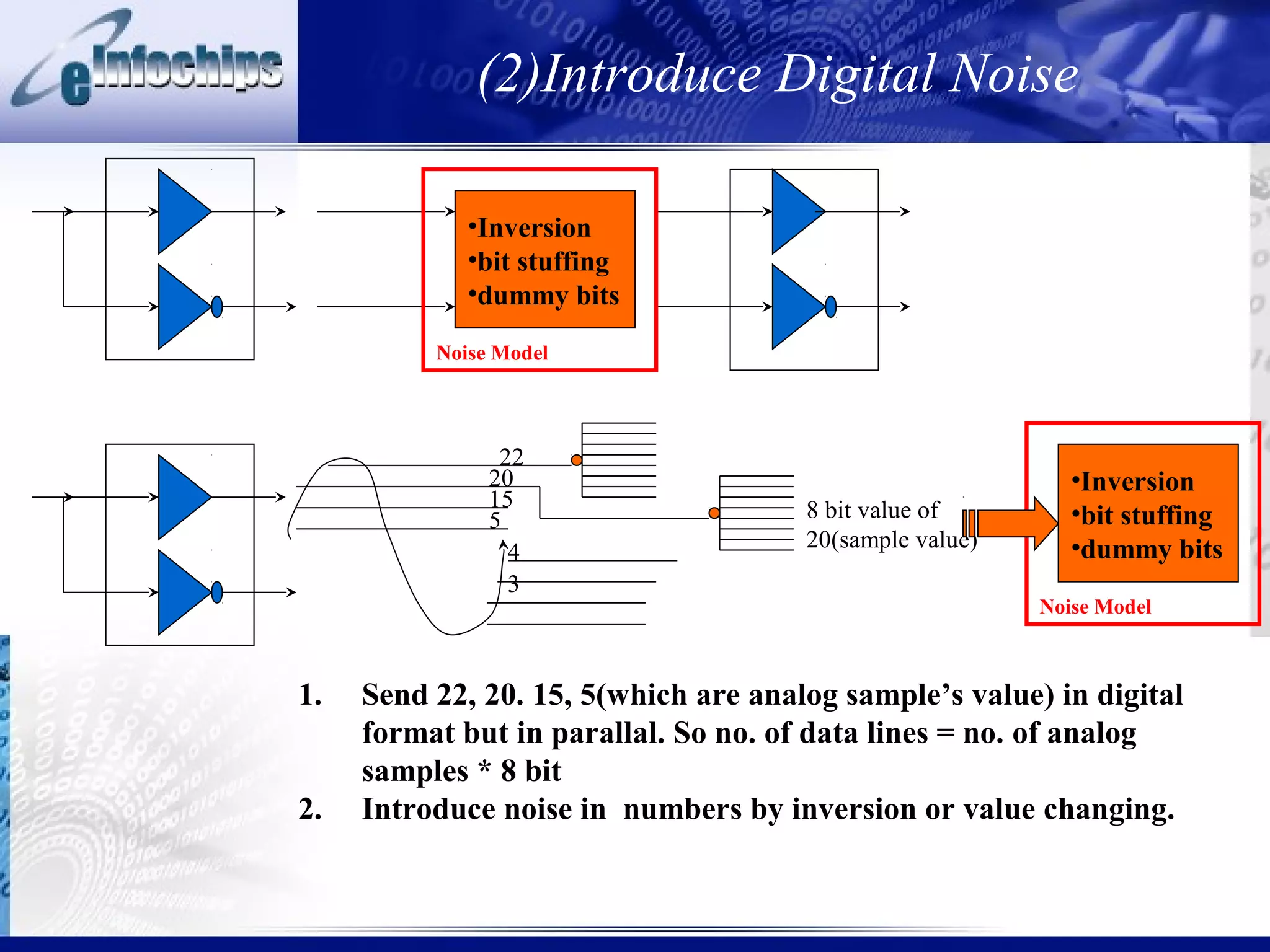
(2)Introduce Digital Noise

             •Inversion
             •bit stuffing
             •dummy bits

          Noise Model


                22
               20                                           •Inversion
               15                     8 bit value of
               5                                            •bit stuffing
                                      20(sample value)      •dummy bits
                 4
                 3
                                                         Noise Model


1.   Send 22, 20. 15, 5(which are analog sample’s value) in digital
     format but in parallal. So no. of data lines = no. of analog
     samples * 8 bit
2.   Introduce noise in numbers by inversion or value changing.
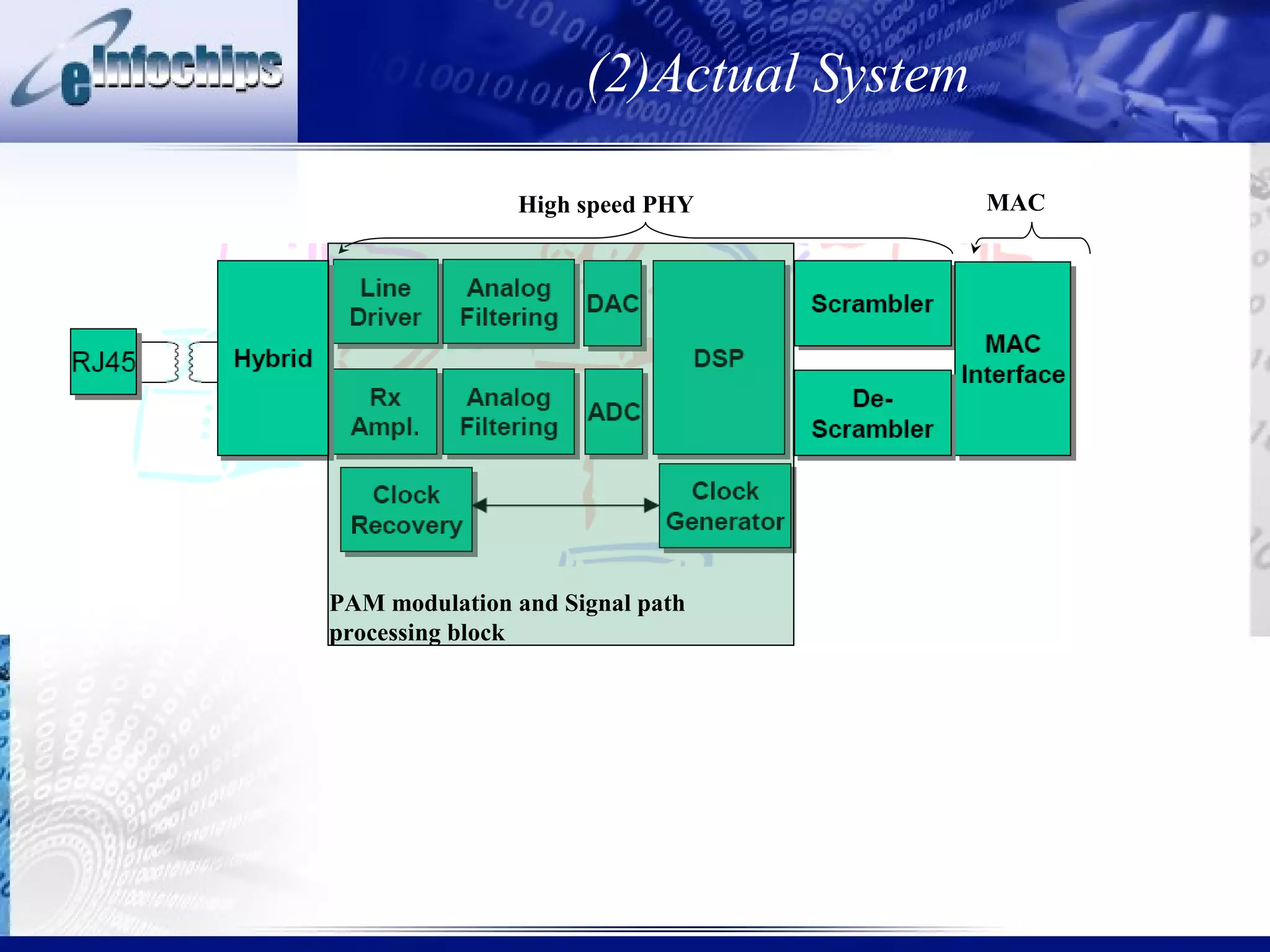
(2)Actual System

               High speed PHY           MAC


PAM modulation and Signal path
processing block
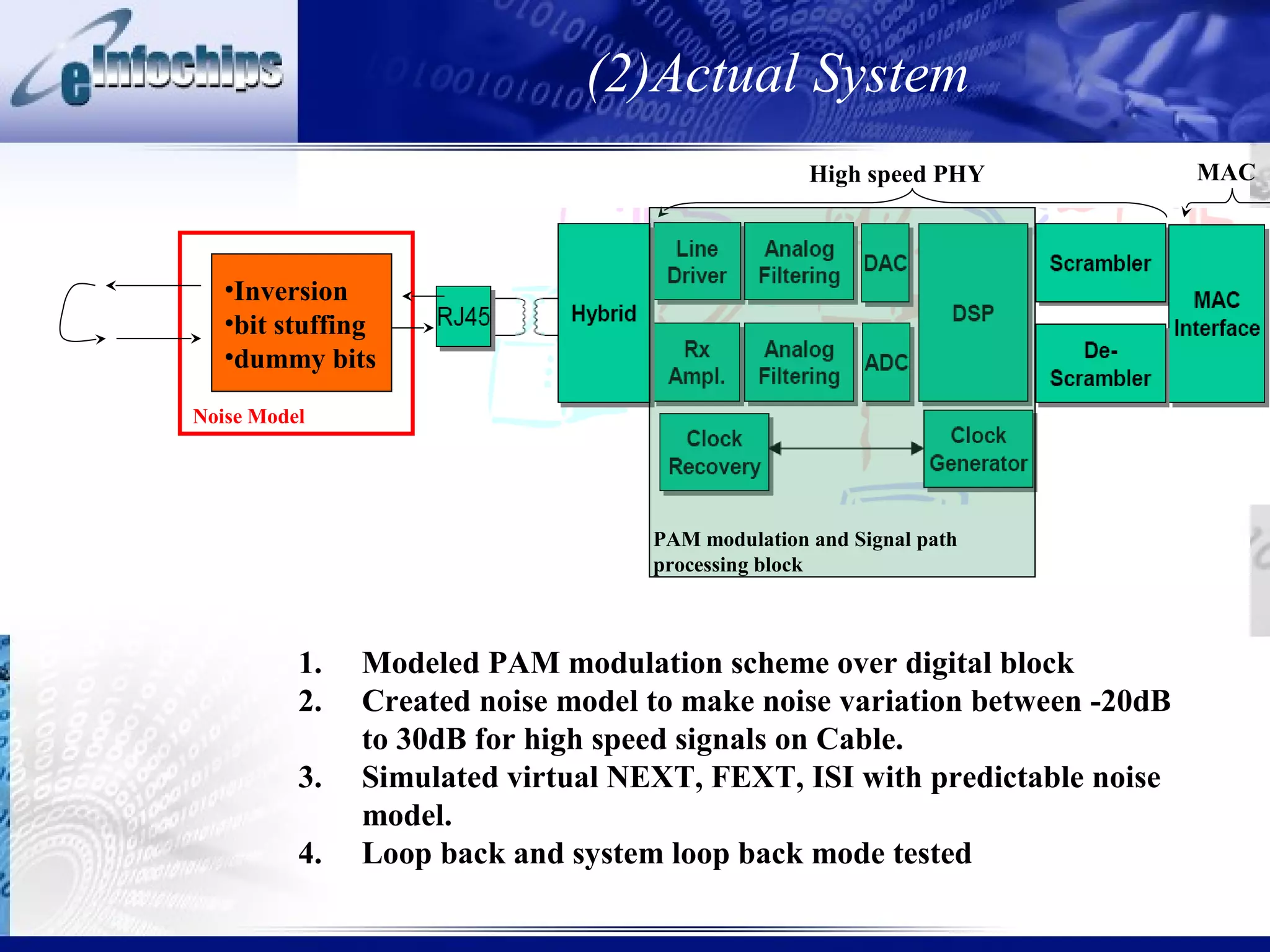
(2)Actual System
                                                  High speed PHY           MAC


   •Inversion
   •bit stuffing
   •dummy bits

Noise Model


                                   PAM modulation and Signal path
                                   processing block


          1.   Modeled PAM modulation scheme over digital block
          2.   Created noise model to make noise variation between -20dB
               to 30dB for high speed signals on Cable.
          3.   Simulated virtual NEXT, FEXT, ISI with predictable noise
               model.
          4.   Loop back and system loop back mode tested
Thank You, All…!

Modeling System Behaviors: A Better Paradigm on Prototyping

  • 1.
    “Modeling System behaviors”….Abetter Paradigm on prototyping -Nilesh Ranpura
  • 2.
    Electronic System Structure System development process Software input/output Hardware input/output Software Hardware Abstraction trade offs development development process process
  • 3.
    System Abstraction andDevelopment Process System Development happens this way Design Flow Because, 1. “Abstraction layers” ensure Concept Architecture specs threads running concurrently 2. Different approach of specs SPI 5 Chip/Block specs due to different types of team Hardware 3. More than one customer with and Board/proto specs proto specs different nature/features Product Specs Not documented System data/environment Reference Platforms
  • 4.
    Which are thoseSystem Properties ? Hardware & Environmental Software co-exist System Safety/ Mixed Signal Properties Standards/ Compliance New Performance Approaches : Error injection Green mode
  • 5.
    (1)PCIe Switch Applications– System Interconnect Compute Blade Compute Blade Compute Blade Memory Memory CPU CPU Memory Memory Memory Memory CPU CPU Memory Memory Memory Memory CPU CPU Memory Memory I/O Hub I/O Hub I/O Hub PCIe PCIe Inter-Domain Switch Inter-Domain Switch PCIe System Interconnect Switch Storage Local I/O Blade Blade Storage Processor Processor Processor Fibre Channel SATA / SAS Expander Dual GbE Dual GbE Controller Controller Controller FC FC GbE GbE GbE GbE
  • 6.
    Model parameter Values Parameter Value Remark MPS 128 Testbench Payload 128/256/512 Testcase Packet types MRD,MWR,IRD Testcase Traffic pattern Multicast, One to one, Testbench Many to one Speed 2.5Ghz, 5Ghz Testcase State PM or non PM Testbench Active Port 2/4/5/6/8 Testcase No of packets 20/100/500/5000 Testcase Misc. ECRC, etc
  • 7.
    Model Latency definition  Latency is the delay between starting and completing action  Latency Definition: Payload Switch efficiency Theoretical(GBps) Actual throughput (GBps) (Bytes) (Actual/Theoretical) % 32 2.462 2.000 81% 64 3.048 2.905 95% 128 3.459 3.360 97%  Throughput (pkts/sec) = (total number of pkts(i.e. 500)/(time_t1 - time_t0))  Throughput (bits/sec) = (throughput (pkts/sec) * length * 32) In this case, length = Payload size + 3DW header Theoretical max throughput assumes a 20 byte framing overhead on top of payload.  After removing 8b/10 coding, useful x8 Gen2 unidirectional throughput is 4 GB/s.  (4 GBps * payload) / (payload + 20) = theoretical max (second column above)
  • 8.
    Usage Model andError Model CPU CPU P2P NTB NTB NTB NTB P2P CPU Memory CPU Memory P2P P2P P2P P2P P2P P2P P2P P2P I/O I/O I/O I/O I/O I/O I/O I/O I/O Hub I/O Hub ... . . . . ... PCIe Switch PCIe Switch I/O I/O 1GbE 1GbE I/O I/O 1GbE 1GbE Internal Switch Error External Error
  • 9.
    (2)Modeling Channel propertiesand Mixed signal for Simple Link 1. Model as much as digital blocks up to last stage 2. Last analog Transceiver can be modelled and converted in to Differential digital by just inverting it. 3. Next slide depicts digital noise and transmission model
  • 10.
    (2)Introduce Digital Noise •Inversion •bit stuffing •dummy bits Noise Model 22 20 •Inversion 15 8 bit value of 5 •bit stuffing 20(sample value) •dummy bits 4 3 Noise Model 1. Send 22, 20. 15, 5(which are analog sample’s value) in digital format but in parallal. So no. of data lines = no. of analog samples * 8 bit 2. Introduce noise in numbers by inversion or value changing.
  • 11.
    (2)Actual System High speed PHY MAC PAM modulation and Signal path processing block
  • 12.
    (2)Actual System High speed PHY MAC •Inversion •bit stuffing •dummy bits Noise Model PAM modulation and Signal path processing block 1. Modeled PAM modulation scheme over digital block 2. Created noise model to make noise variation between -20dB to 30dB for high speed signals on Cable. 3. Simulated virtual NEXT, FEXT, ISI with predictable noise model. 4. Loop back and system loop back mode tested
  • 13.

Editor's Notes

  • #4 Silicon/Chip Realization Services eInfochips’ suite of solutions and services addresses all stages of a chip lifecycle, ranging from Design, Verification, Physical Design to Continuation Engineering Services. It helps silicon vendors reduce their cost and development time through IP leveraged design services that address to the complete chip lifecycle.