MODALS TENSES
MARINA URQUIZAR ORTEGA
What's a modal?
A modal expressing a distinction of mood, such
as that between possibility and actuality.
The kinds of modals in English are. CAN, MAY,
MUST, NEED, OUGHT, SHALL, SHOULD, WILL
AND WOULD.
But we only will see Can, may, must, ought, shall
and should.
CHARACTERISTICS
 No -S in 3th person of singular
 No 'TO' + INFINITIVE.
Except → Be able to, have to, ought to.
 Direct negation and interrogation.
→ Could you do me a favor, please?
→ You shouldn't be so angry.
Except → Don't/doesn't have
 No past, future, participe and compund times.
Except → Can with be able to/could.
CAN/COULD
|Poder, podría/podía (could)|
USES
 Ability and permission
 COULD is the past of CAN. (Podía/Podría)
 WILL BE ABLE TO is the future of CAN (Ser capaz de)
→ Cans(incorrect)(incorrect)
→→ CanCan toto go (incorrect)go (incorrect)
→→ Don't canDon't can (incorrect) Can't (correct)(incorrect) Can't (correct)
→→ WillWill can (incorrect)can (incorrect)
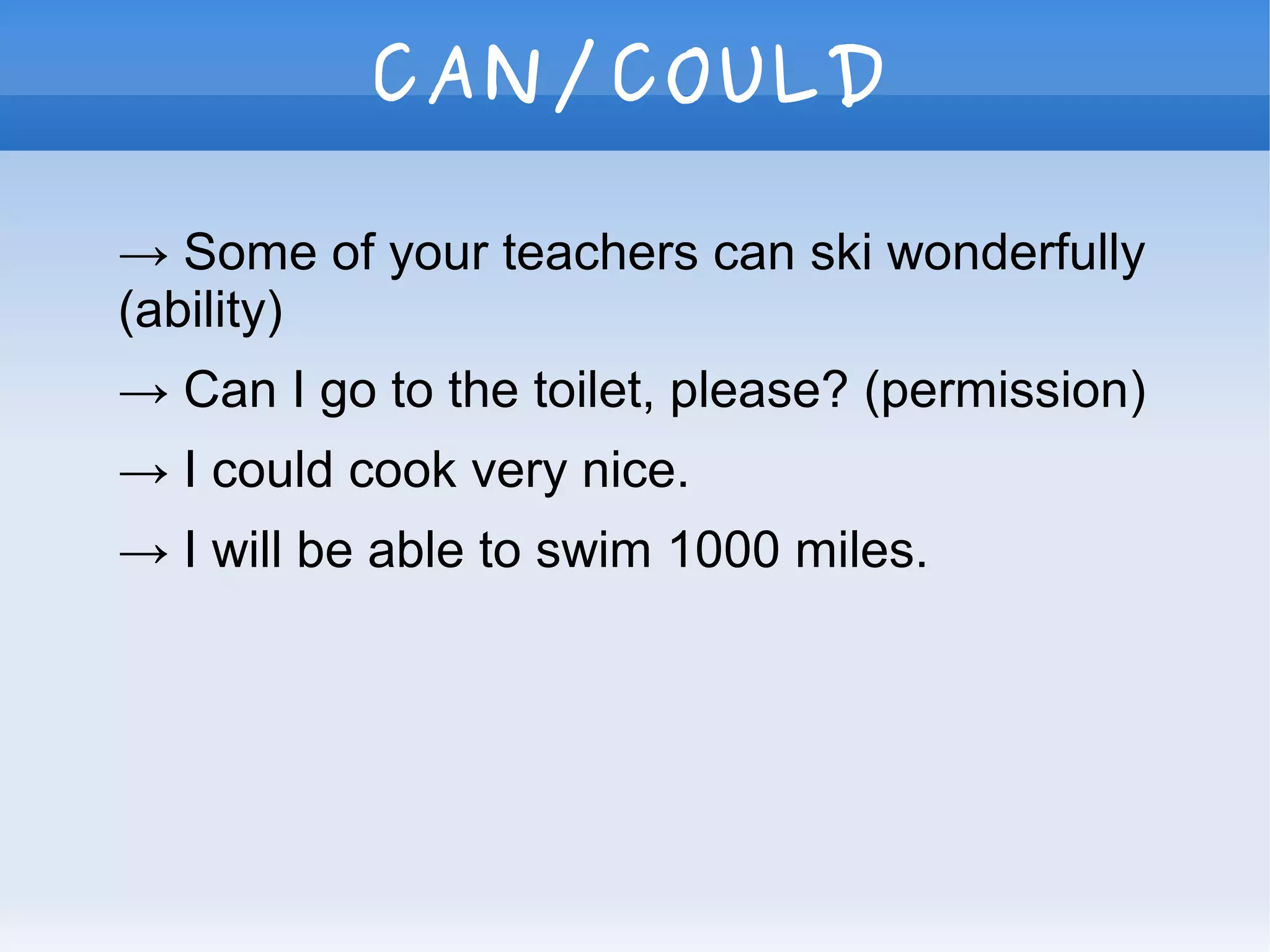
CAN/COULD
→ Some of your teachers can ski wonderfully
(ability)
→ Can I go to the toilet, please? (permission)
→ I could cook very nice.
→ I will be able to swim 1000 miles.
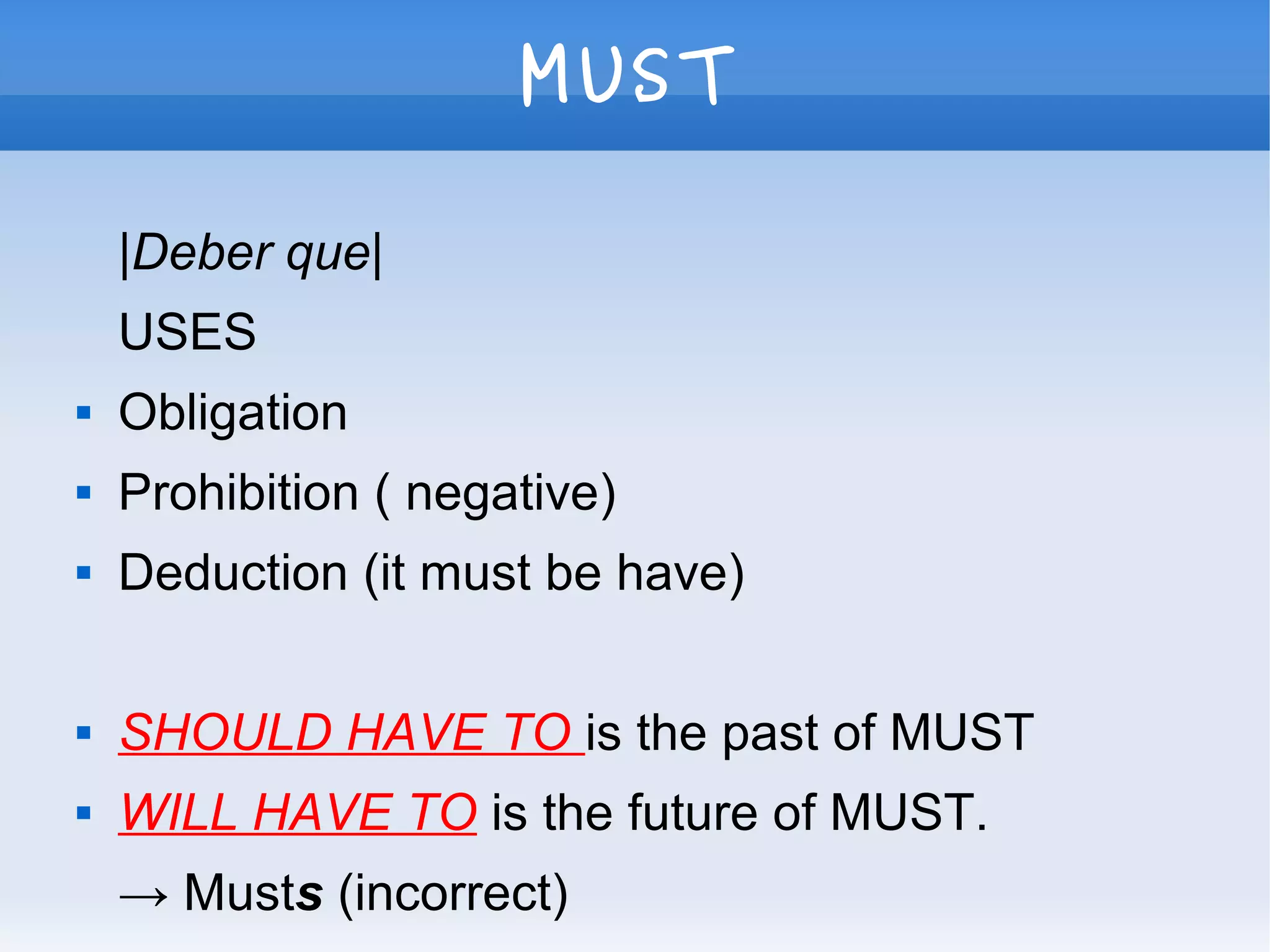
MUST
|Deber que|
USES
 Obligation
 Prohibition ( negative)
 Deduction (it must be have)
 SHOULD HAVE TO is the past of MUST
 WILL HAVE TO is the future of MUST.
→ Musts (incorrect)
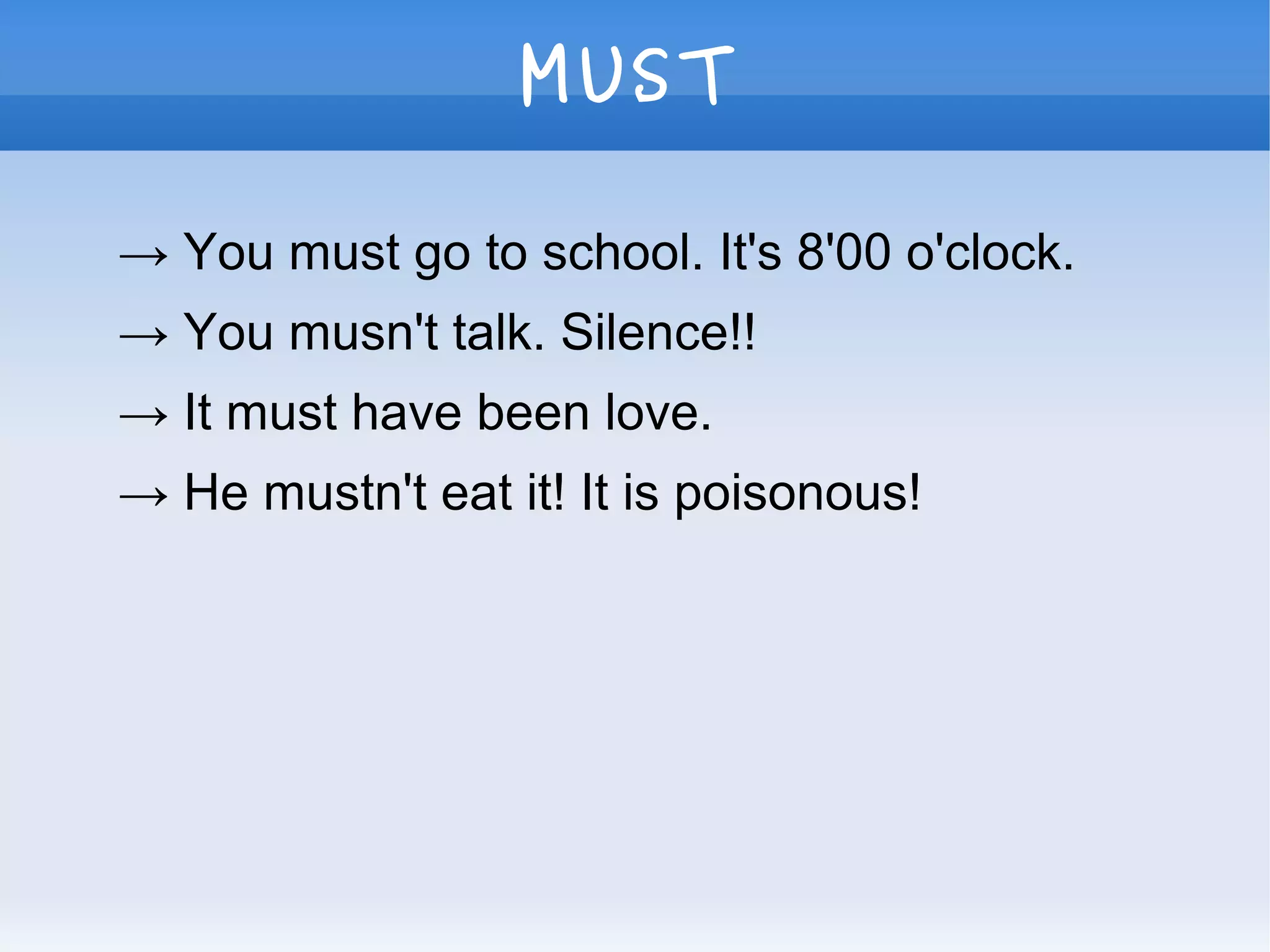
→ You must go to school. It's 8'00 o'clock.
→ You musn't talk. Silence!!
→ It must have been love.
→ He mustn't eat it! It is poisonous!
MUST
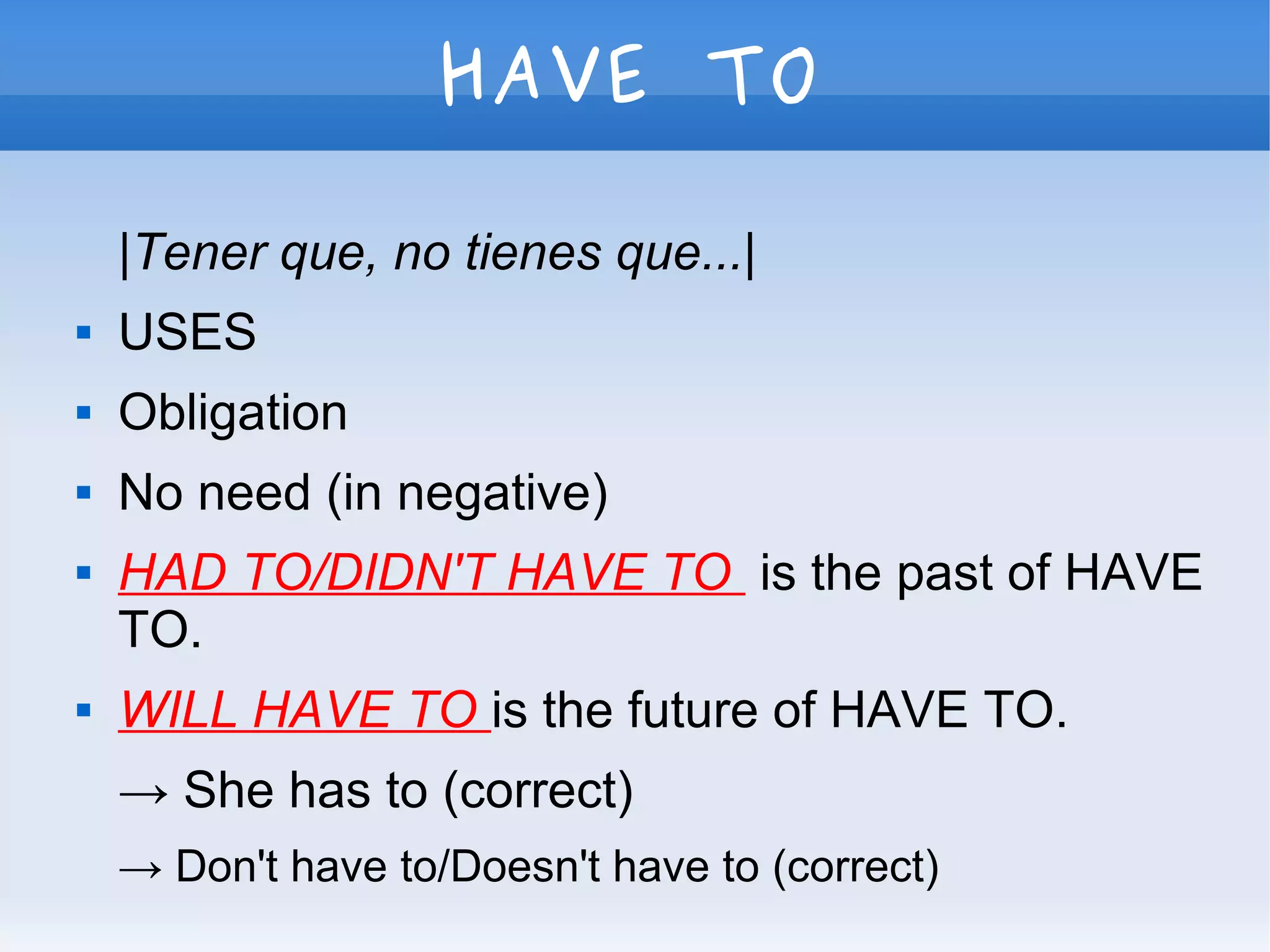
HAVE TO
|Tener que, no tienes que...|
 USES
 Obligation
 No need (in negative)
 HAD TO/DIDN'T HAVE TO is the past of HAVE
TO.
 WILL HAVE TO is the future of HAVE TO.
→ She has to (correct)
→ Don't have to/Doesn't have to (correct)
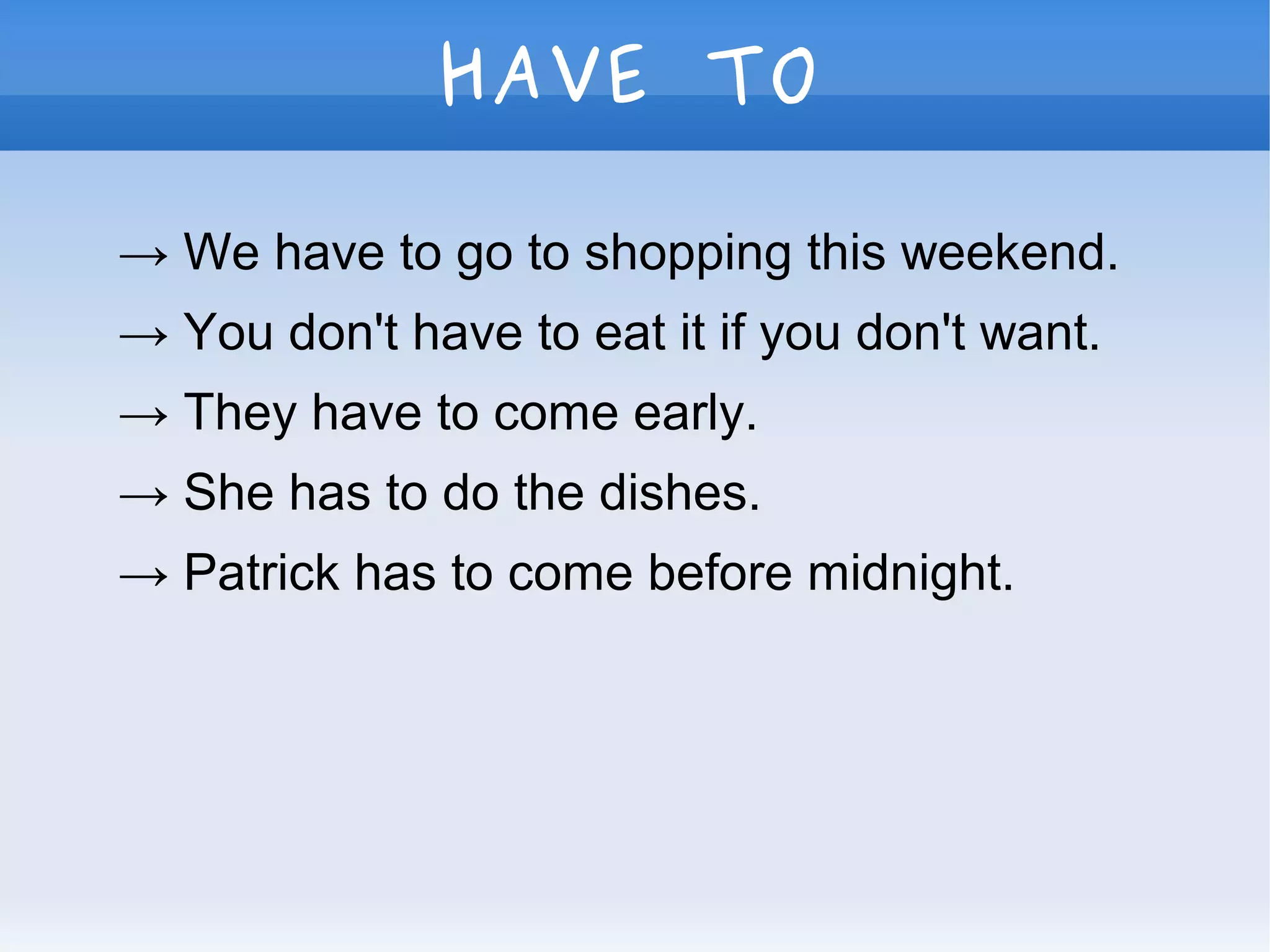
HAVE TO
→ We have to go to shopping this weekend.
→ You don't have to eat it if you don't want.
→ They have to come early.
→ She has to do the dishes.
→ Patrick has to come before midnight.
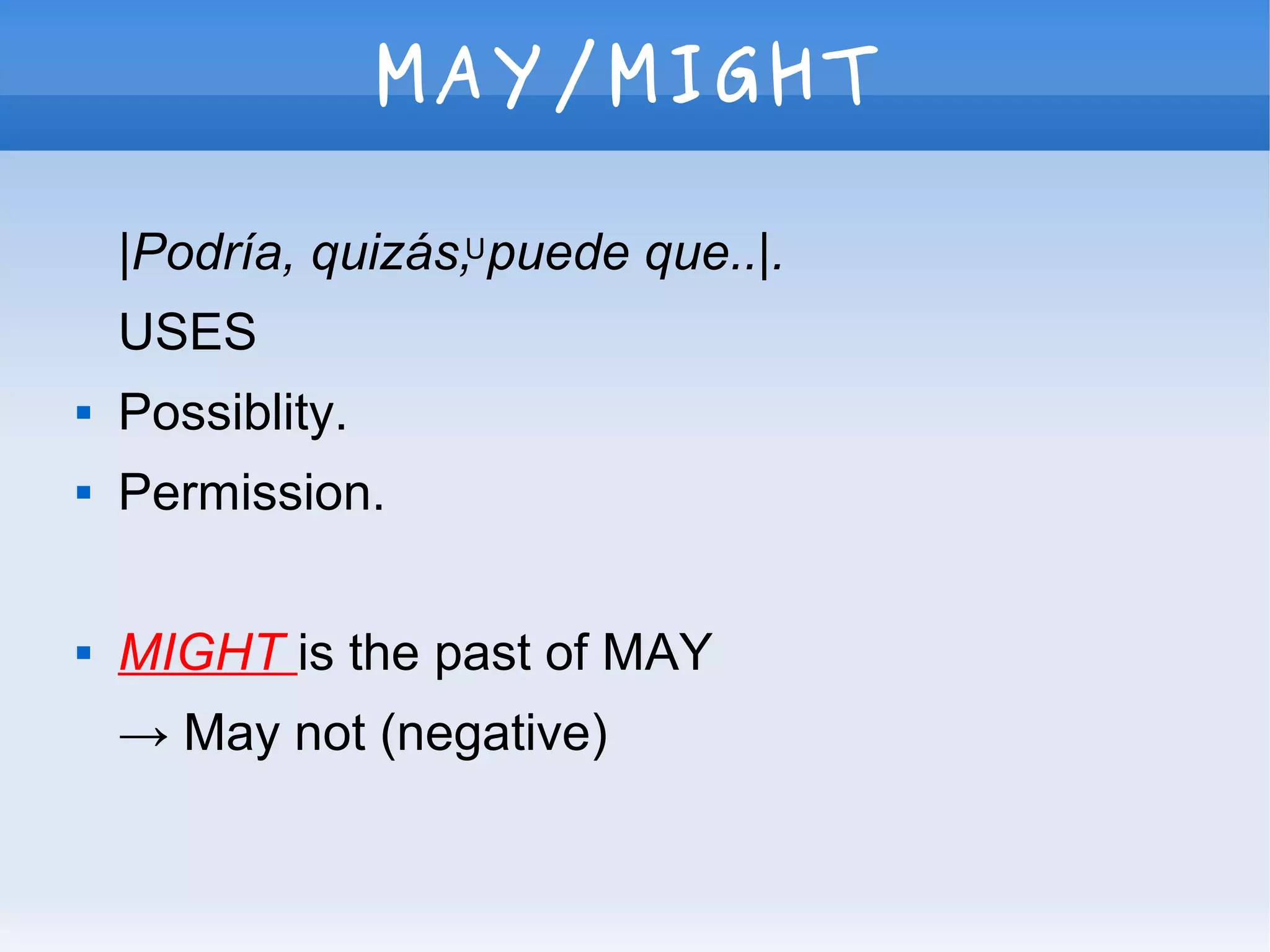
MAY/MIGHT
|Podría, quizás, puede que..|.
USES
 Possiblity.
 Permission.
 MIGHT is the past of MAY
→ May not (negative)
U
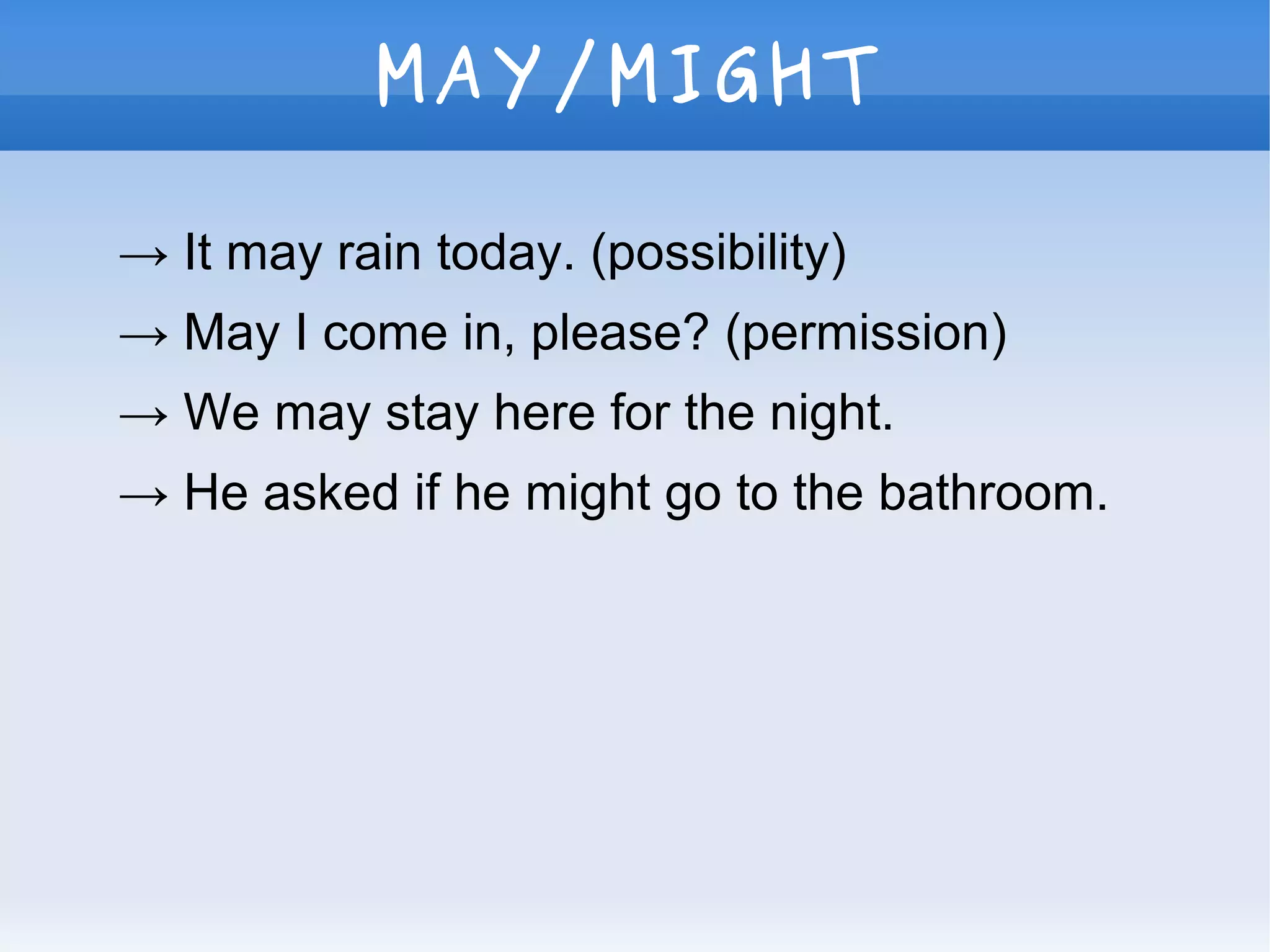
MAY/MIGHT
→ It may rain today. (possibility)
→ May I come in, please? (permission)
→ We may stay here for the night.
→ He asked if he might go to the bathroom.
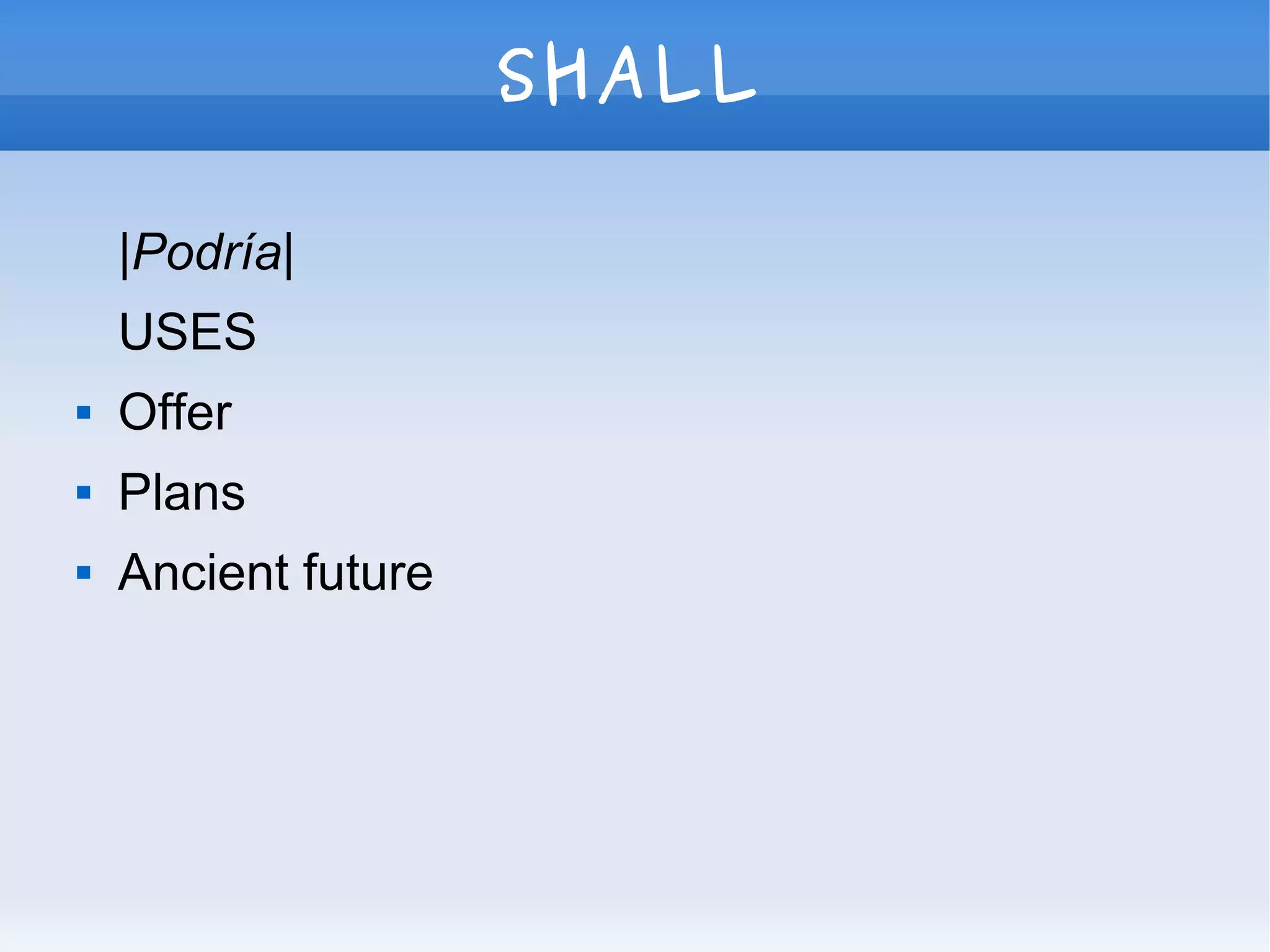
SHALL
|Podría|
USES
 Offer
 Plans
 Ancient future
SHALL
→ Shall we have a coffee? (plans)
→ We shall do it. (offer)
→ I shall go (ancient future)
→ Shall I do it?
SHOULD
|Debería, tendría que||
USES
 Advice
→ Should + infinitive without TO
SHOULD
→ You should talk with her.
→ Should I study for the exam?
→ We shouldn't arrive late.
→ I think you should work harder.
OUGHT TO
|Debería, tendría que|
 USES
 Light duty
 Advice
→ You ought not to drink (correct)
→ Ought you to be here so early? (correct)
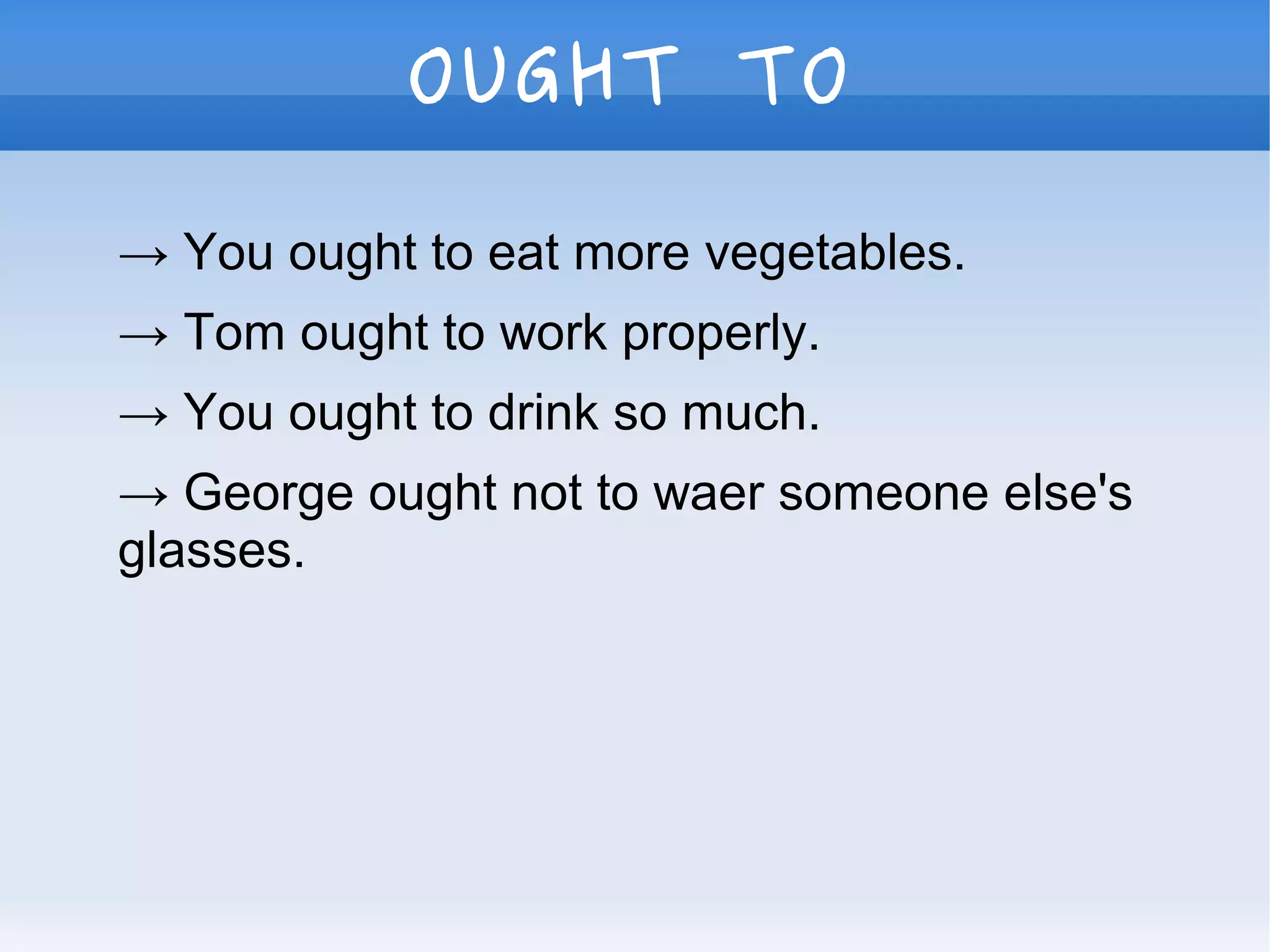
OUGHT TO
→ You ought to eat more vegetables.
→ Tom ought to work properly.
→ You ought to drink so much.
→ George ought not to waer someone else's
glasses.

MODALS TENSES

  • 1.
  • 2.
    What's a modal? Amodal expressing a distinction of mood, such as that between possibility and actuality. The kinds of modals in English are. CAN, MAY, MUST, NEED, OUGHT, SHALL, SHOULD, WILL AND WOULD. But we only will see Can, may, must, ought, shall and should.
  • 3.
    CHARACTERISTICS  No -Sin 3th person of singular  No 'TO' + INFINITIVE. Except → Be able to, have to, ought to.  Direct negation and interrogation. → Could you do me a favor, please? → You shouldn't be so angry. Except → Don't/doesn't have  No past, future, participe and compund times. Except → Can with be able to/could.
  • 4.
    CAN/COULD |Poder, podría/podía (could)| USES Ability and permission  COULD is the past of CAN. (Podía/Podría)  WILL BE ABLE TO is the future of CAN (Ser capaz de) → Cans(incorrect)(incorrect) →→ CanCan toto go (incorrect)go (incorrect) →→ Don't canDon't can (incorrect) Can't (correct)(incorrect) Can't (correct) →→ WillWill can (incorrect)can (incorrect)
  • 5.
    CAN/COULD → Some ofyour teachers can ski wonderfully (ability) → Can I go to the toilet, please? (permission) → I could cook very nice. → I will be able to swim 1000 miles.
  • 6.
    MUST |Deber que| USES  Obligation Prohibition ( negative)  Deduction (it must be have)  SHOULD HAVE TO is the past of MUST  WILL HAVE TO is the future of MUST. → Musts (incorrect)
  • 7.
    → You mustgo to school. It's 8'00 o'clock. → You musn't talk. Silence!! → It must have been love. → He mustn't eat it! It is poisonous! MUST
  • 8.
    HAVE TO |Tener que,no tienes que...|  USES  Obligation  No need (in negative)  HAD TO/DIDN'T HAVE TO is the past of HAVE TO.  WILL HAVE TO is the future of HAVE TO. → She has to (correct) → Don't have to/Doesn't have to (correct)
  • 9.
    HAVE TO → Wehave to go to shopping this weekend. → You don't have to eat it if you don't want. → They have to come early. → She has to do the dishes. → Patrick has to come before midnight.
  • 10.
    MAY/MIGHT |Podría, quizás, puedeque..|. USES  Possiblity.  Permission.  MIGHT is the past of MAY → May not (negative) U
  • 11.
    MAY/MIGHT → It mayrain today. (possibility) → May I come in, please? (permission) → We may stay here for the night. → He asked if he might go to the bathroom.
  • 12.
  • 13.
    SHALL → Shall wehave a coffee? (plans) → We shall do it. (offer) → I shall go (ancient future) → Shall I do it?
  • 14.
    SHOULD |Debería, tendría que|| USES Advice → Should + infinitive without TO
  • 15.
    SHOULD → You shouldtalk with her. → Should I study for the exam? → We shouldn't arrive late. → I think you should work harder.
  • 16.
    OUGHT TO |Debería, tendríaque|  USES  Light duty  Advice → You ought not to drink (correct) → Ought you to be here so early? (correct)
  • 17.
    OUGHT TO → Youought to eat more vegetables. → Tom ought to work properly. → You ought to drink so much. → George ought not to waer someone else's glasses.