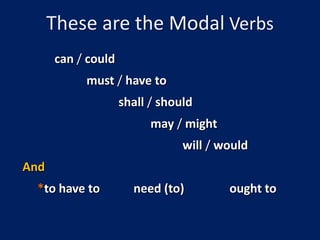


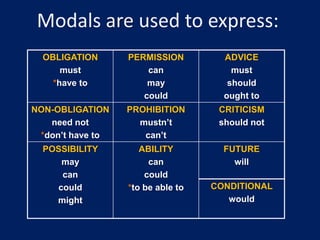

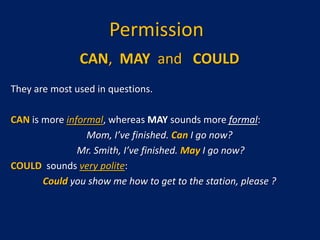
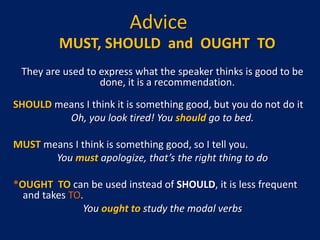


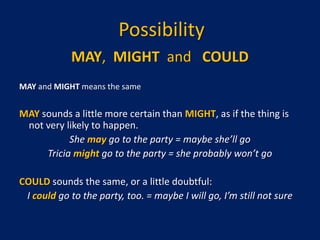
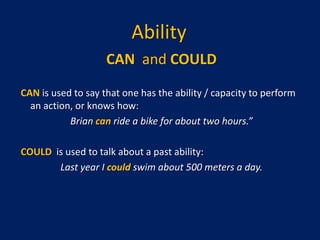

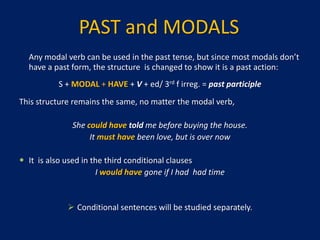


This document provides information about modal verbs in English. It defines modal verbs as special verbs that do not have regular verb forms and are used to express ideas like obligation, permission, advice, possibility, and ability. The document lists common modal verbs like can, may, must, should, will, would. It explains the uses and meanings of different modal verbs like must and have to for obligation, can, may and could for permission, should and ought to for advice. It also discusses how modal verbs are used without do-support in questions and negatives. The document provides details on modal verb usage with examples to express ideas like prohibition, criticism, possibility, ability, future, and conditionals. It notes some exceptions for modal verbs


