LANGUAGE TEACHING 
METHODOLOGY
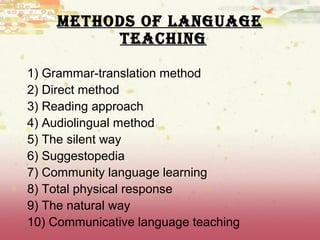
METHODS OF LANGUAGE 
TEACHING 
1) Grammar-translation method 
2) Direct method 
3) Reading approach 
4) Audiolingual method 
5) The silent way 
6) Suggestopedia 
7) Community language learning 
8) Total physical response 
9) The natural way 
10) Communicative language teaching
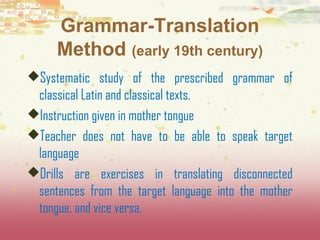
Grammar-Translation 
Method (early 19th century) 
Systematic study of the prescribed grammar of 
classical Latin and classical texts. 
Instruction given in mother tongue 
Teacher does not have to be able to speak target 
language 
Drills are exercises in translating disconnected 
sentences from the target language into the mother 
tongue, and vice versa.
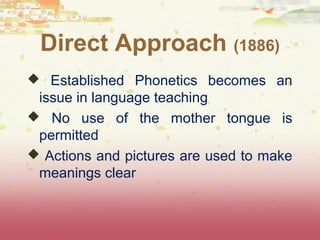
Direct Approach (1886) 
 Established Phonetics becomes an 
issue in language teaching 
 No use of the mother tongue is 
permitted 
 Actions and pictures are used to make 
meanings clear
Reading Approach 
Reading is viewed as the most appropriate 
skill to have in a foreign language since many 
people did not travel abroad 
 Only the grammar useful for reading 
comprehension is taught; 
 Reading comprehension is the only language 
skill emphasized
AUDIO- LINGUAL 
APPROACH (1939-1945 ) 
This method is based on the principles of 
behavior psychology. 
Overcoming native language habits; form 
new target language habits. 
 Vocabulary is strictly limited and learned in 
context 
 Intersperse short periods of drill (about 10 
minutes) with very brief alternative activities 
to avoid fatigue and boredom.
SILENT WAY/ 
COGNITIVE APPROACH 
(1960) 
 To create simple linguistic situations 
that remain under the complete control 
of the teacher . 
This method emphasizes the autonomy 
of the learners 
 Reading and writing are once again 
important as listening and speaking
Suggestopedia/ 
Affective - Humanistic Approach 
(1976) 
 Class atmosphere is viewed as more 
important than materials or methods; 
 The teacher should be proficient in the 
target language and the student’s native 
language since translation may be used 
heavily in the initial stages to help students 
feel at ease; later it is gradually phased 
out. 
 Learners were encouraged to be as 
“childlike” as possible.
Community Language 
Learning 
 Teacher plays role as a counselor, and 
student as client 
 Emphasize the sense of community in 
learning group 
 There is no syllabus or textbook to 
follow, the student determine the lesson 
themselves
TOTAL PHYSICAL 
RESPONSE 
 Combines information and skills 
through the use of the kinesthetic 
sensory system. 
 Main aim is to reduce the stress. 
 Students speak when they are ready. 
 After learning to respond to oral 
commands the students learn to read 
and write
NATURAL APPROACH 
 This method emphasized development of 
basic personal communication skills 
 Focus of instruction is on communication 
rather than it form 
 Speech production comes slowly and is 
never forced 
 Early speech goes through natural stages 
(yes or no response, one word answer to 
complete sentence)
Communicative Language 
Teaching 
 The method stresses on learning to 
communicate through the target 
language 
Interact with others in the target 
language; negotiate meaning. 
Focus in on meaning, not form 
 Material is presented in context
OUR 
ENVIRONME 
E X E R C I S E 
NT  Reading : 
 Speaking : 
 Listening : 
 Writing :

methods of-language-teaching

  • 1.
  • 2.
    METHODS OF LANGUAGE TEACHING 1) Grammar-translation method 2) Direct method 3) Reading approach 4) Audiolingual method 5) The silent way 6) Suggestopedia 7) Community language learning 8) Total physical response 9) The natural way 10) Communicative language teaching
  • 3.
    Grammar-Translation Method (early19th century) Systematic study of the prescribed grammar of classical Latin and classical texts. Instruction given in mother tongue Teacher does not have to be able to speak target language Drills are exercises in translating disconnected sentences from the target language into the mother tongue, and vice versa.
  • 4.
    Direct Approach (1886)  Established Phonetics becomes an issue in language teaching  No use of the mother tongue is permitted  Actions and pictures are used to make meanings clear
  • 5.
    Reading Approach Readingis viewed as the most appropriate skill to have in a foreign language since many people did not travel abroad  Only the grammar useful for reading comprehension is taught;  Reading comprehension is the only language skill emphasized
  • 6.
    AUDIO- LINGUAL APPROACH(1939-1945 ) This method is based on the principles of behavior psychology. Overcoming native language habits; form new target language habits.  Vocabulary is strictly limited and learned in context  Intersperse short periods of drill (about 10 minutes) with very brief alternative activities to avoid fatigue and boredom.
  • 7.
    SILENT WAY/ COGNITIVEAPPROACH (1960)  To create simple linguistic situations that remain under the complete control of the teacher . This method emphasizes the autonomy of the learners  Reading and writing are once again important as listening and speaking
  • 8.
    Suggestopedia/ Affective -Humanistic Approach (1976)  Class atmosphere is viewed as more important than materials or methods;  The teacher should be proficient in the target language and the student’s native language since translation may be used heavily in the initial stages to help students feel at ease; later it is gradually phased out.  Learners were encouraged to be as “childlike” as possible.
  • 9.
    Community Language Learning  Teacher plays role as a counselor, and student as client  Emphasize the sense of community in learning group  There is no syllabus or textbook to follow, the student determine the lesson themselves
  • 10.
    TOTAL PHYSICAL RESPONSE  Combines information and skills through the use of the kinesthetic sensory system.  Main aim is to reduce the stress.  Students speak when they are ready.  After learning to respond to oral commands the students learn to read and write
  • 11.
    NATURAL APPROACH This method emphasized development of basic personal communication skills  Focus of instruction is on communication rather than it form  Speech production comes slowly and is never forced  Early speech goes through natural stages (yes or no response, one word answer to complete sentence)
  • 12.
    Communicative Language Teaching  The method stresses on learning to communicate through the target language Interact with others in the target language; negotiate meaning. Focus in on meaning, not form  Material is presented in context
  • 13.
    OUR ENVIRONME EX E R C I S E NT  Reading :  Speaking :  Listening :  Writing :