M odals -  P ermission
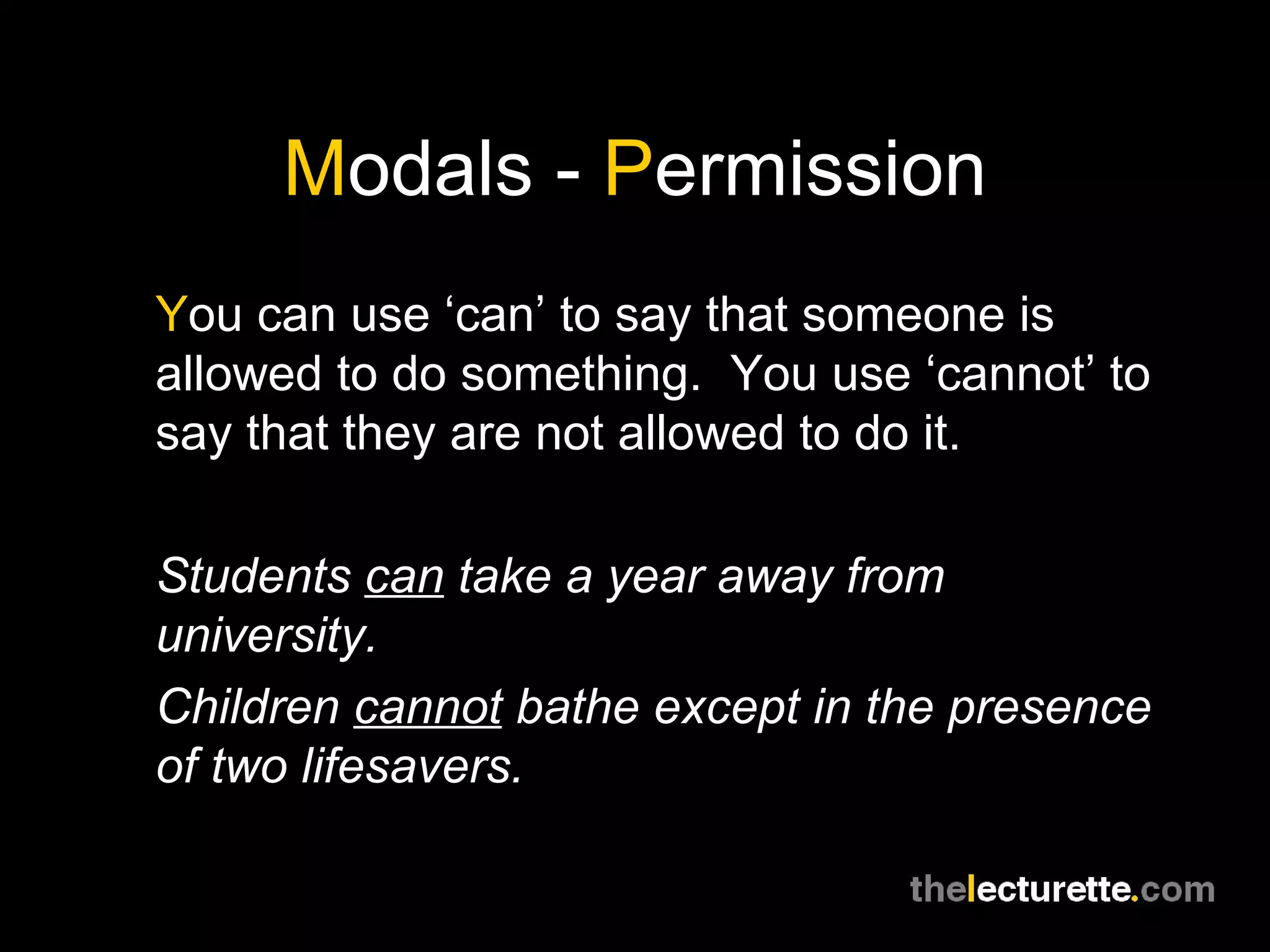
M odals -  P ermission Y ou can use ‘can’ to say that someone is allowed to do something.  You use ‘cannot’ to say that they are not allowed to do it. Students  can  take a year away from university. Children  cannot  bathe except in the presence of two lifesavers.
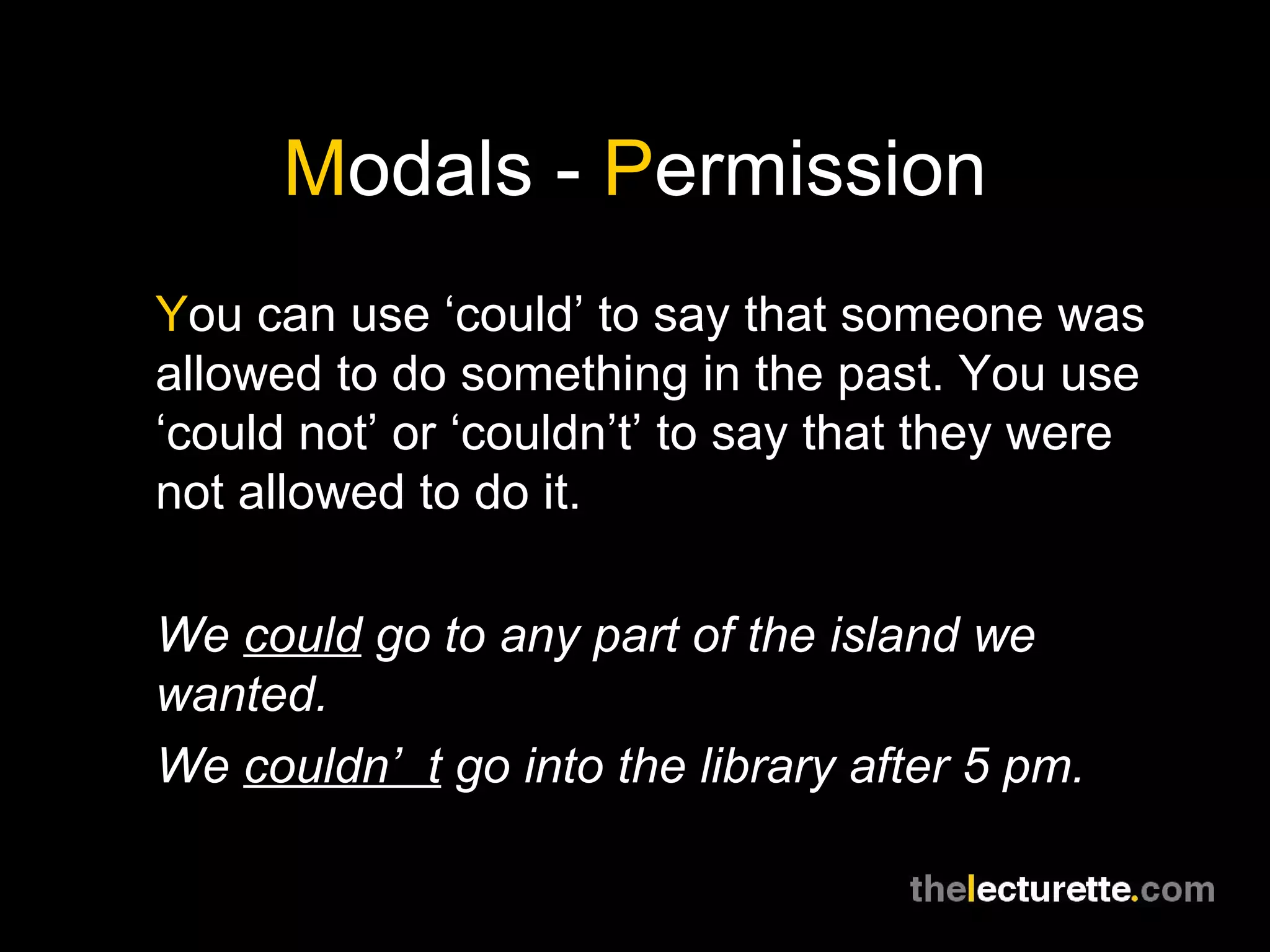
M odals -  P ermission Y ou can use ‘could’ to say that someone was allowed to do something in the past. You use ‘could not’ or ‘couldn’t’ to say that they were not allowed to do it. We  could  go to any part of the island we wanted. We  couldn’t  go into the library after 5 pm.
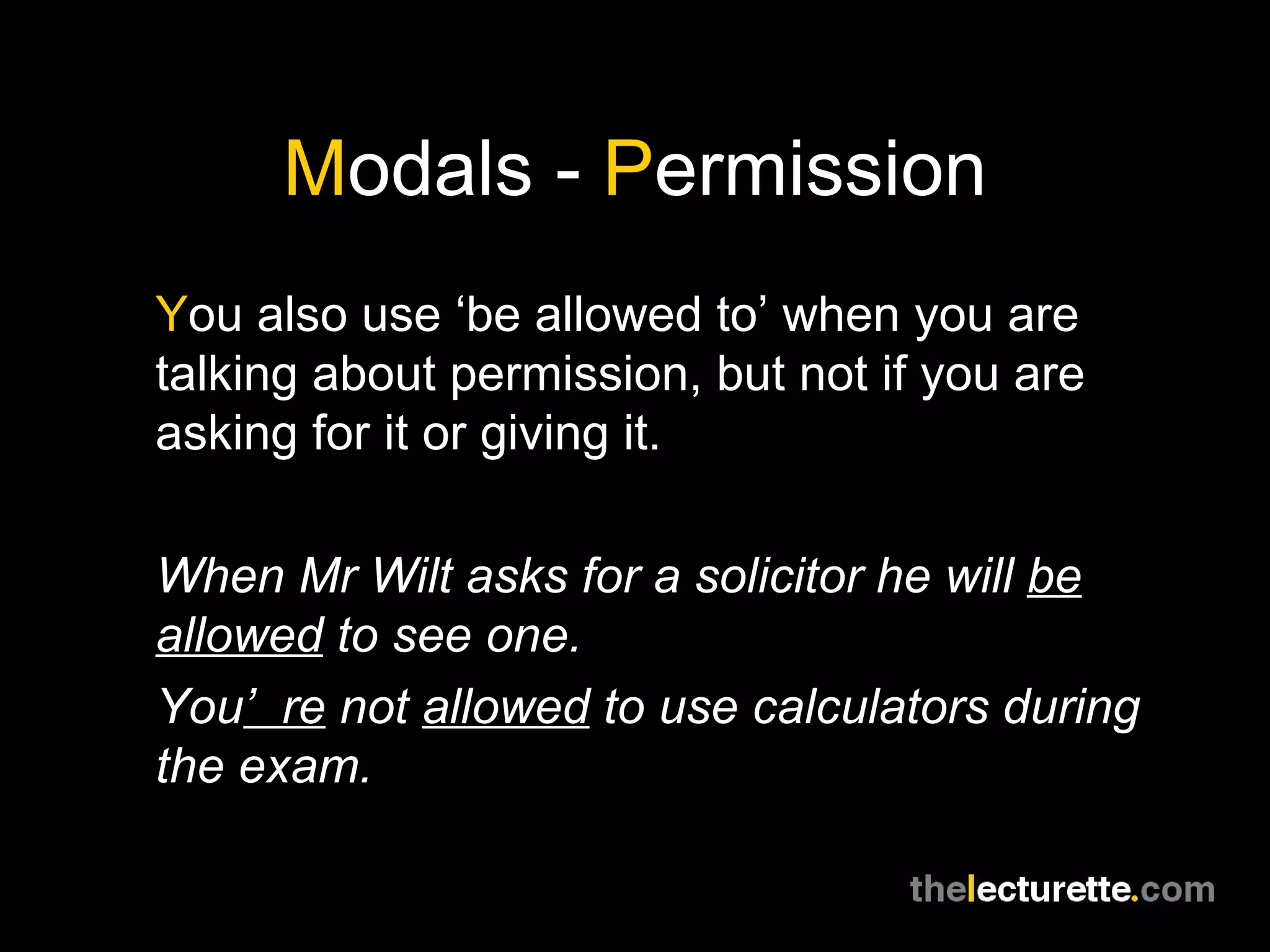
M odals -  P ermission Y ou also use ‘be allowed to’ when you are talking about permission, but not if you are asking for it or giving it. When Mr Wilt asks for a solicitor he will  be allowed  to see one. You ’re  not  allowed  to use calculators during the exam.
M odals -  P ermission I n more formal situations, ‘may’ is used to say that someone is allowed to do something, and ‘may not’ is used to say that they are not allowed to do it. They  may  do exactly as they like. The retailer  may not  sell the book below the publisher’s price.
M odals -  P ermission W hen you want to give someone permission to do something, you use ‘can’. You  can  borrow that pen if you want to. You  can  go off duty now. She  can  go with you.
M odals -  P ermission ‘ M ay’ is also used to give permission, but this is more formal. You  may  speak. You  may  leave as soon as you are finished.
M odals -  P ermission W hen you want to refuse someone permission to do something, you use ‘cannot’, ‘can’t’, ‘will not’, ‘won’t’, ‘shall not’, or ‘shan’t’. ‘ Can I have some sweets?’ - ‘No, you  can’t !’ ‘ I’ll go upstairs’ - ‘You  will not !’ You  shan’t  leave without my permission.
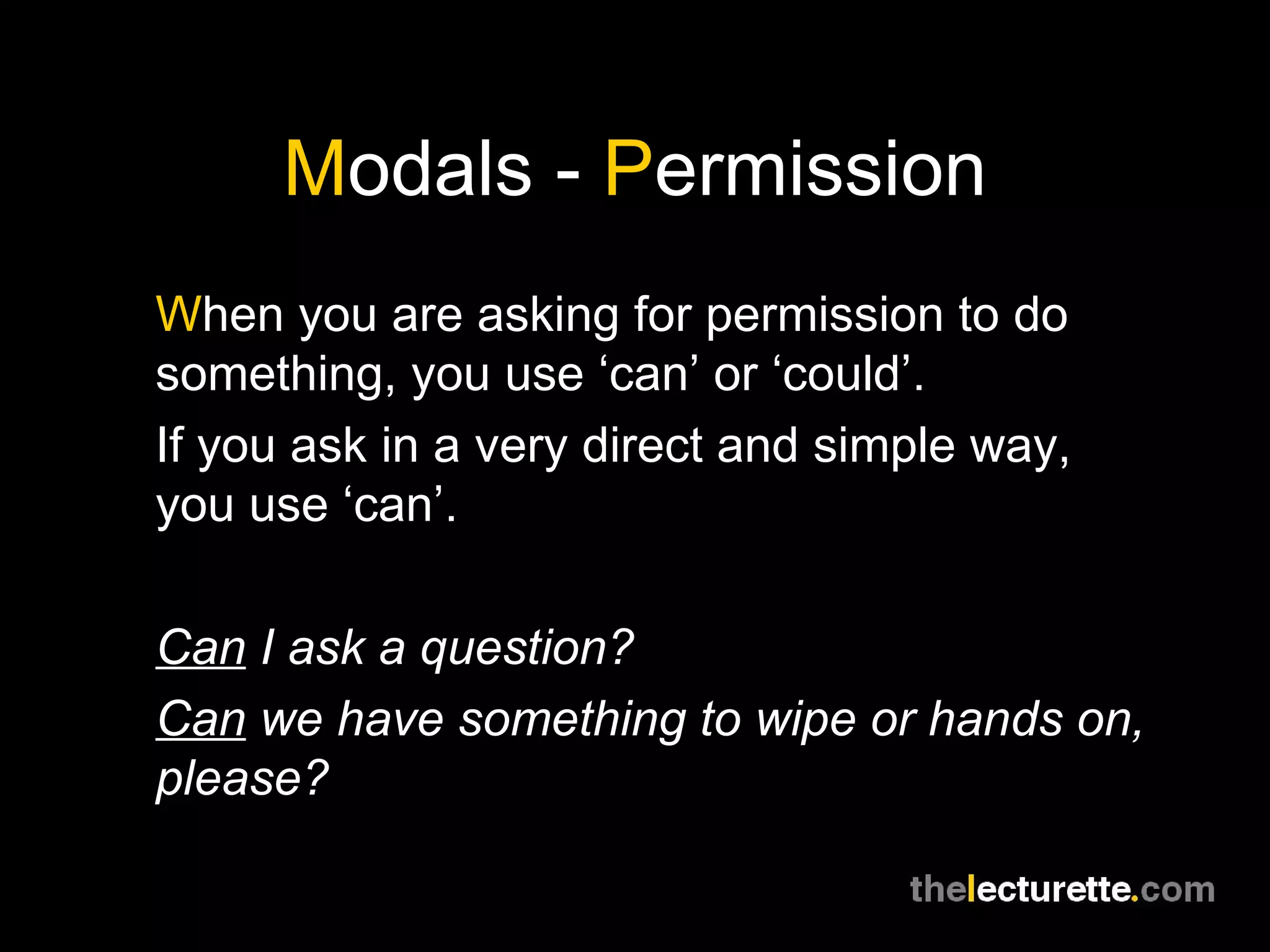
M odals -  P ermission W hen you are asking for permission to do something, you use ‘can’ or ‘could’. If you ask in a very direct and simple way, you use ‘can’. Can  I ask a question? Can  we have something to wipe or hands on, please?
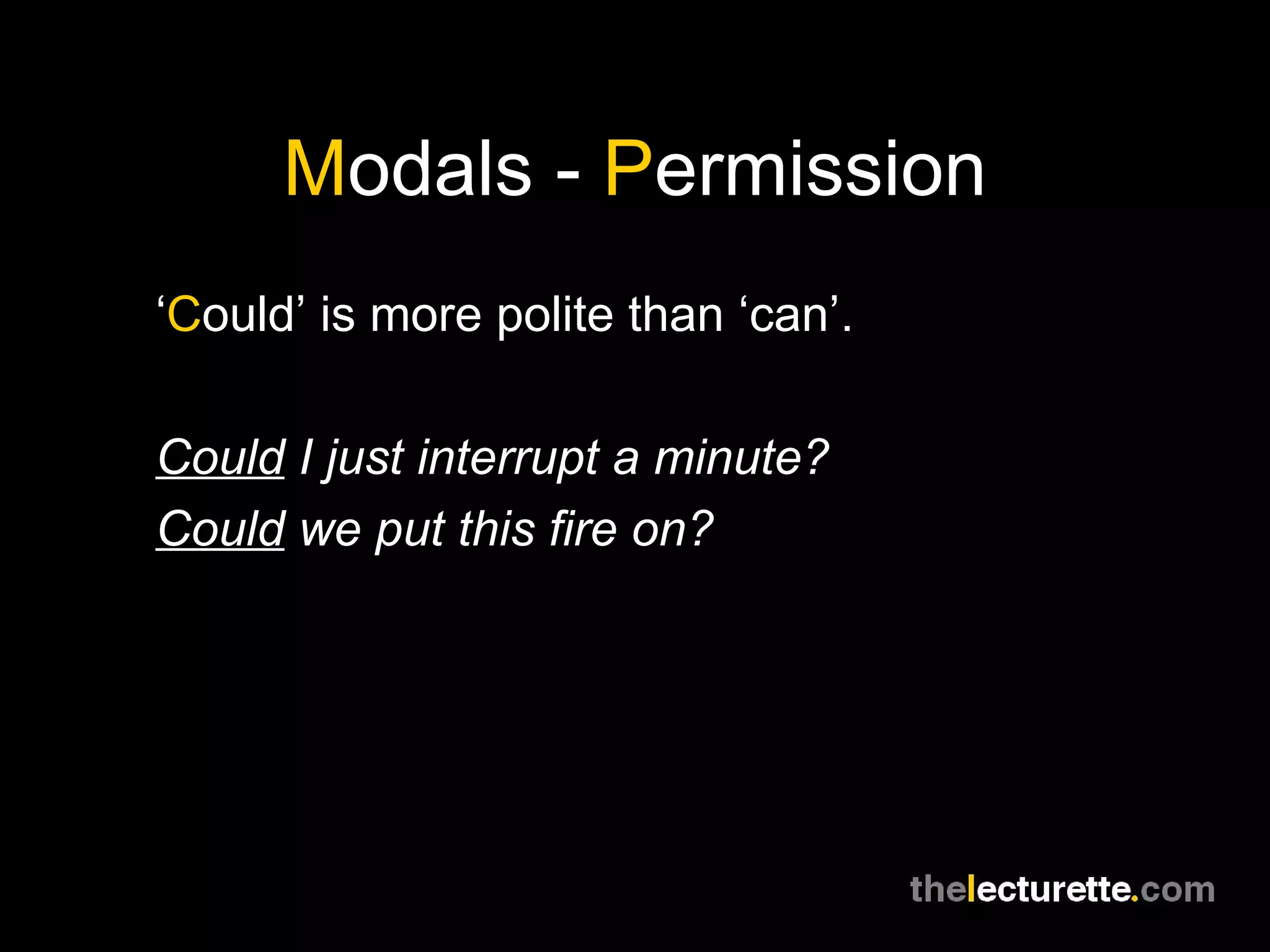
M odals -  P ermission ‘ C ould’ is more polite than ‘can’. Could  I just interrupt a minute? Could  we put this fire on?
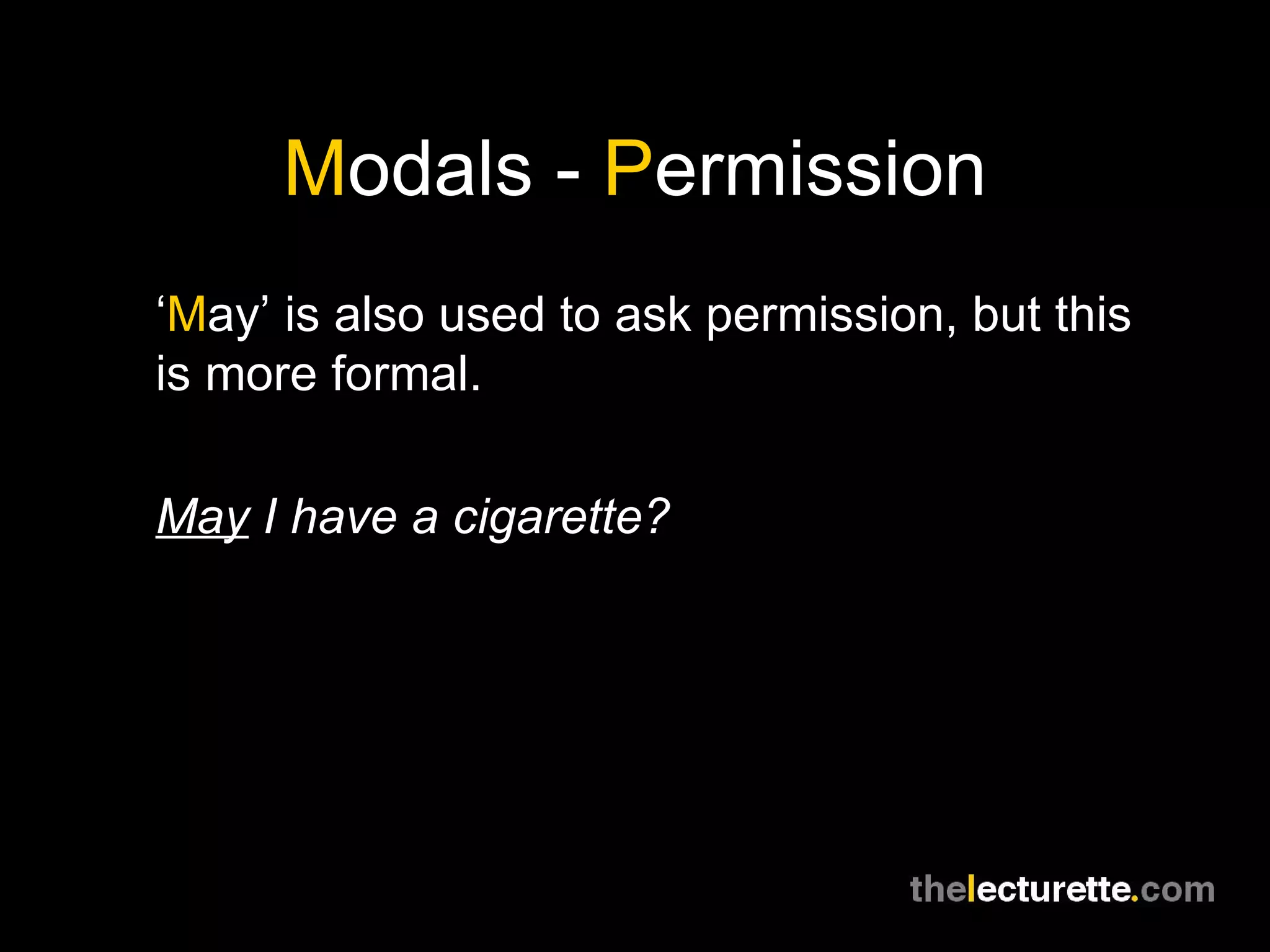
M odals -  P ermission ‘ M ay’ is also used to ask permission, but this is more formal. May  I have a cigarette?
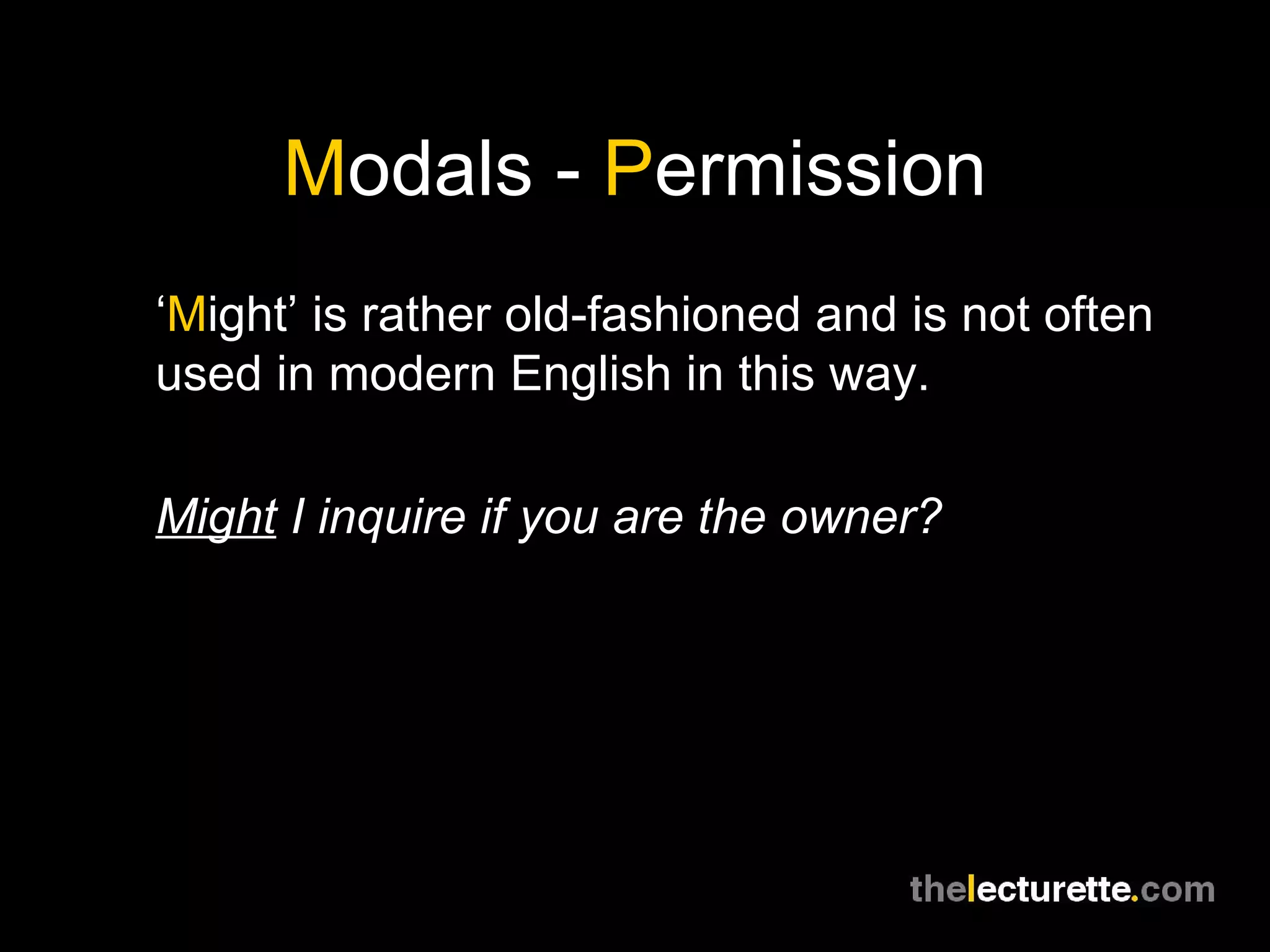
M odals -  P ermission ‘ M ight’ is rather old-fashioned and is not often used in modern English in this way. Might  I inquire if you are the owner?
M odals -  P ermission Y ou have to use ‘be allowed to’ instead of a modal if you are using another modal, or if you want to use an ‘-ing’ form, a past participle or a ‘to’- infinitive. Teachers  will be allowed  to decide for themselves. I am strongly in favor of people  being allowed  to put on plays.
M odals -  P ermission They have not  been allowed  to come. We are going  to be allowed to  travel on the trains.
Q uestions? For more slide presentations visit:

Modals - Permission

  • 1.
    M odals - P ermission
  • 2.
    M odals - P ermission Y ou can use ‘can’ to say that someone is allowed to do something. You use ‘cannot’ to say that they are not allowed to do it. Students can take a year away from university. Children cannot bathe except in the presence of two lifesavers.
  • 3.
    M odals - P ermission Y ou can use ‘could’ to say that someone was allowed to do something in the past. You use ‘could not’ or ‘couldn’t’ to say that they were not allowed to do it. We could go to any part of the island we wanted. We couldn’t go into the library after 5 pm.
  • 4.
    M odals - P ermission Y ou also use ‘be allowed to’ when you are talking about permission, but not if you are asking for it or giving it. When Mr Wilt asks for a solicitor he will be allowed to see one. You ’re not allowed to use calculators during the exam.
  • 5.
    M odals - P ermission I n more formal situations, ‘may’ is used to say that someone is allowed to do something, and ‘may not’ is used to say that they are not allowed to do it. They may do exactly as they like. The retailer may not sell the book below the publisher’s price.
  • 6.
    M odals - P ermission W hen you want to give someone permission to do something, you use ‘can’. You can borrow that pen if you want to. You can go off duty now. She can go with you.
  • 7.
    M odals - P ermission ‘ M ay’ is also used to give permission, but this is more formal. You may speak. You may leave as soon as you are finished.
  • 8.
    M odals - P ermission W hen you want to refuse someone permission to do something, you use ‘cannot’, ‘can’t’, ‘will not’, ‘won’t’, ‘shall not’, or ‘shan’t’. ‘ Can I have some sweets?’ - ‘No, you can’t !’ ‘ I’ll go upstairs’ - ‘You will not !’ You shan’t leave without my permission.
  • 9.
    M odals - P ermission W hen you are asking for permission to do something, you use ‘can’ or ‘could’. If you ask in a very direct and simple way, you use ‘can’. Can I ask a question? Can we have something to wipe or hands on, please?
  • 10.
    M odals - P ermission ‘ C ould’ is more polite than ‘can’. Could I just interrupt a minute? Could we put this fire on?
  • 11.
    M odals - P ermission ‘ M ay’ is also used to ask permission, but this is more formal. May I have a cigarette?
  • 12.
    M odals - P ermission ‘ M ight’ is rather old-fashioned and is not often used in modern English in this way. Might I inquire if you are the owner?
  • 13.
    M odals - P ermission Y ou have to use ‘be allowed to’ instead of a modal if you are using another modal, or if you want to use an ‘-ing’ form, a past participle or a ‘to’- infinitive. Teachers will be allowed to decide for themselves. I am strongly in favor of people being allowed to put on plays.
  • 14.
    M odals - P ermission They have not been allowed to come. We are going to be allowed to travel on the trains.
  • 15.
    Q uestions? Formore slide presentations visit: