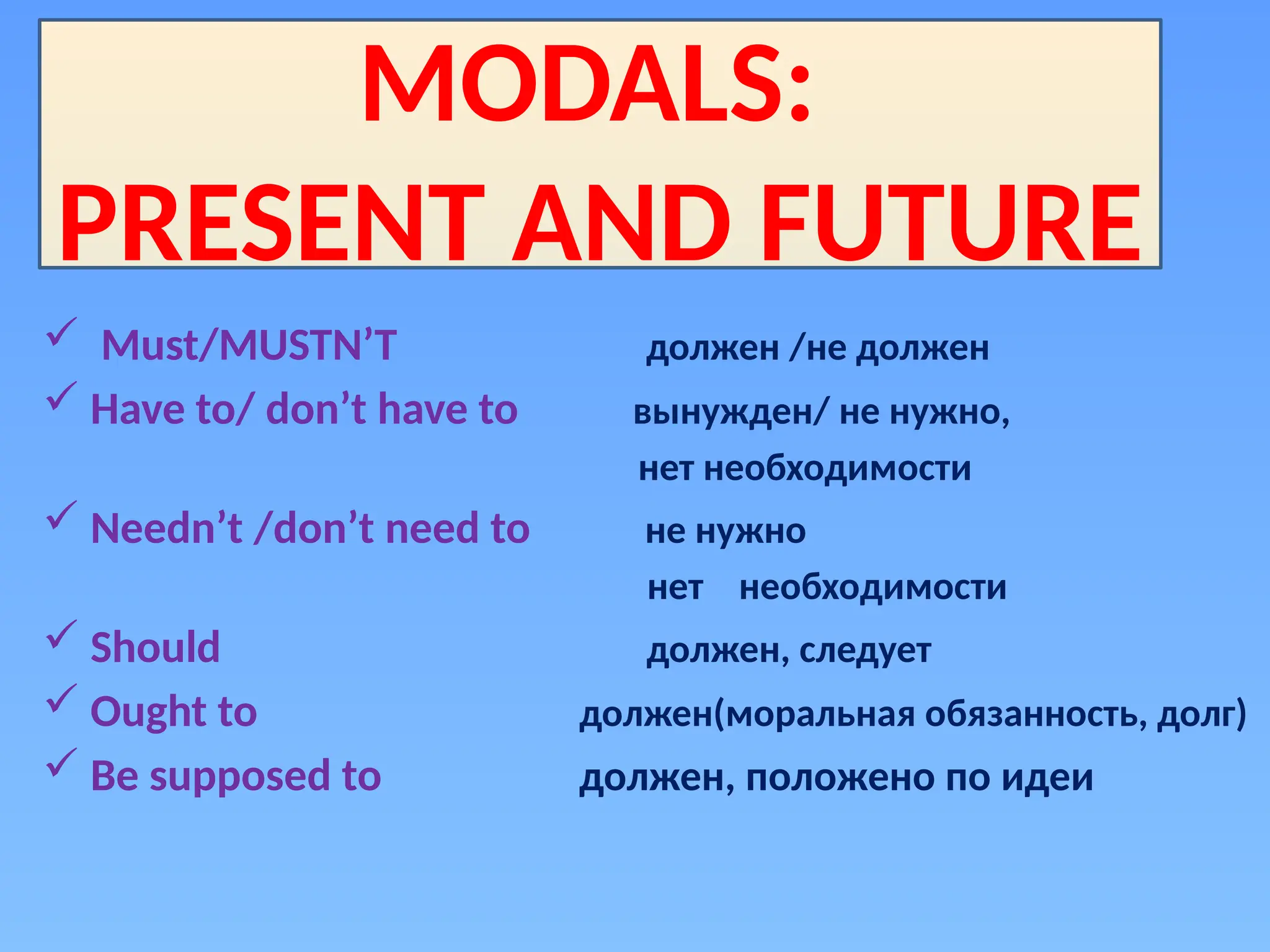
 Must/MUSTN’T должен /не должен
 Have to/ don’t have to вынужден/ не нужно,
нет необходимости
 Needn’t /don’t need to не нужно
нет необходимости
 Should должен, следует
 Ought to должен(моральная обязанность, долг)
 Be supposed to должен, положено по идеи
MODALS:
PRESENT AND FUTURE
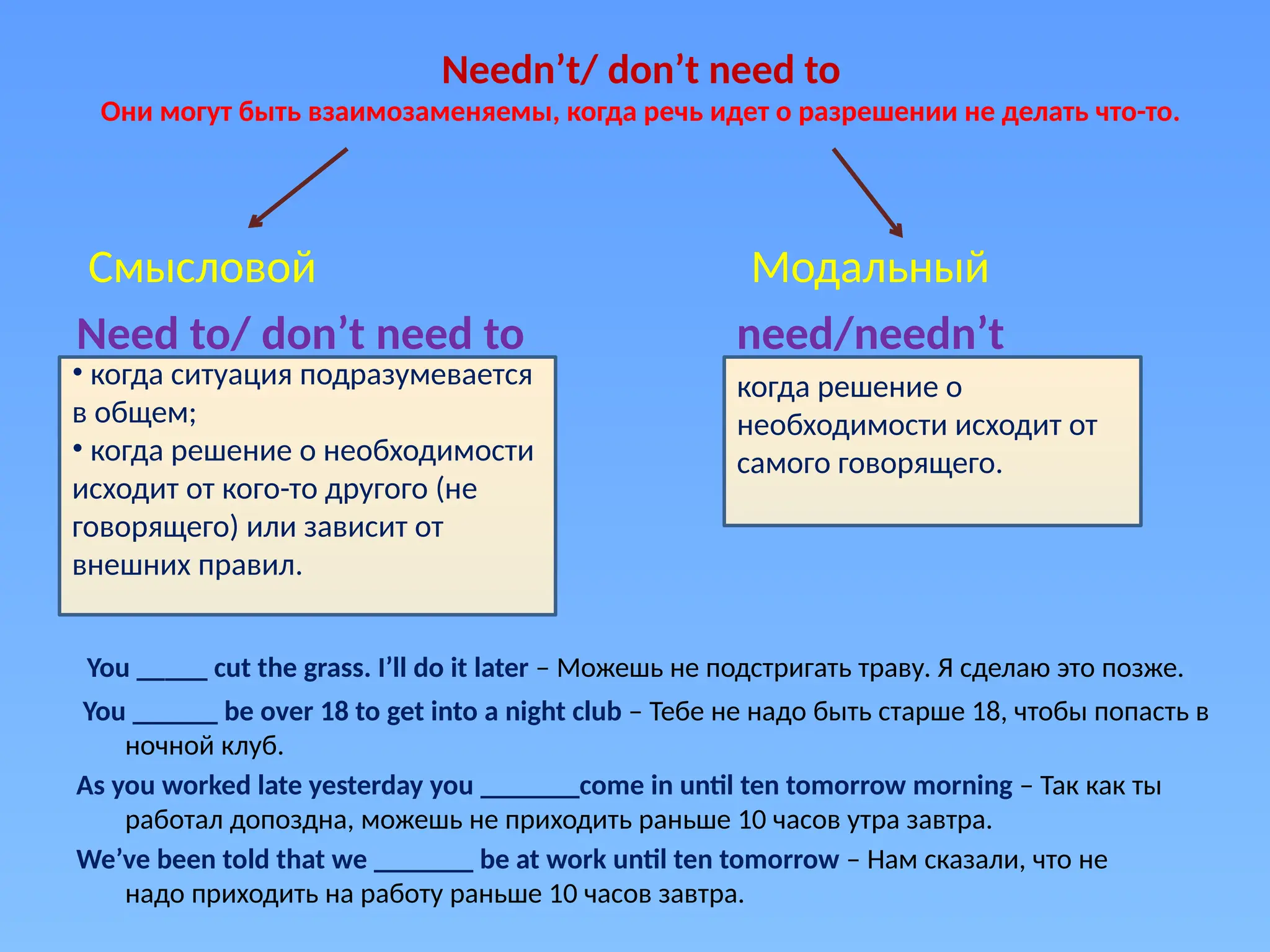
Needn’t/ don’t need to
Они могут быть взаимозаменяемы, когда речь идет о разрешении не делать что-то.
Смысловой Модальный
Need to/ don’t need to need/needn’t
You _____ cut the grass. I’ll do it later – Можешь не подстригать траву. Я сделаю это позже.
You ______ be over 18 to get into a night club – Тебе не надо быть старше 18, чтобы попасть в
ночной клуб.
As you worked late yesterday you _______come in until ten tomorrow morning – Так как ты
работал допоздна, можешь не приходить раньше 10 часов утра завтра.
We’ve been told that we _______ be at work until ten tomorrow – Нам сказали, что не
надо приходить на работу раньше 10 часов завтра.
когда решение о
необходимости исходит от
самого говорящего.
• когда ситуация подразумевается
в общем;
• когда решение о необходимости
исходит от кого-то другого (не
говорящего) или зависит от
внешних правил.
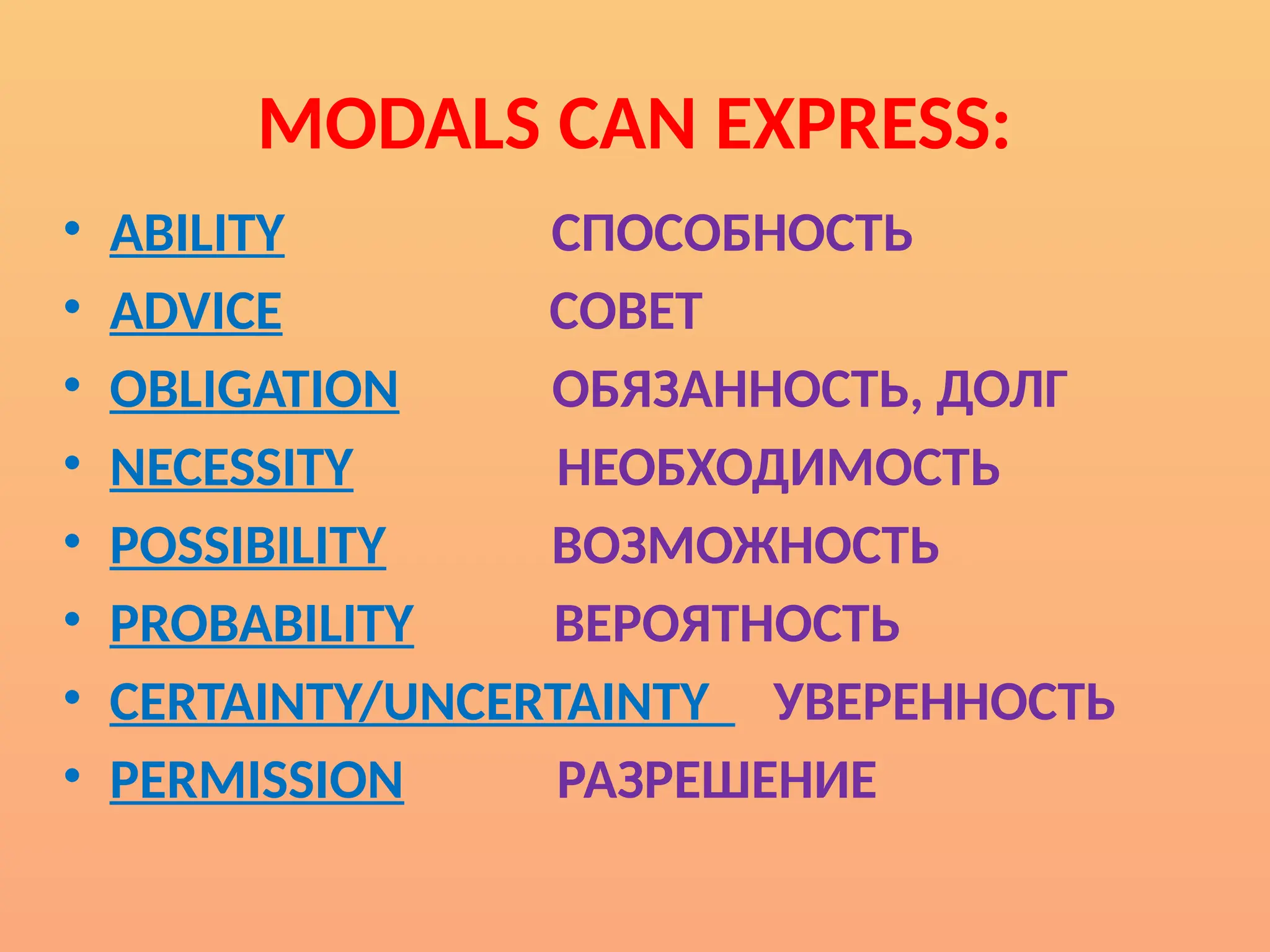
MODALS CAN EXPRESS:
• ABILITY СПОСОБНОСТЬ
• ADVICE СОВЕТ
• OBLIGATION ОБЯЗАННОСТЬ, ДОЛГ
• NECESSITY НЕОБХОДИМОСТЬ
• POSSIBILITY ВОЗМОЖНОСТЬ
• PROBABILITY ВЕРОЯТНОСТЬ
• CERTAINTY/UNCERTAINTY УВЕРЕННОСТЬ
• PERMISSION РАЗРЕШЕНИЕ
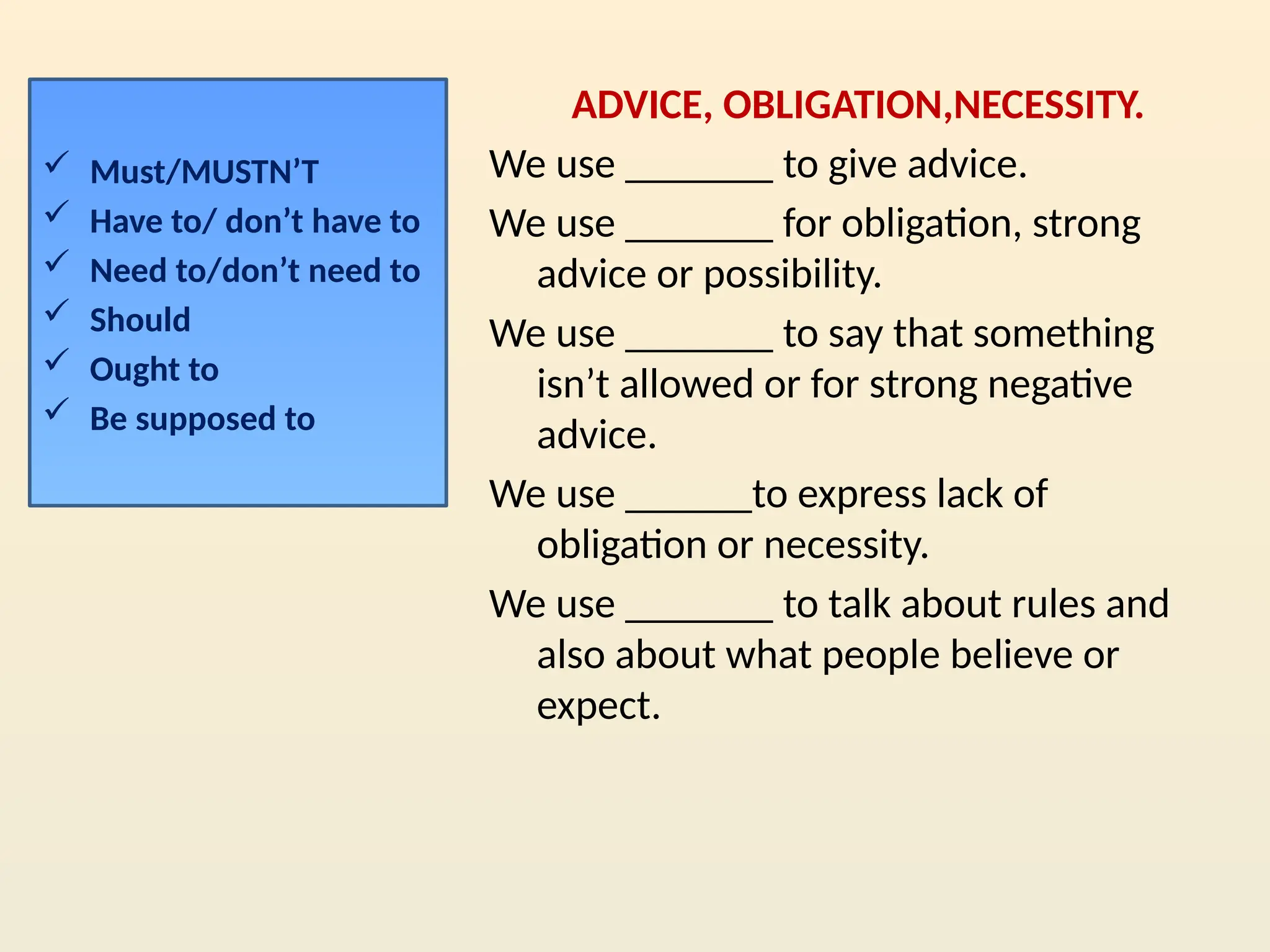
ADVICE, OBLIGATION,NECESSITY.
We use _______ to give advice.
We use _______ for obligation, strong
advice or possibility.
We use _______ to say that something
isn’t allowed or for strong negative
advice.
We use ______to express lack of
obligation or necessity.
We use _______ to talk about rules and
also about what people believe or
expect.
 Must/MUSTN’T
 Have to/ don’t have to
 Need to/don’t need to
 Should
 Ought to
 Be supposed to
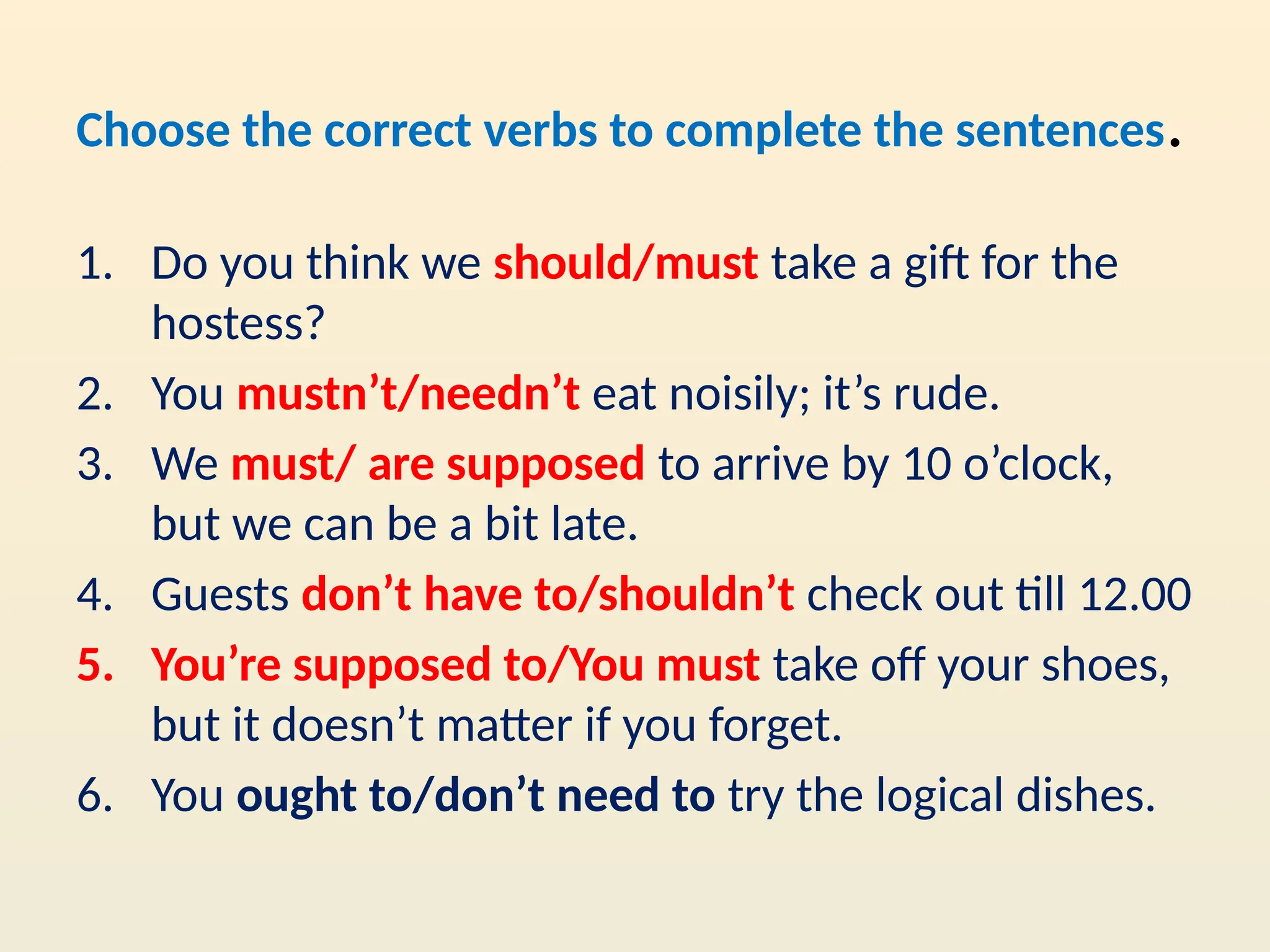
Choose the correct verbs to complete the sentences.
1. Do you think we should/must take a gift for the
hostess?
2. You mustn’t/needn’t eat noisily; it’s rude.
3. We must/ are supposed to arrive by 10 o’clock,
but we can be a bit late.
4. Guests don’t have to/shouldn’t check out till 12.00
5. You’re supposed to/You must take off your shoes,
but it doesn’t matter if you forget.
6. You ought to/don’t need to try the logical dishes.
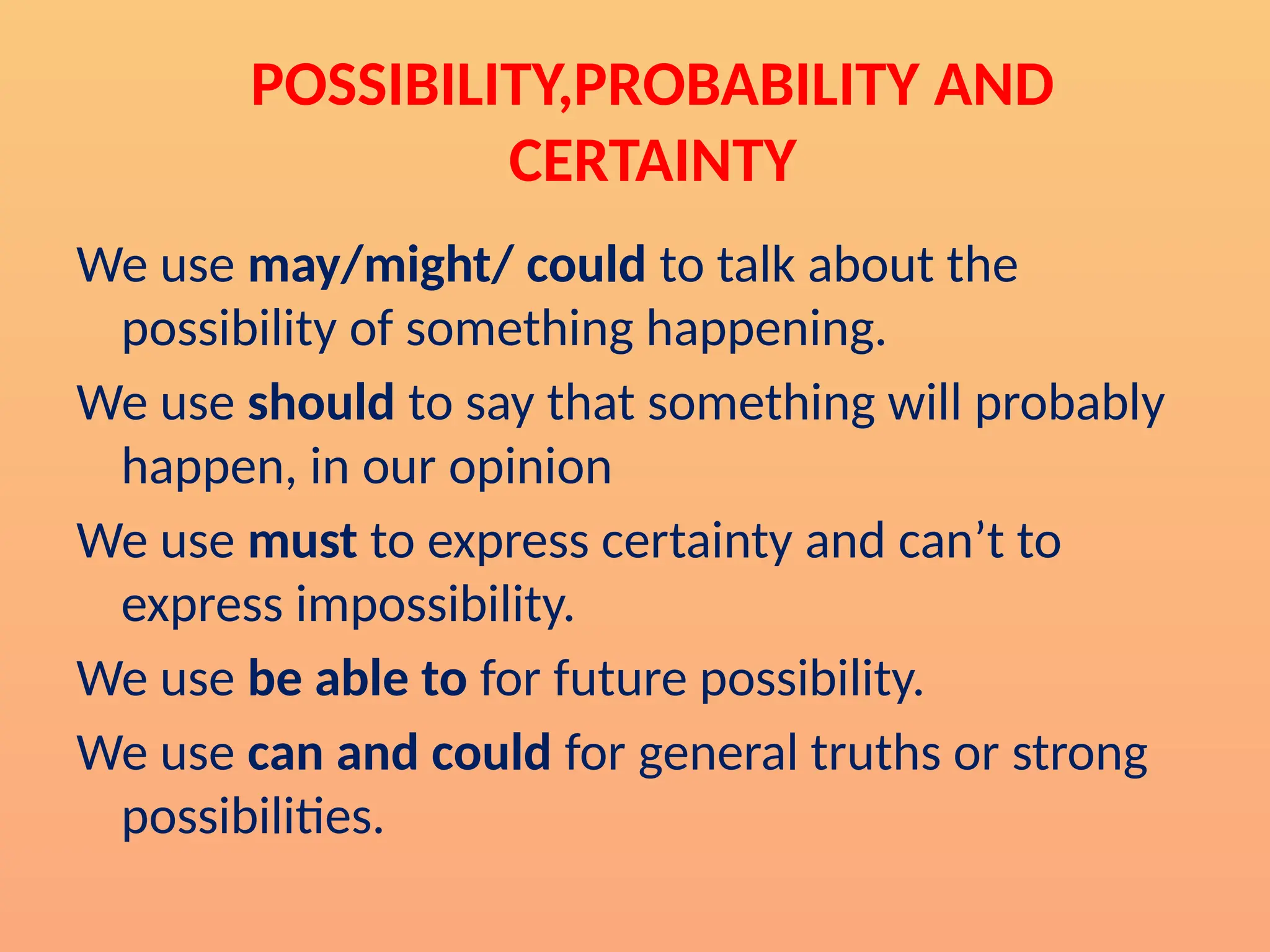
POSSIBILITY,PROBABILITY AND
CERTAINTY
We use may/might/ could to talk about the
possibility of something happening.
We use should to say that something will probably
happen, in our opinion
We use must to express certainty and can’t to
express impossibility.
We use be able to for future possibility.
We use can and could for general truths or strong
possibilities.
Home task WB p.35, ex. 2,3,6
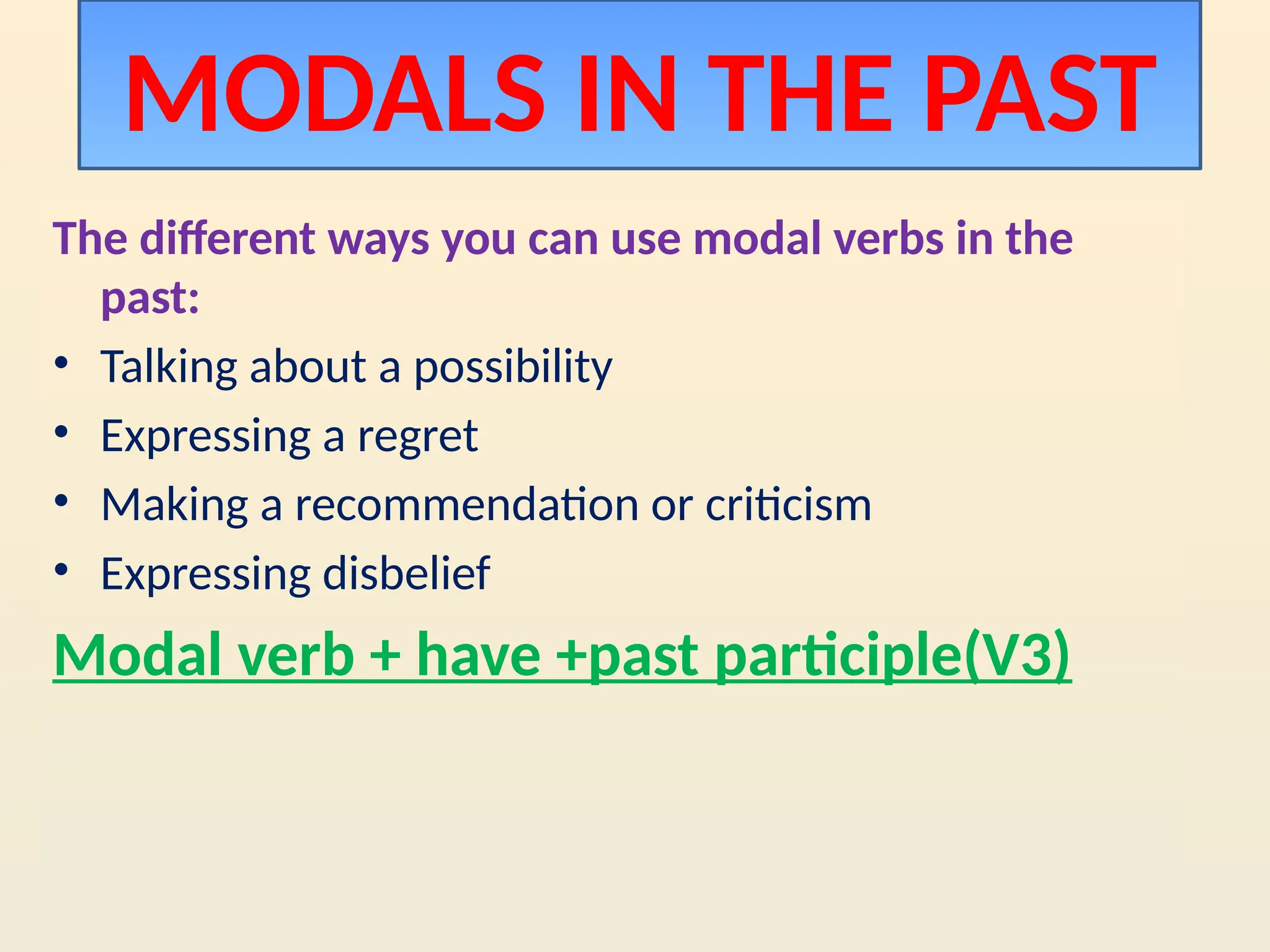
The different ways you can use modal verbs in the
past:
• Talking about a possibility
• Expressing a regret
• Making a recommendation or criticism
• Expressing disbelief
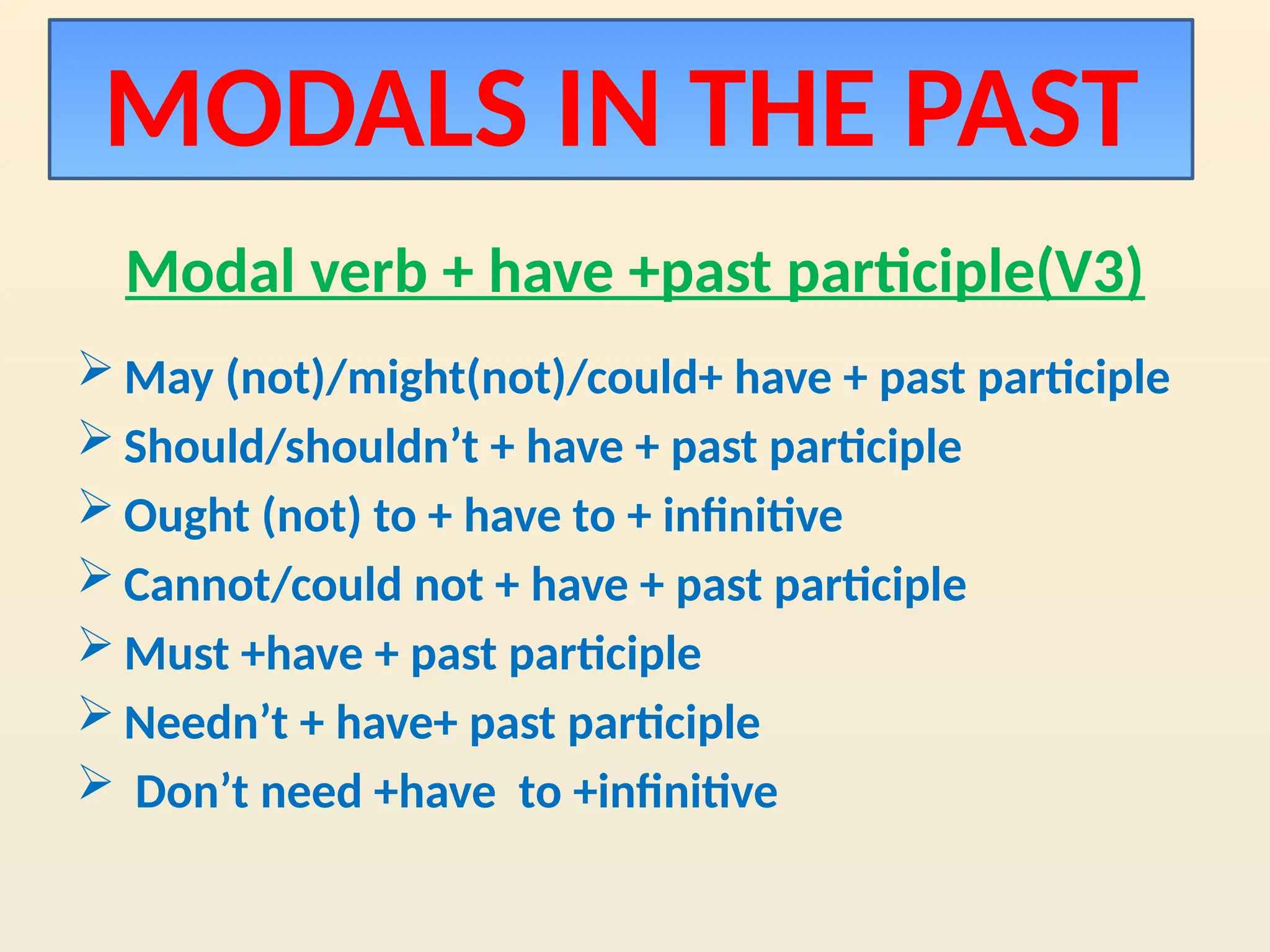
Modal verb + have +past participle(V3)
MODALS IN THE PAST
Modal verb + have +past participle(V3)
 May (not)/might(not)/could+ have + past participle
 Should/shouldn’t + have + past participle
 Ought (not) to + have to + infinitive
 Cannot/could not + have + past participle
 Must +have + past participle
 Needn’t + have+ past participle
 Don’t need +have to +infinitive
MODALS IN THE PAST
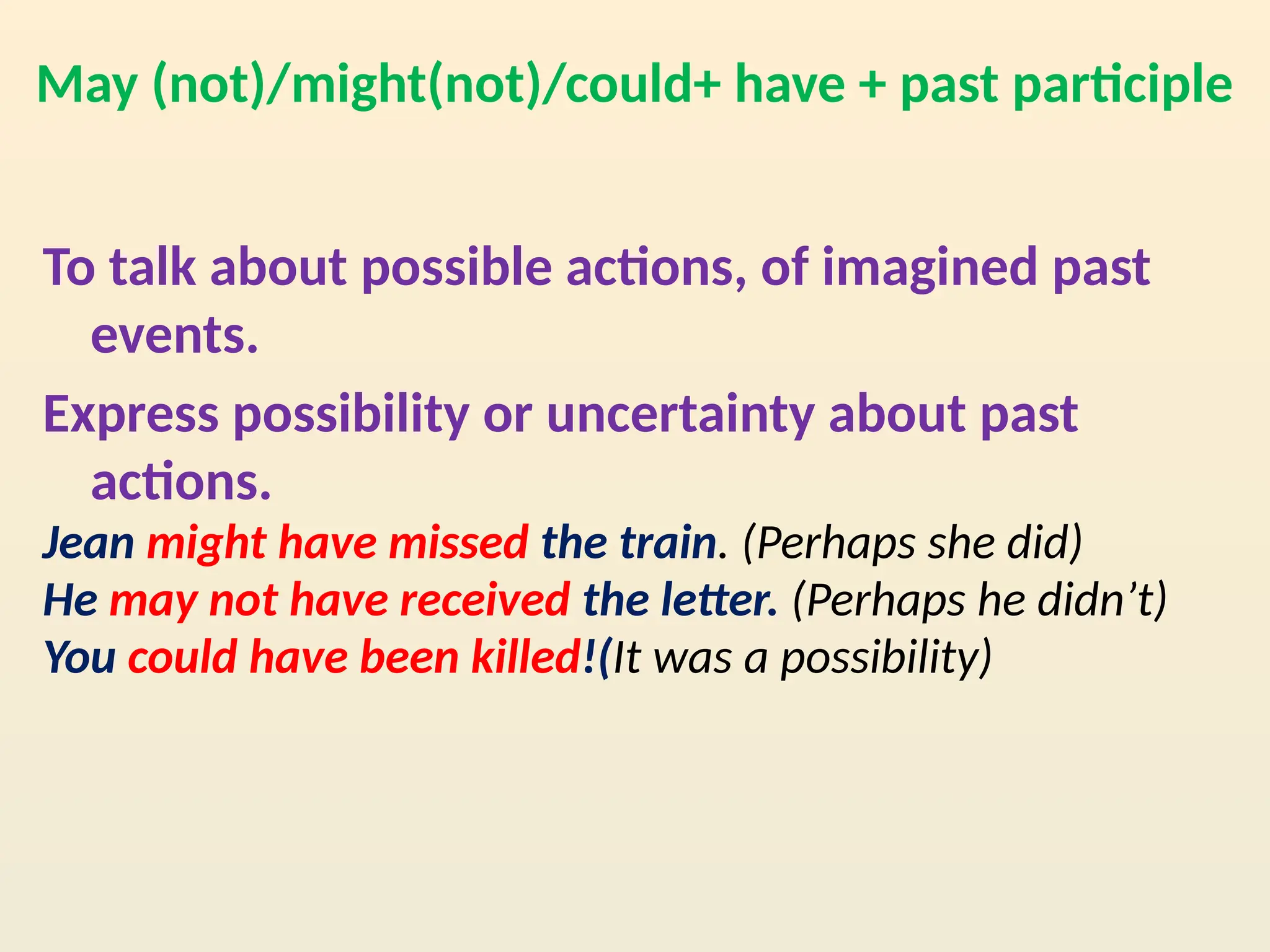
May (not)/might(not)/could+ have + past participle
To talk about possible actions, of imagined past
events.
Express possibility or uncertainty about past
actions.
Jean might have missed the train. (Perhaps she did)
He may not have received the letter. (Perhaps he didn’t)
You could have been killed!(It was a possibility)
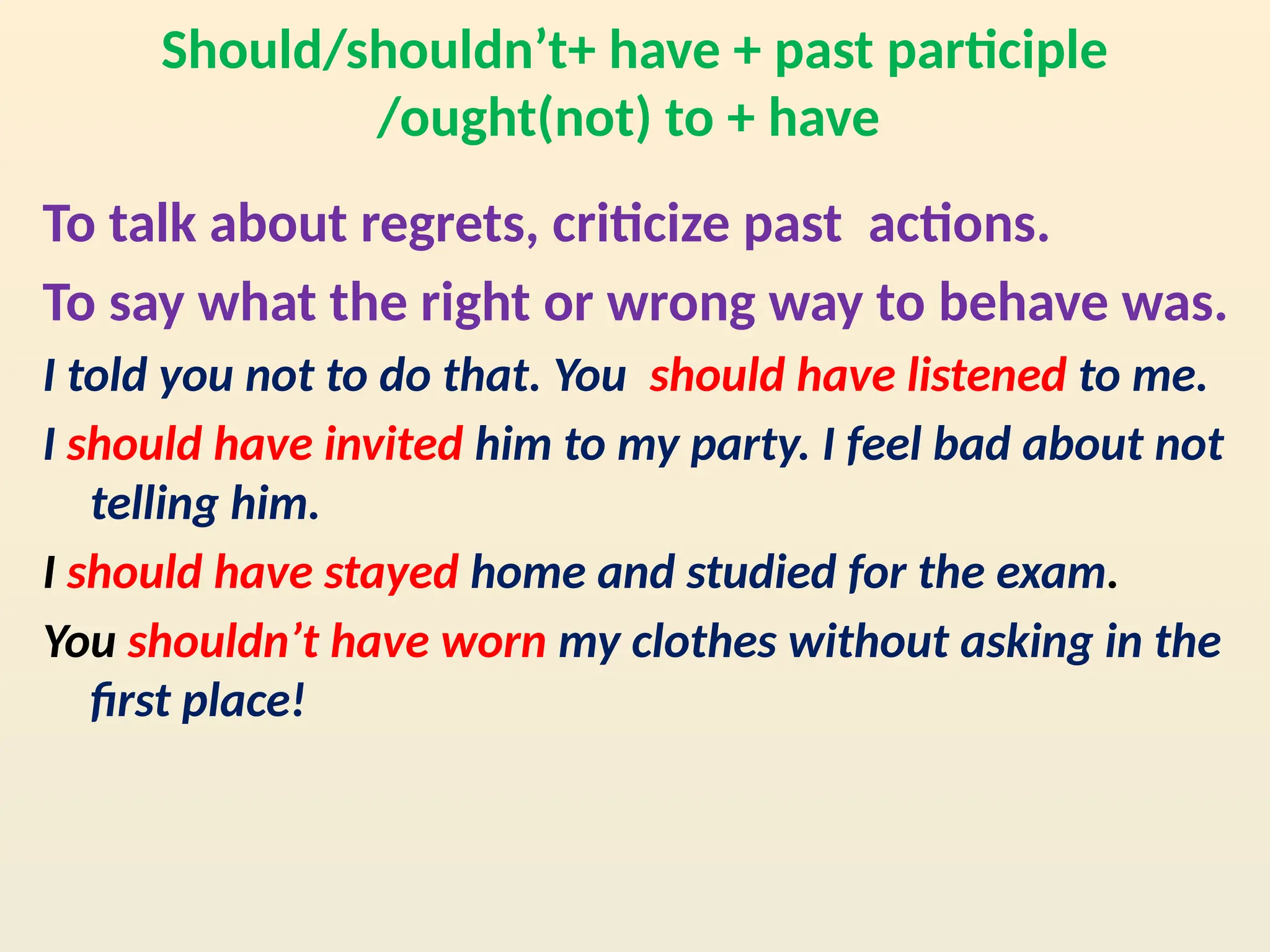
Should/shouldn’t+ have + past participle
/ought(not) to + have
To talk about regrets, criticize past actions.
To say what the right or wrong way to behave was.
I told you not to do that. You should have listened to me.
I should have invited him to my party. I feel bad about not
telling him.
I should have stayed home and studied for the exam.
You shouldn’t have worn my clothes without asking in the
first place!
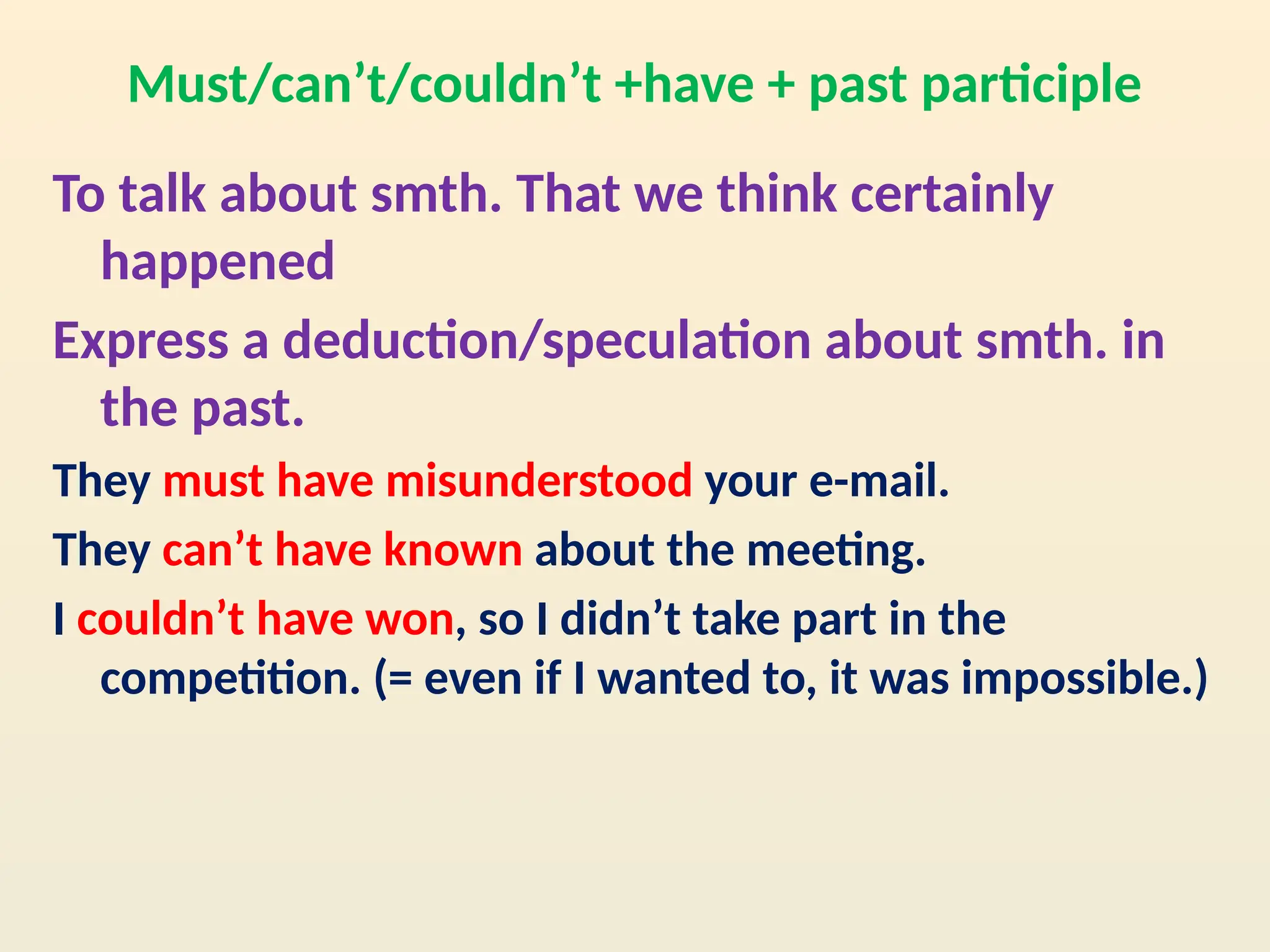
Must/can’t/couldn’t +have + past participle
To talk about smth. That we think certainly
happened
Express a deduction/speculation about smth. in
the past.
They must have misunderstood your e-mail.
They can’t have known about the meeting.
I couldn’t have won, so I didn’t take part in the
competition. (= even if I wanted to, it was impossible.)
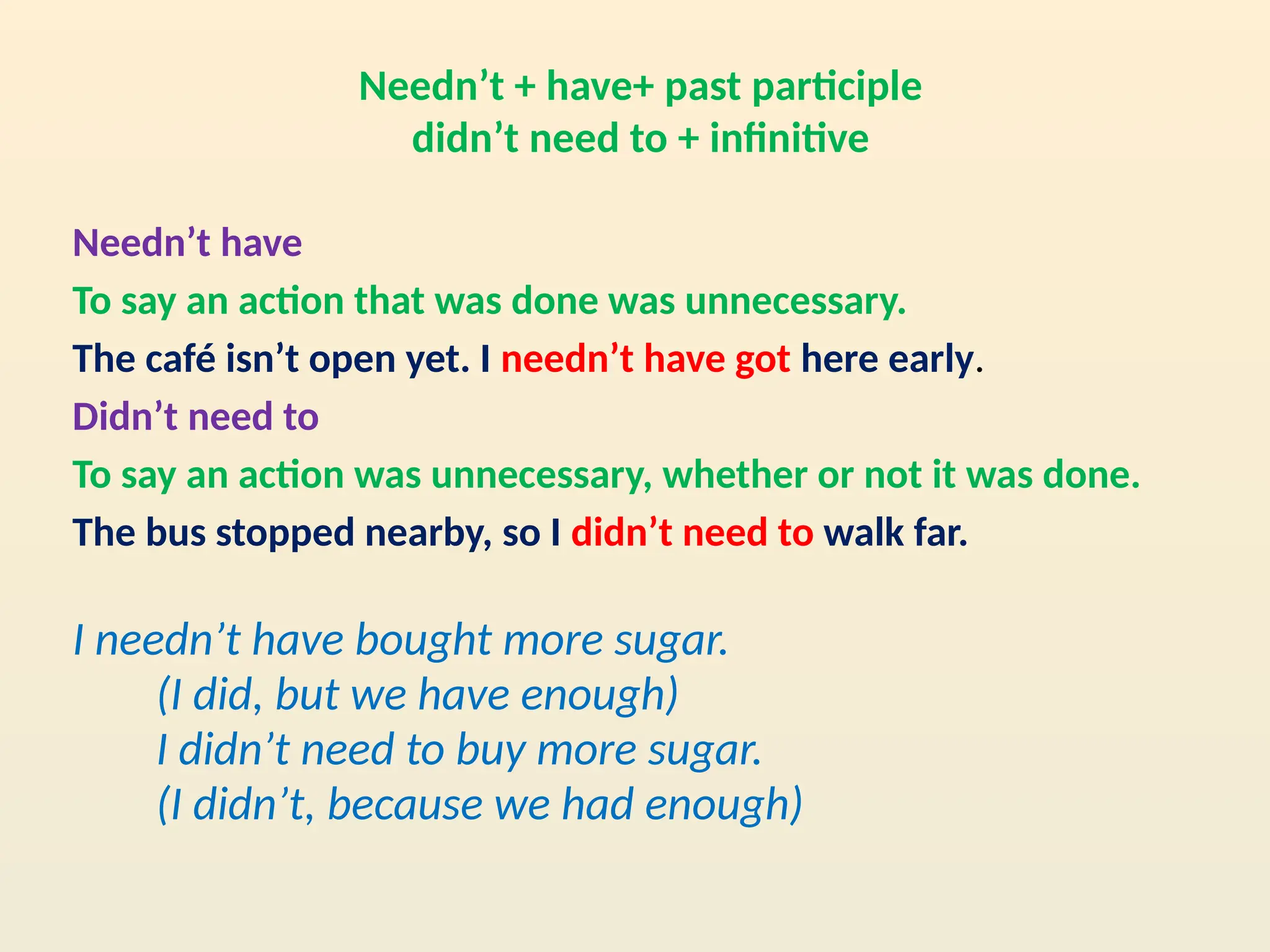
Needn’t + have+ past participle
didn’t need to + infinitive
Needn’t have
To say an action that was done was unnecessary.
The café isn’t open yet. I needn’t have got here early.
Didn’t need to
To say an action was unnecessary, whether or not it was done.
The bus stopped nearby, so I didn’t need to walk far.
I needn’t have bought more sugar.
(I did, but we have enough)
I didn’t need to buy more sugar.
(I didn’t, because we had enough)
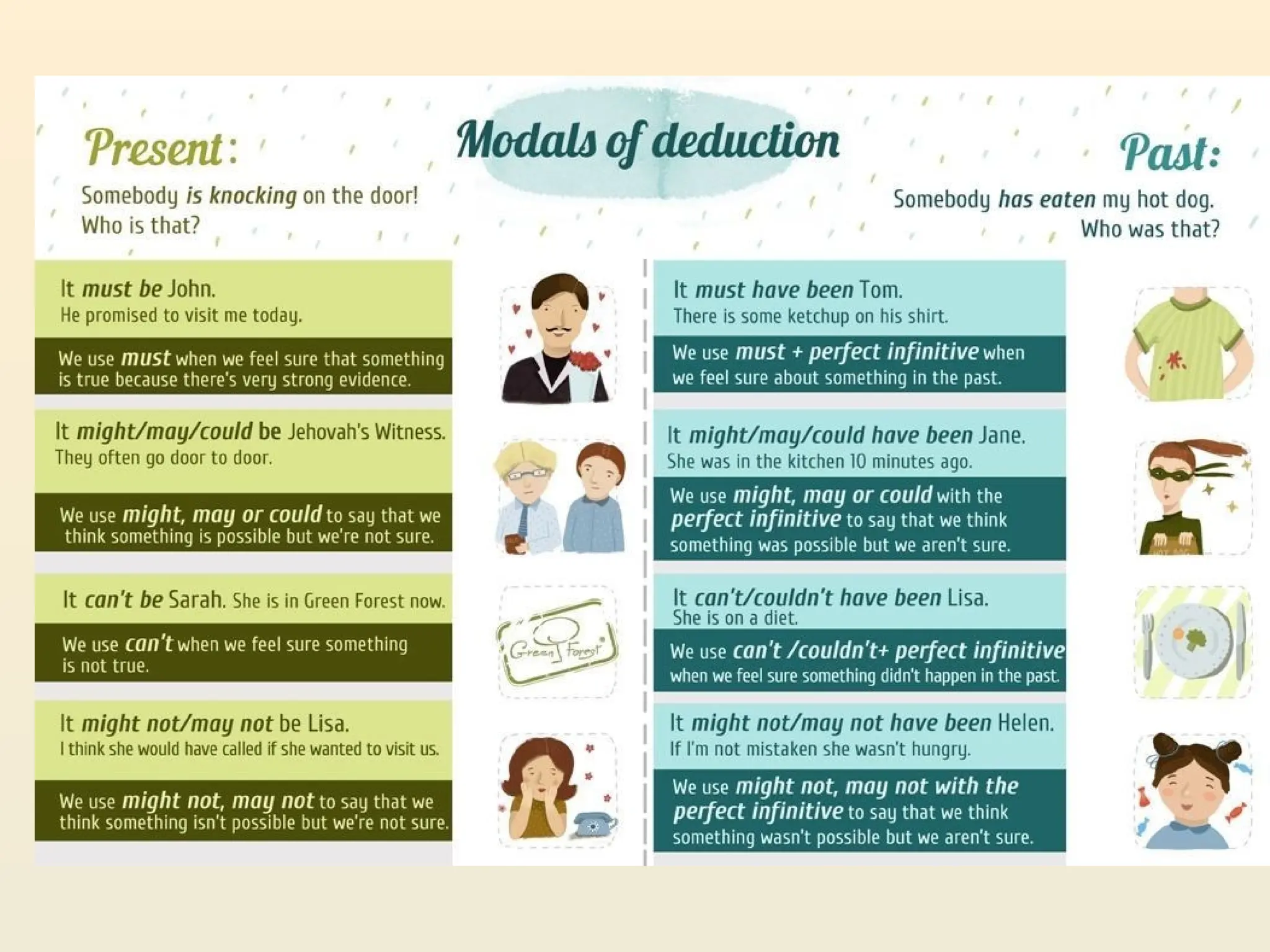
Modals of deduction
We use the modal verbs might, may and could
+ an infinitive form without to when we think it
is possible that something is true.
We use must when we are sure it is true and
can’t when we are sure it isn’t true.

Modal Verbs for students from 9-11 grad

  • 1.
     Must/MUSTN’T должен/не должен  Have to/ don’t have to вынужден/ не нужно, нет необходимости  Needn’t /don’t need to не нужно нет необходимости  Should должен, следует  Ought to должен(моральная обязанность, долг)  Be supposed to должен, положено по идеи MODALS: PRESENT AND FUTURE
  • 2.
    Needn’t/ don’t needto Они могут быть взаимозаменяемы, когда речь идет о разрешении не делать что-то. Смысловой Модальный Need to/ don’t need to need/needn’t You _____ cut the grass. I’ll do it later – Можешь не подстригать траву. Я сделаю это позже. You ______ be over 18 to get into a night club – Тебе не надо быть старше 18, чтобы попасть в ночной клуб. As you worked late yesterday you _______come in until ten tomorrow morning – Так как ты работал допоздна, можешь не приходить раньше 10 часов утра завтра. We’ve been told that we _______ be at work until ten tomorrow – Нам сказали, что не надо приходить на работу раньше 10 часов завтра. когда решение о необходимости исходит от самого говорящего. • когда ситуация подразумевается в общем; • когда решение о необходимости исходит от кого-то другого (не говорящего) или зависит от внешних правил.
  • 3.
    MODALS CAN EXPRESS: •ABILITY СПОСОБНОСТЬ • ADVICE СОВЕТ • OBLIGATION ОБЯЗАННОСТЬ, ДОЛГ • NECESSITY НЕОБХОДИМОСТЬ • POSSIBILITY ВОЗМОЖНОСТЬ • PROBABILITY ВЕРОЯТНОСТЬ • CERTAINTY/UNCERTAINTY УВЕРЕННОСТЬ • PERMISSION РАЗРЕШЕНИЕ
  • 4.
    ADVICE, OBLIGATION,NECESSITY. We use_______ to give advice. We use _______ for obligation, strong advice or possibility. We use _______ to say that something isn’t allowed or for strong negative advice. We use ______to express lack of obligation or necessity. We use _______ to talk about rules and also about what people believe or expect.  Must/MUSTN’T  Have to/ don’t have to  Need to/don’t need to  Should  Ought to  Be supposed to
  • 5.
    Choose the correctverbs to complete the sentences. 1. Do you think we should/must take a gift for the hostess? 2. You mustn’t/needn’t eat noisily; it’s rude. 3. We must/ are supposed to arrive by 10 o’clock, but we can be a bit late. 4. Guests don’t have to/shouldn’t check out till 12.00 5. You’re supposed to/You must take off your shoes, but it doesn’t matter if you forget. 6. You ought to/don’t need to try the logical dishes.
  • 6.
    POSSIBILITY,PROBABILITY AND CERTAINTY We usemay/might/ could to talk about the possibility of something happening. We use should to say that something will probably happen, in our opinion We use must to express certainty and can’t to express impossibility. We use be able to for future possibility. We use can and could for general truths or strong possibilities.
  • 7.
    Home task WBp.35, ex. 2,3,6
  • 8.
    The different waysyou can use modal verbs in the past: • Talking about a possibility • Expressing a regret • Making a recommendation or criticism • Expressing disbelief Modal verb + have +past participle(V3) MODALS IN THE PAST
  • 9.
    Modal verb +have +past participle(V3)  May (not)/might(not)/could+ have + past participle  Should/shouldn’t + have + past participle  Ought (not) to + have to + infinitive  Cannot/could not + have + past participle  Must +have + past participle  Needn’t + have+ past participle  Don’t need +have to +infinitive MODALS IN THE PAST
  • 10.
    May (not)/might(not)/could+ have+ past participle To talk about possible actions, of imagined past events. Express possibility or uncertainty about past actions. Jean might have missed the train. (Perhaps she did) He may not have received the letter. (Perhaps he didn’t) You could have been killed!(It was a possibility)
  • 11.
    Should/shouldn’t+ have +past participle /ought(not) to + have To talk about regrets, criticize past actions. To say what the right or wrong way to behave was. I told you not to do that. You should have listened to me. I should have invited him to my party. I feel bad about not telling him. I should have stayed home and studied for the exam. You shouldn’t have worn my clothes without asking in the first place!
  • 12.
    Must/can’t/couldn’t +have +past participle To talk about smth. That we think certainly happened Express a deduction/speculation about smth. in the past. They must have misunderstood your e-mail. They can’t have known about the meeting. I couldn’t have won, so I didn’t take part in the competition. (= even if I wanted to, it was impossible.)
  • 13.
    Needn’t + have+past participle didn’t need to + infinitive Needn’t have To say an action that was done was unnecessary. The café isn’t open yet. I needn’t have got here early. Didn’t need to To say an action was unnecessary, whether or not it was done. The bus stopped nearby, so I didn’t need to walk far. I needn’t have bought more sugar. (I did, but we have enough) I didn’t need to buy more sugar. (I didn’t, because we had enough)
  • 18.
    Modals of deduction Weuse the modal verbs might, may and could + an infinitive form without to when we think it is possible that something is true. We use must when we are sure it is true and can’t when we are sure it isn’t true.