Modal verbs
Intermediate 2
Pre-task: let’s try
grouping the
modal verbs
depending on
their use.
• Obligation.
• Lack of obligation or necessity.
• Prohibition.
• Advice.
http://www.educaplay.com/es/recursoseducativos/22
99411/modal_verbs.htm
Modal verbs are auxiliary verbs that provide additional
and specific meaning to the main verb of the sentence.
They are special verbs which behave very differently from
normal verbs.
Here are some important differences:
Modal verbs do not take "-s" in
the third person:
He can speak Chinese.
She should be here by 9:00.
You use "not" to make modal verbs negative,
even in simple present and simple past.
He should not be late.
They might not come to the party.
Many modal verbs cannot be used in
past or future tenses.
She musted study very hard
not correct
Should have past
participle
Must
• To use those modal verbs in the past we
add the infinitive have after them. Next,
the past participle of the main verb is
used.
He should have come home earlier. Now
he’s grounded.
My parents must have gone out because
they don’t answer the phone.
Expressing obligation
or no obligation
Must vs. have to
must
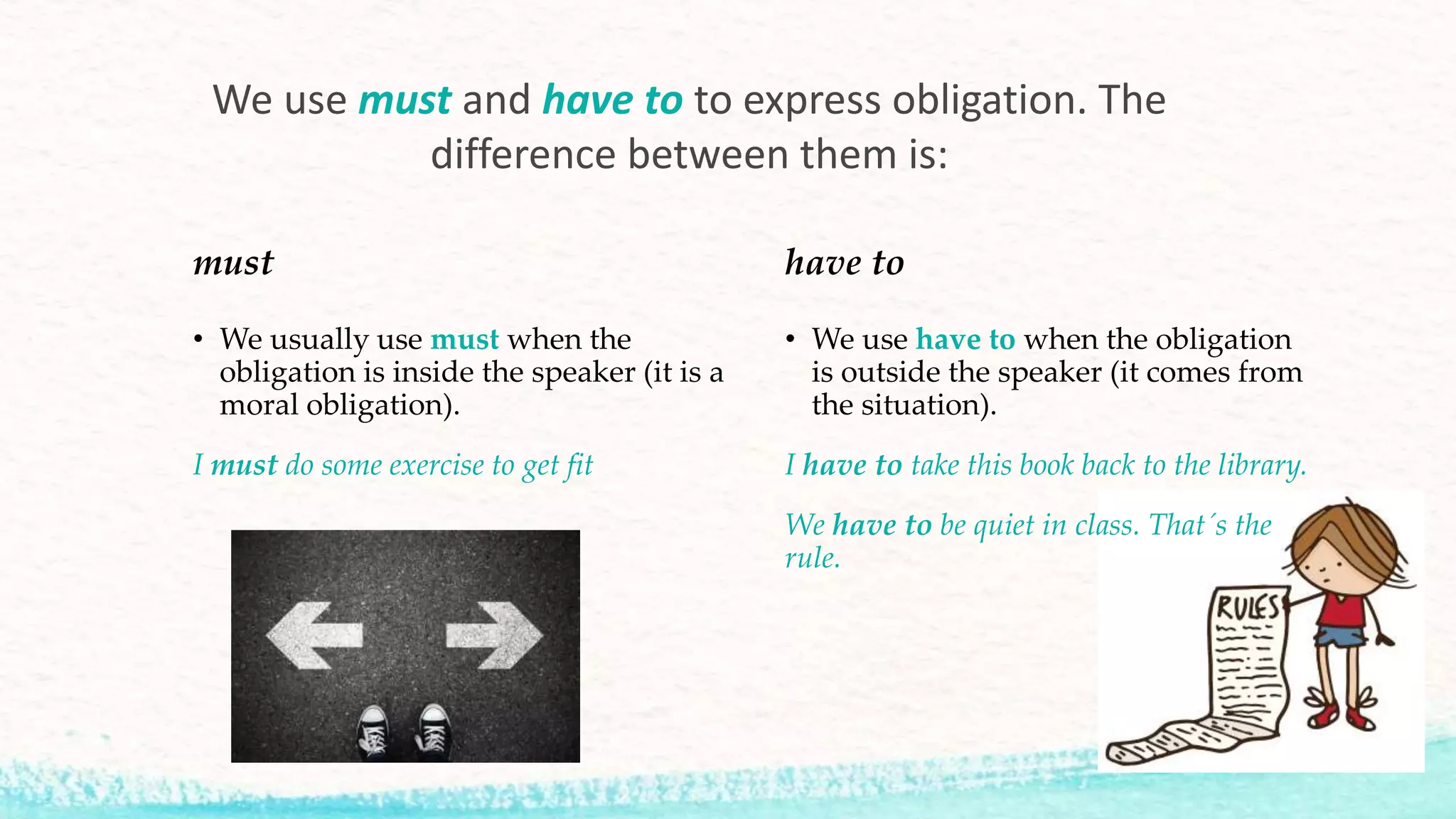
• We usually use must when the
obligation is inside the speaker (it is a
moral obligation).
I must do some exercise to get fit
have to
• We use have to when the obligation
is outside the speaker (it comes from
the situation).
I have to take this book back to the library.
We have to be quiet in class. That´s the
rule.
We use must and have to to express obligation. The
difference between them is:
Have to or must?
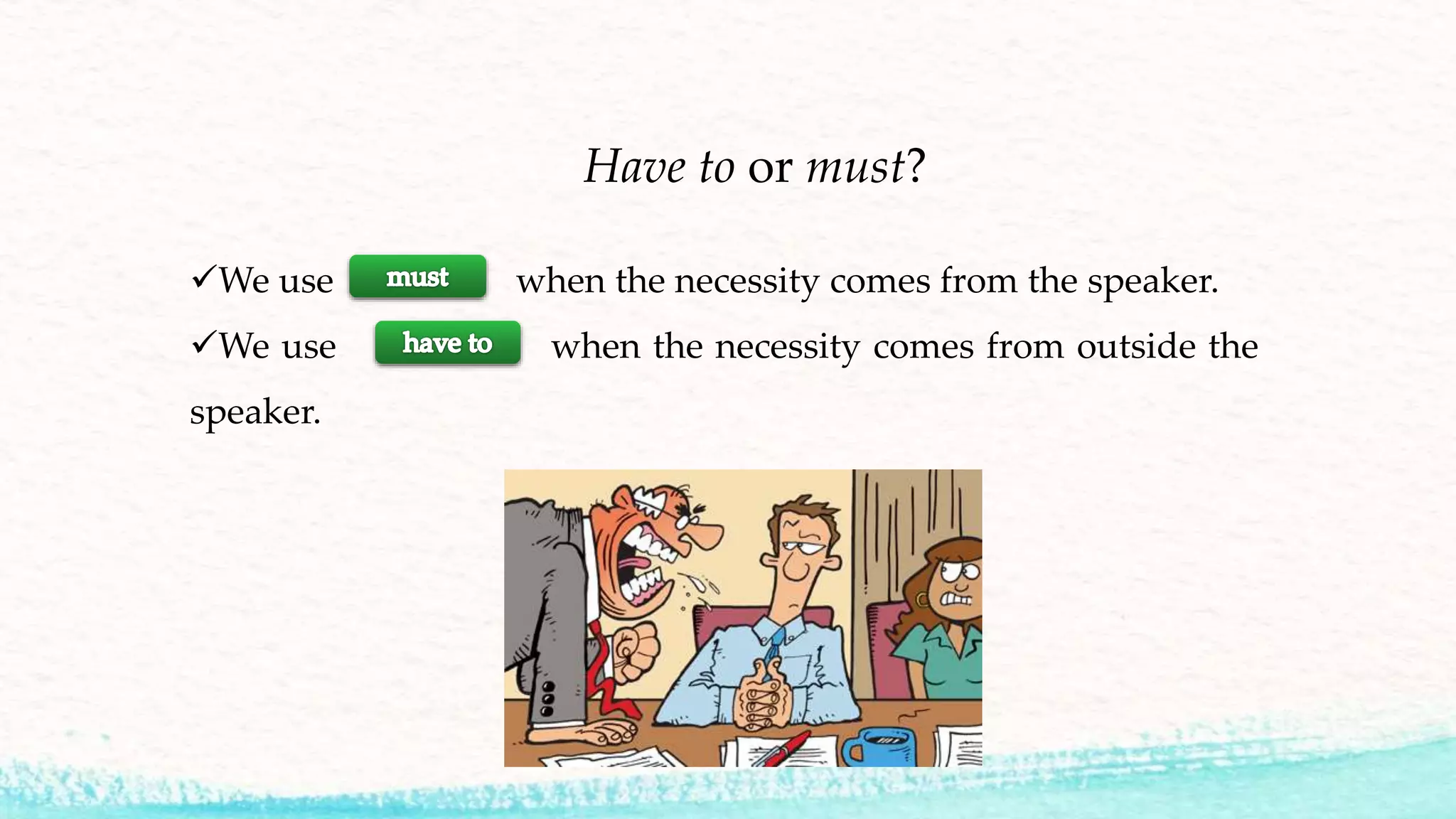
We use when the necessity comes from the speaker.
We use when the necessity comes from outside the
speaker.
Expressing no obligation
• To express lack of obligation we use:
don´t / doesn´t have to,
needn´t and don´t /doesn´t need to
You don´t need to get up early. It is Sunday!
she doesn´t need to wear a coat. It is warm outside.
She needn´t cook tonight. We´re eating out.
Have to and need
to are not modal
verbs
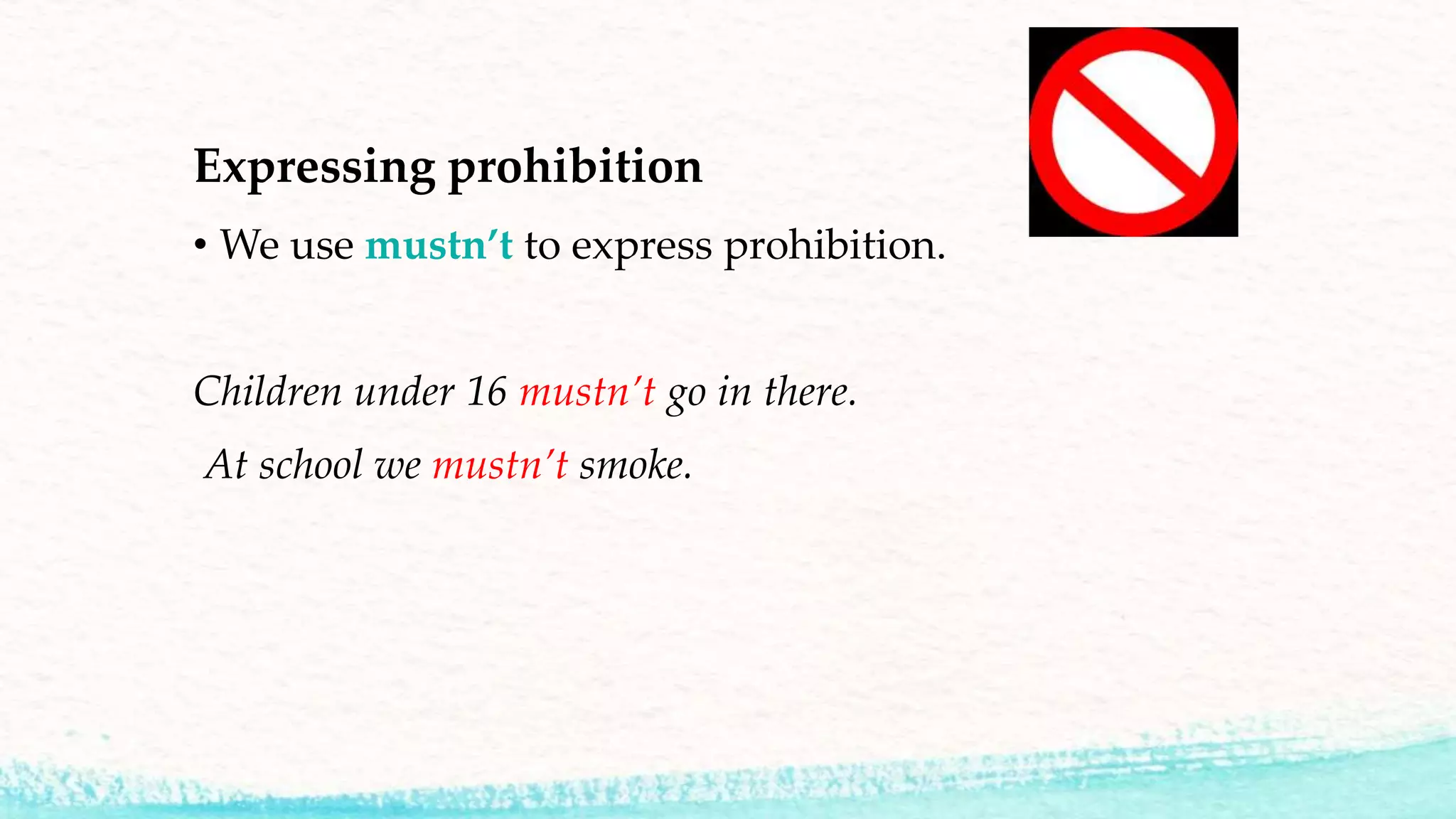
Expressing prohibition
• We use mustn’t to express prohibition.
Children under 16 mustn’t go in there.
At school we mustn’t smoke.
Expressing advice
• We use should and ought to to express advice or make recommendations:
You should eat less fat if you want to lose weight.
You ought to relax if you don´t want to get ill.
You shouldn´t be rude to anybody.
You oughtn´t to tell lies.
• We can use must and have to give strong advice when we think it’s very
important that someone does something
If you feel really ill, you must go to the doctor’s
When you’re in Venice, you have to have a drink at Harry’s bar!
Let’s have some
practice!
1. I have not to tidy my room up today; I did
it yesterday.
2. Do you must make such a noise? I’m trying
to concentrate!
3. Last week I must went to the hairdresser.
Mum said my hair was far too long.
4. They’ve changed my hours! Now I must
start work at 7.30 instead of 8.30!
5. At my school we mustn’t wear a tie if we
don’t want to.
6. You really should to go and see that film.
Correct the sentences.
You can also redirect yourself to
the activity online/blog:
http://www.educaplay.com/es/rec
ursoseducativos/2304493/modal_v
erbs_sentence_correction.htm

Modal verbs

  • 1.
  • 2.
    Pre-task: let’s try groupingthe modal verbs depending on their use. • Obligation. • Lack of obligation or necessity. • Prohibition. • Advice. http://www.educaplay.com/es/recursoseducativos/22 99411/modal_verbs.htm
  • 3.
    Modal verbs areauxiliary verbs that provide additional and specific meaning to the main verb of the sentence. They are special verbs which behave very differently from normal verbs. Here are some important differences:
  • 4.
    Modal verbs donot take "-s" in the third person: He can speak Chinese. She should be here by 9:00.
  • 5.
    You use "not"to make modal verbs negative, even in simple present and simple past. He should not be late. They might not come to the party.
  • 6.
    Many modal verbscannot be used in past or future tenses. She musted study very hard not correct
  • 7.
    Should have past participle Must •To use those modal verbs in the past we add the infinitive have after them. Next, the past participle of the main verb is used. He should have come home earlier. Now he’s grounded. My parents must have gone out because they don’t answer the phone.
  • 8.
    Expressing obligation or noobligation Must vs. have to
  • 9.
    must • We usuallyuse must when the obligation is inside the speaker (it is a moral obligation). I must do some exercise to get fit have to • We use have to when the obligation is outside the speaker (it comes from the situation). I have to take this book back to the library. We have to be quiet in class. That´s the rule. We use must and have to to express obligation. The difference between them is:
  • 10.
    Have to ormust? We use when the necessity comes from the speaker. We use when the necessity comes from outside the speaker.
  • 11.
    Expressing no obligation •To express lack of obligation we use: don´t / doesn´t have to, needn´t and don´t /doesn´t need to You don´t need to get up early. It is Sunday! she doesn´t need to wear a coat. It is warm outside. She needn´t cook tonight. We´re eating out. Have to and need to are not modal verbs
  • 12.
    Expressing prohibition • Weuse mustn’t to express prohibition. Children under 16 mustn’t go in there. At school we mustn’t smoke.
  • 13.
    Expressing advice • Weuse should and ought to to express advice or make recommendations: You should eat less fat if you want to lose weight. You ought to relax if you don´t want to get ill. You shouldn´t be rude to anybody. You oughtn´t to tell lies. • We can use must and have to give strong advice when we think it’s very important that someone does something If you feel really ill, you must go to the doctor’s When you’re in Venice, you have to have a drink at Harry’s bar!
  • 14.
    Let’s have some practice! 1.I have not to tidy my room up today; I did it yesterday. 2. Do you must make such a noise? I’m trying to concentrate! 3. Last week I must went to the hairdresser. Mum said my hair was far too long. 4. They’ve changed my hours! Now I must start work at 7.30 instead of 8.30! 5. At my school we mustn’t wear a tie if we don’t want to. 6. You really should to go and see that film. Correct the sentences. You can also redirect yourself to the activity online/blog: http://www.educaplay.com/es/rec ursoseducativos/2304493/modal_v erbs_sentence_correction.htm