Past Modals
NEF Upper-Intermediate 4B
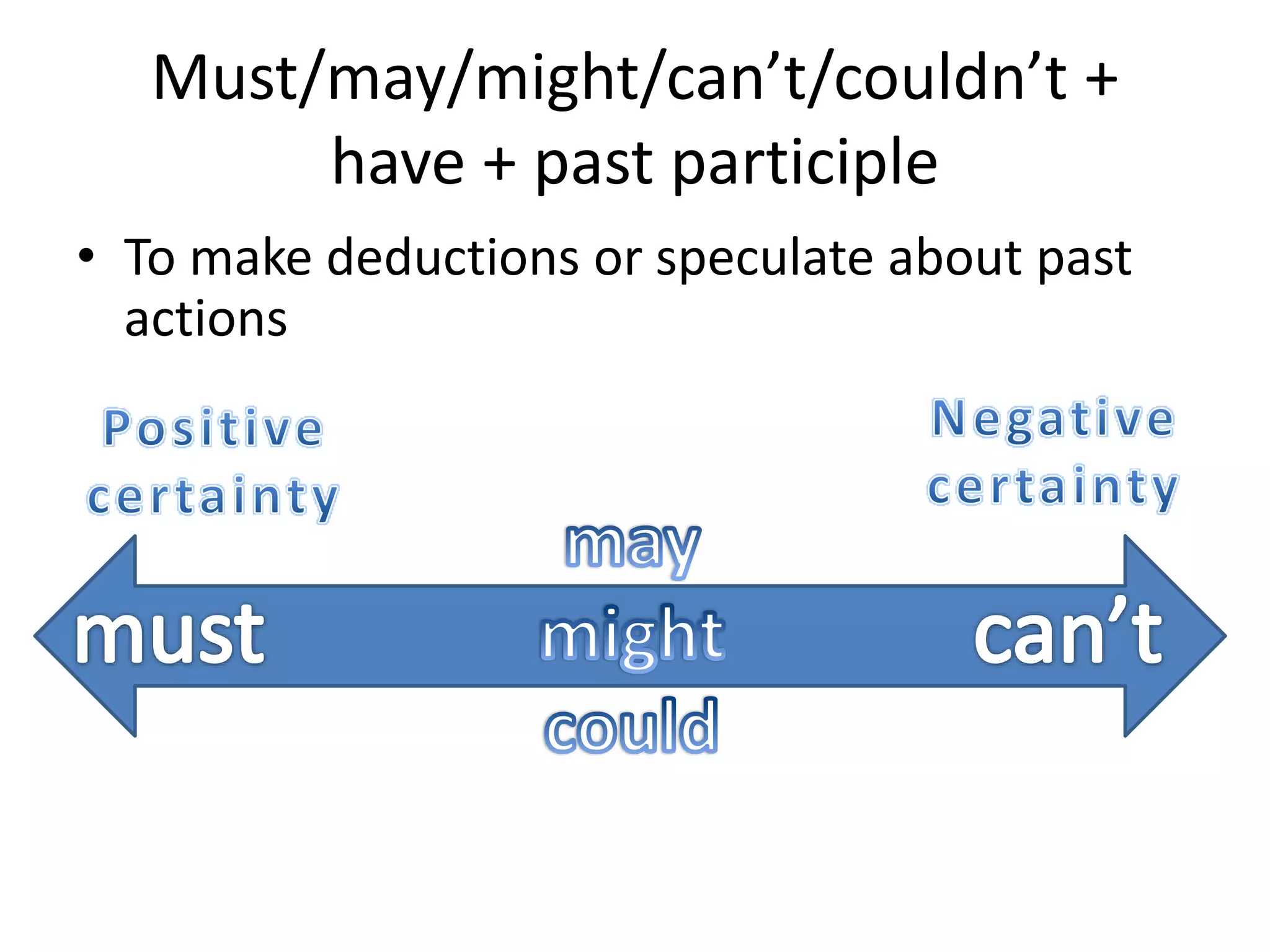
Must/may/might/can’t/couldn’t +
have + past participle
• To make deductions or speculate about past
actions
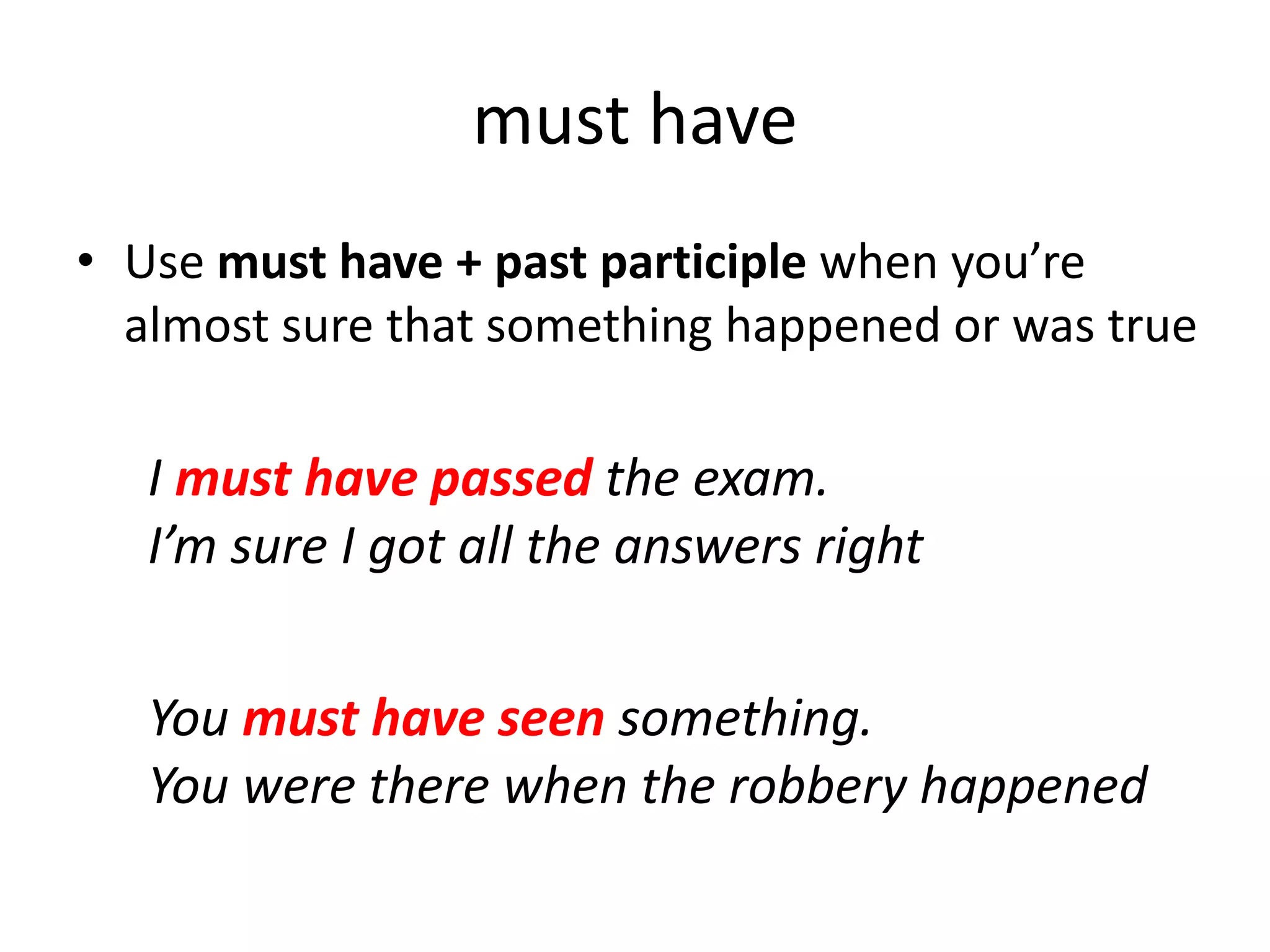
I must have passed the exam.
I’m sure I got all the answers right
You must have seen something.
You were there when the robbery happened
must have
• Use must have + past participle when you’re
almost sure that something happened or was true
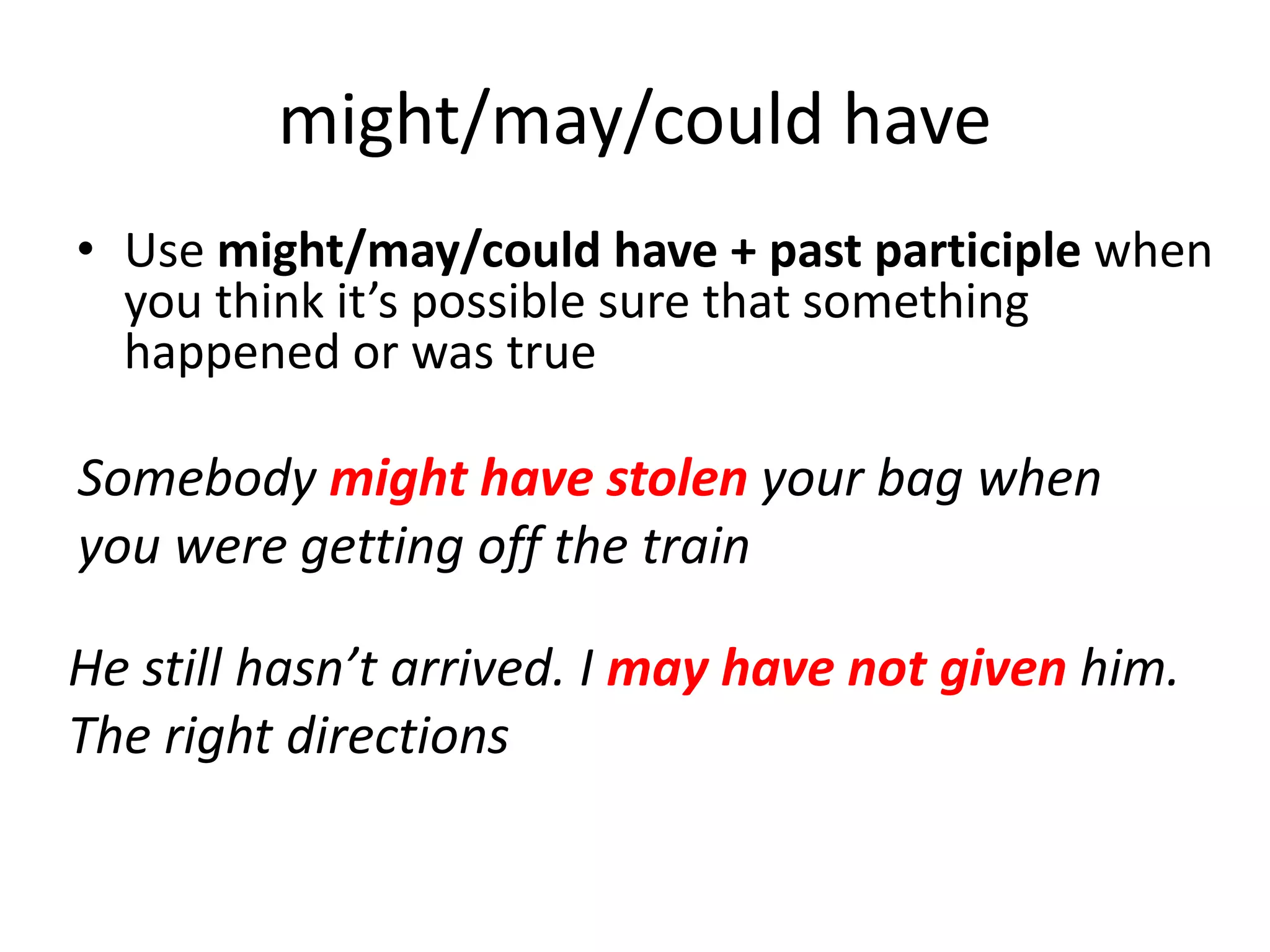
Somebody might have stolen your bag when
you were getting off the train
He still hasn’t arrived. I may have not given him.
The right directions
might/may/could have
• Use might/may/could have + past participle when
you think it’s possible sure that something
happened or was true
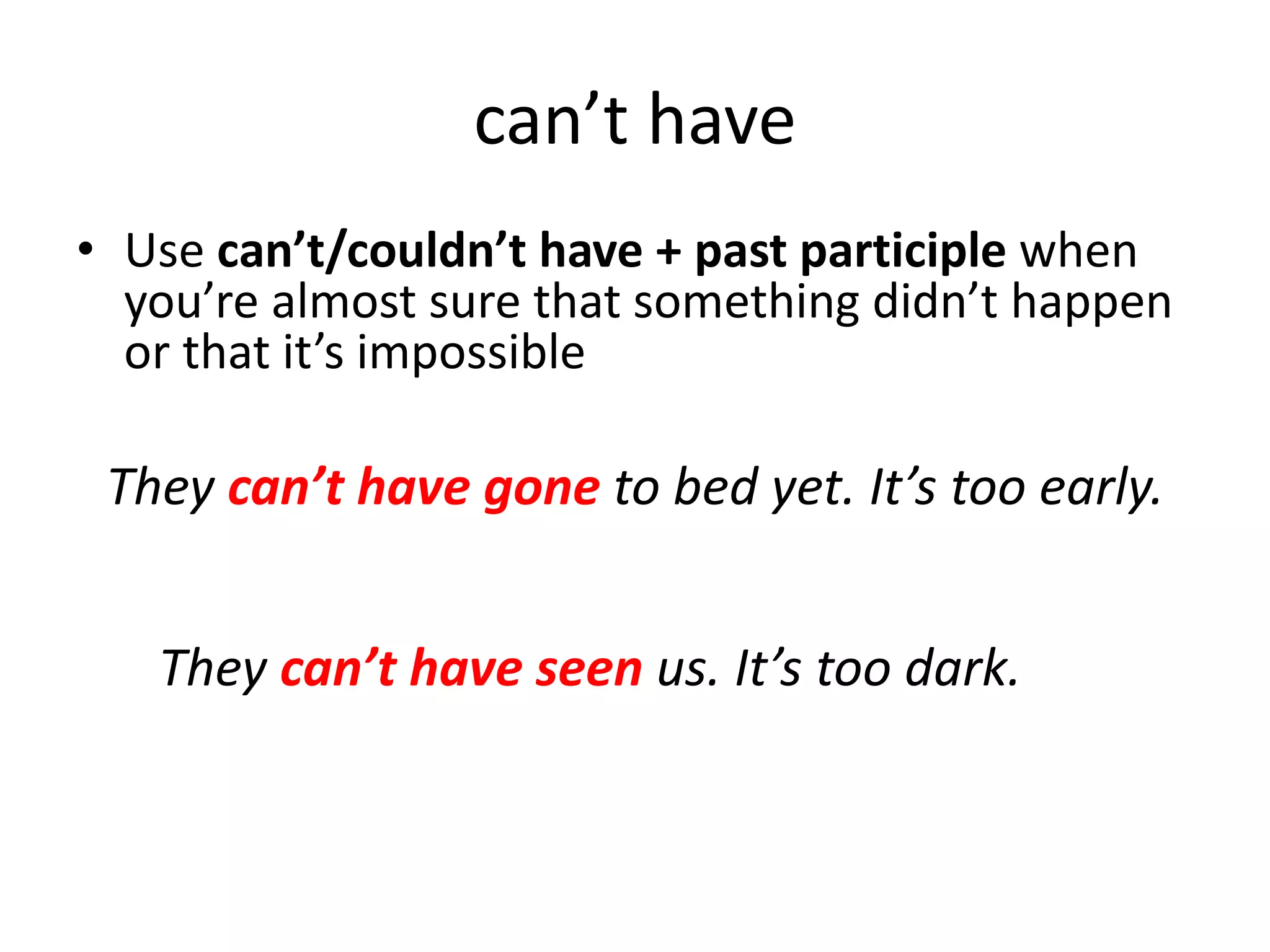
They can’t have gone to bed yet. It’s too early.
They can’t have seen us. It’s too dark.
can’t have
• Use can’t/couldn’t have + past participle when
you’re almost sure that something didn’t happen
or that it’s impossible

Past modals for speculation in the past

  • 1.
  • 2.
    Must/may/might/can’t/couldn’t + have +past participle • To make deductions or speculate about past actions
  • 3.
    I must havepassed the exam. I’m sure I got all the answers right You must have seen something. You were there when the robbery happened must have • Use must have + past participle when you’re almost sure that something happened or was true
  • 4.
    Somebody might havestolen your bag when you were getting off the train He still hasn’t arrived. I may have not given him. The right directions might/may/could have • Use might/may/could have + past participle when you think it’s possible sure that something happened or was true
  • 5.
    They can’t havegone to bed yet. It’s too early. They can’t have seen us. It’s too dark. can’t have • Use can’t/couldn’t have + past participle when you’re almost sure that something didn’t happen or that it’s impossible