MODAL VERBS (I):
MODALVERBS (I):
Must, have to, don’t have to,
Must, have to, don’t have to,
mustn’t
mustn’t
2.
Have to, don’thave to
Have to, don’t have to
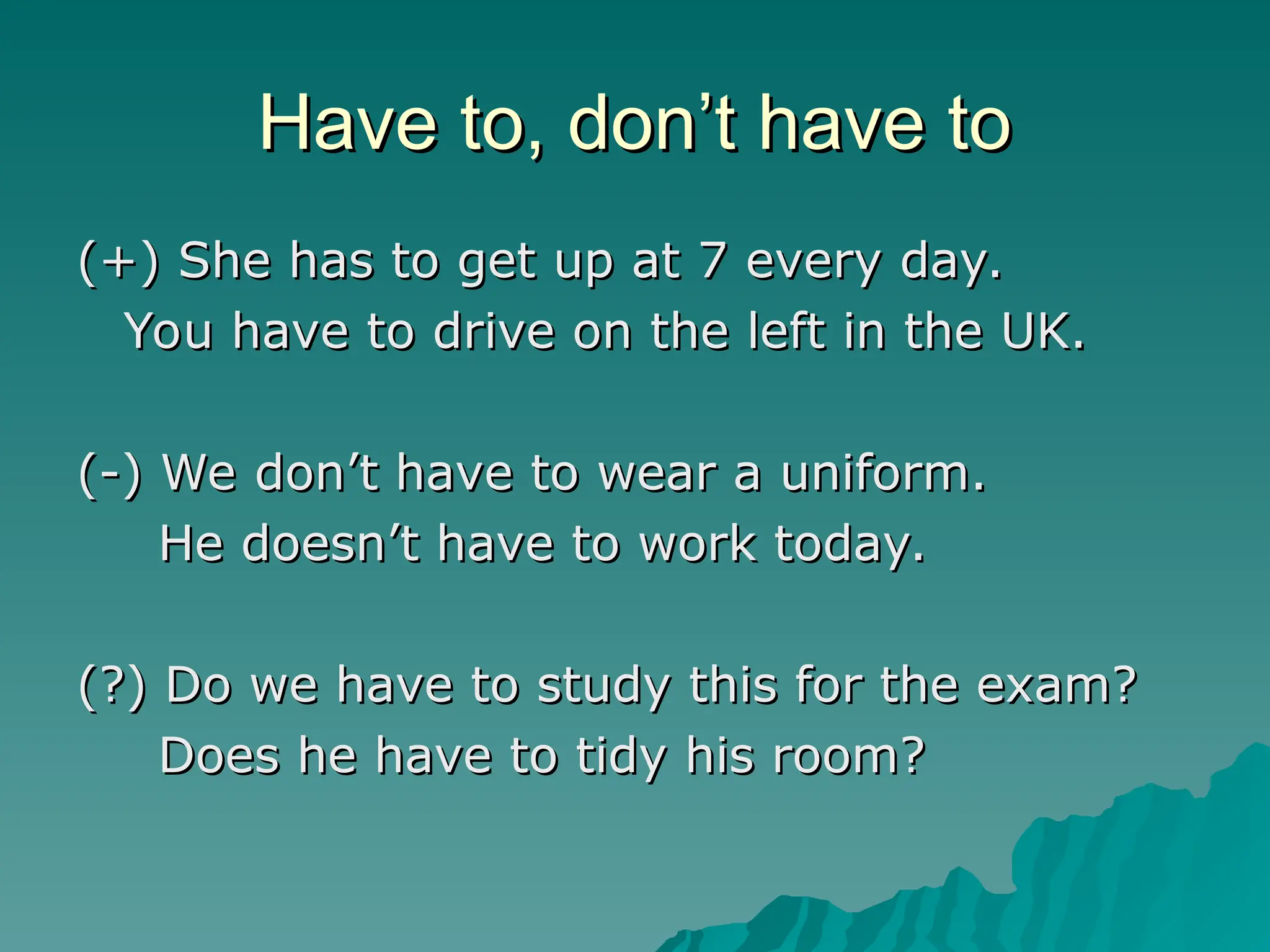
(+) She has to get up at 7 every day.
(+) She has to get up at 7 every day.
You have to drive on the left in the UK.
You have to drive on the left in the UK.
(-) We don’t have to wear a uniform.
(-) We don’t have to wear a uniform.
He doesn’t have to work today.
He doesn’t have to work today.
(?) Do we have to study this for the exam?
(?) Do we have to study this for the exam?
Does he have to tidy his room?
Does he have to tidy his room?
3.
Use
Use haveto
have to to talk about
to talk about rules
rules and
and
obligations
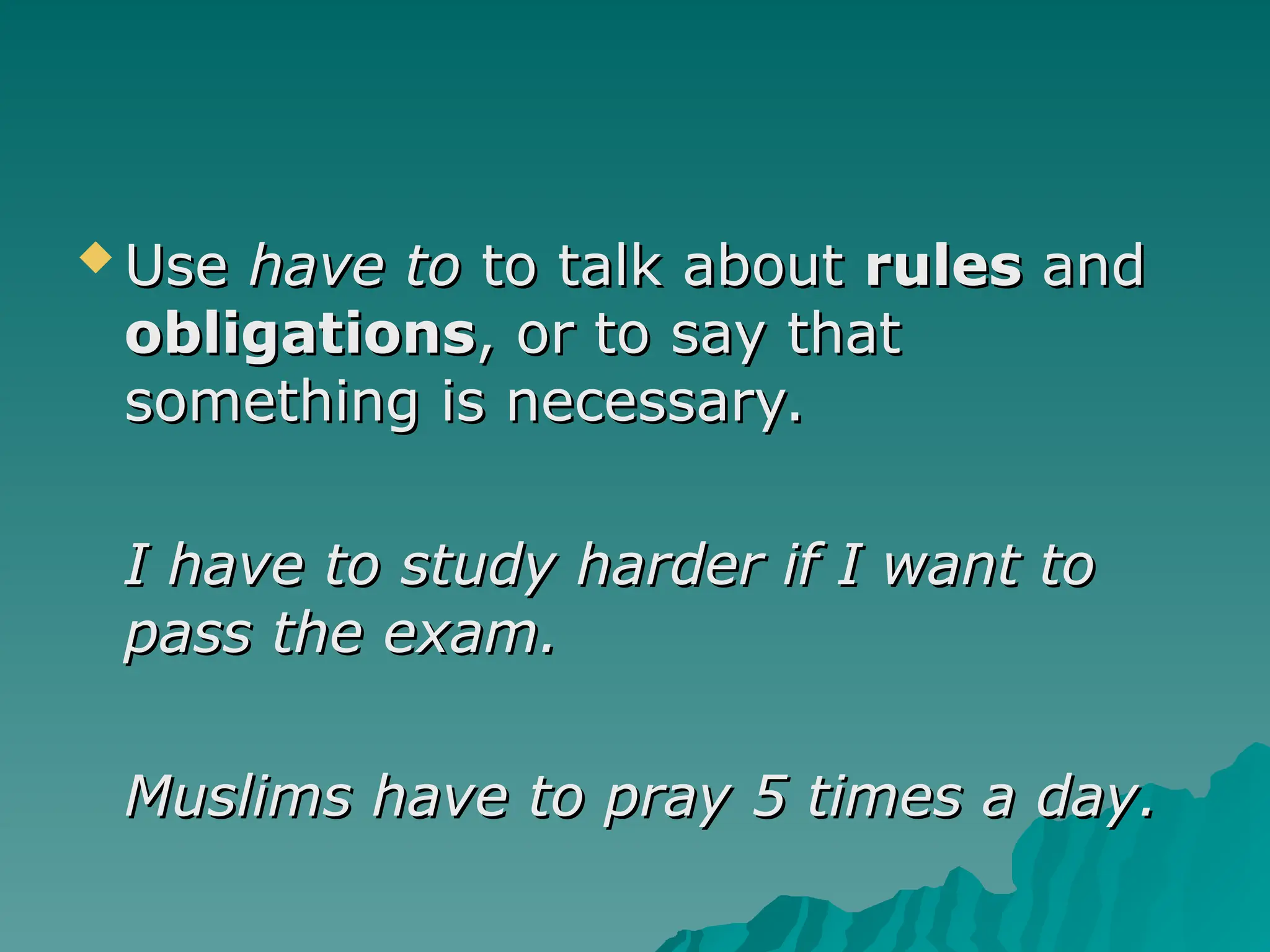
obligations, or to say that
, or to say that
something is necessary.
something is necessary.
I have to study harder if I want to
I have to study harder if I want to
pass the exam.
pass the exam.
Muslims have to pray 5 times a day.
Muslims have to pray 5 times a day.
4.
Must, mustn’t
Must, mustn’t
(+)Youmust do your homework tonight.
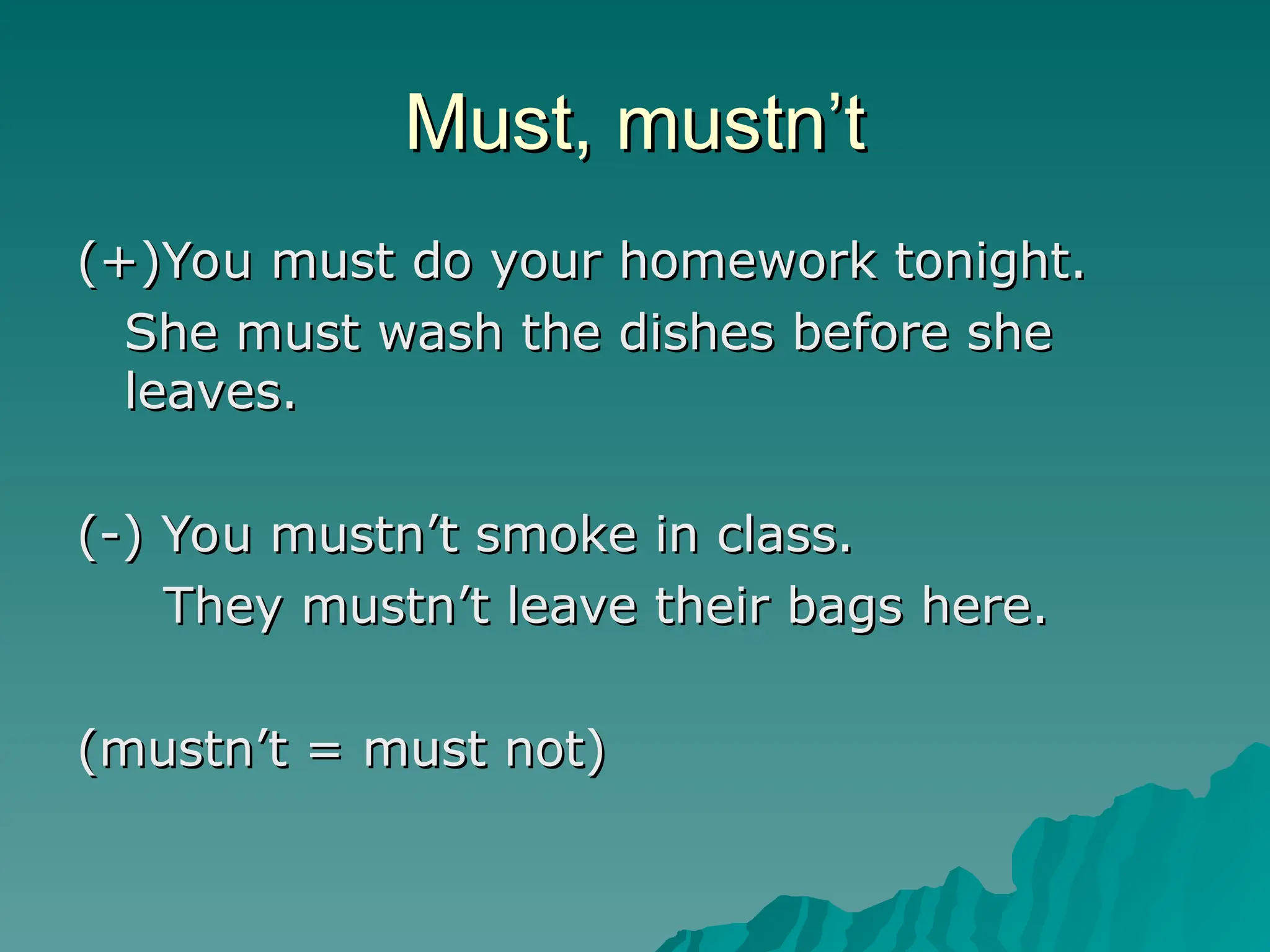
(+)You must do your homework tonight.
She must wash the dishes before she
She must wash the dishes before she
leaves.
leaves.
(-) You mustn’t smoke in class.
(-) You mustn’t smoke in class.
They mustn’t leave their bags here.
They mustn’t leave their bags here.
(mustn’t = must not)
(mustn’t = must not)
5.
Use
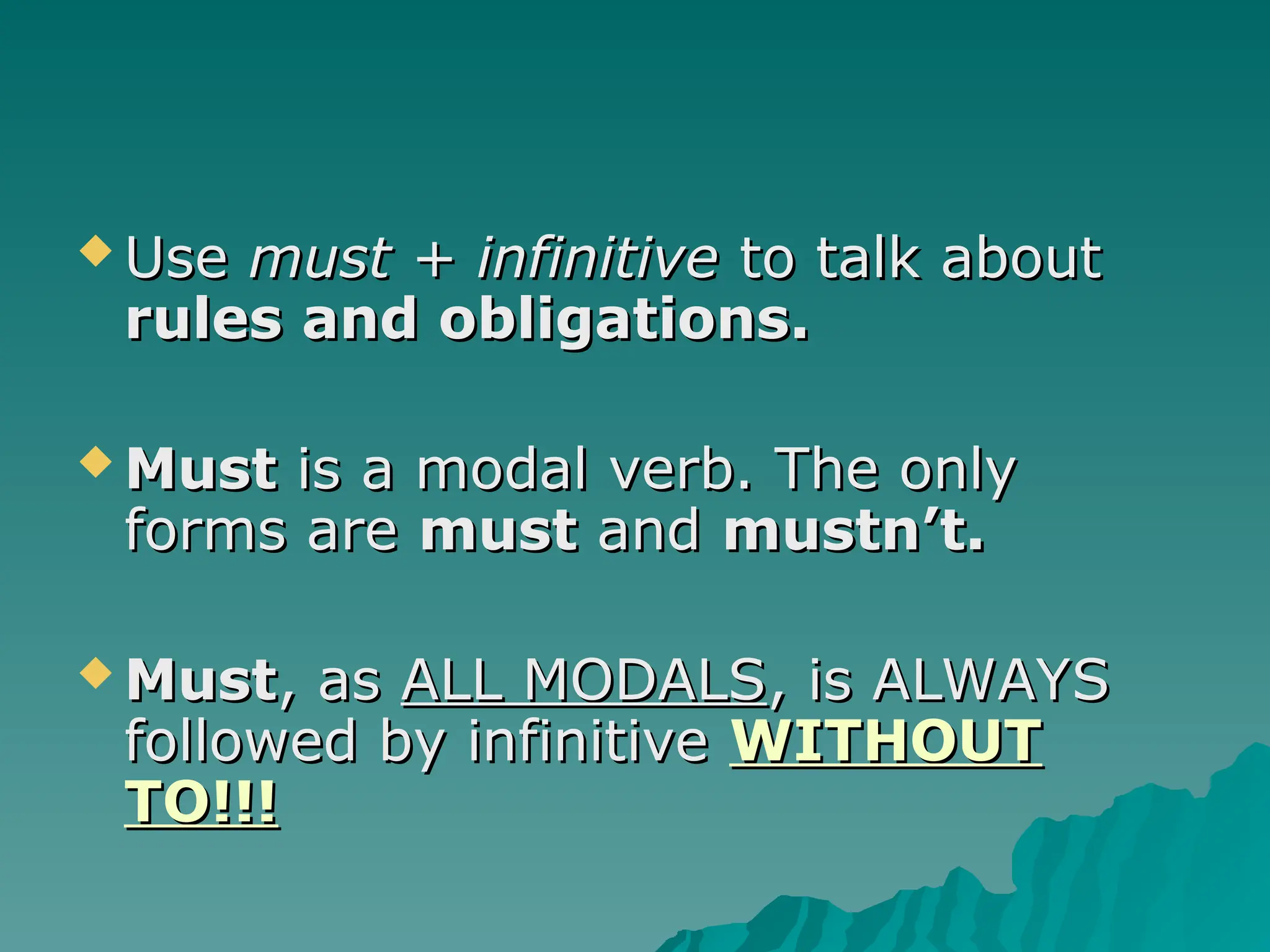
Use must+ infinitive
must + infinitive to talk about
to talk about
rules and obligations.
rules and obligations.
Must
Must is a modal verb. The only
is a modal verb. The only
forms are
forms are must
must and
and mustn’t.
mustn’t.
Must
Must, as
, as ALL MODALS
ALL MODALS, is ALWAYS
, is ALWAYS
followed by infinitive
followed by infinitive WITHOUT
WITHOUT
TO!!!
TO!!!
6.
Must vs. Haveto
Must vs. Have to
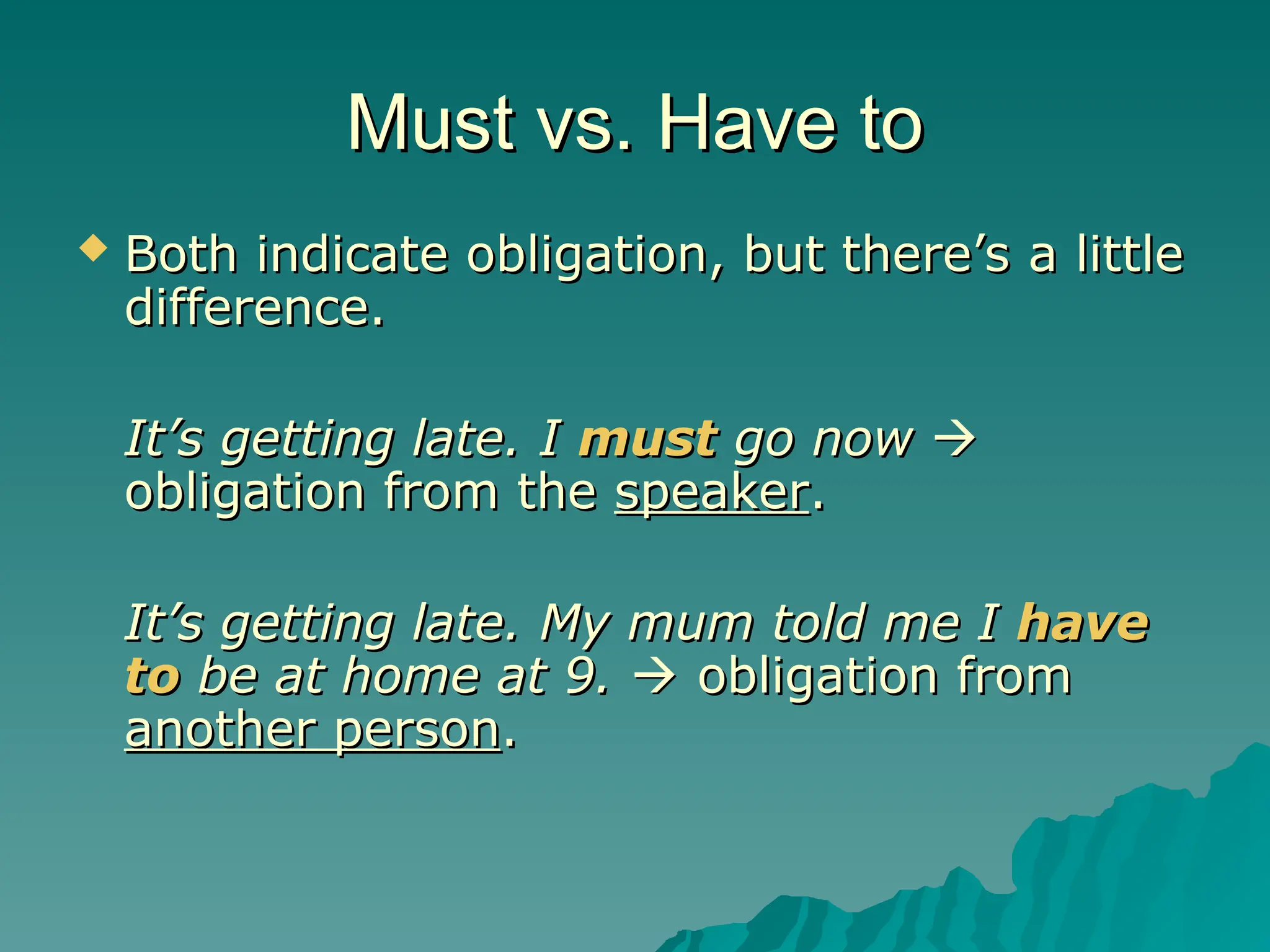
Both indicate obligation, but there’s a little
Both indicate obligation, but there’s a little
difference.
difference.
It’s getting late. I
It’s getting late. I must
must go now
go now
obligation from the
obligation from the speaker
speaker.
.
It’s getting late. My mum told me I
It’s getting late. My mum told me I have
have
to
to be at home at 9.
be at home at 9.
obligation from
obligation from
another person
another person.
.
7.
OBLIGATION
OBLIGATION
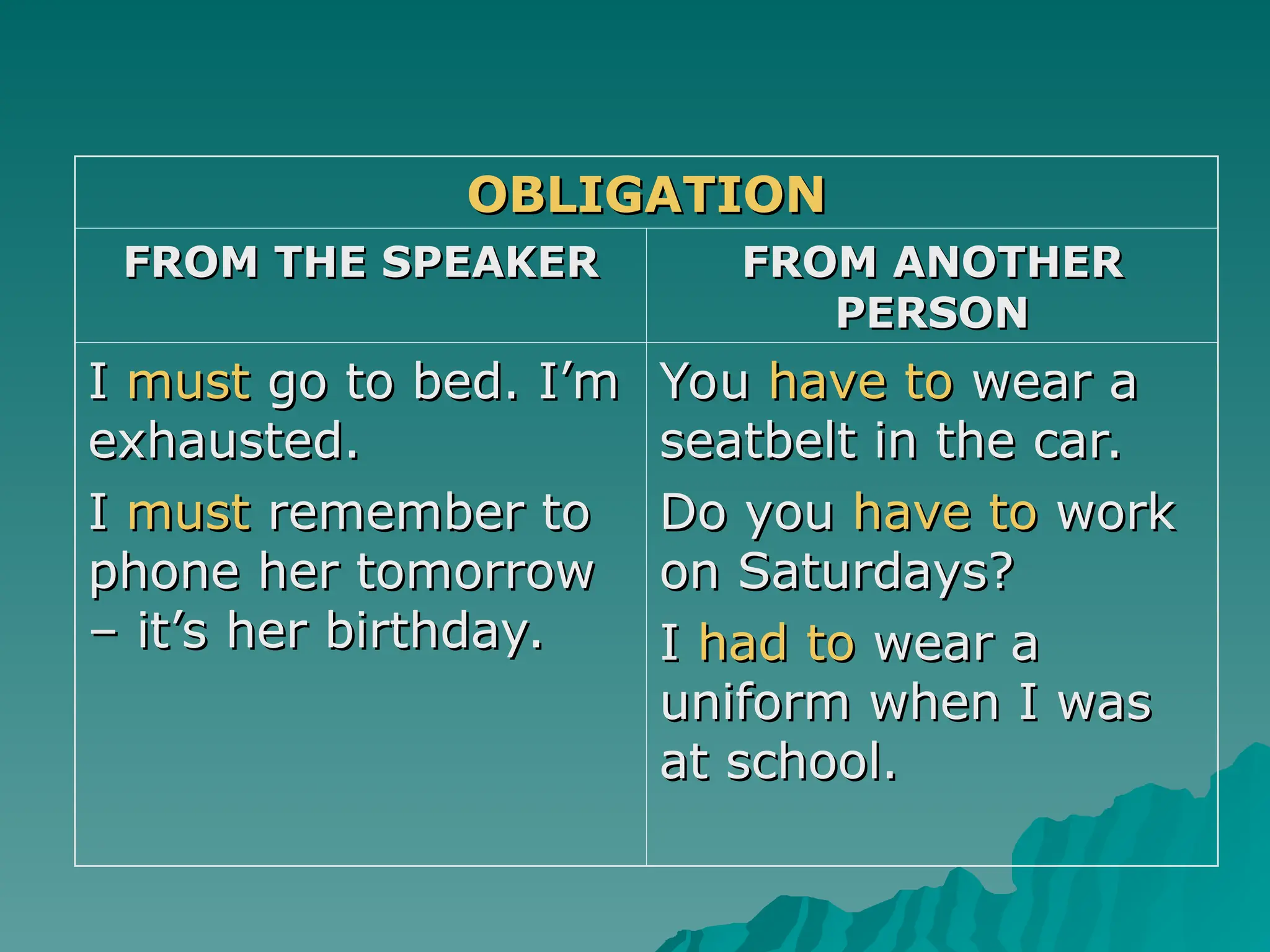
FROM THE SPEAKER
FROMTHE SPEAKER FROM ANOTHER
FROM ANOTHER
PERSON
PERSON
I
I must
must go to bed. I’m
go to bed. I’m
exhausted.
exhausted.
I
I must
must remember to
remember to
phone her tomorrow
phone her tomorrow
– it’s her birthday.
– it’s her birthday.
You
You have to
have to wear a
wear a
seatbelt in the car.
seatbelt in the car.
Do you
Do you have to
have to work
work
on Saturdays?
on Saturdays?
I
I had to
had to wear a
wear a
uniform when I was
uniform when I was
at school.
at school.
8.
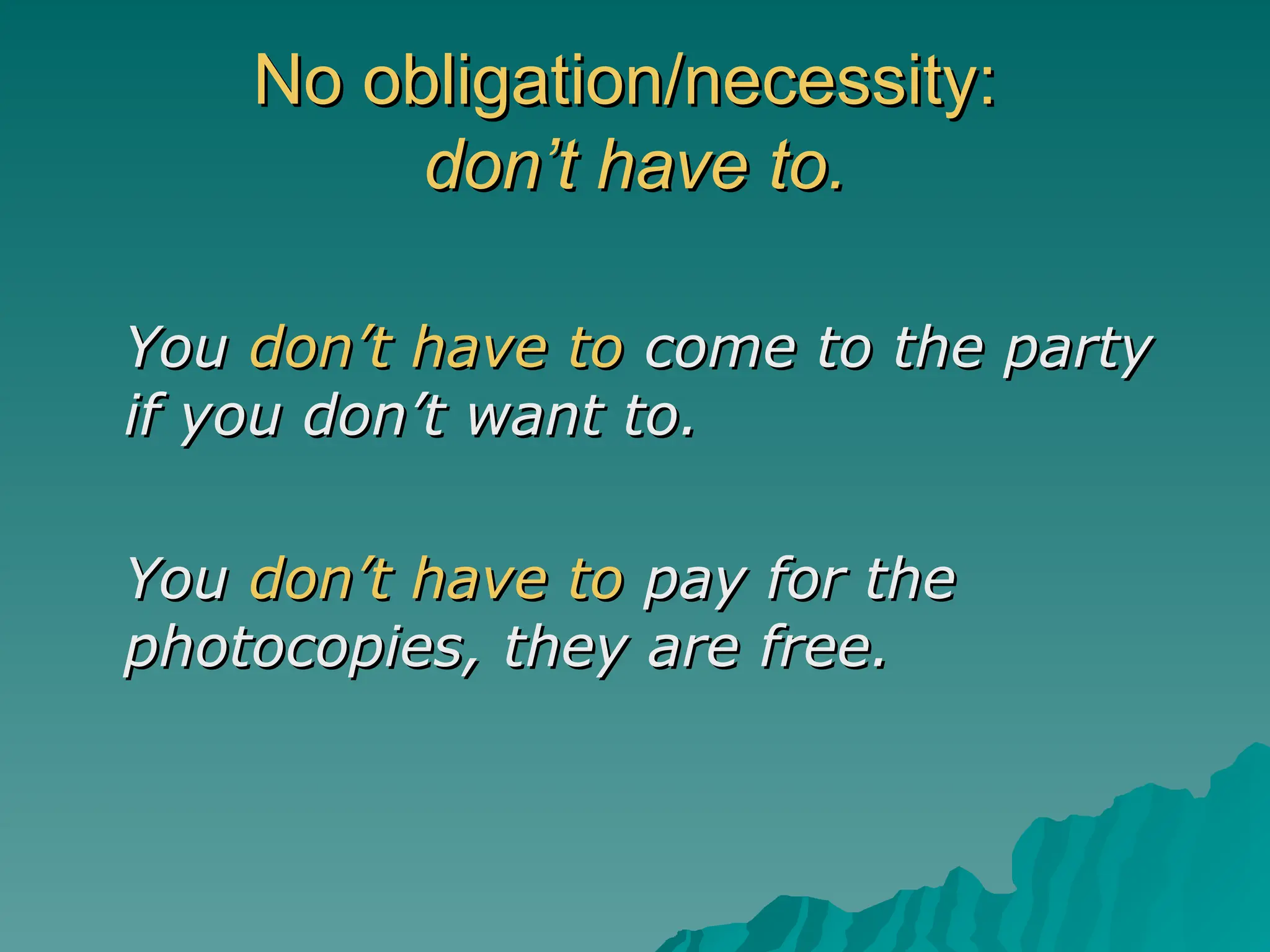
No obligation/necessity:
No obligation/necessity:
don’thave to.
don’t have to.
You
You don’t have to
don’t have to come to the party
come to the party
if you don’t want to.
if you don’t want to.
You
You don’t have to
don’t have to pay for the
pay for the
photocopies, they are free.
photocopies, they are free.
9.
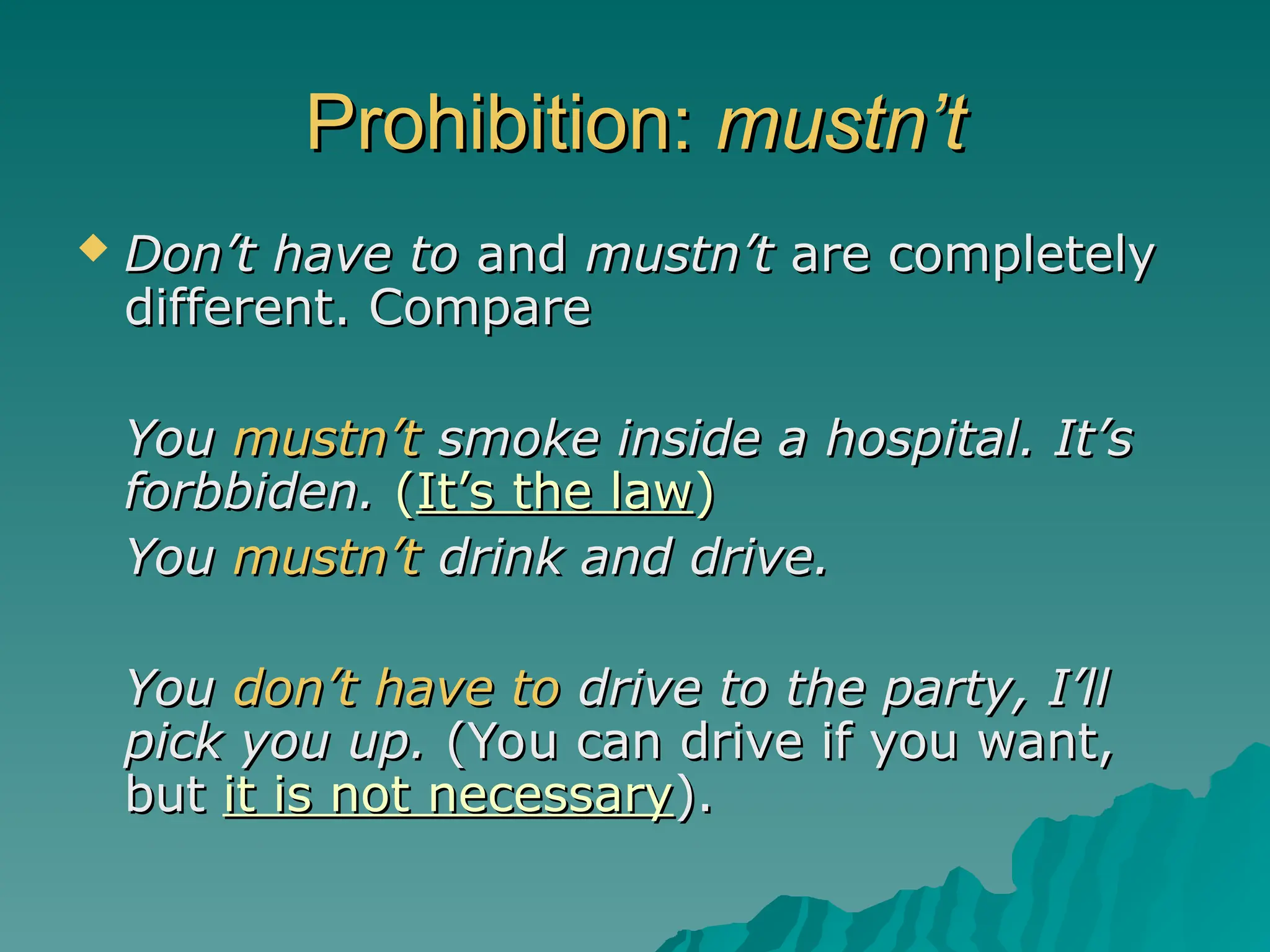
Prohibition:
Prohibition: mustn’t
mustn’t
Don’thave to
Don’t have to and
and mustn’t
mustn’t are completely
are completely
different. Compare
different. Compare
You
You mustn’t
mustn’t smoke inside a hospital. It’s
smoke inside a hospital. It’s
forbbiden.
forbbiden. (
(It’s the law
It’s the law)
)
You
You mustn’t
mustn’t drink and drive.
drink and drive.
You
You don’t have to
don’t have to drive to the party, I’ll
drive to the party, I’ll
pick you up.
pick you up. (You can drive if you want,
(You can drive if you want,
but
but it is not necessary
it is not necessary).
).