Modals of Deduction
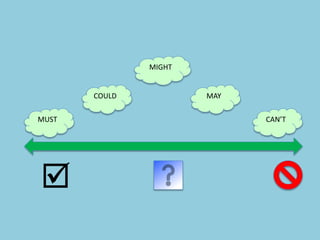
CAN’TMUST
COULD
MIGHT
MAY

(+) Must
• We use ‘must’ when we feel 100% sure that
something is true because we have strong
evidence about the information.
Present Tense
s + must + verb (base form)
She must be furious!
His parents must be rich!
(+) Must
• We use ‘must’ for the past when we feel 100%
sure that something happened in the past.
Past Tense
s + must have + past participle
They must have had a big party!
The couple must have gotten married!
(+) May / Might / Could
• We use may/might/could when we are not
sure about something but we think it is
possible.
Present Tense
s + may/might/could + verb (base form)
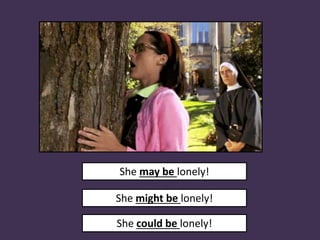
She may be lonely!
She might be lonely!
She could be lonely!
(-) May not / Might not / Could not
• We use may not/might not/could not when we
think that something is not exactly true.
Present Tense
s + may not /might not /could not + v (base form)
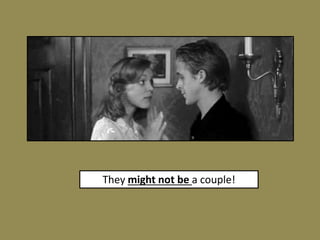
They might not be a couple!
(+) May/Might/Could
• We use may/might/could in the past when we
feel unsure about what happened in the past.
Past Tense
s + may have + past participle
s + might have + past participle
s + could have + past participle
• He could have been fired!
• He might have gotten into a
fight with someone.
• He may have had a bad day.
Can’t
• We use can’t or cannot when we feel 100%
sure that something is NOT true because we
have strong evidence about the information.
s + can’t + verb (base form)
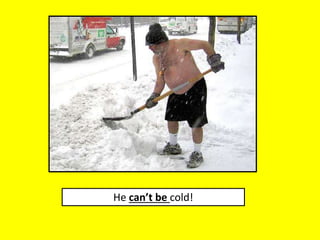
He can’t be cold!
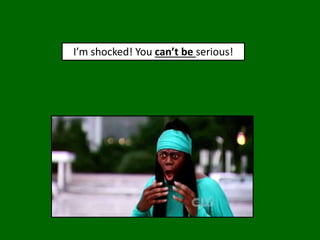
I’m shocked! You can’t be serious!
Can’t
• We use can’t or cannot in the past when we
feel 100% sure that something is NOT true
about a past situation.
s + can’t have + past participle
Maria can’t have been sick yesterday!
I saw her playing tennis in the morning and
soccer in the afternoon!
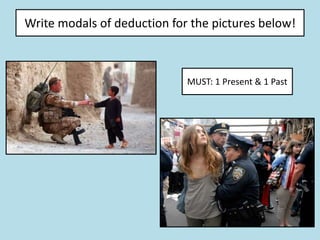
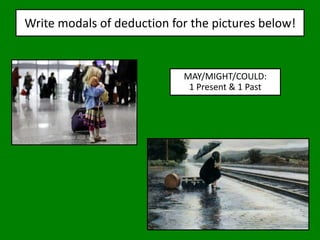
Write modals of deduction for the pictures below!
MUST: 1 Present & 1 Past
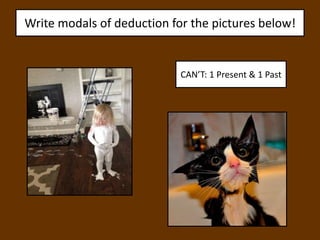
Write modals of deduction for the pictures below!
CAN’T: 1 Present & 1 Past
Write modals of deduction for the pictures below!
MAY/MIGHT/COULD:
1 Present & 1 Past

Modals of deduction 2017

  • 1.
  • 2.
  • 3.
    (+) Must • Weuse ‘must’ when we feel 100% sure that something is true because we have strong evidence about the information. Present Tense s + must + verb (base form)
  • 4.
    She must befurious!
  • 5.
  • 6.
    (+) Must • Weuse ‘must’ for the past when we feel 100% sure that something happened in the past. Past Tense s + must have + past participle
  • 7.
    They must havehad a big party!
  • 8.
    The couple musthave gotten married!
  • 9.
    (+) May /Might / Could • We use may/might/could when we are not sure about something but we think it is possible. Present Tense s + may/might/could + verb (base form)
  • 10.
    She may belonely! She might be lonely! She could be lonely!
  • 11.
    (-) May not/ Might not / Could not • We use may not/might not/could not when we think that something is not exactly true. Present Tense s + may not /might not /could not + v (base form)
  • 12.
    They might notbe a couple!
  • 13.
    (+) May/Might/Could • Weuse may/might/could in the past when we feel unsure about what happened in the past. Past Tense s + may have + past participle s + might have + past participle s + could have + past participle
  • 14.
    • He couldhave been fired! • He might have gotten into a fight with someone. • He may have had a bad day.
  • 15.
    Can’t • We usecan’t or cannot when we feel 100% sure that something is NOT true because we have strong evidence about the information. s + can’t + verb (base form)
  • 16.
  • 17.
    I’m shocked! Youcan’t be serious!
  • 18.
    Can’t • We usecan’t or cannot in the past when we feel 100% sure that something is NOT true about a past situation. s + can’t have + past participle
  • 19.
    Maria can’t havebeen sick yesterday! I saw her playing tennis in the morning and soccer in the afternoon!
  • 20.
    Write modals ofdeduction for the pictures below! MUST: 1 Present & 1 Past
  • 21.
    Write modals ofdeduction for the pictures below! CAN’T: 1 Present & 1 Past
  • 22.
    Write modals ofdeduction for the pictures below! MAY/MIGHT/COULD: 1 Present & 1 Past