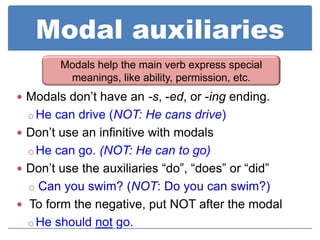
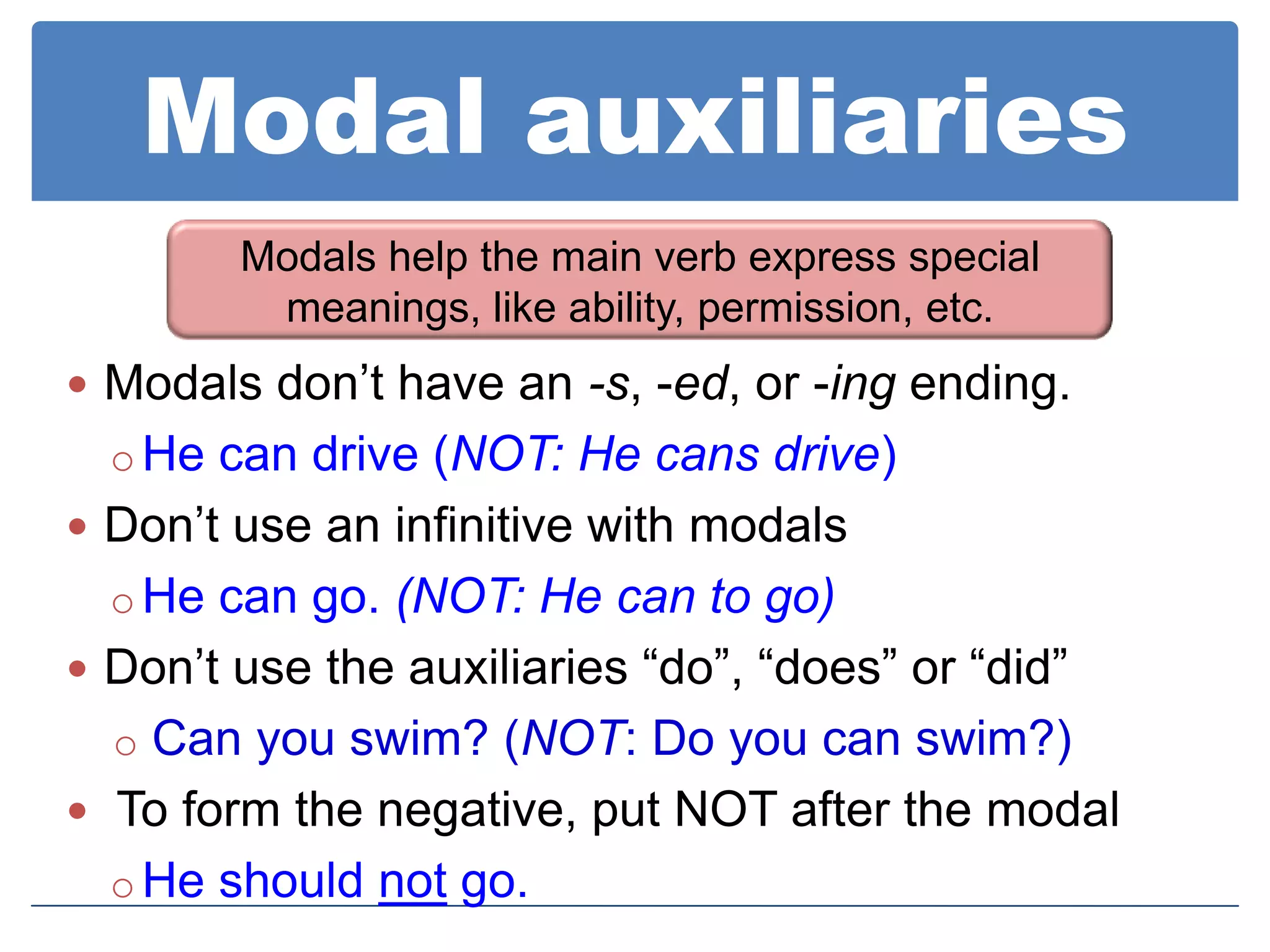
Modal auxiliaries
        Modals help the main verb express special
         meanings, like ability, permission, etc.
 Modals don’t have an -s, -ed, or -ing ending.
  o He can drive (NOT: He cans drive)
 Don’t use an infinitive with modals
  o He can go. (NOT: He can to go)
 Don’t use the auxiliaries “do”, “does” or “did”
  o Can you swim? (NOT: Do you can swim?)
 To form the negative, put NOT after the modal
  o He should not go.
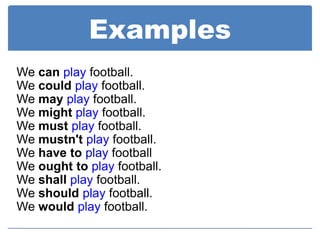
Examples
We can play football.
We could play football.
We may play football.
We might play football.
We must play football.
We mustn't play football.
We have to play football
We ought to play football.
We shall play football.
We should play football.
We would play football.
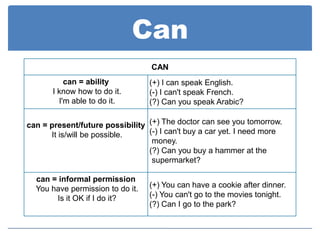
Can
                                  CAN
           can = ability          (+) I can speak English.
       I know how to do it.       (-) I can't speak French.
         I'm able to do it.       (?) Can you speak Arabic?

can = present/future possibility (+) The doctor can see you tomorrow.
      It is/will be possible.    (-) I can't buy a car yet. I need more
                                  money.
                                 (?) Can you buy a hammer at the
                                  supermarket?

  can = informal permission
  You have permission to do it.   (+) You can have a cookie after dinner.
       Is it OK if I do it?       (-) You can't go to the movies tonight.
                                  (?) Can I go to the park?
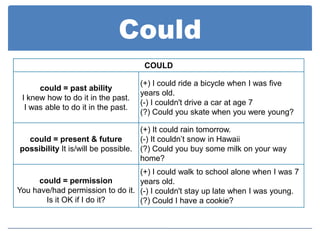
Could
                                       COULD

                                      (+) I could ride a bicycle when I was five
      could = past ability
                                      years old.
 I knew how to do it in the past.
                                      (-) I couldn't drive a car at age 7
  I was able to do it in the past.
                                      (?) Could you skate when you were young?

                                      (+) It could rain tomorrow.
  could = present & future            (-) It couldn’t snow in Hawaii
possibility It is/will be possible.   (?) Could you buy some milk on your way
                                      home?
                                  (+) I could walk to school alone when I was 7
      could = permission          years old.
You have/had permission to do it. (-) I couldn't stay up late when I was young.
        Is it OK if I do it?      (?) Could I have a cookie?
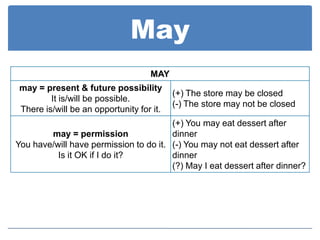
May
                                   MAY
may = present & future possibility
                                          (+) The store may be closed
        It is/will be possible.
                                          (-) The store may not be closed
There is/will be an opportunity for it.
                                        (+) You may eat dessert after
        may = permission                dinner
You have/will have permission to do it. (-) You may not eat dessert after
          Is it OK if I do it?          dinner
                                        (?) May I eat dessert after dinner?
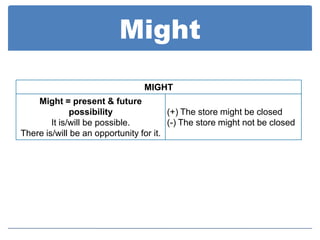
Might
                                MIGHT
    Might = present & future
              possibility               (+) The store might be closed
        It is/will be possible.         (-) The store might not be closed
There is/will be an opportunity for it.
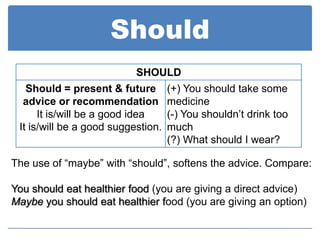
Should
                           SHOULD
   Should = present & future        (+) You should take some
  advice or recommendation          medicine
      It is/will be a good idea     (-) You shouldn’t drink too
 It is/will be a good suggestion.   much
                                    (?) What should I wear?

The use of “maybe” with “should”, softens the advice. Compare:

You should eat healthier food (you are giving a direct advice)
Maybe you should eat healthier food (you are giving an option)

Modal auxiliaries

  • 1.
    Modal auxiliaries Modals help the main verb express special meanings, like ability, permission, etc.  Modals don’t have an -s, -ed, or -ing ending. o He can drive (NOT: He cans drive)  Don’t use an infinitive with modals o He can go. (NOT: He can to go)  Don’t use the auxiliaries “do”, “does” or “did” o Can you swim? (NOT: Do you can swim?)  To form the negative, put NOT after the modal o He should not go.
  • 2.
    Examples We can playfootball. We could play football. We may play football. We might play football. We must play football. We mustn't play football. We have to play football We ought to play football. We shall play football. We should play football. We would play football.
  • 3.
    Can CAN can = ability (+) I can speak English. I know how to do it. (-) I can't speak French. I'm able to do it. (?) Can you speak Arabic? can = present/future possibility (+) The doctor can see you tomorrow. It is/will be possible. (-) I can't buy a car yet. I need more money. (?) Can you buy a hammer at the supermarket? can = informal permission You have permission to do it. (+) You can have a cookie after dinner. Is it OK if I do it? (-) You can't go to the movies tonight. (?) Can I go to the park?
  • 4.
    Could COULD (+) I could ride a bicycle when I was five could = past ability years old. I knew how to do it in the past. (-) I couldn't drive a car at age 7 I was able to do it in the past. (?) Could you skate when you were young? (+) It could rain tomorrow. could = present & future (-) It couldn’t snow in Hawaii possibility It is/will be possible. (?) Could you buy some milk on your way home? (+) I could walk to school alone when I was 7 could = permission years old. You have/had permission to do it. (-) I couldn't stay up late when I was young. Is it OK if I do it? (?) Could I have a cookie?
  • 5.
    May MAY may = present & future possibility (+) The store may be closed It is/will be possible. (-) The store may not be closed There is/will be an opportunity for it. (+) You may eat dessert after may = permission dinner You have/will have permission to do it. (-) You may not eat dessert after Is it OK if I do it? dinner (?) May I eat dessert after dinner?
  • 6.
    Might MIGHT Might = present & future possibility (+) The store might be closed It is/will be possible. (-) The store might not be closed There is/will be an opportunity for it.
  • 7.
    Should SHOULD Should = present & future (+) You should take some advice or recommendation medicine It is/will be a good idea (-) You shouldn’t drink too It is/will be a good suggestion. much (?) What should I wear? The use of “maybe” with “should”, softens the advice. Compare: You should eat healthier food (you are giving a direct advice) Maybe you should eat healthier food (you are giving an option)