Downloaded 13 times


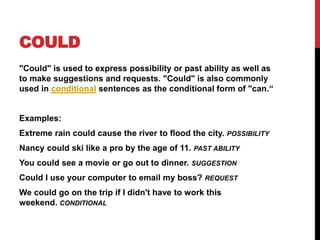


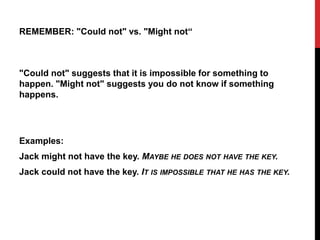

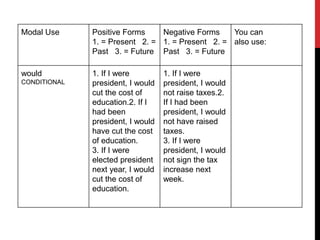
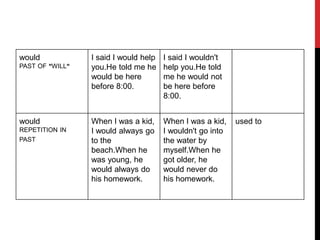

Modal verbs are special verbs that behave differently than regular verbs. Some key differences are that modal verbs don't take "-s" in the third person and use "not" to form negatives. Common modal verbs include can, could, may, might, must, ought to, shall, should, and will. Modal verbs have different meanings and uses depending on whether they are expressing ability, permission, possibility, conditionals, repetition in the past, or other concepts.


