Modal Verbs
      or
Modal Auxiliary
    Verbs
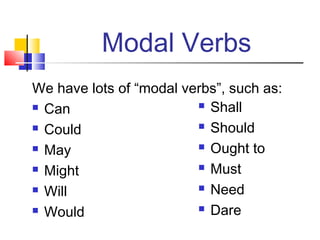
Modal Verbs
We have lots of “modal verbs”, such as:
 Can                     Shall

 Could                   Should

 May                     Ought to

 Might                   Must

 Will                    Need

 Would                   Dare
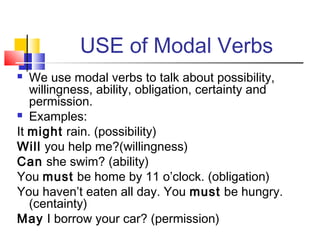
USE of Modal Verbs
  We use modal verbs to talk about possibility,
   willingness, ability, obligation, certainty and
   permission.
 Examples:

It might rain. (possibility)
Will you help me?(willingness)
Can she swim? (ability)
You must be home by 11 o’clock. (obligation)
You haven’t eaten all day. You must be hungry.
   (centainty)
May I borrow your car? (permission)
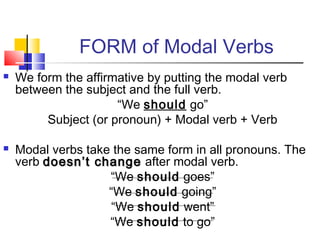
FORM of Modal Verbs
   We form the affirmative by putting the modal verb
    between the subject and the full verb.
                      “We should go”
         Subject (or pronoun) + Modal verb + Verb

   Modal verbs take the same form in all pronouns. The
    verb doesn’t change after modal verb.
                    “We should goes”
                    “We should going”
                     “We should went”
                    “We should to go”
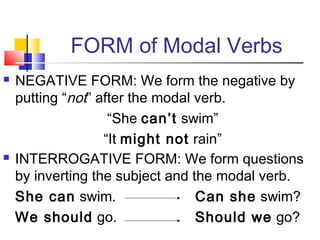
FORM of Modal Verbs
   NEGATIVE FORM: We form the negative by
    putting “not” after the modal verb.
                    “She can’t swim”
                   “It might not rain”
   INTERROGATIVE FORM: We form questions
    by inverting the subject and the modal verb.
    She can swim.                 Can she swim?
    We should go.                 Should we go?
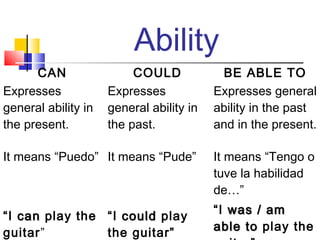
Ability
      CAN                 COULD            BE ABLE TO
Expresses            Expresses            Expresses general
general ability in   general ability in   ability in the past
the present.         the past.            and in the present.

It means “Puedo” It means “Pude”          It means “Tengo o
                                          tuve la habilidad
                                          de…”
                                          “I was / am
“I can play the “I could play
guitar”         the guitar”               able to play the
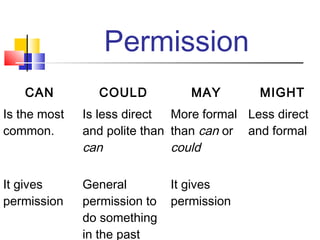
Permission
   CAN          COULD            MAY        MIGHT
Is the most   Is less direct  More formal Less direct
common.       and polite than than can or and formal
              can             could

It gives      General         It gives
permission    permission to   permission
              do something
              in the past
Obligation and Necessity
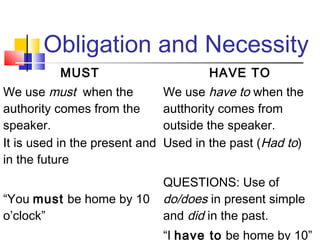
          MUST                          HAVE TO
We use must when the            We use have to when the
authority comes from the        autthority comes from
speaker.                        outside the speaker.
It is used in the present and   Used in the past (Had to)
in the future
                                QUESTIONS: Use of
“You must be home by 10         do/does in present simple
o’clock”                        and did in the past.
                                “I have to be home by 10”
Obligation and Necessity
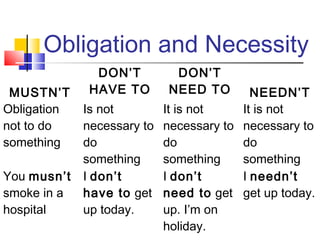
              DON’T         DON’T
 MUSTN’T     HAVE TO       NEED TO       NEEDN’T
Obligation   Is not       It is not    It is not
not to do    necessary to necessary to necessary to
something    do           do           do
             something    something    something
You musn’t   I don’t      I don’t      I needn’t
smoke in a   have to get need to get get up today.
hospital     up today.    up. I’m on
                          holiday.
Obligation and Advice
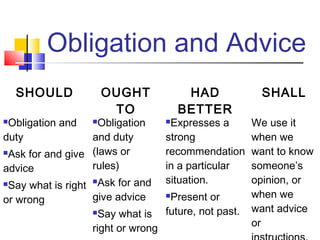
    SHOULD             OUGHT            HAD             SHALL
                        TO             BETTER
Obligation and    Obligation     Expresses a       We use it
duty              and duty         strong             when we
Ask for and give (laws or         recommendation     want to know
advice            rules)           in a particular    someone’s
                                   situation.         opinion, or
Say what is right Ask for and
                   give advice    Present or         when we
or wrong
                   Say what is   future, not past.   want advice
                   right or wrong                     or
Possibility
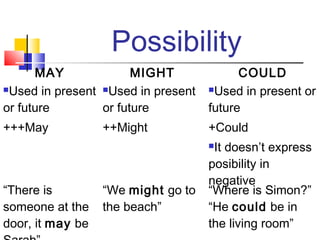
      MAY              MIGHT              COULD
Used in present Used in present   Used in present or

or future        or future          future
+++May            ++Might           +Could
                                    It doesn’t express
                                    posibility in
                                    negative
“There is         “We might go to   “Where is Simon?”
someone at the    the beach”        “He could be in
door, it may be                     the living room”
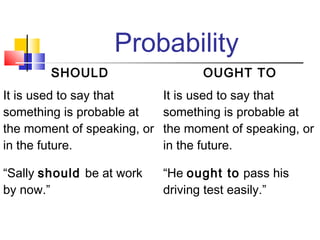
Probability
        SHOULD                     OUGHT TO
It is used to say that       It is used to say that
something is probable at     something is probable at
the moment of speaking, or   the moment of speaking, or
in the future.               in the future.

“Sally should be at work     “He ought to pass his
by now.”                     driving test easily.”
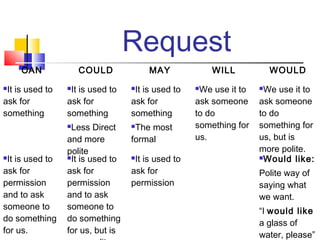
Request
     CAN             COULD             MAY             WILL            WOULD
It is used to   It is used to   It is used to   We use it to   We use it to
ask for          ask for          ask for          ask someone     ask someone
something        something        something        to do           to do
                 Less Direct     The most        something for   something for
                 and more         formal           us.             us, but is
                 polite                                            more polite.
It is used to   It is used to   It is used to                   Would like:

ask for          ask for          ask for                          Polite way of
permission       permission       permission                       saying what
and to ask       and to ask                                        we want.
someone to       someone to                                        “I would like
do something     do something                                      a glass of
for us.          for us, but is                                    water, please”
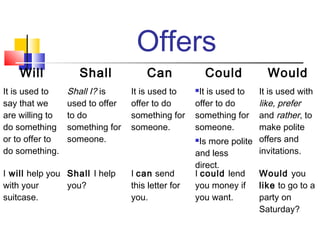
Offers
    Will            Shall            Can               Could         Would
It is used to    Shall I? is     It is used to     It is used to  It is used with
say that we      used to offer   offer to do       offer to do     like, prefer
are willing to   to do           something for     something for   and rather, to
do something     something for   someone.          someone.        make polite
or to offer to   someone.                          Is more polite offers and

do something.                                      and less        invitations.
                                                   direct.
I will help you Shall I help     I can send        I could lend    Would you
with your       you?             this letter for   you money if    like to go to a
suitcase.                        you.              you want.       party on
                                                                   Saturday?

Modal Verbs for the test

  • 1.
    Modal Verbs or Modal Auxiliary Verbs
  • 2.
    Modal Verbs We havelots of “modal verbs”, such as:  Can  Shall  Could  Should  May  Ought to  Might  Must  Will  Need  Would  Dare
  • 3.
    USE of ModalVerbs  We use modal verbs to talk about possibility, willingness, ability, obligation, certainty and permission.  Examples: It might rain. (possibility) Will you help me?(willingness) Can she swim? (ability) You must be home by 11 o’clock. (obligation) You haven’t eaten all day. You must be hungry. (centainty) May I borrow your car? (permission)
  • 4.
    FORM of ModalVerbs  We form the affirmative by putting the modal verb between the subject and the full verb. “We should go” Subject (or pronoun) + Modal verb + Verb  Modal verbs take the same form in all pronouns. The verb doesn’t change after modal verb. “We should goes” “We should going” “We should went” “We should to go”
  • 5.
    FORM of ModalVerbs  NEGATIVE FORM: We form the negative by putting “not” after the modal verb. “She can’t swim” “It might not rain”  INTERROGATIVE FORM: We form questions by inverting the subject and the modal verb. She can swim. Can she swim? We should go. Should we go?
  • 6.
    Ability CAN COULD BE ABLE TO Expresses Expresses Expresses general general ability in general ability in ability in the past the present. the past. and in the present. It means “Puedo” It means “Pude” It means “Tengo o tuve la habilidad de…” “I was / am “I can play the “I could play guitar” the guitar” able to play the
  • 7.
    Permission CAN COULD MAY MIGHT Is the most Is less direct More formal Less direct common. and polite than than can or and formal can could It gives General It gives permission permission to permission do something in the past
  • 8.
    Obligation and Necessity MUST HAVE TO We use must when the We use have to when the authority comes from the autthority comes from speaker. outside the speaker. It is used in the present and Used in the past (Had to) in the future QUESTIONS: Use of “You must be home by 10 do/does in present simple o’clock” and did in the past. “I have to be home by 10”
  • 9.
    Obligation and Necessity DON’T DON’T MUSTN’T HAVE TO NEED TO NEEDN’T Obligation Is not It is not It is not not to do necessary to necessary to necessary to something do do do something something something You musn’t I don’t I don’t I needn’t smoke in a have to get need to get get up today. hospital up today. up. I’m on holiday.
  • 10.
    Obligation and Advice SHOULD OUGHT HAD SHALL TO BETTER Obligation and Obligation Expresses a We use it duty and duty strong when we Ask for and give (laws or recommendation want to know advice rules) in a particular someone’s situation. opinion, or Say what is right Ask for and give advice Present or when we or wrong Say what is future, not past. want advice right or wrong or
  • 11.
    Possibility MAY MIGHT COULD Used in present Used in present Used in present or or future or future future +++May ++Might +Could It doesn’t express posibility in negative “There is “We might go to “Where is Simon?” someone at the the beach” “He could be in door, it may be the living room”
  • 12.
    Probability SHOULD OUGHT TO It is used to say that It is used to say that something is probable at something is probable at the moment of speaking, or the moment of speaking, or in the future. in the future. “Sally should be at work “He ought to pass his by now.” driving test easily.”
  • 13.
    Request CAN COULD MAY WILL WOULD It is used to It is used to It is used to We use it to We use it to ask for ask for ask for ask someone ask someone something something something to do to do Less Direct The most something for something for and more formal us. us, but is polite more polite. It is used to It is used to It is used to Would like: ask for ask for ask for Polite way of permission permission permission saying what and to ask and to ask we want. someone to someone to “I would like do something do something a glass of for us. for us, but is water, please”
  • 14.
    Offers Will Shall Can Could Would It is used to Shall I? is It is used to It is used to It is used with say that we used to offer offer to do offer to do like, prefer are willing to to do something for something for and rather, to do something something for someone. someone. make polite or to offer to someone. Is more polite offers and do something. and less invitations. direct. I will help you Shall I help I can send I could lend Would you with your you? this letter for you money if like to go to a suitcase. you. you want. party on Saturday?