Project Management
Systems
4/16/2013
What Is a Project?
• A project is “a temporary endeavor
undertaken to create a unique product,
service, or result” (PMBOK® Guide 2004, p.
5)
• Projects can be large or small and take a short
or long time to complete
What is a project?
• One definition
– ‘a specific design or plan’
• Key elements
– non-routine
– specific objectives
– planned
– predetermined time span
– constrained resources
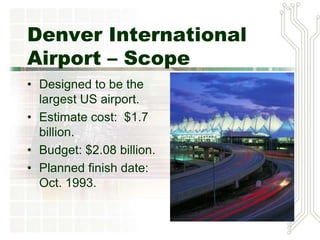
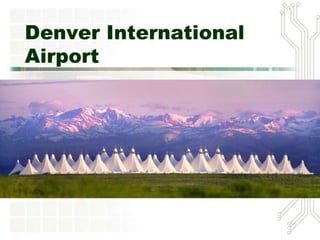
Denver International
Airport – Scope
• Designed to be the
largest US airport.
• Estimate cost: $1.7
billion.
• Budget: $2.08 billion.
• Planned finish date:
Oct. 1993.
Denver International AP
• Repeated design changes due to
changing requirements
from United Airlines
• Malfunctioning computerized
baggage system
• Inter-terminal transit
breakdowns.
• Millworkers’ union strike.
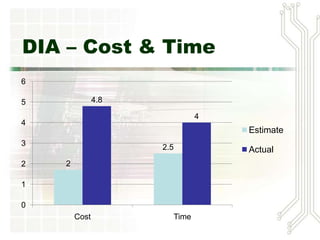
DIA – Cost & Time
2
2.5
4.8
4
0
1
2
3
4
5
6
Cost Time
Estimate
Actual
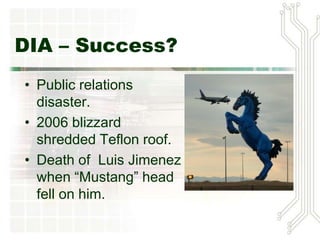
DIA – Success?
• Public relations
disaster.
• 2006 blizzard
shredded Teflon roof.
• Death of Luis Jimenez
when “Mustang” head
fell on him.
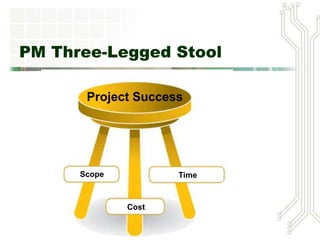
PM Three-Legged Stool
Scope
Cost
Time
Project Success
Project Management
Skills
• Leadership
• Communications
• Problem Solving
• Negotiating
• Influencing the Organization
• Mentoring
• Process and technical expertise
The Role of the Project
Manager
• Planning
• Scheduling
• Coordinating
• Coaching
• Project succeeds or fails based on you!
Position of planning
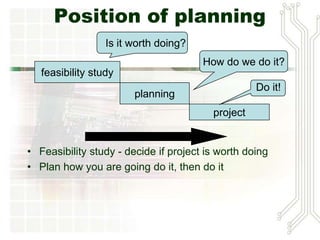
• Feasibility study - decide if project is worth doing
• Plan how you are going do it, then do it
feasibility study
planning
project
Is it worth doing?
How do we do it?
Do it!
Project Management
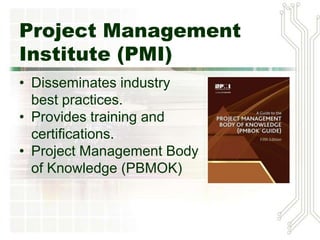
Institute (PMI)
• Disseminates industry
best practices.
• Provides training and
certifications.
• Project Management Body
of Knowledge (PBMOK)
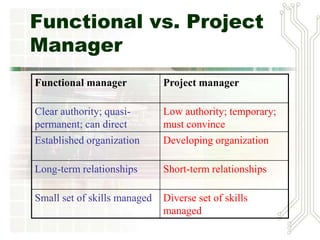
Functional vs. Project
Manager
Functional manager Project manager
Clear authority; quasi-
permanent; can direct
Low authority; temporary;
must convince
Established organization Developing organization
Long-term relationships Short-term relationships
Small set of skills managed Diverse set of skills
managed
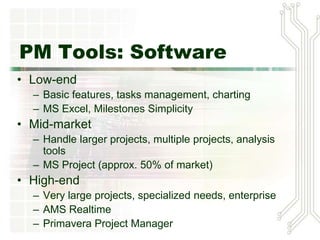
PM Tools: Software
• Low-end
– Basic features, tasks management, charting
– MS Excel, Milestones Simplicity
• Mid-market
– Handle larger projects, multiple projects, analysis
tools
– MS Project (approx. 50% of market)
• High-end
– Very large projects, specialized needs, enterprise
– AMS Realtime
– Primavera Project Manager
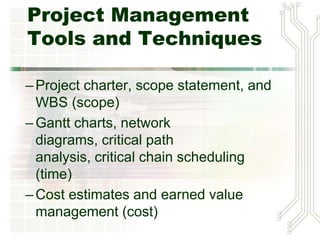
Project Management
Tools and Techniques
–Project charter, scope statement, and
WBS (scope)
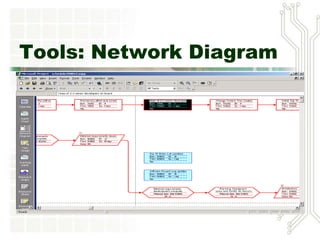
–Gantt charts, network
diagrams, critical path
analysis, critical chain scheduling
(time)
–Cost estimates and earned value
management (cost)
JJ - Software Project
Management, Oct 2010
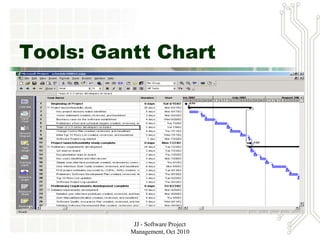
Tools: Gantt Chart
Tools: Network Diagram
Adages
• Brooks’ Law
Adding manpower to a late software
project makes it later.
• Throwing money at a project doesn’t
solve the problem
• Taking resources away from a project
doesn’t always make it easier either

MIS: Project Management Systems

  • 1.
  • 2.
    What Is aProject? • A project is “a temporary endeavor undertaken to create a unique product, service, or result” (PMBOK® Guide 2004, p. 5) • Projects can be large or small and take a short or long time to complete
  • 3.
    What is aproject? • One definition – ‘a specific design or plan’ • Key elements – non-routine – specific objectives – planned – predetermined time span – constrained resources
  • 5.
    Denver International Airport –Scope • Designed to be the largest US airport. • Estimate cost: $1.7 billion. • Budget: $2.08 billion. • Planned finish date: Oct. 1993.
  • 7.
    Denver International AP •Repeated design changes due to changing requirements from United Airlines • Malfunctioning computerized baggage system • Inter-terminal transit breakdowns. • Millworkers’ union strike.
  • 8.
    DIA – Cost& Time 2 2.5 4.8 4 0 1 2 3 4 5 6 Cost Time Estimate Actual
  • 9.
    DIA – Success? •Public relations disaster. • 2006 blizzard shredded Teflon roof. • Death of Luis Jimenez when “Mustang” head fell on him.
  • 10.
  • 11.
    Project Management Skills • Leadership •Communications • Problem Solving • Negotiating • Influencing the Organization • Mentoring • Process and technical expertise
  • 12.
    The Role ofthe Project Manager • Planning • Scheduling • Coordinating • Coaching • Project succeeds or fails based on you!
  • 13.
    Position of planning •Feasibility study - decide if project is worth doing • Plan how you are going do it, then do it feasibility study planning project Is it worth doing? How do we do it? Do it!
  • 14.
    Project Management Institute (PMI) •Disseminates industry best practices. • Provides training and certifications. • Project Management Body of Knowledge (PBMOK)
  • 16.
    Functional vs. Project Manager Functionalmanager Project manager Clear authority; quasi- permanent; can direct Low authority; temporary; must convince Established organization Developing organization Long-term relationships Short-term relationships Small set of skills managed Diverse set of skills managed
  • 17.
    PM Tools: Software •Low-end – Basic features, tasks management, charting – MS Excel, Milestones Simplicity • Mid-market – Handle larger projects, multiple projects, analysis tools – MS Project (approx. 50% of market) • High-end – Very large projects, specialized needs, enterprise – AMS Realtime – Primavera Project Manager
  • 18.
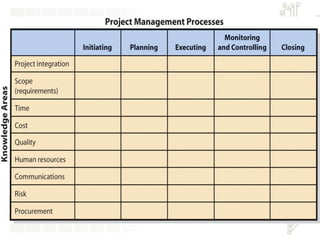
    Project Management Tools andTechniques –Project charter, scope statement, and WBS (scope) –Gantt charts, network diagrams, critical path analysis, critical chain scheduling (time) –Cost estimates and earned value management (cost)
  • 19.
    JJ - SoftwareProject Management, Oct 2010 Tools: Gantt Chart
  • 20.
  • 21.
    Adages • Brooks’ Law Addingmanpower to a late software project makes it later. • Throwing money at a project doesn’t solve the problem • Taking resources away from a project doesn’t always make it easier either

Editor's Notes

  • #11 Trade off requirements against time and cost. (if we make the house smaller it will cost less and take less time.)Cannot exactly improve time by throwing in more money (diseconomies of scale). – overtime.If the requirements increase, pretty soon the cost and time multiply exponentially and the stool is in danger of tipping over.
  • #12 Communication skills: listening, persuadingOrganizational skills: planning, goal-setting, analyzingTeam Building skills: empathy, motivation, esprit de corpsLeadership skills: sets example, energetic, vision (big picture), delegates, positiveCoping skills: flexibility, creativity, patience, persistenceTechnological skills: experience, project knowledgeProject managers need both “hard” and “soft” skills Hard skills include product knowledge and knowing how to use various project management tools and techniquesSoft skills include being able to work with various types of people
  • #13 97% of successful projects led by experienced pm
  • #15 PMP = 4500 hours of experience + exam.