MINIMAL CHANGE
DISEASE
Richard McCrory SpR Seminar 19th March 2014
Minimal Change Disease - Outline
Pathophysiology
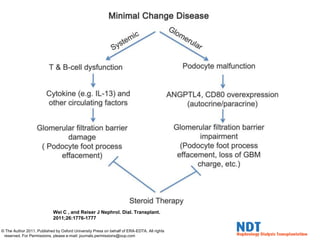
 IL-13,ANGPTL4, CD80
Epidemiology
Evidence Base forTreatment
 What to do in‘exceptional circumstances’
MCD inAKI
MCD in Other Renal Disease
Case 1
 57 year old woman
 B/G Hypothyroidism on 50mcgT4
 Otherwise very well
 Attends GP after NewYear‘14
 Ankle puffiness
 Weight Gain
 Fatigue
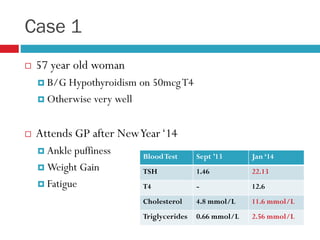
BloodTest Sept ’13 Jan ‘14
TSH 1.46 22.13
T4 - 12.6
Cholesterol 4.8 mmol/L 11.6 mmol/L
Triglycerides 0.66 mmol/L 2.56 mmol/L
Case 1
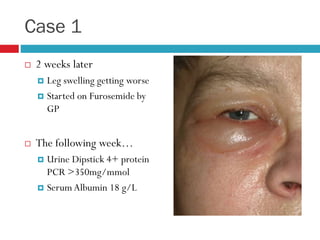
 2 weeks later
 Leg swelling getting worse
 Started on Furosemide by
GP
 The following week…
 Urine Dipstick 4+ protein
PCR >350mg/mmol
 SerumAlbumin 18 g/L
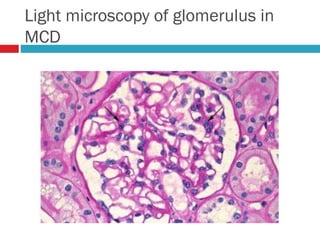
Light microscopy of glomerulus in
MCD
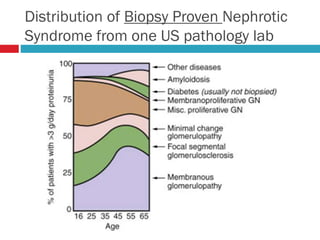
Distribution of Biopsy Proven Nephrotic
Syndrome from one US pathology lab
Pathophysiology
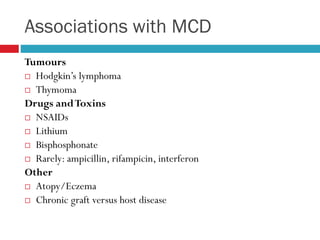
Associations with MCD
Tumours
 Hodgkin’s lymphoma
 Thymoma
Drugs andToxins
 NSAIDs
 Lithium
 Bisphosphonate
 Rarely: ampicillin, rifampicin, interferon
Other
 Atopy/Eczema
 Chronic graft versus host disease
Pathophysiology
“The Shalhoub Hypothesis” (1974)
 Remissions occur in the setting of viral associated
immunosuppression (Measles)
 MCD occurs more frequently in patient’s with
lymphoma.
 MCD is responsive to steroids and alkylating drugs.
 Atopic individuals at higher risk of developing MCD.
Is MCD immunologically mediated?
Pathophysiology
A “Permeability Factor”
 T-cell hybridoma made from patient with MCD released
a substance that when injected into rats
 Proteinuria and foot process effacement.
 Young deceased donor with presumed MCD
 Transplanted into two recipients without baseline proteinuria.
 Proteinuria absent by week six.
Koyama A et al. KI 40: p453, 1991.
Ali AA et al. Transplantation 58: p849, 1994.
IL-13
 Cytokine involved with development ofTH2 cells in atopic
reactions
 IL-13 expression upregulated inT cells in children with
steroid sensitive nephrotic syndrome who were in relapse.
 Podocytes possess IL-13R & stimulation of cultured
monolayers of podocytes with IL-13 lead to decreased
transepithelial electrical resistance.
 Glucocorticoids can reverse this effect through stabilisation of
nephrin at slit diaphragm
Yap HK et al. JASN 10: p 529, 1999.
Van den Berg JG et al. JASN 11: p413, 2000.
Tan M J et al. Mol Cancer Res 2012;10:677-688
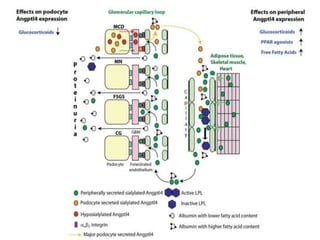
Angiopoetin
Like Protein
(ANGPTL4)
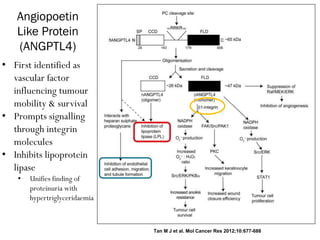
• First identified as
vascular factor
influencing tumour
mobility & survival
• Prompts signalling
through integrin
molecules
• Inhibits lipoprotein
lipase
• Unifies finding of
proteinuria with
hypertriglyceridaemia
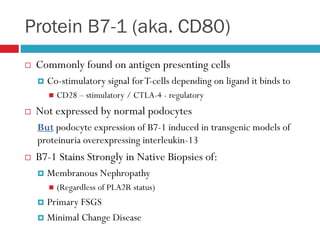
Protein B7-1 (aka. CD80)
 Commonly found on antigen presenting cells
 Co-stimulatory signal forT-cells depending on ligand it binds to
 CD28 – stimulatory / CTLA-4 - regulatory
 Not expressed by normal podocytes
But podocyte expression of B7-1 induced in transgenic models of
proteinuria overexpressing interleukin-13
 B7-1 Stains Strongly in Native Biopsies of:
 Membranous Nephropathy
 (Regardless of PLA2R status)
 Primary FSGS
 Minimal Change Disease
Wei C , and Reiser J Nephrol. Dial. Transplant.
2011;26:1776-1777
© The Author 2011. Published by Oxford University Press on behalf of ERA-EDTA. All rights
reserved. For Permissions, please e-mail: journals.permissions@oup.com
Treatment Strategies
KDIGO Glomerulonephritis Guidelines
June 2012
“Helping clinicians know and better understand
the evidence (or lack of evidence) that determines
current practice.”
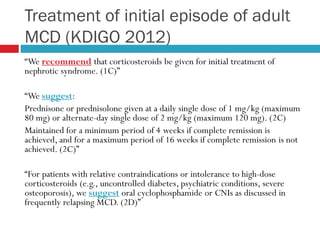
Treatment of initial episode of adult
MCD (KDIGO 2012)
“We recommend that corticosteroids be given for initial treatment of
nephrotic syndrome. (1C)”
“We suggest:
Prednisone or prednisolone given at a daily single dose of 1 mg/kg (maximum
80 mg) or alternate-day single dose of 2 mg/kg (maximum 120 mg). (2C)
Maintained for a minimum period of 4 weeks if complete remission is
achieved, and for a maximum period of 16 weeks if complete remission is not
achieved. (2C)”
“For patients with relative contraindications or intolerance to high-dose
corticosteroids (e.g., uncontrolled diabetes, psychiatric conditions, severe
osteoporosis), we suggest oral cyclophosphamide or CNIs as discussed in
frequently relapsing MCD. (2D)”
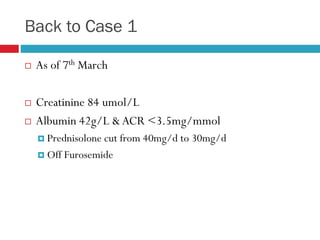
Back to Case 1
 As of 7th March
 Creatinine 84 umol/L
 Albumin 42g/L &ACR <3.5mg/mmol
 Prednisolone cut from 40mg/d to 30mg/d
 Off Furosemide
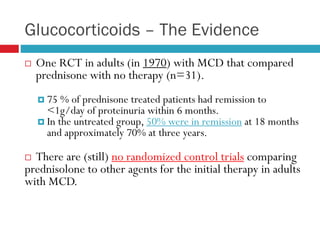
Glucocorticoids – The Evidence
 One RCT in adults (in 1970) with MCD that compared
prednisone with no therapy (n=31).
 75 % of prednisone treated patients had remission to
<1g/day of proteinuria within 6 months.
 In the untreated group, 50% were in remission at 18 months
and approximately 70% at three years.
 There are (still) no randomized control trials comparing
prednisolone to other agents for the initial therapy in adults
with MCD.
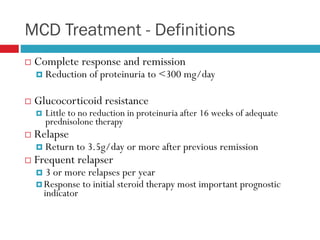
MCD Treatment - Definitions
 Complete response and remission
 Reduction of proteinuria to <300 mg/day
 Glucocorticoid resistance
 Little to no reduction in proteinuria after 16 weeks of adequate
prednisolone therapy
 Relapse
 Return to 3.5g/day or more after previous remission
 Frequent relapser
 3 or more relapses per year
 Response to initial steroid therapy most important prognostic
indicator
Steroid Tapering in MCD
Waldman et al. CJASN 2007
 95 cases in one referral centre
 Majority (>80%) of patients receiving remission
within 16 weeks
 No optimal corticosteroid taper protocol in adults
 In children with MCD
 Fast tapers associated with
 Increased frequency of relapse and/or SD vs. slow-
taper group at both 6 months (51.7% vs 17.6%) and
last follow-up (34.5% vs. 5.9%).
 But total cumulative steroid dose similar
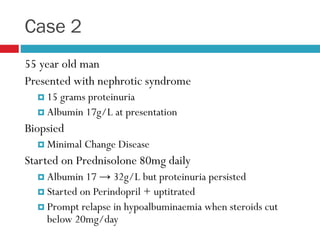
Case 2
55 year old man
Presented with nephrotic syndrome
 15 grams proteinuria
 Albumin 17g/L at presentation
Biopsied
 Minimal Change Disease
Started on Prednisolone 80mg daily
 Albumin 17 → 32g/L but proteinuria persisted
 Started on Perindopril + uptitrated
 Prompt relapse in hypoalbuminaemia when steroids cut
below 20mg/day
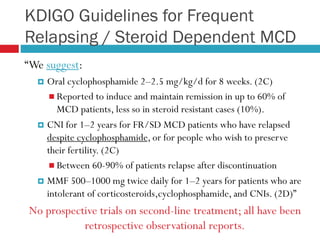
KDIGO Guidelines for Frequent
Relapsing / Steroid Dependent MCD
“We suggest:
 Oral cyclophosphamide 2–2.5 mg/kg/d for 8 weeks. (2C)
 Reported to induce and maintain remission in up to 60% of
MCD patients, less so in steroid resistant cases (10%).
 CNI for 1–2 years for FR/SD MCD patients who have relapsed
despite cyclophosphamide, or for people who wish to preserve
their fertility. (2C)
 Between 60-90% of patients relapse after discontinuation
 MMF 500–1000 mg twice daily for 1–2 years for patients who are
intolerant of corticosteroids,cyclophosphamide, and CNIs. (2D)”
No prospective trials on second-line treatment; all have been
retrospective observational reports.
Challenges with Second Line Therapies
for Minimal Change
 Is a revision of diagnosis required?
 Sampling Error on Biopsy
 Variations
 Physician Practice
 Extrapolation from Paediatric Studies
 Predicting response toTherapy
Case 2 - Clinical Course
 Escalated to oral cyclophosphamide for 6 months
 2 LRTIs and one episode of transient AKI needing to stop ACEi for a bit
 Albumin slowly rose to 34 g/L maximum
 Partial response to proteinuria (ACR 800)
 Further relapse in hypoalbuminaemia 2 months post cessation
of cyclophosphamide
 High dose steroids work at cost to:
 Blood Sugars /Weight Gain
 Skin Problems
“What about Rituximab?”
Rituximab & Proteinuric Kidney Dx
 Chimeric MonoclonalAntibody
 Strong evidence for use in immune depletion for primary
membranous nephropathy
2006
 Rituximab found to bind to podocytes, despite no
evidence of CD20 expression
 Binds to amino acid sequence found on the protein
SMPDL-3b
Relevance of SMPDL-3b to Proteinuric
Kidney Diseases
 SMPDL-3b depleted podocytes seen in post re-perfusion
biopsies who developed recurrent FSGS
 Treatment with rituximab leads to an increase in
SMPDL-3b expression and subsequent reduction in
proteinuria
 Proposed mechanism – stabilise SMPDL-3b + stops
downstream signalling
Fornoni et al 2011
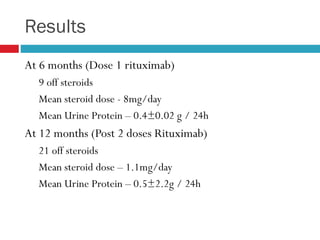
Results
At 6 months (Dose 1 rituximab)
9 off steroids
Mean steroid dose - 8mg/day
Mean Urine Protein – 0.4±0.02 g / 24h
At 12 months (Post 2 doses Rituximab)
21 off steroids
Mean steroid dose – 1.1mg/day
Mean Urine Protein – 0.5±2.2g / 24h
The Pharmacist says…
‘Sorry, you can’t
have Rituximab…’
Individual Funding Requests
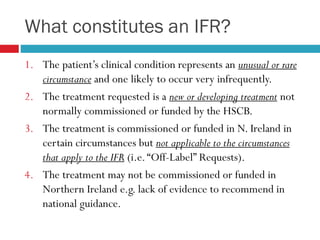
What constitutes an IFR?
1. The patient’s clinical condition represents an unusual or rare
circumstance and one likely to occur very infrequently.
2. The treatment requested is a new or developing treatment not
normally commissioned or funded by the HSCB.
3. The treatment is commissioned or funded in N. Ireland in
certain circumstances but not applicable to the circumstances
that apply to the IFR (i.e.“Off-Label” Requests).
4. The treatment may not be commissioned or funded in
Northern Ireland e.g. lack of evidence to recommend in
national guidance.
“Allocating
Resources to
fairly &
efficiently meet
healthcare needs”
Fiduciary
Propriety
Collegial
Propriety
Bureaucratic
Propriety
From Shale “Moral Leadership in Medicine”(2013)
Exceptionality
“An individual whose clinical circumstances are outside the
range of clinical circumstances presented by at least 95% of
patients with the same medical condition at the same stage of
progression as the named patient”
AND
Is likely to gain significantly more benefit for the intervention
than might normally be expected for patients with that
condition.
Case 2 - Continued
 June 2013
 Received single dose rituximab (800mg)
 Proteinuria fell from 12.5g/24hr to 2.7g/24hr within 3
weeks
 ACR August 2013 – 0.1mg/mmol
 Creatinine 95 umol/L and now <10mg/day
Prednisolone
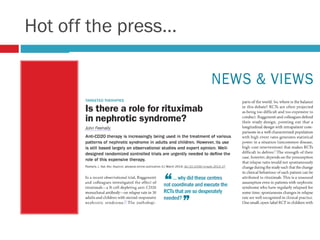
Hot off the press…
AKI with Minimal Change Disease
Case 3
 77 year old male
 One week history of abrupt onset leg oedema +
shortness of breath
 O/E
 Hypertensive (BP
 Periorbital Oedema, Severe Leg & Flank Oedema
 Relevant Chemistry
 Creatinine 167 (previously N)
 ACR >900mg/mmol,Albumin 22g/L
Clinical Course
 Biopsy – Minimal Change & FloridATN
 Started on Prednisolone & High Dose Diuretics
One week later:
 Poor response to diuretics, worsening renal function (Cre >480
umol/L), symptomatic uraemia
 Started on Haemodialysis and remained HD-dependent for 30 days.
Serial improvement in urine output, renal function & proteinuria
Currently: Creatinine 100 umol/L,ACR 70 mg/mmol
AKI complicating MCD
Waldman et al. CJASN 2007
 95 cases in one referral centre
 24 presentations associated withAKI
Tended to be:
 Older Males
 Hypertensive
 Worse Serum Albumin / Proteinuria
 Progression to ESRD – 4 cases
 3 re-biopsied (FSGS)
 1 frequent relapser + 2 episodes of AKI remaining HD dependent
MCD in other renal diseases
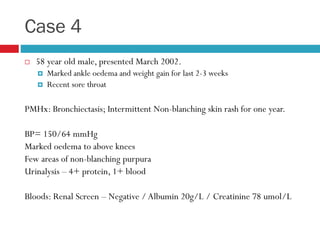
Case 4
 58 year old male, presented March 2002.
 Marked ankle oedema and weight gain for last 2-3 weeks
 Recent sore throat
PMHx: Bronchiectasis; Intermittent Non-blanching skin rash for one year.
BP= 150/64 mmHg
Marked oedema to above knees
Few areas of non-blanching purpura
Urinalysis – 4+ protein, 1+ blood
Bloods: Renal Screen – Negative / Albumin 20g/L / Creatinine 78 umol/L
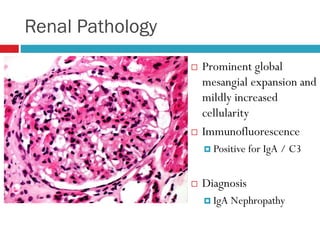
Renal Pathology
 Prominent global
mesangial expansion and
mildly increased
cellularity
 Immunofluorescence
 Positive for IgA / C3
 Diagnosis
 IgA Nephropathy
Clinical Course
 Given 60mg/day prednisolone
 Remittance of Proteinuria within 3 weeks
 Has relapsed frequently with complete remission on oral
steroid
 At 10 year follow-up
 Continues to have normal renal function despite proteinuric
flares
 No further rash flares & No Haematuria
 Bronchiectasis occasionally problematic with maintenance
steroid, now on azithromycin prophylaxis
IgA Nephropathy / MCD Overlap
 Subset of patients with IgA where steroids appear to be of
more benefit
 Sudden onset nephrotic syndrome
 No haematuria
 Minimal glomerular changes on light microscopy
 Treatment essentially that of minimal change disease
HOWEVER
 IgA / IgM deposition on IF in biopsies deemed‘minimal
change’ on light microscopy don’t have the same favourable
prognostic response as MCD.
Summary
 MCD mediated by systemic (IL-13) + local (ANGPTL4)
influences on podocyte structure/function
 Corticosteroid sensitivity helps define response & prognosis
 Robust evidence lacking on second line therapies
 Rituximab presents a promising treatment option for patients
with challenging MCD
 Remember your Individual Funding Request
 MCD +AKI – recovery the rule rather than exception
 MCD + IgA – the exception rather than the rule!

Minimal Change Disease

  • 1.
    MINIMAL CHANGE DISEASE Richard McCrorySpR Seminar 19th March 2014
  • 2.
    Minimal Change Disease- Outline Pathophysiology  IL-13,ANGPTL4, CD80 Epidemiology Evidence Base forTreatment  What to do in‘exceptional circumstances’ MCD inAKI MCD in Other Renal Disease
  • 3.
    Case 1  57year old woman  B/G Hypothyroidism on 50mcgT4  Otherwise very well  Attends GP after NewYear‘14  Ankle puffiness  Weight Gain  Fatigue BloodTest Sept ’13 Jan ‘14 TSH 1.46 22.13 T4 - 12.6 Cholesterol 4.8 mmol/L 11.6 mmol/L Triglycerides 0.66 mmol/L 2.56 mmol/L
  • 4.
    Case 1  2weeks later  Leg swelling getting worse  Started on Furosemide by GP  The following week…  Urine Dipstick 4+ protein PCR >350mg/mmol  SerumAlbumin 18 g/L
  • 5.
    Light microscopy ofglomerulus in MCD
  • 6.
    Distribution of BiopsyProven Nephrotic Syndrome from one US pathology lab
  • 7.
  • 8.
    Associations with MCD Tumours Hodgkin’s lymphoma  Thymoma Drugs andToxins  NSAIDs  Lithium  Bisphosphonate  Rarely: ampicillin, rifampicin, interferon Other  Atopy/Eczema  Chronic graft versus host disease
  • 9.
    Pathophysiology “The Shalhoub Hypothesis”(1974)  Remissions occur in the setting of viral associated immunosuppression (Measles)  MCD occurs more frequently in patient’s with lymphoma.  MCD is responsive to steroids and alkylating drugs.  Atopic individuals at higher risk of developing MCD. Is MCD immunologically mediated?
  • 10.
    Pathophysiology A “Permeability Factor” T-cell hybridoma made from patient with MCD released a substance that when injected into rats  Proteinuria and foot process effacement.  Young deceased donor with presumed MCD  Transplanted into two recipients without baseline proteinuria.  Proteinuria absent by week six. Koyama A et al. KI 40: p453, 1991. Ali AA et al. Transplantation 58: p849, 1994.
  • 11.
    IL-13  Cytokine involvedwith development ofTH2 cells in atopic reactions  IL-13 expression upregulated inT cells in children with steroid sensitive nephrotic syndrome who were in relapse.  Podocytes possess IL-13R & stimulation of cultured monolayers of podocytes with IL-13 lead to decreased transepithelial electrical resistance.  Glucocorticoids can reverse this effect through stabilisation of nephrin at slit diaphragm Yap HK et al. JASN 10: p 529, 1999. Van den Berg JG et al. JASN 11: p413, 2000.
  • 12.
    Tan M Jet al. Mol Cancer Res 2012;10:677-688 Angiopoetin Like Protein (ANGPTL4) • First identified as vascular factor influencing tumour mobility & survival • Prompts signalling through integrin molecules • Inhibits lipoprotein lipase • Unifies finding of proteinuria with hypertriglyceridaemia
  • 14.
    Protein B7-1 (aka.CD80)  Commonly found on antigen presenting cells  Co-stimulatory signal forT-cells depending on ligand it binds to  CD28 – stimulatory / CTLA-4 - regulatory  Not expressed by normal podocytes But podocyte expression of B7-1 induced in transgenic models of proteinuria overexpressing interleukin-13  B7-1 Stains Strongly in Native Biopsies of:  Membranous Nephropathy  (Regardless of PLA2R status)  Primary FSGS  Minimal Change Disease
  • 15.
    Wei C ,and Reiser J Nephrol. Dial. Transplant. 2011;26:1776-1777 © The Author 2011. Published by Oxford University Press on behalf of ERA-EDTA. All rights reserved. For Permissions, please e-mail: journals.permissions@oup.com
  • 16.
  • 17.
    KDIGO Glomerulonephritis Guidelines June2012 “Helping clinicians know and better understand the evidence (or lack of evidence) that determines current practice.”
  • 18.
    Treatment of initialepisode of adult MCD (KDIGO 2012) “We recommend that corticosteroids be given for initial treatment of nephrotic syndrome. (1C)” “We suggest: Prednisone or prednisolone given at a daily single dose of 1 mg/kg (maximum 80 mg) or alternate-day single dose of 2 mg/kg (maximum 120 mg). (2C) Maintained for a minimum period of 4 weeks if complete remission is achieved, and for a maximum period of 16 weeks if complete remission is not achieved. (2C)” “For patients with relative contraindications or intolerance to high-dose corticosteroids (e.g., uncontrolled diabetes, psychiatric conditions, severe osteoporosis), we suggest oral cyclophosphamide or CNIs as discussed in frequently relapsing MCD. (2D)”
  • 19.
    Back to Case1  As of 7th March  Creatinine 84 umol/L  Albumin 42g/L &ACR <3.5mg/mmol  Prednisolone cut from 40mg/d to 30mg/d  Off Furosemide
  • 20.
    Glucocorticoids – TheEvidence  One RCT in adults (in 1970) with MCD that compared prednisone with no therapy (n=31).  75 % of prednisone treated patients had remission to <1g/day of proteinuria within 6 months.  In the untreated group, 50% were in remission at 18 months and approximately 70% at three years.  There are (still) no randomized control trials comparing prednisolone to other agents for the initial therapy in adults with MCD.
  • 21.
    MCD Treatment -Definitions  Complete response and remission  Reduction of proteinuria to <300 mg/day  Glucocorticoid resistance  Little to no reduction in proteinuria after 16 weeks of adequate prednisolone therapy  Relapse  Return to 3.5g/day or more after previous remission  Frequent relapser  3 or more relapses per year  Response to initial steroid therapy most important prognostic indicator
  • 22.
    Steroid Tapering inMCD Waldman et al. CJASN 2007  95 cases in one referral centre  Majority (>80%) of patients receiving remission within 16 weeks  No optimal corticosteroid taper protocol in adults  In children with MCD  Fast tapers associated with  Increased frequency of relapse and/or SD vs. slow- taper group at both 6 months (51.7% vs 17.6%) and last follow-up (34.5% vs. 5.9%).  But total cumulative steroid dose similar
  • 23.
    Case 2 55 yearold man Presented with nephrotic syndrome  15 grams proteinuria  Albumin 17g/L at presentation Biopsied  Minimal Change Disease Started on Prednisolone 80mg daily  Albumin 17 → 32g/L but proteinuria persisted  Started on Perindopril + uptitrated  Prompt relapse in hypoalbuminaemia when steroids cut below 20mg/day
  • 24.
    KDIGO Guidelines forFrequent Relapsing / Steroid Dependent MCD “We suggest:  Oral cyclophosphamide 2–2.5 mg/kg/d for 8 weeks. (2C)  Reported to induce and maintain remission in up to 60% of MCD patients, less so in steroid resistant cases (10%).  CNI for 1–2 years for FR/SD MCD patients who have relapsed despite cyclophosphamide, or for people who wish to preserve their fertility. (2C)  Between 60-90% of patients relapse after discontinuation  MMF 500–1000 mg twice daily for 1–2 years for patients who are intolerant of corticosteroids,cyclophosphamide, and CNIs. (2D)” No prospective trials on second-line treatment; all have been retrospective observational reports.
  • 25.
    Challenges with SecondLine Therapies for Minimal Change  Is a revision of diagnosis required?  Sampling Error on Biopsy  Variations  Physician Practice  Extrapolation from Paediatric Studies  Predicting response toTherapy
  • 26.
    Case 2 -Clinical Course  Escalated to oral cyclophosphamide for 6 months  2 LRTIs and one episode of transient AKI needing to stop ACEi for a bit  Albumin slowly rose to 34 g/L maximum  Partial response to proteinuria (ACR 800)  Further relapse in hypoalbuminaemia 2 months post cessation of cyclophosphamide  High dose steroids work at cost to:  Blood Sugars /Weight Gain  Skin Problems
  • 27.
  • 28.
    Rituximab & ProteinuricKidney Dx  Chimeric MonoclonalAntibody  Strong evidence for use in immune depletion for primary membranous nephropathy 2006  Rituximab found to bind to podocytes, despite no evidence of CD20 expression  Binds to amino acid sequence found on the protein SMPDL-3b
  • 29.
    Relevance of SMPDL-3bto Proteinuric Kidney Diseases  SMPDL-3b depleted podocytes seen in post re-perfusion biopsies who developed recurrent FSGS  Treatment with rituximab leads to an increase in SMPDL-3b expression and subsequent reduction in proteinuria  Proposed mechanism – stabilise SMPDL-3b + stops downstream signalling Fornoni et al 2011
  • 31.
    Results At 6 months(Dose 1 rituximab) 9 off steroids Mean steroid dose - 8mg/day Mean Urine Protein – 0.4±0.02 g / 24h At 12 months (Post 2 doses Rituximab) 21 off steroids Mean steroid dose – 1.1mg/day Mean Urine Protein – 0.5±2.2g / 24h
  • 32.
    The Pharmacist says… ‘Sorry,you can’t have Rituximab…’
  • 33.
  • 34.
    What constitutes anIFR? 1. The patient’s clinical condition represents an unusual or rare circumstance and one likely to occur very infrequently. 2. The treatment requested is a new or developing treatment not normally commissioned or funded by the HSCB. 3. The treatment is commissioned or funded in N. Ireland in certain circumstances but not applicable to the circumstances that apply to the IFR (i.e.“Off-Label” Requests). 4. The treatment may not be commissioned or funded in Northern Ireland e.g. lack of evidence to recommend in national guidance.
  • 35.
    “Allocating Resources to fairly & efficientlymeet healthcare needs” Fiduciary Propriety Collegial Propriety Bureaucratic Propriety From Shale “Moral Leadership in Medicine”(2013)
  • 36.
    Exceptionality “An individual whoseclinical circumstances are outside the range of clinical circumstances presented by at least 95% of patients with the same medical condition at the same stage of progression as the named patient” AND Is likely to gain significantly more benefit for the intervention than might normally be expected for patients with that condition.
  • 37.
    Case 2 -Continued  June 2013  Received single dose rituximab (800mg)  Proteinuria fell from 12.5g/24hr to 2.7g/24hr within 3 weeks  ACR August 2013 – 0.1mg/mmol  Creatinine 95 umol/L and now <10mg/day Prednisolone
  • 38.
    Hot off thepress…
  • 39.
    AKI with MinimalChange Disease
  • 40.
    Case 3  77year old male  One week history of abrupt onset leg oedema + shortness of breath  O/E  Hypertensive (BP  Periorbital Oedema, Severe Leg & Flank Oedema  Relevant Chemistry  Creatinine 167 (previously N)  ACR >900mg/mmol,Albumin 22g/L
  • 41.
    Clinical Course  Biopsy– Minimal Change & FloridATN  Started on Prednisolone & High Dose Diuretics One week later:  Poor response to diuretics, worsening renal function (Cre >480 umol/L), symptomatic uraemia  Started on Haemodialysis and remained HD-dependent for 30 days. Serial improvement in urine output, renal function & proteinuria Currently: Creatinine 100 umol/L,ACR 70 mg/mmol
  • 42.
    AKI complicating MCD Waldmanet al. CJASN 2007  95 cases in one referral centre  24 presentations associated withAKI Tended to be:  Older Males  Hypertensive  Worse Serum Albumin / Proteinuria  Progression to ESRD – 4 cases  3 re-biopsied (FSGS)  1 frequent relapser + 2 episodes of AKI remaining HD dependent
  • 43.
    MCD in otherrenal diseases
  • 44.
    Case 4  58year old male, presented March 2002.  Marked ankle oedema and weight gain for last 2-3 weeks  Recent sore throat PMHx: Bronchiectasis; Intermittent Non-blanching skin rash for one year. BP= 150/64 mmHg Marked oedema to above knees Few areas of non-blanching purpura Urinalysis – 4+ protein, 1+ blood Bloods: Renal Screen – Negative / Albumin 20g/L / Creatinine 78 umol/L
  • 45.
    Renal Pathology  Prominentglobal mesangial expansion and mildly increased cellularity  Immunofluorescence  Positive for IgA / C3  Diagnosis  IgA Nephropathy
  • 46.
    Clinical Course  Given60mg/day prednisolone  Remittance of Proteinuria within 3 weeks  Has relapsed frequently with complete remission on oral steroid  At 10 year follow-up  Continues to have normal renal function despite proteinuric flares  No further rash flares & No Haematuria  Bronchiectasis occasionally problematic with maintenance steroid, now on azithromycin prophylaxis
  • 47.
    IgA Nephropathy /MCD Overlap  Subset of patients with IgA where steroids appear to be of more benefit  Sudden onset nephrotic syndrome  No haematuria  Minimal glomerular changes on light microscopy  Treatment essentially that of minimal change disease HOWEVER  IgA / IgM deposition on IF in biopsies deemed‘minimal change’ on light microscopy don’t have the same favourable prognostic response as MCD.
  • 48.
    Summary  MCD mediatedby systemic (IL-13) + local (ANGPTL4) influences on podocyte structure/function  Corticosteroid sensitivity helps define response & prognosis  Robust evidence lacking on second line therapies  Rituximab presents a promising treatment option for patients with challenging MCD  Remember your Individual Funding Request  MCD +AKI – recovery the rule rather than exception  MCD + IgA – the exception rather than the rule!