Natural resources in the form of minerals.
 The general definition of a mineral
encompasses the following criteria:
1. Naturally occurring
2. Stable at room temperature
3. Represented by a chemical formula
4. Usually abiogenic
5. Ordered atomic arrangement
 The term Mineral Resource is used to refer to
any of a class of naturally occurring solid
inorganic substances with a characteristic
crystalline form and a homogeneous
chemical composition.
 Identified resources - a mineral
occurrence which is known but is not known to
be recoverable at a profit, either because it is
too remote, too low grade, too small, not
enough information, or a wide variety of other
factors.
 Undiscovered resources - a resource which has
not been discovered. An example would be a
property being explored by a mining company,
hoping they find something.
 Reserve - a resource which can be recovered at a
profit. This will be a mine either in production or
going into production.
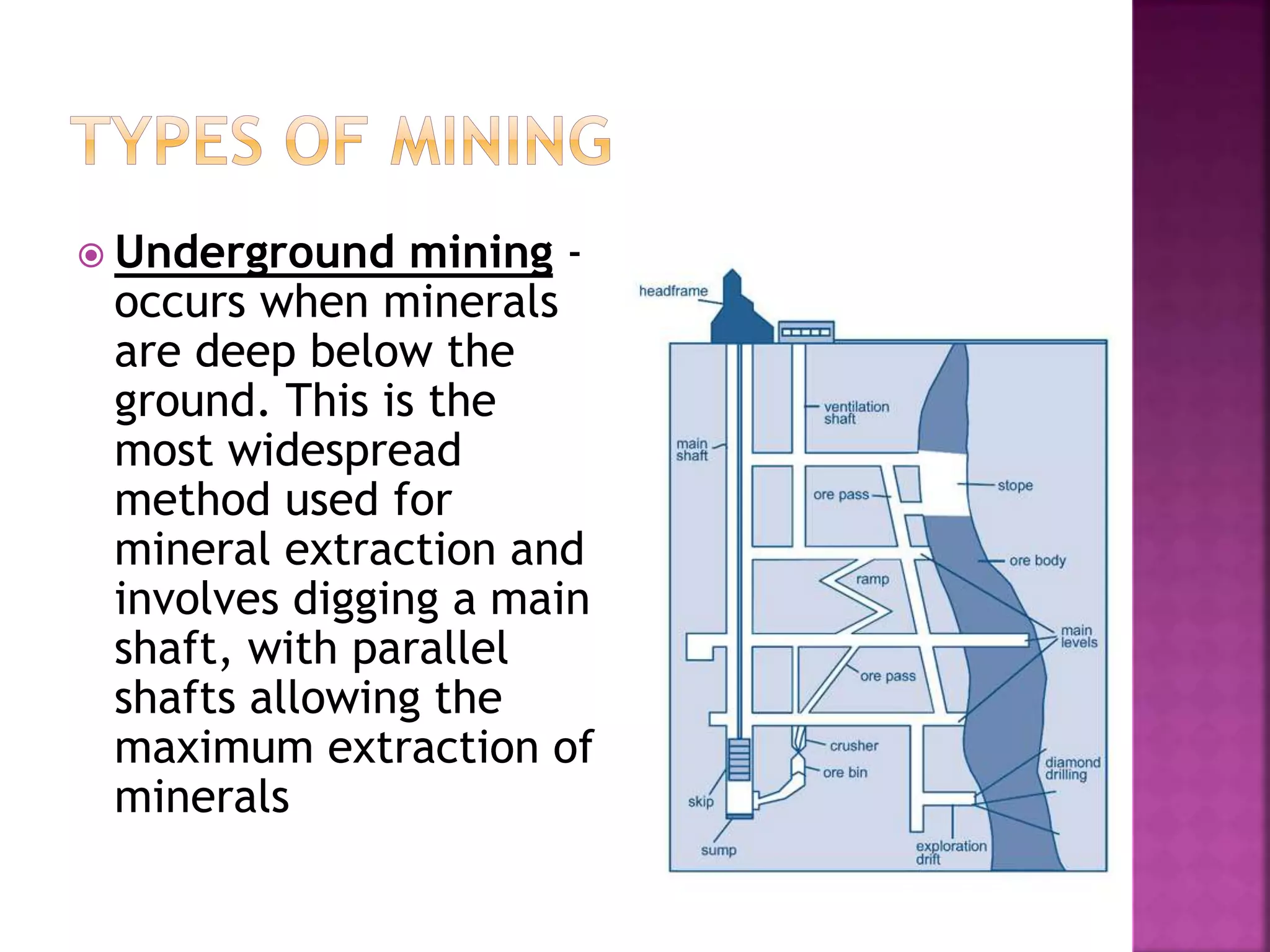
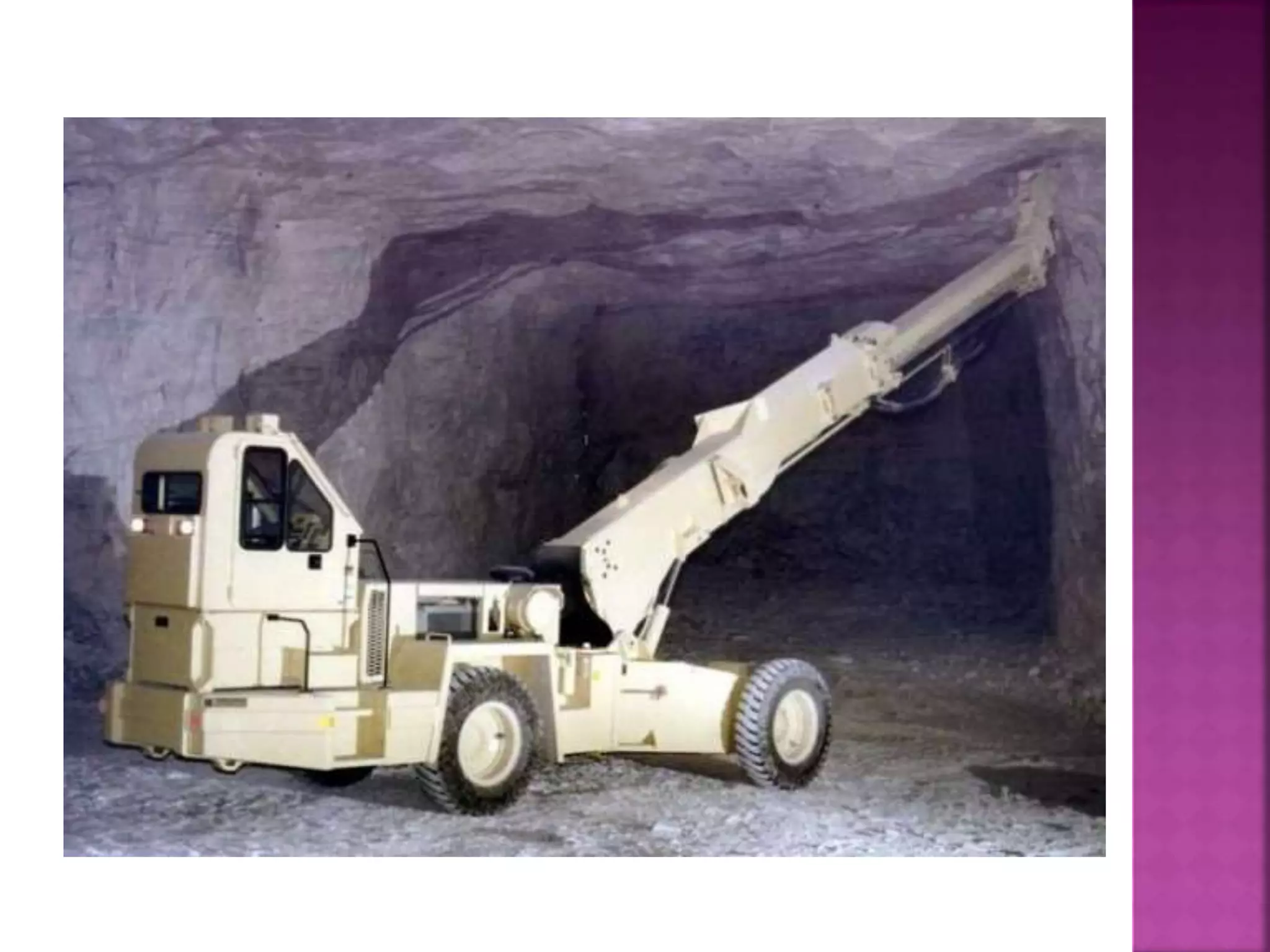
 Underground mining -
occurs when minerals
are deep below the
ground. This is the
most widespread
method used for
mineral extraction and
involves digging a main
shaft, with parallel
shafts allowing the
maximum extraction of
minerals
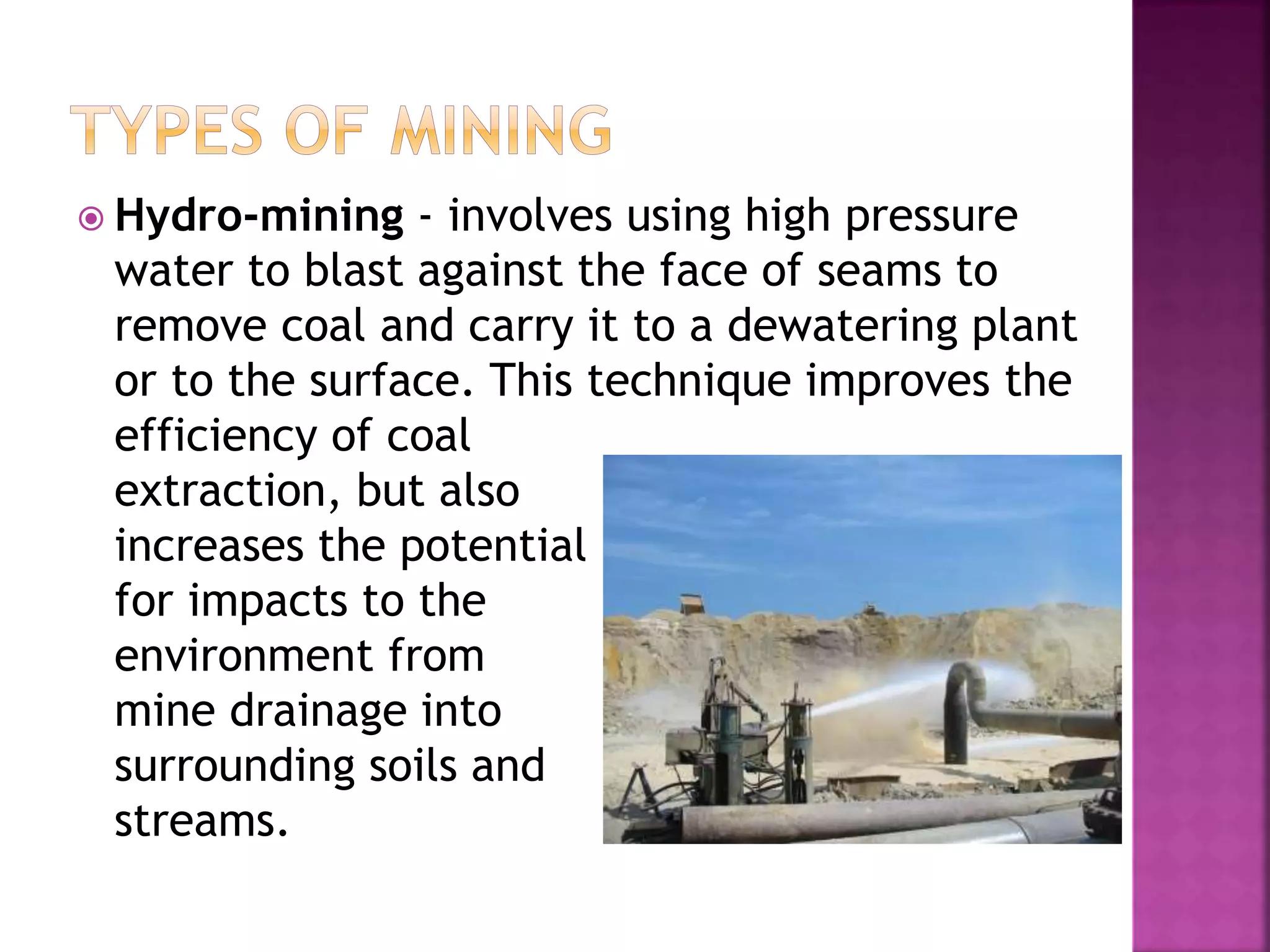
 Hydro-mining - involves using high pressure
water to blast against the face of seams to
remove coal and carry it to a dewatering plant
or to the surface. This technique improves the
efficiency of coal
extraction, but also
increases the potential
for impacts to the
environment from
mine drainage into
surrounding soils and
streams.
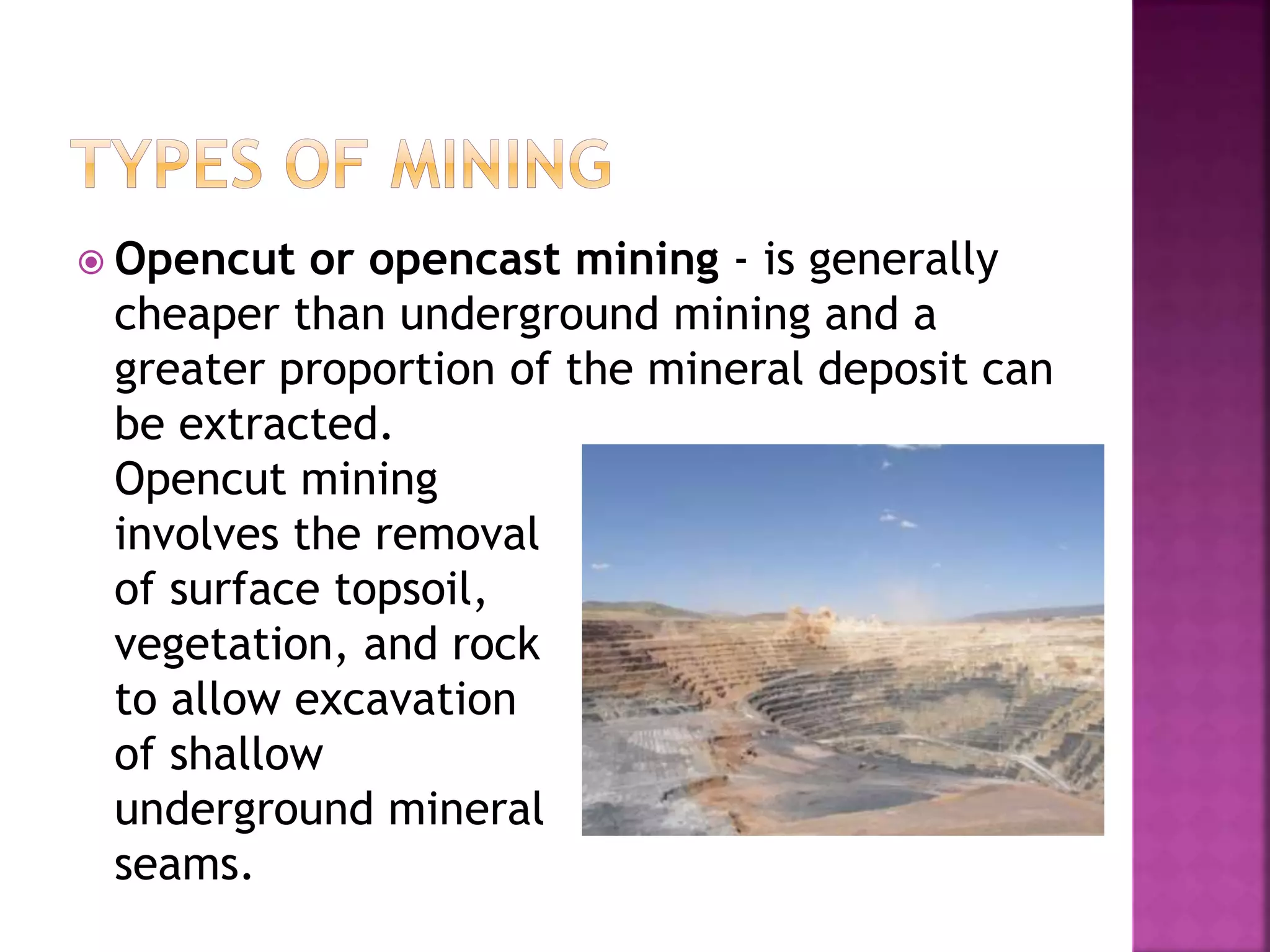
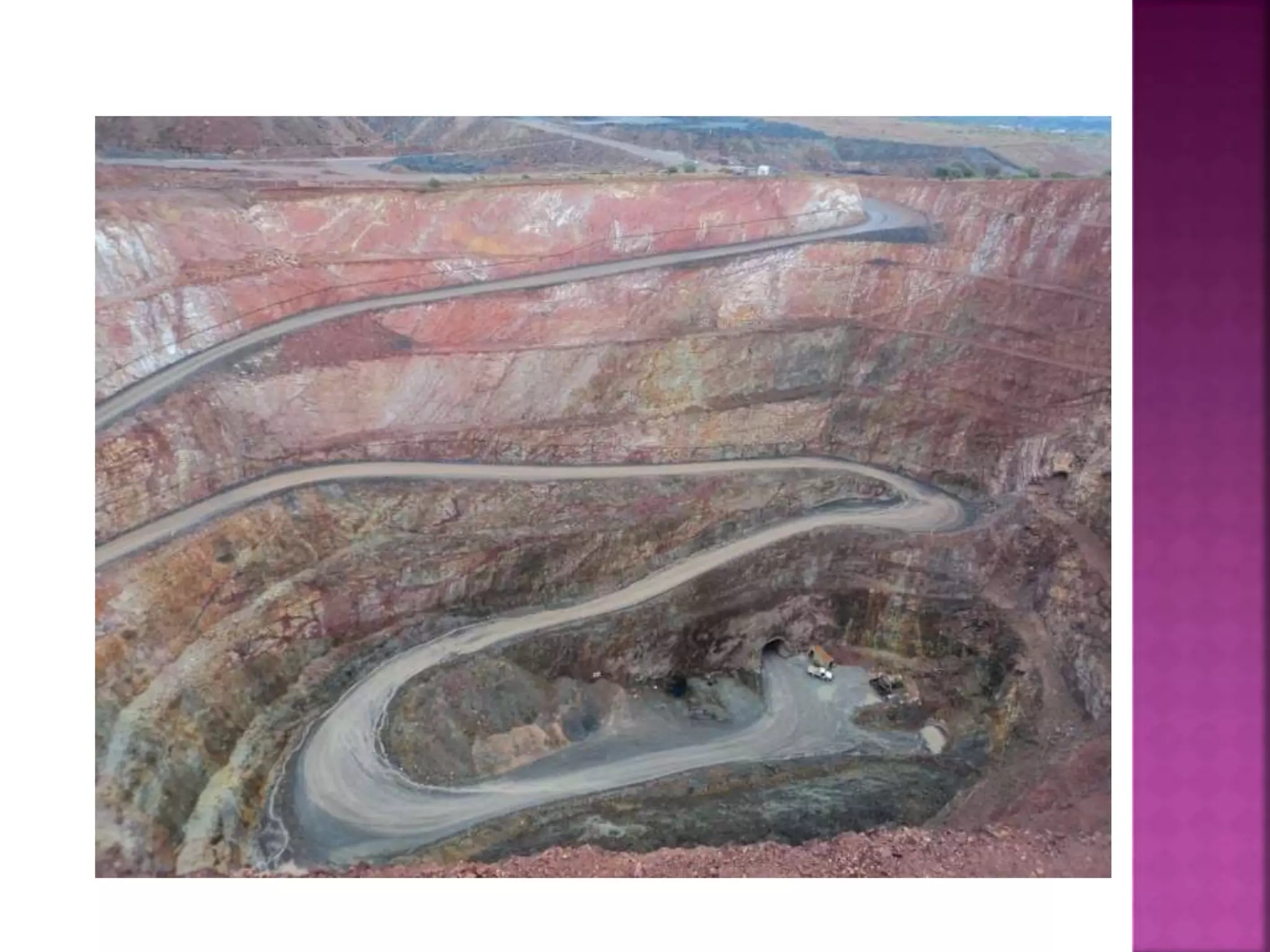
 Opencut or opencast mining - is generally
cheaper than underground mining and a
greater proportion of the mineral deposit can
be extracted.
Opencut mining
involves the removal
of surface topsoil,
vegetation, and rock
to allow excavation
of shallow
underground mineral
seams.
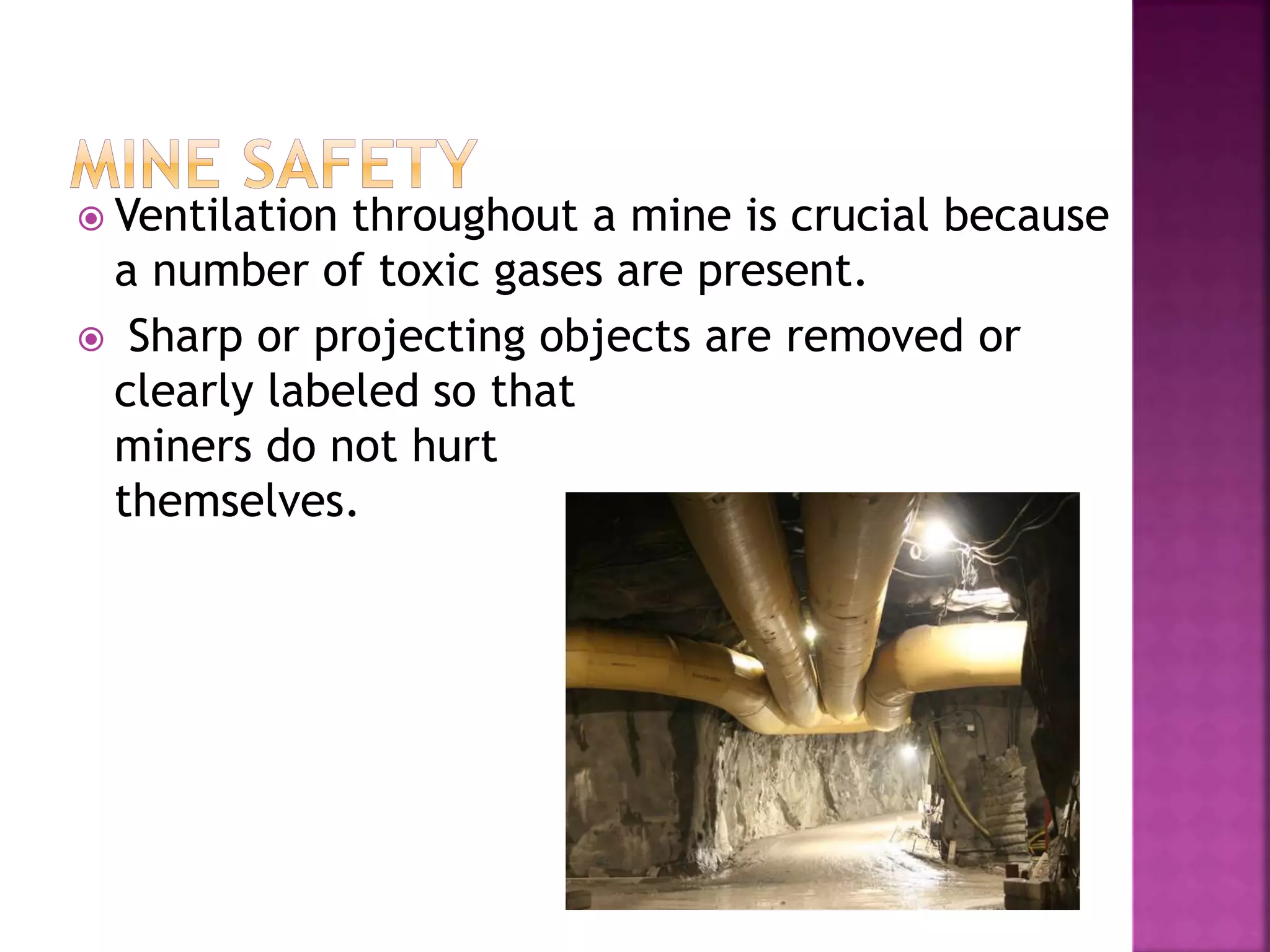
 Ventilation throughout a mine is crucial because
a number of toxic gases are present.
 Sharp or projecting objects are removed or
clearly labeled so that
miners do not hurt
themselves.
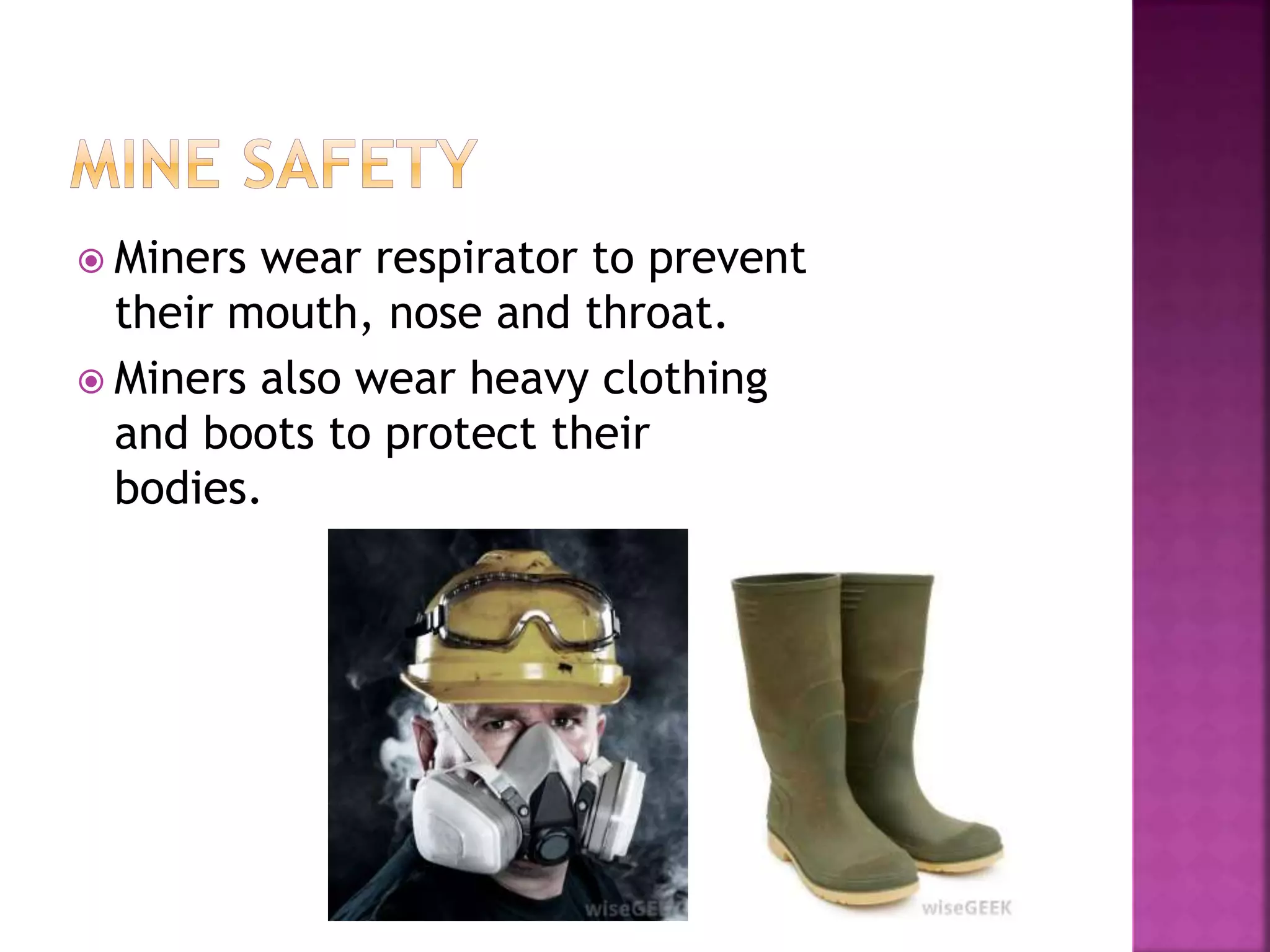
 Miners wear respirator to prevent
their mouth, nose and throat.
 Miners also wear heavy clothing
and boots to protect their
bodies.
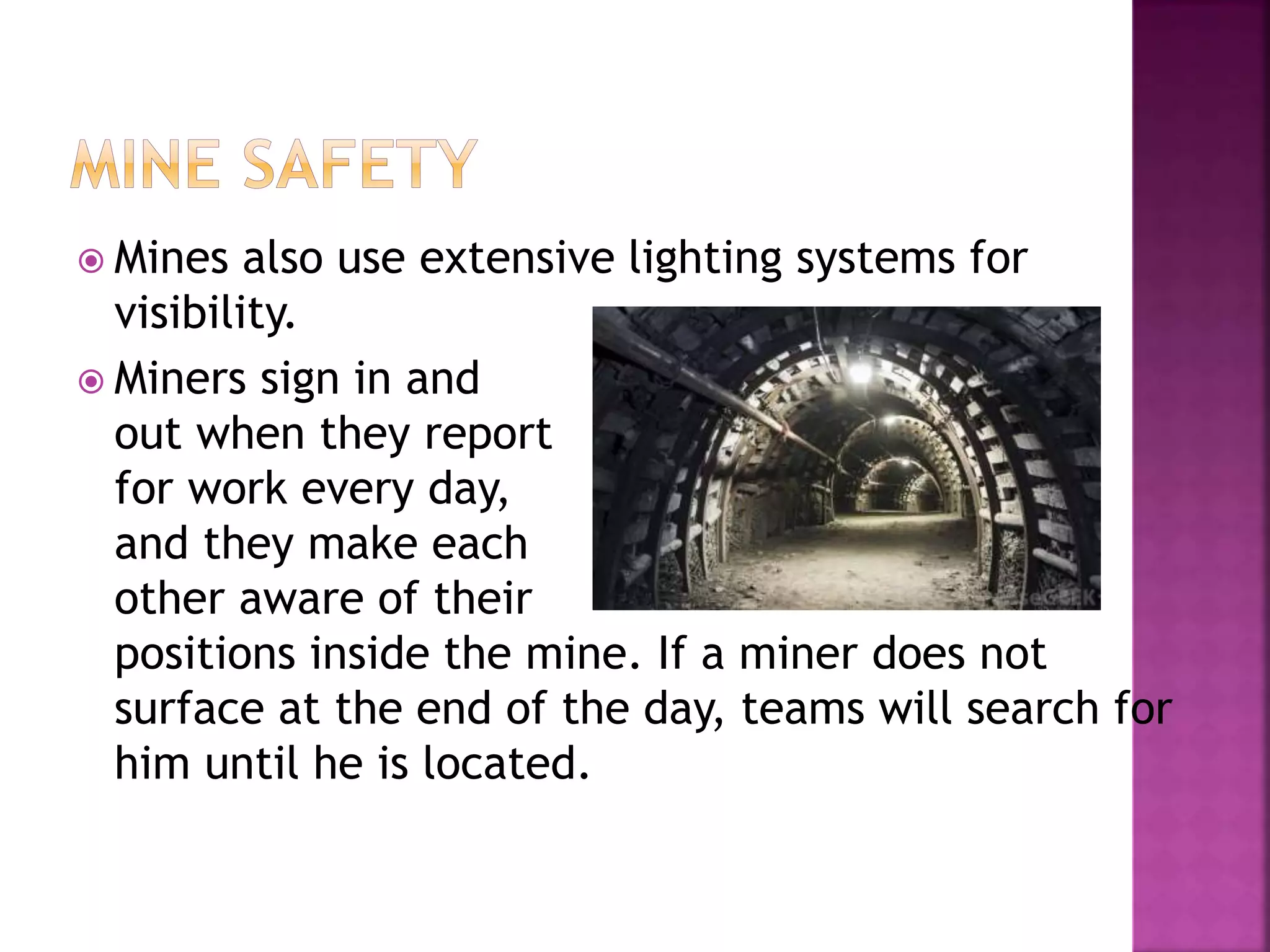
 Mines also use extensive lighting systems for
visibility.
 Miners sign in and
out when they report
for work every day,
and they make each
other aware of their
positions inside the mine. If a miner does not
surface at the end of the day, teams will search for
him until he is located.
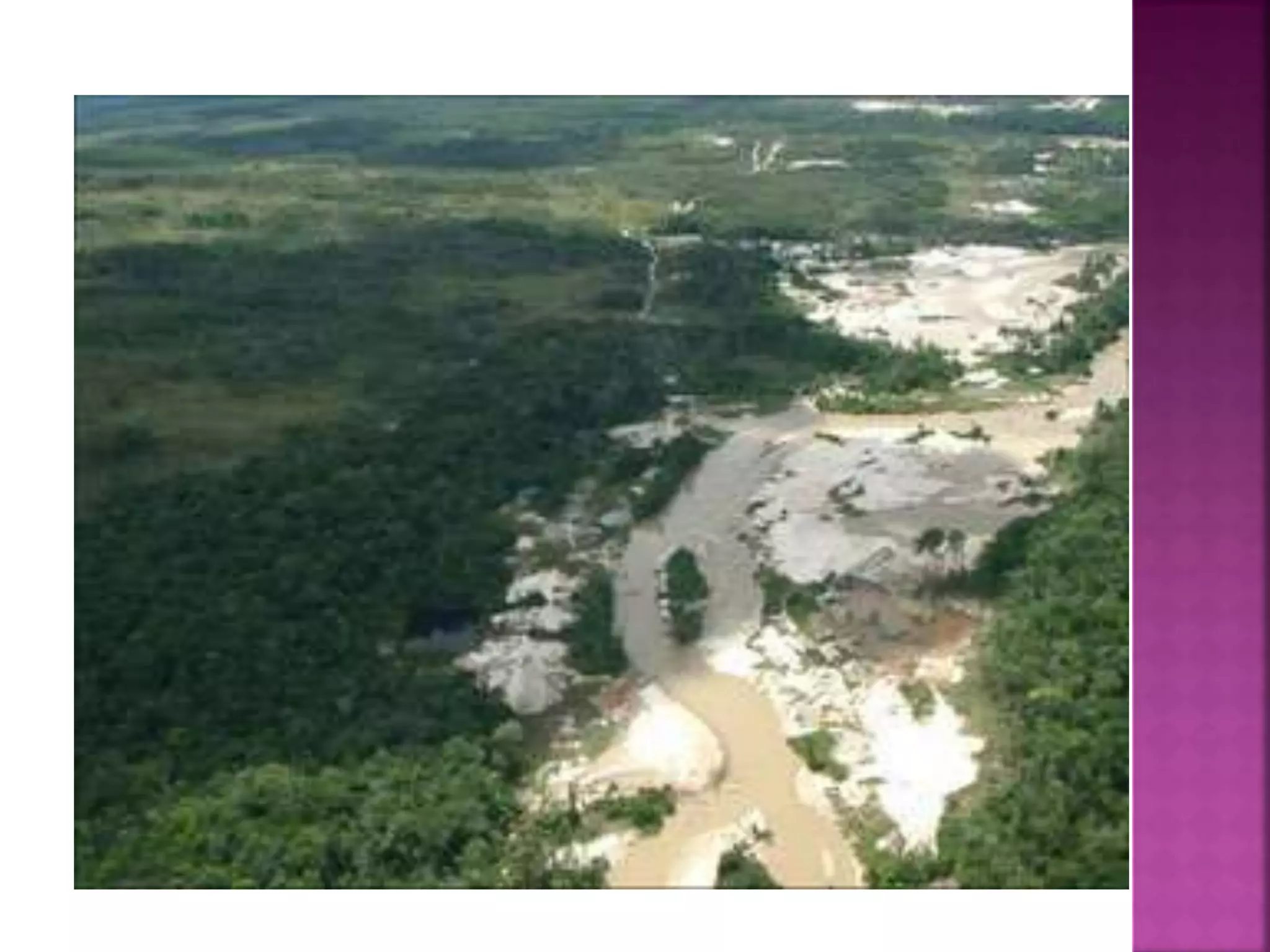
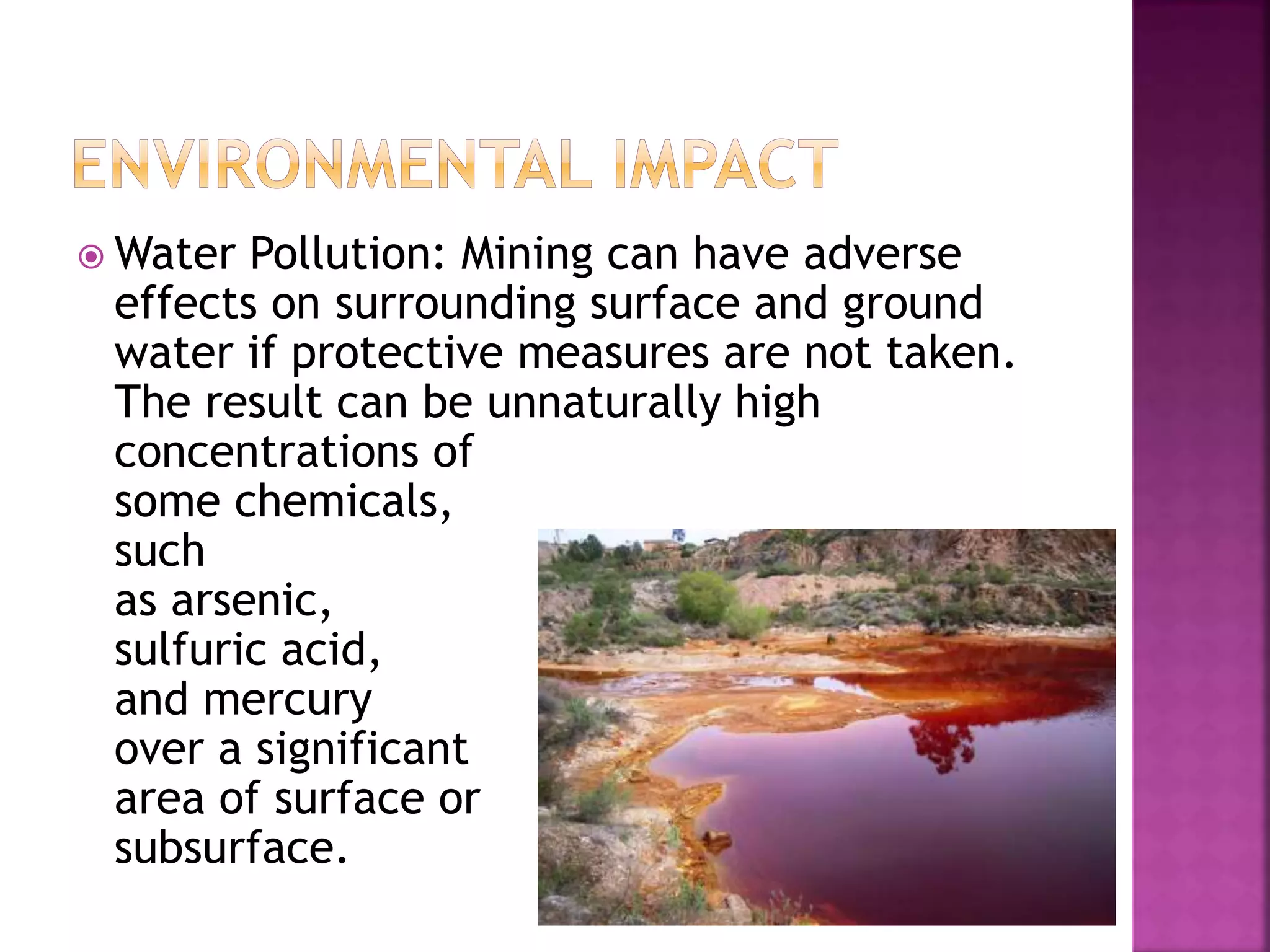
 Water Pollution: Mining can have adverse
effects on surrounding surface and ground
water if protective measures are not taken.
The result can be unnaturally high
concentrations of
some chemicals,
such
as arsenic,
sulfuric acid,
and mercury
over a significant
area of surface or
subsurface.
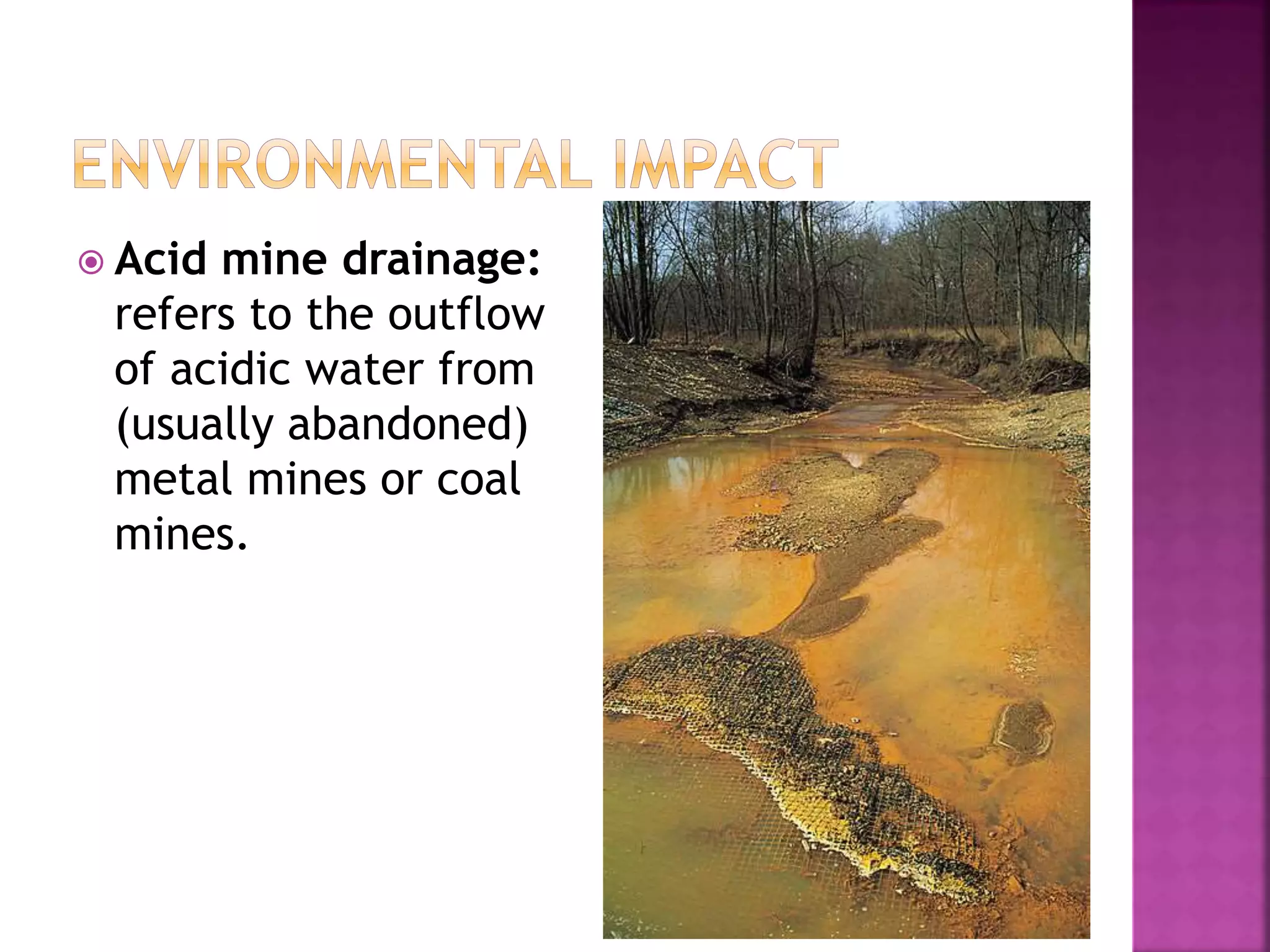
 Acid mine drainage:
refers to the outflow
of acidic water from
(usually abandoned)
metal mines or coal
mines.
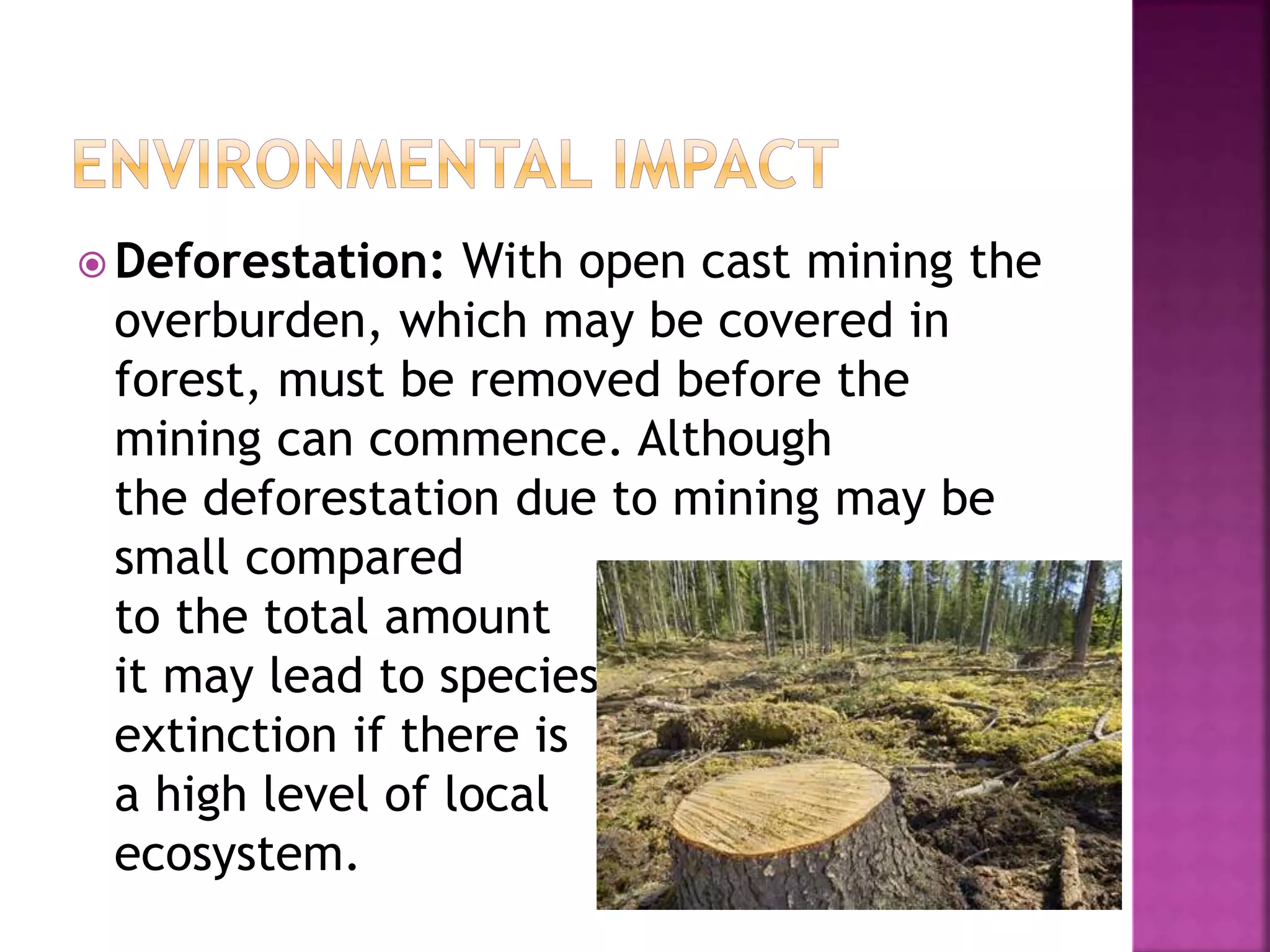
 Deforestation: With open cast mining the
overburden, which may be covered in
forest, must be removed before the
mining can commence. Although
the deforestation due to mining may be
small compared
to the total amount
it may lead to species
extinction if there is
a high level of local
ecosystem.
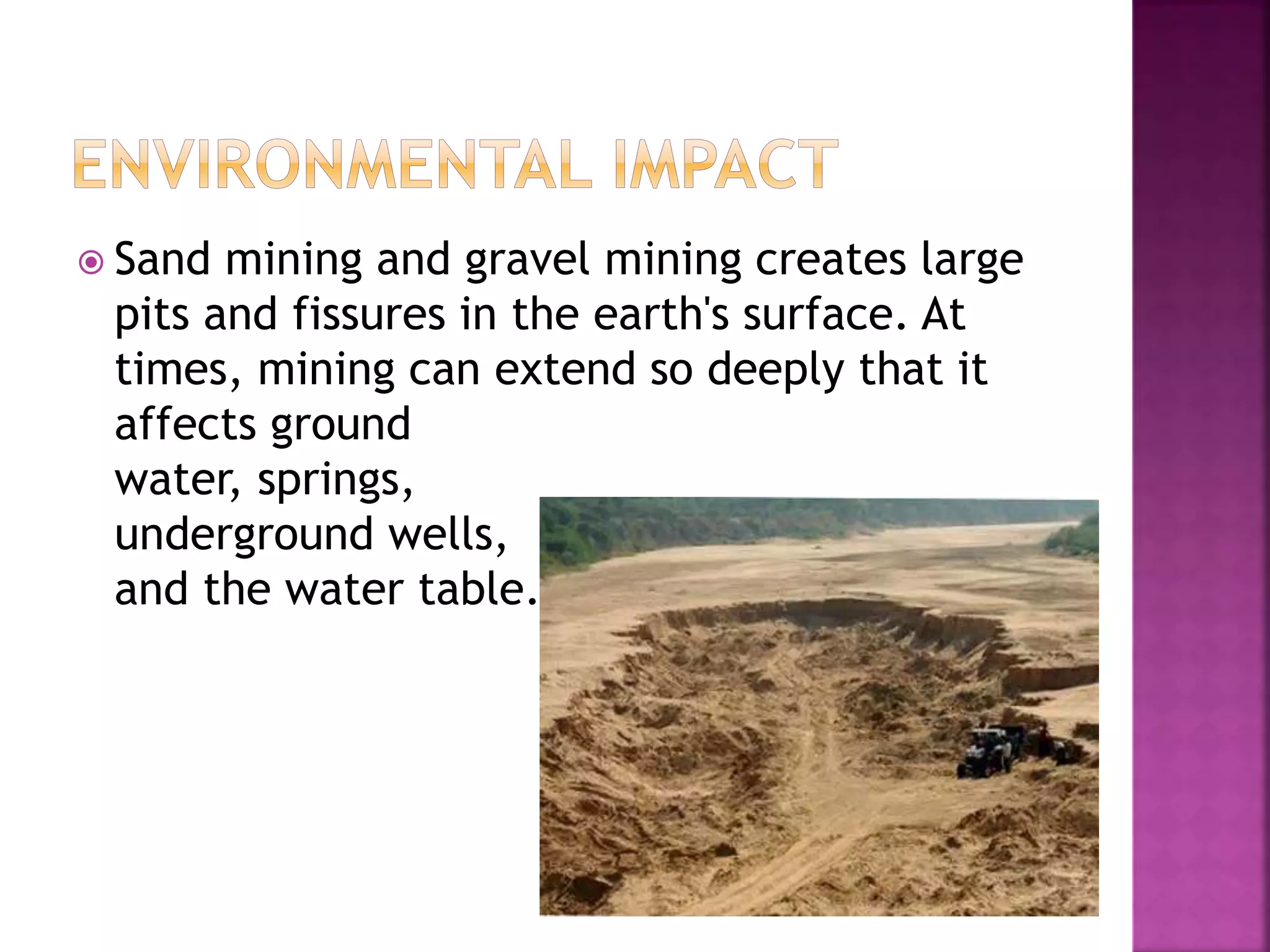
 Sand mining and gravel mining creates large
pits and fissures in the earth's surface. At
times, mining can extend so deeply that it
affects ground
water, springs,
underground wells,
and the water table.
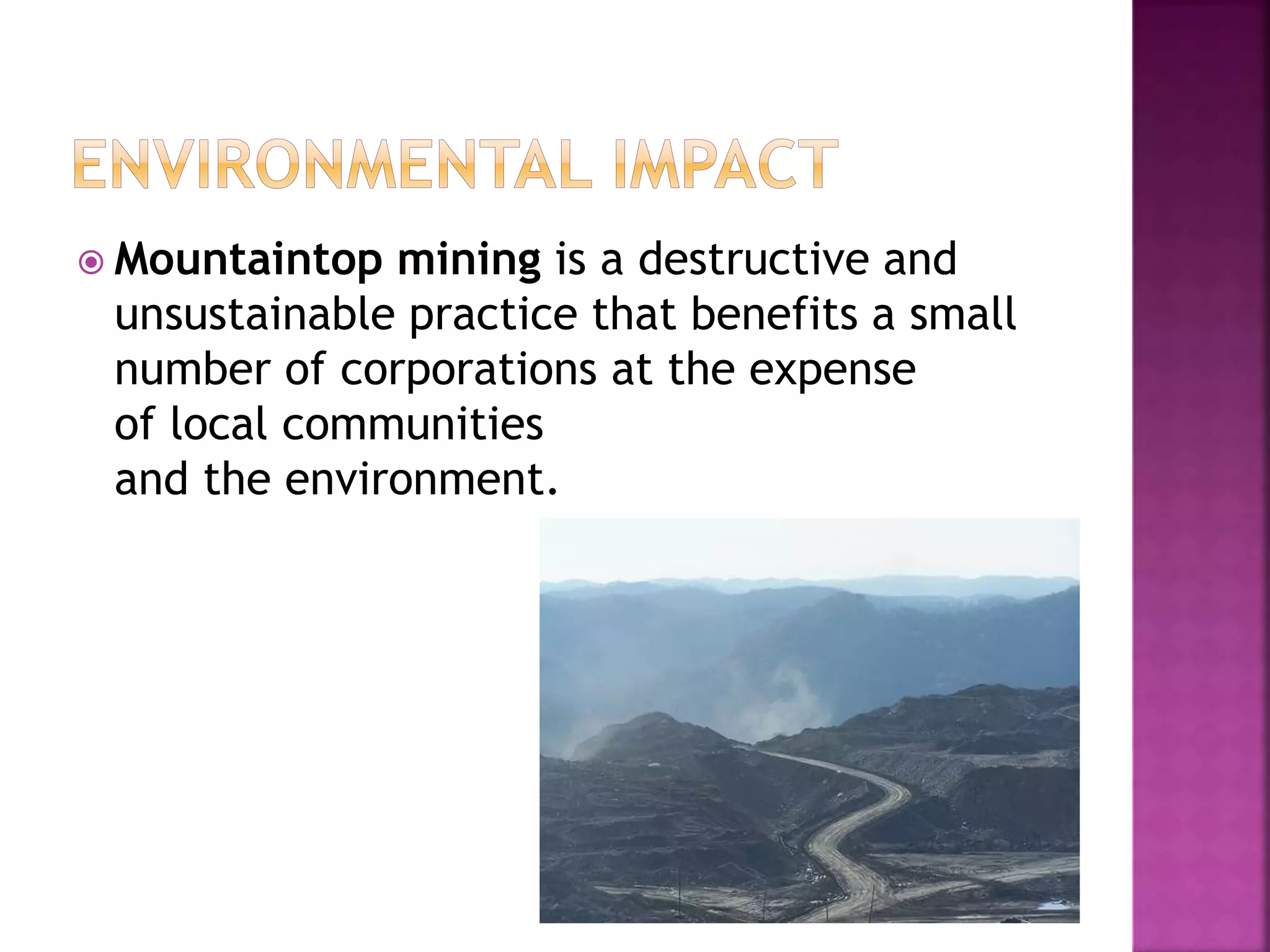
 Mountaintop mining is a destructive and
unsustainable practice that benefits a small
number of corporations at the expense
of local communities
and the environment.
Presented By:-
Devidas Barge
Pratik Dalvi
Gopesh Chilveri
Sonal Jagdale

Mineral resources and types of mining

  • 1.
    Natural resources inthe form of minerals.
  • 2.
     The generaldefinition of a mineral encompasses the following criteria: 1. Naturally occurring 2. Stable at room temperature 3. Represented by a chemical formula 4. Usually abiogenic 5. Ordered atomic arrangement  The term Mineral Resource is used to refer to any of a class of naturally occurring solid inorganic substances with a characteristic crystalline form and a homogeneous chemical composition.
  • 3.
     Identified resources- a mineral occurrence which is known but is not known to be recoverable at a profit, either because it is too remote, too low grade, too small, not enough information, or a wide variety of other factors.  Undiscovered resources - a resource which has not been discovered. An example would be a property being explored by a mining company, hoping they find something.  Reserve - a resource which can be recovered at a profit. This will be a mine either in production or going into production.
  • 4.
     Underground mining- occurs when minerals are deep below the ground. This is the most widespread method used for mineral extraction and involves digging a main shaft, with parallel shafts allowing the maximum extraction of minerals
  • 6.
     Hydro-mining -involves using high pressure water to blast against the face of seams to remove coal and carry it to a dewatering plant or to the surface. This technique improves the efficiency of coal extraction, but also increases the potential for impacts to the environment from mine drainage into surrounding soils and streams.
  • 8.
     Opencut oropencast mining - is generally cheaper than underground mining and a greater proportion of the mineral deposit can be extracted. Opencut mining involves the removal of surface topsoil, vegetation, and rock to allow excavation of shallow underground mineral seams.
  • 10.
     Ventilation throughouta mine is crucial because a number of toxic gases are present.  Sharp or projecting objects are removed or clearly labeled so that miners do not hurt themselves.
  • 11.
     Miners wearrespirator to prevent their mouth, nose and throat.  Miners also wear heavy clothing and boots to protect their bodies.
  • 12.
     Mines alsouse extensive lighting systems for visibility.  Miners sign in and out when they report for work every day, and they make each other aware of their positions inside the mine. If a miner does not surface at the end of the day, teams will search for him until he is located.
  • 13.
     Water Pollution:Mining can have adverse effects on surrounding surface and ground water if protective measures are not taken. The result can be unnaturally high concentrations of some chemicals, such as arsenic, sulfuric acid, and mercury over a significant area of surface or subsurface.
  • 14.
     Acid minedrainage: refers to the outflow of acidic water from (usually abandoned) metal mines or coal mines.
  • 15.
     Deforestation: Withopen cast mining the overburden, which may be covered in forest, must be removed before the mining can commence. Although the deforestation due to mining may be small compared to the total amount it may lead to species extinction if there is a high level of local ecosystem.
  • 16.
     Sand miningand gravel mining creates large pits and fissures in the earth's surface. At times, mining can extend so deeply that it affects ground water, springs, underground wells, and the water table.
  • 17.
     Mountaintop miningis a destructive and unsustainable practice that benefits a small number of corporations at the expense of local communities and the environment.
  • 18.
    Presented By:- Devidas Barge PratikDalvi Gopesh Chilveri Sonal Jagdale