Yuiyo shishak
yuiyoshishak@yahoo.com
 Introduction
 Surface mining
 Underground mining
 Environmental impacts of mining
 Acid mine drainage
 Impacts on air quality
 Heavy metal contamination
 Erosion and sedimentation
 Other effects
 Social impacts of mining
 Conclusion
 Reference
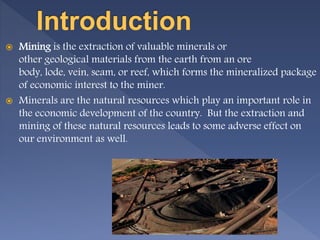
 Mining is the extraction of valuable minerals or
other geological materials from the earth from an ore
body, lode, vein, seam, or reef, which forms the mineralized package
of economic interest to the miner.
 Minerals are the natural resources which play an important role in
the economic development of the country. But the extraction and
mining of these natural resources leads to some adverse effect on
our environment as well.
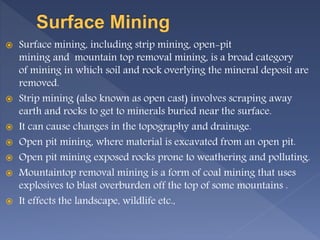
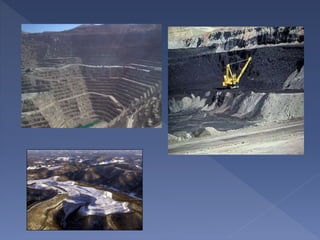
 Surface mining, including strip mining, open-pit
mining and mountain top removal mining, is a broad category
of mining in which soil and rock overlying the mineral deposit are
removed.
 Strip mining (also known as open cast) involves scraping away
earth and rocks to get to minerals buried near the surface.
 It can cause changes in the topography and drainage.
 Open pit mining, where material is excavated from an open pit.
 Open pit mining exposed rocks prone to weathering and polluting.
 Mountaintop removal mining is a form of coal mining that uses
explosives to blast overburden off the top of some mountains .
 It effects the landscape, wildlife etc.,
 Sub surface mining
 Extracting minerals from under the Earth crust.
 Tunnels closely follow the ore body.
 It has a potential for land subsidence and tunnel
collapse.
 It can release toxic compounds to air and water.
 Acid mine drainage
 Impacts on air quality
 Heavy metal contamination
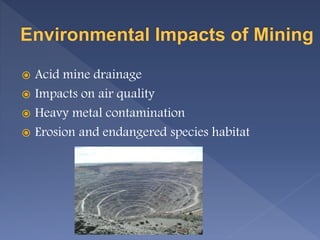
 Erosion and endangered species habitat
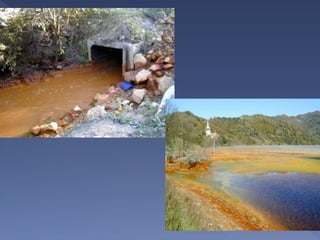
 Outflow of acidic water from metal mines or coal
mines.
 This toxic water leaks out of abandoned mines to
contaminate groundwater, streams, soil, plants,
animals and humans.
 As a result an orange color can blanket the river,
estuary or sea and kill aquatic life and making
surface water unusable as drinking water.
 Airborne emissions occur during each stage of the
mine cycle, but especially during exploration,
development, construction, and operational activities.
 Coal mine methane, less prevalent in the atmosphere
than CO2, but 20 times as powerful as a greenhouse
gas, and is released during the coal mining process.
Most coal mine methane come from underground
mines.
 Carbon-monoxide (CO), carbon-dioxide (CO2),
methane (CH4), sulphur dioxide (SO2), nitrous
oxides (NOx) and other greenhouse or toxic gases –
as well as fly ash from vents and fissures.
 Release of harmful trace element e.g., Cu, Pb, Cd etc.
leads to the contamination of surface water.
 Underground water is also contaminated due to
seepage and infiltration of leached drainage.
 Elevated levels of cyanide and nitrogen compounds
(ammonia, nitrate, nitrite) can also be found in waters
at mine sites, from heap leaching and blasting.
 Mineral development disturbs soil and rock
in the course of constructing and
maintaining roads, open pits, and waste
impoundments.
 Loss of landscape and beauty of surrounding.
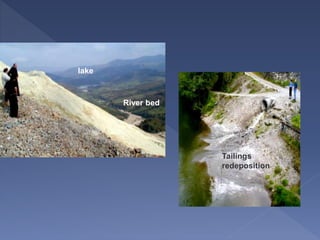
 Excessive sediment can clog riverbeds and
smother watershed vegetation, wildlife
habitat and aquatic organisms.
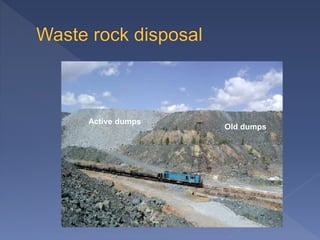
Active dumps
Old dumps
lake
River bed
Tailings
redeposition
 Deforestation
 Wastage of land as it neither remain suitable
for industrial use nor for agricultural
purposes.
 Loss of flora and fauna.
 Degradation of soil quality and fertility.
 Land subsidence and slope failure.
 Human displacement and resettlement.
 Impacts on migration.
 Impacts on livelihoods.
 Lost access to clean water.
 Impacts on public health.
 Unregulated mining has the potential to release
harmful substances into the soil, air, and water.
 Protecting the environment and human health is
the prevention method.
 Water management and treatment.
 Reduction of acid rock drainage.
 If no action is taken to remediate the many
environmental problems inherent to modern
mining, the end cost for governments and
communities would be devastating.
 Principles of Environmental chemistry
- James E Girard
 Environmental chemistry
- Asim K Das
 www.environment.co.za/mining-2/effects-of-mining.html
 web.mit.edu/12.000/www/m2016/finalwebsite/problems/mini
ng.html
 www.elaw.org/files/mining-eia-guidebook/Chapter1.pdf
 www.yourarticlelibrary.com/environment/9-adverse-effects-
of-mining

Impacts of mining

  • 1.
  • 2.
     Introduction  Surfacemining  Underground mining  Environmental impacts of mining  Acid mine drainage  Impacts on air quality  Heavy metal contamination  Erosion and sedimentation  Other effects  Social impacts of mining  Conclusion  Reference
  • 3.
     Mining isthe extraction of valuable minerals or other geological materials from the earth from an ore body, lode, vein, seam, or reef, which forms the mineralized package of economic interest to the miner.  Minerals are the natural resources which play an important role in the economic development of the country. But the extraction and mining of these natural resources leads to some adverse effect on our environment as well.
  • 4.
     Surface mining,including strip mining, open-pit mining and mountain top removal mining, is a broad category of mining in which soil and rock overlying the mineral deposit are removed.  Strip mining (also known as open cast) involves scraping away earth and rocks to get to minerals buried near the surface.  It can cause changes in the topography and drainage.  Open pit mining, where material is excavated from an open pit.  Open pit mining exposed rocks prone to weathering and polluting.  Mountaintop removal mining is a form of coal mining that uses explosives to blast overburden off the top of some mountains .  It effects the landscape, wildlife etc.,
  • 6.
     Sub surfacemining  Extracting minerals from under the Earth crust.  Tunnels closely follow the ore body.  It has a potential for land subsidence and tunnel collapse.  It can release toxic compounds to air and water.
  • 7.
     Acid minedrainage  Impacts on air quality  Heavy metal contamination  Erosion and endangered species habitat
  • 8.
     Outflow ofacidic water from metal mines or coal mines.  This toxic water leaks out of abandoned mines to contaminate groundwater, streams, soil, plants, animals and humans.  As a result an orange color can blanket the river, estuary or sea and kill aquatic life and making surface water unusable as drinking water.
  • 10.
     Airborne emissionsoccur during each stage of the mine cycle, but especially during exploration, development, construction, and operational activities.  Coal mine methane, less prevalent in the atmosphere than CO2, but 20 times as powerful as a greenhouse gas, and is released during the coal mining process. Most coal mine methane come from underground mines.  Carbon-monoxide (CO), carbon-dioxide (CO2), methane (CH4), sulphur dioxide (SO2), nitrous oxides (NOx) and other greenhouse or toxic gases – as well as fly ash from vents and fissures.
  • 11.
     Release ofharmful trace element e.g., Cu, Pb, Cd etc. leads to the contamination of surface water.  Underground water is also contaminated due to seepage and infiltration of leached drainage.  Elevated levels of cyanide and nitrogen compounds (ammonia, nitrate, nitrite) can also be found in waters at mine sites, from heap leaching and blasting.
  • 12.
     Mineral developmentdisturbs soil and rock in the course of constructing and maintaining roads, open pits, and waste impoundments.  Loss of landscape and beauty of surrounding.  Excessive sediment can clog riverbeds and smother watershed vegetation, wildlife habitat and aquatic organisms.
  • 13.
  • 14.
  • 15.
     Deforestation  Wastageof land as it neither remain suitable for industrial use nor for agricultural purposes.  Loss of flora and fauna.  Degradation of soil quality and fertility.  Land subsidence and slope failure.
  • 16.
     Human displacementand resettlement.  Impacts on migration.  Impacts on livelihoods.  Lost access to clean water.  Impacts on public health.
  • 17.
     Unregulated mininghas the potential to release harmful substances into the soil, air, and water.  Protecting the environment and human health is the prevention method.  Water management and treatment.  Reduction of acid rock drainage.  If no action is taken to remediate the many environmental problems inherent to modern mining, the end cost for governments and communities would be devastating.
  • 18.
     Principles ofEnvironmental chemistry - James E Girard  Environmental chemistry - Asim K Das  www.environment.co.za/mining-2/effects-of-mining.html  web.mit.edu/12.000/www/m2016/finalwebsite/problems/mini ng.html  www.elaw.org/files/mining-eia-guidebook/Chapter1.pdf  www.yourarticlelibrary.com/environment/9-adverse-effects- of-mining