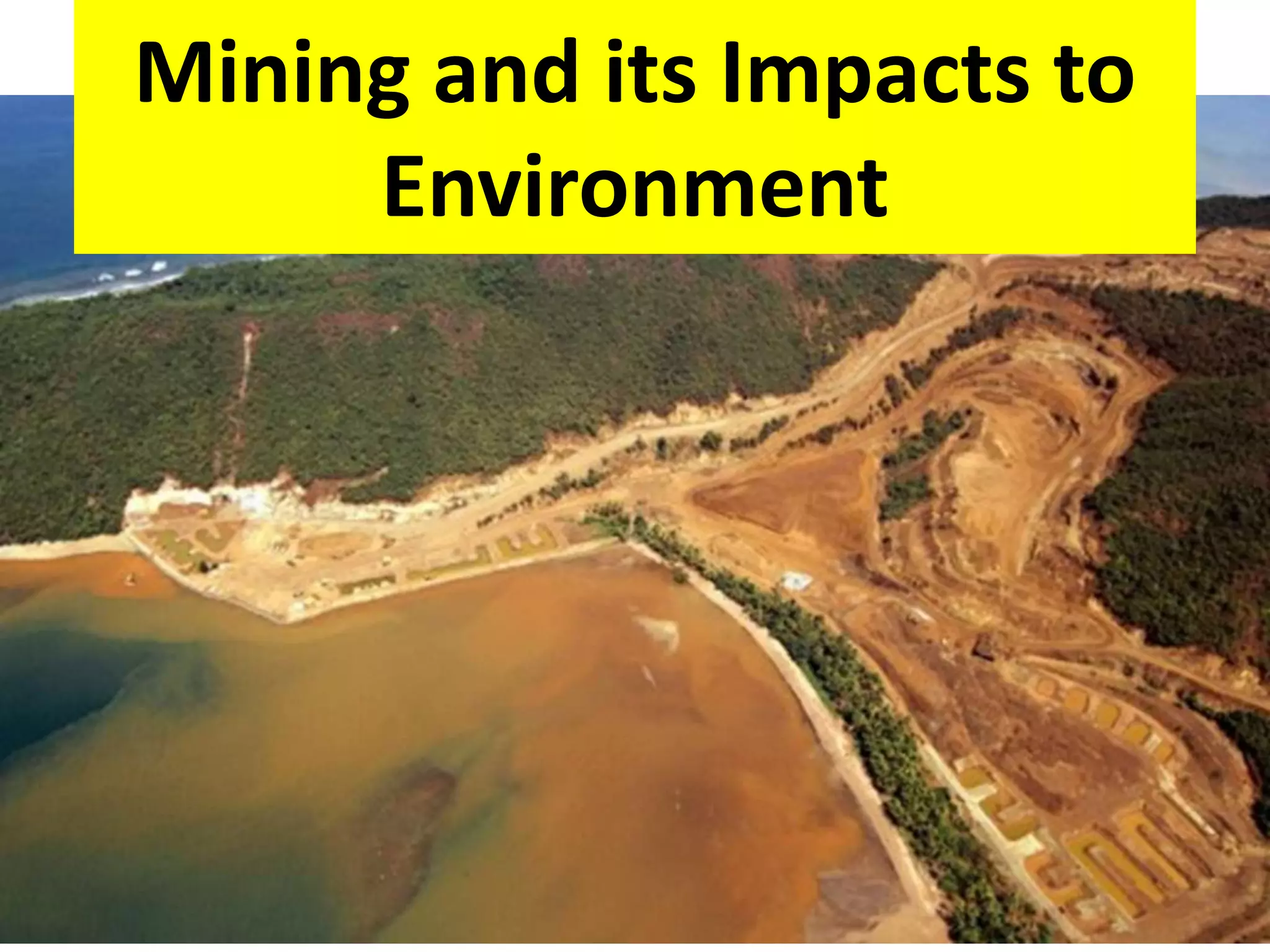
Mining and its Impacts to
Environment
Learning Objectives
• Describe how ore minerals are mined
and processed for human use
• Cite ways to prevent or lessen the
environmental impact that result from
the exploitation, extraction, and use of
mineral resources
• Answer this question
 Would you allow large scale
mining operation to operate in
your locality? Explain your answer.
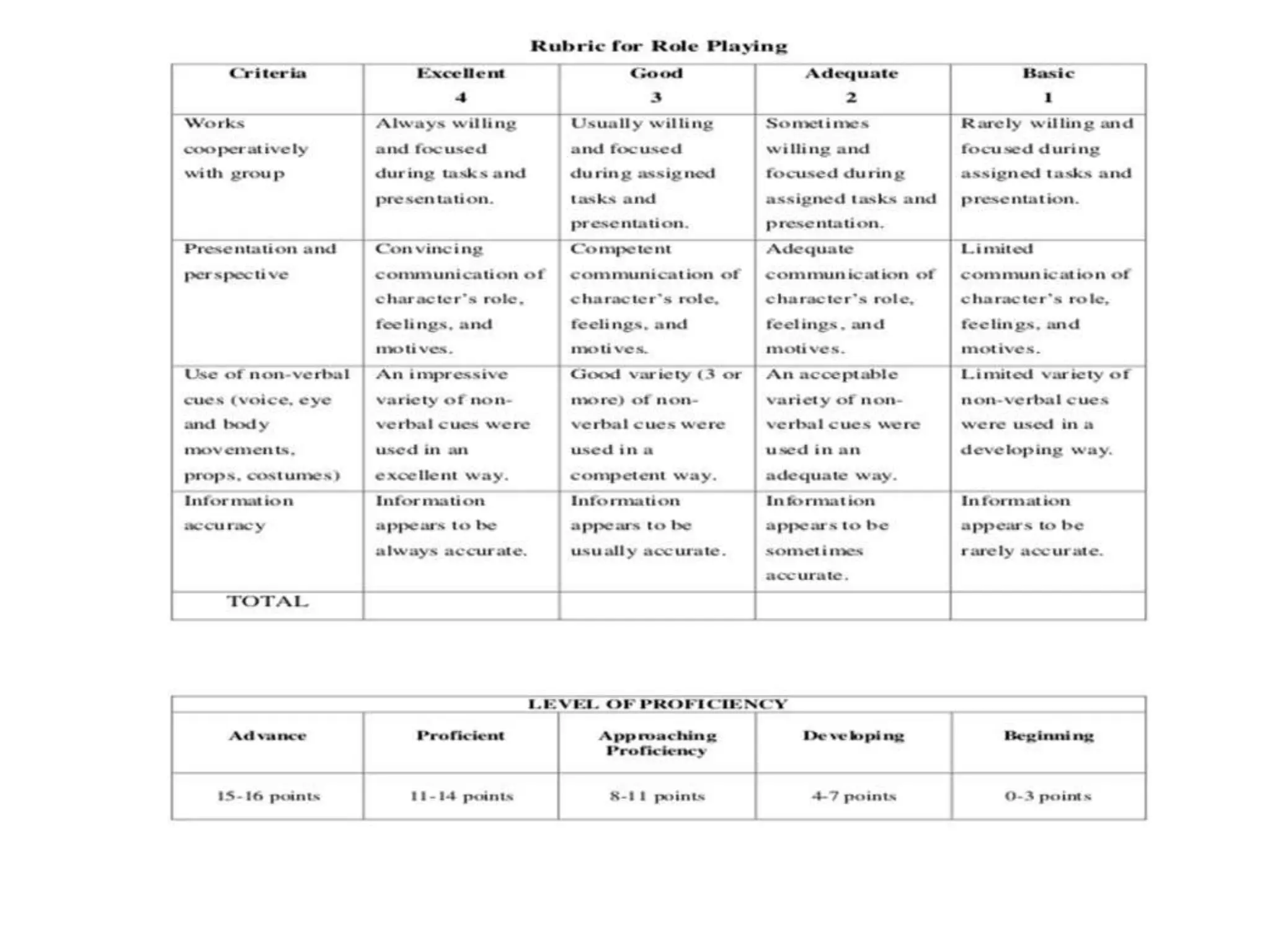
Group Activity
• “Role Playing – MININANG BAYAN”
• Imagine yourself living in impacted mining
areas and conceptualize realistic scenario for
role playing.
- Class will be grouped into two.
- Each group is given 10 minutes to dramatize
the scenario(s).
What is Mining?
• Is the extraction of valuable minerals or
other geologic materials from the earth
from an ore body, lode, vein, seam, reef
or placer deposits which form the
mineralized package of economic
interest to the miner.
Mining Methods
1.Surface Mining – broad
category of mining in which
soil and rock overlying the
mineral deposit are removed
Types of surface mining
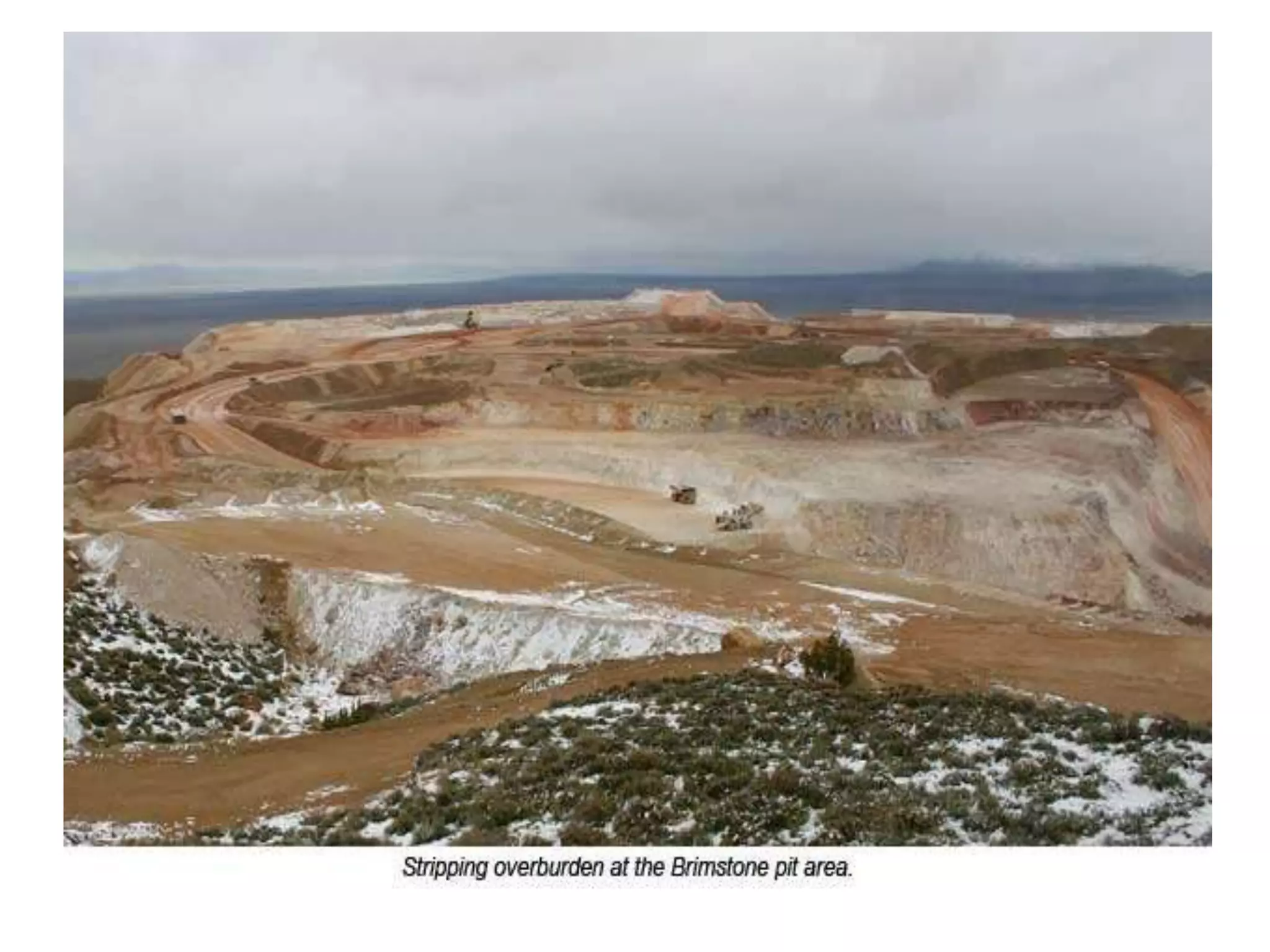
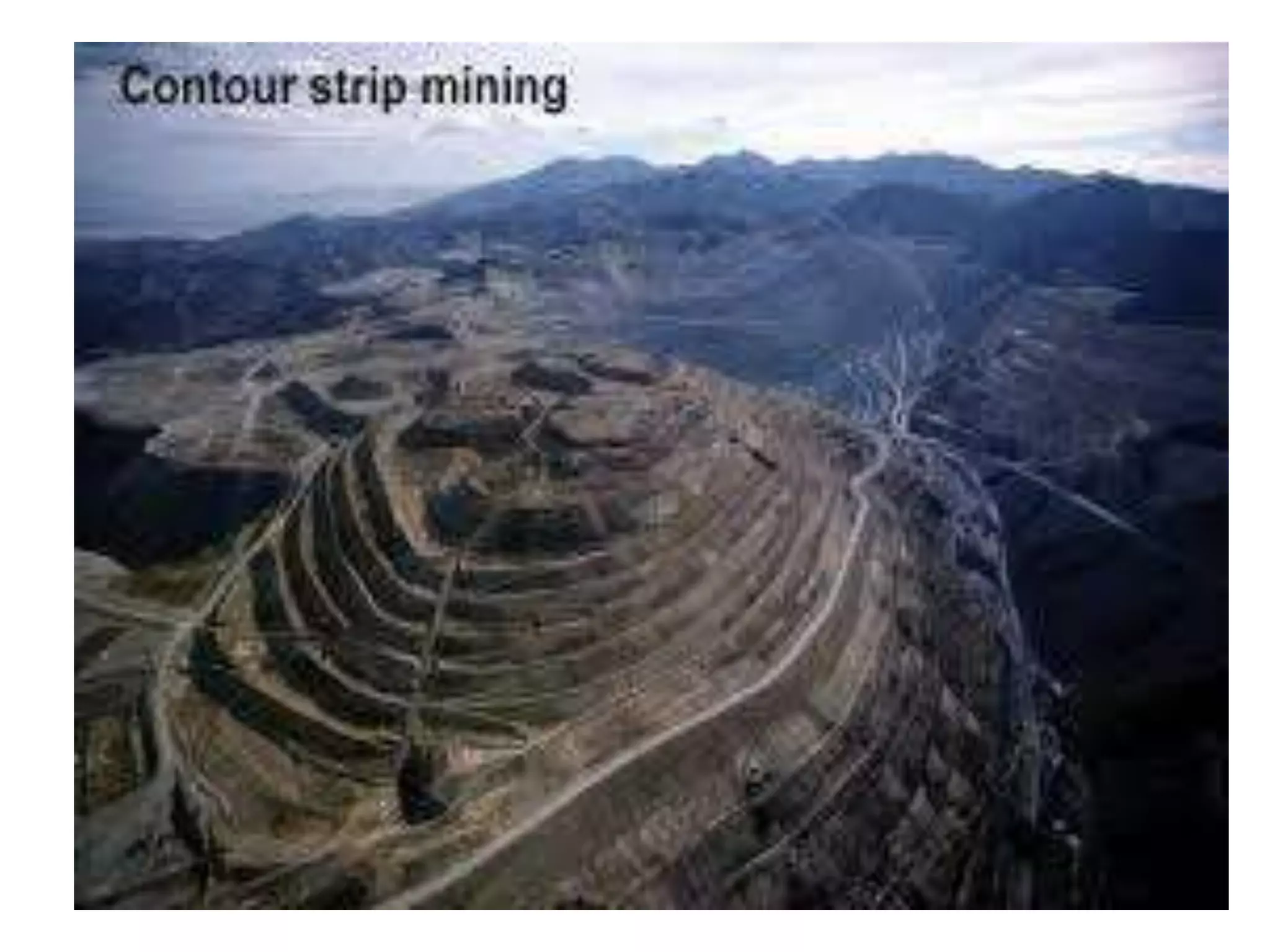
1. Strip Mining – removing a long strip
of overlying soil and rock
 practical when ore body is relatively
near the surface
 coal and lignite
 two forms: area stripping and
contour stripping
Types of surface mining
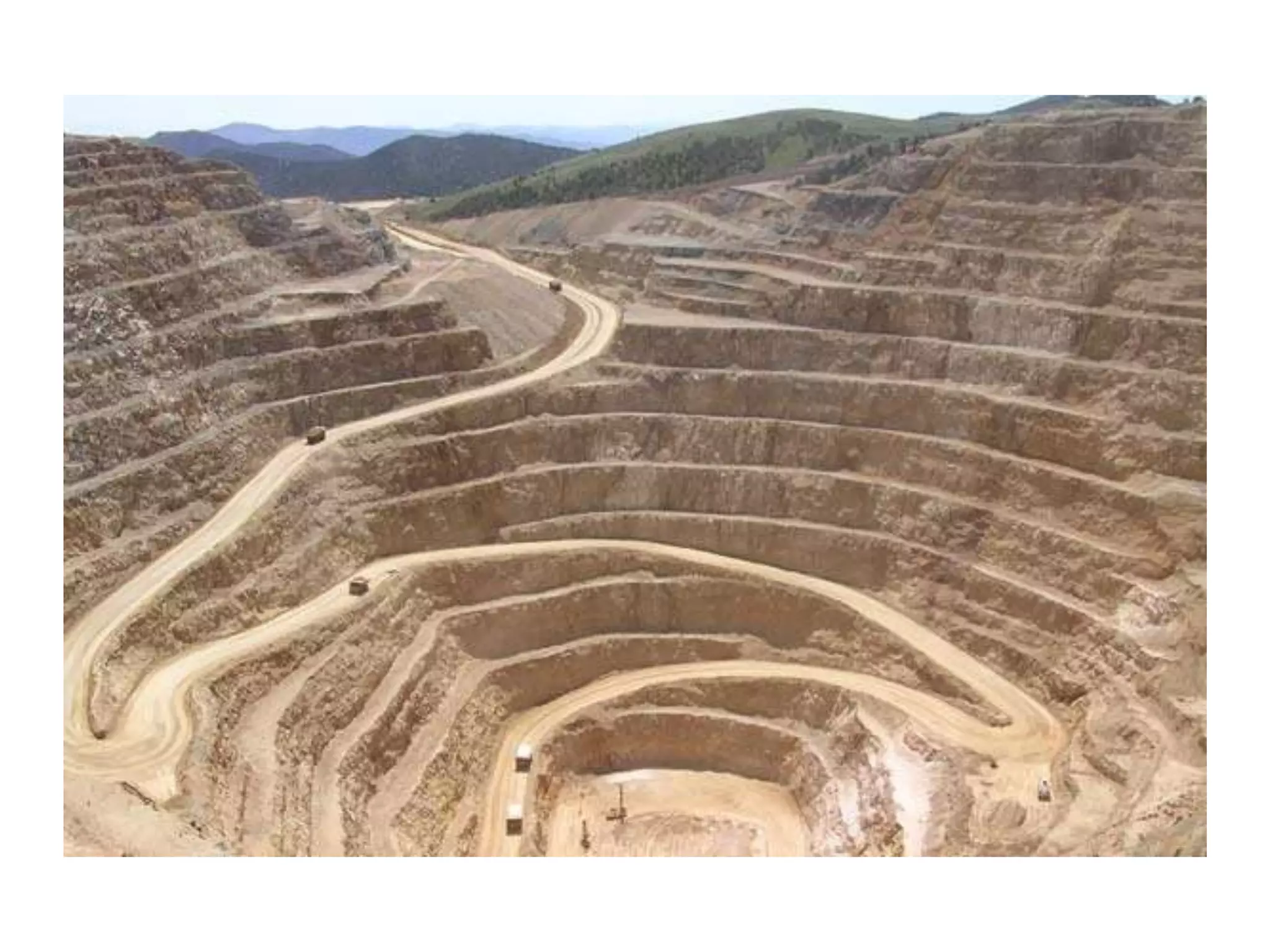
2. Open-pit mining – extracting
rock or minerals from the earth
through their removal from an
open pit or burrow
Types of surface mining
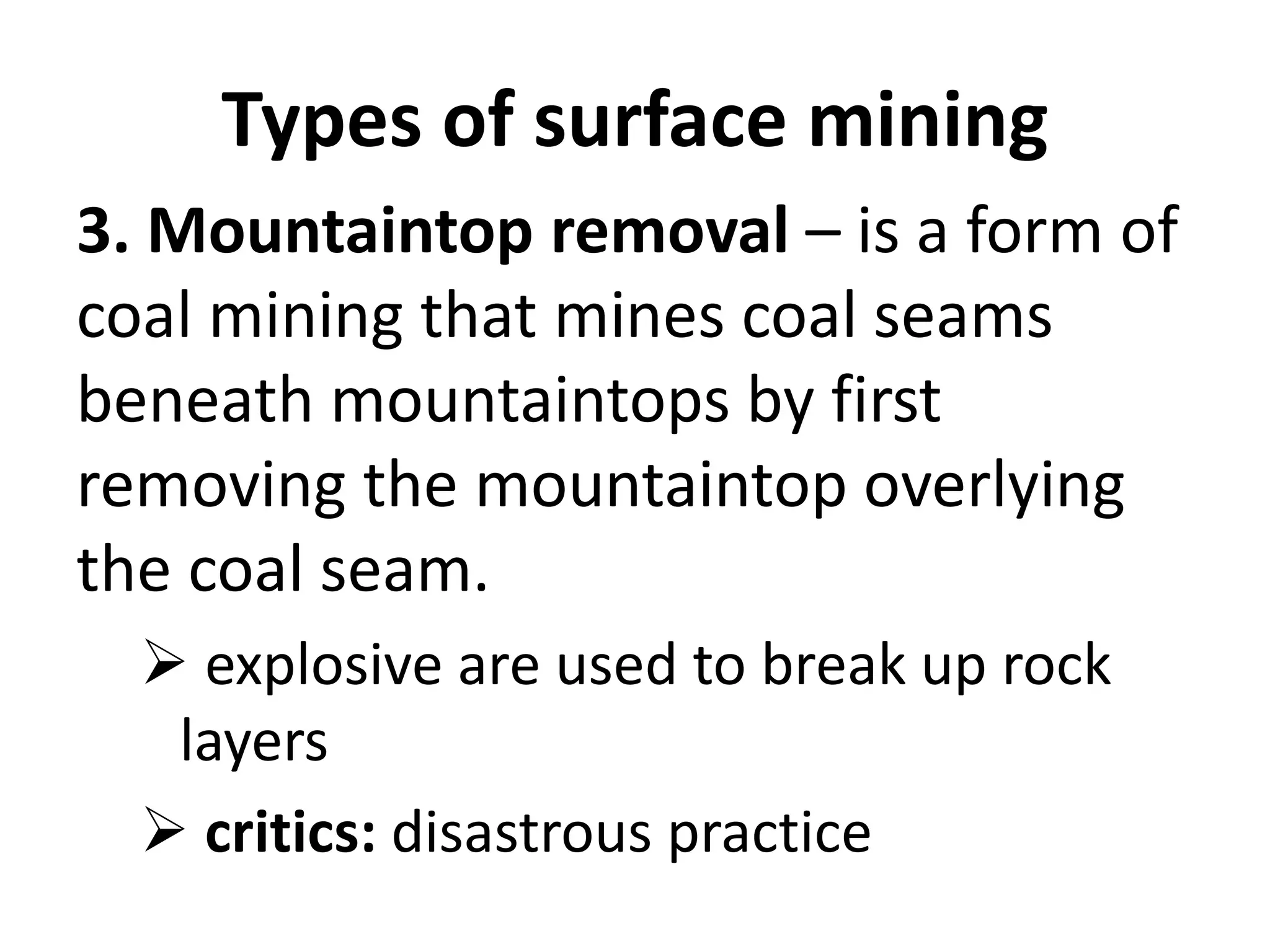
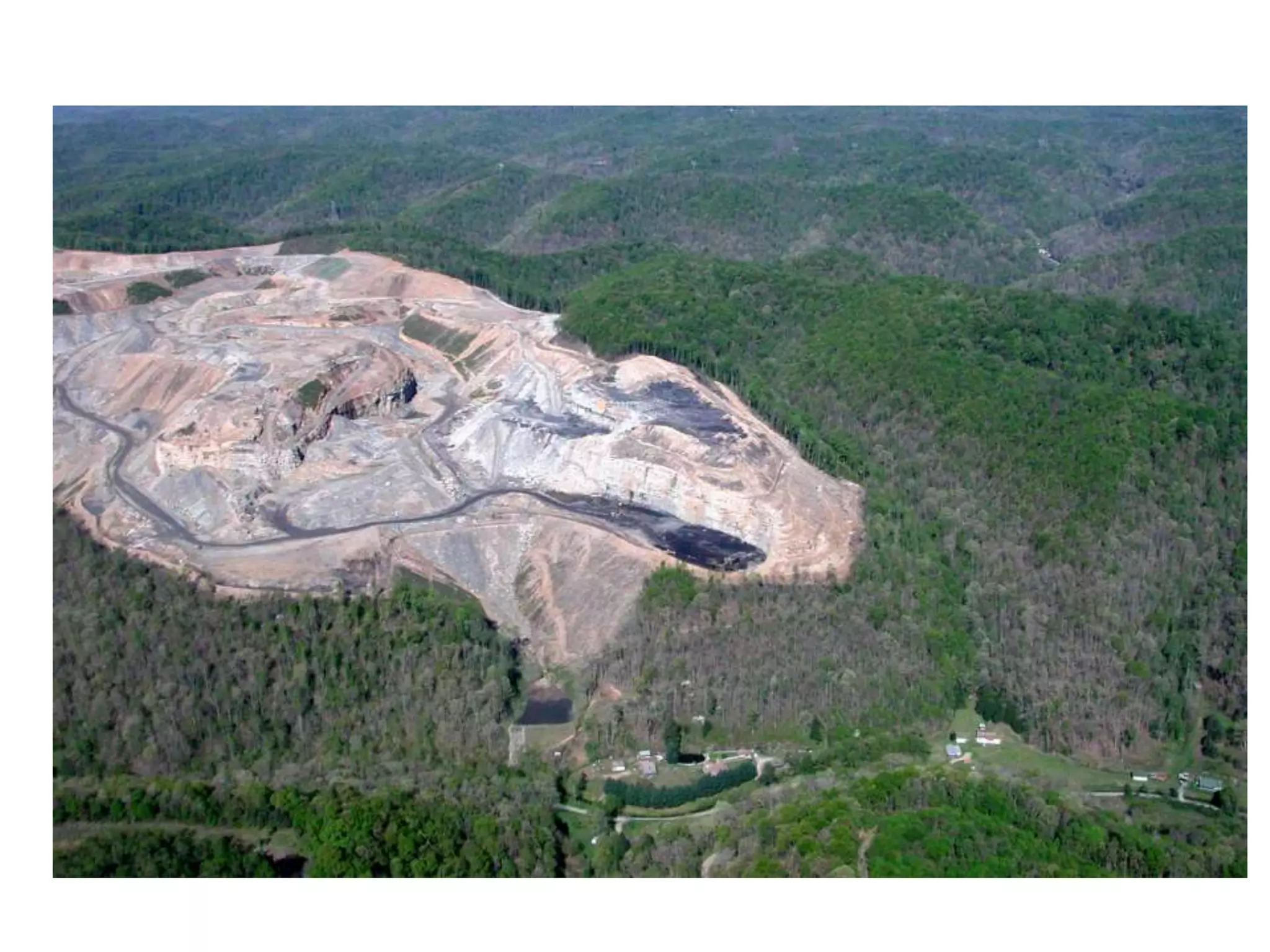
3. Mountaintop removal – is a form of
coal mining that mines coal seams
beneath mountaintops by first
removing the mountaintop overlying
the coal seam.
 explosive are used to break up rock
layers
 critics: disastrous practice
Types of surface mining
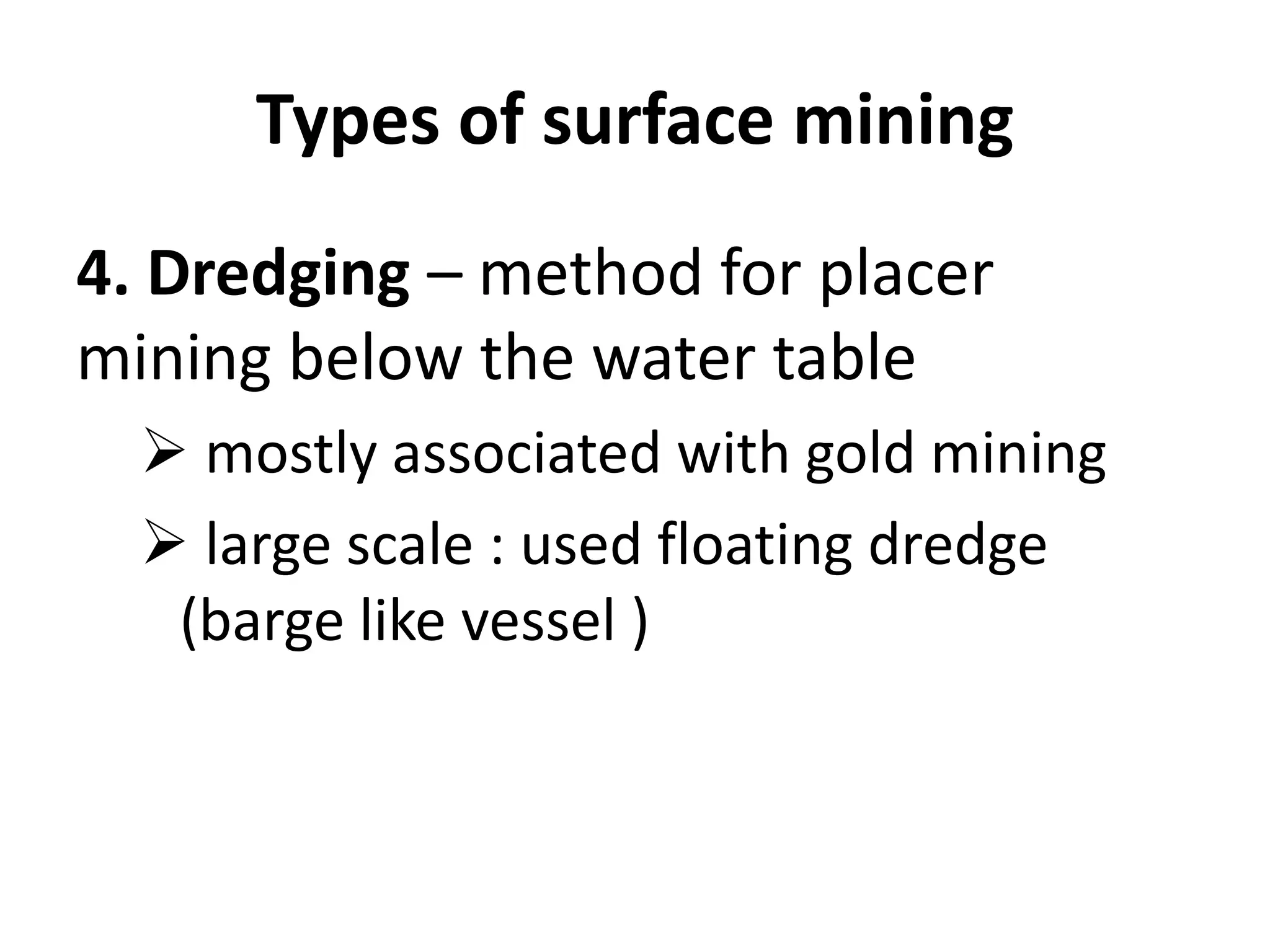
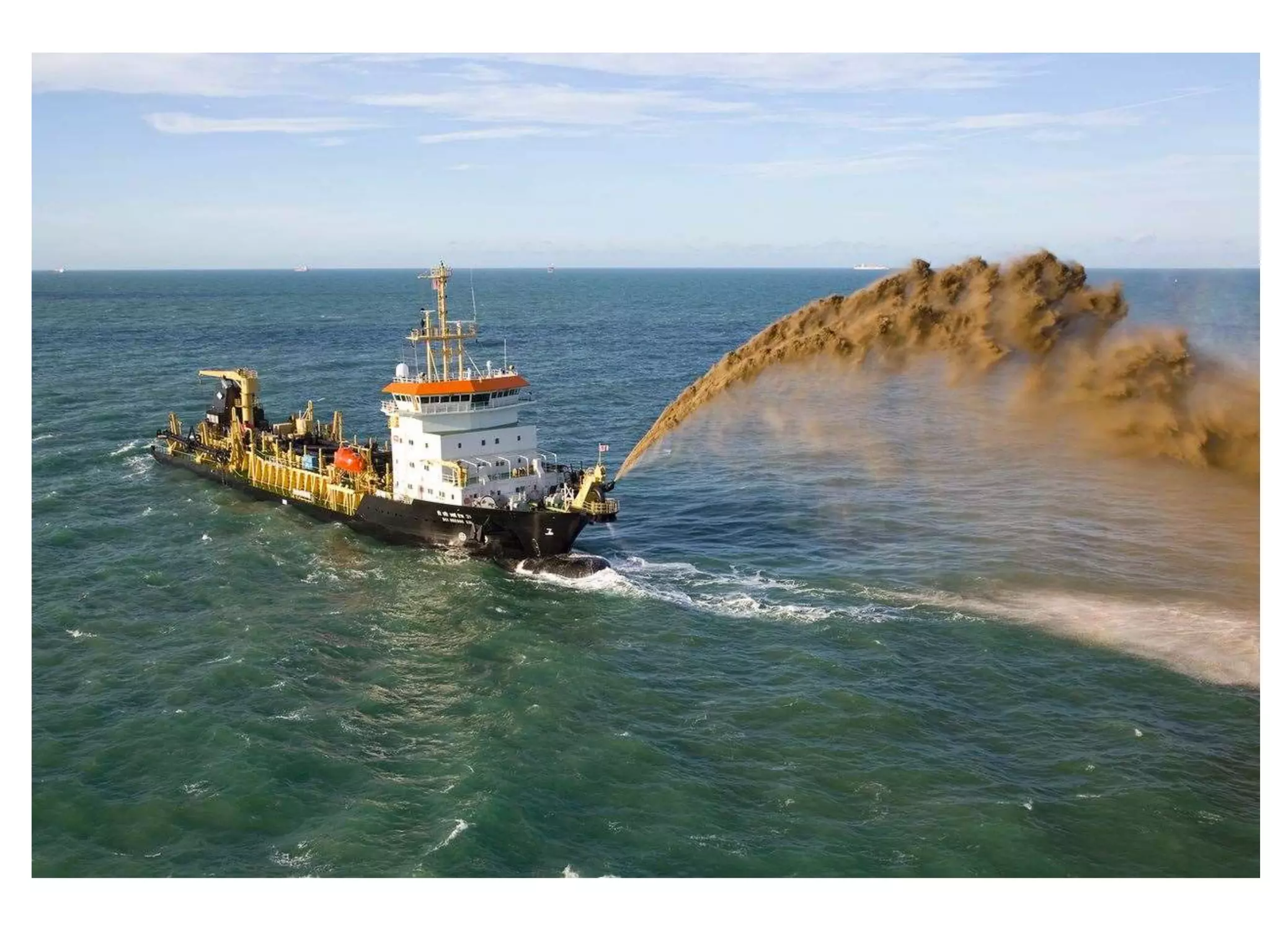
4. Dredging – method for placer
mining below the water table
 mostly associated with gold mining
 large scale : used floating dredge
(barge like vessel )
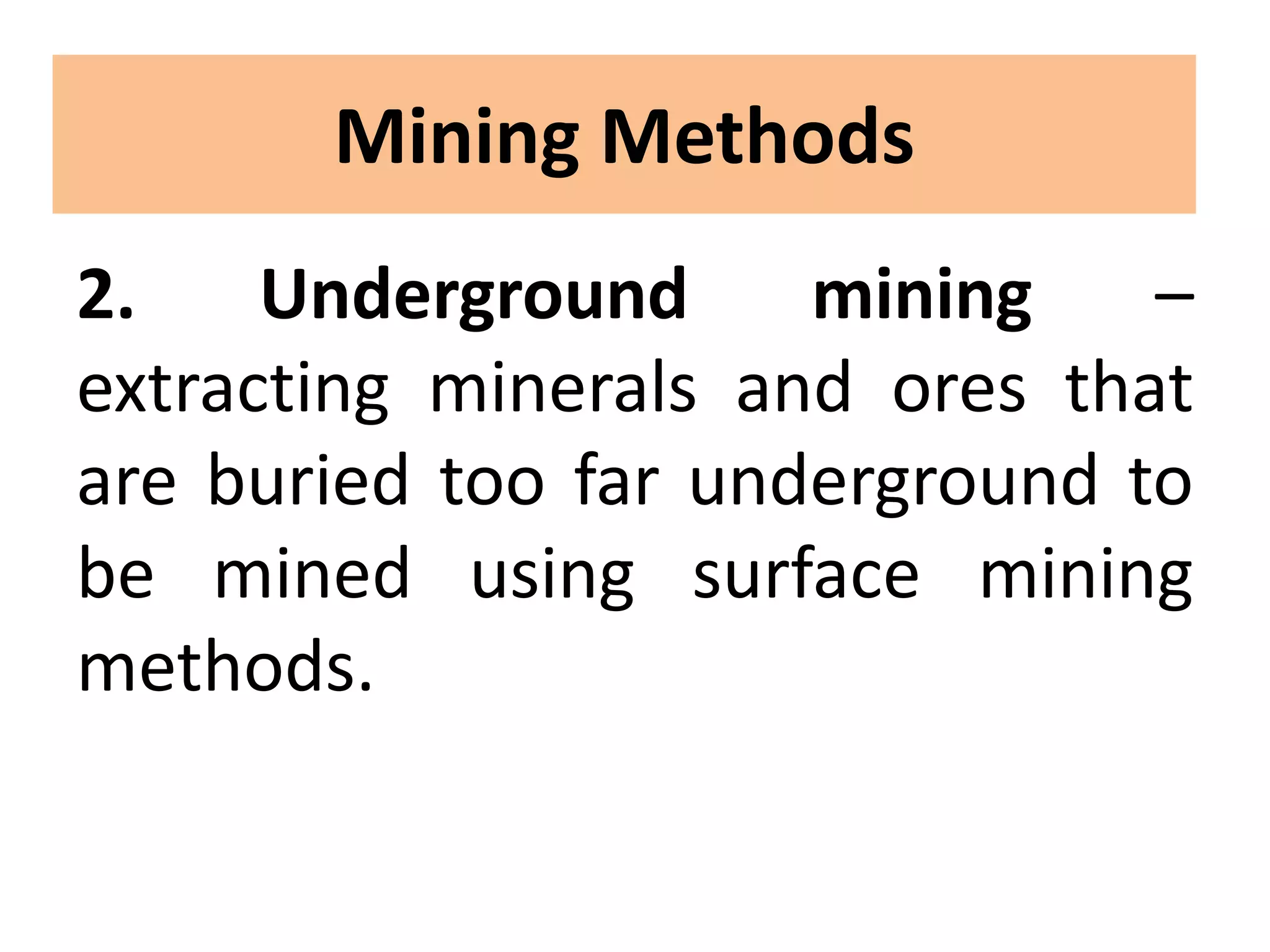
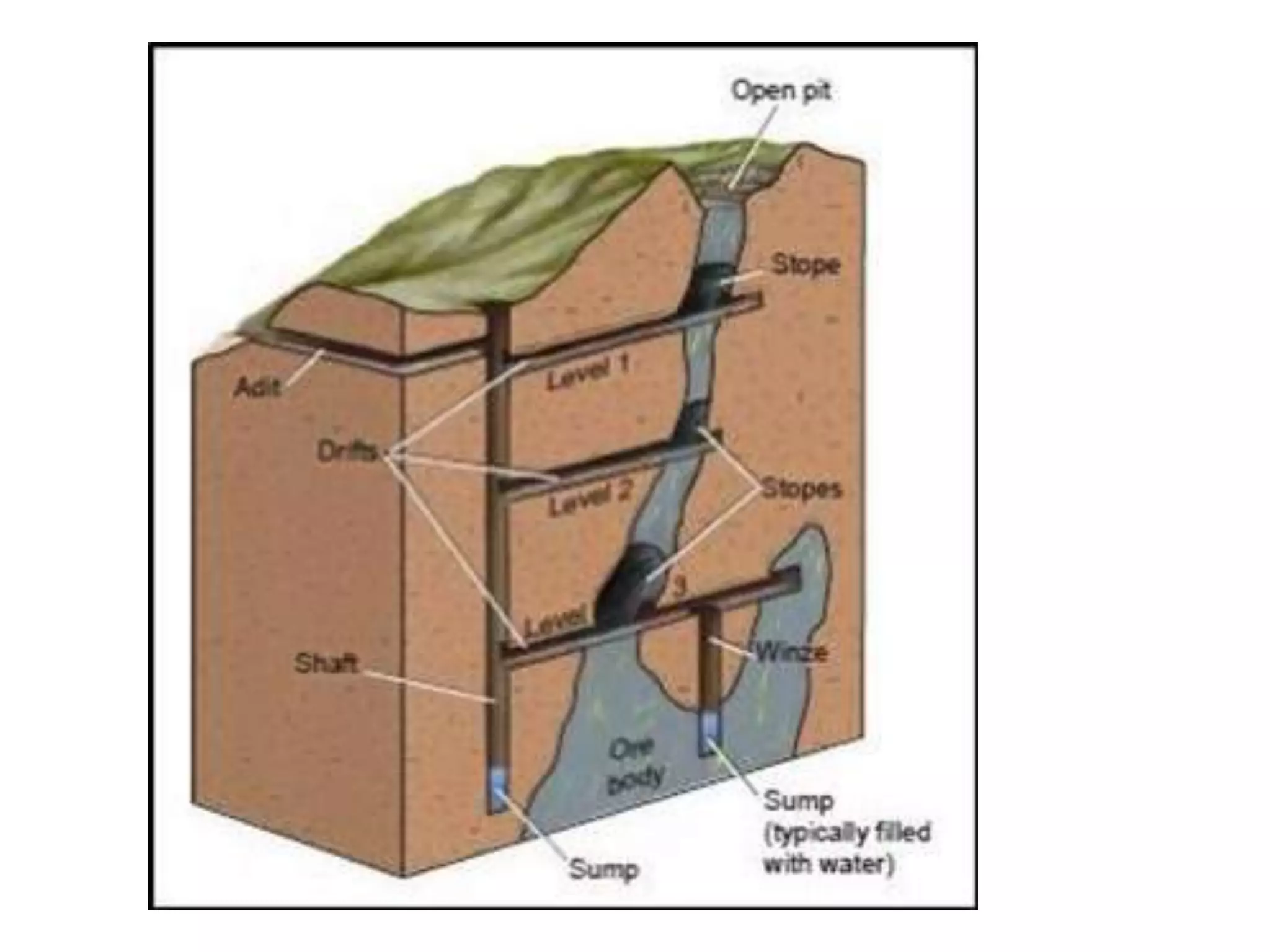
Underground
2. Underground mining –
extracting minerals and ores that
are buried too far underground to
be mined using surface mining
methods.
Mining Methods
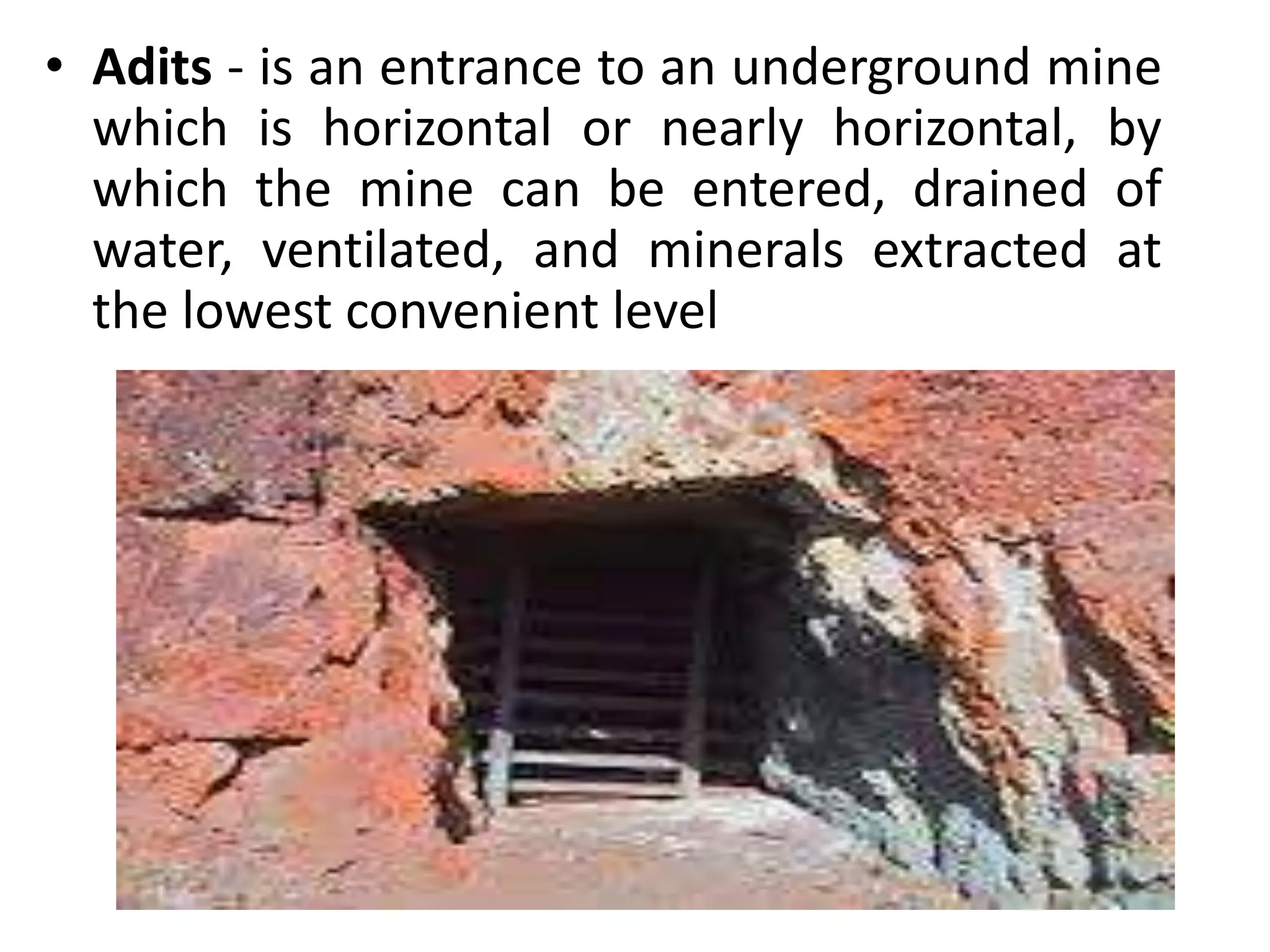
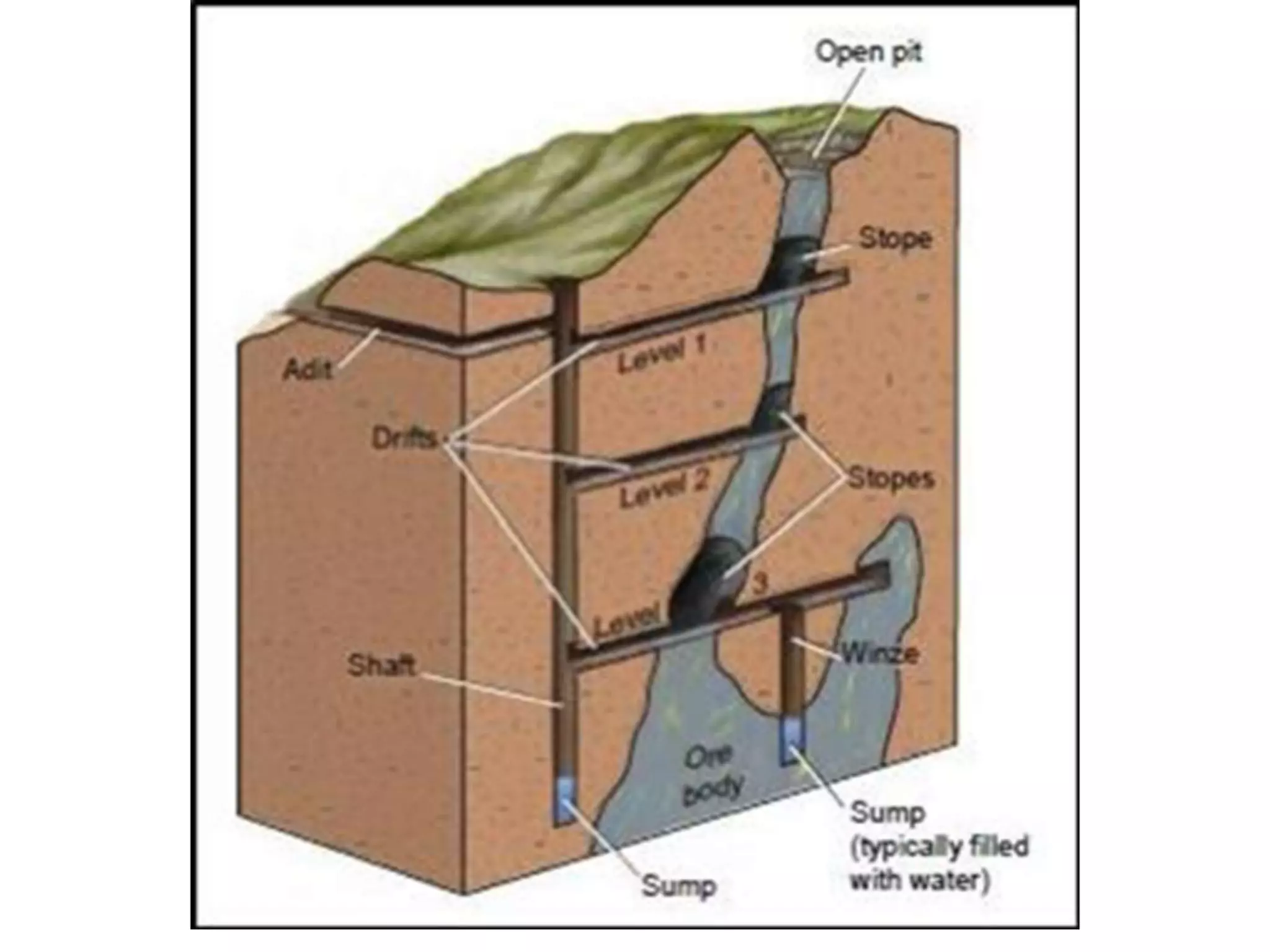
• Adits - is an entrance to an underground mine
which is horizontal or nearly horizontal, by
which the mine can be entered, drained of
water, ventilated, and minerals extracted at
the lowest convenient level
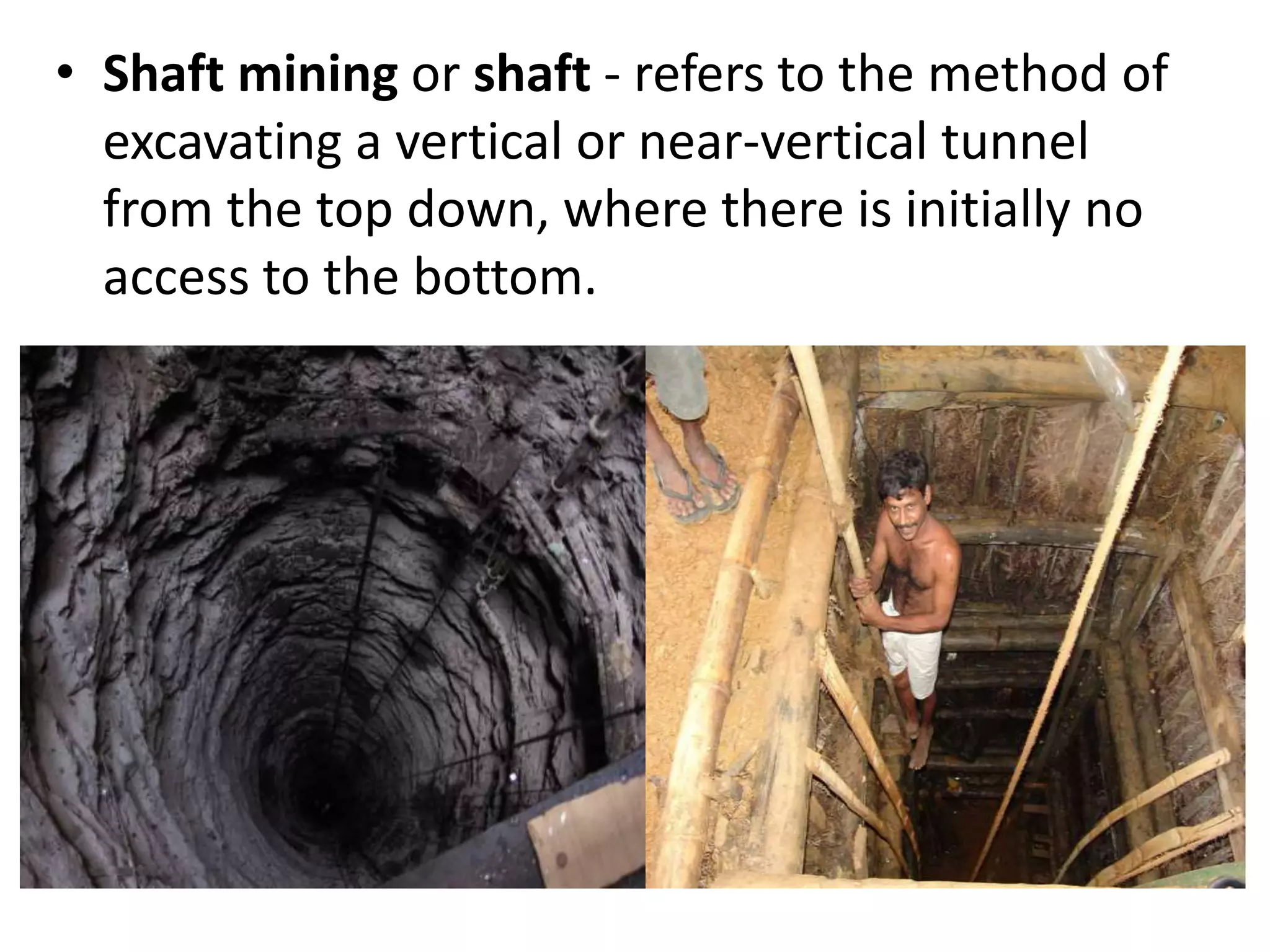
• Shaft mining or shaft - refers to the method of
excavating a vertical or near-vertical tunnel
from the top down, where there is initially no
access to the bottom.
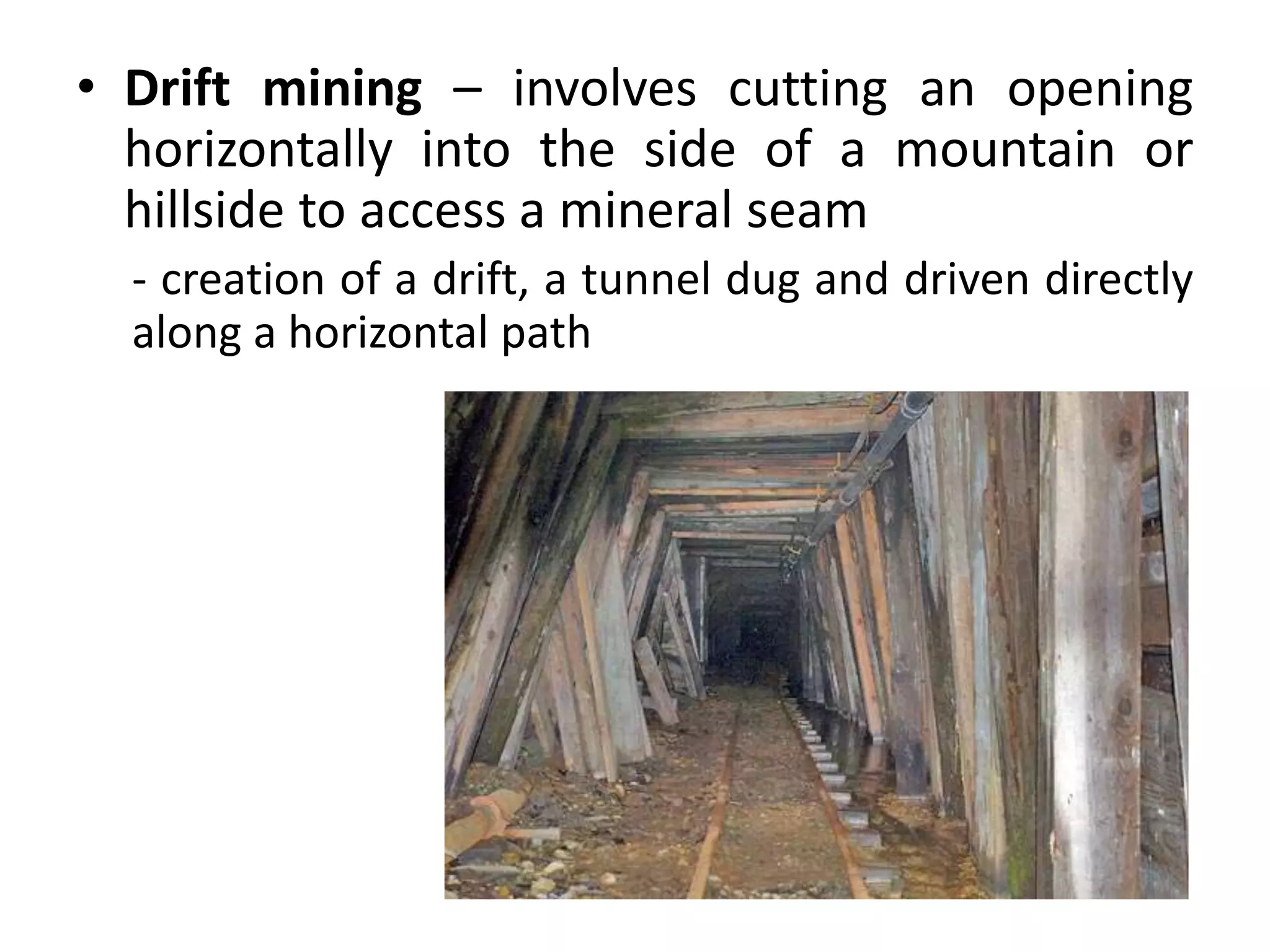
• Drift mining – involves cutting an opening
horizontally into the side of a mountain or
hillside to access a mineral seam
- creation of a drift, a tunnel dug and driven directly
along a horizontal path
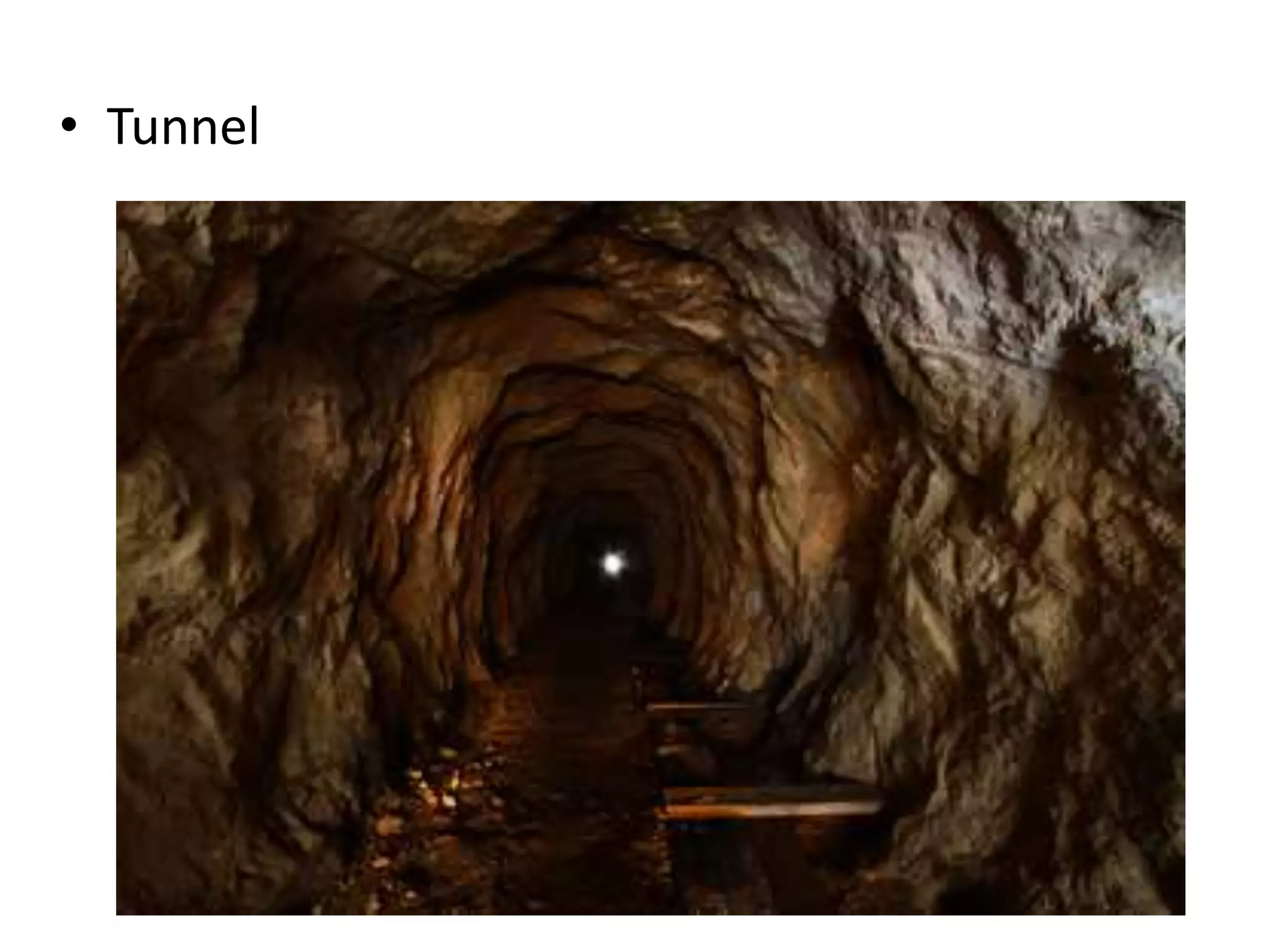
• Tunnel
Milling Process
• Materials extracted or “mined” are rocks
composed of both ore and waste material
• Extracted rocks undergo process of mineral
(e.g metal) separation and recovery
• Crushing and screening are the first stages of
controlled size reduction followed by grinding
where rocks are pulverized.
Milling or Recovery Processes
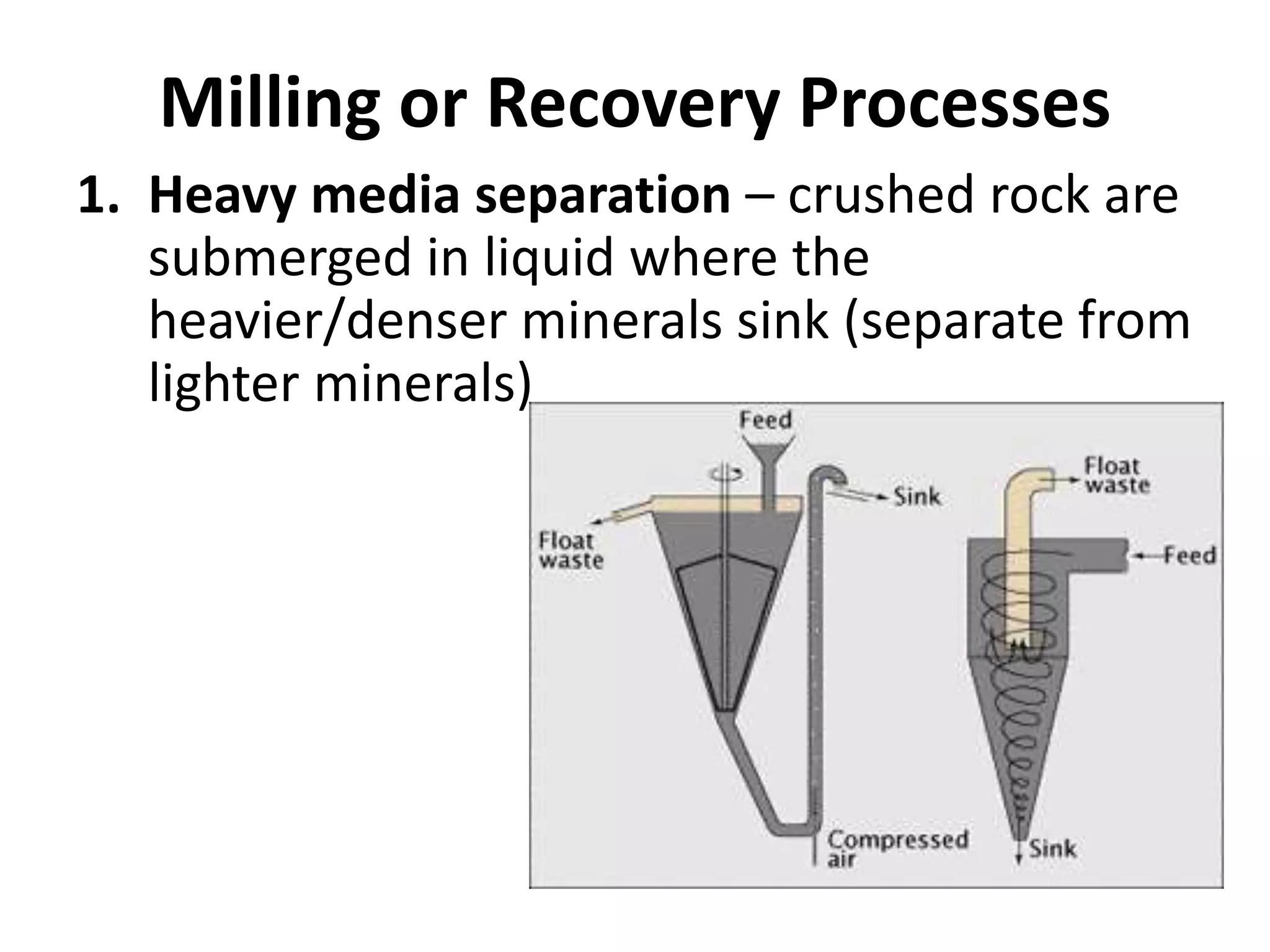
1. Heavy media separation – crushed rock are
submerged in liquid where the
heavier/denser minerals sink (separate from
lighter minerals)
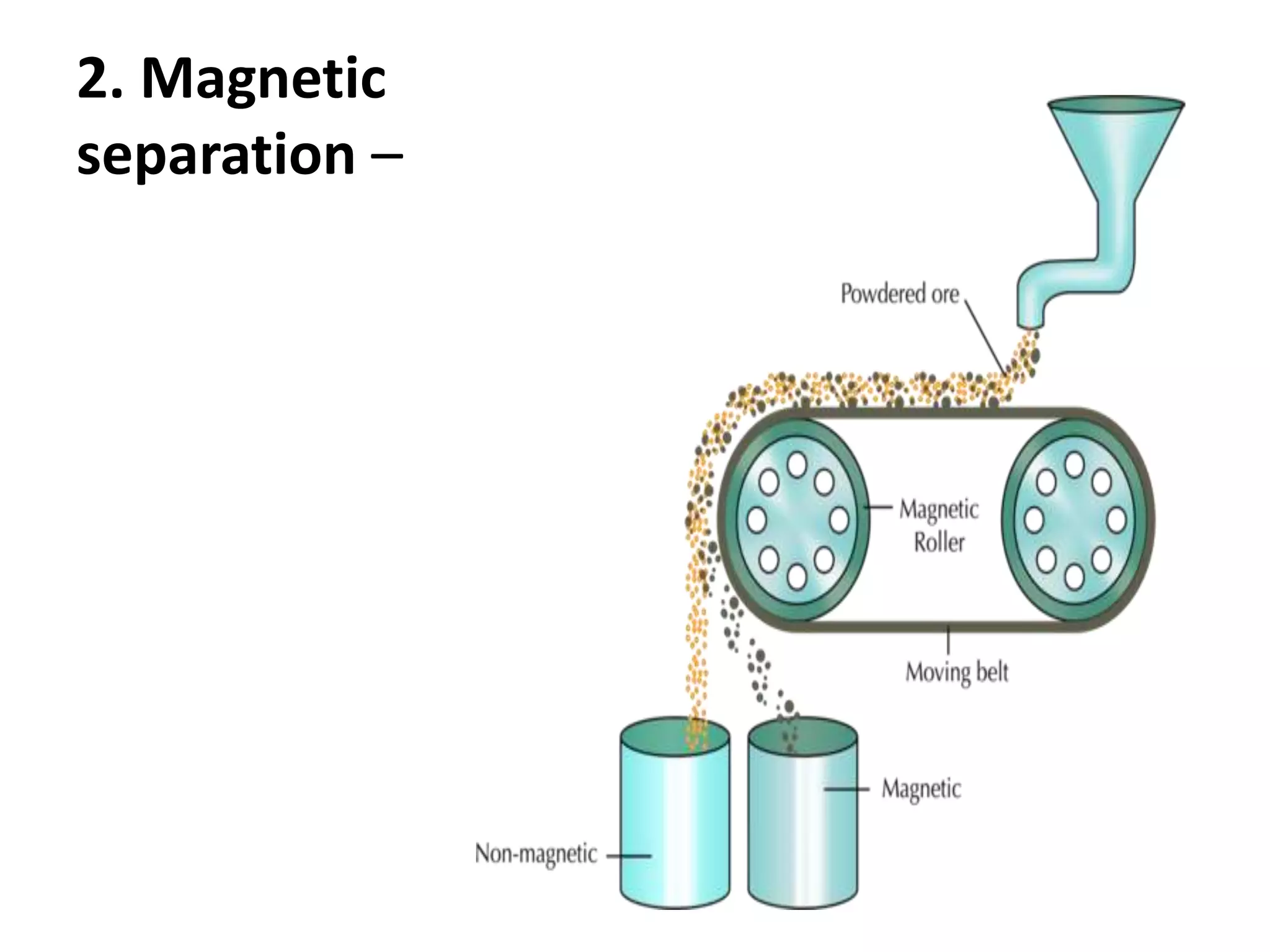
2. Magnetic
separation –
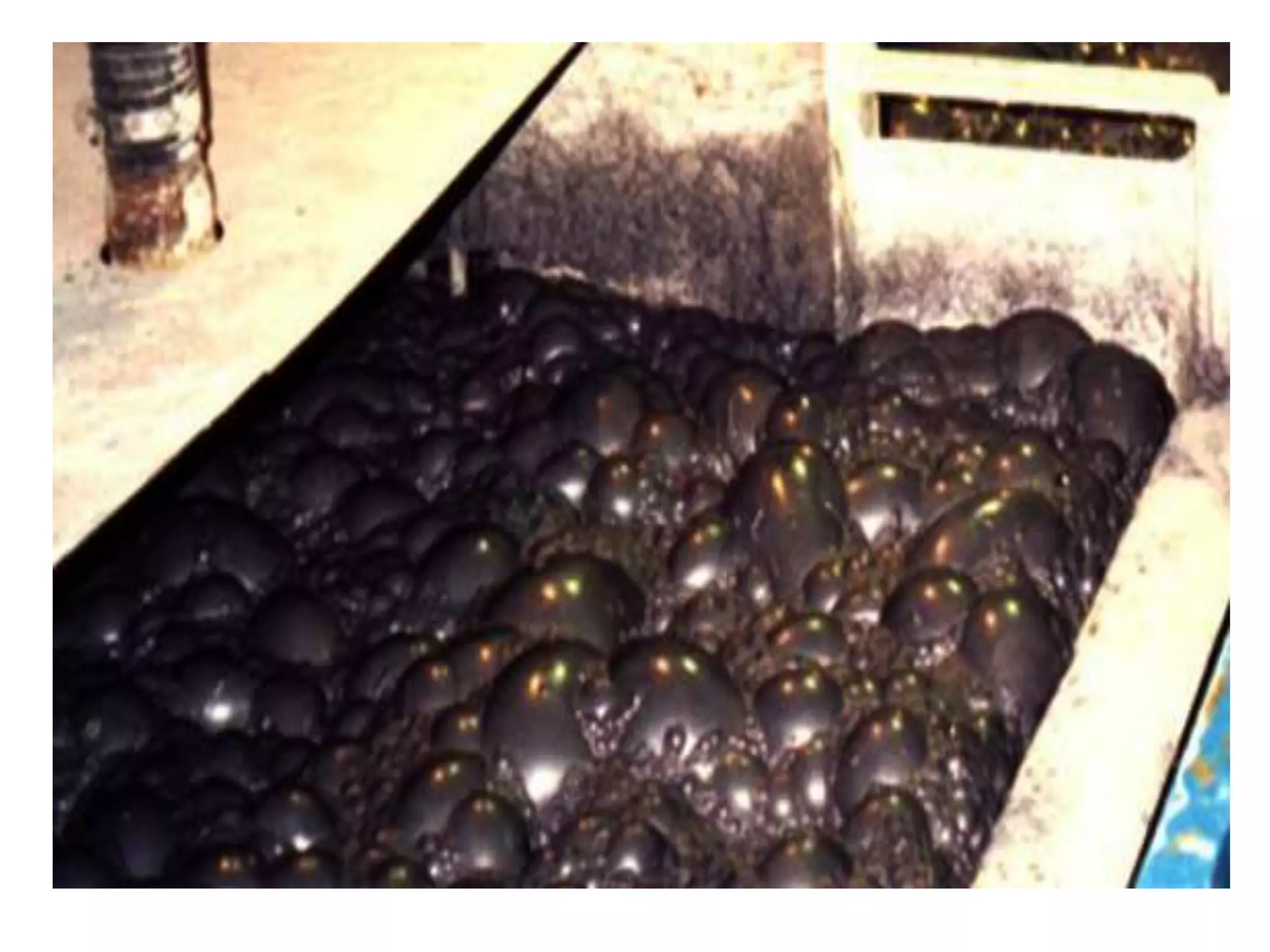
3. Floatation – powdered ore is placed
into an agitated frothy slurry where some
minerals and metals based on physical and
chemical properties may either sink to the
bottom or may stick to the bubbles and
rise to the top thus separating the minerals
and metals from waste
4. Cyanide heap leaching – used for low-grade
ore where the crushed rock is placed on a “leach
file” where cyanide solution is sprayed or dipped
on top of the file.
 as the leach solution percolates down through
the rocks, the gold is dissolve into the solution
The solution is processed further to extract the
gold
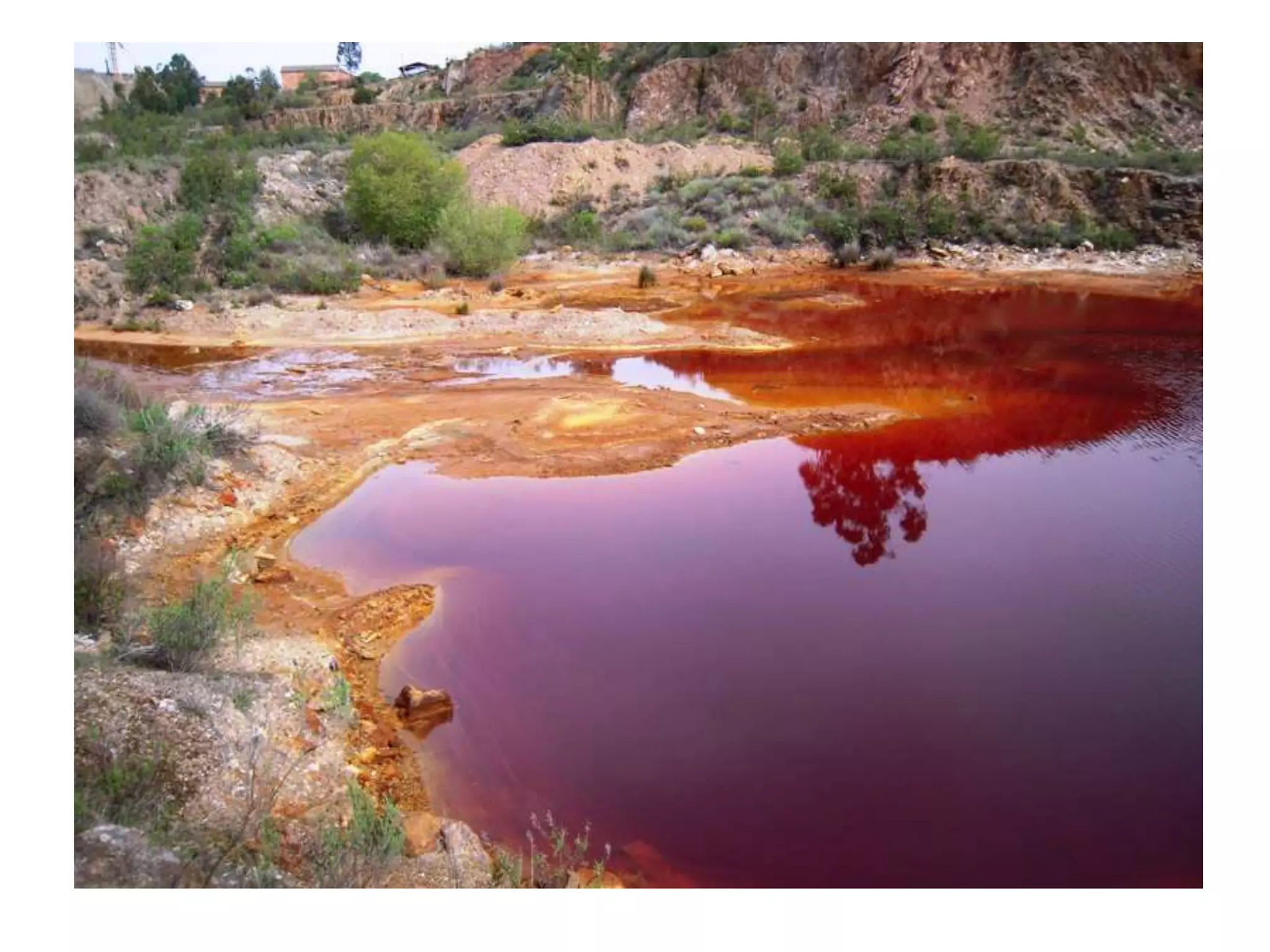
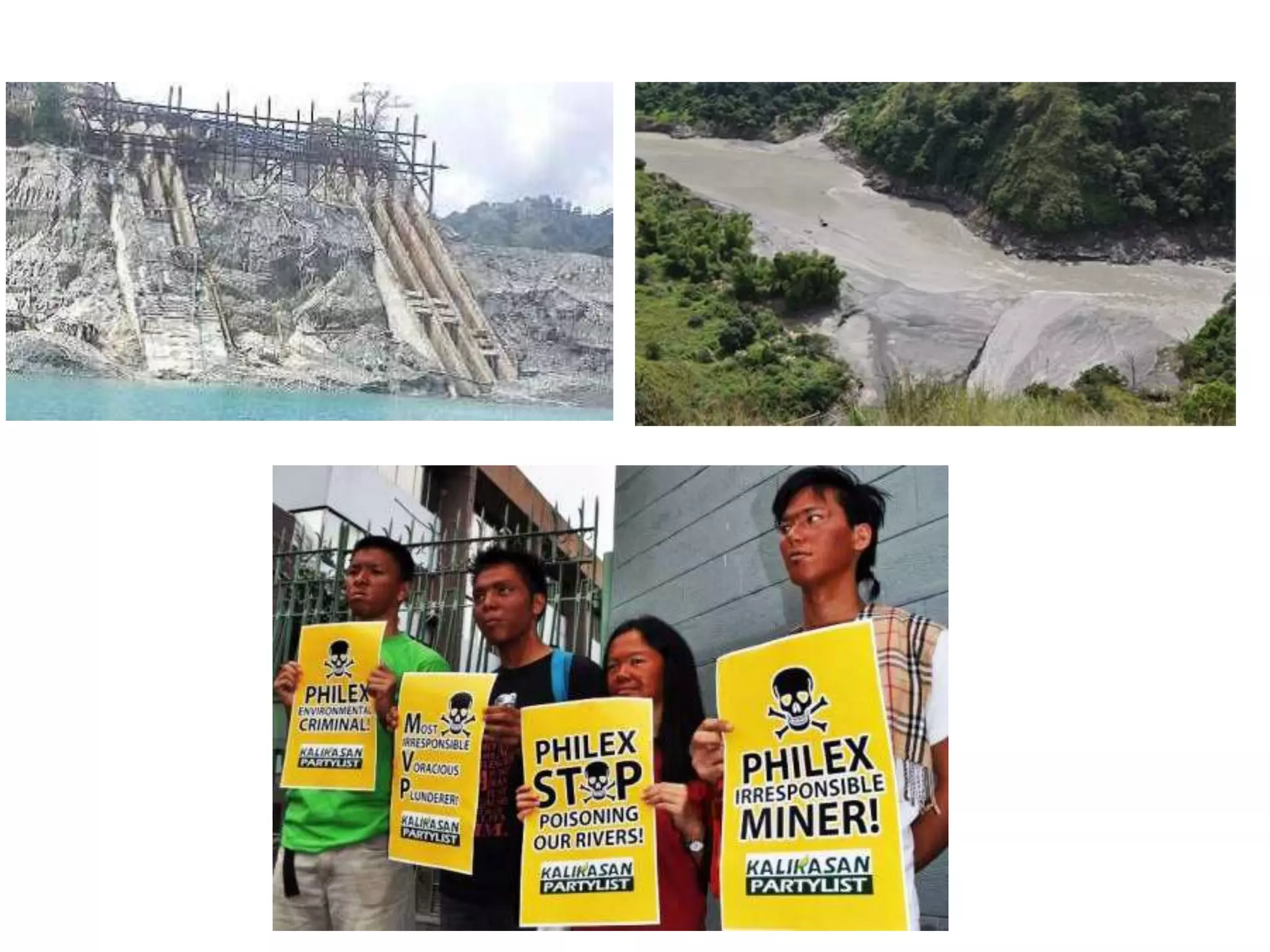
Environmental Impacts
• Flooding
• Erosion
• Subsidence
• Water and air pollution
• Damage to wildlife and habitat
Impact Preventive Measures
• Topsoil replacement using uncontaminated
soil
• Reintroduction of flora and fauna
• Neutralizing acidic waters
• Backfilling and sealing of abandoned
underground mines
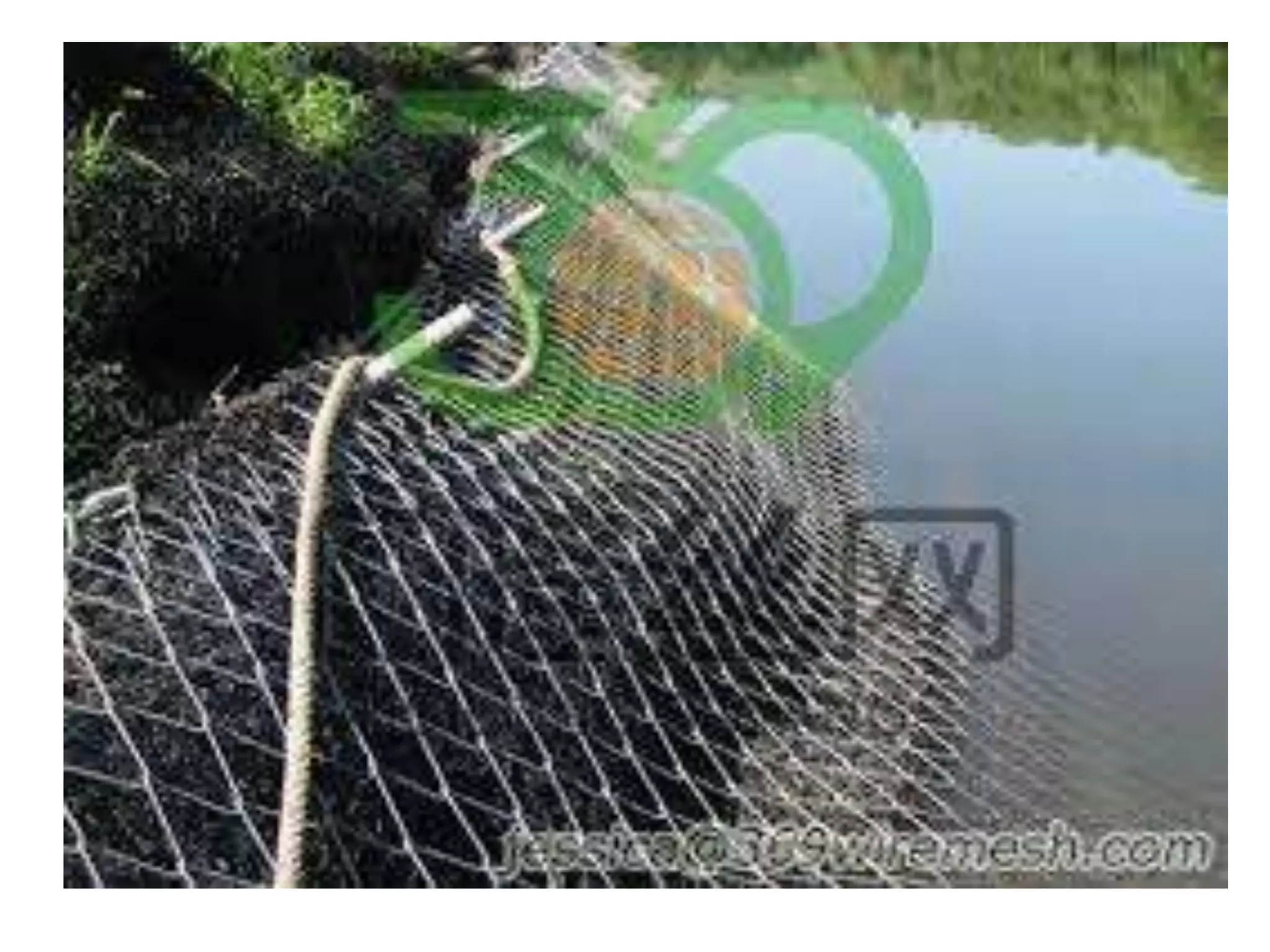
• Stabilizing the slope to reduce erosion
Laws
• RA 7942 – The Philippine Mining Act
• EO 79 – People’s Small Scale Mining
Areas
Role of Government
• Mines and Geoscience Bureau (MGB)
– Undertake final evaluation of all mining
application, conduct audit of the disposition of
mineral lands and resources, and manage the
Mineral Rights Management System
• Environmental Management Bureau (EMB)
- Issued ECC and monitor its commitments and
compliances
SALAMAT KARAJAW 

4 mining and its impacts to environment

  • 1.
    Mining and itsImpacts to Environment
  • 2.
    Learning Objectives • Describehow ore minerals are mined and processed for human use • Cite ways to prevent or lessen the environmental impact that result from the exploitation, extraction, and use of mineral resources
  • 3.
    • Answer thisquestion  Would you allow large scale mining operation to operate in your locality? Explain your answer.
  • 4.
    Group Activity • “RolePlaying – MININANG BAYAN” • Imagine yourself living in impacted mining areas and conceptualize realistic scenario for role playing. - Class will be grouped into two. - Each group is given 10 minutes to dramatize the scenario(s).
  • 6.
    What is Mining? •Is the extraction of valuable minerals or other geologic materials from the earth from an ore body, lode, vein, seam, reef or placer deposits which form the mineralized package of economic interest to the miner.
  • 7.
    Mining Methods 1.Surface Mining– broad category of mining in which soil and rock overlying the mineral deposit are removed
  • 8.
    Types of surfacemining 1. Strip Mining – removing a long strip of overlying soil and rock  practical when ore body is relatively near the surface  coal and lignite  two forms: area stripping and contour stripping
  • 11.
    Types of surfacemining 2. Open-pit mining – extracting rock or minerals from the earth through their removal from an open pit or burrow
  • 13.
    Types of surfacemining 3. Mountaintop removal – is a form of coal mining that mines coal seams beneath mountaintops by first removing the mountaintop overlying the coal seam.  explosive are used to break up rock layers  critics: disastrous practice
  • 15.
    Types of surfacemining 4. Dredging – method for placer mining below the water table  mostly associated with gold mining  large scale : used floating dredge (barge like vessel )
  • 17.
    Underground 2. Underground mining– extracting minerals and ores that are buried too far underground to be mined using surface mining methods. Mining Methods
  • 19.
    • Adits -is an entrance to an underground mine which is horizontal or nearly horizontal, by which the mine can be entered, drained of water, ventilated, and minerals extracted at the lowest convenient level
  • 20.
    • Shaft miningor shaft - refers to the method of excavating a vertical or near-vertical tunnel from the top down, where there is initially no access to the bottom.
  • 21.
    • Drift mining– involves cutting an opening horizontally into the side of a mountain or hillside to access a mineral seam - creation of a drift, a tunnel dug and driven directly along a horizontal path
  • 22.
  • 24.
    Milling Process • Materialsextracted or “mined” are rocks composed of both ore and waste material • Extracted rocks undergo process of mineral (e.g metal) separation and recovery • Crushing and screening are the first stages of controlled size reduction followed by grinding where rocks are pulverized.
  • 25.
    Milling or RecoveryProcesses 1. Heavy media separation – crushed rock are submerged in liquid where the heavier/denser minerals sink (separate from lighter minerals)
  • 26.
  • 27.
    3. Floatation –powdered ore is placed into an agitated frothy slurry where some minerals and metals based on physical and chemical properties may either sink to the bottom or may stick to the bubbles and rise to the top thus separating the minerals and metals from waste
  • 29.
    4. Cyanide heapleaching – used for low-grade ore where the crushed rock is placed on a “leach file” where cyanide solution is sprayed or dipped on top of the file.  as the leach solution percolates down through the rocks, the gold is dissolve into the solution The solution is processed further to extract the gold
  • 31.
    Environmental Impacts • Flooding •Erosion • Subsidence • Water and air pollution • Damage to wildlife and habitat
  • 41.
    Impact Preventive Measures •Topsoil replacement using uncontaminated soil • Reintroduction of flora and fauna • Neutralizing acidic waters • Backfilling and sealing of abandoned underground mines • Stabilizing the slope to reduce erosion
  • 44.
    Laws • RA 7942– The Philippine Mining Act • EO 79 – People’s Small Scale Mining Areas
  • 45.
    Role of Government •Mines and Geoscience Bureau (MGB) – Undertake final evaluation of all mining application, conduct audit of the disposition of mineral lands and resources, and manage the Mineral Rights Management System • Environmental Management Bureau (EMB) - Issued ECC and monitor its commitments and compliances
  • 46.

Editor's Notes

  • #12 -sometimes mistakenly referred to as "strip mining"
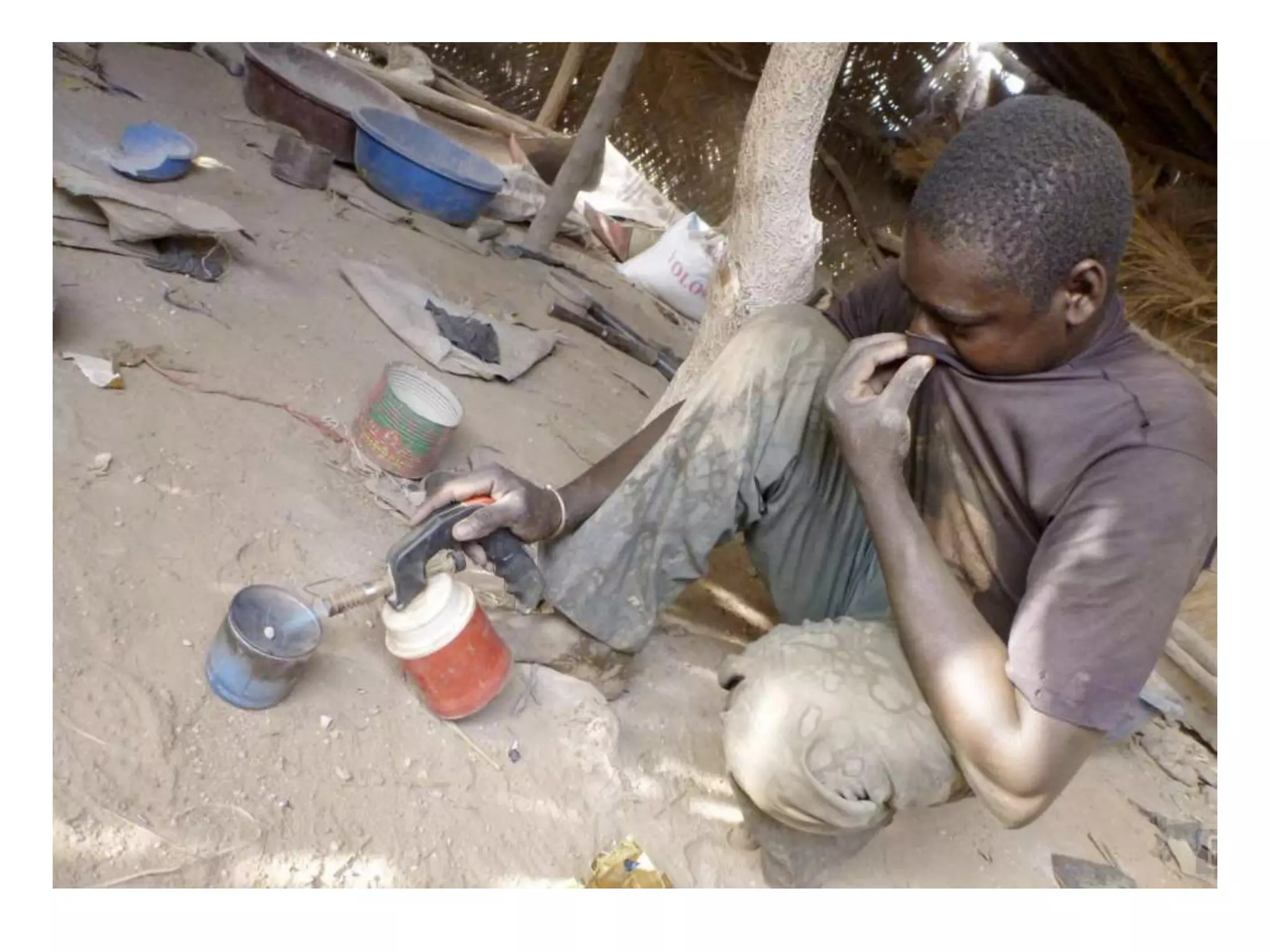
  • #14 - Explosives are used to break up the rock layers above the seam, which are them removed
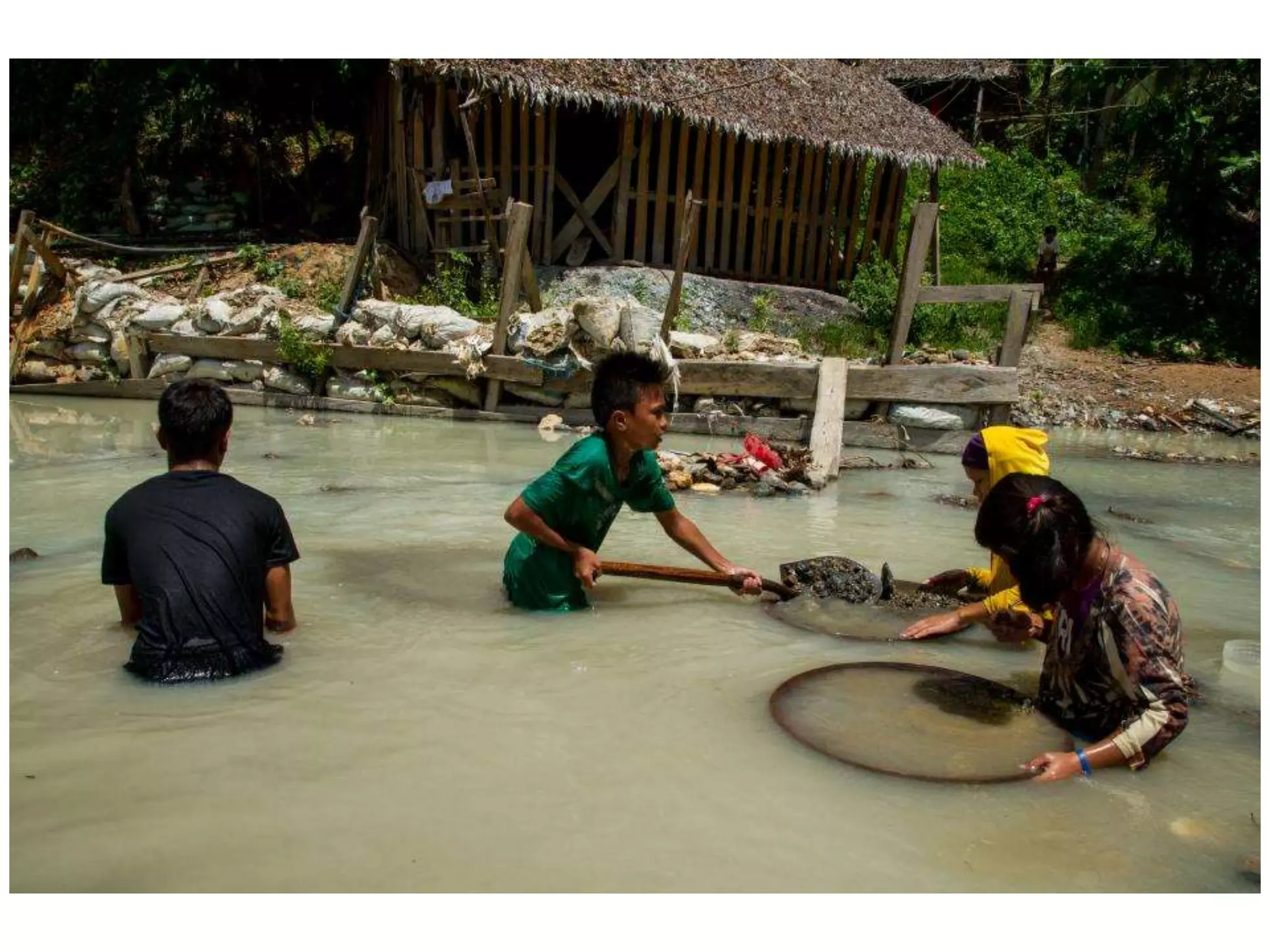
  • #24 winze is a minor connection between different levels in an underground mine
  • #26 - Also called sink-and float separation
  • #29 -METAL BUBBLES
  • #30 a series of chemical reactions that absorb specific minerals and then re-separates them after their division from other earth materials
  • #33 -carascal