Milling, milling cutters
By VAIBHAV TAILOR
 Milling is the machining process of using
rotary cutters to remove material from a work
piece by advancing in a direction at an angle
with the axis of the tool.
 Milling cutters
◦ Milling cutters are cutting tools typically used in
milling machines or machining centres to perform
milling operations
 Plain or slab milling
 Face milling
 End milling
 Side milling
 Angular milling
 Form milling
 Straddle milling
 Gang milling
 Gear Cutting
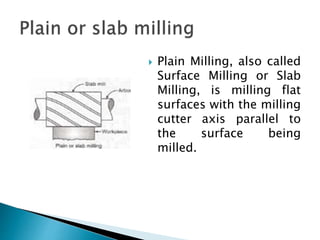
 Plain Milling, also called
Surface Milling or Slab
Milling, is milling flat
surfaces with the milling
cutter axis parallel to
the surface being
milled.
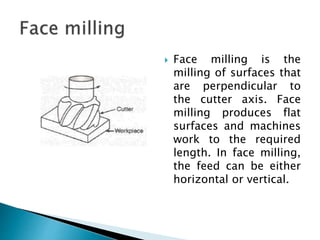
 Face milling is the
milling of surfaces that
are perpendicular to
the cutter axis. Face
milling produces flat
surfaces and machines
work to the required
length. In face milling,
the feed can be either
horizontal or vertical.
 A rotating cutting
tool having a
cylindrical shank with
teeth at the end,
used for machining
the faces and sides of
metal pieces and
other objects.
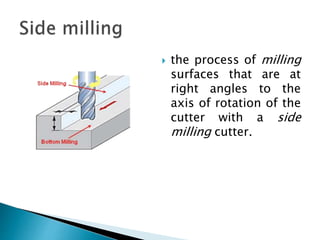
 the process of milling
surfaces that are at
right angles to the
axis of rotation of the
cutter with a side
milling cutter.
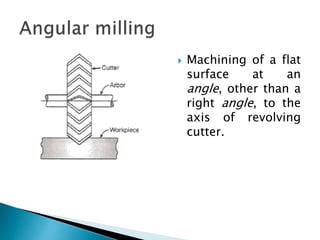
 Machining of a flat
surface at an
angle, other than a
right angle, to the
axis of revolving
cutter.
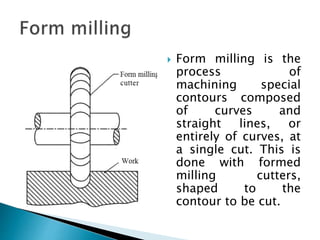
 Form milling is the
process of
machining special
contours composed
of curves and
straight lines, or
entirely of curves, at
a single cut. This is
done with formed
milling cutters,
shaped to the
contour to be cut.
 When two or more
parallel vertical
surfaces are
machined at a single
cut, the operation is
called straddle
milling
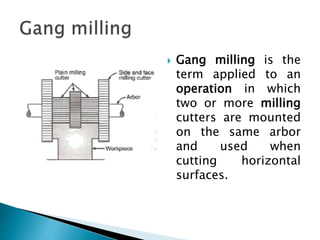
 Gang milling is the
term applied to an
operation in which
two or more milling
cutters are mounted
on the same arbor
and used when
cutting horizontal
surfaces.
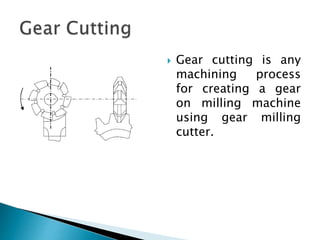
 Gear cutting is any
machining process
for creating a gear
on milling machine
using gear milling
cutter.

Milling cutters

  • 1.
  • 2.
     Milling isthe machining process of using rotary cutters to remove material from a work piece by advancing in a direction at an angle with the axis of the tool.  Milling cutters ◦ Milling cutters are cutting tools typically used in milling machines or machining centres to perform milling operations
  • 3.
     Plain orslab milling  Face milling  End milling  Side milling  Angular milling  Form milling  Straddle milling  Gang milling  Gear Cutting
  • 4.
     Plain Milling,also called Surface Milling or Slab Milling, is milling flat surfaces with the milling cutter axis parallel to the surface being milled.
  • 5.
     Face millingis the milling of surfaces that are perpendicular to the cutter axis. Face milling produces flat surfaces and machines work to the required length. In face milling, the feed can be either horizontal or vertical.
  • 6.
     A rotatingcutting tool having a cylindrical shank with teeth at the end, used for machining the faces and sides of metal pieces and other objects.
  • 7.
     the processof milling surfaces that are at right angles to the axis of rotation of the cutter with a side milling cutter.
  • 8.
     Machining ofa flat surface at an angle, other than a right angle, to the axis of revolving cutter.
  • 9.
     Form millingis the process of machining special contours composed of curves and straight lines, or entirely of curves, at a single cut. This is done with formed milling cutters, shaped to the contour to be cut.
  • 10.
     When twoor more parallel vertical surfaces are machined at a single cut, the operation is called straddle milling
  • 11.
     Gang millingis the term applied to an operation in which two or more milling cutters are mounted on the same arbor and used when cutting horizontal surfaces.
  • 12.
     Gear cuttingis any machining process for creating a gear on milling machine using gear milling cutter.