

MICROTEACHING
ASTHA K. PATEL
COMMUNITY HEALTH NURSING
Astha K. Patel
INTRODUCTION
• The term microteaching was coined for this method of
developing skills in 1963.
• Microteaching is a teacher training technique that help the
teacher trainee to master the teaching skills.
• It requires the teacher trainee :
• To teach single concept of content
• Teach for short time (5-20 minutes)
• Teach very small no. Of students. (5-10)
Astha K. Patel
MEANING
• The short lesson is recorded on an audio or video tape
recorder and trainee gets to hear & see himself
immediately after the lesson.
• The pupils who attained the lesson are asked to fill in
rating questionnaires evaluating the specific aspects of
lesson.
Astha K. Patel
DEFINITION
•Microteaching as a scaled down teaching
encounter in class size & class time. The no.
Of students is from 5-10 & the duration of
period ranges from 5-20 minutes.
Astha K. Patel
CHARACTERISTICS
• Microelements.
• Reduce the complexity of teaching situations in terms of :
• No. Of students to be taught
• Duration of lesson
• It reduce teaching skill & size of topic
• Focused on micro events.
• Microanalysis of the teaching process consists of analyzing the
minute details of teaching
Astha K. Patel
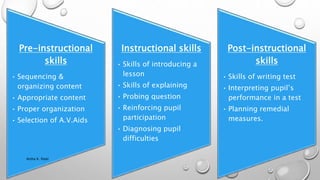
Pre-instructional
skills
• Sequencing &
organizing content
• Appropriate content
• Proper organization
• Selection of A.V.Aids
Instructional skills
• Skills of introducing a
lesson
• Skills of explaining
• Probing question
• Reinforcing pupil
participation
• Diagnosing pupil
difficulties
Post-instructional
skills
• Skills of writing test
• Interpreting pupil’s
performance in a test
• Planning remedial
measures.
Astha K. Patel
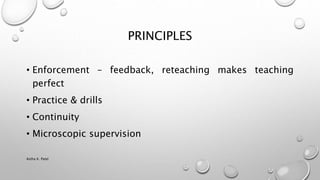
PRINCIPLES
• Enforcement – feedback, reteaching makes teaching
perfect
• Practice & drills
• Continuity
• Microscopic supervision
Astha K. Patel
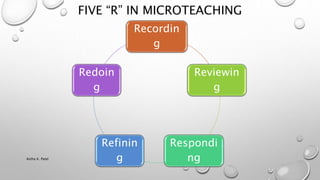
FIVE “R” IN MICROTEACHING
Recordin
g
Reviewin
g
Respondi
ng
Refinin
g
Redoin
g
Astha K. Patel
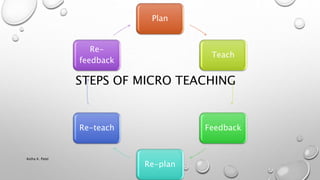
STEPS OF MICRO TEACHING
Plan
Teach
Feedback
Re-plan
Re-teach
Re-
feedback
Astha K. Patel
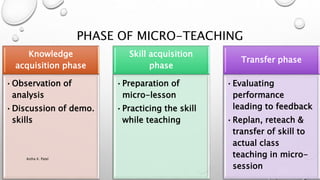
PHASE OF MICRO-TEACHING
Knowledge
acquisition phase
•Observation of
analysis
•Discussion of demo.
skills
Skill acquisition
phase
•Preparation of
micro-lesson
•Practicing the skill
while teaching
Transfer phase
•Evaluating
performance
leading to feedback
•Replan, reteach &
transfer of skill to
actual class
teaching in micro-
session
Astha K. Patel
ADVANTAGES
• Real teaching
• Superior performance
• Increased control of tactics
• Help in solving problem
• Effective teaching behavior
• Helps in developing teaching skills
• Different feedback
• Individualized teaching training
Astha K. Patel
DISADVANTAGES
• Limited to lecturing
• Minimum feedback
• Scope is narrow
• Required more skills
• Time consuming
Astha K. Patel

Microteaching.pptx

  • 1.
    MICROTEACHING ASTHA K. PATEL COMMUNITYHEALTH NURSING Astha K. Patel
  • 2.
    INTRODUCTION • The termmicroteaching was coined for this method of developing skills in 1963. • Microteaching is a teacher training technique that help the teacher trainee to master the teaching skills. • It requires the teacher trainee : • To teach single concept of content • Teach for short time (5-20 minutes) • Teach very small no. Of students. (5-10) Astha K. Patel
  • 3.
    MEANING • The shortlesson is recorded on an audio or video tape recorder and trainee gets to hear & see himself immediately after the lesson. • The pupils who attained the lesson are asked to fill in rating questionnaires evaluating the specific aspects of lesson. Astha K. Patel
  • 4.
    DEFINITION •Microteaching as ascaled down teaching encounter in class size & class time. The no. Of students is from 5-10 & the duration of period ranges from 5-20 minutes. Astha K. Patel
  • 5.
    CHARACTERISTICS • Microelements. • Reducethe complexity of teaching situations in terms of : • No. Of students to be taught • Duration of lesson • It reduce teaching skill & size of topic • Focused on micro events. • Microanalysis of the teaching process consists of analyzing the minute details of teaching Astha K. Patel
  • 6.
    Pre-instructional skills • Sequencing & organizingcontent • Appropriate content • Proper organization • Selection of A.V.Aids Instructional skills • Skills of introducing a lesson • Skills of explaining • Probing question • Reinforcing pupil participation • Diagnosing pupil difficulties Post-instructional skills • Skills of writing test • Interpreting pupil’s performance in a test • Planning remedial measures. Astha K. Patel
  • 7.
    PRINCIPLES • Enforcement –feedback, reteaching makes teaching perfect • Practice & drills • Continuity • Microscopic supervision Astha K. Patel
  • 8.
    FIVE “R” INMICROTEACHING Recordin g Reviewin g Respondi ng Refinin g Redoin g Astha K. Patel
  • 9.
    STEPS OF MICROTEACHING Plan Teach Feedback Re-plan Re-teach Re- feedback Astha K. Patel
  • 10.
    PHASE OF MICRO-TEACHING Knowledge acquisitionphase •Observation of analysis •Discussion of demo. skills Skill acquisition phase •Preparation of micro-lesson •Practicing the skill while teaching Transfer phase •Evaluating performance leading to feedback •Replan, reteach & transfer of skill to actual class teaching in micro- session Astha K. Patel
  • 11.
    ADVANTAGES • Real teaching •Superior performance • Increased control of tactics • Help in solving problem • Effective teaching behavior • Helps in developing teaching skills • Different feedback • Individualized teaching training Astha K. Patel
  • 12.
    DISADVANTAGES • Limited tolecturing • Minimum feedback • Scope is narrow • Required more skills • Time consuming Astha K. Patel