Preparation of Beverages
By – Astha K. Patel
ASTHA K. PATEL
• Beverages are drinks used for the purpose of
relieving thirst.
• All beverages contain water, which support
proper hydration.
• Many 100% fruit & vegetable juices are also a
good source of vitamin C, folate & Potassium,
while milk provides Calcium.
ASTHA K. PATEL
Nutritional Significance of Baverages
• Most beverages contain a great deal of water.
This does not add many nutrients to the diet, but
it does play an important role in the maintaining
body balance by preventing dehydration.
• Beverages are not usually consumed for their
food value, but many, particularly fruit drinks
contain high % of sugar therefore it provide
energy to the body.
• Fruit juices also provides vitamins & minerals.
ASTHA K. PATEL
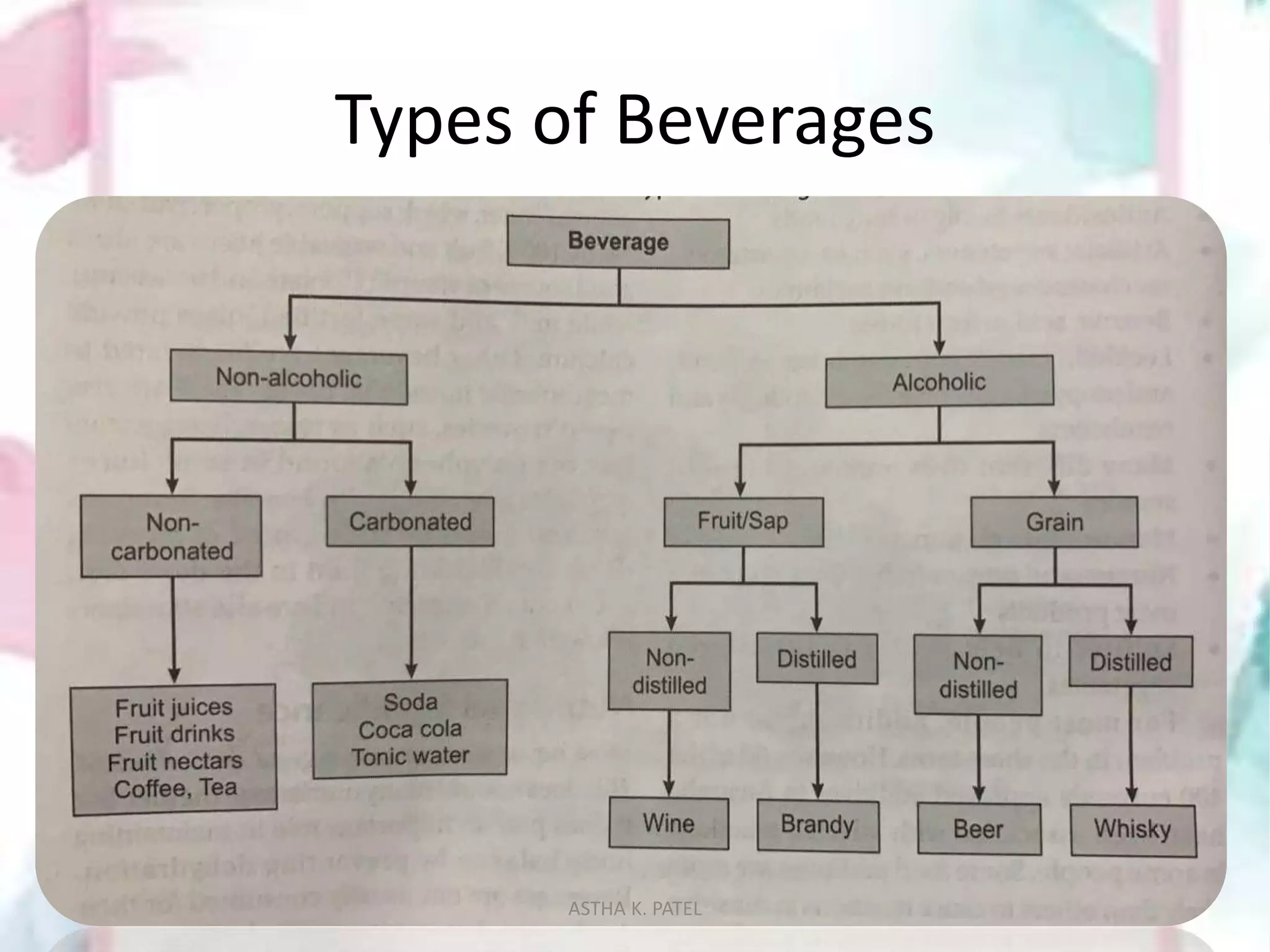
Types of Beverages
ASTHA K. PATEL
Non-alcoholic Bavereges
ASTHA K. PATEL
ASTHA K. PATEL
Tea
• Tea is stimulating & refreshing drink.
• The principles flavour components of tea are
1. Caffeine- provide stimulating effect
2. Tannin yielding compounds – provide colour
& taste
3. Small amount of essential oils- provides
aroma.
ASTHA K. PATEL
• Tea comes in many varieties including herbal,
caffeinated, iced, sweet, instant.
• Tea particularly Green & black are good
sources of flavonoids, which have antioxidant
properties.
ASTHA K. PATEL
Coffee
• It is prepared from the beans of the coffee
plant.
• Available in many variety including
caffeinated, decaffeinated, brewed, roasted,
instant, flavoured, iced etc.
ASTHA K. PATEL
Fruit beverages
• It is obtained by extracting the juice from the
fruits such as orange, grape, pineapple,
lemon, tomato etc.
• These juices are excellent sources of vitamins,
minerals & energy.
ASTHA K. PATEL
Milk beverages
• Milk beverages are prepared by the addition
of different variety of flavours like strawberry,
pista, & chocolate.
• They enhance the flavour of milk & thereby
increase consumption of milk specially in
young children.
ASTHA K. PATEL
• Milk is available in many varieties including
whole milk, 2% milk, 1% milk, skim milk,
flavoured milk, powdered, condensed milk.
• Milk is excellent source of calcium, vit. D,
potassium, vit. B12, riboflavin, phosphorus &
protein.
ASTHA K. PATEL
Soy beverages
• Soy beverages contains any nutrients including
protein, CHO., potassium, iron, phosphorus.
ASTHA K. PATEL
Carbonated Non- Alchoholic Beverages
• These are generallyy sweeetened, flavoured,
& colored.
• Contain 92% of water & 8-14 % of sugar.
• Sacchrin is used as artificial sweetner.
• These provides only calories no nutrients.
ASTHA K. PATEL
• Phosphoric acid, citric acid, fumaric acid &
tartaric acid which are added to enhance the
flavour & make drink acidic.
• It is not recommended to patient with acidity
& stomach ulcer.
ASTHA K. PATEL
ASTHA K. PATEL

Preparation of beverages

  • 1.
    Preparation of Beverages By– Astha K. Patel ASTHA K. PATEL
  • 2.
    • Beverages aredrinks used for the purpose of relieving thirst. • All beverages contain water, which support proper hydration. • Many 100% fruit & vegetable juices are also a good source of vitamin C, folate & Potassium, while milk provides Calcium. ASTHA K. PATEL
  • 3.
    Nutritional Significance ofBaverages • Most beverages contain a great deal of water. This does not add many nutrients to the diet, but it does play an important role in the maintaining body balance by preventing dehydration. • Beverages are not usually consumed for their food value, but many, particularly fruit drinks contain high % of sugar therefore it provide energy to the body. • Fruit juices also provides vitamins & minerals. ASTHA K. PATEL
  • 4.
  • 5.
  • 6.
  • 7.
    Tea • Tea isstimulating & refreshing drink. • The principles flavour components of tea are 1. Caffeine- provide stimulating effect 2. Tannin yielding compounds – provide colour & taste 3. Small amount of essential oils- provides aroma. ASTHA K. PATEL
  • 8.
    • Tea comesin many varieties including herbal, caffeinated, iced, sweet, instant. • Tea particularly Green & black are good sources of flavonoids, which have antioxidant properties. ASTHA K. PATEL
  • 9.
    Coffee • It isprepared from the beans of the coffee plant. • Available in many variety including caffeinated, decaffeinated, brewed, roasted, instant, flavoured, iced etc. ASTHA K. PATEL
  • 10.
    Fruit beverages • Itis obtained by extracting the juice from the fruits such as orange, grape, pineapple, lemon, tomato etc. • These juices are excellent sources of vitamins, minerals & energy. ASTHA K. PATEL
  • 11.
    Milk beverages • Milkbeverages are prepared by the addition of different variety of flavours like strawberry, pista, & chocolate. • They enhance the flavour of milk & thereby increase consumption of milk specially in young children. ASTHA K. PATEL
  • 12.
    • Milk isavailable in many varieties including whole milk, 2% milk, 1% milk, skim milk, flavoured milk, powdered, condensed milk. • Milk is excellent source of calcium, vit. D, potassium, vit. B12, riboflavin, phosphorus & protein. ASTHA K. PATEL
  • 13.
    Soy beverages • Soybeverages contains any nutrients including protein, CHO., potassium, iron, phosphorus. ASTHA K. PATEL
  • 14.
    Carbonated Non- AlchoholicBeverages • These are generallyy sweeetened, flavoured, & colored. • Contain 92% of water & 8-14 % of sugar. • Sacchrin is used as artificial sweetner. • These provides only calories no nutrients. ASTHA K. PATEL
  • 15.
    • Phosphoric acid,citric acid, fumaric acid & tartaric acid which are added to enhance the flavour & make drink acidic. • It is not recommended to patient with acidity & stomach ulcer. ASTHA K. PATEL
  • 16.