

Quality Control-Microbiology
Training on hygiene & finger dab test
                       Sreenath.S
                   Site Microbiologist
                                         1
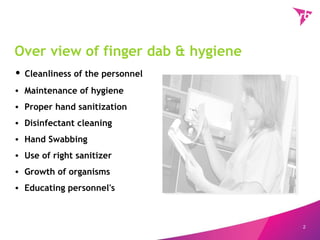
Over view of finger dab & hygiene
• Cleanliness of the personnel
• Maintenance of hygiene
• Proper hand sanitization
• Disinfectant cleaning
• Hand Swabbing
• Use of right sanitizer
• Growth of organisms
• Educating personnel's


                                    2
Why Is Hand Hygiene Important?
Hands are the most common mode
     of pathogen transmission

Hand washing is an extremely important step

   Hand washing significantly removes the
          bacterial flora on the skin

 Hand washing protects you and your patient
   from the bacterial flora (from each other)
         from becoming skin residents


                                                3
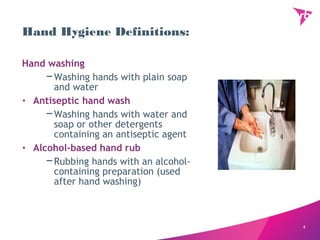
Hand Hygiene Definitions:

Hand washing
     − Washing hands with plain soap
       and water
• Antiseptic hand wash

     − Washing hands with water and
       soap or other detergents
       containing an antiseptic agent
• Alcohol-based hand rub

     − Rubbing hands with an alcohol-
       containing preparation (used
       after hand washing)


                                        4
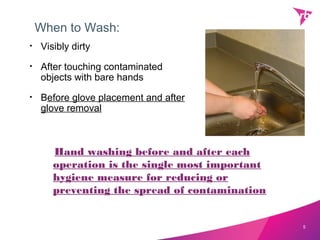
When to Wash:
•   Visibly dirty
•   After touching contaminated
    objects with bare hands
•   Before glove placement and after
    glove removal


       Hand washing before and after each
       operation is the single most important
       hygiene measure for reducing or
       preventing the spread of contamination


                                                5
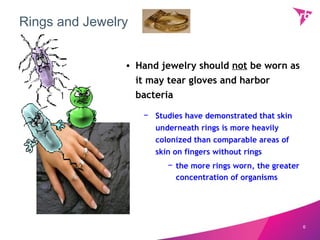
Rings and Jewelry


                • Hand jewelry should not be worn as
                  it may tear gloves and harbor
                  bacteria

                    − Studies have demonstrated that skin
                      underneath rings is more heavily
                      colonized than comparable areas of
                      skin on fingers without rings
                          − the more rings worn, the greater
                            concentration of organisms


                                                               6
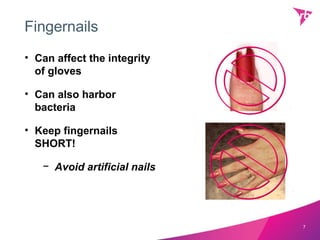
Fingernails
• Can affect the integrity
  of gloves

• Can also harbor
  bacteria

• Keep fingernails
  SHORT!

   − Avoid artificial nails


                              7
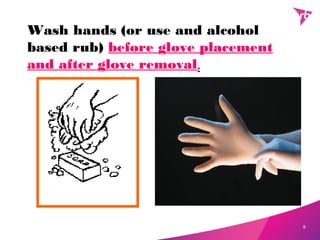
Wash hands (or use and alcohol
based rub) before glove placement
and after glove removal.


                                    8
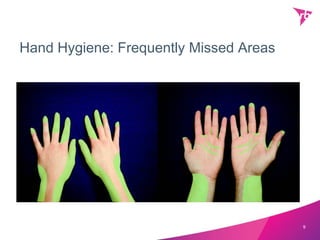
Hand Hygiene: Frequently Missed Areas


                                        9
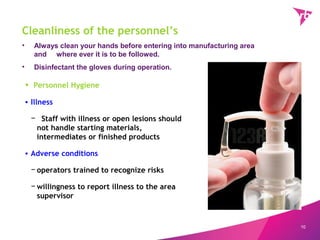
Cleanliness of the personnel’s
•   Always clean your hands before entering into manufacturing area
    and where ever it is to be followed.
•   Disinfectant the gloves during operation.

 • Personnel Hygiene
 • Illness

    − Staff with illness or open lesions should
     not handle starting materials,
     intermediates or finished products

 • Adverse conditions

    − operators trained to recognize risks

    − willingness to report illness to the area
      supervisor


                                                                      10
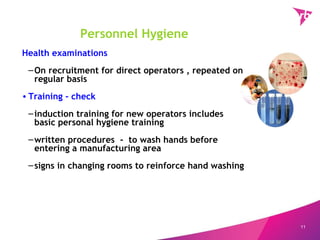
Personnel Hygiene
Health examinations
 – On recruitment for direct operators , repeated on
   regular basis
• Training - check
 – induction training for new operators includes
   basic personal hygiene training
 – written procedures - to wash hands before
   entering a manufacturing area
 – signs in changing rooms to reinforce hand washing


                                                       11
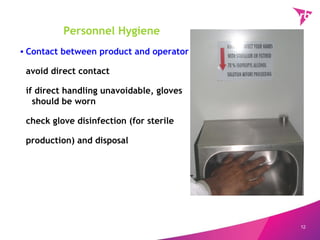
Personnel Hygiene
• Contact between product and operator

 avoid direct contact

 if direct handling unavoidable, gloves
   should be worn

 check glove disinfection (for sterile

 production) and disposal


                                          12
Personnel Hygiene
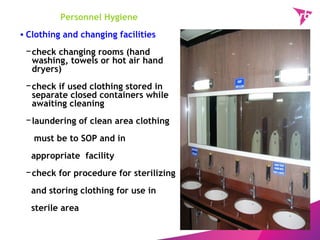
• Clothing and changing facilities
 − check changing rooms (hand
   washing, towels or hot air hand
   dryers)
 − check if used clothing stored in
   separate closed containers while
   awaiting cleaning
 − laundering of clean area clothing

   must be to SOP and in
  appropriate facility
 − check for procedure for sterilizing

  and storing clothing for use in
  sterile area
                                         13
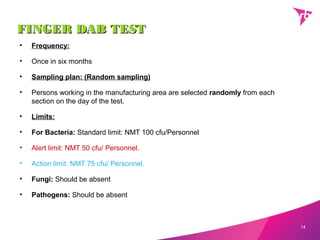
FINGER DAB TEST
•   Frequency:

•   Once in six months

•   Sampling plan: (Random sampling)

•   Persons working in the manufacturing area are selected randomly from each
    section on the day of the test.

•   Limits:

•   For Bacteria: Standard limit: NMT 100 cfu/Personnel

•   Alert limit: NMT 50 cfu/ Personnel.

•   Action limit: NMT 75 cfu/ Personnel.

•   Fungi: Should be absent

•   Pathogens: Should be absent


                                                                                14
FINGER DAB TEST DEMO


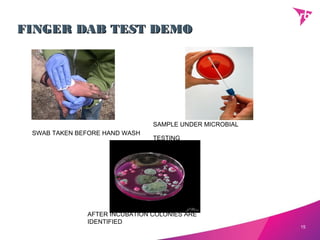
                               SAMPLE UNDER MICROBIAL
 SWAB TAKEN BEFORE HAND WASH
                               TESTING


              AFTER INCUBATION COLONIES ARE
              IDENTIFIED
                                                        15
FINGER DAB TEST DEMO


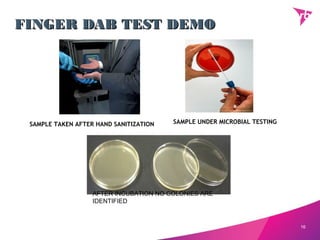
 SAMPLE TAKEN AFTER HAND SANITIZATION   SAMPLE UNDER MICROBIAL TESTING


                   AFTER INCUBATION NO COLONIES ARE
                   IDENTIFIED


                                                                         16
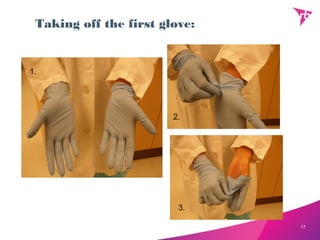
Taking off the first glove:


1.


                        2.


                         3.

                               17
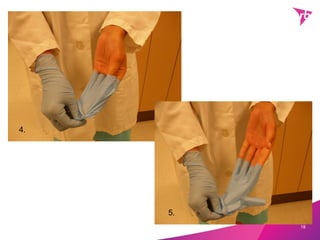
4.


     5.
          18
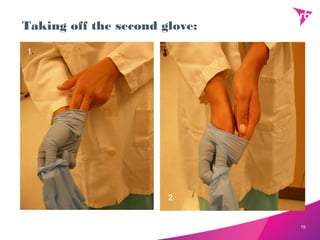
Taking off the second glove:
1.


                       2.


                               19
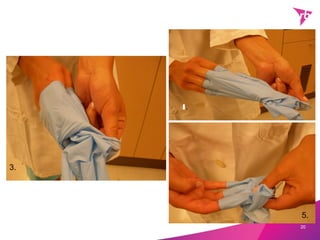
4.


3.


          5.
          20
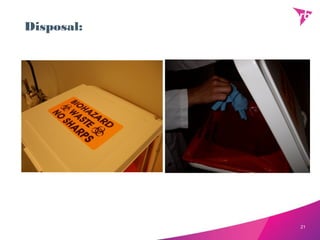
Disposal:


            21
THANK You………


     Any Query ????????


                          22

Microbiology training module--finger dab& higeine

  • 1.
    Quality Control-Microbiology Training onhygiene & finger dab test Sreenath.S Site Microbiologist 1
  • 2.
    Over view offinger dab & hygiene • Cleanliness of the personnel • Maintenance of hygiene • Proper hand sanitization • Disinfectant cleaning • Hand Swabbing • Use of right sanitizer • Growth of organisms • Educating personnel's 2
  • 3.
    Why Is HandHygiene Important? Hands are the most common mode of pathogen transmission Hand washing is an extremely important step Hand washing significantly removes the bacterial flora on the skin Hand washing protects you and your patient from the bacterial flora (from each other) from becoming skin residents 3
  • 4.
    Hand Hygiene Definitions: Handwashing − Washing hands with plain soap and water • Antiseptic hand wash − Washing hands with water and soap or other detergents containing an antiseptic agent • Alcohol-based hand rub − Rubbing hands with an alcohol- containing preparation (used after hand washing) 4
  • 5.
    When to Wash: • Visibly dirty • After touching contaminated objects with bare hands • Before glove placement and after glove removal Hand washing before and after each operation is the single most important hygiene measure for reducing or preventing the spread of contamination 5
  • 6.
    Rings and Jewelry • Hand jewelry should not be worn as it may tear gloves and harbor bacteria − Studies have demonstrated that skin underneath rings is more heavily colonized than comparable areas of skin on fingers without rings − the more rings worn, the greater concentration of organisms 6
  • 7.
    Fingernails • Can affectthe integrity of gloves • Can also harbor bacteria • Keep fingernails SHORT! − Avoid artificial nails 7
  • 8.
    Wash hands (oruse and alcohol based rub) before glove placement and after glove removal. 8
  • 9.
  • 10.
    Cleanliness of thepersonnel’s • Always clean your hands before entering into manufacturing area and where ever it is to be followed. • Disinfectant the gloves during operation. • Personnel Hygiene • Illness − Staff with illness or open lesions should not handle starting materials, intermediates or finished products • Adverse conditions − operators trained to recognize risks − willingness to report illness to the area supervisor 10
  • 11.
    Personnel Hygiene Health examinations – On recruitment for direct operators , repeated on regular basis • Training - check – induction training for new operators includes basic personal hygiene training – written procedures - to wash hands before entering a manufacturing area – signs in changing rooms to reinforce hand washing 11
  • 12.
    Personnel Hygiene • Contactbetween product and operator avoid direct contact if direct handling unavoidable, gloves should be worn check glove disinfection (for sterile production) and disposal 12
  • 13.
    Personnel Hygiene • Clothingand changing facilities − check changing rooms (hand washing, towels or hot air hand dryers) − check if used clothing stored in separate closed containers while awaiting cleaning − laundering of clean area clothing must be to SOP and in appropriate facility − check for procedure for sterilizing and storing clothing for use in sterile area 13
  • 14.
    FINGER DAB TEST • Frequency: • Once in six months • Sampling plan: (Random sampling) • Persons working in the manufacturing area are selected randomly from each section on the day of the test. • Limits: • For Bacteria: Standard limit: NMT 100 cfu/Personnel • Alert limit: NMT 50 cfu/ Personnel. • Action limit: NMT 75 cfu/ Personnel. • Fungi: Should be absent • Pathogens: Should be absent 14
  • 15.
    FINGER DAB TESTDEMO SAMPLE UNDER MICROBIAL SWAB TAKEN BEFORE HAND WASH TESTING AFTER INCUBATION COLONIES ARE IDENTIFIED 15
  • 16.
    FINGER DAB TESTDEMO SAMPLE TAKEN AFTER HAND SANITIZATION SAMPLE UNDER MICROBIAL TESTING AFTER INCUBATION NO COLONIES ARE IDENTIFIED 16
  • 17.
    Taking off thefirst glove: 1. 2. 3. 17
  • 18.
    4. 5. 18
  • 19.
    Taking off thesecond glove: 1. 2. 19
  • 20.
    4. 3. 5. 20
  • 21.
  • 22.
    THANK You……… Any Query ???????? 22