BLOOD CULTURING
using automation
Dr.T.V.Rao MD
Dr.T.V.Rao MD 12/9/2016
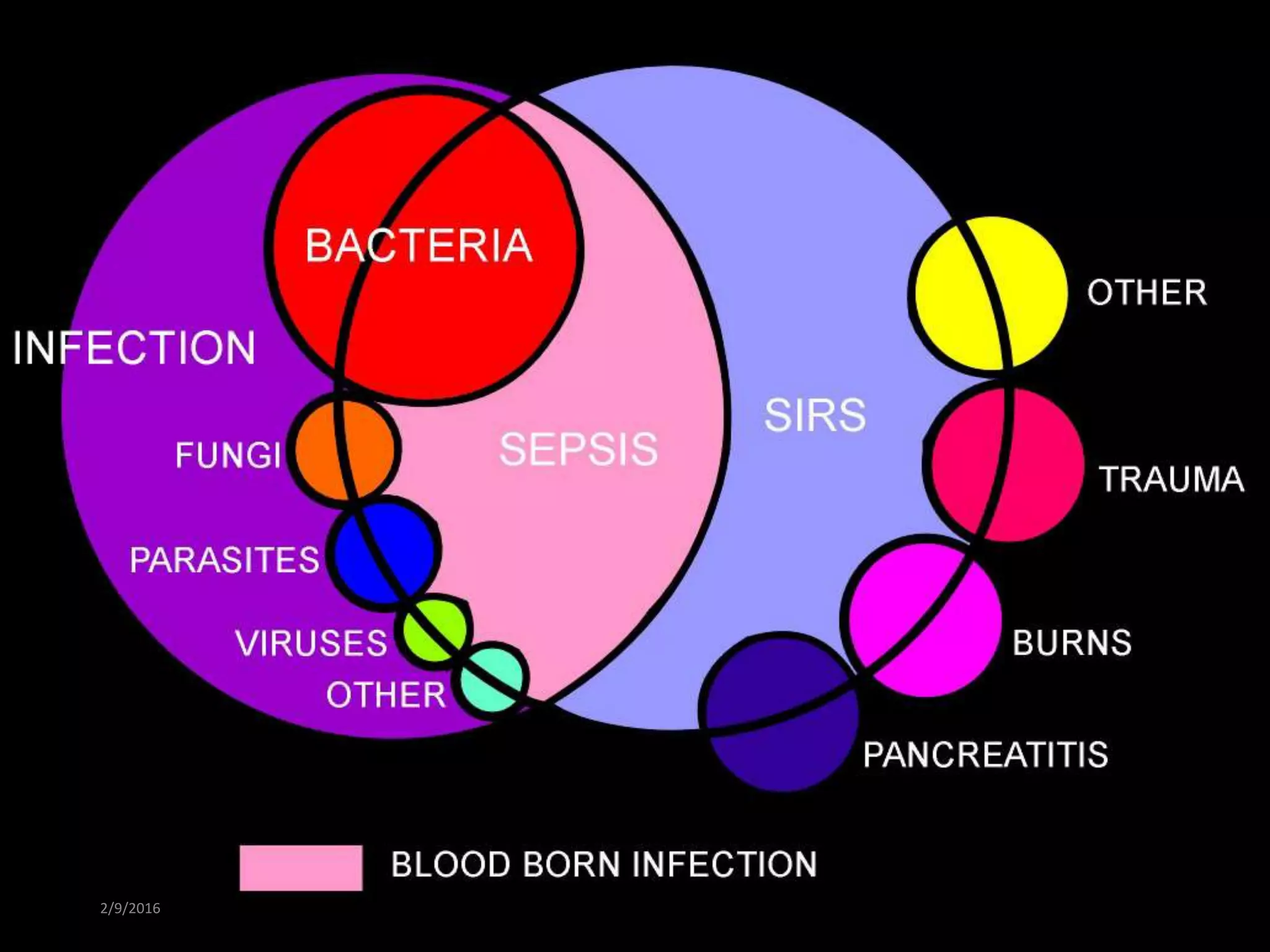
Need for Blood Culture?
No microbiological test is more essential to the
clinician than the blood culture. The finding of
pathogenic microorganisms in a patient’s
bloodstream is of great importance in terms of
diagnosis, prognosis, and therapy.”
- L. Barth Reller, Clin. Infect. Diseases, 1996
Dr.T.V.Rao MD 22/9/2016
Dr.T.V.Rao MD 32/9/2016
Sources of Bacteremia Spread

•Pericarditis and

Peritonitis
•Pneumonias
•Pressure sores
•Prosthetic medical
devices
•Total hip replacement
•Skeletal system
•Skin and soft tissue
Dr.T.V.Rao MD 42/9/2016
Blood culturing most
important and life saving
Investigation
Needs optimal Methods for Diagnosis
of Blood Borne Pathogens
Dr.T.V.Rao MD 52/9/2016
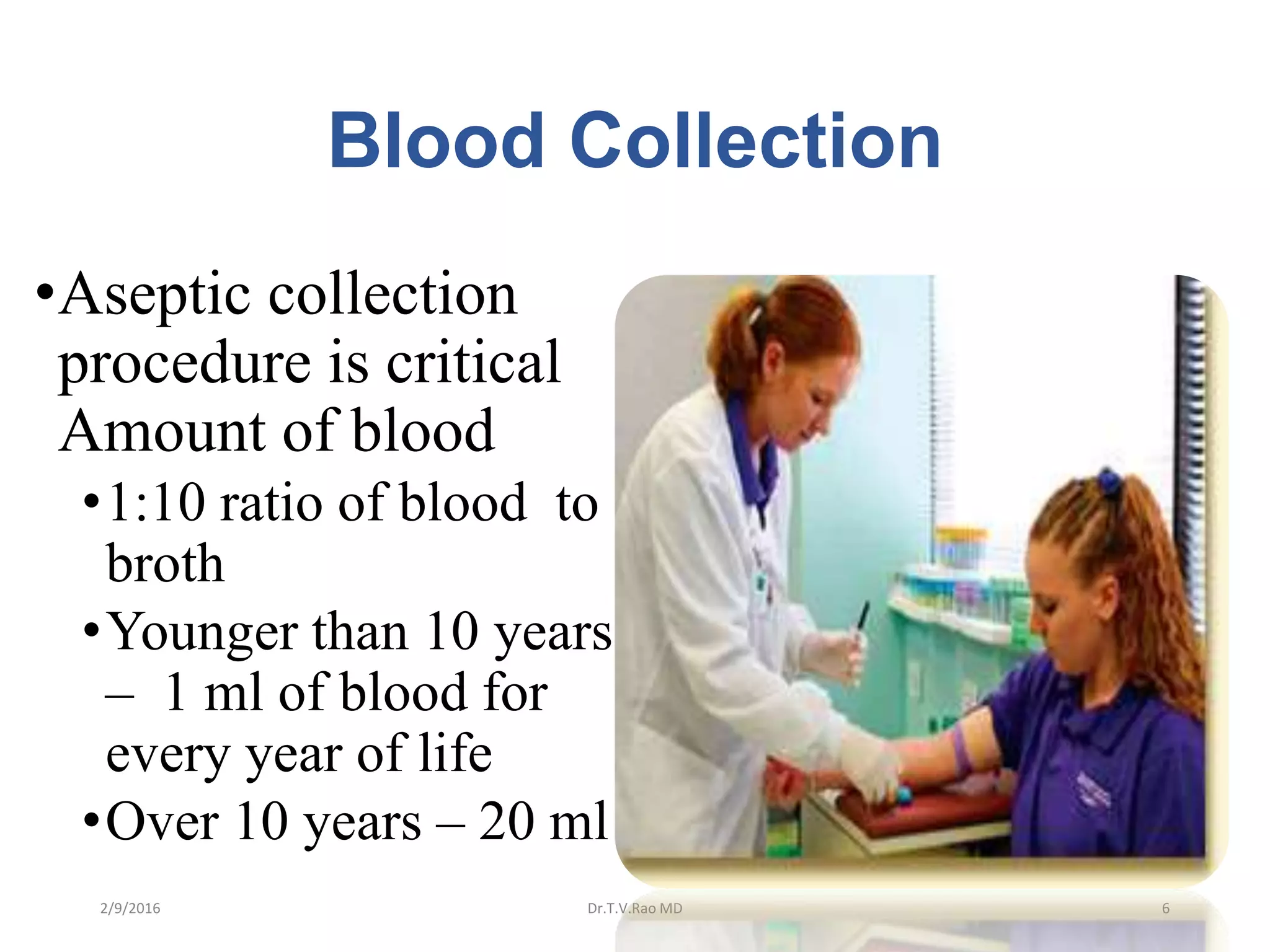
Blood Collection
•Aseptic collection
procedure is critical
Amount of blood
•1:10 ratio of blood to
broth
•Younger than 10 years
– 1 ml of blood for
every year of life
•Over 10 years – 20 ml
Dr.T.V.Rao MD 62/9/2016
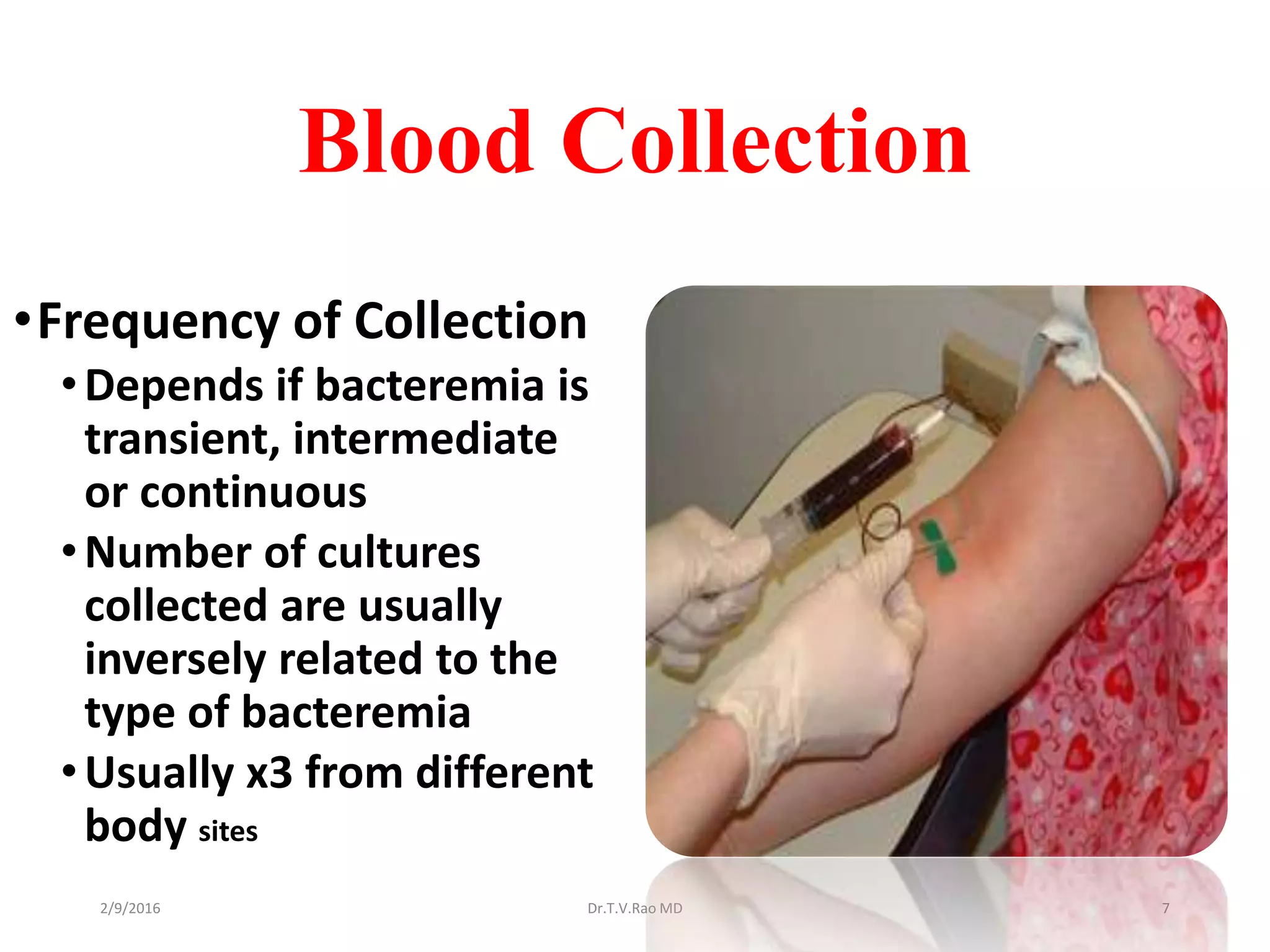
Blood Collection
•Frequency of Collection
•Depends if bacteremia is
transient, intermediate
or continuous
•Number of cultures
collected are usually
inversely related to the
type of bacteremia
•Usually x3 from different
body sites
Dr.T.V.Rao MD 72/9/2016
Venipuncture
• Venipuncture is the process of obtaining
intravenous access for the purpose of intravenous
therapy or obtaining a sample of venous blood.
This procedure is performed by medical
laboratory scientists, medical practitioners, some
EMTs, paramedics phlebotomists and other
nursing staff. Venipuncture is one of the most
routinely performed invasive procedures and is
carried out for two reasons, to obtain blood for
diagnostic purposes or to monitor levels of blood
components (Lavery & Ingram 2005).
Dr.T.V.Rao MD 82/9/2016
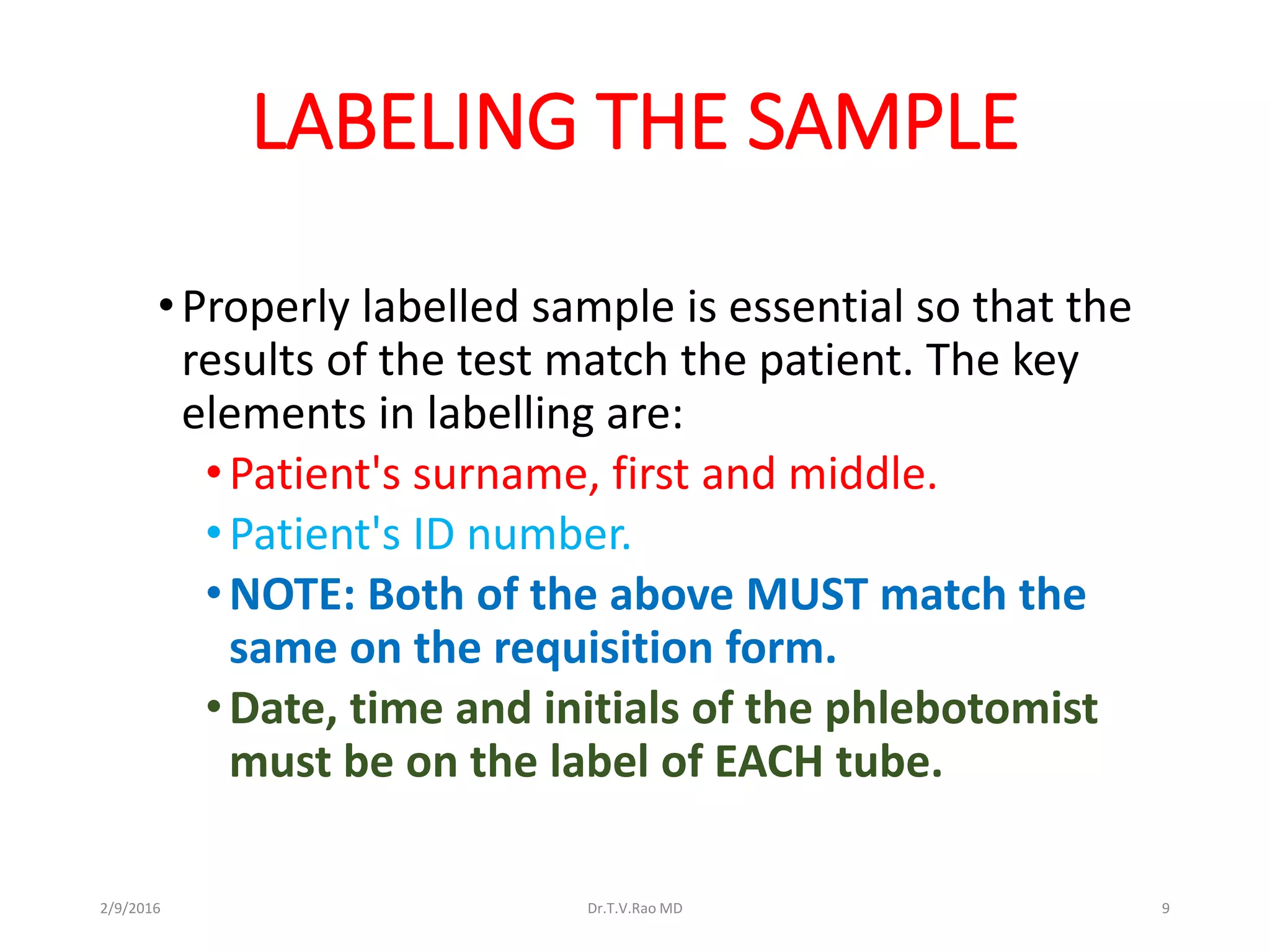
LABELING THE SAMPLE
•Properly labelled sample is essential so that the
results of the test match the patient. The key
elements in labelling are:
•Patient's surname, first and middle.
•Patient's ID number.
•NOTE: Both of the above MUST match the
same on the requisition form.
•Date, time and initials of the phlebotomist
must be on the label of EACH tube.
Dr.T.V.Rao MD 92/9/2016
Principles for Collection
•Gloves will be worn in accordance with standard
precautions.
••Appropriate verification of the patient's identity,
by means of an armband or area specific
procedure, will occur before the specimen
collection.
••Cultures should be drawn before administration
of antibiotics, if possible. ???
•• blood cultures should be drawn from lines, but
should be drawn viavenipuncture.
Dr.T.V.Rao MD 102/9/2016
The requisitions form should be completely filled out,
and the requisition must indicate the tests ordered.
Dr.T.V.Rao MD 112/9/2016
Self
Protection
A few ways to make sure your
role in the collection process is
carried out with efficiency,
orderliness and safety
Dr.T.V.Rao MD 122/9/2016
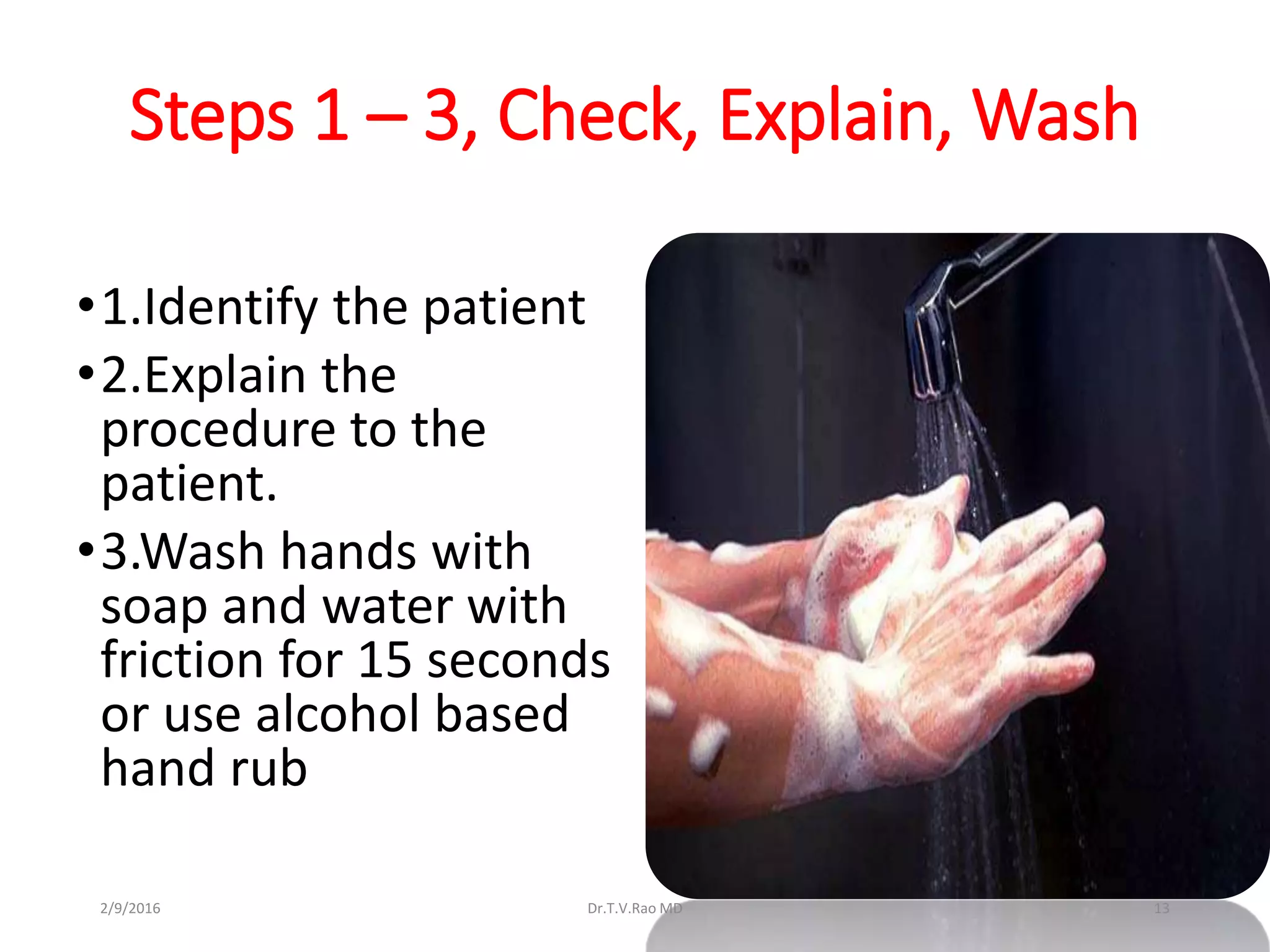
Steps 1 – 3, Check, Explain, Wash
•1.Identify the patient
•2.Explain the
procedure to the
patient.
•3.Wash hands with
soap and water with
friction for 15 seconds
or use alcohol based
hand rub
Dr.T.V.Rao MD 132/9/2016
Materials
• Chlorhexidine swabs (1-2 packages)
• Alcohol swabs
• Blood culture bottles (2 bottles per set)
• 2 syringes (adult: 20 cc, paediatric: 5 cc)
• 2 needles (adult: 22 gauge or preferably larger butterfly or
standard needle; pediatric: 25 or 23 gauge butterfly or standard
needle)
• Gloves (sterile &nonsterile)
• Tourniquet
• Sterile gauze pad
• Adhesive strip or tape
• Self-sticking patient labels
• Plastic zip lock specimen bags
Dr.T.V.Rao MD 142/9/2016
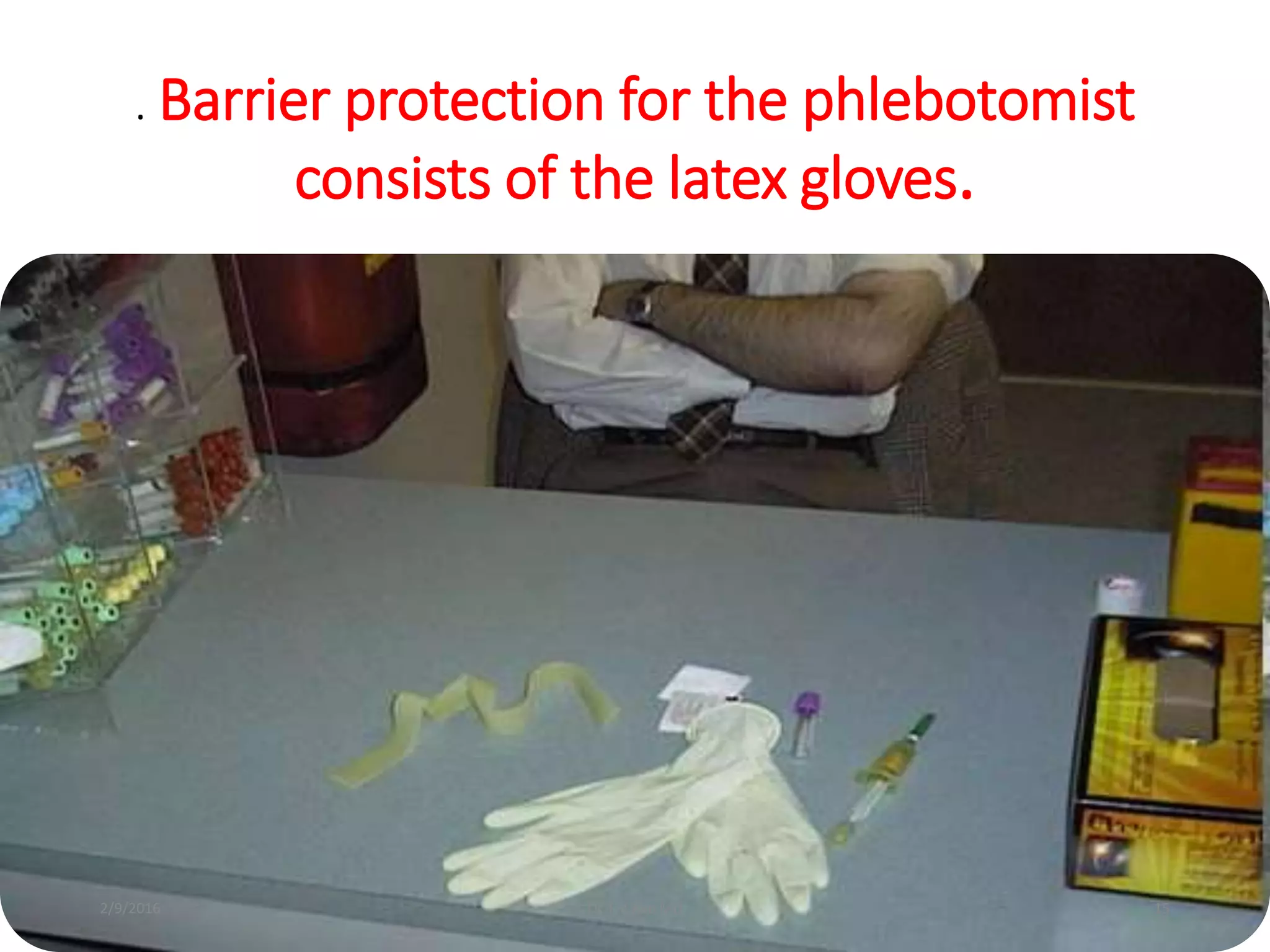
. Barrier protection for the phlebotomist
consists of the latex gloves.
Dr.T.V.Rao MD 152/9/2016
Obtaining Blood
• Locate the vein
• Prep kit
• Alcohol 5 sec. Dry 30-60 sec ( resource poor conditions )
• Ideal to collect with alcohol swabs containing 2% Chlorhexidine and
70% isopropyl alcohol
• Remove caps, clean with alcohol
• Put on gloves
• Without palpating, draw 20 ml and put 10 in anaerobic and 10 in
aerobic bottle
• Dispose of syringe in sharps container
• Label bottles and send to lab
Dr.T.V.Rao MD 162/9/2016
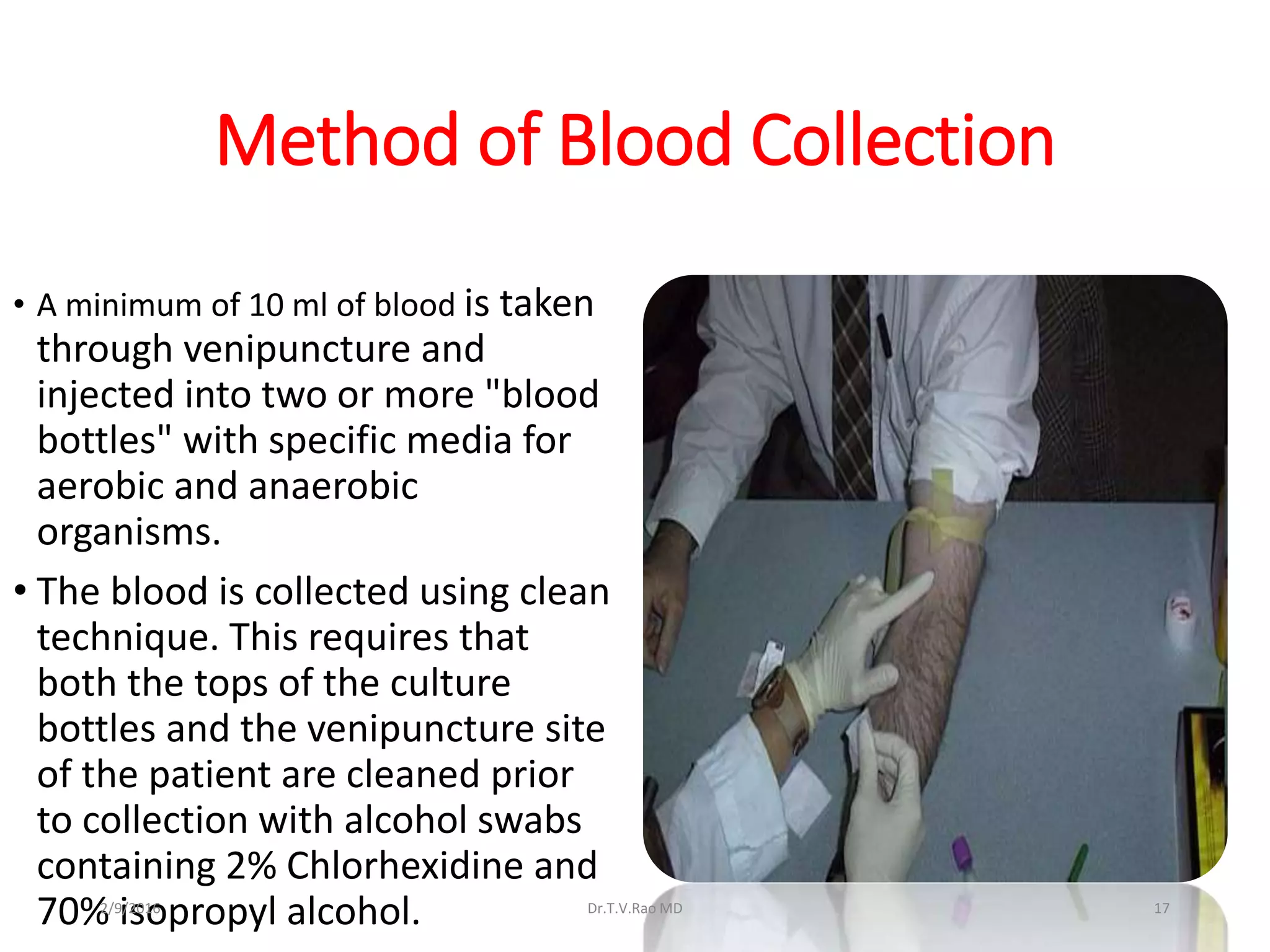
Method of Blood Collection
• A minimum of 10 ml of blood is taken
through venipuncture and
injected into two or more "blood
bottles" with specific media for
aerobic and anaerobic
organisms.
• The blood is collected using clean
technique. This requires that
both the tops of the culture
bottles and the venipuncture site
of the patient are cleaned prior
to collection with alcohol swabs
containing 2% Chlorhexidine and
70% isopropyl alcohol. Dr.T.V.Rao MD 172/9/2016
The area of skin is cleaned with a
disinfectant, or an alcohol swab.
• Using sterile gloves, do not
wipe away the surgical
solution, touch the
puncture site, or in any
way compromise the
sterile process. It is vital
that the procedure is
performed in as sterile a
manner as possible as the
persistent presence of skin
commensals in blood
cultures could indicate
endocarditis but they are
most often found asDr.T.V.Rao MD 182/9/2016
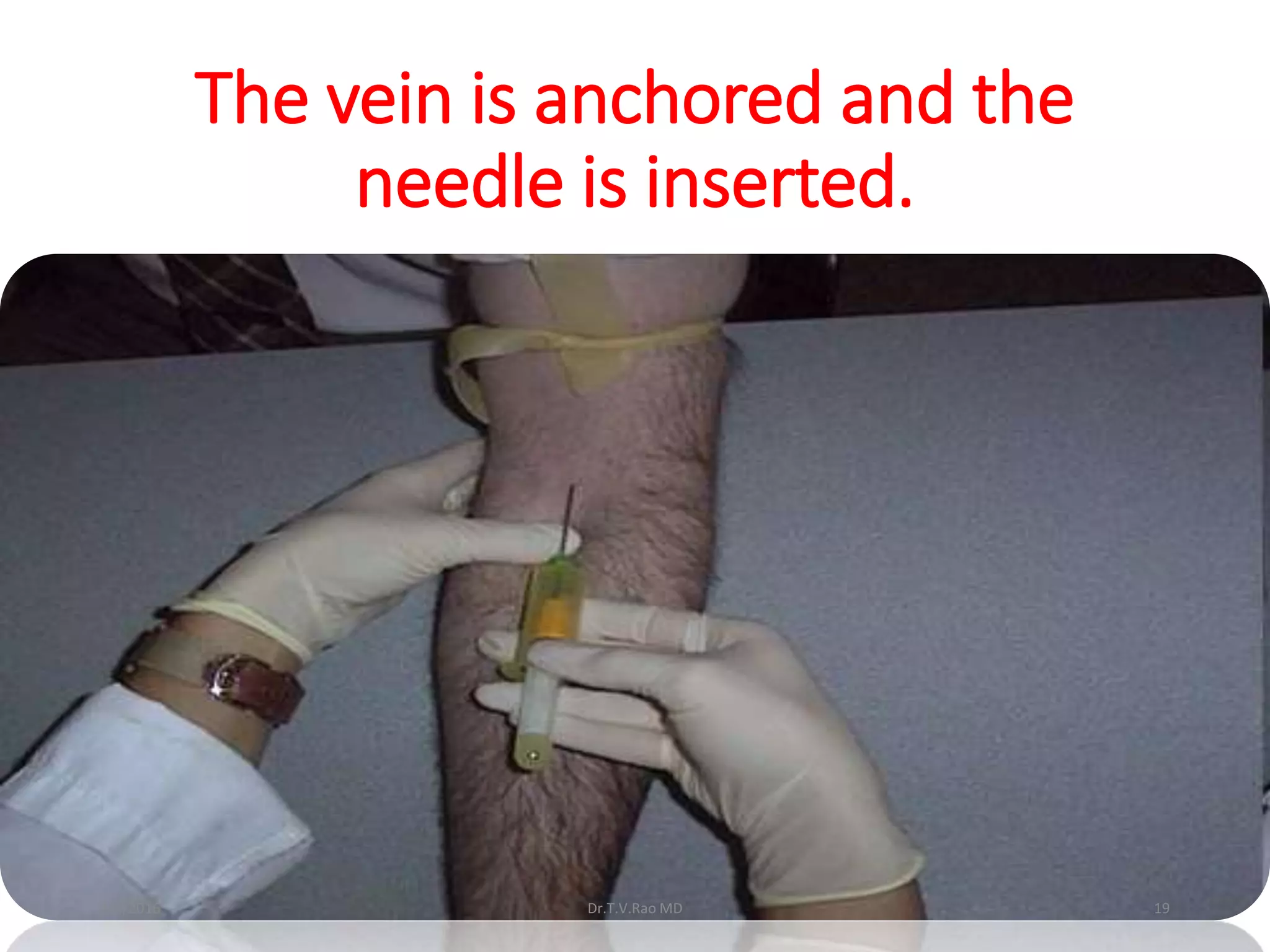
The vein is anchored and the
needle is inserted.
Dr.T.V.Rao MD 192/9/2016
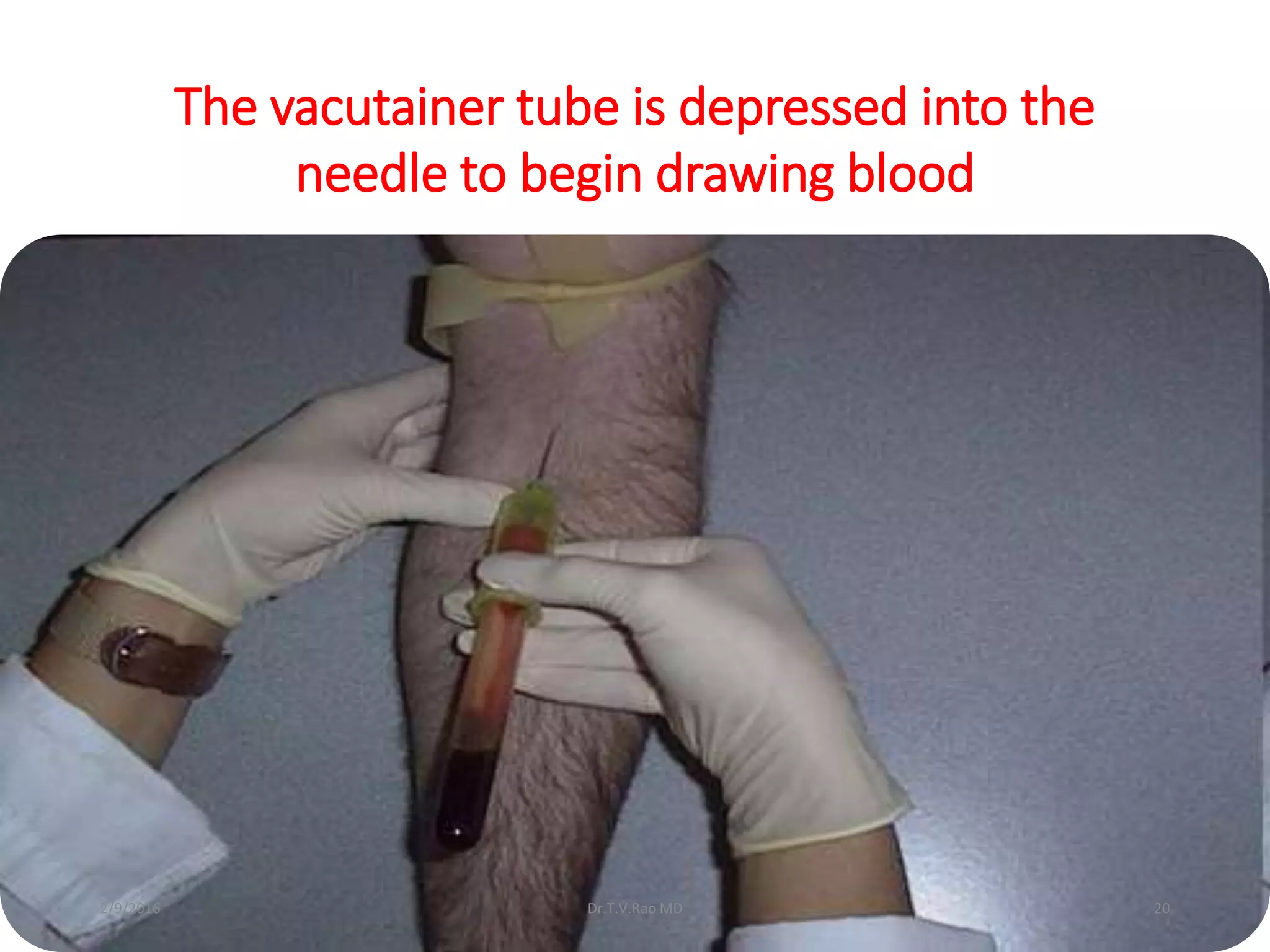
The vacutainer tube is depressed into the
needle to begin drawing blood
Dr.T.V.Rao MD 202/9/2016
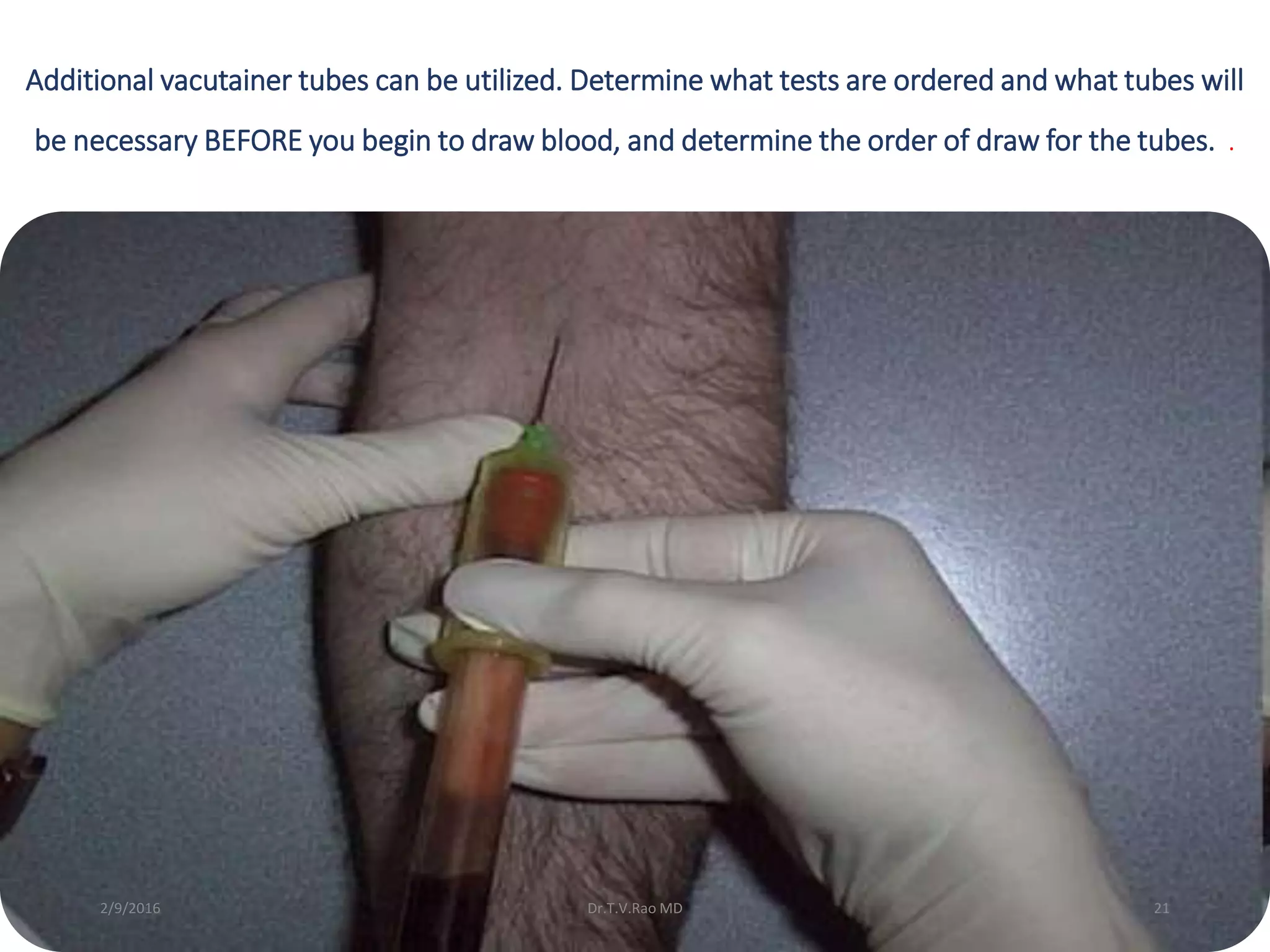
Additional vacutainer tubes can be utilized. Determine what tests are ordered and what tubes will
be necessary BEFORE you begin to draw blood, and determine the order of draw for the tubes. .
Dr.T.V.Rao MD 212/9/2016
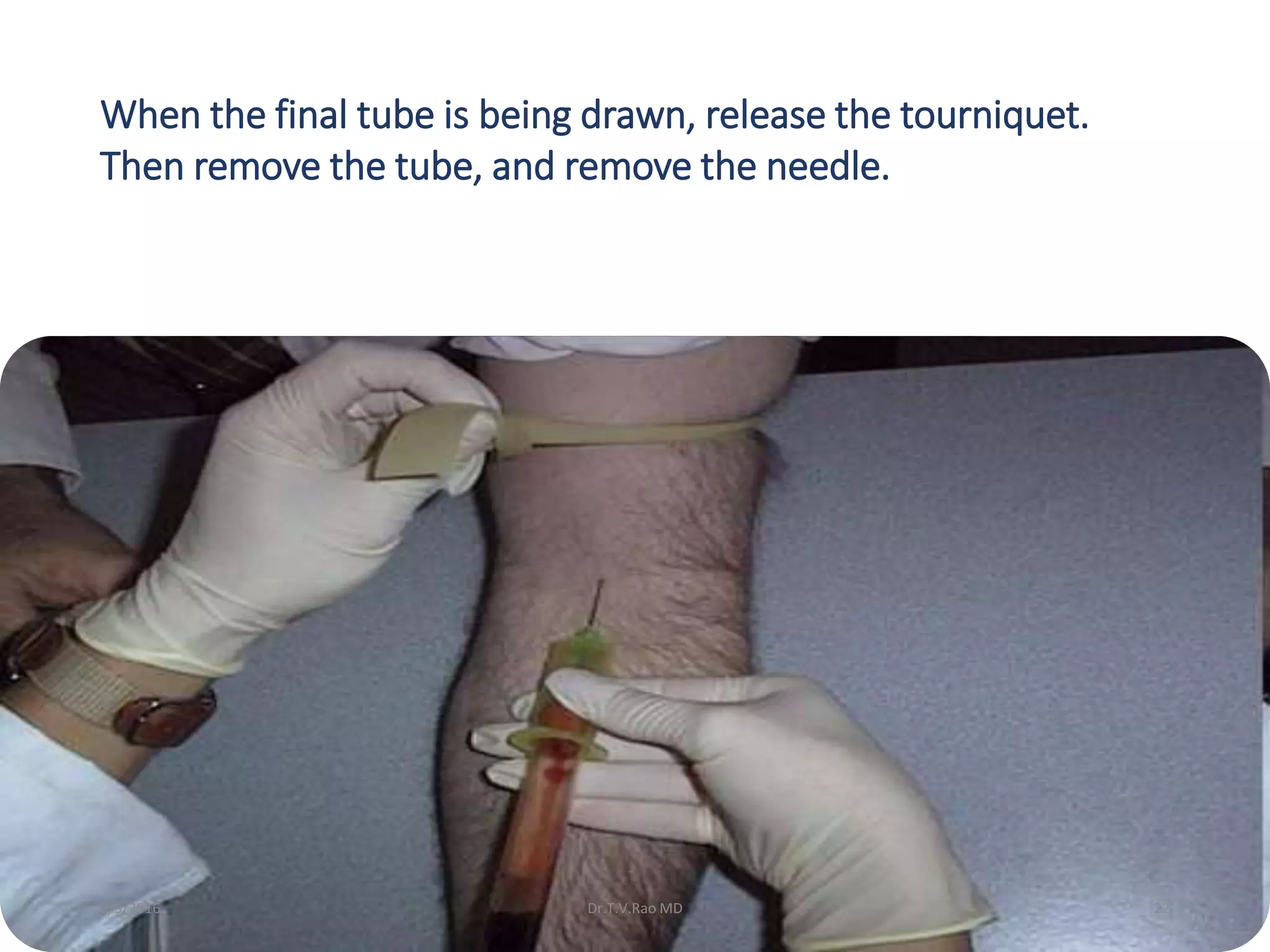
When the final tube is being drawn, release the tourniquet.
Then remove the tube, and remove the needle.
Dr.T.V.Rao MD 222/9/2016
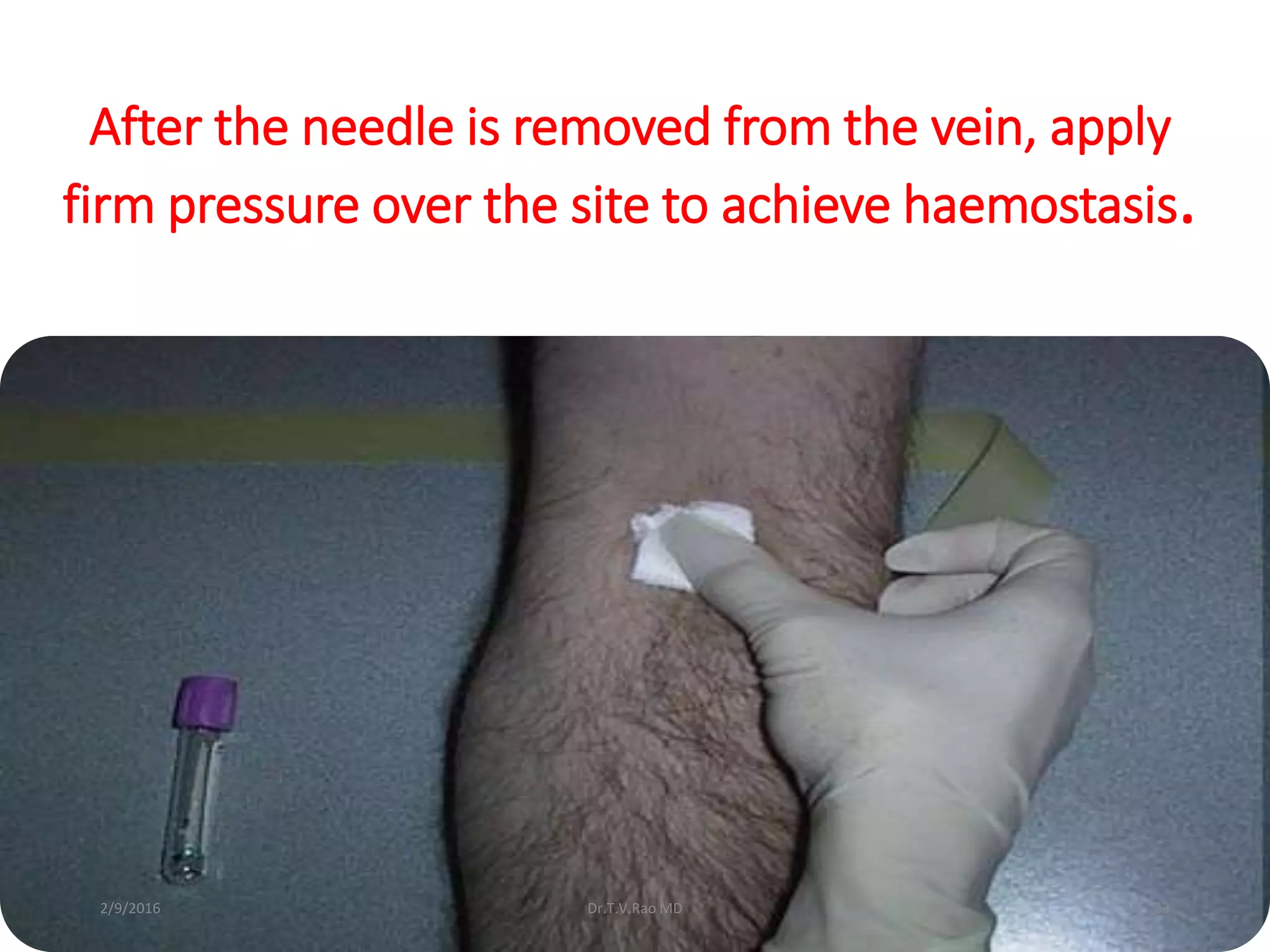
After the needle is removed from the vein, apply
firm pressure over the site to achieve haemostasis.
Dr.T.V.Rao MD 232/9/2016
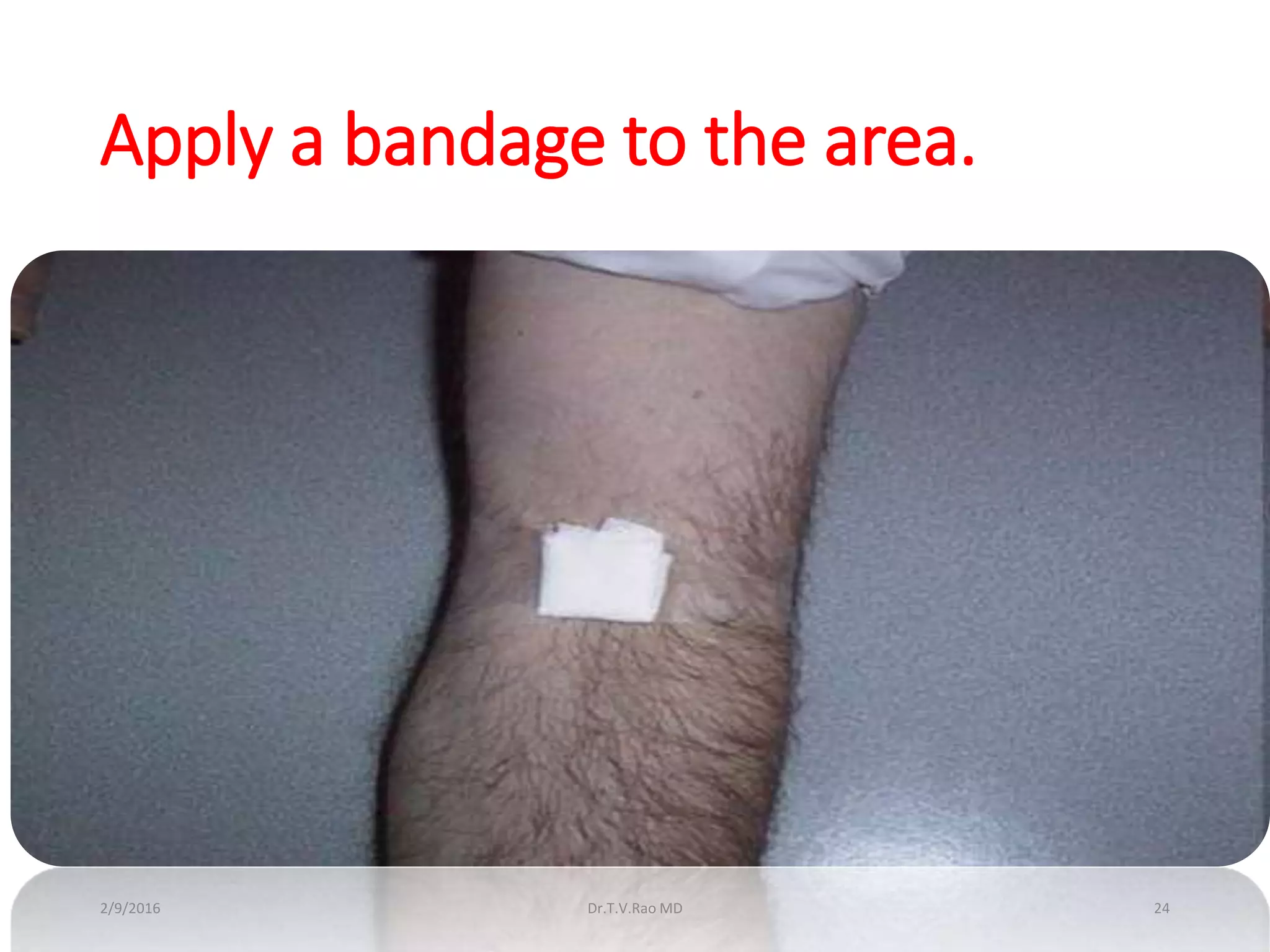
Apply a bandage to the area.
Dr.T.V.Rao MD 242/9/2016
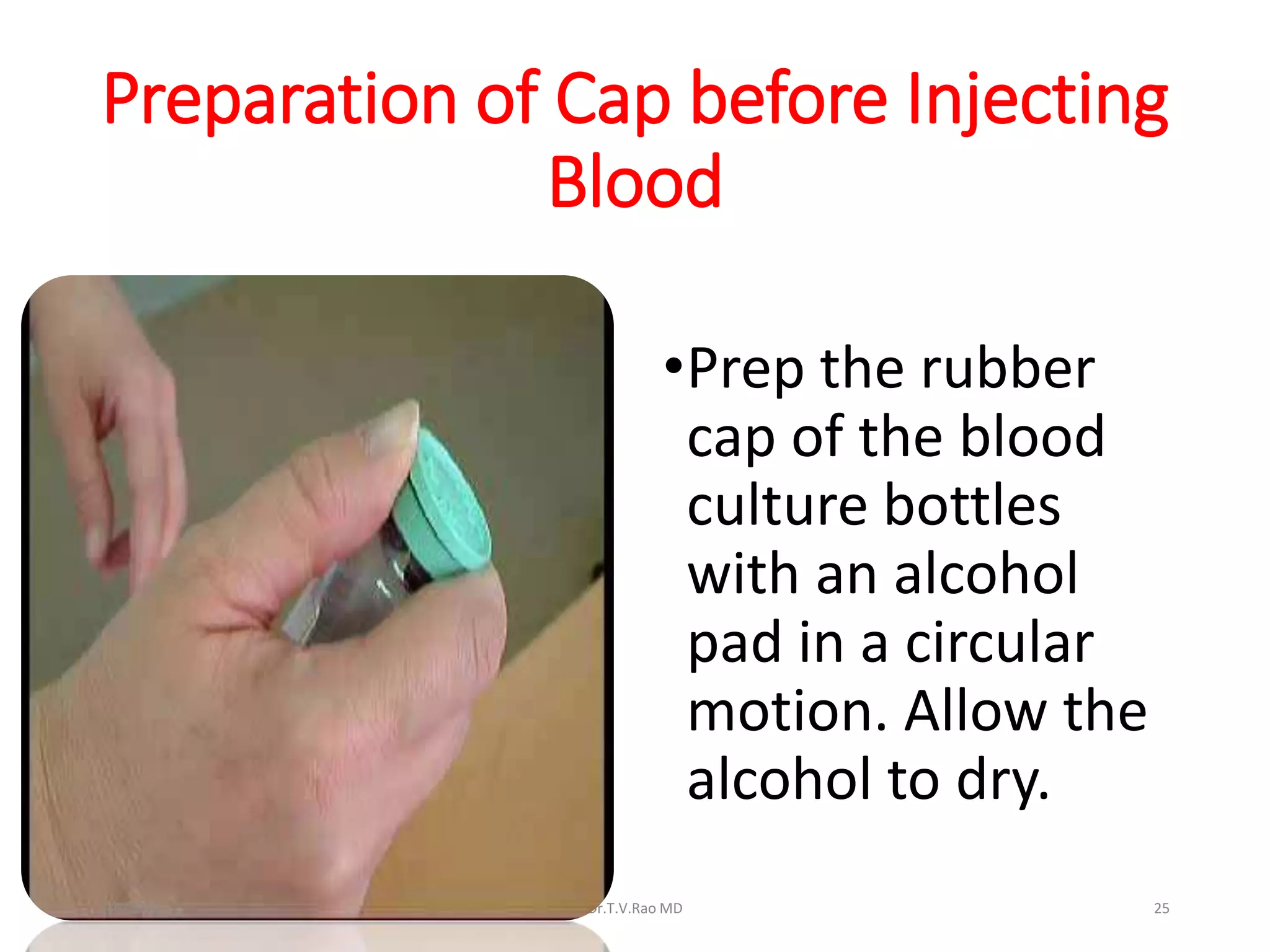
Preparation of Cap before Injecting
Blood
•Prep the rubber
cap of the blood
culture bottles
with an alcohol
pad in a circular
motion. Allow the
alcohol to dry.
Dr.T.V.Rao MD 252/9/2016
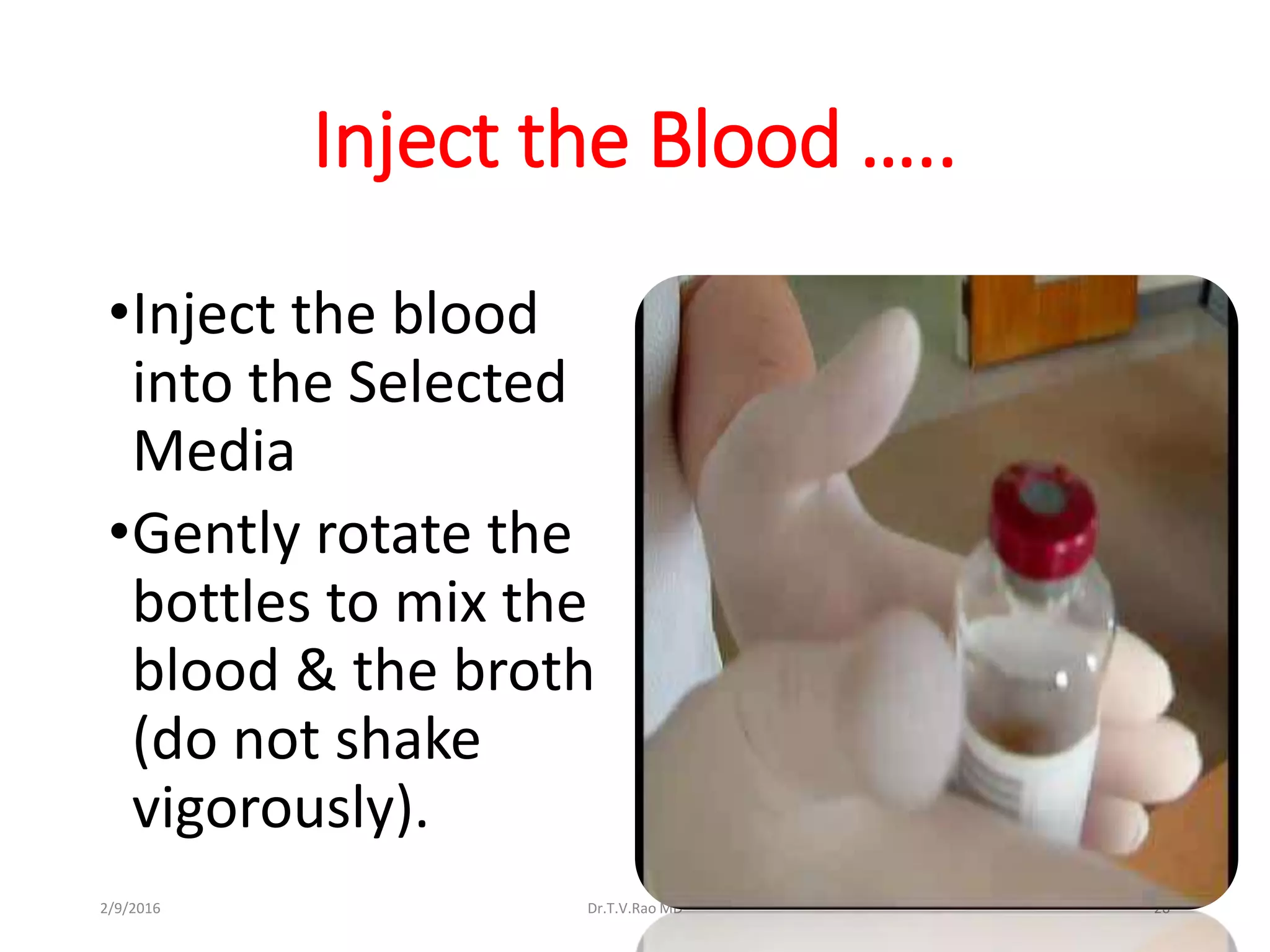
Inject the Blood …..
•Inject the blood
into the Selected
Media
•Gently rotate the
bottles to mix the
blood & the broth
(do not shake
vigorously).
Dr.T.V.Rao MD 262/9/2016
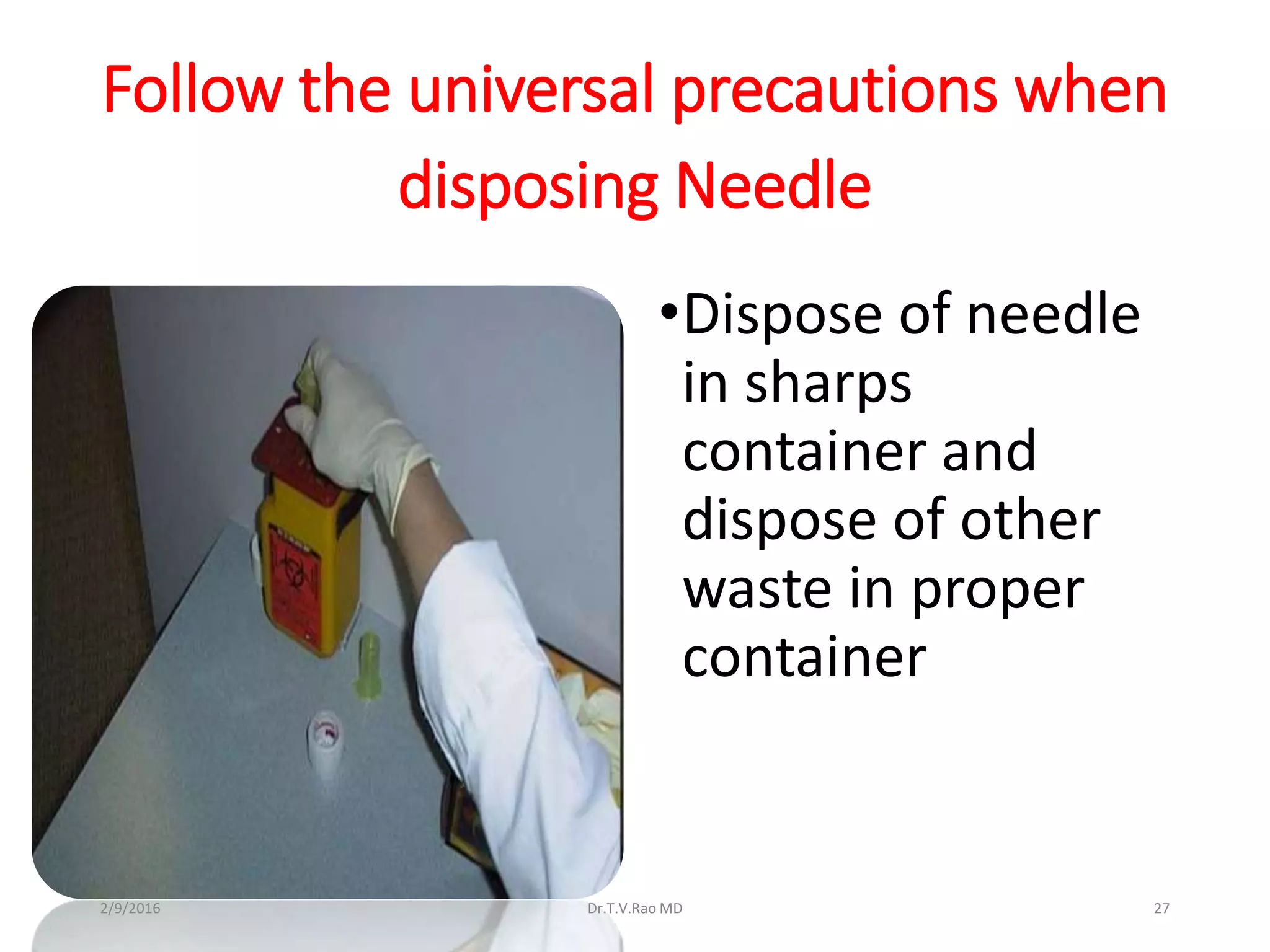
Follow the universal precautions when
disposing Needle
•Dispose of needle
in sharps
container and
dispose of other
waste in proper
container
Dr.T.V.Rao MD 272/9/2016
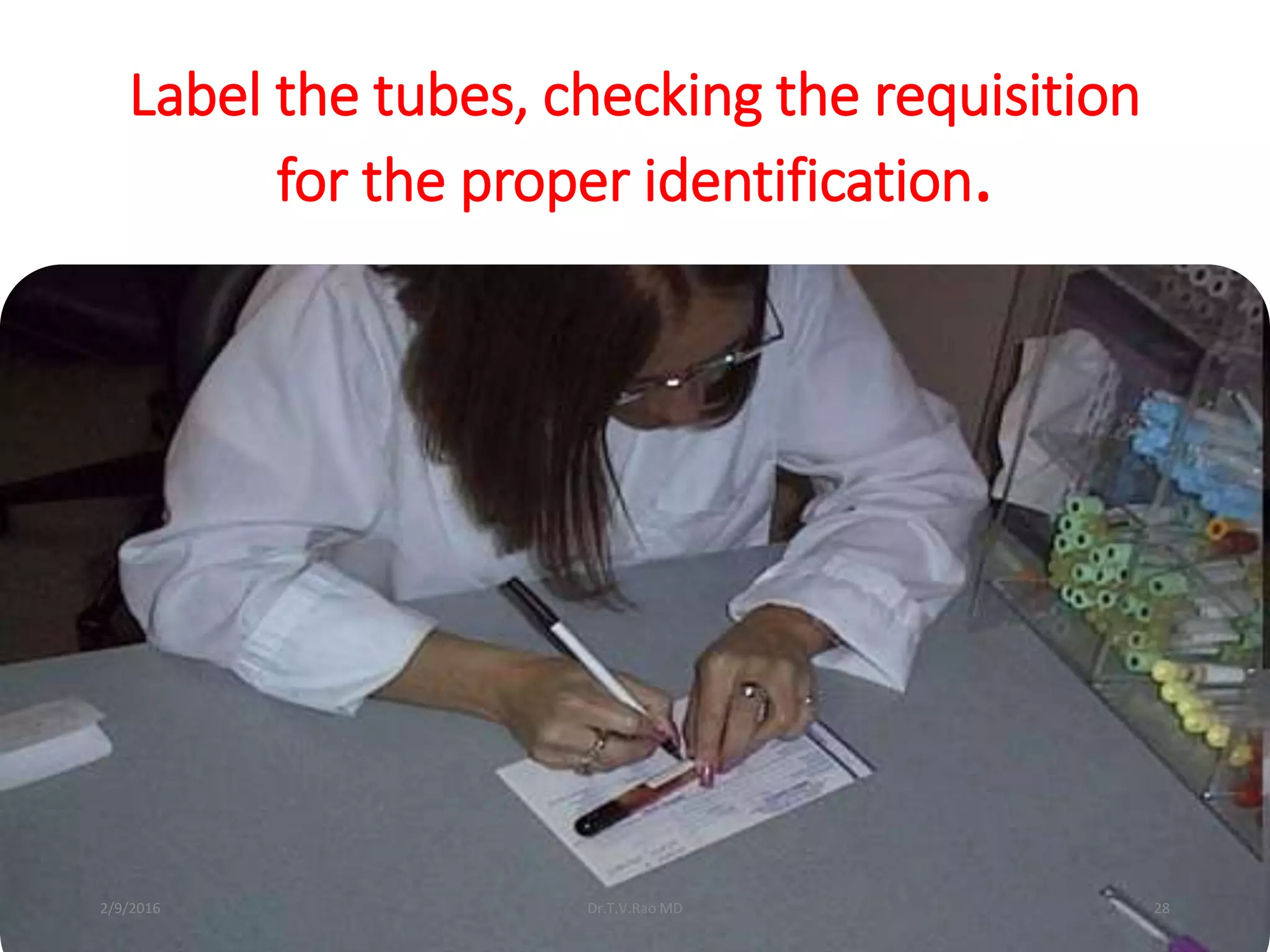
Label the tubes, checking the requisition
for the proper identification.
Dr.T.V.Rao MD 282/9/2016
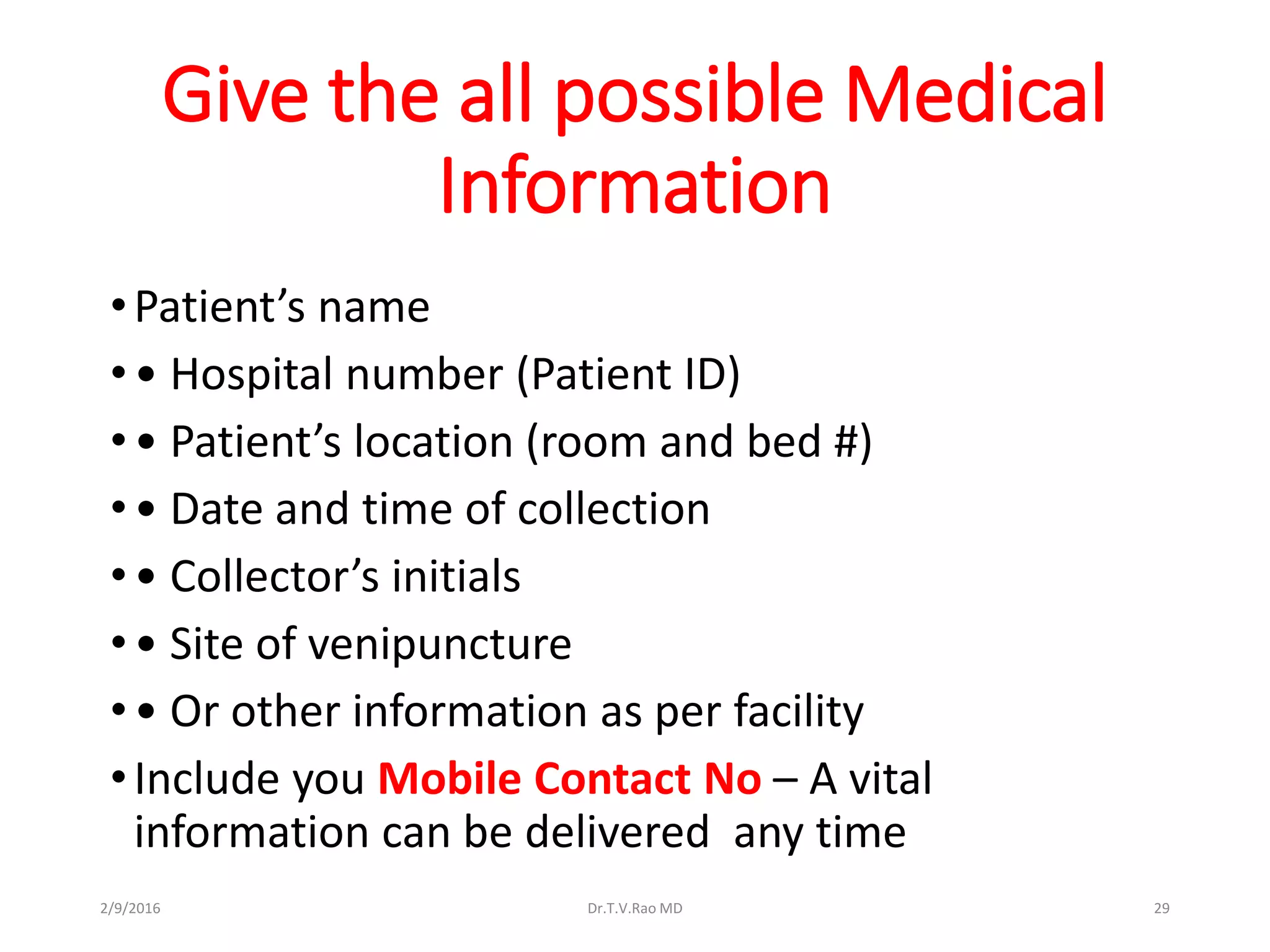
Give the all possible Medical
Information
•Patient’s name
•• Hospital number (Patient ID)
•• Patient’s location (room and bed #)
•• Date and time of collection
•• Collector’s initials
•• Site of venipuncture
•• Or other information as per facility
•Include you Mobile Contact No – A vital
information can be delivered any time
Dr.T.V.Rao MD 292/9/2016
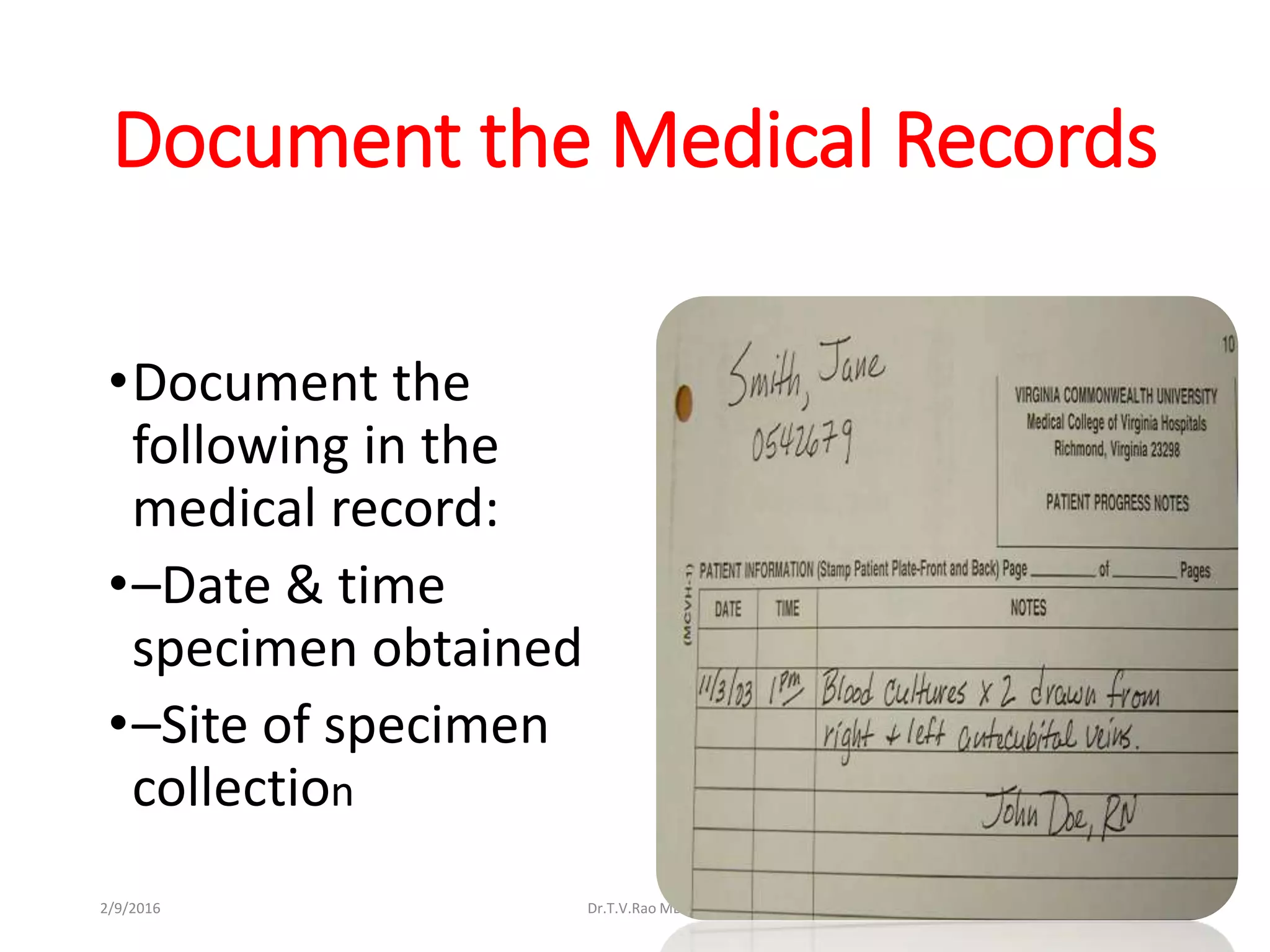
Document the Medical Records
•Document the
following in the
medical record:
•–Date & time
specimen obtained
•–Site of specimen
collection
Dr.T.V.Rao MD 302/9/2016
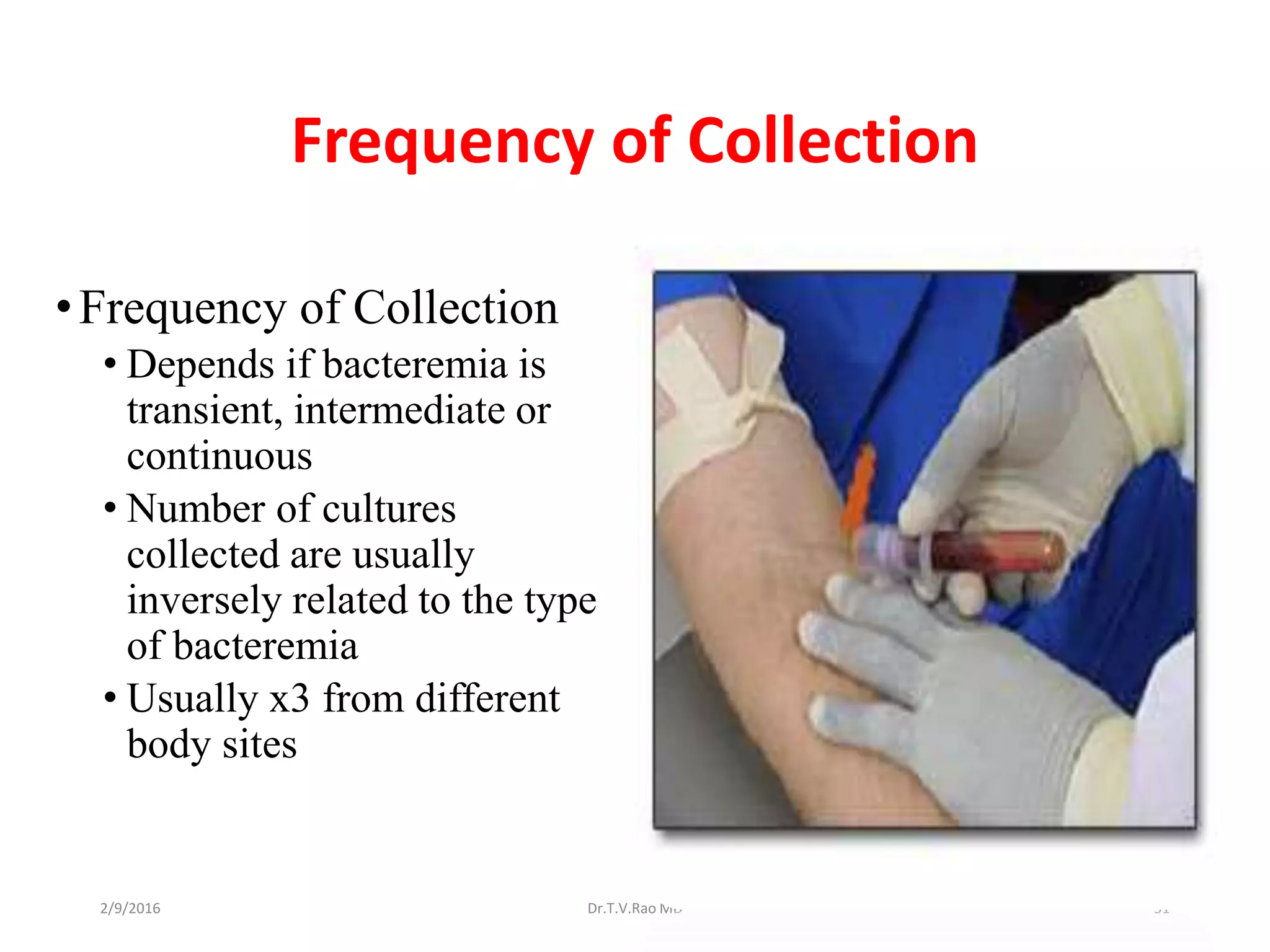
Frequency of Collection
•Frequency of Collection
• Depends if bacteremia is
transient, intermediate or
continuous
• Number of cultures
collected are usually
inversely related to the type
of bacteremia
• Usually x3 from different
body sites
Dr.T.V.Rao MD 312/9/2016
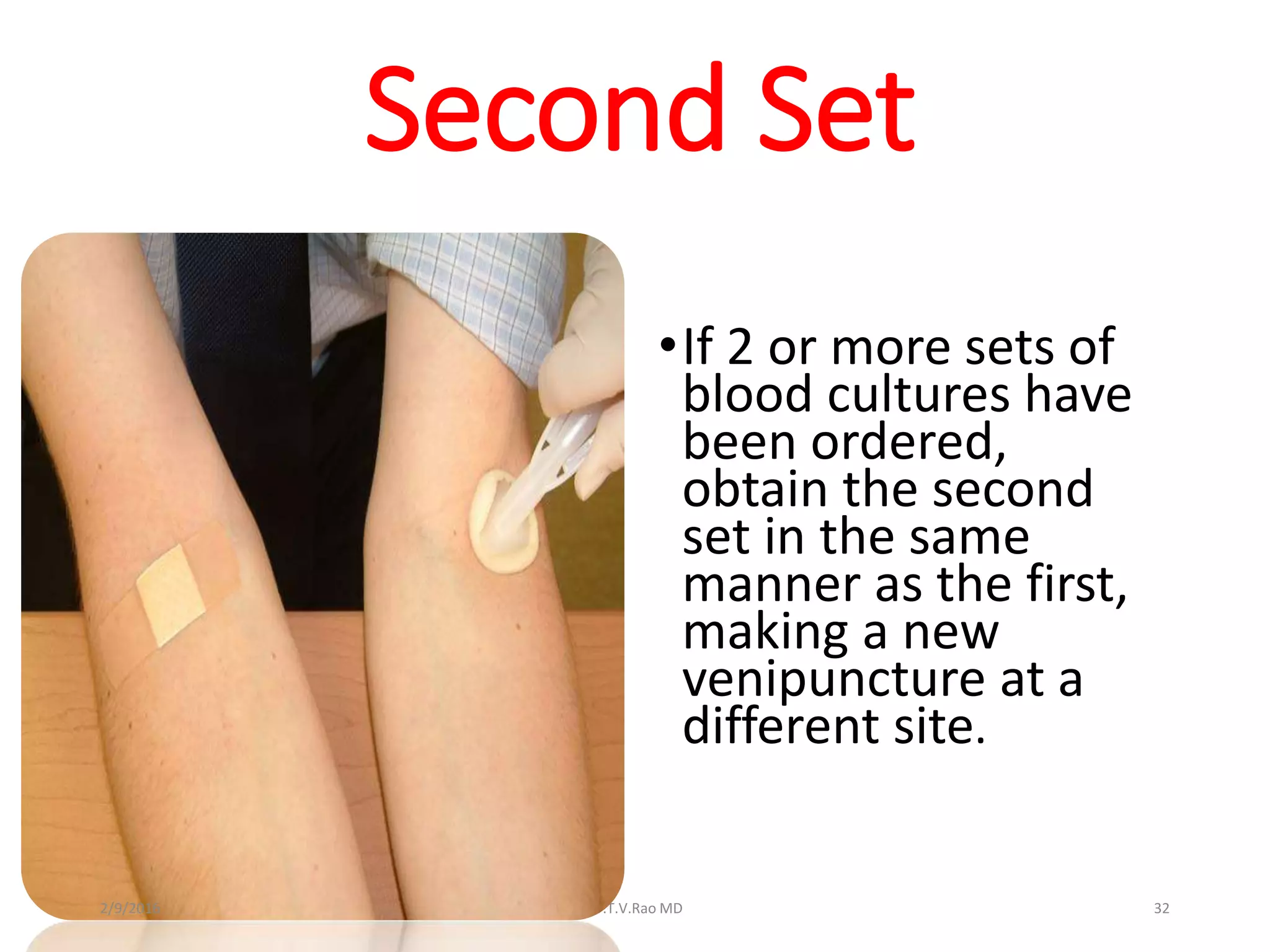
Second Set
•If 2 or more sets of
blood cultures have
been ordered,
obtain the second
set in the same
manner as the first,
making a new
venipuncture at a
different site.
Dr.T.V.Rao MD 322/9/2016
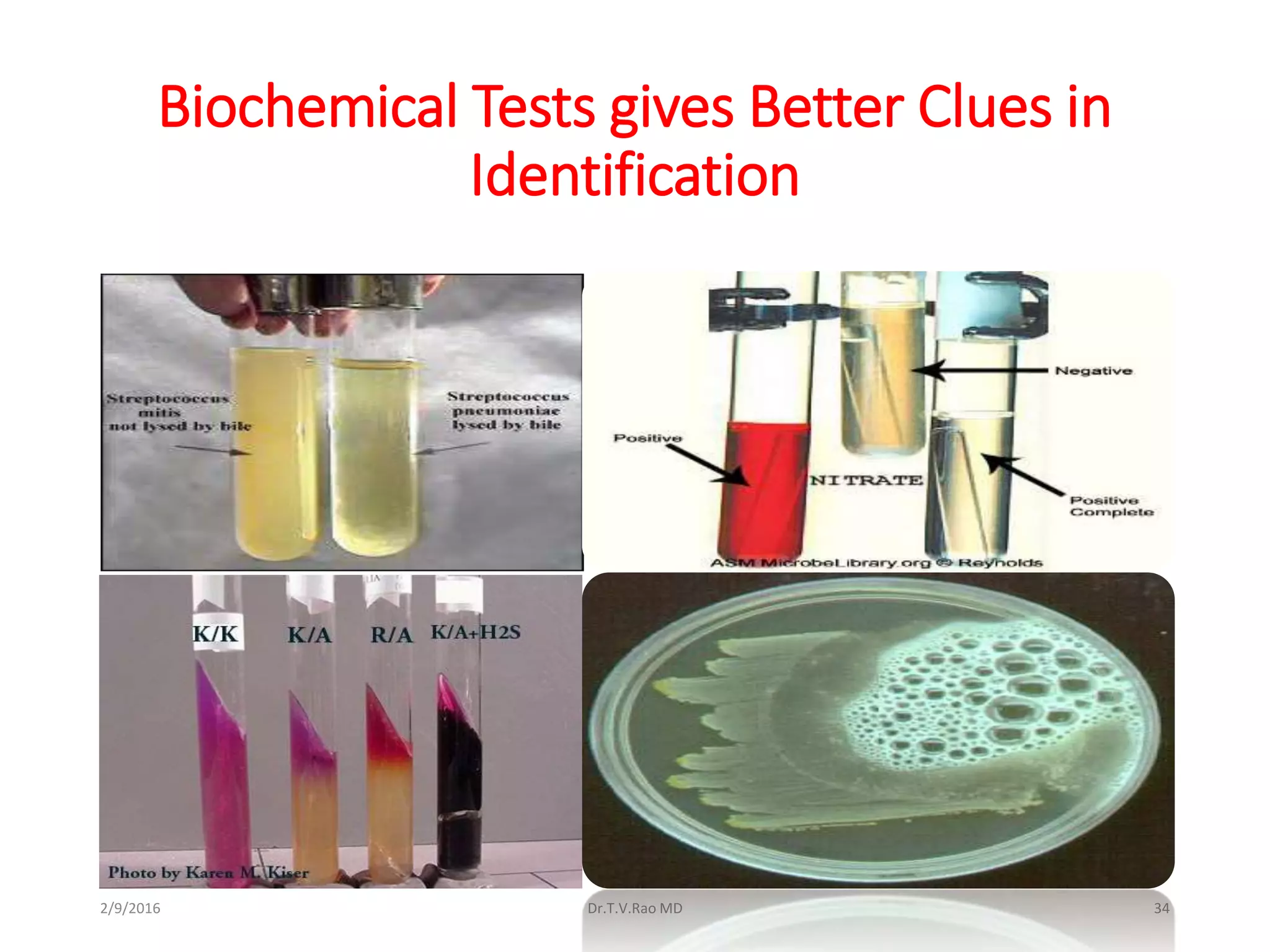
Bacteria and Fungi Are Identified by
Phenotypic Characters
Dr.T.V.Rao MD 332/9/2016
Biochemical Tests gives Better Clues in
Identification
Dr.T.V.Rao MD 342/9/2016
Newer Blood Culture Methods
• Newer Blood Culture Systems
•Biphasic Broth-Slide System
• Agar “paddles” attached to top of bottle
• Closed system
•Continuous Monitoring Blood Culture Systems
• BacTec – measures 14CO2
• BacTec 9000 Series – measures CO2
• ESP – measures consumption of gases
• BacT-Alert – measures change in pH
Dr.T.V.Rao MD 352/9/2016
Newer Technologies available at our
Hospital
•Over the past few years, dramatic
improvement has taken place in blood
culture methods, media, and systems. Most
of the technologically advanced blood culture
systems are fully automated continuously
monitored blood culture systems. These
systems electronically monitor blood culture
bottles every 8-10 minutes and detect
algorithms based on assessments of changes
associated with microbial growth.
Dr.T.V.Rao MD 362/9/2016
SEPTIC SHOCK A PRIORITY
• Let us think of septic shock as a top priority, at least
we receive 10% of the samples, we process are Blood
cultures and the number of specimens increase with
the expansion of ICU and MICU care, According to the
literature, the risk of death from septic shock
increases by over 7% with every hour that passes
from the onset of shock until the start of targeted
therapy. tools in clinical microbiology are primarily
based on techniques that evolved 30 to 40 years
ago
2/9/2016 Dr.T.V.Rao MD 37
Reliable Microorganism Recovery
• BacT/ALERT® Culture Media
provides a wide range of media
bottles to rapidly and reliably
recover an array of
microorganisms, including
bacteria, mycobacteria, fungi,
and yeasts from various sample
types. BacT/ALERT® Culture
Media is FDA-cleared for blood,
sterile body fluids, and platelets,
and can detect 98% of isolates
within 72 hours.* -
2/9/2016 Dr.T.V.Rao MD 38
Automation reduces the time requirement
• But this can be completed
within 30 hours by using
automated techniques. This is
especially useful when large
number of specimens needs to
be cultured, as the instrument,
which has been programmed
for the same, automatically
screens these.
Dr.T.V.Rao MD 392/9/2016
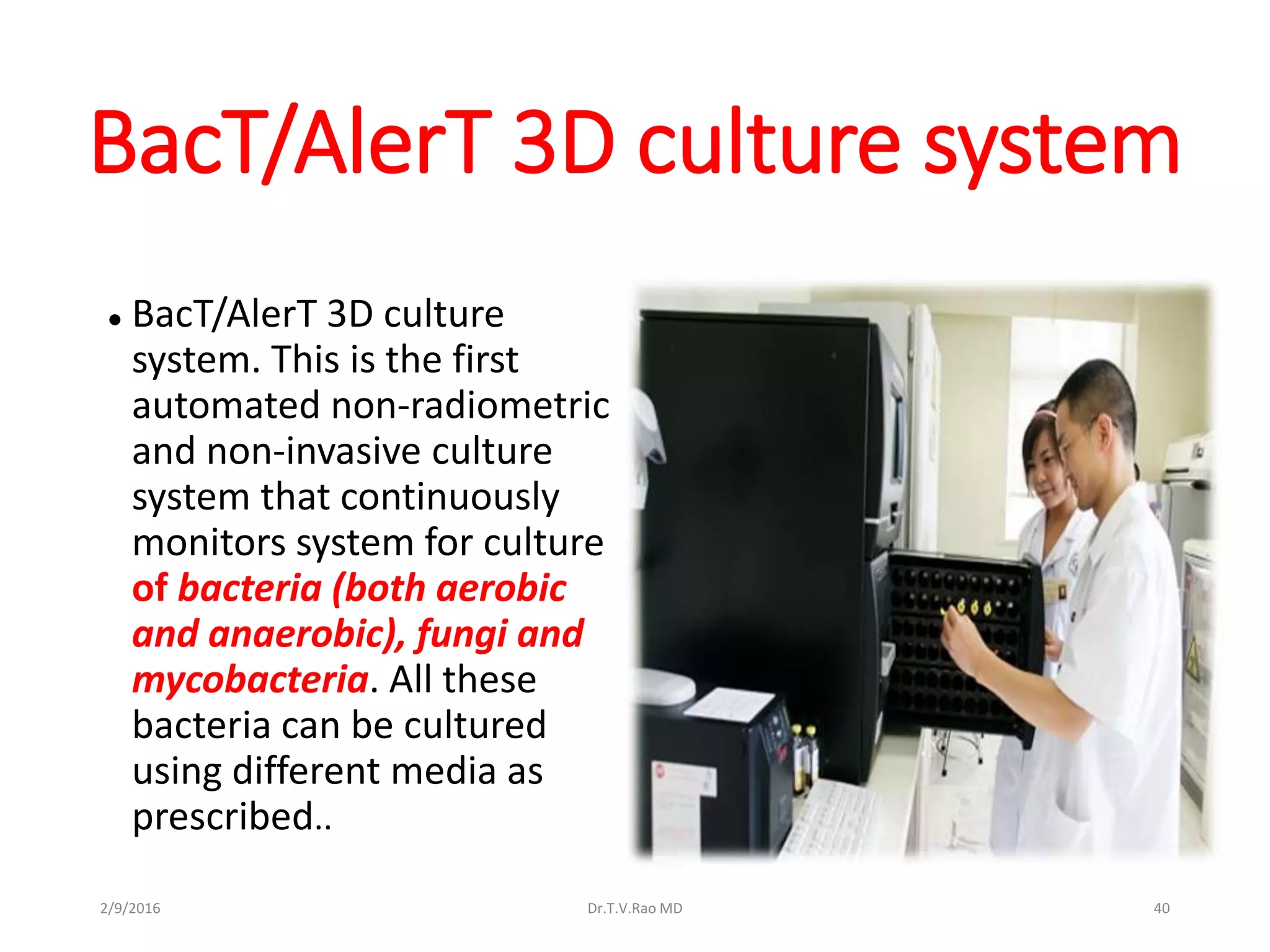
BacT/AlerT 3D culture system
 BacT/AlerT 3D culture
system. This is the first
automated non-radiometric
and non-invasive culture
system that continuously
monitors system for culture
of bacteria (both aerobic
and anaerobic), fungi and
mycobacteria. All these
bacteria can be cultured
using different media as
prescribed..
Dr.T.V.Rao MD 402/9/2016
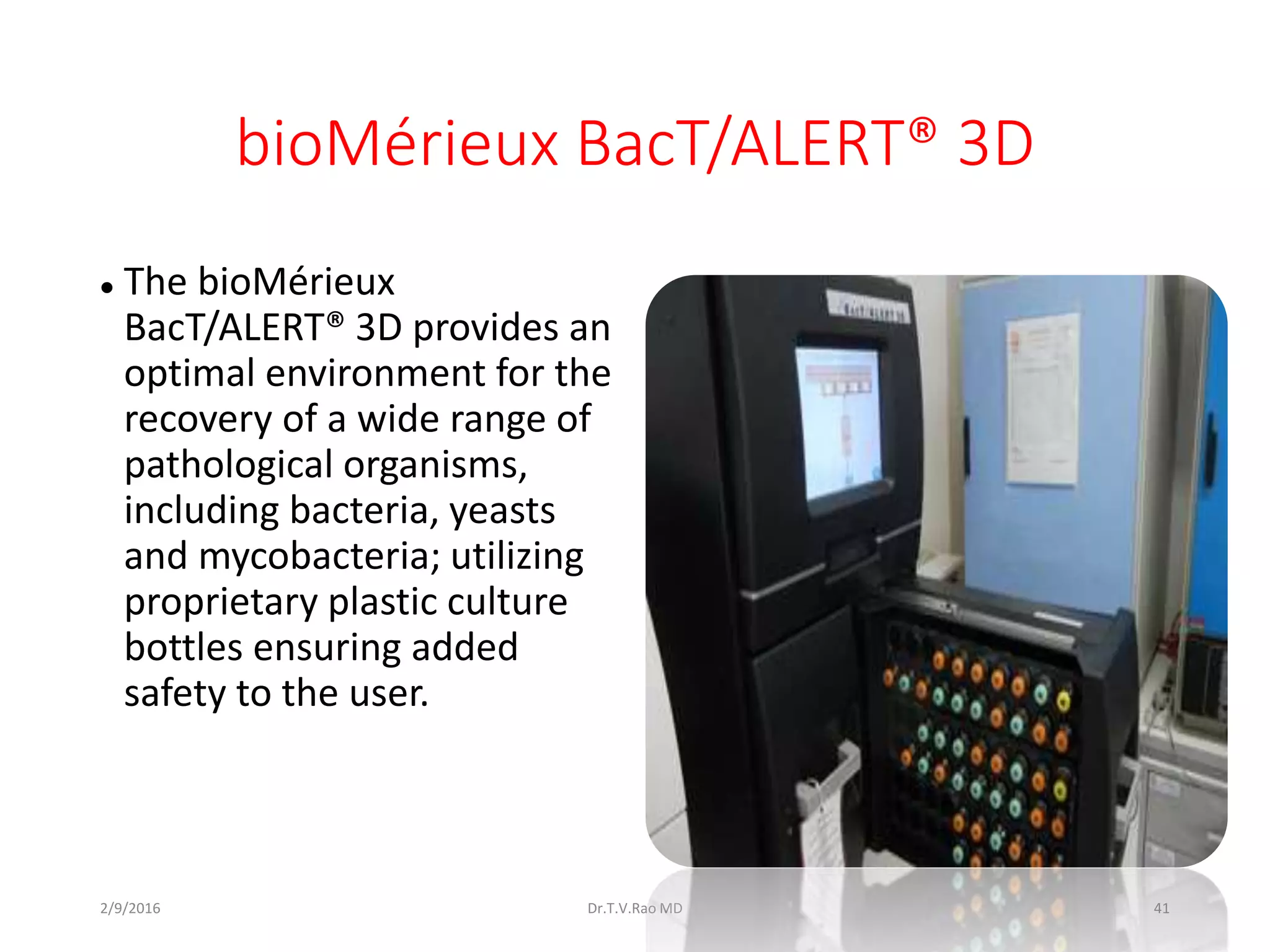
bioMérieux BacT/ALERT® 3D
 The bioMérieux
BacT/ALERT® 3D provides an
optimal environment for the
recovery of a wide range of
pathological organisms,
including bacteria, yeasts
and mycobacteria; utilizing
proprietary plastic culture
bottles ensuring added
safety to the user.
Dr.T.V.Rao MD 412/9/2016
BacT/ALERT® 3D Microbial
Detection System
• This newest generation of the
time-tested BacT/ALERT
system offers advantages in
every dimension of testing.
From its space-saving
modular design to its easy
touch-screen operation and
flexible data management
options, every laboratory will
find something to love about
the BacT/ALERT 3D!
Dr.T.V.Rao MD 422/9/2016
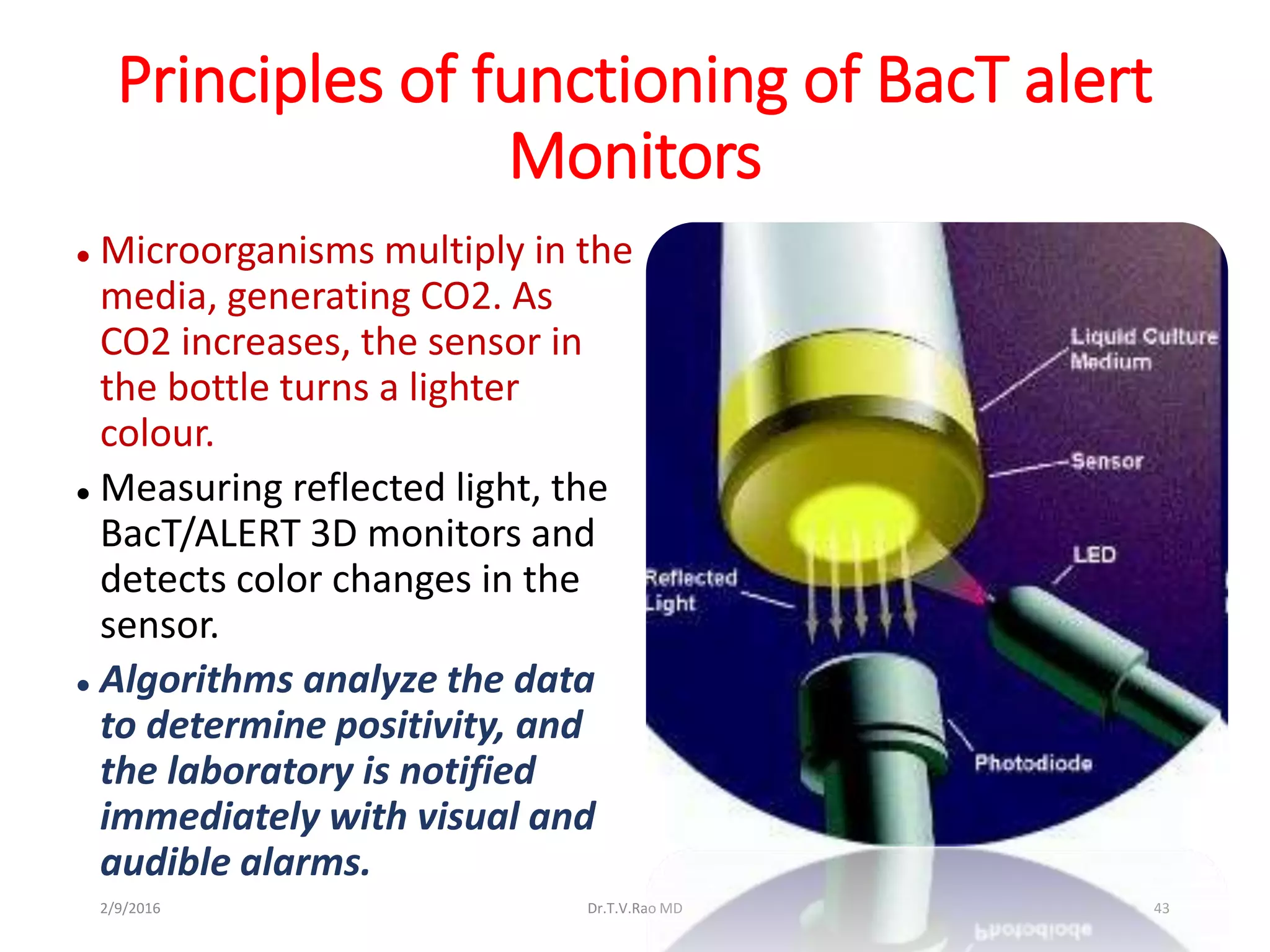
Principles of functioning of BacT alert
Monitors
 Microorganisms multiply in the
media, generating CO2. As
CO2 increases, the sensor in
the bottle turns a lighter
colour.
 Measuring reflected light, the
BacT/ALERT 3D monitors and
detects color changes in the
sensor.
 Algorithms analyze the data
to determine positivity, and
the laboratory is notified
immediately with visual and
audible alarms.
Dr.T.V.Rao MD 432/9/2016
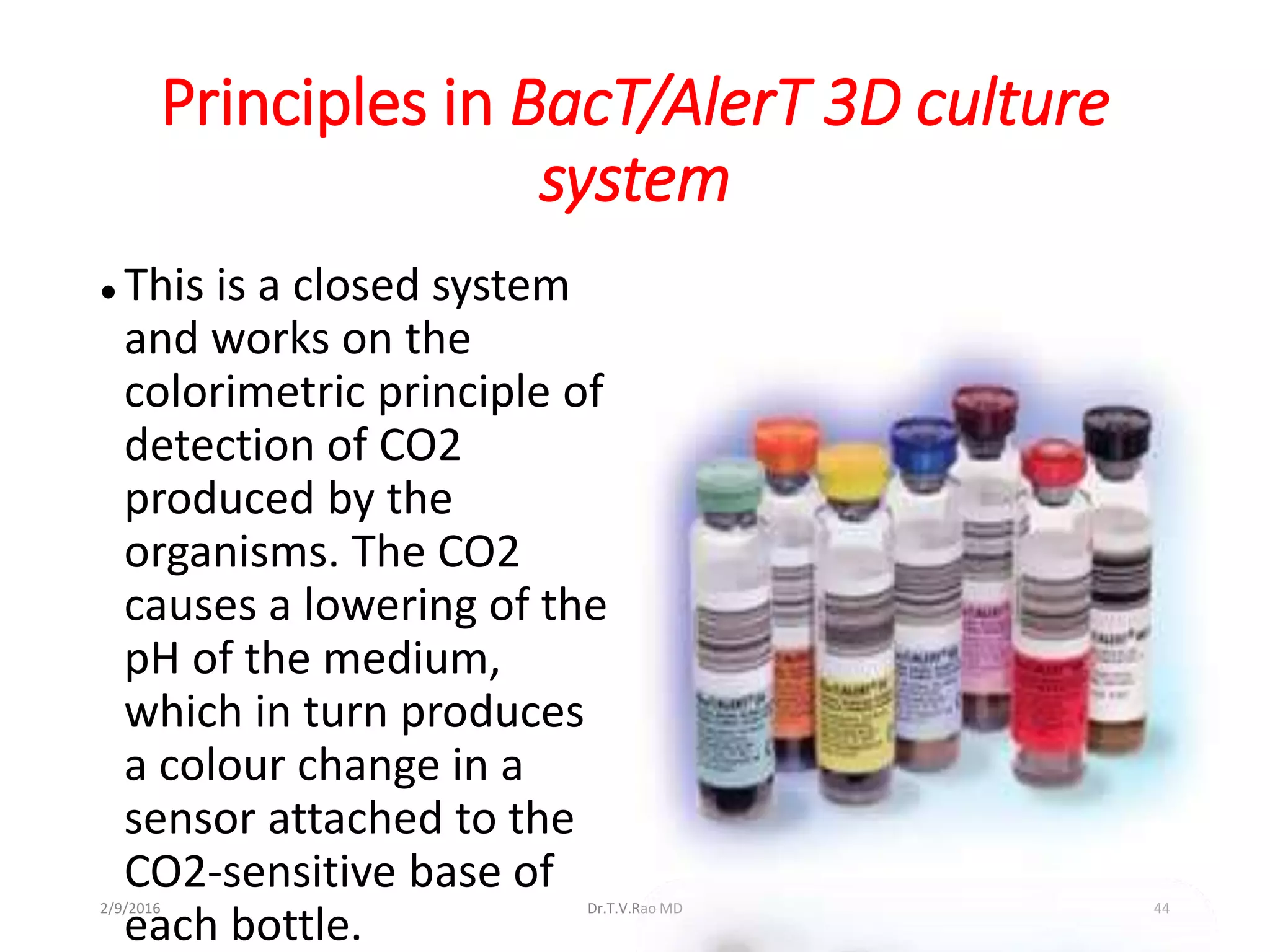
Principles in BacT/AlerT 3D culture
system
 This is a closed system
and works on the
colorimetric principle of
detection of CO2
produced by the
organisms. The CO2
causes a lowering of the
pH of the medium,
which in turn produces
a colour change in a
sensor attached to the
CO2-sensitive base of
each bottle.
Dr.T.V.Rao MD 442/9/2016
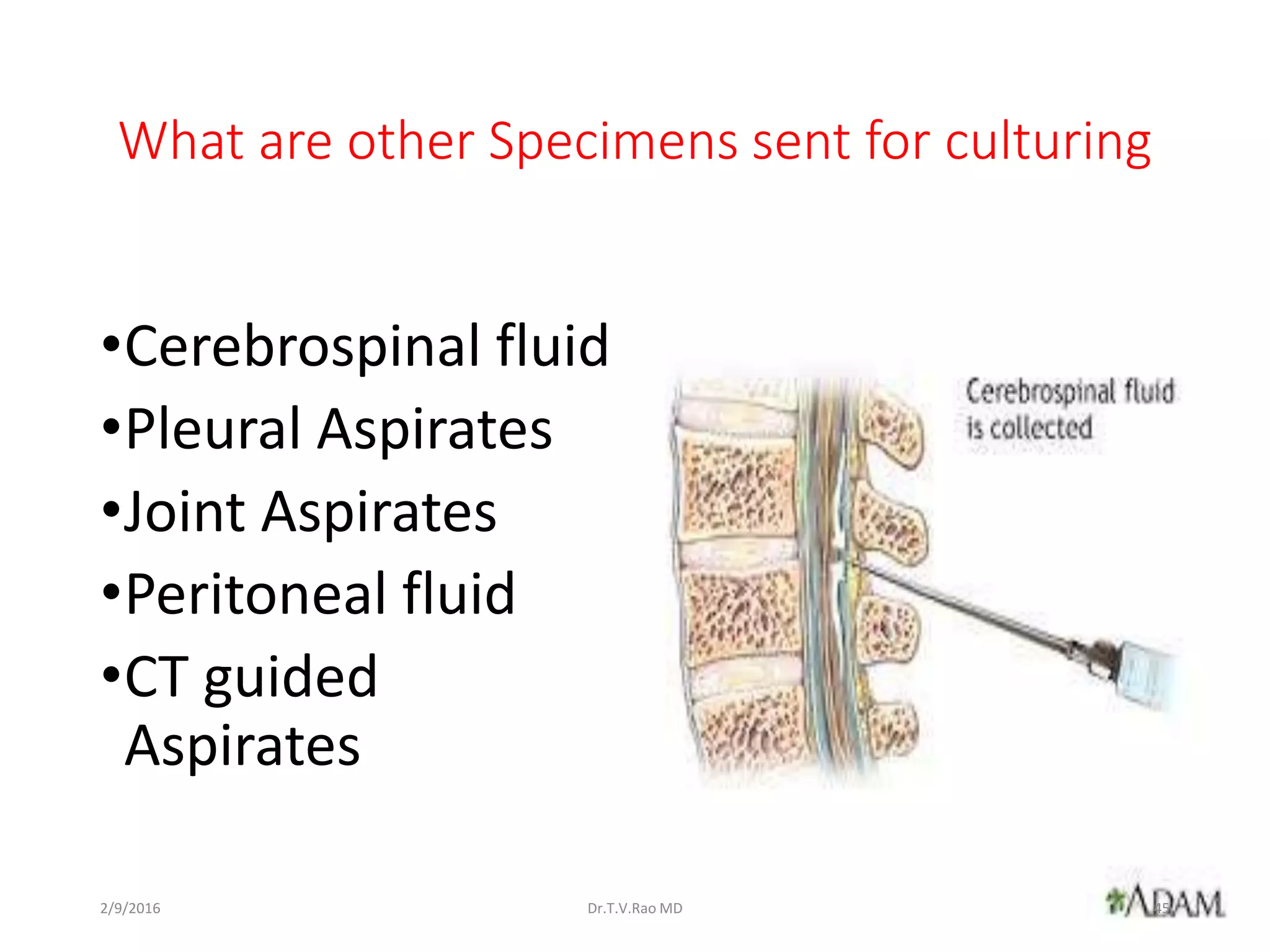
What are other Specimens sent for culturing
•Cerebrospinal fluid
•Pleural Aspirates
•Joint Aspirates
•Peritoneal fluid
•CT guided
Aspirates
Dr.T.V.Rao MD 452/9/2016
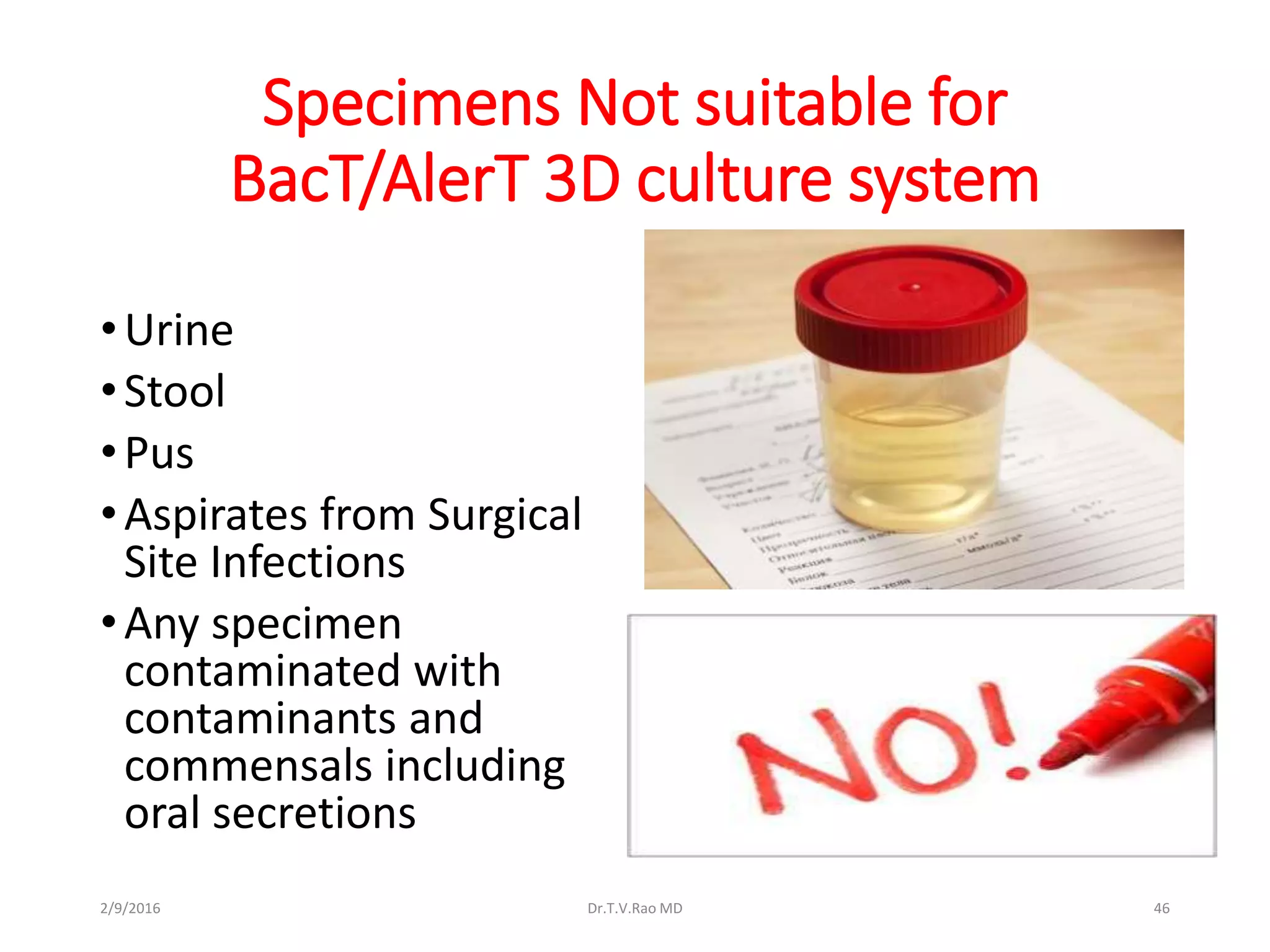
Specimens Not suitable for
BacT/AlerT 3D culture system
•Urine
•Stool
•Pus
•Aspirates from Surgical
Site Infections
•Any specimen
contaminated with
contaminants and
commensals including
oral secretions
Dr.T.V.Rao MD 462/9/2016
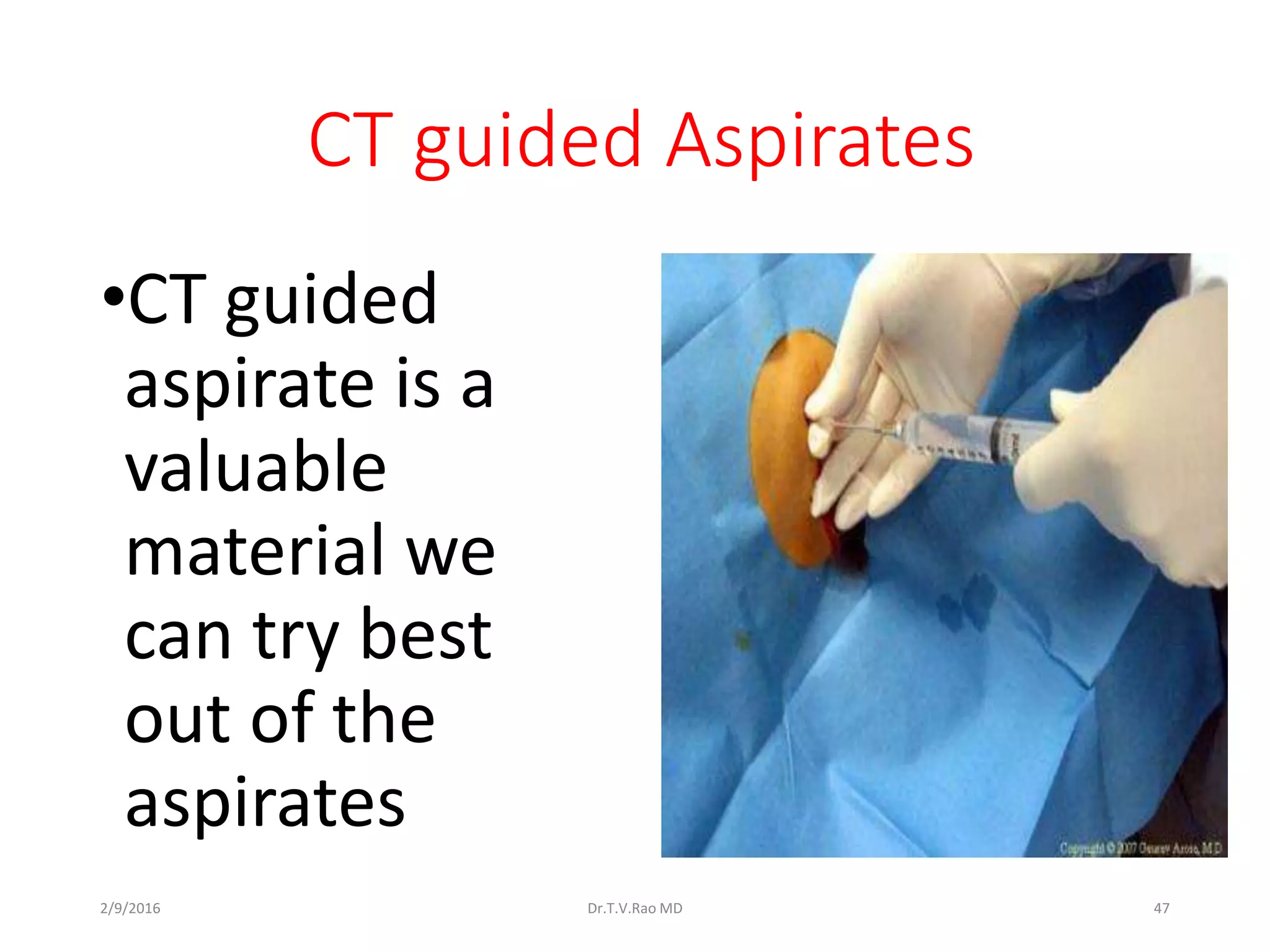
CT guided Aspirates
•CT guided
aspirate is a
valuable
material we
can try best
out of the
aspirates
Dr.T.V.Rao MD 472/9/2016
WHO IS ACCOUNTABLE TO RUNNING THE
SYSTEM
• 1The physicians should give many clinical details why they
wish to culture blood, as automation is fraught with many
errors if the coordination fails between treating doctor and
laboratory personal the errors with automation are more
expensive dangerous with loss of valuable time and the
purpose of automation is lost
• 2 All the requests should be identified with caring Doctor or
nurse responsible for treatment decision and better with
active Mobile contact number for faster communication in
case of any growth as the machine alerts every 10 minutes a
valuable time is saved for faster decisions
2/9/2016 Dr.T.V.Rao MD 48
WHO IS ACCOUNTABLE TO RUNNING THE
SYSTEM
•3 The Medical Microbiologists should be well
know ledged to identify the contamination and
source to make the system running with
scientific efficacy
• 4 With experience I wish to say automation
needs more knowledge of Medical
Microbiologists or the matters will be
counterproductive in false identification of
contaminants
2/9/2016 Dr.T.V.Rao MD 49
WHO IS ACCOUNTABLE TO RUNNING THE
SYSTEM
• 5 A regular audit of the functioning and reporting both by
internal and external experts.
• 6 I wish who wish to run the Automation must read from
more at Bailey and Scot diagnostic microbiology available
in our libraries
• 7 Ill qualified and careless Microbiologists, and technicians
are more dangerous as the errors at many stages multiplies
faster than traditional methods of culturing leasing greater
misuse of Antibiotics
2/9/2016 Dr.T.V.Rao MD 50
Automation improves quality of services
 Overall, laboratories
transitioning from
conventional to
automated processes
find that
technologists and
microbiologists are
more open to
innovation and
improved quality.
Dr.T.V.Rao MD 512/9/2016
Automation Signals Bacteremia
cases
•After inoculating the culture vials, they are sent to
the clinical pathology microbiology department.
Here the bottles are entered into a blood culture
machine, which incubate the specimens at body
temperature. The blood culture instrument reports
positive blood cultures (cultures with bacteria
present, thus indicating the patient is
"bacteremia"). Most cultures are monitored for 5
days after which negative vials are removed.
Dr.T.V.Rao MD 522/9/2016
The positives cases to be
proceeded without delay
•A vial is positive, a microbiologist will perform a
Gram Stain on the blood for a rapid, general ID of
the bacteria, which they will report to the
attending physician of the bacteremic patient. The
blood is also subcultured onto agar plates to
isolate the pathogenic organism for culture and
susceptibility testing, which takes up to 3 days.
This culture & sensitivity (C&S) process identifies
the species of bacteria. Antibiotic sensitivities are
then assessed on the bacterial isolate to inform
clinicians on appropriate antibiotics for treatment.
Dr.T.V.Rao MD 532/9/2016
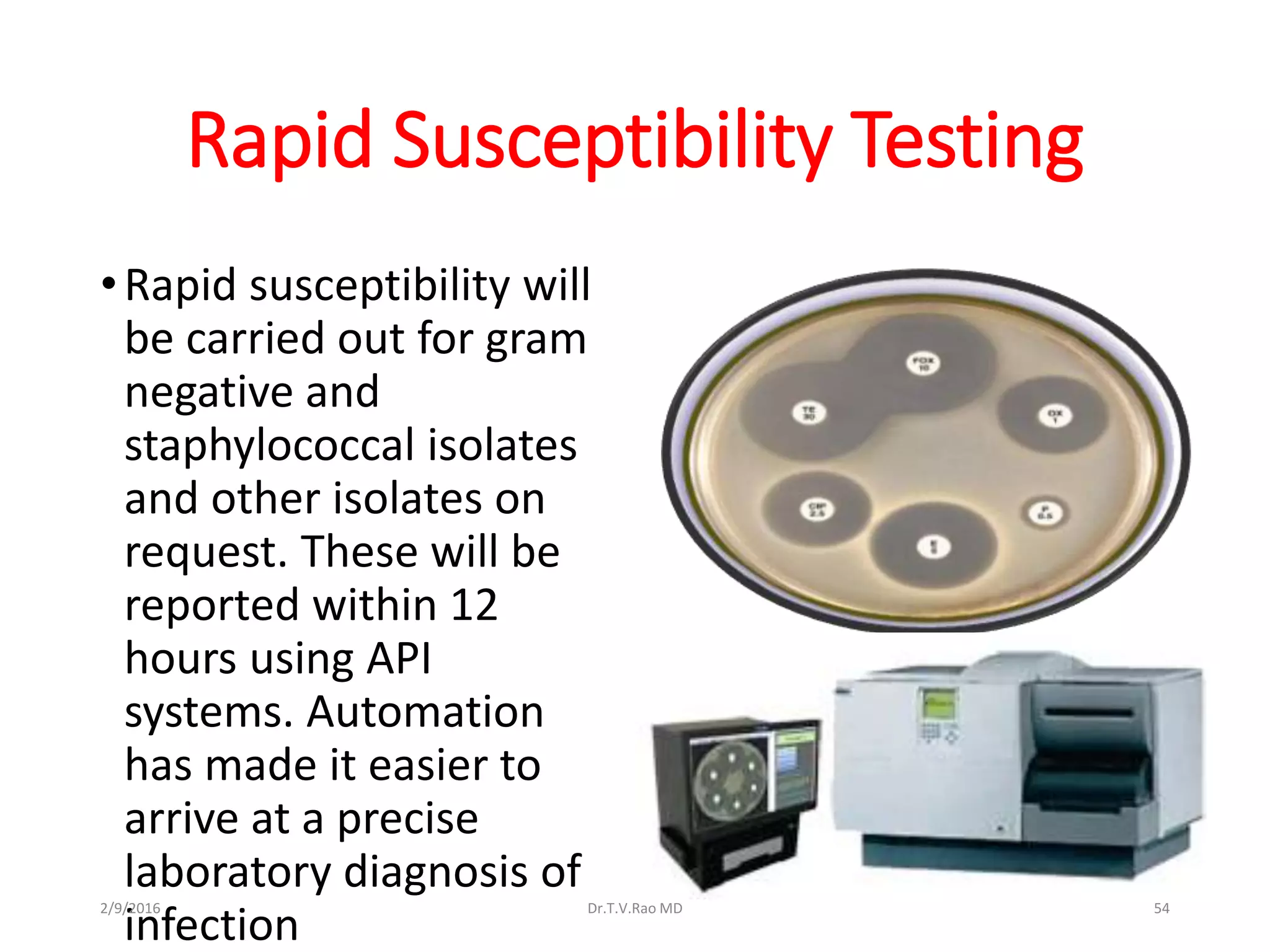
Rapid Susceptibility Testing
•Rapid susceptibility will
be carried out for gram
negative and
staphylococcal isolates
and other isolates on
request. These will be
reported within 12
hours using API
systems. Automation
has made it easier to
arrive at a precise
laboratory diagnosis of
infection
2/9/2016 Dr.T.V.Rao MD 54
VITEK® MS
•VITEK® MS Mass spectrometry microbial
identification system An automated mass
spectrometry microbial identification system that
uses Matrix Assisted Laser Desorption Ionization
Time-of-Flight (MALDI-TOF) technology and a
comprehensive database of clinically relevant
species for results in minutes Robust & accurate ID
with Advanced Spectra Classifier Seamless
integration of ID/AST results for optimized workflow
Complete traceability & flexibility -
2/9/2016 Dr.T.V.Rao MD 55
Rapid & clear identification
•VITEK® MS is an innovative, automated
microbial identification system that uses
MALDI-TOF (Matrix Assisted Laser Desorption
Ionization Time-of-Flight) technology. In just
minutes, this mass spectrometry technology
can provide clear identification at the
species, genus and family level. You can
provide clinicians with quick information to
start appropriate treatment, contributing to
overall patient care and outcomes.
2/9/2016 Dr.T.V.Rao MD 56
The Contaminated Blood Culture
•If the skin is not adequately cleansed before
drawing blood for culture, bacteria on the skin
will be injected into the bottle, producing a false
positive blood culture
•It is difficult for the physician to determine
whether the bacteria growing in the blood
culture is a real pathogen causing bloodstream
infection or whether bacteria on the skin have
contaminated the culture. This can lead to excess
use of antibiotics and prolongation of hospital
stay.
Dr.T.V.Rao MD 572/9/2016
•Program Created by Dr.T.V.Rao MD for
Medical and Microbiology
Professionals Globally for improving
the Skills in Diagnostic Microbiology
•Email
•doctortvrao@gmail.com
Dr.T.V.Rao MD 582/9/2016

BLOOD CULTURING using automation

  • 1.
  • 2.
    Need for BloodCulture? No microbiological test is more essential to the clinician than the blood culture. The finding of pathogenic microorganisms in a patient’s bloodstream is of great importance in terms of diagnosis, prognosis, and therapy.” - L. Barth Reller, Clin. Infect. Diseases, 1996 Dr.T.V.Rao MD 22/9/2016
  • 3.
  • 4.
    Sources of BacteremiaSpread •Pericarditis and Peritonitis •Pneumonias •Pressure sores •Prosthetic medical devices •Total hip replacement •Skeletal system •Skin and soft tissue Dr.T.V.Rao MD 42/9/2016
  • 5.
    Blood culturing most importantand life saving Investigation Needs optimal Methods for Diagnosis of Blood Borne Pathogens Dr.T.V.Rao MD 52/9/2016
  • 6.
    Blood Collection •Aseptic collection procedureis critical Amount of blood •1:10 ratio of blood to broth •Younger than 10 years – 1 ml of blood for every year of life •Over 10 years – 20 ml Dr.T.V.Rao MD 62/9/2016
  • 7.
    Blood Collection •Frequency ofCollection •Depends if bacteremia is transient, intermediate or continuous •Number of cultures collected are usually inversely related to the type of bacteremia •Usually x3 from different body sites Dr.T.V.Rao MD 72/9/2016
  • 8.
    Venipuncture • Venipuncture isthe process of obtaining intravenous access for the purpose of intravenous therapy or obtaining a sample of venous blood. This procedure is performed by medical laboratory scientists, medical practitioners, some EMTs, paramedics phlebotomists and other nursing staff. Venipuncture is one of the most routinely performed invasive procedures and is carried out for two reasons, to obtain blood for diagnostic purposes or to monitor levels of blood components (Lavery & Ingram 2005). Dr.T.V.Rao MD 82/9/2016
  • 9.
    LABELING THE SAMPLE •Properlylabelled sample is essential so that the results of the test match the patient. The key elements in labelling are: •Patient's surname, first and middle. •Patient's ID number. •NOTE: Both of the above MUST match the same on the requisition form. •Date, time and initials of the phlebotomist must be on the label of EACH tube. Dr.T.V.Rao MD 92/9/2016
  • 10.
    Principles for Collection •Gloveswill be worn in accordance with standard precautions. ••Appropriate verification of the patient's identity, by means of an armband or area specific procedure, will occur before the specimen collection. ••Cultures should be drawn before administration of antibiotics, if possible. ??? •• blood cultures should be drawn from lines, but should be drawn viavenipuncture. Dr.T.V.Rao MD 102/9/2016
  • 11.
    The requisitions formshould be completely filled out, and the requisition must indicate the tests ordered. Dr.T.V.Rao MD 112/9/2016
  • 12.
    Self Protection A few waysto make sure your role in the collection process is carried out with efficiency, orderliness and safety Dr.T.V.Rao MD 122/9/2016
  • 13.
    Steps 1 –3, Check, Explain, Wash •1.Identify the patient •2.Explain the procedure to the patient. •3.Wash hands with soap and water with friction for 15 seconds or use alcohol based hand rub Dr.T.V.Rao MD 132/9/2016
  • 14.
    Materials • Chlorhexidine swabs(1-2 packages) • Alcohol swabs • Blood culture bottles (2 bottles per set) • 2 syringes (adult: 20 cc, paediatric: 5 cc) • 2 needles (adult: 22 gauge or preferably larger butterfly or standard needle; pediatric: 25 or 23 gauge butterfly or standard needle) • Gloves (sterile &nonsterile) • Tourniquet • Sterile gauze pad • Adhesive strip or tape • Self-sticking patient labels • Plastic zip lock specimen bags Dr.T.V.Rao MD 142/9/2016
  • 15.
    . Barrier protectionfor the phlebotomist consists of the latex gloves. Dr.T.V.Rao MD 152/9/2016
  • 16.
    Obtaining Blood • Locatethe vein • Prep kit • Alcohol 5 sec. Dry 30-60 sec ( resource poor conditions ) • Ideal to collect with alcohol swabs containing 2% Chlorhexidine and 70% isopropyl alcohol • Remove caps, clean with alcohol • Put on gloves • Without palpating, draw 20 ml and put 10 in anaerobic and 10 in aerobic bottle • Dispose of syringe in sharps container • Label bottles and send to lab Dr.T.V.Rao MD 162/9/2016
  • 17.
    Method of BloodCollection • A minimum of 10 ml of blood is taken through venipuncture and injected into two or more "blood bottles" with specific media for aerobic and anaerobic organisms. • The blood is collected using clean technique. This requires that both the tops of the culture bottles and the venipuncture site of the patient are cleaned prior to collection with alcohol swabs containing 2% Chlorhexidine and 70% isopropyl alcohol. Dr.T.V.Rao MD 172/9/2016
  • 18.
    The area ofskin is cleaned with a disinfectant, or an alcohol swab. • Using sterile gloves, do not wipe away the surgical solution, touch the puncture site, or in any way compromise the sterile process. It is vital that the procedure is performed in as sterile a manner as possible as the persistent presence of skin commensals in blood cultures could indicate endocarditis but they are most often found asDr.T.V.Rao MD 182/9/2016
  • 19.
    The vein isanchored and the needle is inserted. Dr.T.V.Rao MD 192/9/2016
  • 20.
    The vacutainer tubeis depressed into the needle to begin drawing blood Dr.T.V.Rao MD 202/9/2016
  • 21.
    Additional vacutainer tubescan be utilized. Determine what tests are ordered and what tubes will be necessary BEFORE you begin to draw blood, and determine the order of draw for the tubes. . Dr.T.V.Rao MD 212/9/2016
  • 22.
    When the finaltube is being drawn, release the tourniquet. Then remove the tube, and remove the needle. Dr.T.V.Rao MD 222/9/2016
  • 23.
    After the needleis removed from the vein, apply firm pressure over the site to achieve haemostasis. Dr.T.V.Rao MD 232/9/2016
  • 24.
    Apply a bandageto the area. Dr.T.V.Rao MD 242/9/2016
  • 25.
    Preparation of Capbefore Injecting Blood •Prep the rubber cap of the blood culture bottles with an alcohol pad in a circular motion. Allow the alcohol to dry. Dr.T.V.Rao MD 252/9/2016
  • 26.
    Inject the Blood….. •Inject the blood into the Selected Media •Gently rotate the bottles to mix the blood & the broth (do not shake vigorously). Dr.T.V.Rao MD 262/9/2016
  • 27.
    Follow the universalprecautions when disposing Needle •Dispose of needle in sharps container and dispose of other waste in proper container Dr.T.V.Rao MD 272/9/2016
  • 28.
    Label the tubes,checking the requisition for the proper identification. Dr.T.V.Rao MD 282/9/2016
  • 29.
    Give the allpossible Medical Information •Patient’s name •• Hospital number (Patient ID) •• Patient’s location (room and bed #) •• Date and time of collection •• Collector’s initials •• Site of venipuncture •• Or other information as per facility •Include you Mobile Contact No – A vital information can be delivered any time Dr.T.V.Rao MD 292/9/2016
  • 30.
    Document the MedicalRecords •Document the following in the medical record: •–Date & time specimen obtained •–Site of specimen collection Dr.T.V.Rao MD 302/9/2016
  • 31.
    Frequency of Collection •Frequencyof Collection • Depends if bacteremia is transient, intermediate or continuous • Number of cultures collected are usually inversely related to the type of bacteremia • Usually x3 from different body sites Dr.T.V.Rao MD 312/9/2016
  • 32.
    Second Set •If 2or more sets of blood cultures have been ordered, obtain the second set in the same manner as the first, making a new venipuncture at a different site. Dr.T.V.Rao MD 322/9/2016
  • 33.
    Bacteria and FungiAre Identified by Phenotypic Characters Dr.T.V.Rao MD 332/9/2016
  • 34.
    Biochemical Tests givesBetter Clues in Identification Dr.T.V.Rao MD 342/9/2016
  • 35.
    Newer Blood CultureMethods • Newer Blood Culture Systems •Biphasic Broth-Slide System • Agar “paddles” attached to top of bottle • Closed system •Continuous Monitoring Blood Culture Systems • BacTec – measures 14CO2 • BacTec 9000 Series – measures CO2 • ESP – measures consumption of gases • BacT-Alert – measures change in pH Dr.T.V.Rao MD 352/9/2016
  • 36.
    Newer Technologies availableat our Hospital •Over the past few years, dramatic improvement has taken place in blood culture methods, media, and systems. Most of the technologically advanced blood culture systems are fully automated continuously monitored blood culture systems. These systems electronically monitor blood culture bottles every 8-10 minutes and detect algorithms based on assessments of changes associated with microbial growth. Dr.T.V.Rao MD 362/9/2016
  • 37.
    SEPTIC SHOCK APRIORITY • Let us think of septic shock as a top priority, at least we receive 10% of the samples, we process are Blood cultures and the number of specimens increase with the expansion of ICU and MICU care, According to the literature, the risk of death from septic shock increases by over 7% with every hour that passes from the onset of shock until the start of targeted therapy. tools in clinical microbiology are primarily based on techniques that evolved 30 to 40 years ago 2/9/2016 Dr.T.V.Rao MD 37
  • 38.
    Reliable Microorganism Recovery •BacT/ALERT® Culture Media provides a wide range of media bottles to rapidly and reliably recover an array of microorganisms, including bacteria, mycobacteria, fungi, and yeasts from various sample types. BacT/ALERT® Culture Media is FDA-cleared for blood, sterile body fluids, and platelets, and can detect 98% of isolates within 72 hours.* - 2/9/2016 Dr.T.V.Rao MD 38
  • 39.
    Automation reduces thetime requirement • But this can be completed within 30 hours by using automated techniques. This is especially useful when large number of specimens needs to be cultured, as the instrument, which has been programmed for the same, automatically screens these. Dr.T.V.Rao MD 392/9/2016
  • 40.
    BacT/AlerT 3D culturesystem  BacT/AlerT 3D culture system. This is the first automated non-radiometric and non-invasive culture system that continuously monitors system for culture of bacteria (both aerobic and anaerobic), fungi and mycobacteria. All these bacteria can be cultured using different media as prescribed.. Dr.T.V.Rao MD 402/9/2016
  • 41.
    bioMérieux BacT/ALERT® 3D The bioMérieux BacT/ALERT® 3D provides an optimal environment for the recovery of a wide range of pathological organisms, including bacteria, yeasts and mycobacteria; utilizing proprietary plastic culture bottles ensuring added safety to the user. Dr.T.V.Rao MD 412/9/2016
  • 42.
    BacT/ALERT® 3D Microbial DetectionSystem • This newest generation of the time-tested BacT/ALERT system offers advantages in every dimension of testing. From its space-saving modular design to its easy touch-screen operation and flexible data management options, every laboratory will find something to love about the BacT/ALERT 3D! Dr.T.V.Rao MD 422/9/2016
  • 43.
    Principles of functioningof BacT alert Monitors  Microorganisms multiply in the media, generating CO2. As CO2 increases, the sensor in the bottle turns a lighter colour.  Measuring reflected light, the BacT/ALERT 3D monitors and detects color changes in the sensor.  Algorithms analyze the data to determine positivity, and the laboratory is notified immediately with visual and audible alarms. Dr.T.V.Rao MD 432/9/2016
  • 44.
    Principles in BacT/AlerT3D culture system  This is a closed system and works on the colorimetric principle of detection of CO2 produced by the organisms. The CO2 causes a lowering of the pH of the medium, which in turn produces a colour change in a sensor attached to the CO2-sensitive base of each bottle. Dr.T.V.Rao MD 442/9/2016
  • 45.
    What are otherSpecimens sent for culturing •Cerebrospinal fluid •Pleural Aspirates •Joint Aspirates •Peritoneal fluid •CT guided Aspirates Dr.T.V.Rao MD 452/9/2016
  • 46.
    Specimens Not suitablefor BacT/AlerT 3D culture system •Urine •Stool •Pus •Aspirates from Surgical Site Infections •Any specimen contaminated with contaminants and commensals including oral secretions Dr.T.V.Rao MD 462/9/2016
  • 47.
    CT guided Aspirates •CTguided aspirate is a valuable material we can try best out of the aspirates Dr.T.V.Rao MD 472/9/2016
  • 48.
    WHO IS ACCOUNTABLETO RUNNING THE SYSTEM • 1The physicians should give many clinical details why they wish to culture blood, as automation is fraught with many errors if the coordination fails between treating doctor and laboratory personal the errors with automation are more expensive dangerous with loss of valuable time and the purpose of automation is lost • 2 All the requests should be identified with caring Doctor or nurse responsible for treatment decision and better with active Mobile contact number for faster communication in case of any growth as the machine alerts every 10 minutes a valuable time is saved for faster decisions 2/9/2016 Dr.T.V.Rao MD 48
  • 49.
    WHO IS ACCOUNTABLETO RUNNING THE SYSTEM •3 The Medical Microbiologists should be well know ledged to identify the contamination and source to make the system running with scientific efficacy • 4 With experience I wish to say automation needs more knowledge of Medical Microbiologists or the matters will be counterproductive in false identification of contaminants 2/9/2016 Dr.T.V.Rao MD 49
  • 50.
    WHO IS ACCOUNTABLETO RUNNING THE SYSTEM • 5 A regular audit of the functioning and reporting both by internal and external experts. • 6 I wish who wish to run the Automation must read from more at Bailey and Scot diagnostic microbiology available in our libraries • 7 Ill qualified and careless Microbiologists, and technicians are more dangerous as the errors at many stages multiplies faster than traditional methods of culturing leasing greater misuse of Antibiotics 2/9/2016 Dr.T.V.Rao MD 50
  • 51.
    Automation improves qualityof services  Overall, laboratories transitioning from conventional to automated processes find that technologists and microbiologists are more open to innovation and improved quality. Dr.T.V.Rao MD 512/9/2016
  • 52.
    Automation Signals Bacteremia cases •Afterinoculating the culture vials, they are sent to the clinical pathology microbiology department. Here the bottles are entered into a blood culture machine, which incubate the specimens at body temperature. The blood culture instrument reports positive blood cultures (cultures with bacteria present, thus indicating the patient is "bacteremia"). Most cultures are monitored for 5 days after which negative vials are removed. Dr.T.V.Rao MD 522/9/2016
  • 53.
    The positives casesto be proceeded without delay •A vial is positive, a microbiologist will perform a Gram Stain on the blood for a rapid, general ID of the bacteria, which they will report to the attending physician of the bacteremic patient. The blood is also subcultured onto agar plates to isolate the pathogenic organism for culture and susceptibility testing, which takes up to 3 days. This culture & sensitivity (C&S) process identifies the species of bacteria. Antibiotic sensitivities are then assessed on the bacterial isolate to inform clinicians on appropriate antibiotics for treatment. Dr.T.V.Rao MD 532/9/2016
  • 54.
    Rapid Susceptibility Testing •Rapidsusceptibility will be carried out for gram negative and staphylococcal isolates and other isolates on request. These will be reported within 12 hours using API systems. Automation has made it easier to arrive at a precise laboratory diagnosis of infection 2/9/2016 Dr.T.V.Rao MD 54
  • 55.
    VITEK® MS •VITEK® MSMass spectrometry microbial identification system An automated mass spectrometry microbial identification system that uses Matrix Assisted Laser Desorption Ionization Time-of-Flight (MALDI-TOF) technology and a comprehensive database of clinically relevant species for results in minutes Robust & accurate ID with Advanced Spectra Classifier Seamless integration of ID/AST results for optimized workflow Complete traceability & flexibility - 2/9/2016 Dr.T.V.Rao MD 55
  • 56.
    Rapid & clearidentification •VITEK® MS is an innovative, automated microbial identification system that uses MALDI-TOF (Matrix Assisted Laser Desorption Ionization Time-of-Flight) technology. In just minutes, this mass spectrometry technology can provide clear identification at the species, genus and family level. You can provide clinicians with quick information to start appropriate treatment, contributing to overall patient care and outcomes. 2/9/2016 Dr.T.V.Rao MD 56
  • 57.
    The Contaminated BloodCulture •If the skin is not adequately cleansed before drawing blood for culture, bacteria on the skin will be injected into the bottle, producing a false positive blood culture •It is difficult for the physician to determine whether the bacteria growing in the blood culture is a real pathogen causing bloodstream infection or whether bacteria on the skin have contaminated the culture. This can lead to excess use of antibiotics and prolongation of hospital stay. Dr.T.V.Rao MD 572/9/2016
  • 58.
    •Program Created byDr.T.V.Rao MD for Medical and Microbiology Professionals Globally for improving the Skills in Diagnostic Microbiology •Email •doctortvrao@gmail.com Dr.T.V.Rao MD 582/9/2016