MICRO HYDEL POWER PLANT
Contents
 Introduction
 Operating Principle
 Construction of Micro Hydel Power plants
 Types Of Turbines
 Use
 Merits
 Demerits
Introduction
 Micro hydro or Micro hydel is a type of
hydroelectric power that typically produce up to
100 kW of electricity using the natural flow of water.
 These installations can provide power to an isolated
home or small community, or are sometimes
connected to electric power networks.
 There are many of these installations around the
world, particularly in developing nations as they can
provide an economical source of energy without the
purchase of fuel.
Operating Principle
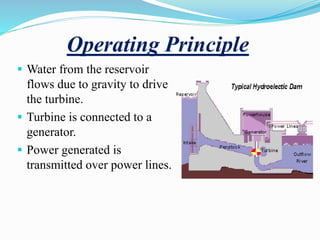
 Water from the reservoir
flows due to gravity to drive
the turbine.
 Turbine is connected to a
generator.
 Power generated is
transmitted over power lines.
Operating Principle
 A water turbine that cover the energy
of flowing or falling water into
mechanical energy that drives a
generator, which generates electrical
power. This is a heart of hydropower
power plant.
 A control mechanism to provide
stable electrical power. It is called
governor.
 Electrical transmission line to deliver
the power to its destination.
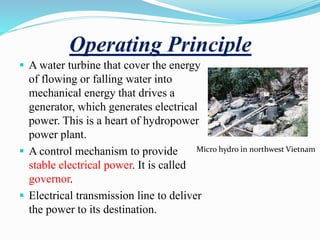
Micro hydro in northwest Vietnam
Construction
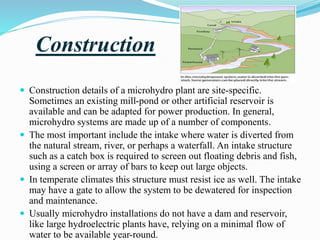
 Construction details of a microhydro plant are site-specific.
Sometimes an existing mill-pond or other artificial reservoir is
available and can be adapted for power production. In general,
microhydro systems are made up of a number of components.
 The most important include the intake where water is diverted from
the natural stream, river, or perhaps a waterfall. An intake structure
such as a catch box is required to screen out floating debris and fish,
using a screen or array of bars to keep out large objects.
 In temperate climates this structure must resist ice as well. The intake
may have a gate to allow the system to be dewatered for inspection
and maintenance.
 Usually microhydro installations do not have a dam and reservoir,
like large hydroelectric plants have, relying on a minimal flow of
water to be available year-round.
Head and flow characteristics
 Microhydro systems are typically set up in areas capable of producing up to
100 kilowatts of electricity. This can be enough to power a home or small
business facility. This production range is calculated in terms of "head" and
"flow". The higher each of these are, the more power available.
 "Head" is the pressure measurement of falling water expressed as a
function of the vertical distance the water falls.This change in elevation is
usually measured in feet or meters. A drop of at least 2 feet is required or the
system may not be feasible.
 When quantifying head, both gross and net head must be considered. Gross
head approximates power accessibility through the vertical distance
measurement alone whereas net head subtracts pressure lost due to friction
in piping from the gross head.
 "Flow" is the actual quantity of water falling from a site and is usually
measured in gallons per minute, cubic feet per second, or liters per second.
Turbine types
Impulse Turbines
 Uses the velocity of the water to move the runner and
discharges to atmospheric pressure.
 The water stream hits each bucket on the runner.
 High head, low flow applications.
 Types : Pelton turbine, Turgo turbine
Pelton Turbine
Turgo Turbine
Reaction Turbines
 Combined action of pressure and moving water.
 Runner placed directly in the water stream flowing over
the blades rather than striking each individually.
 Lower head and higher flows than compared with the
impulse turbines.
Francis Turbine
Kaplan Turbine
Chain Turbine
 It is a gravity machine
 It is built up of two parallel
chain systems joint together at
the chains with a series of
buckets.
 The flow rater entering the
buckets is controlled by the
water valve through a motor to
open or close the valve.
 Buckets fill full of water go
down to bring to rotary
sprocket system.
USES
 Microhydro systems are very flexible and can be deployed in a
number of different environments.
 They are dependent on how much water flow the source
(creek, river, stream) has and the velocity of the flow of water.
 Energy can be stored in battery banks at sites that are far from a
facility or used in addition to a system that is directly
connected so that in times of high demand there is additional
reserve energy available.
 These systems can be designed to minimize potential damage
regularly caused by large dams or other mass hydroelectric
generation sites.
Potential for rural development
 In relation to rural development, the simplicity and low relative cost
of micro hydro systems open up new opportunities for some isolated
communities in need of electricity.
 With only a small stream needed, remote areas can access lighting
and communications for homes, medical clinics, schools, and other
facilities. Microhydro can even run a certain level of machinery
supporting small businesses. Regions along the Andes mountains and
in Sri Lanka and China already have similar, active programs.
 One seemingly unexpected use of such systems in some areas is to
keep young community members from moving into more urban
regions in order to spur economic growth.
 Also, as the possibility of financial incentives for less carbon
intensive processes grows, the future of microhydro systems may
become more appealing.
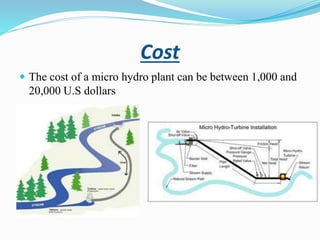
Cost
 The cost of a micro hydro plant can be between 1,000 and
20,000 U.S dollars
Merits
 Microhydro power is generated through a process that utilizes
the natural flow of water.This power is most commonly
converted into electricity.
 With no direct emissions resulting from this conversion
process, there are little to no harmful effects on the
environment, if planned well, thus supplying power from a
renewable source and in a sustainable manner.
 Microhydro is considered a "run-of-river" system meaning that
water diverted from the stream or river is redirected back into
the same watercourse.Adding to the potential economic
benefits of microhydro is efficiency, reliability, and cost
effectiveness.
Demerits
 Microhydro systems are limited mainly by characteristics
of the site. The most direct limitation comes from small
sources with minuscule flow.
 Likewise, flow can fluctuate seasonally in some areas.
Lastly, though perhaps the foremost disadvantage is the
distance from the power source to the site in need of
energy.
 This distributional issue as well as the others are key when
considering using a microhydro system.
By Bhavik Shah -130210106049.

Micro Hydel Powerplant

  • 2.
  • 3.
    Contents  Introduction  OperatingPrinciple  Construction of Micro Hydel Power plants  Types Of Turbines  Use  Merits  Demerits
  • 4.
    Introduction  Micro hydroor Micro hydel is a type of hydroelectric power that typically produce up to 100 kW of electricity using the natural flow of water.  These installations can provide power to an isolated home or small community, or are sometimes connected to electric power networks.  There are many of these installations around the world, particularly in developing nations as they can provide an economical source of energy without the purchase of fuel.
  • 5.
    Operating Principle  Waterfrom the reservoir flows due to gravity to drive the turbine.  Turbine is connected to a generator.  Power generated is transmitted over power lines.
  • 6.
    Operating Principle  Awater turbine that cover the energy of flowing or falling water into mechanical energy that drives a generator, which generates electrical power. This is a heart of hydropower power plant.  A control mechanism to provide stable electrical power. It is called governor.  Electrical transmission line to deliver the power to its destination. Micro hydro in northwest Vietnam
  • 7.
    Construction  Construction detailsof a microhydro plant are site-specific. Sometimes an existing mill-pond or other artificial reservoir is available and can be adapted for power production. In general, microhydro systems are made up of a number of components.  The most important include the intake where water is diverted from the natural stream, river, or perhaps a waterfall. An intake structure such as a catch box is required to screen out floating debris and fish, using a screen or array of bars to keep out large objects.  In temperate climates this structure must resist ice as well. The intake may have a gate to allow the system to be dewatered for inspection and maintenance.  Usually microhydro installations do not have a dam and reservoir, like large hydroelectric plants have, relying on a minimal flow of water to be available year-round.
  • 8.
    Head and flowcharacteristics  Microhydro systems are typically set up in areas capable of producing up to 100 kilowatts of electricity. This can be enough to power a home or small business facility. This production range is calculated in terms of "head" and "flow". The higher each of these are, the more power available.  "Head" is the pressure measurement of falling water expressed as a function of the vertical distance the water falls.This change in elevation is usually measured in feet or meters. A drop of at least 2 feet is required or the system may not be feasible.  When quantifying head, both gross and net head must be considered. Gross head approximates power accessibility through the vertical distance measurement alone whereas net head subtracts pressure lost due to friction in piping from the gross head.  "Flow" is the actual quantity of water falling from a site and is usually measured in gallons per minute, cubic feet per second, or liters per second.
  • 9.
  • 10.
    Impulse Turbines  Usesthe velocity of the water to move the runner and discharges to atmospheric pressure.  The water stream hits each bucket on the runner.  High head, low flow applications.  Types : Pelton turbine, Turgo turbine
  • 11.
  • 12.
  • 13.
    Reaction Turbines  Combinedaction of pressure and moving water.  Runner placed directly in the water stream flowing over the blades rather than striking each individually.  Lower head and higher flows than compared with the impulse turbines.
  • 14.
  • 15.
  • 16.
    Chain Turbine  Itis a gravity machine  It is built up of two parallel chain systems joint together at the chains with a series of buckets.  The flow rater entering the buckets is controlled by the water valve through a motor to open or close the valve.  Buckets fill full of water go down to bring to rotary sprocket system.
  • 17.
    USES  Microhydro systemsare very flexible and can be deployed in a number of different environments.  They are dependent on how much water flow the source (creek, river, stream) has and the velocity of the flow of water.  Energy can be stored in battery banks at sites that are far from a facility or used in addition to a system that is directly connected so that in times of high demand there is additional reserve energy available.  These systems can be designed to minimize potential damage regularly caused by large dams or other mass hydroelectric generation sites.
  • 18.
    Potential for ruraldevelopment  In relation to rural development, the simplicity and low relative cost of micro hydro systems open up new opportunities for some isolated communities in need of electricity.  With only a small stream needed, remote areas can access lighting and communications for homes, medical clinics, schools, and other facilities. Microhydro can even run a certain level of machinery supporting small businesses. Regions along the Andes mountains and in Sri Lanka and China already have similar, active programs.  One seemingly unexpected use of such systems in some areas is to keep young community members from moving into more urban regions in order to spur economic growth.  Also, as the possibility of financial incentives for less carbon intensive processes grows, the future of microhydro systems may become more appealing.
  • 19.
    Cost  The costof a micro hydro plant can be between 1,000 and 20,000 U.S dollars
  • 20.
    Merits  Microhydro poweris generated through a process that utilizes the natural flow of water.This power is most commonly converted into electricity.  With no direct emissions resulting from this conversion process, there are little to no harmful effects on the environment, if planned well, thus supplying power from a renewable source and in a sustainable manner.  Microhydro is considered a "run-of-river" system meaning that water diverted from the stream or river is redirected back into the same watercourse.Adding to the potential economic benefits of microhydro is efficiency, reliability, and cost effectiveness.
  • 21.
    Demerits  Microhydro systemsare limited mainly by characteristics of the site. The most direct limitation comes from small sources with minuscule flow.  Likewise, flow can fluctuate seasonally in some areas. Lastly, though perhaps the foremost disadvantage is the distance from the power source to the site in need of energy.  This distributional issue as well as the others are key when considering using a microhydro system.
  • 22.
    By Bhavik Shah-130210106049.