OTEC
OCEAN THERMAL ENERGY CONVERSION
By-
Anik Samaddar and Debanjan Paul,
ME(5th semester), Academy Of Technology
INTRODUCTION
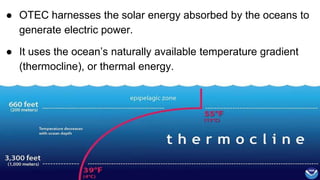
● OTEC harnesses the solar energy absorbed by the oceans to
generate electric power.
● It uses the ocean’s naturally available temperature gradient
(thermocline), or thermal energy.
• Oceans collect 80% of the incident solar energy.
•
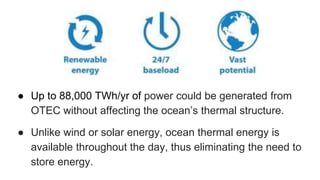
● Up to 88,000 TWh/yr of power could be generated from
OTEC without affecting the ocean’s thermal structure.
● Unlike wind or solar energy, ocean thermal energy is
available throughout the day, thus eliminating the need to
store energy.
STUDY OF OTEC PLANTS
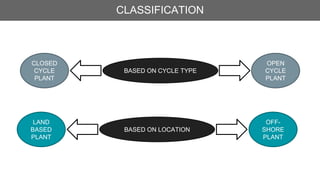
CLASSIFICATION
BASED ON CYCLE TYPE
OPEN
CYCLE
PLANT
CLOSED
CYCLE
PLANT
BASED ON LOCATION
LAND
BASED
PLANT
OFF-
SHORE
PLANT
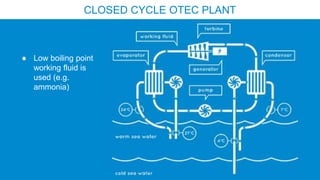
CLOSED CYCLE OTEC PLANT
● Low boiling point
working fluid is
used (e.g.
ammonia)
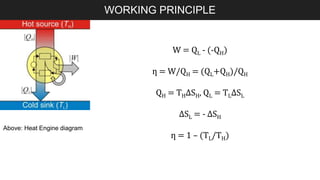
WORKING PRINCIPLE
W = QL - (-QH)
ƞ = W/QH = (QL+QH)/QH
QH = THΔSH, QL = TLΔSL
ΔSL = - ΔSH
ƞ = 1 – (TL/TH)
Above: Heat Engine diagram
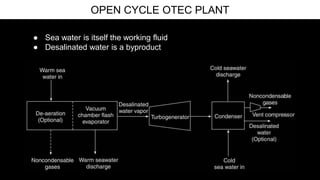
● Sea water is itself the working fluid
● Desalinated water is a byproduct
OPEN CYCLE OTEC PLANT
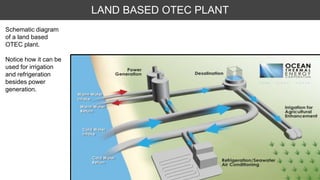
LAND BASED OTEC PLANT
Schematic diagram
of a land based
OTEC plant.
Notice how it can be
used for irrigation
and refrigeration
besides power
generation.
OFFSHORE OTEC PLANT
Right: A concept of a proposed
floating type plant in Puerto Rico
Below: A floating type plant off the
coast at Keahole Point, Hawaii
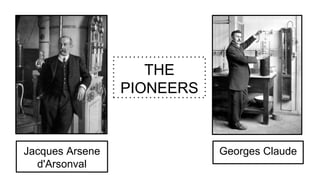
HISTORY
Jacques Arsene
d'Arsonval
THE
PIONEERS
Georges Claude
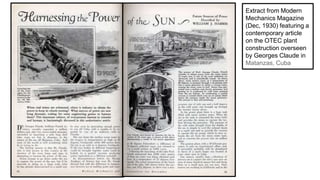
Extract from Modern
Mechanics Magazine
(Dec, 1930) featuring a
contemporary article
on the OTEC plant
construction overseen
by Georges Claude in
Matanzas, Cuba
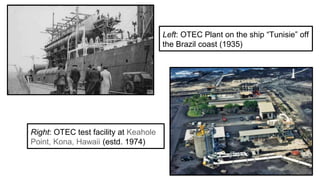
Left: OTEC Plant on the ship “Tunisie” off
the Brazil coast (1935)
Right: OTEC test facility at Keahole
Point, Kona, Hawaii (estd. 1974)
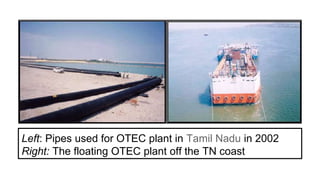
Left: Pipes used for OTEC plant in Tamil Nadu in 2002
Right: The floating OTEC plant off the TN coast
Construction of
the OTEC plant
at Kume Island,
Okinawa in
2013.
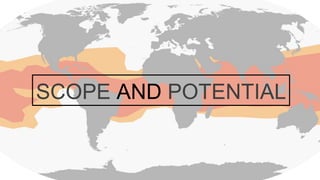
SCOPE AND POTENTIAL
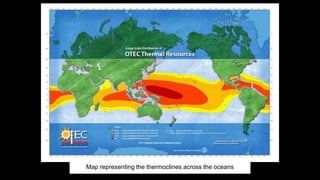
Map representing the thermoclines across the oceans
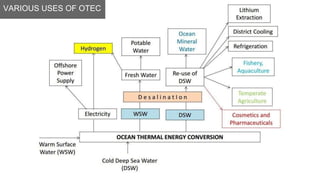
VARIOUS USES OF OTEC
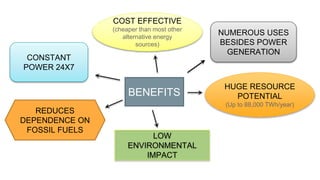
COST EFFECTIVE
(cheaper than most other
alternative energy
sources)
NUMEROUS USES
BESIDES POWER
GENERATION
LOW
ENVIRONMENTAL
IMPACT
HUGE RESOURCE
POTENTIAL
(Up to 88,000 TWh/year)
CONSTANT
POWER 24X7
BENEFITS
REDUCES
DEPENDENCE ON
FOSSIL FUELS
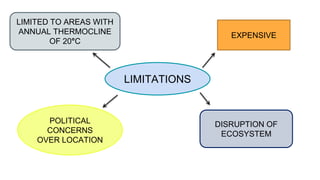
LIMITATIONS
EXPENSIVE
LIMITED TO AREAS WITH
ANNUAL THERMOCLINE
OF 20°C
POLITICAL
CONCERNS
OVER LOCATION
DISRUPTION OF
ECOSYSTEM
FUTURE OF OTEC
Upcoming project
locations:
• The Bahamas, US
• Hainan Island,
China
• Hawaii, US
• Japan
• Virgin Islands, US
• Kiribati
• Andaman & Nicobar
Islands, India
• Martinique, France
• Reunion island,
France
REFERENCES AND SOURCES
● Ocean Thermal Energy Conversion - Wikipedia, the free encyclopedia
https://en.wikipedia.org/wiki/Ocean_thermal_energy_conversion
● How does OTEC work? (ocean thermal energy conversion) - Explain that Stuff
http://www.explainthatstuff.com/how-otec-works.html
● The Energy Debates: Ocean Thermal Energy Conversion
http://www.livescience.com/3155-energy-debates-ocean-thermal-energy-conversion.html
● Ocean Thermal Energy Conversion Basics | Department of Energy
http://energy.gov/eere/energybasics/articles/ocean-thermal-energy-conversion-basics
● OTEC 101 - How Does It Work? - OTE Corporation
http://otecorporation.com/technology/otec-101-how-does-it-work/
● OTEC: The Time Is Now – Lockheed Martin
http://www.lockheedmartin.co.in/us/100years/stories/otec.html
● ocean thermal energy conversion (OTEC) | technology | Britannica.com
https://www.britannica.com/technology/ocean-thermal-energy-conversion

Power Point Presentation On OCEAN THERMAL ENERGY CONVERSION

  • 1.
    OTEC OCEAN THERMAL ENERGYCONVERSION By- Anik Samaddar and Debanjan Paul, ME(5th semester), Academy Of Technology
  • 2.
  • 3.
    ● OTEC harnessesthe solar energy absorbed by the oceans to generate electric power. ● It uses the ocean’s naturally available temperature gradient (thermocline), or thermal energy. • Oceans collect 80% of the incident solar energy. •
  • 4.
    ● Up to88,000 TWh/yr of power could be generated from OTEC without affecting the ocean’s thermal structure. ● Unlike wind or solar energy, ocean thermal energy is available throughout the day, thus eliminating the need to store energy.
  • 5.
  • 6.
    CLASSIFICATION BASED ON CYCLETYPE OPEN CYCLE PLANT CLOSED CYCLE PLANT BASED ON LOCATION LAND BASED PLANT OFF- SHORE PLANT
  • 7.
    CLOSED CYCLE OTECPLANT ● Low boiling point working fluid is used (e.g. ammonia)
  • 8.
    WORKING PRINCIPLE W =QL - (-QH) ƞ = W/QH = (QL+QH)/QH QH = THΔSH, QL = TLΔSL ΔSL = - ΔSH ƞ = 1 – (TL/TH) Above: Heat Engine diagram
  • 9.
    ● Sea wateris itself the working fluid ● Desalinated water is a byproduct OPEN CYCLE OTEC PLANT
  • 10.
    LAND BASED OTECPLANT Schematic diagram of a land based OTEC plant. Notice how it can be used for irrigation and refrigeration besides power generation.
  • 11.
    OFFSHORE OTEC PLANT Right:A concept of a proposed floating type plant in Puerto Rico Below: A floating type plant off the coast at Keahole Point, Hawaii
  • 12.
  • 13.
  • 14.
    Extract from Modern MechanicsMagazine (Dec, 1930) featuring a contemporary article on the OTEC plant construction overseen by Georges Claude in Matanzas, Cuba
  • 15.
    Left: OTEC Planton the ship “Tunisie” off the Brazil coast (1935) Right: OTEC test facility at Keahole Point, Kona, Hawaii (estd. 1974)
  • 16.
    Left: Pipes usedfor OTEC plant in Tamil Nadu in 2002 Right: The floating OTEC plant off the TN coast
  • 17.
    Construction of the OTECplant at Kume Island, Okinawa in 2013.
  • 18.
  • 19.
    Map representing thethermoclines across the oceans
  • 20.
  • 21.
    COST EFFECTIVE (cheaper thanmost other alternative energy sources) NUMEROUS USES BESIDES POWER GENERATION LOW ENVIRONMENTAL IMPACT HUGE RESOURCE POTENTIAL (Up to 88,000 TWh/year) CONSTANT POWER 24X7 BENEFITS REDUCES DEPENDENCE ON FOSSIL FUELS
  • 22.
    LIMITATIONS EXPENSIVE LIMITED TO AREASWITH ANNUAL THERMOCLINE OF 20°C POLITICAL CONCERNS OVER LOCATION DISRUPTION OF ECOSYSTEM
  • 23.
    FUTURE OF OTEC Upcomingproject locations: • The Bahamas, US • Hainan Island, China • Hawaii, US • Japan • Virgin Islands, US • Kiribati • Andaman & Nicobar Islands, India • Martinique, France • Reunion island, France
  • 24.
    REFERENCES AND SOURCES ●Ocean Thermal Energy Conversion - Wikipedia, the free encyclopedia https://en.wikipedia.org/wiki/Ocean_thermal_energy_conversion ● How does OTEC work? (ocean thermal energy conversion) - Explain that Stuff http://www.explainthatstuff.com/how-otec-works.html ● The Energy Debates: Ocean Thermal Energy Conversion http://www.livescience.com/3155-energy-debates-ocean-thermal-energy-conversion.html ● Ocean Thermal Energy Conversion Basics | Department of Energy http://energy.gov/eere/energybasics/articles/ocean-thermal-energy-conversion-basics ● OTEC 101 - How Does It Work? - OTE Corporation http://otecorporation.com/technology/otec-101-how-does-it-work/ ● OTEC: The Time Is Now – Lockheed Martin http://www.lockheedmartin.co.in/us/100years/stories/otec.html ● ocean thermal energy conversion (OTEC) | technology | Britannica.com https://www.britannica.com/technology/ocean-thermal-energy-conversion