MICI 1100 Health Sciences Microbiology Course Coordinator:  Dr David Haldane Rm 326 Mackenzie Building, QE II HSC [email_address] Welcome to
Objectives of the Course To have an appreciation of the development of microbiology relating to infection. To understand the structure and physiology of microorganisms of different types. Be able to recognize genera and important species by name. To have an understanding of the types of infectious disease. To have an understanding of the role of particular organisms in infections, and how infection is caused. Be aware of the range of organisms causing disease, and how to distinguish groups of organisms. To understand the sources, and routes of transmission of organisms To have an understanding of how infectious diseases are manifested in the host.
Objectives To understand the nature and role of the immune system To know the role of immunization in the prevention of infection. To have an understanding of the range and principle mode of action of antimicrobial agents. To have an understanding of the means by which organisms are resistant to antimicrobials. To have an understanding of the principles of environmental control of organisms.  To have an understanding of the principles of infection control. To be able to provide appropriate specimens and understand laboratory results for microbiology. To have an awareness of the laboratory techniques used in the diagnosis of infectious disease.
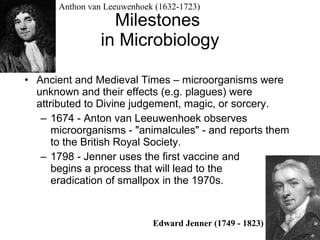
Milestones  in Microbiology Ancient and Medieval Times – microorganisms were unknown and their effects (e.g. plagues) were attributed to Divine judgement, magic, or sorcery. 1674 - Anton van Leeuwenhoek observes microorganisms - "animalcules" - and reports them to the British Royal Society. 1798 - Jenner uses the first vaccine and  begins a process that will lead to the  eradication of smallpox in the 1970s. Edward Jenner (1749 - 1823) Anthon van Leeuwenhoek (1632-1723)
Milestones  (cont’d) 17th-19th - The theory of spontaneous generation (that organisms were generated from rotting organic material) was slowly disproved, a process which was finally completed by Pasteur and Tyndall. 1850 – Semelweiss shows the value of hygiene  1860s - Pasteur furthers the germ theory of disease by his work on silkworms, and develops pasteurization. 1870s - Lister uses "antisepsis" to control surgical infections. 1876 - Koch demonstrates that anthrax is caused by Bacillus anthracis.
Milestones in Microbiology  (cont’d) 1881 – Lina Hesse suggests agar to solidify growth media for bacteria. 1880-1900 - “The Golden Age of Microbiology” - many pathogens first identified. 1940s - Development of antibiotics begins. 1940s–present - Widespread use of immunization leads to huge reductions in illness and death caused by many previously common infections, e.g. measles, diphtheria. 1980s - Development of molecular techniques for diagnosis and engineering begins.
Koch's postulates - to establish if an organism is the cause of a disease The same organism must be found in all cases of a given disease. The organism must be isolated and grown in pure culture. Organisms from the pure culture must reproduce the disease when inoculated into a healthy susceptible animal. The organism must then again be isolated from the experimentally infected animal.
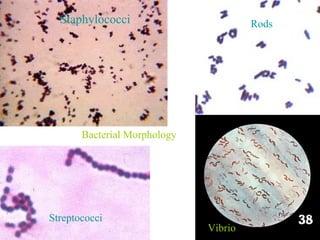
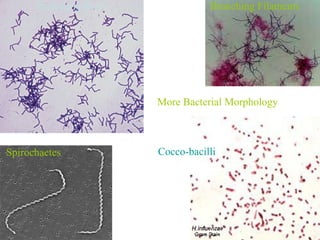
Organisms - Morphology (shapes) Cocci Streptococci (Strepto - chain) Staphylococci (Staphylo - grapes) Rods (“bacilli”)  very short rods - coccobacilli curved rods - vibrio spiral rods - spirochaetes Filaments with branching  actinomycetes
Staphylococci Streptococci Rods Vibrio Bacterial Morphology
Spirochaetes Cocco-bacilli Branching Filaments Branching Rods More Bacterial Morphology
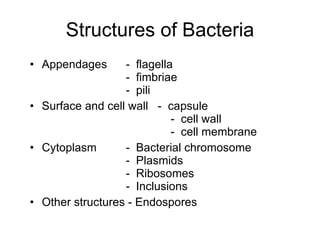
Structures of Bacteria Appendages -  flagella -  fimbriae -  pili Surface and cell wall  -  capsule     -  cell wall     -  cell membrane Cytoplasm -  Bacterial chromosome -  Plasmids -  Ribosomes -  Inclusions Other structures - Endospores
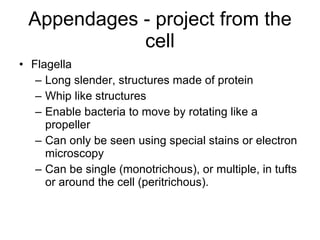
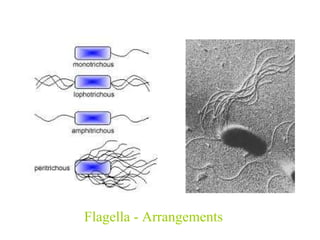
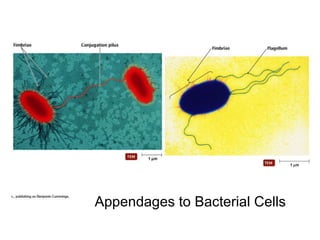
Appendages - project from the cell Flagella Long slender, structures made of protein Whip like structures Enable bacteria to move by rotating like a propeller Can only be seen using special stains or electron microscopy Can be single (monotrichous), or multiple, in tufts or around the cell (peritrichous).
Flagella - Arrangements
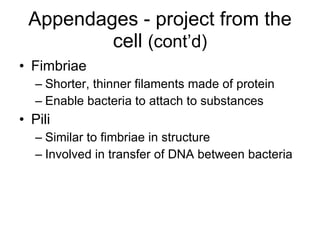
Appendages - project from the cell  (cont’d) Fimbriae  Shorter, thinner filaments made of protein Enable bacteria to attach to substances Pili  Similar to fimbriae in structure Involved in transfer of DNA between bacteria
Appendages to Bacterial Cells
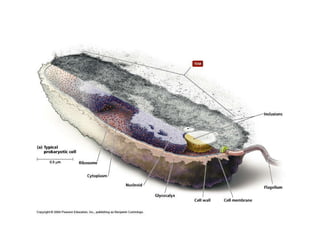
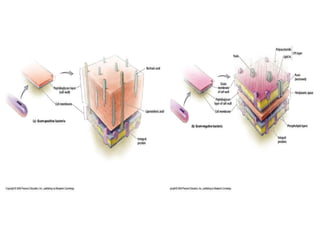
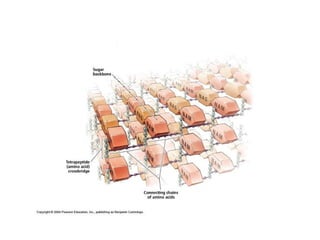
Surface and Cell Wall Capsule Material that is secreted by bacteria and covers the exterior of the cell Often polysaccharide May be a thick layer; slime coating Cell Wall Differs from animal cells, or fungi A strong layer made of peptidoglycan Maintains cell shape and integrity A principle target for antibiotic action Stains using the Gram stain. Differs for  Gram positive vs Gram negative organisms
 
Surface and Cell Wall  (cont’d) Gram Positive Thick peptidoglycan layer No outer membrane Gram Negative Outer membrane Thin peptidoglycan layer Space between membranes is periplasmic space
 
 
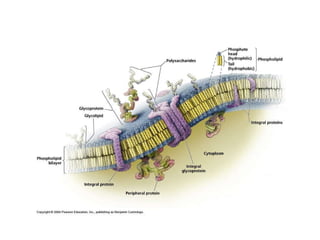
Surface and Cell Wall  (cont’d) Cell Membrane Lipid bilayer with proteins Controls the entrance and exit of substances from the cell Contains enzymes involved in cell wall production, cellular metabolism, and production of some extra-cellular materials In gram negatives, it contains endotoxin Cytoplasm Liquid containing a variety of substances It is where metabolism occurs
 
Surface and Cell Wall  (cont’d) Ribosomes Made of RNA and protein Structures where proteins are made Two subunits.  Bacterial ribosomes are  different from ribosomes in animal or plant cells (eukaryotic cells) Bacterial Chromosome Made of DNA A single long circular molecular of DNA Not separated from cytoplasm (as in animal or plant cells which have nuclei)
Surface and Cell Wall  (cont’d) Plasmids Small, circular pieces of DNA Separate from the chromosome Can be transferred between bacteria May carry genes for antibiotic resistance Inclusions Granules in the cytoplasm May act as storage of various substances
Other Structures Endospores ("spore") Environmentally tough, dormant form Develop in cytoplasm of bacteria Do not grow or divide Can remain viable for long periods Only formed by certain genera of bacteria Germinates to form a new cell
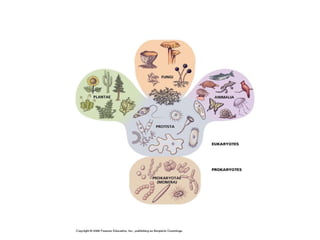
Bacterial Taxonomy How are bacteria organized and classified Domains  Cells lacking nuclei (prokaryotes) vs cells with nuclei (eukaryotes) Kingdoms*: Animals Plants Fungi Protista Monera - the prokaryotic organisms (*Note: Different systems are used; this one is convenient )
 
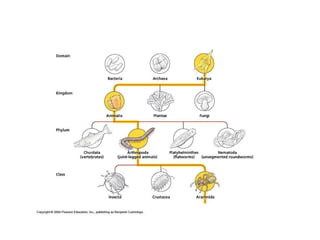
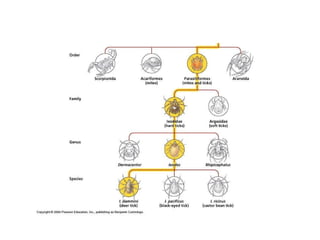
Bacterial Taxonomy  (cont’d) Classification: Kingdom Phylum Class Order Family    Used most Genus    frequently in Species    clinical practise
 
 
Bacterial Taxonomy ( cont’d) Characteristics used to classify organisms Traditional Size, shape, gram reaction, need for O 2 Ability to metabolize sugars Metabolic end products Supplemented by Comparison of 100-300 characteristics Nucleic acid sequence of ribosomal RNA
General Groupings used in Taxonomy Aerobic (grows in air), obligate if must have O 2 .  Capnophilic if needs CO 2 . Facultative anaerobe (grows in air, and can grow without oxygen). Anaerobe (grows without oxygen, and most species do not grow well in air as O 2  is toxic for them). Microaerophilic (grows in a low concentration of oxygen, but not in its absence or in air).
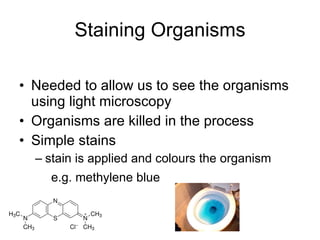
Staining Organisms Needed to allow us to see the organisms using light microscopy Organisms are killed in the process Simple stains stain is applied and colours the organism  e.g. methylene blue
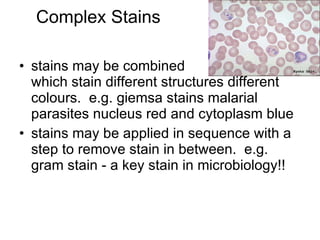
Complex Stains stains may be combined  which stain different structures different colours.  e.g. giemsa stains malarial parasites nucleus red and cytoplasm blue stains may be applied in sequence with a step to remove stain in between.  e.g. gram stain - a key stain in microbiology!!
The Gram Stain Developed by Christian Gram in the 19th Century He found that a stain could be washed out of some organisms much more easily than others Technique allows differentiation of many bacteria into 2 groups: gram positive and gram negative – corresponding to cell wall type. Continues to be used extensively and is important!
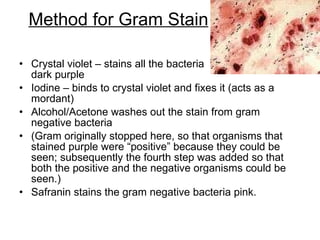
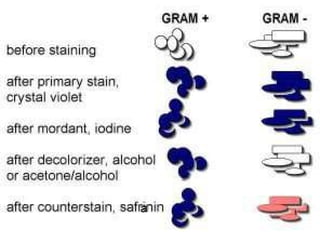
Method for Gram Stain Crystal violet – stains all the bacteria  dark purple Iodine – binds to crystal violet and fixes it (acts as a mordant) Alcohol/Acetone washes out the stain from gram negative bacteria (Gram originally stopped here, so that organisms that stained purple were “positive” because they could be seen; subsequently the fourth step was added so that both the positive and the negative organisms could be seen.) Safranin stains the gram negative bacteria pink.
a
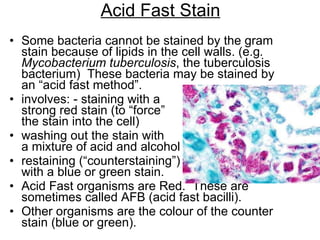
Acid Fast Stain Some bacteria cannot be stained by the gram stain because of lipids in the cell walls. (e.g . Mycobacterium tuberculosis , the tuberculosis bacterium)  These bacteria may be stained by an “acid fast method”. involves: - staining with a  strong red stain (to “force”  the stain into the cell) washing out the stain with  a mixture of acid and alcohol  restaining (“counterstaining”)  with a blue or green stain. Acid Fast organisms are Red.  These are sometimes called AFB (acid fast bacilli). Other organisms are the colour of the counter stain (blue or green).
Bacterial Growth Requirements and Metabolism
Requirements for Bacterial Growth Carbon source Nitrogen source Essential nutrients Temperature Atmosphere Inorganic ions, iron pH Water
Requirements for Bacterial Growth  (cont’d) Carbon Sources Simple carbohydrates, sugars, proteins Some organisms can fix CO 2 Nitrogen Sources Protein, amino acid, peptides Nitrates, ammonium salts Some organisms can fix N 2
Requirements for Bacterial Growth  (cont'd) Essential Nutrients Bacteria vary in their requirements Some can synthesize all their needs Others need complex organic molecules, blood, vitamins to grow.  These are called fastidious. Temperature Bacteria (like humans) grow best at certain temperatures. Mesophiles grow best between 20-40°C.  Other types are best adapted to growing below 15  , or above 40-45  . Human pathogens are usually mesophiles.
Requirements for Bacterial Growth  (cont'd) Oxygen Acts as a final electron accepter in aerobic organisms. The superoxide radical (O 2 - ) is toxic and must be rendered safe for cells to survive.  Anaerobic organisms lack the means to detoxify O 2 - . Iron Required for enzyme action. Fe 3+  is insoluble. Bacteria produce siderophores, which bind to Fe 3+  and make it possible to import it.
Requirements for Bacterial Growth  (cont’d) pH Most organisms prefer neutral conditions. Bacteria tend to die in acidic conditions (pH <6). Water Bacteria require soluble nutrients for diffusion into the cell. Growth is inhibited in strong solutions. Bacteria with defective cell walls burst in very weak solutions.
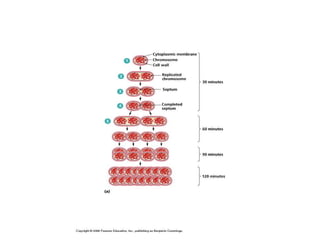
Growth of Bacteria Bacteria multiply by binary fission (a single cell separates to form two new cells of equal size). The rate of growth is limited by: the availability of nutrients temperature ability to remove toxic products The time required to divide is called the generation time. for most organisms, it is measured in minutes
 
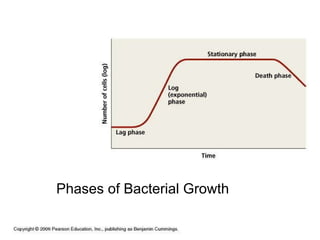
Phases of Growth of Microbial Populations Lag phase Adaption to environment Active synthesis of enzymes and other constituents Log (i.e. logarithmic) phase Rapid reproduction Antibiotics most active
Phases of Growth of Microbial Populations  (cont’d) Stationary Phase Rate of reproduction equals rate of cell death Nutrients depleted Toxic metabolites accumulate Death Phase Death rate exceeds reproduction
Phases of Bacterial Growth
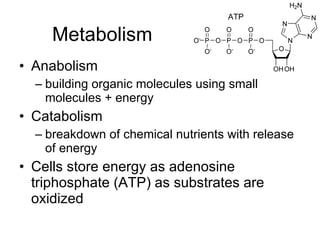
Metabolism Anabolism building organic molecules using small molecules + energy Catabolism breakdown of chemical nutrients with release of energy Cells store energy as adenosine triphosphate (ATP) as substrates are oxidized ATP
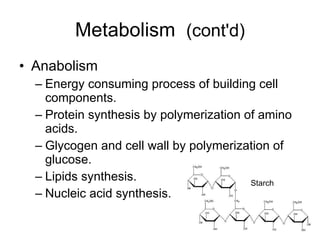
Metabolism  (cont'd) Anabolism Energy consuming process of building cell components. Protein synthesis by polymerization of amino acids. Glycogen and cell wall by polymerization of glucose. Lipids synthesis. Nucleic acid synthesis. Starch
Importation of Nutrients Active Transport - enzymes move substrate into the cell, requiring energy. Concentration inside the cell higher than outside No modification of substrate Group Translocation - enzymes modify a substance as it comes into the cell. Diffusion of altered substrate is reduced Energy required
Importation of Nutrients  (cont’d) Facilitated Diffusion - enzymes aid diffusion but no energy required. No modification of substrate Concentration does not exceed exterior conc.
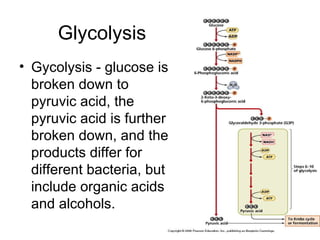
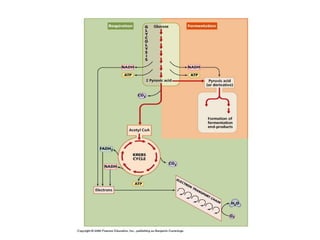
Gycolysis - glucose is broken down to pyruvic acid, the pyruvic acid is further broken down, and the products differ for different bacteria, but include organic acids and alcohols. Glycolysis
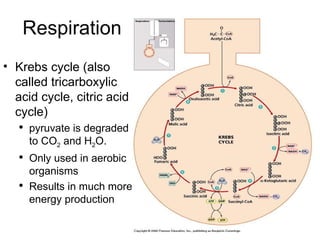
Krebs cycle (also called tricarboxylic acid cycle, citric acid cycle) pyruvate is degraded to CO 2  and H 2 O. Only used in aerobic organisms Results in much more energy production Respiration
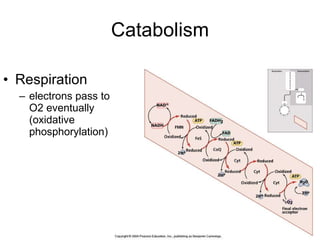
Catabolism Respiration electrons pass to O2 eventually (oxidative phosphorylation)
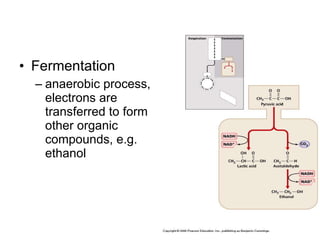
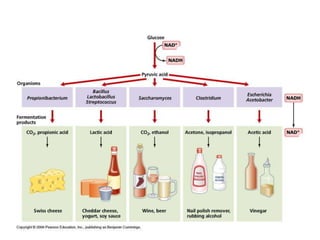
Fermentation anaerobic process, electrons are transferred to form other organic compounds, e.g. ethanol
 
 
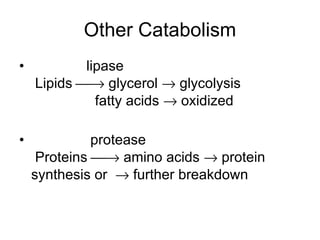
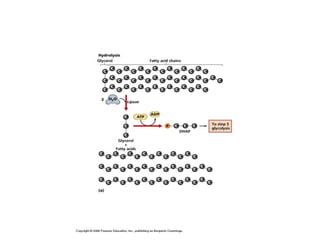
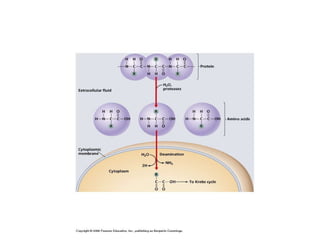
Other Catabolism lipase  Lipids    glycerol    glycolysis     fatty acids    oxidized protease  Proteins    amino acids    protein  synthesis or    further breakdown
 
 
Sterilization and Disinfection
Disinfection Disinfection using Chemicals. Antiseptics - &quot;disinfectants&quot; that can be used on skin. Disinfectant - usually used on inanimate objects. May kill bacteria (bactericide) or prevent growth (bacteriostatic agent). Pasteurization Preservation - drying, osmotic methods, etc.
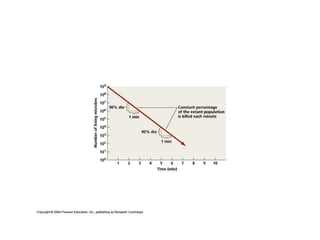
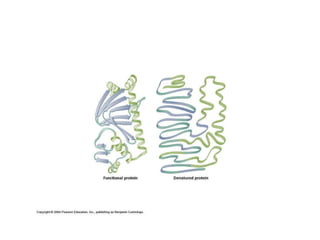
Disinfection  (cont’d) Factors important in disinfectant activity: Disinfectant concentration Time of exposure Number and type of microbes present Nature of material to be disinfected Mode of action Disruption of cell membrane (e.g. detergents). Denaturation of proteins (e.g. alcohol).
 
 
Examples of Disinfectants Phenol based - disrupt cell membranes and precipitate proteins. As phenol is toxic, chemically altered (“substituted”) phenols –phenolics- are used. Cresol - similar action to phenol. e.g. Lysol. Biguanides – disrupt plasma membrane. Nontoxic. e.g. chlorhexidine  used for skin disinfection. Alcohols - denature proteins. 70% is more effective than 100% Requires adequate time for activity
Examples of Disinfectants  (cont’d) Halogens (fluorine, chlorine, iodine) - acts by oxidation of enzymes. Hypochlorite (“javex”) is commonly used Inactivated by organic material Activity of preparations drops after opening Quarternary ammonium compounds - possibly disrupt membranes Often combined with detergents Commonly used for environmental cleaning
Examples of Disinfectants  (cont’d) Detergents - disrupt cell membranes. Heavy metals. (e.g. copper, lead)
“High Level Disinfectants” Substances able to kill spores, tubercle bacilli, and viruses given enough time. Examples Glutaraldehyde Formaldehyde
Sterilization Elimination of viable organisms. Used for substances/devices to be inoculated into or to enter patients.
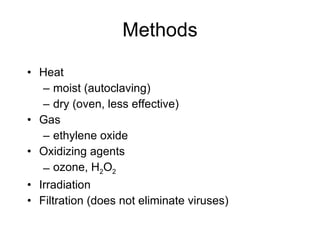
Methods Heat moist (autoclaving) dry (oven, less effective) Gas ethylene oxide Oxidizing agents ozone, H 2 O 2 Irradiation Filtration (does not eliminate viruses)
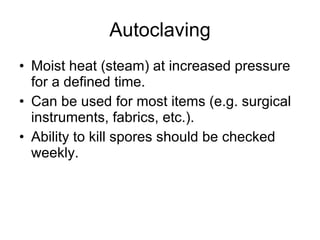
Autoclaving Moist heat (steam) at increased pressure for a defined time. Can be used for most items (e.g. surgical instruments, fabrics, etc.). Ability to kill spores should be checked weekly.
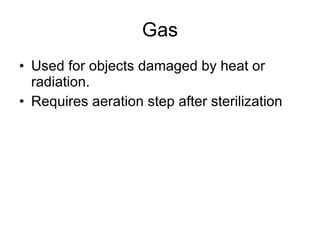
Gas Used for objects damaged by heat or radiation. Requires aeration step after sterilization
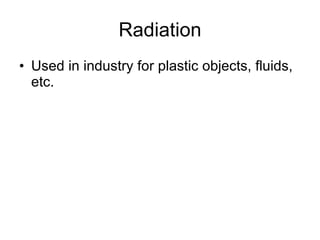
Radiation Used in industry for plastic objects, fluids, etc.
Bacterial Pathogenicity Virulence Factors and Genetics
Microbial Ecology Relationships between host and microbes. Commensal - Microbe received benefit, but there is no harm to the host. Opportunist - Microbe received benefit, and is able to cause disease if host defenses are  weakened. Pathogenicity - The ability of an organism to cause disease.
Microbial Ecology  (cont’d) Virulence - The extent to which an organism can cause severe disease. Normal Flora - The community of organisms that normally exist on a body surface, the constituents vary according to the site.
Transmission of Infection Sources may be   from the normal flora from other sources Other sources: people animals (direct or via food) environment vectors and fomites
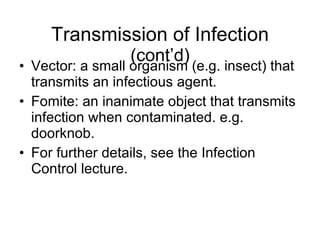
Transmission of Infection  (cont’d) Vector: a small organism (e.g. insect) that transmits an infectious agent. Fomite: an inanimate object that transmits infection when contaminated. e.g. doorknob. For further details, see the Infection Control lecture.
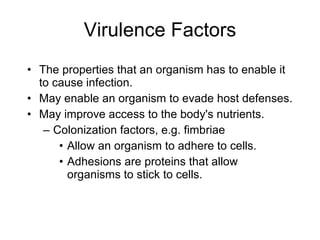
Virulence Factors The properties that an organism has to enable it to cause infection. May enable an organism to evade host defenses. May improve access to the body's nutrients. Colonization factors, e.g. fimbriae Allow an organism to adhere to cells. Adhesions are proteins that allow organisms to stick to cells.
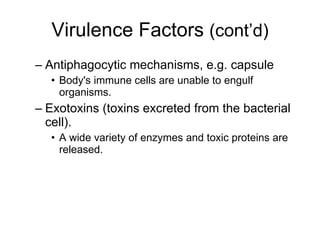
Virulence Factors  (cont’d) Antiphagocytic mechanisms, e.g. capsule Body's immune cells are unable to engulf organisms. Exotoxins (toxins excreted from the bacterial cell). A wide variety of enzymes and toxic proteins are released.
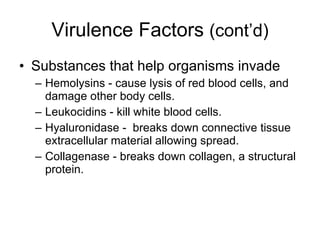
Virulence Factors  (cont’d) Substances that help organisms invade Hemolysins - cause lysis of red blood cells, and damage other body cells. Leukocidins - kill white blood cells. Hyaluronidase -  breaks down connective tissue extracellular material allowing spread. Collagenase - breaks down collagen, a structural protein.
Virulence Factor  (cont’d) Toxins that cause disease Enterotoxins - attack the bowel. Neurotoxins - inhibit normal neurological function. Protein synthesis inhibitors - can kill cells or damage organs, e.g. diphtheria Superantigens - these toxins bind to macrophages and short circuit the mechanism for stimulation of the immune system, causing a massive response and  consequent damage to the body, e.g. Toxic Shock Syndrome, &quot;Flesh  eating disease&quot;.
Virulence Factors  (cont’d) Endotoxin (&quot;Pyrogen&quot;) Found in the outer membrane of gram negative organisms. Causes fever, drop in blood pressure (shock). Acts by binding macrophages and causing release of active substances (cytokines).
Bacterial Genetics Bacteria do not have nuclei. DNA in bacteria occurs as a single circular molecule, and sometimes as small circular molecules (plasmids) that are independent of the chromosome but are expressed. DNA contains the genetic code, recorded in the sequences of the 4 bases in DNA.  Special enzymes cut DNA when it has the specific base  sequence for that enzyme.
Bacterial Genetics  (cont’d) Genetic information is transferred from DNA to RNA and then expressed in the form of proteins. As the DNA sequence of an individual strain is unique (although parts are identical for strains in the same species or genus), it is the basis for the revolution in molecular techniques that you will hear about in a future lecture.
DNA Transfer Free extracellular DNA can be taken up by some bacteria and incorporated to the bacterial genome (transformation). Transfer of genetic material by direct contact of cells (conjugation) especially important in gram negatives. mediated by pili allows transfer of plasmids
DNA Transfer  (cont’d) Genetic material is transferred via a bacterial virus (bacteriophage). Some bacteriophages rapidly destroy infected bacterial cells Others combine their DNA with the host bacteria, where it can be expressed.  This process is called transduction.

Mici 1100 sept_08_lectures_1-5

  • 1.
    MICI 1100 HealthSciences Microbiology Course Coordinator: Dr David Haldane Rm 326 Mackenzie Building, QE II HSC [email_address] Welcome to
  • 2.
    Objectives of theCourse To have an appreciation of the development of microbiology relating to infection. To understand the structure and physiology of microorganisms of different types. Be able to recognize genera and important species by name. To have an understanding of the types of infectious disease. To have an understanding of the role of particular organisms in infections, and how infection is caused. Be aware of the range of organisms causing disease, and how to distinguish groups of organisms. To understand the sources, and routes of transmission of organisms To have an understanding of how infectious diseases are manifested in the host.
  • 3.
    Objectives To understandthe nature and role of the immune system To know the role of immunization in the prevention of infection. To have an understanding of the range and principle mode of action of antimicrobial agents. To have an understanding of the means by which organisms are resistant to antimicrobials. To have an understanding of the principles of environmental control of organisms. To have an understanding of the principles of infection control. To be able to provide appropriate specimens and understand laboratory results for microbiology. To have an awareness of the laboratory techniques used in the diagnosis of infectious disease.
  • 4.
    Milestones inMicrobiology Ancient and Medieval Times – microorganisms were unknown and their effects (e.g. plagues) were attributed to Divine judgement, magic, or sorcery. 1674 - Anton van Leeuwenhoek observes microorganisms - &quot;animalcules&quot; - and reports them to the British Royal Society. 1798 - Jenner uses the first vaccine and begins a process that will lead to the eradication of smallpox in the 1970s. Edward Jenner (1749 - 1823) Anthon van Leeuwenhoek (1632-1723)
  • 5.
    Milestones (cont’d)17th-19th - The theory of spontaneous generation (that organisms were generated from rotting organic material) was slowly disproved, a process which was finally completed by Pasteur and Tyndall. 1850 – Semelweiss shows the value of hygiene 1860s - Pasteur furthers the germ theory of disease by his work on silkworms, and develops pasteurization. 1870s - Lister uses &quot;antisepsis&quot; to control surgical infections. 1876 - Koch demonstrates that anthrax is caused by Bacillus anthracis.
  • 6.
    Milestones in Microbiology (cont’d) 1881 – Lina Hesse suggests agar to solidify growth media for bacteria. 1880-1900 - “The Golden Age of Microbiology” - many pathogens first identified. 1940s - Development of antibiotics begins. 1940s–present - Widespread use of immunization leads to huge reductions in illness and death caused by many previously common infections, e.g. measles, diphtheria. 1980s - Development of molecular techniques for diagnosis and engineering begins.
  • 7.
    Koch's postulates -to establish if an organism is the cause of a disease The same organism must be found in all cases of a given disease. The organism must be isolated and grown in pure culture. Organisms from the pure culture must reproduce the disease when inoculated into a healthy susceptible animal. The organism must then again be isolated from the experimentally infected animal.
  • 8.
    Organisms - Morphology(shapes) Cocci Streptococci (Strepto - chain) Staphylococci (Staphylo - grapes) Rods (“bacilli”) very short rods - coccobacilli curved rods - vibrio spiral rods - spirochaetes Filaments with branching actinomycetes
  • 9.
    Staphylococci Streptococci RodsVibrio Bacterial Morphology
  • 10.
    Spirochaetes Cocco-bacilli BranchingFilaments Branching Rods More Bacterial Morphology
  • 11.
    Structures of BacteriaAppendages - flagella - fimbriae - pili Surface and cell wall - capsule - cell wall - cell membrane Cytoplasm - Bacterial chromosome - Plasmids - Ribosomes - Inclusions Other structures - Endospores
  • 12.
    Appendages - projectfrom the cell Flagella Long slender, structures made of protein Whip like structures Enable bacteria to move by rotating like a propeller Can only be seen using special stains or electron microscopy Can be single (monotrichous), or multiple, in tufts or around the cell (peritrichous).
  • 13.
  • 14.
    Appendages - projectfrom the cell (cont’d) Fimbriae Shorter, thinner filaments made of protein Enable bacteria to attach to substances Pili Similar to fimbriae in structure Involved in transfer of DNA between bacteria
  • 15.
  • 16.
    Surface and CellWall Capsule Material that is secreted by bacteria and covers the exterior of the cell Often polysaccharide May be a thick layer; slime coating Cell Wall Differs from animal cells, or fungi A strong layer made of peptidoglycan Maintains cell shape and integrity A principle target for antibiotic action Stains using the Gram stain. Differs for Gram positive vs Gram negative organisms
  • 17.
  • 18.
    Surface and CellWall (cont’d) Gram Positive Thick peptidoglycan layer No outer membrane Gram Negative Outer membrane Thin peptidoglycan layer Space between membranes is periplasmic space
  • 19.
  • 20.
  • 21.
    Surface and CellWall (cont’d) Cell Membrane Lipid bilayer with proteins Controls the entrance and exit of substances from the cell Contains enzymes involved in cell wall production, cellular metabolism, and production of some extra-cellular materials In gram negatives, it contains endotoxin Cytoplasm Liquid containing a variety of substances It is where metabolism occurs
  • 22.
  • 23.
    Surface and CellWall (cont’d) Ribosomes Made of RNA and protein Structures where proteins are made Two subunits. Bacterial ribosomes are different from ribosomes in animal or plant cells (eukaryotic cells) Bacterial Chromosome Made of DNA A single long circular molecular of DNA Not separated from cytoplasm (as in animal or plant cells which have nuclei)
  • 24.
    Surface and CellWall (cont’d) Plasmids Small, circular pieces of DNA Separate from the chromosome Can be transferred between bacteria May carry genes for antibiotic resistance Inclusions Granules in the cytoplasm May act as storage of various substances
  • 25.
    Other Structures Endospores(&quot;spore&quot;) Environmentally tough, dormant form Develop in cytoplasm of bacteria Do not grow or divide Can remain viable for long periods Only formed by certain genera of bacteria Germinates to form a new cell
  • 26.
    Bacterial Taxonomy Howare bacteria organized and classified Domains Cells lacking nuclei (prokaryotes) vs cells with nuclei (eukaryotes) Kingdoms*: Animals Plants Fungi Protista Monera - the prokaryotic organisms (*Note: Different systems are used; this one is convenient )
  • 27.
  • 28.
    Bacterial Taxonomy (cont’d) Classification: Kingdom Phylum Class Order Family  Used most Genus  frequently in Species  clinical practise
  • 29.
  • 30.
  • 31.
    Bacterial Taxonomy (cont’d) Characteristics used to classify organisms Traditional Size, shape, gram reaction, need for O 2 Ability to metabolize sugars Metabolic end products Supplemented by Comparison of 100-300 characteristics Nucleic acid sequence of ribosomal RNA
  • 32.
    General Groupings usedin Taxonomy Aerobic (grows in air), obligate if must have O 2 . Capnophilic if needs CO 2 . Facultative anaerobe (grows in air, and can grow without oxygen). Anaerobe (grows without oxygen, and most species do not grow well in air as O 2 is toxic for them). Microaerophilic (grows in a low concentration of oxygen, but not in its absence or in air).
  • 33.
    Staining Organisms Neededto allow us to see the organisms using light microscopy Organisms are killed in the process Simple stains stain is applied and colours the organism e.g. methylene blue
  • 34.
    Complex Stains stainsmay be combined which stain different structures different colours. e.g. giemsa stains malarial parasites nucleus red and cytoplasm blue stains may be applied in sequence with a step to remove stain in between. e.g. gram stain - a key stain in microbiology!!
  • 35.
    The Gram StainDeveloped by Christian Gram in the 19th Century He found that a stain could be washed out of some organisms much more easily than others Technique allows differentiation of many bacteria into 2 groups: gram positive and gram negative – corresponding to cell wall type. Continues to be used extensively and is important!
  • 36.
    Method for GramStain Crystal violet – stains all the bacteria dark purple Iodine – binds to crystal violet and fixes it (acts as a mordant) Alcohol/Acetone washes out the stain from gram negative bacteria (Gram originally stopped here, so that organisms that stained purple were “positive” because they could be seen; subsequently the fourth step was added so that both the positive and the negative organisms could be seen.) Safranin stains the gram negative bacteria pink.
  • 37.
  • 38.
    Acid Fast StainSome bacteria cannot be stained by the gram stain because of lipids in the cell walls. (e.g . Mycobacterium tuberculosis , the tuberculosis bacterium) These bacteria may be stained by an “acid fast method”. involves: - staining with a strong red stain (to “force” the stain into the cell) washing out the stain with a mixture of acid and alcohol restaining (“counterstaining”) with a blue or green stain. Acid Fast organisms are Red. These are sometimes called AFB (acid fast bacilli). Other organisms are the colour of the counter stain (blue or green).
  • 39.
  • 40.
    Requirements for BacterialGrowth Carbon source Nitrogen source Essential nutrients Temperature Atmosphere Inorganic ions, iron pH Water
  • 41.
    Requirements for BacterialGrowth (cont’d) Carbon Sources Simple carbohydrates, sugars, proteins Some organisms can fix CO 2 Nitrogen Sources Protein, amino acid, peptides Nitrates, ammonium salts Some organisms can fix N 2
  • 42.
    Requirements for BacterialGrowth (cont'd) Essential Nutrients Bacteria vary in their requirements Some can synthesize all their needs Others need complex organic molecules, blood, vitamins to grow. These are called fastidious. Temperature Bacteria (like humans) grow best at certain temperatures. Mesophiles grow best between 20-40°C. Other types are best adapted to growing below 15  , or above 40-45  . Human pathogens are usually mesophiles.
  • 43.
    Requirements for BacterialGrowth (cont'd) Oxygen Acts as a final electron accepter in aerobic organisms. The superoxide radical (O 2 - ) is toxic and must be rendered safe for cells to survive. Anaerobic organisms lack the means to detoxify O 2 - . Iron Required for enzyme action. Fe 3+ is insoluble. Bacteria produce siderophores, which bind to Fe 3+ and make it possible to import it.
  • 44.
    Requirements for BacterialGrowth (cont’d) pH Most organisms prefer neutral conditions. Bacteria tend to die in acidic conditions (pH <6). Water Bacteria require soluble nutrients for diffusion into the cell. Growth is inhibited in strong solutions. Bacteria with defective cell walls burst in very weak solutions.
  • 45.
    Growth of BacteriaBacteria multiply by binary fission (a single cell separates to form two new cells of equal size). The rate of growth is limited by: the availability of nutrients temperature ability to remove toxic products The time required to divide is called the generation time. for most organisms, it is measured in minutes
  • 46.
  • 47.
    Phases of Growthof Microbial Populations Lag phase Adaption to environment Active synthesis of enzymes and other constituents Log (i.e. logarithmic) phase Rapid reproduction Antibiotics most active
  • 48.
    Phases of Growthof Microbial Populations (cont’d) Stationary Phase Rate of reproduction equals rate of cell death Nutrients depleted Toxic metabolites accumulate Death Phase Death rate exceeds reproduction
  • 49.
  • 50.
    Metabolism Anabolism buildingorganic molecules using small molecules + energy Catabolism breakdown of chemical nutrients with release of energy Cells store energy as adenosine triphosphate (ATP) as substrates are oxidized ATP
  • 51.
    Metabolism (cont'd)Anabolism Energy consuming process of building cell components. Protein synthesis by polymerization of amino acids. Glycogen and cell wall by polymerization of glucose. Lipids synthesis. Nucleic acid synthesis. Starch
  • 52.
    Importation of NutrientsActive Transport - enzymes move substrate into the cell, requiring energy. Concentration inside the cell higher than outside No modification of substrate Group Translocation - enzymes modify a substance as it comes into the cell. Diffusion of altered substrate is reduced Energy required
  • 53.
    Importation of Nutrients (cont’d) Facilitated Diffusion - enzymes aid diffusion but no energy required. No modification of substrate Concentration does not exceed exterior conc.
  • 54.
    Gycolysis - glucoseis broken down to pyruvic acid, the pyruvic acid is further broken down, and the products differ for different bacteria, but include organic acids and alcohols. Glycolysis
  • 55.
    Krebs cycle (alsocalled tricarboxylic acid cycle, citric acid cycle) pyruvate is degraded to CO 2 and H 2 O. Only used in aerobic organisms Results in much more energy production Respiration
  • 56.
    Catabolism Respiration electronspass to O2 eventually (oxidative phosphorylation)
  • 57.
    Fermentation anaerobic process,electrons are transferred to form other organic compounds, e.g. ethanol
  • 58.
  • 59.
  • 60.
    Other Catabolism lipase Lipids  glycerol  glycolysis fatty acids  oxidized protease Proteins  amino acids  protein synthesis or  further breakdown
  • 61.
  • 62.
  • 63.
  • 64.
    Disinfection Disinfection usingChemicals. Antiseptics - &quot;disinfectants&quot; that can be used on skin. Disinfectant - usually used on inanimate objects. May kill bacteria (bactericide) or prevent growth (bacteriostatic agent). Pasteurization Preservation - drying, osmotic methods, etc.
  • 65.
    Disinfection (cont’d)Factors important in disinfectant activity: Disinfectant concentration Time of exposure Number and type of microbes present Nature of material to be disinfected Mode of action Disruption of cell membrane (e.g. detergents). Denaturation of proteins (e.g. alcohol).
  • 66.
  • 67.
  • 68.
    Examples of DisinfectantsPhenol based - disrupt cell membranes and precipitate proteins. As phenol is toxic, chemically altered (“substituted”) phenols –phenolics- are used. Cresol - similar action to phenol. e.g. Lysol. Biguanides – disrupt plasma membrane. Nontoxic. e.g. chlorhexidine used for skin disinfection. Alcohols - denature proteins. 70% is more effective than 100% Requires adequate time for activity
  • 69.
    Examples of Disinfectants (cont’d) Halogens (fluorine, chlorine, iodine) - acts by oxidation of enzymes. Hypochlorite (“javex”) is commonly used Inactivated by organic material Activity of preparations drops after opening Quarternary ammonium compounds - possibly disrupt membranes Often combined with detergents Commonly used for environmental cleaning
  • 70.
    Examples of Disinfectants (cont’d) Detergents - disrupt cell membranes. Heavy metals. (e.g. copper, lead)
  • 71.
    “High Level Disinfectants”Substances able to kill spores, tubercle bacilli, and viruses given enough time. Examples Glutaraldehyde Formaldehyde
  • 72.
    Sterilization Elimination ofviable organisms. Used for substances/devices to be inoculated into or to enter patients.
  • 73.
    Methods Heat moist(autoclaving) dry (oven, less effective) Gas ethylene oxide Oxidizing agents ozone, H 2 O 2 Irradiation Filtration (does not eliminate viruses)
  • 74.
    Autoclaving Moist heat(steam) at increased pressure for a defined time. Can be used for most items (e.g. surgical instruments, fabrics, etc.). Ability to kill spores should be checked weekly.
  • 75.
    Gas Used forobjects damaged by heat or radiation. Requires aeration step after sterilization
  • 76.
    Radiation Used inindustry for plastic objects, fluids, etc.
  • 77.
  • 78.
    Microbial Ecology Relationshipsbetween host and microbes. Commensal - Microbe received benefit, but there is no harm to the host. Opportunist - Microbe received benefit, and is able to cause disease if host defenses are weakened. Pathogenicity - The ability of an organism to cause disease.
  • 79.
    Microbial Ecology (cont’d) Virulence - The extent to which an organism can cause severe disease. Normal Flora - The community of organisms that normally exist on a body surface, the constituents vary according to the site.
  • 80.
    Transmission of InfectionSources may be from the normal flora from other sources Other sources: people animals (direct or via food) environment vectors and fomites
  • 81.
    Transmission of Infection (cont’d) Vector: a small organism (e.g. insect) that transmits an infectious agent. Fomite: an inanimate object that transmits infection when contaminated. e.g. doorknob. For further details, see the Infection Control lecture.
  • 82.
    Virulence Factors Theproperties that an organism has to enable it to cause infection. May enable an organism to evade host defenses. May improve access to the body's nutrients. Colonization factors, e.g. fimbriae Allow an organism to adhere to cells. Adhesions are proteins that allow organisms to stick to cells.
  • 83.
    Virulence Factors (cont’d) Antiphagocytic mechanisms, e.g. capsule Body's immune cells are unable to engulf organisms. Exotoxins (toxins excreted from the bacterial cell). A wide variety of enzymes and toxic proteins are released.
  • 84.
    Virulence Factors (cont’d) Substances that help organisms invade Hemolysins - cause lysis of red blood cells, and damage other body cells. Leukocidins - kill white blood cells. Hyaluronidase - breaks down connective tissue extracellular material allowing spread. Collagenase - breaks down collagen, a structural protein.
  • 85.
    Virulence Factor (cont’d) Toxins that cause disease Enterotoxins - attack the bowel. Neurotoxins - inhibit normal neurological function. Protein synthesis inhibitors - can kill cells or damage organs, e.g. diphtheria Superantigens - these toxins bind to macrophages and short circuit the mechanism for stimulation of the immune system, causing a massive response and consequent damage to the body, e.g. Toxic Shock Syndrome, &quot;Flesh eating disease&quot;.
  • 86.
    Virulence Factors (cont’d) Endotoxin (&quot;Pyrogen&quot;) Found in the outer membrane of gram negative organisms. Causes fever, drop in blood pressure (shock). Acts by binding macrophages and causing release of active substances (cytokines).
  • 87.
    Bacterial Genetics Bacteriado not have nuclei. DNA in bacteria occurs as a single circular molecule, and sometimes as small circular molecules (plasmids) that are independent of the chromosome but are expressed. DNA contains the genetic code, recorded in the sequences of the 4 bases in DNA. Special enzymes cut DNA when it has the specific base sequence for that enzyme.
  • 88.
    Bacterial Genetics (cont’d) Genetic information is transferred from DNA to RNA and then expressed in the form of proteins. As the DNA sequence of an individual strain is unique (although parts are identical for strains in the same species or genus), it is the basis for the revolution in molecular techniques that you will hear about in a future lecture.
  • 89.
    DNA Transfer Freeextracellular DNA can be taken up by some bacteria and incorporated to the bacterial genome (transformation). Transfer of genetic material by direct contact of cells (conjugation) especially important in gram negatives. mediated by pili allows transfer of plasmids
  • 90.
    DNA Transfer (cont’d) Genetic material is transferred via a bacterial virus (bacteriophage). Some bacteriophages rapidly destroy infected bacterial cells Others combine their DNA with the host bacteria, where it can be expressed. This process is called transduction.