ANALYTICAL MINDS
-A UNIT OF BHUBAN ENTERPRISES PVT. LTD.
Prof. Tathagata Deb (M-9875607566)
Mr. Shivam Saha (M-8910041450)
Metallurgy
ENTRANCE LEVEL MCQ
1. Cassiterite is concentrated by
(a) levigation
(b) electromagnetic separation
(c) floatation
(d) liquefaction
2. While extracting an element from its ore, the ore is grounded and leached
with dil, potassium cyanide solution to form the soluble product potassium
argento cyanide. The element is
(a) Pb
(b)Cr
(c) Mn
(d) Ag
3. The method of concentrating the ore which makes use of the difference in
density between ore and impurities is called
(a) levigation
(b) leaching
(c) magnetic separation
(d) liquefaction
ANALYTICAL MINDS
-A UNIT OF BHUBAN ENTERPRISES PVT. LTD.
Prof. Tathagata Deb (M-9875607566)
Mr. Shivam Saha (M-8910041450)
4. Leaching in a process of
(a) reduction
(b) concentration
(c) refining
(d) oxidation
5. Which one of the following ores is concentrated by chemical leaching
method?
(a) Galena
(b) Copper pyrite
(c) Cinnabar
(d) Argentite
6. Electromagnetic separation is used in the concentration of
(a) copper pyrites
(b) bauxite
(c) cassiterite
(d) cinnabar
7. For which ore of the metal, froth flotation method is used for concentration
(a) horn silver
(b) bauxite
ANALYTICAL MINDS
-A UNIT OF BHUBAN ENTERPRISES PVT. LTD.
Prof. Tathagata Deb (M-9875607566)
Mr. Shivam Saha (M-8910041450)
(c) cinnabar
(d) heamatite
8. Which one of the following metal is leached by cyanide process?
(a) Ag
(b) Na
(c) Al
(d) Cu
9. Which one of the following ore is not concentrate by froth flotation process?
(a) copper pyrites
(b) pyrargyrite
(c) pyrolusite
(d) zinc blende
10. In froth flotation process many chemicals (frother, collector, activator,
and depressant) are used. Which of the following is a frother?
(a) CuSo4
(b) NaCN+alkali
(c) pine oil
(d) potassium xanthate
ANALYTICAL MINDS
-A UNIT OF BHUBAN ENTERPRISES PVT. LTD.
Prof. Tathagata Deb (M-9875607566)
Mr. Shivam Saha (M-8910041450)
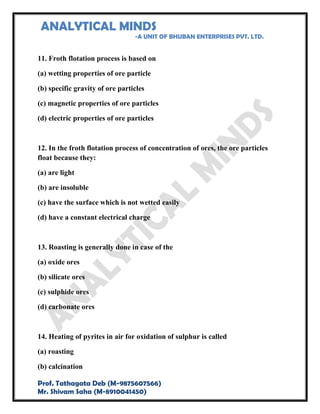
11. Froth flotation process is based on
(a) wetting properties of ore particle
(b) specific gravity of ore particles
(c) magnetic properties of ore particles
(d) electric properties of ore particles
12. In the froth flotation process of concentration of ores, the ore particles
float because they:
(a) are light
(b) are insoluble
(c) have the surface which is not wetted easily
(d) have a constant electrical charge
13. Roasting is generally done in case of the
(a) oxide ores
(b) silicate ores
(c) sulphide ores
(d) carbonate ores
14. Heating of pyrites in air for oxidation of sulphur is called
(a) roasting
(b) calcination
ANALYTICAL MINDS
-A UNIT OF BHUBAN ENTERPRISES PVT. LTD.
Prof. Tathagata Deb (M-9875607566)
Mr. Shivam Saha (M-8910041450)
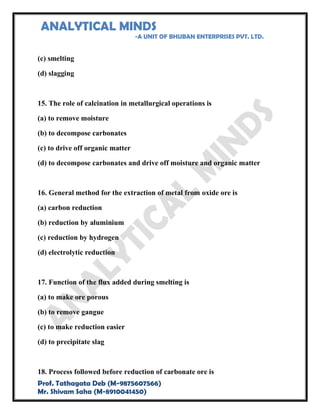
(c) smelting
(d) slagging
15. The role of calcination in metallurgical operations is
(a) to remove moisture
(b) to decompose carbonates
(c) to drive off organic matter
(d) to decompose carbonates and drive off moisture and organic matter
16. General method for the extraction of metal from oxide ore is
(a) carbon reduction
(b) reduction by aluminium
(c) reduction by hydrogen
(d) electrolytic reduction
17. Function of the flux added during smelting is
(a) to make ore porous
(b) to remove gangue
(c) to make reduction easier
(d) to precipitate slag
18. Process followed before reduction of carbonate ore is
ANALYTICAL MINDS
-A UNIT OF BHUBAN ENTERPRISES PVT. LTD.
Prof. Tathagata Deb (M-9875607566)
Mr. Shivam Saha (M-8910041450)
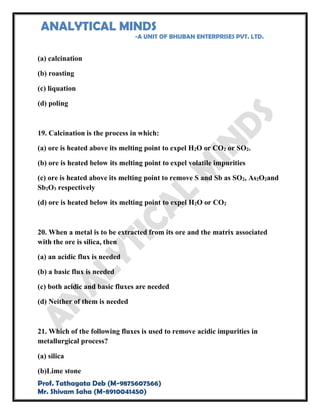
(a) calcination
(b) roasting
(c) liquation
(d) poling
19. Calcination is the process in which:
(a) ore is heated above its melting point to expel H2O or CO2 or SO2.
(b) ore is heated below its melting point to expel volatile impurities
(c) ore is heated above its melting point to remove S and Sb as SO2, As2O2and
Sb2O3 respectively
(d) ore is heated below its melting point to expel H2O or CO2
20. When a metal is to be extracted from its ore and the matrix associated
with the ore is silica, then
(a) an acidic flux is needed
(b) a basic flux is needed
(c) both acidic and basic fluxes are needed
(d) Neither of them is needed
21. Which of the following fluxes is used to remove acidic impurities in
metallurgical process?
(a) silica
(b)Lime stone
ANALYTICAL MINDS
-A UNIT OF BHUBAN ENTERPRISES PVT. LTD.
Prof. Tathagata Deb (M-9875607566)
Mr. Shivam Saha (M-8910041450)
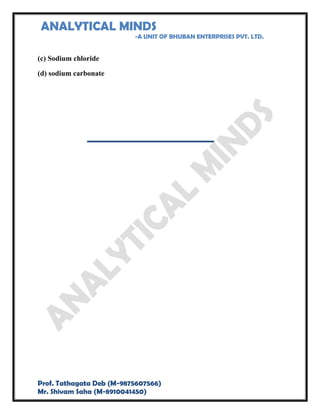
(c) Sodium chloride
(d) sodium carbonate

Metallurgy MCQ

  • 1.
    ANALYTICAL MINDS -A UNITOF BHUBAN ENTERPRISES PVT. LTD. Prof. Tathagata Deb (M-9875607566) Mr. Shivam Saha (M-8910041450) Metallurgy ENTRANCE LEVEL MCQ 1. Cassiterite is concentrated by (a) levigation (b) electromagnetic separation (c) floatation (d) liquefaction 2. While extracting an element from its ore, the ore is grounded and leached with dil, potassium cyanide solution to form the soluble product potassium argento cyanide. The element is (a) Pb (b)Cr (c) Mn (d) Ag 3. The method of concentrating the ore which makes use of the difference in density between ore and impurities is called (a) levigation (b) leaching (c) magnetic separation (d) liquefaction
  • 2.
    ANALYTICAL MINDS -A UNITOF BHUBAN ENTERPRISES PVT. LTD. Prof. Tathagata Deb (M-9875607566) Mr. Shivam Saha (M-8910041450) 4. Leaching in a process of (a) reduction (b) concentration (c) refining (d) oxidation 5. Which one of the following ores is concentrated by chemical leaching method? (a) Galena (b) Copper pyrite (c) Cinnabar (d) Argentite 6. Electromagnetic separation is used in the concentration of (a) copper pyrites (b) bauxite (c) cassiterite (d) cinnabar 7. For which ore of the metal, froth flotation method is used for concentration (a) horn silver (b) bauxite
  • 3.
    ANALYTICAL MINDS -A UNITOF BHUBAN ENTERPRISES PVT. LTD. Prof. Tathagata Deb (M-9875607566) Mr. Shivam Saha (M-8910041450) (c) cinnabar (d) heamatite 8. Which one of the following metal is leached by cyanide process? (a) Ag (b) Na (c) Al (d) Cu 9. Which one of the following ore is not concentrate by froth flotation process? (a) copper pyrites (b) pyrargyrite (c) pyrolusite (d) zinc blende 10. In froth flotation process many chemicals (frother, collector, activator, and depressant) are used. Which of the following is a frother? (a) CuSo4 (b) NaCN+alkali (c) pine oil (d) potassium xanthate
  • 4.
    ANALYTICAL MINDS -A UNITOF BHUBAN ENTERPRISES PVT. LTD. Prof. Tathagata Deb (M-9875607566) Mr. Shivam Saha (M-8910041450) 11. Froth flotation process is based on (a) wetting properties of ore particle (b) specific gravity of ore particles (c) magnetic properties of ore particles (d) electric properties of ore particles 12. In the froth flotation process of concentration of ores, the ore particles float because they: (a) are light (b) are insoluble (c) have the surface which is not wetted easily (d) have a constant electrical charge 13. Roasting is generally done in case of the (a) oxide ores (b) silicate ores (c) sulphide ores (d) carbonate ores 14. Heating of pyrites in air for oxidation of sulphur is called (a) roasting (b) calcination
  • 5.
    ANALYTICAL MINDS -A UNITOF BHUBAN ENTERPRISES PVT. LTD. Prof. Tathagata Deb (M-9875607566) Mr. Shivam Saha (M-8910041450) (c) smelting (d) slagging 15. The role of calcination in metallurgical operations is (a) to remove moisture (b) to decompose carbonates (c) to drive off organic matter (d) to decompose carbonates and drive off moisture and organic matter 16. General method for the extraction of metal from oxide ore is (a) carbon reduction (b) reduction by aluminium (c) reduction by hydrogen (d) electrolytic reduction 17. Function of the flux added during smelting is (a) to make ore porous (b) to remove gangue (c) to make reduction easier (d) to precipitate slag 18. Process followed before reduction of carbonate ore is
  • 6.
    ANALYTICAL MINDS -A UNITOF BHUBAN ENTERPRISES PVT. LTD. Prof. Tathagata Deb (M-9875607566) Mr. Shivam Saha (M-8910041450) (a) calcination (b) roasting (c) liquation (d) poling 19. Calcination is the process in which: (a) ore is heated above its melting point to expel H2O or CO2 or SO2. (b) ore is heated below its melting point to expel volatile impurities (c) ore is heated above its melting point to remove S and Sb as SO2, As2O2and Sb2O3 respectively (d) ore is heated below its melting point to expel H2O or CO2 20. When a metal is to be extracted from its ore and the matrix associated with the ore is silica, then (a) an acidic flux is needed (b) a basic flux is needed (c) both acidic and basic fluxes are needed (d) Neither of them is needed 21. Which of the following fluxes is used to remove acidic impurities in metallurgical process? (a) silica (b)Lime stone
  • 7.
    ANALYTICAL MINDS -A UNITOF BHUBAN ENTERPRISES PVT. LTD. Prof. Tathagata Deb (M-9875607566) Mr. Shivam Saha (M-8910041450) (c) Sodium chloride (d) sodium carbonate