◘Believes that KNOWLEDE cannot be
passed on from one person to another


                                       2
3
4
5
6
7
8
9
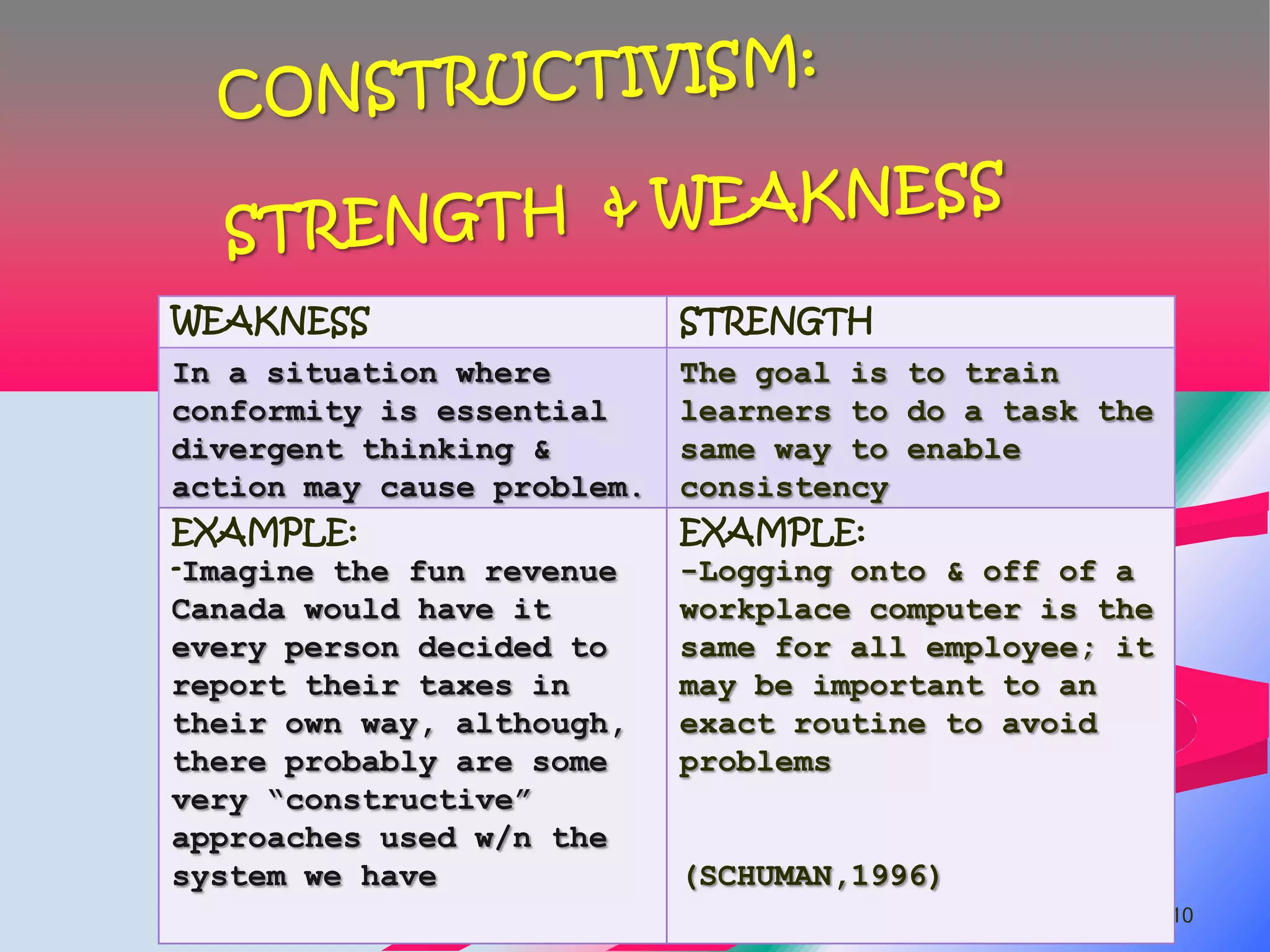
WEAKNESS                    STRENGTH
In a situation where        The goal is to train
conformity is essential     learners to do a task the
divergent thinking &        same way to enable
action may cause problem.   consistency
EXAMPLE:                    EXAMPLE:
-Imagine the fun revenue    -Logging onto & off of a
Canada would have it        workplace computer is the
every person decided to     same for all employee; it
report their taxes in       may be important to an
their own way, although,    exact routine to avoid
there probably are some     problems
very “constructive”
approaches used w/n the
system we have              (SCHUMAN,1996)
                                                        10
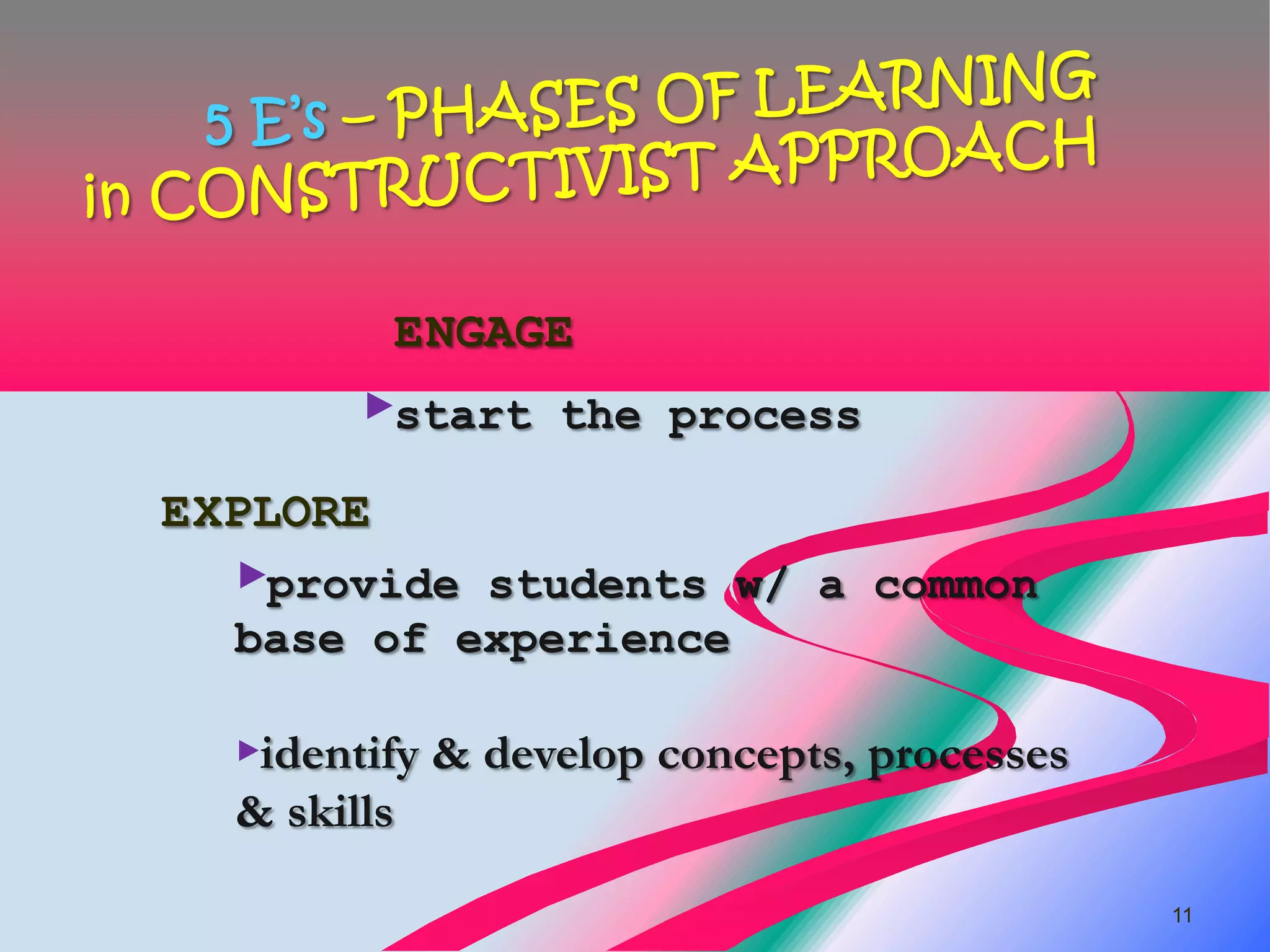
ENGAGE
       ►start    the process

EXPLORE
  ►provide students w/ a common
  base of experience

  ►identify & develop concepts, processes
  & skills
                                            11
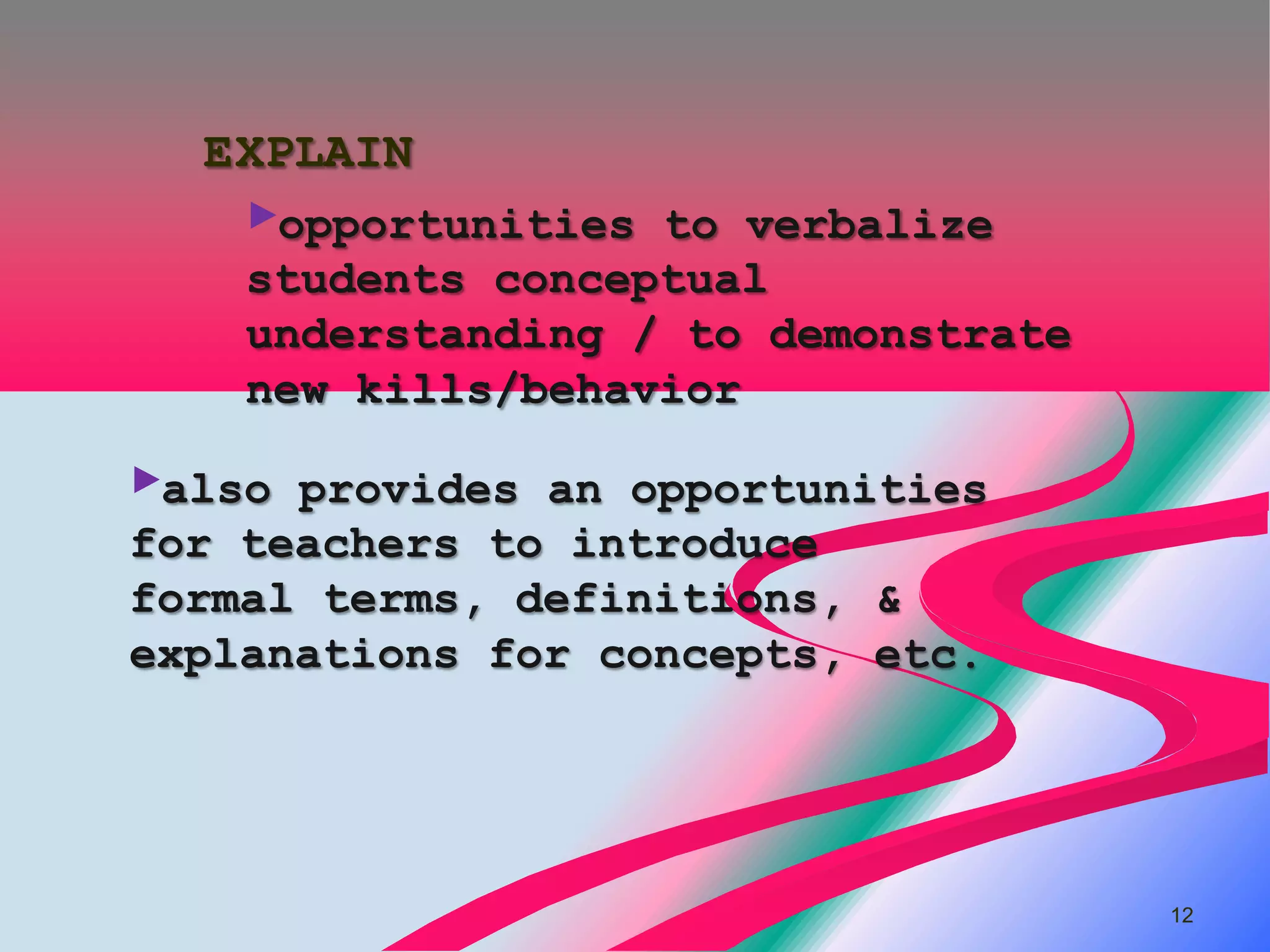
EXPLAIN
    ►opportunities to verbalize
    students conceptual
    understanding / to demonstrate
    new kills/behavior

►also provides an opportunities
for teachers to introduce
formal terms, definitions, &
explanations for concepts, etc.


                                     12
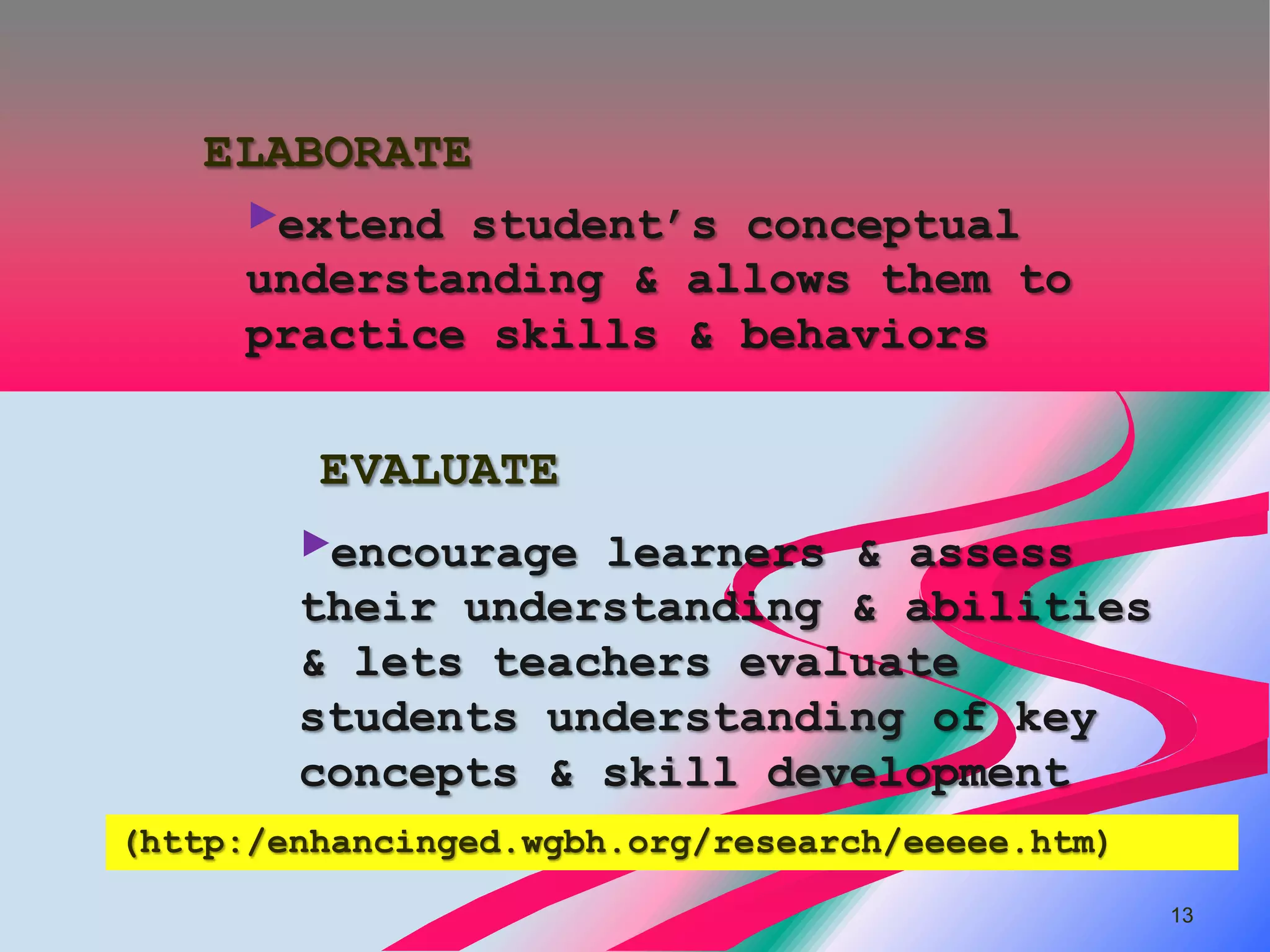
ELABORATE
     ►extend student’s conceptual
     understanding & allows them to
     practice skills & behaviors

         EVALUATE
        ►encourage learners & assess
        their understanding & abilities
        & lets teachers evaluate
        students understanding of key
        concepts & skill development
(http:/enhancinged.wgbh.org/research/eeeee.htm)
                                                  13
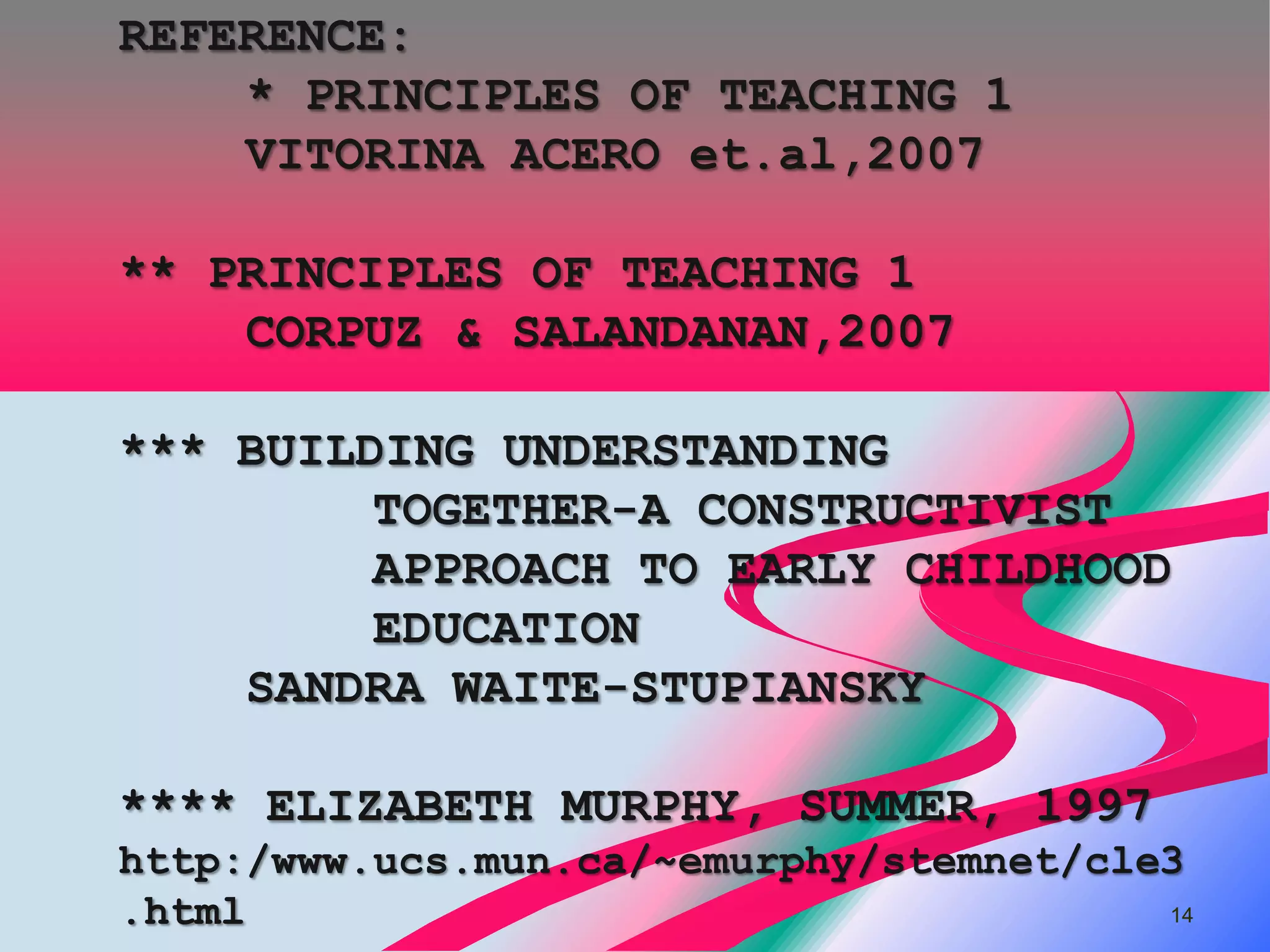
REFERENCE:
    * PRINCIPLES OF TEACHING 1
    VITORINA ACERO et.al,2007

** PRINCIPLES OF TEACHING 1
    CORPUZ & SALANDANAN,2007

*** BUILDING UNDERSTANDING
         TOGETHER-A CONSTRUCTIVIST
         APPROACH TO EARLY CHILDHOOD
         EDUCATION
    SANDRA WAITE-STUPIANSKY

**** ELIZABETH MURPHY, SUMMER, 1997
http:/www.ucs.mun.ca/~emurphy/stemnet/cle3
.html                                    14

Constructivist approach

  • 2.
    ◘Believes that KNOWLEDEcannot be passed on from one person to another 2
  • 3.
  • 4.
  • 5.
  • 6.
  • 7.
  • 8.
  • 9.
  • 10.
    WEAKNESS STRENGTH In a situation where The goal is to train conformity is essential learners to do a task the divergent thinking & same way to enable action may cause problem. consistency EXAMPLE: EXAMPLE: -Imagine the fun revenue -Logging onto & off of a Canada would have it workplace computer is the every person decided to same for all employee; it report their taxes in may be important to an their own way, although, exact routine to avoid there probably are some problems very “constructive” approaches used w/n the system we have (SCHUMAN,1996) 10
  • 11.
    ENGAGE ►start the process EXPLORE ►provide students w/ a common base of experience ►identify & develop concepts, processes & skills 11
  • 12.
    EXPLAIN ►opportunities to verbalize students conceptual understanding / to demonstrate new kills/behavior ►also provides an opportunities for teachers to introduce formal terms, definitions, & explanations for concepts, etc. 12
  • 13.
    ELABORATE ►extend student’s conceptual understanding & allows them to practice skills & behaviors EVALUATE ►encourage learners & assess their understanding & abilities & lets teachers evaluate students understanding of key concepts & skill development (http:/enhancinged.wgbh.org/research/eeeee.htm) 13
  • 14.
    REFERENCE: * PRINCIPLES OF TEACHING 1 VITORINA ACERO et.al,2007 ** PRINCIPLES OF TEACHING 1 CORPUZ & SALANDANAN,2007 *** BUILDING UNDERSTANDING TOGETHER-A CONSTRUCTIVIST APPROACH TO EARLY CHILDHOOD EDUCATION SANDRA WAITE-STUPIANSKY **** ELIZABETH MURPHY, SUMMER, 1997 http:/www.ucs.mun.ca/~emurphy/stemnet/cle3 .html 14