MODULE-1
 According to thermodynamic concept ,
the energy that is transferred as a result
  of a temperature difference is called
                  HEAT
    THREE DIFFERENT TYPES OF HEAT
               TRANSFER:
            1.CONDUCTION
            2.CONVECTION
             3.RADIATION
Itmportances of heat transfer:
   1.electrical engineerg:cooling system for
     motors,generators and transformor
             2.chemical engineering:
evaporation,condensation,heating and cooling
                      of fluid
       3. civil engineering: constructions
       dams,structures,building design.
  4.mechanical engineering:heat transfer in
      internal combustion engine,steam
  generations,refrigeration and heating and
                   ventillation.
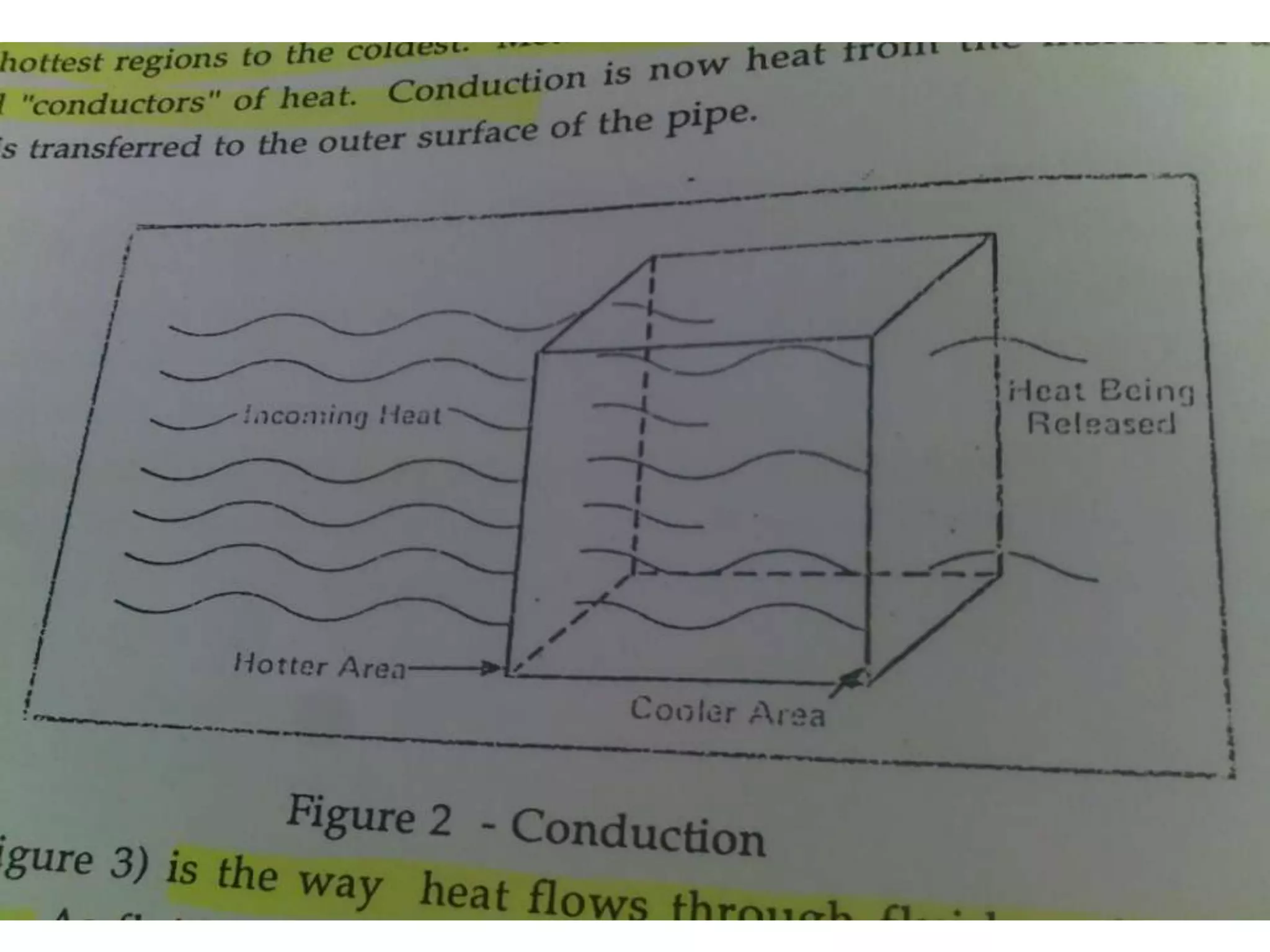
Conduction:it is the process by which heat flows from a
   region of higher temperature to a region of lower
  temperature within the substance. Conduction take
                place by two mechanism:
a)by lattice vibration:molecules at higher temperature
     imparts energy to adjacent molecules at lower
                      temperature.
 b)by free electrons: transfer of heat by free electrons,
 the free electrons concentration in non-metals is very
        low.Hence conduction is found in solids
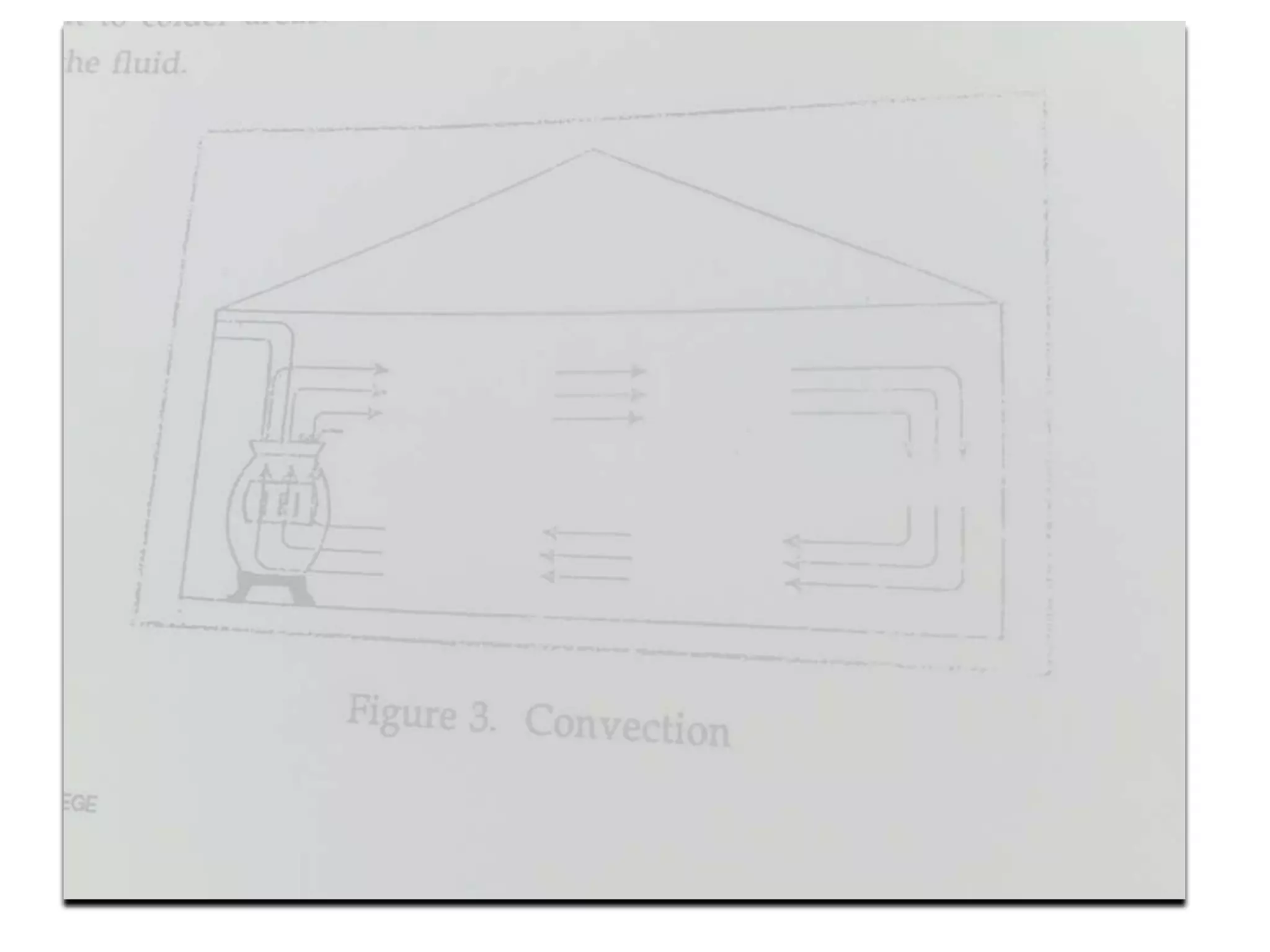
Convection:it is possible only in the presence of
fluids( liquid and gases).As fluid passes over hot
objects,they pick up heat energy and carry it to
                    colder area.
             Two types of convection:
                 1.free convection
                2.forced convection
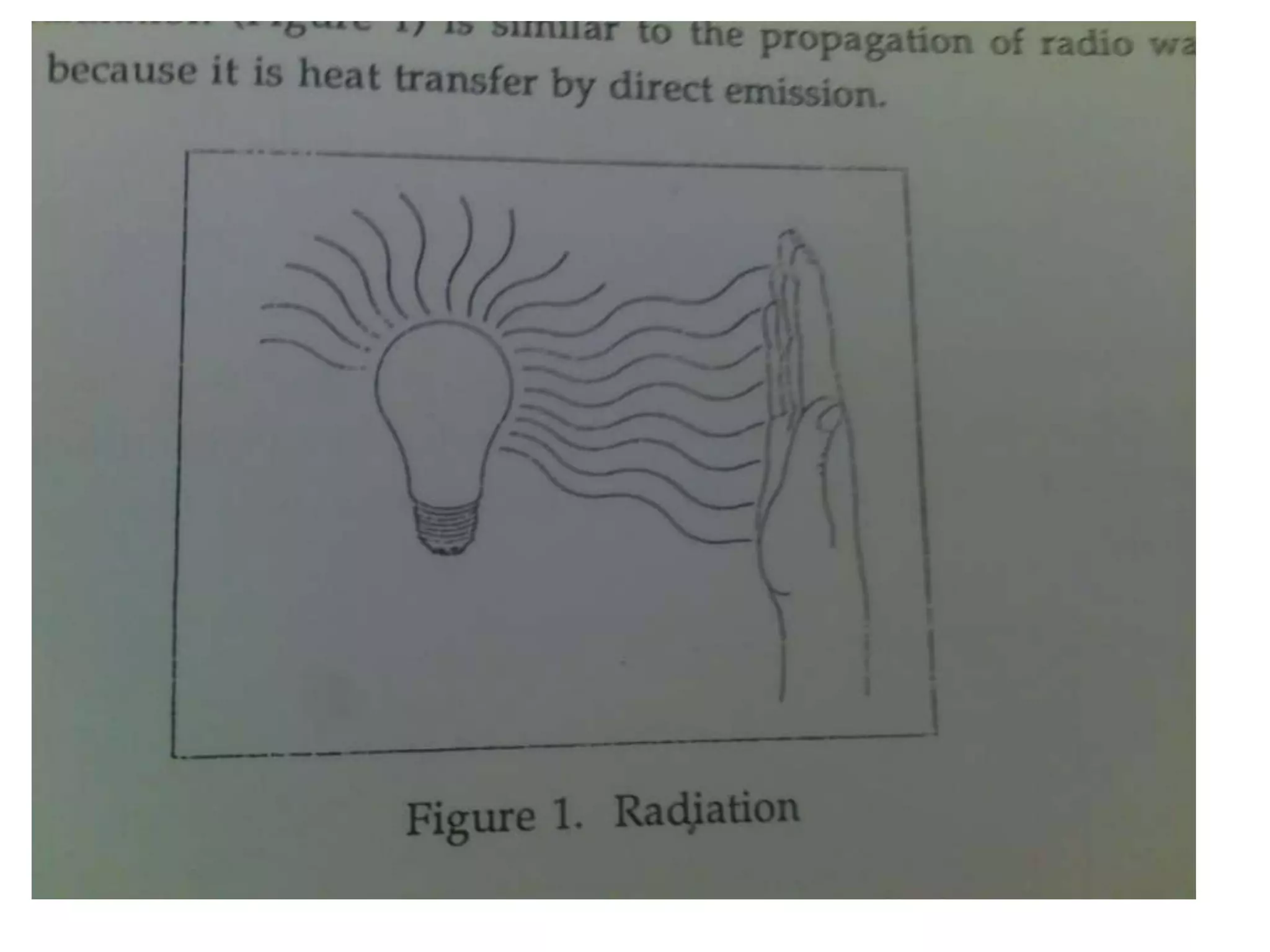
RADIATION:RADIATION HEAT TRANSFER
  BETWEEN TWO SUBSTANCES TAKE
PLACE EVEN WITHOUT ANY MEDIUM
THROUGH ELECTROMAGNETIC WAVES
Heat flux: it is the amount of heat flow
  per unit area through a body=Q/A
                   W/m2
 the materials having higher thermal
  conductivity are conductors, while
    material having lower thermal
 conductivity are called as insulators
Radiation is the only way that heat can
move through a vaccum.Radiant heat
can be felt by holding a hand near any
hot object,higher the temperature of
the object, more energy being
released. The denser the solid, the
faster heat will be transferred from the
hottest regions to coldest.
Convection: Is the way heat flows
through fluids, whether they are
        liquids or gases.
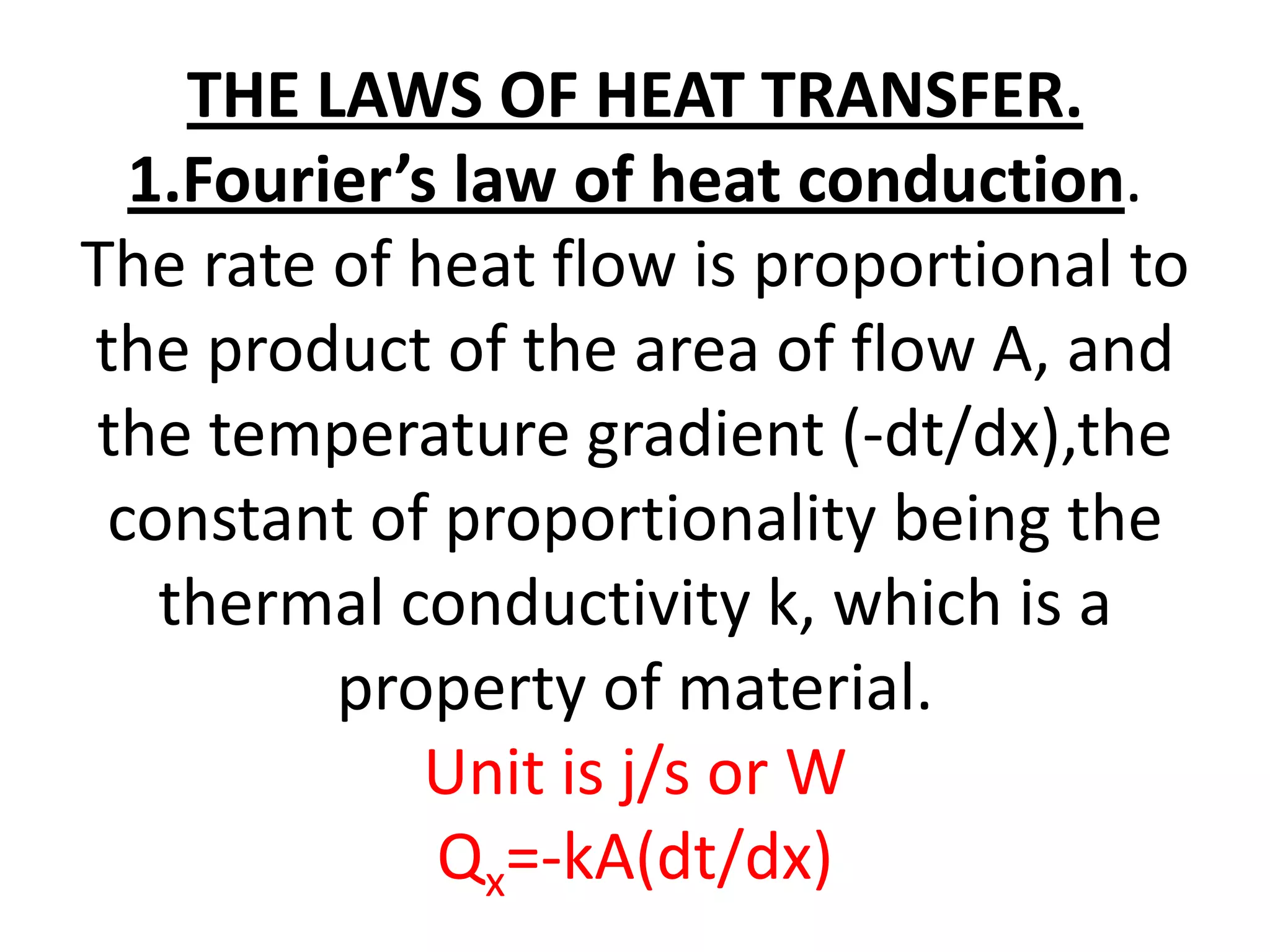
THE LAWS OF HEAT TRANSFER.
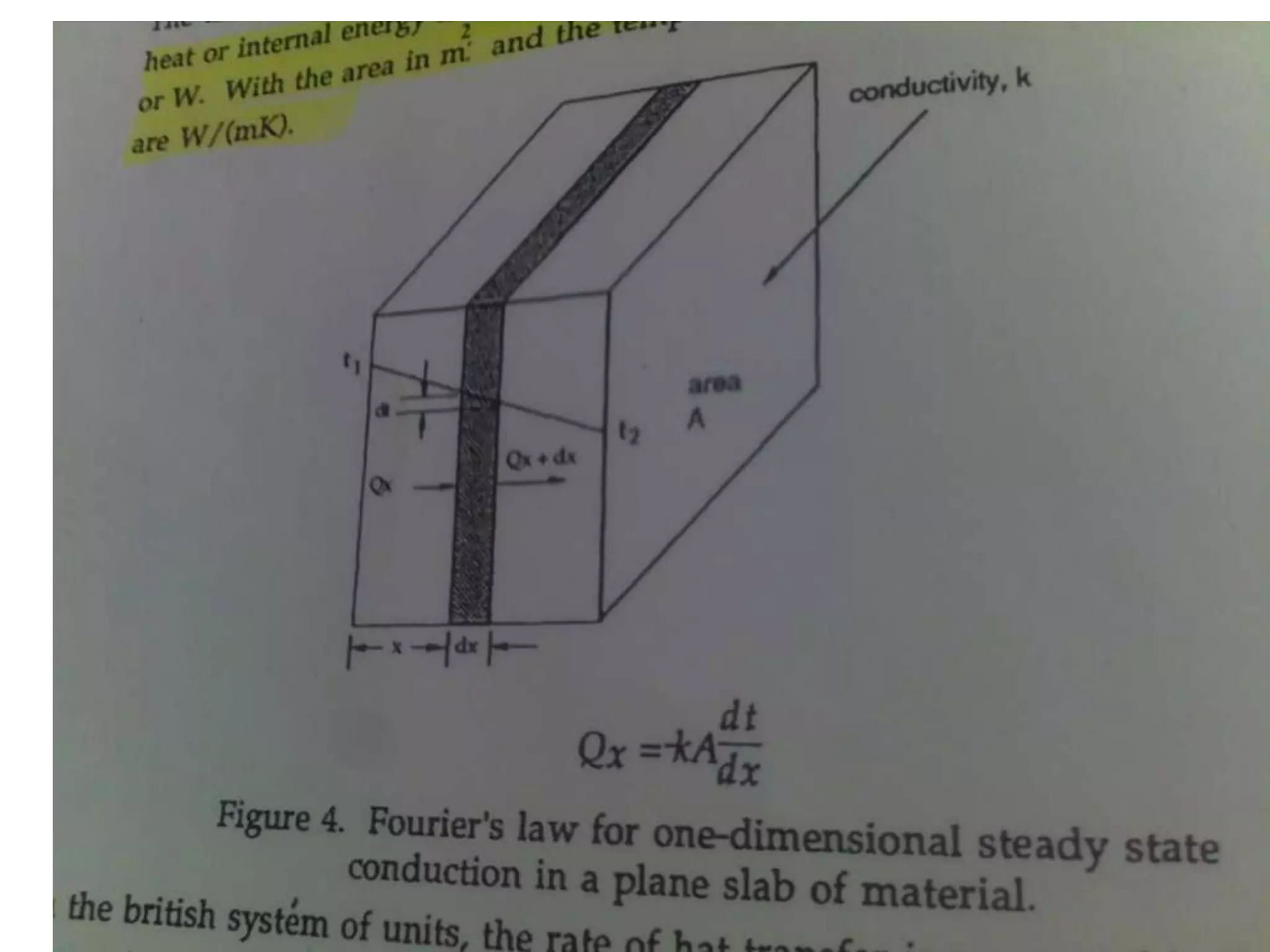
  1.Fourier’s law of heat conduction.
The rate of heat flow is proportional to
the product of the area of flow A, and
the temperature gradient (-dt/dx),the
 constant of proportionality being the
   thermal conductivity k, which is a
         property of material.
             Unit is j/s or W
             Qx=-kA(dt/dx)
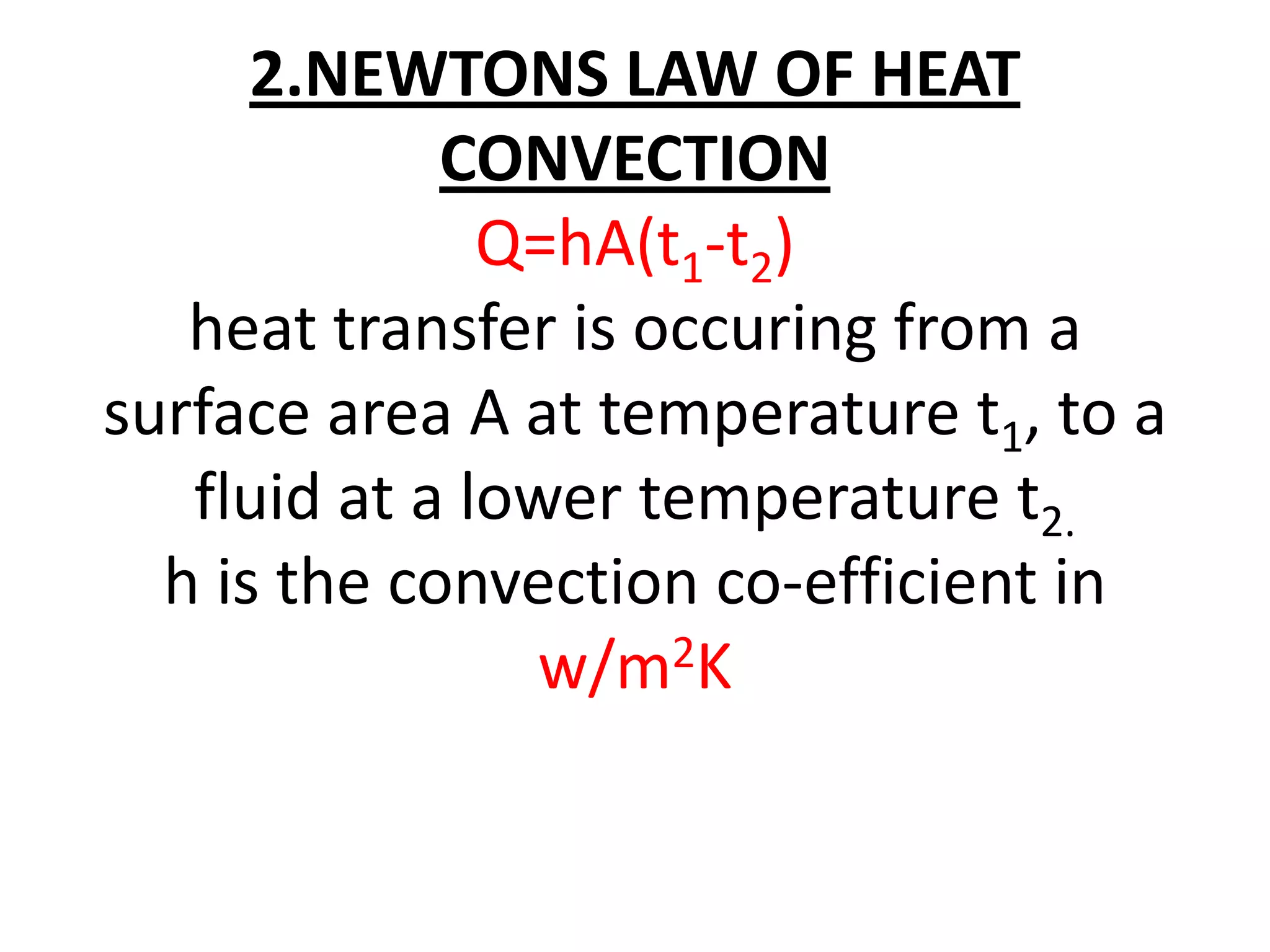
2.NEWTONS LAW OF HEAT
             CONVECTION
               Q=hA(t1-t2)
   heat transfer is occuring from a
surface area A at temperature t1, to a
   fluid at a lower temperature t2.
  h is the convection co-efficient in
                w/m2K
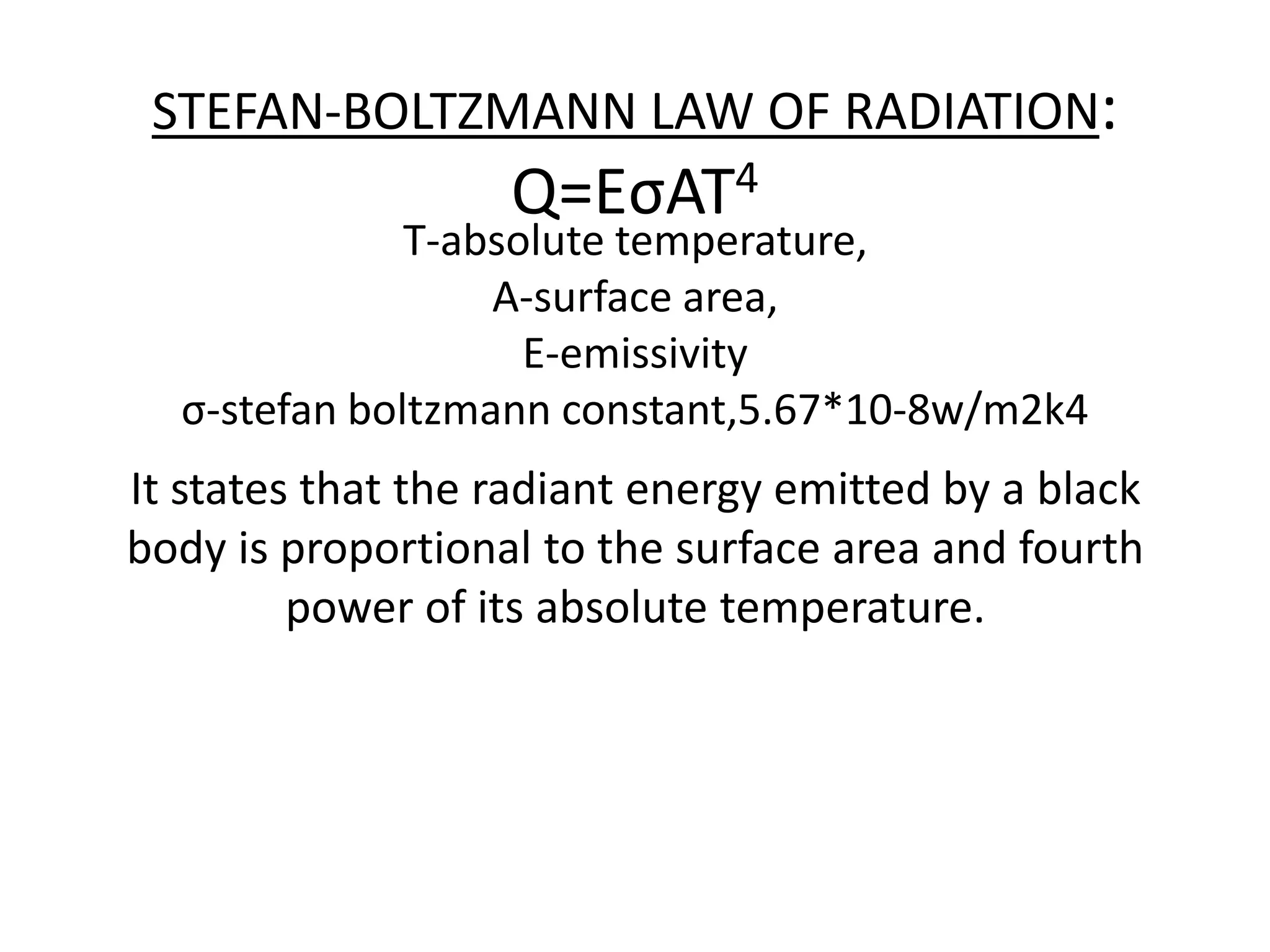
STEFAN-BOLTZMANN LAW OF RADIATION:
                   Q=EσAT4
              T-absolute temperature,
                  A-surface area,
                    E-emissivity
  σ-stefan boltzmann constant,5.67*10-8w/m2k4
It states that the radiant energy emitted by a black
body is proportional to the surface area and fourth
         power of its absolute temperature.
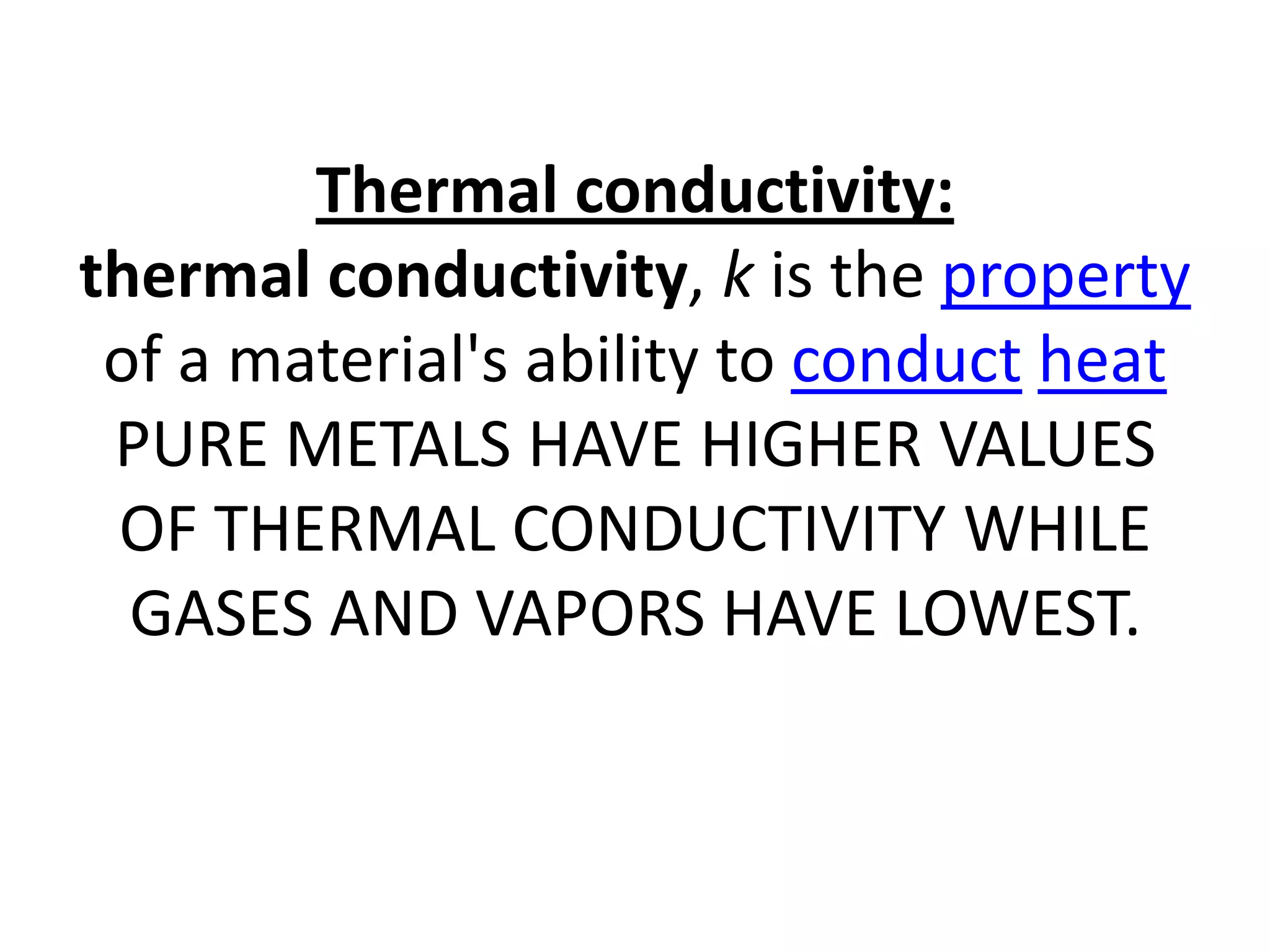
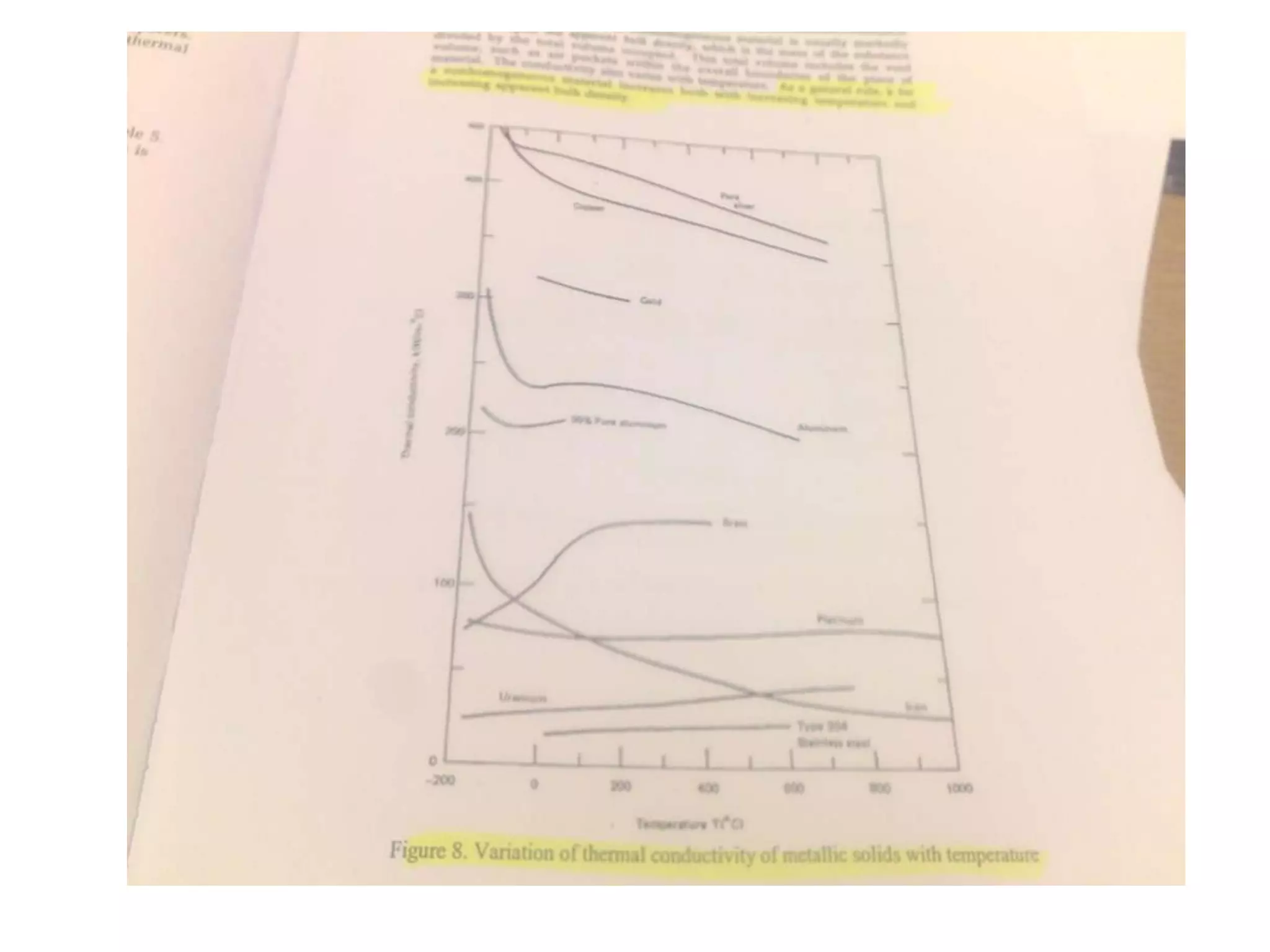
Thermal conductivity:
thermal conductivity, k is the property
 of a material's ability to conduct heat
 PURE METALS HAVE HIGHER VALUES
 OF THERMAL CONDUCTIVITY WHILE
  GASES AND VAPORS HAVE LOWEST.
K for a pure metals decreases with
           temperature.
          K=ko(1+bф+cф2)
            where ф=T-Tref.

K for a non homogeneous materials
   increases both with increasing
temperature and increasing density.
Thermal conductivity: it is defined as
the ability of a substance to conduct
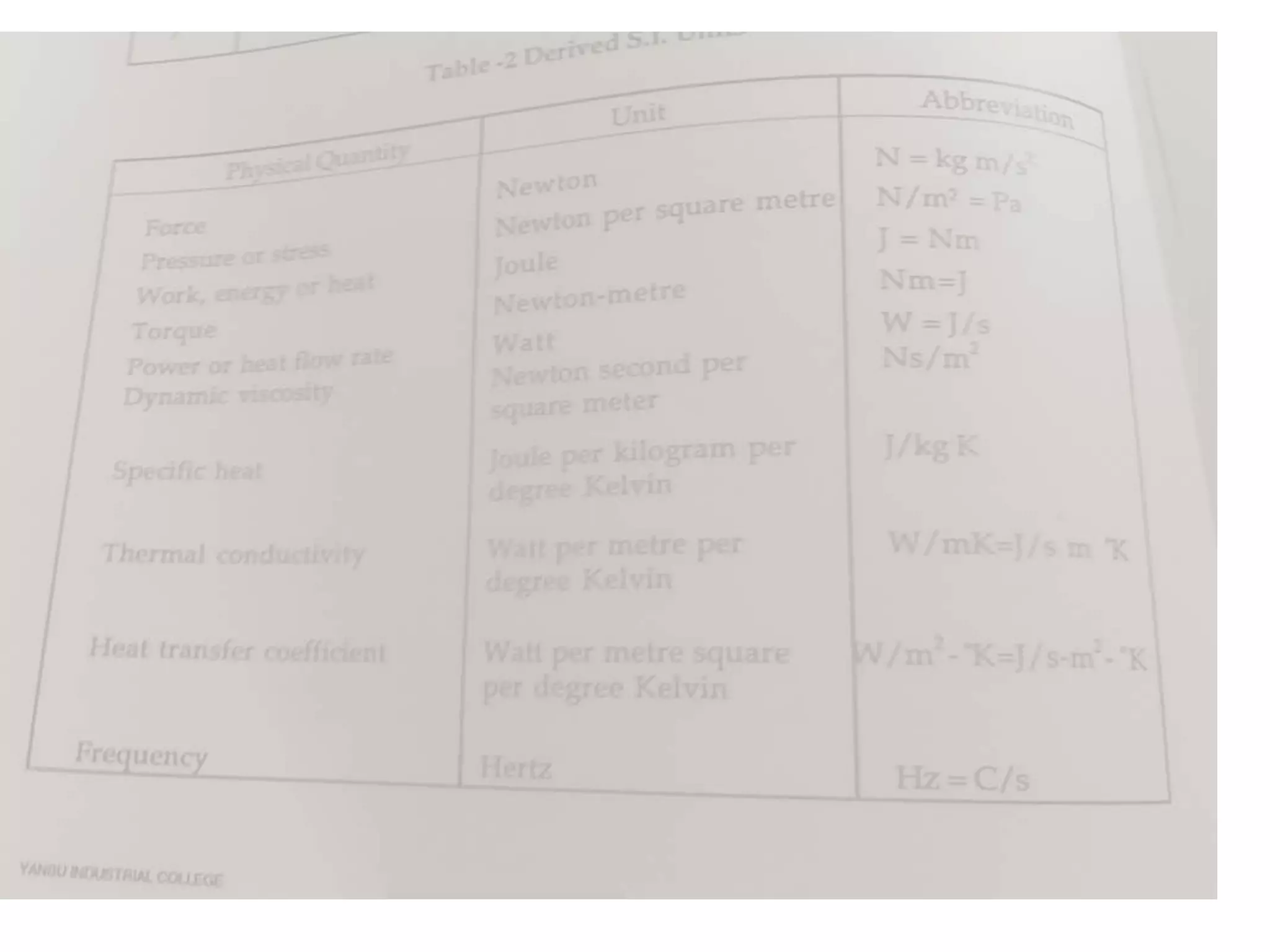
  heat. It is expressed in w/m-k or
                w/moC.
Heat transfer co-efficient(h): ability of
 the fluid carry away heat from the
surfaces which in turn depends upon
    velocities and other thermal
 properties.unit w/m2 k or w/m2oC

MET 214 Heat exchanger module-1

  • 1.
    MODULE-1 According tothermodynamic concept , the energy that is transferred as a result of a temperature difference is called HEAT THREE DIFFERENT TYPES OF HEAT TRANSFER: 1.CONDUCTION 2.CONVECTION 3.RADIATION
  • 2.
    Itmportances of heattransfer: 1.electrical engineerg:cooling system for motors,generators and transformor 2.chemical engineering: evaporation,condensation,heating and cooling of fluid 3. civil engineering: constructions dams,structures,building design. 4.mechanical engineering:heat transfer in internal combustion engine,steam generations,refrigeration and heating and ventillation.
  • 3.
    Conduction:it is theprocess by which heat flows from a region of higher temperature to a region of lower temperature within the substance. Conduction take place by two mechanism: a)by lattice vibration:molecules at higher temperature imparts energy to adjacent molecules at lower temperature. b)by free electrons: transfer of heat by free electrons, the free electrons concentration in non-metals is very low.Hence conduction is found in solids
  • 4.
    Convection:it is possibleonly in the presence of fluids( liquid and gases).As fluid passes over hot objects,they pick up heat energy and carry it to colder area. Two types of convection: 1.free convection 2.forced convection
  • 5.
    RADIATION:RADIATION HEAT TRANSFER BETWEEN TWO SUBSTANCES TAKE PLACE EVEN WITHOUT ANY MEDIUM THROUGH ELECTROMAGNETIC WAVES
  • 6.
    Heat flux: itis the amount of heat flow per unit area through a body=Q/A W/m2 the materials having higher thermal conductivity are conductors, while material having lower thermal conductivity are called as insulators
  • 7.
    Radiation is theonly way that heat can move through a vaccum.Radiant heat can be felt by holding a hand near any hot object,higher the temperature of the object, more energy being released. The denser the solid, the faster heat will be transferred from the hottest regions to coldest.
  • 8.
    Convection: Is theway heat flows through fluids, whether they are liquids or gases.
  • 9.
    THE LAWS OFHEAT TRANSFER. 1.Fourier’s law of heat conduction. The rate of heat flow is proportional to the product of the area of flow A, and the temperature gradient (-dt/dx),the constant of proportionality being the thermal conductivity k, which is a property of material. Unit is j/s or W Qx=-kA(dt/dx)
  • 10.
    2.NEWTONS LAW OFHEAT CONVECTION Q=hA(t1-t2) heat transfer is occuring from a surface area A at temperature t1, to a fluid at a lower temperature t2. h is the convection co-efficient in w/m2K
  • 11.
    STEFAN-BOLTZMANN LAW OFRADIATION: Q=EσAT4 T-absolute temperature, A-surface area, E-emissivity σ-stefan boltzmann constant,5.67*10-8w/m2k4 It states that the radiant energy emitted by a black body is proportional to the surface area and fourth power of its absolute temperature.
  • 12.
    Thermal conductivity: thermal conductivity,k is the property of a material's ability to conduct heat PURE METALS HAVE HIGHER VALUES OF THERMAL CONDUCTIVITY WHILE GASES AND VAPORS HAVE LOWEST.
  • 14.
    K for apure metals decreases with temperature. K=ko(1+bф+cф2) where ф=T-Tref. K for a non homogeneous materials increases both with increasing temperature and increasing density.
  • 21.
    Thermal conductivity: itis defined as the ability of a substance to conduct heat. It is expressed in w/m-k or w/moC. Heat transfer co-efficient(h): ability of the fluid carry away heat from the surfaces which in turn depends upon velocities and other thermal properties.unit w/m2 k or w/m2oC