MENINGOCOCCAL
MENINGOENCEPHALITIS
By Sunidhi Singh
IM 534
Introduction:
• Meningococcal meningoencephalitis is a severe
condition caused by the bacterium Neisseria
meningitidis.
• It involves inflammation of the membranes
covering the brain and spinal cord (meninges) and
the brain itself.
• It's a rare form of meningococcal infection
• Meningococcal meningitis is primarily spread
through respiratory droplets.
• Follows a rapid and severe course.
Symptoms:
• Severe Headache
• Neck stiffness
• High fever
• Malaise and body ache
• Nausea
• Vomitting
• PhotoPhobia
• Altered mental state
• Confusion
• seizures
• Petechial or purpuric rash
• Paresis or paralysis
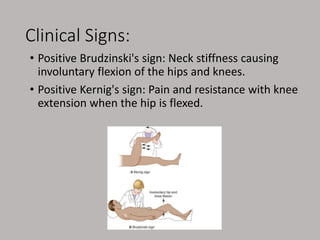
Clinical Signs:
• Positive Brudzinski's sign: Neck stiffness causing
involuntary flexion of the hips and knees.
• Positive Kernig's sign: Pain and resistance with knee
extension when the hip is flexed.
Complications
• Recurrent seizures
• Brain damage, cognitive impairment
• Memory loss
• Hearing loss
• Septic shock
• DIC
• Multi-organ failure
Diagnostic Tests:
• Complete Blood count: leukocytosis, Elevated ESR
• Lumbar Puncture and CSF analysis: Increased WBC,
protein and decreased glucose
• Blood culture: to identify neisseria meningitis in
blood .
• CT or MRI Scan: performed to assess the extent of
inflammation And complications
Treatment:
• Immediate hospitalisation
• Intravenous antibiotics (Ceftriaxone: 2 grams every
12 hours; Cefotaxime: 2 grams every 4-6 hours)
• Antiepileptic drugs in case of seizures
• Corticosteroids to reduce inflammation
• Diuretics to reduce swelling in brain
• Symptomatic treatment of pain, fever.
Prophylaxis:
• Meningococcal vaccine
• Antibiotic prophylaxis for people who have come in
contact with a confirmed case

Meningococcal Meningoencephalitis overview

  • 1.
  • 2.
    Introduction: • Meningococcal meningoencephalitisis a severe condition caused by the bacterium Neisseria meningitidis. • It involves inflammation of the membranes covering the brain and spinal cord (meninges) and the brain itself. • It's a rare form of meningococcal infection • Meningococcal meningitis is primarily spread through respiratory droplets. • Follows a rapid and severe course.
  • 3.
    Symptoms: • Severe Headache •Neck stiffness • High fever • Malaise and body ache • Nausea • Vomitting • PhotoPhobia • Altered mental state • Confusion • seizures • Petechial or purpuric rash • Paresis or paralysis
  • 4.
    Clinical Signs: • PositiveBrudzinski's sign: Neck stiffness causing involuntary flexion of the hips and knees. • Positive Kernig's sign: Pain and resistance with knee extension when the hip is flexed.
  • 5.
    Complications • Recurrent seizures •Brain damage, cognitive impairment • Memory loss • Hearing loss • Septic shock • DIC • Multi-organ failure
  • 6.
    Diagnostic Tests: • CompleteBlood count: leukocytosis, Elevated ESR • Lumbar Puncture and CSF analysis: Increased WBC, protein and decreased glucose • Blood culture: to identify neisseria meningitis in blood . • CT or MRI Scan: performed to assess the extent of inflammation And complications
  • 7.
    Treatment: • Immediate hospitalisation •Intravenous antibiotics (Ceftriaxone: 2 grams every 12 hours; Cefotaxime: 2 grams every 4-6 hours) • Antiepileptic drugs in case of seizures • Corticosteroids to reduce inflammation • Diuretics to reduce swelling in brain • Symptomatic treatment of pain, fever.
  • 8.
    Prophylaxis: • Meningococcal vaccine •Antibiotic prophylaxis for people who have come in contact with a confirmed case