Chickenpox (VARICELLA)
Dr. BOUNIKA ESVANTH RAO,
Dr. JERUBA JAYAKUMAR,
Dr. NEELAVENI MARIMUTHU SAMY,
Dr. PRIYADHARSHINI JOTHI MURUGAN.
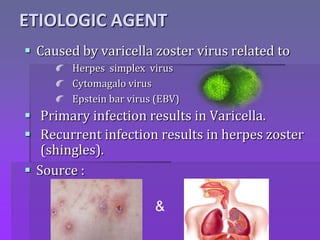
ETIOLOGIC AGENT
 Caused by varicella zoster virus related to
Herpes simplex virus
Cytomagalo virus
Epstein bar virus (EBV)
 Primary infection results in Varicella.
 Recurrent infection results in herpes zoster
(shingles).
 Source :
&
INCUBATION PERIOD
 10- 21 days.
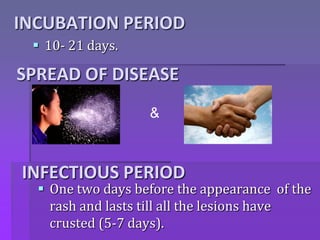
SPREAD OF DISEASE
&
INFECTIOUS PERIOD
 One two days before the appearance of the
rash and lasts till all the lesions have
crusted (5-7 days).
CLINICAL PICTURE
 Stage of invasion / prodromal
stage.
 Stage of eruption.
 Convalescence
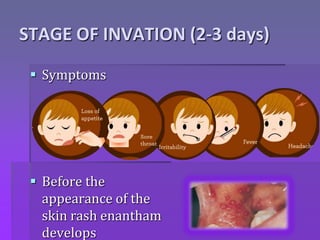
STAGE OF INVATION (2-3 days)
 Symptoms
 Before the
appearance of the
skin rash enantham
develops
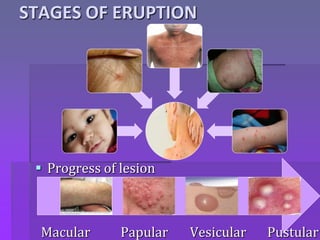
STAGES OF ERUPTION
 Progress of lesion
Macular Papular Vesicular Pustular
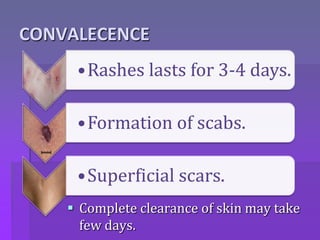
CONVALECENCE
•Rashes lasts for 3-4 days.
•Formation of scabs.
•Superficial scars.
 Complete clearance of skin may take
few days.
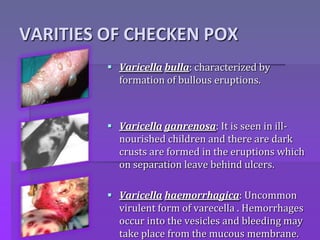
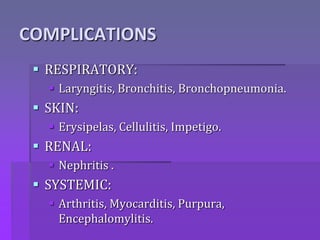
VARITIES OF CHECKEN POX
 Varicella bulla: characterized by
formation of bullous eruptions.
 Varicella ganrenosa: It is seen in ill-
nourished children and there are dark
crusts are formed in the eruptions which
on separation leave behind ulcers.
 Varicella haemorrhagica: Uncommon
virulent form of varecella . Hemorrhages
occur into the vesicles and bleeding may
take place from the mucous membrane.
COMPLICATIONS
 RESPIRATORY:
 Laryngitis, Bronchitis, Bronchopneumonia.
 SKIN:
 Erysipelas, Cellulitis, Impetigo.
 RENAL:
 Nephritis .
 SYSTEMIC:
 Arthritis, Myocarditis, Purpura,
Encephalomylitis.
SEVERE IN
DIAGNOSIS
 Classical appearance of rash.
 Aspiration of vesicular fluid.
 PCR tissue culture.
 Serological examination for rising titers of
antibodies is only useful in primary
infection.
 Staining of scrapings in with fluorescein
labeled monoclonal antibody.
TREATMENT
Use of antivirals
Indications:
For those patients for whom VZIG
is not indicated
Dose:
Oral acyclovir
40mg/kg/day in 4 divided doses
given from days 7 to 14 after
exposure
(Kumagai et al, 1999)
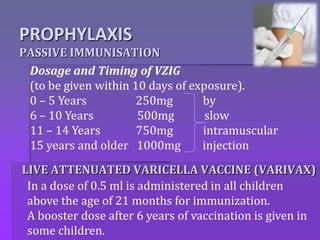
PROPHYLAXIS
Dosage and Timing of VZIG
(to be given within 10 days of exposure).
0 – 5 Years 250mg by
6 – 10 Years 500mg slow
11 – 14 Years 750mg intramuscular
15 years and older 1000mg injection
PASSIVE IMMUNISATION
LIVE ATTENUATED VARICELLA VACCINE (VARIVAX)
In a dose of 0.5 ml is administered in all children
above the age of 21 months for immunization.
A booster dose after 6 years of vaccination is given in
some children.
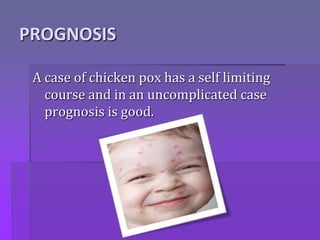
PROGNOSIS
A case of chicken pox has a self limiting
course and in an uncomplicated case
prognosis is good.
ANY QUESTIONS?

chicken pox

  • 1.
    Chickenpox (VARICELLA) Dr. BOUNIKAESVANTH RAO, Dr. JERUBA JAYAKUMAR, Dr. NEELAVENI MARIMUTHU SAMY, Dr. PRIYADHARSHINI JOTHI MURUGAN.
  • 2.
    ETIOLOGIC AGENT  Causedby varicella zoster virus related to Herpes simplex virus Cytomagalo virus Epstein bar virus (EBV)  Primary infection results in Varicella.  Recurrent infection results in herpes zoster (shingles).  Source : &
  • 3.
    INCUBATION PERIOD  10-21 days. SPREAD OF DISEASE & INFECTIOUS PERIOD  One two days before the appearance of the rash and lasts till all the lesions have crusted (5-7 days).
  • 4.
    CLINICAL PICTURE  Stageof invasion / prodromal stage.  Stage of eruption.  Convalescence
  • 5.
    STAGE OF INVATION(2-3 days)  Symptoms  Before the appearance of the skin rash enantham develops
  • 6.
    STAGES OF ERUPTION Progress of lesion Macular Papular Vesicular Pustular
  • 7.
    CONVALECENCE •Rashes lasts for3-4 days. •Formation of scabs. •Superficial scars.  Complete clearance of skin may take few days.
  • 8.
    VARITIES OF CHECKENPOX  Varicella bulla: characterized by formation of bullous eruptions.  Varicella ganrenosa: It is seen in ill- nourished children and there are dark crusts are formed in the eruptions which on separation leave behind ulcers.  Varicella haemorrhagica: Uncommon virulent form of varecella . Hemorrhages occur into the vesicles and bleeding may take place from the mucous membrane.
  • 9.
    COMPLICATIONS  RESPIRATORY:  Laryngitis,Bronchitis, Bronchopneumonia.  SKIN:  Erysipelas, Cellulitis, Impetigo.  RENAL:  Nephritis .  SYSTEMIC:  Arthritis, Myocarditis, Purpura, Encephalomylitis.
  • 10.
  • 11.
    DIAGNOSIS  Classical appearanceof rash.  Aspiration of vesicular fluid.  PCR tissue culture.  Serological examination for rising titers of antibodies is only useful in primary infection.  Staining of scrapings in with fluorescein labeled monoclonal antibody.
  • 12.
    TREATMENT Use of antivirals Indications: Forthose patients for whom VZIG is not indicated Dose: Oral acyclovir 40mg/kg/day in 4 divided doses given from days 7 to 14 after exposure (Kumagai et al, 1999)
  • 13.
    PROPHYLAXIS Dosage and Timingof VZIG (to be given within 10 days of exposure). 0 – 5 Years 250mg by 6 – 10 Years 500mg slow 11 – 14 Years 750mg intramuscular 15 years and older 1000mg injection PASSIVE IMMUNISATION LIVE ATTENUATED VARICELLA VACCINE (VARIVAX) In a dose of 0.5 ml is administered in all children above the age of 21 months for immunization. A booster dose after 6 years of vaccination is given in some children.
  • 14.
    PROGNOSIS A case ofchicken pox has a self limiting course and in an uncomplicated case prognosis is good.
  • 15.