Membrane Transporters and Drug
Response
Introduction
• Cell membrane – Barrier
• Selectively permeable
• Drug absorption, distribution, elimination
• Specialized transport proteins
Transport Mechanisms
• Diffusion
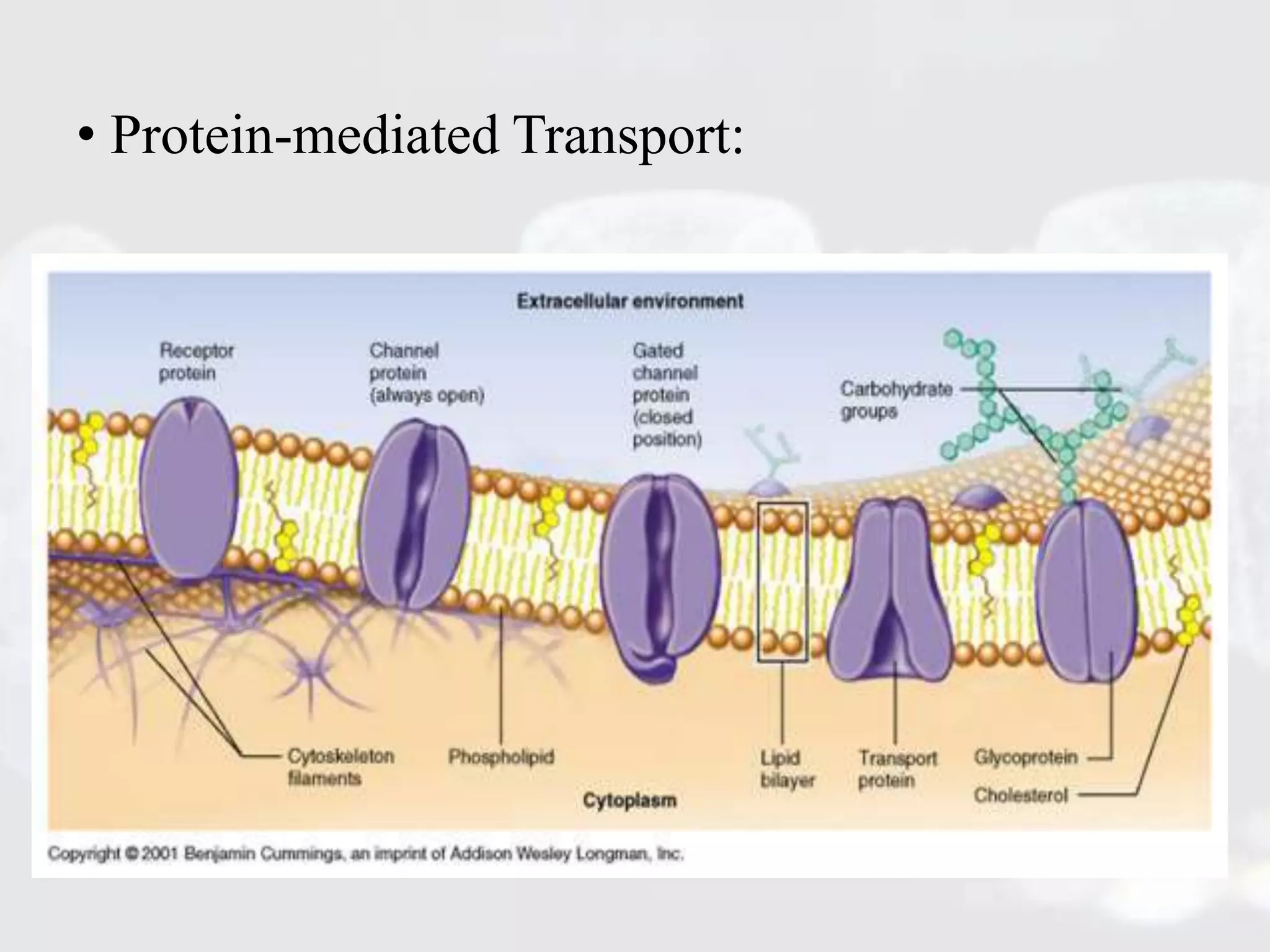
• Protein-mediated Transport:
• Endocytosis/Exocytosis
Membrane Transport Proteins
• Channels
• Carriers
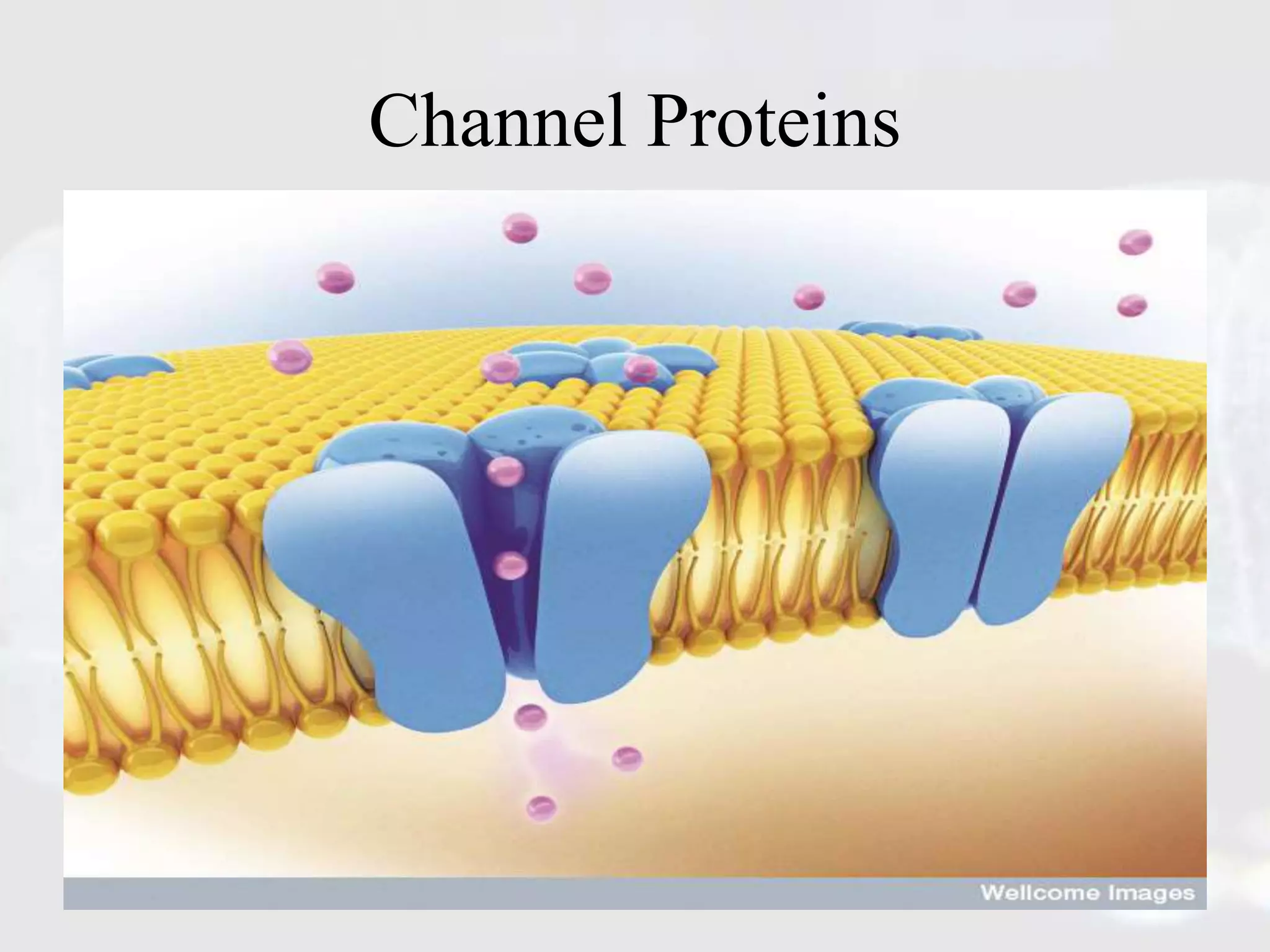
Channel Proteins
• Passive transport
• Protein-lined passageways
• Speed of transport
• Signalling in Nervous system
• Drugs – Receptors
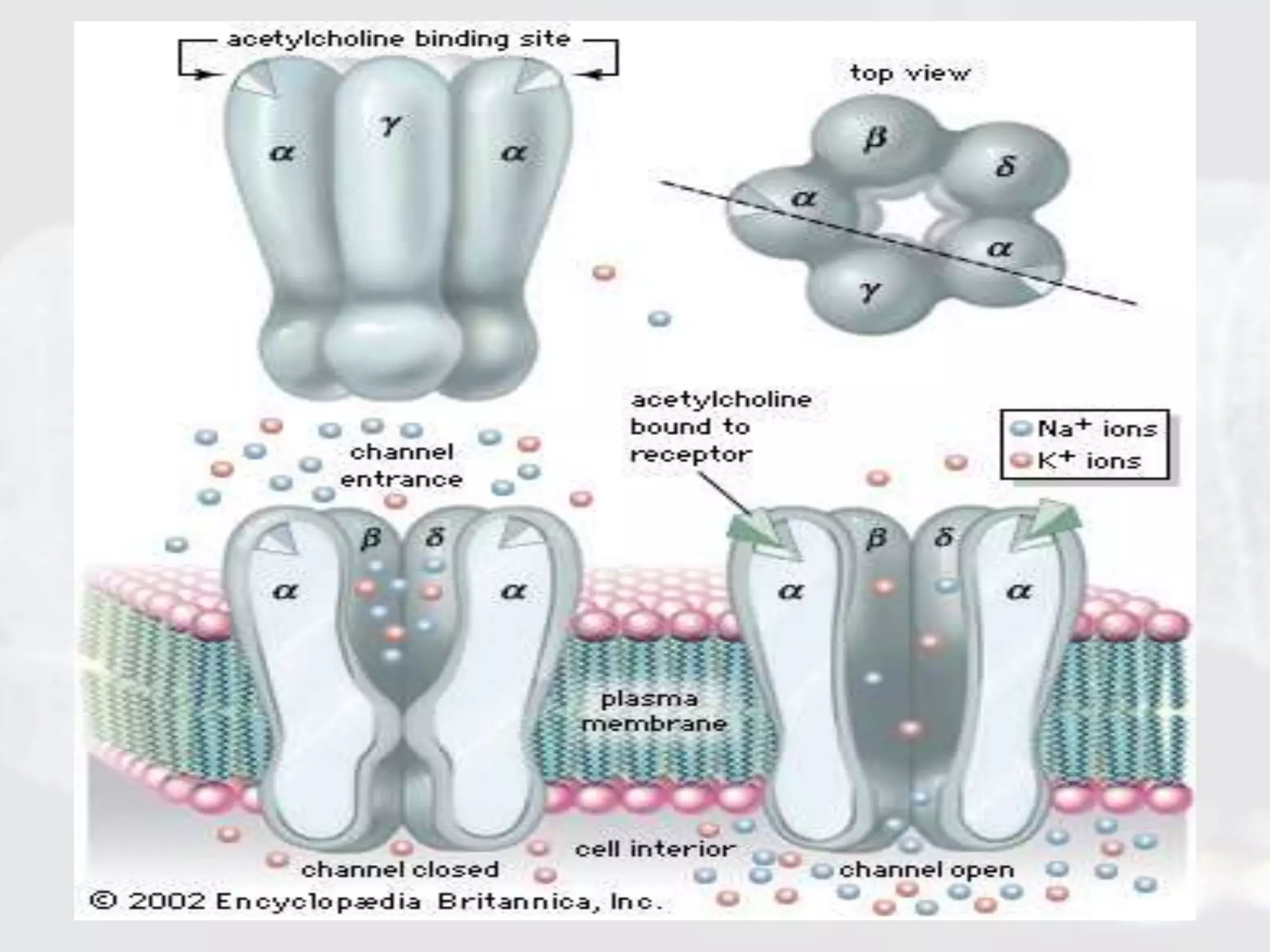
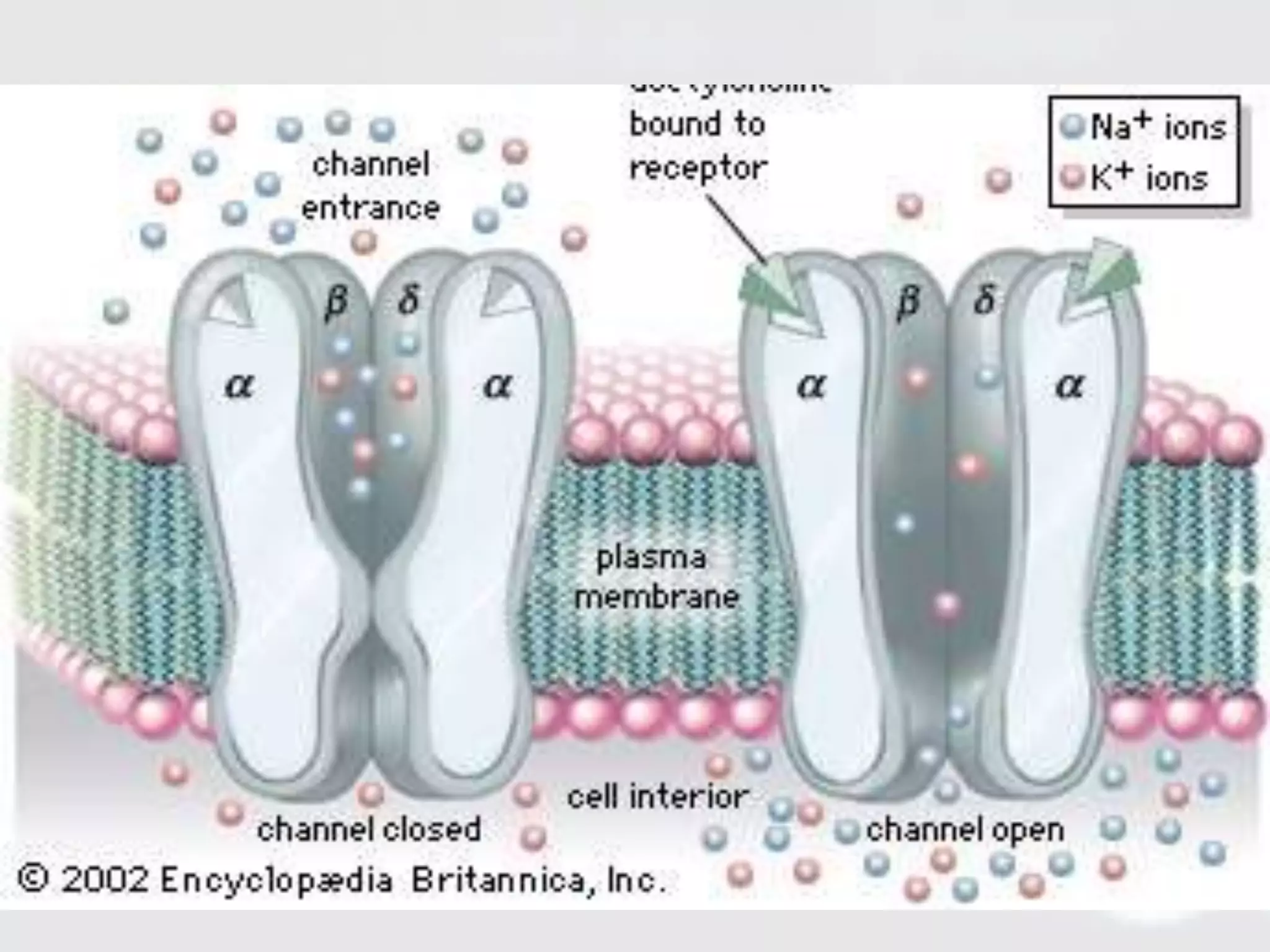
• Nicotinic AcetylCholine Receptor
Selectivity of ion channels
• Size of central pore
• Cations and anions
• nAChr
• K+ Leak channels
Gating of Ion Channels
• Regulation of opening of pore
• Gating:
Voltage
Ligand
Mechanical
Carrier Proteins
• Actually binds to a specific molecule and
physically carries it across the membrane via a
conformational change
• Energy may or may not be required
• Slower than channels
• Drugs – resemble endogenous ligands
Passive Carriers
• Facilitate the downhill transport of substances
across membranes
• No energy input
• Glucose Transporters
Active Carriers
• Transport of solutes against their gradients
• Requires energy
• 3 types:
ATP-driven Ion Pumps
Coupled transporters
ABC transporters
ATP-Driven Ion Pumps
• Utilize the energy liberated by ATP hydrolysis
to move ions across membranes, against their
gradients.
• Na+-K+-ATPase Pump:
2 K+ in, 3 Na+ out
Coupled Transporters
• Use the energy stored in ion gradients to
actively transport molecules across membranes
• Secondary Active Transporters
• 2 mechanisms:
Symport
Antiport
Symport
• The carrier protein transports two solutes in
the same direction
Antiport
• One ion traverses the membrane in one
direction and another metabolite is
transported in the other direction.
ABC Transporters
• ATP-Binding Cassette superfamily
Efflux Pumps
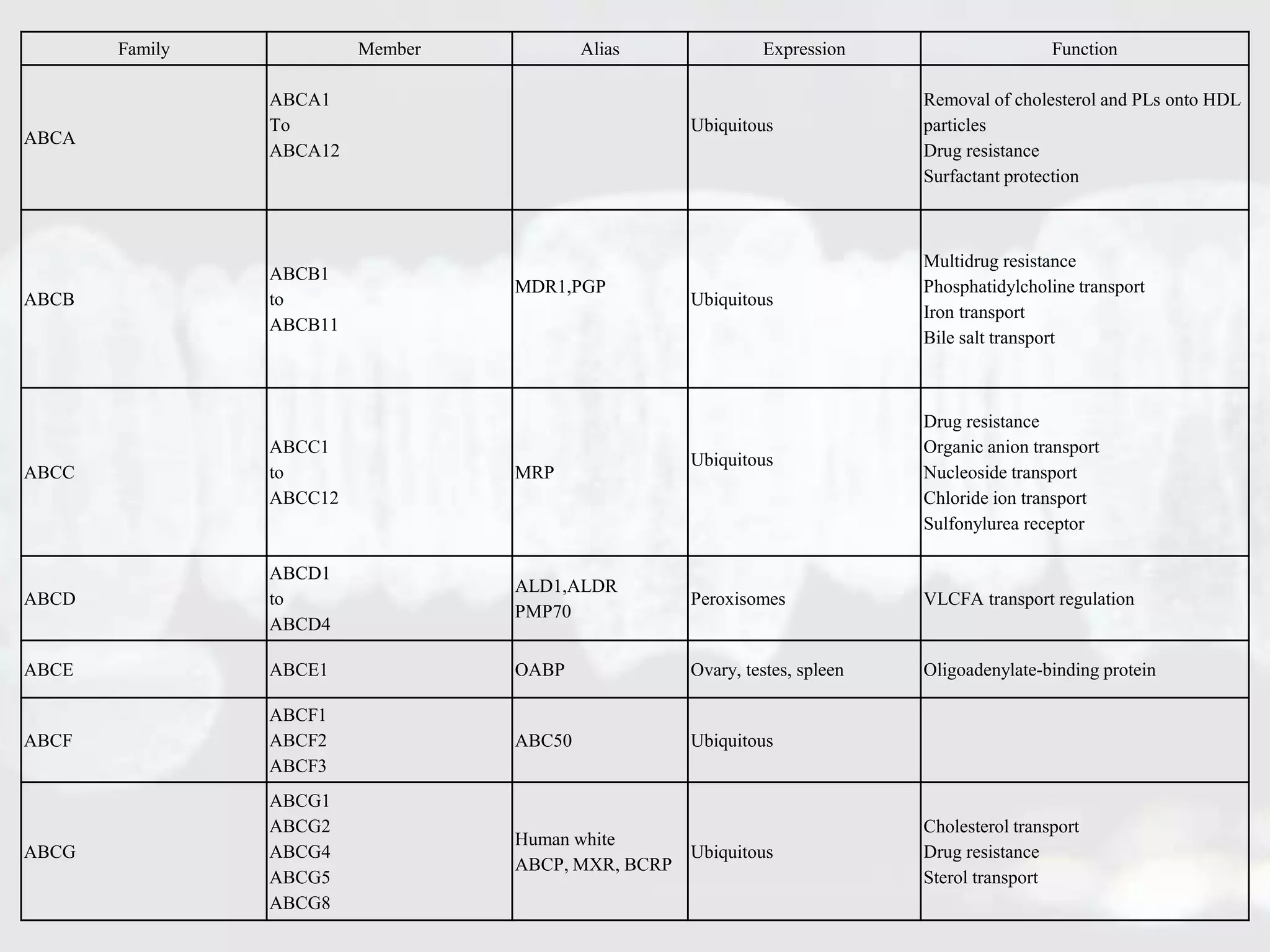
Family Member Alias Expression Function
ABCA
ABCA1
To
ABCA12
Ubiquitous
Removal of cholesterol and PLs onto HDL
particles
Drug resistance
Surfactant protection
ABCB
ABCB1
to
ABCB11
MDR1,PGP
Ubiquitous
Multidrug resistance
Phosphatidylcholine transport
Iron transport
Bile salt transport
ABCC
ABCC1
to
ABCC12
MRP
Ubiquitous
Drug resistance
Organic anion transport
Nucleoside transport
Chloride ion transport
Sulfonylurea receptor
ABCD
ABCD1
to
ABCD4
ALD1,ALDR
PMP70
Peroxisomes VLCFA transport regulation
ABCE ABCE1 OABP Ovary, testes, spleen Oligoadenylate-binding protein
ABCF
ABCF1
ABCF2
ABCF3
ABC50 Ubiquitous
ABCG
ABCG1
ABCG2
ABCG4
ABCG5
ABCG8
Human white
ABCP, MXR, BCRP
Ubiquitous
Cholesterol transport
Drug resistance
Sterol transport
GENE NAME NO OF FAMILY
MEMBERS
DISEASES
ABCA 12 Tangier Disease, Stargardt Syndrome
ABCB 11 Bare Lymphocyte Syndrome Type I, X Linked
Sideroblastic Anemia with Ataxia
ABCC 13 Dubin-Johnson Syndrome, Pseudo-Xanthoma,
Cystic Fibrosis
ABCD 4 Adrenoleukodystrophy
ABCE 1
ABCF 3
ABCG 5 Sitosterolemia
P-Glycoprotein
• Permeability glycoprotein/ MDR1
• Intestinal epithelium, hepatocytes, renal
proximal tubular cells, adrenal gland and
capillary endothelial cells (BBB)
• Pumps out hydrophobic substances
• Overexpressed in human cancer cells
• Multi-drug Resistance
• Transports a variety of substances with
different chemical structures
• Clinical trials: Drugs that inhibit P-gp used in
the treatment of highly drug-resistant cancers
MRP
• Multidrug Resistance associated Protein/
Canalicular Multispecific Organic Anion
Transporter 1 (cMOAT)
• Actions similar to P-gp
• Functions in biliary transport
BCRP
• Breast Cancer Resistance Protein
• Mitoxantrone and Camptothecin analogues
• Expressed in placenta
• Enhances excretion of xenobiotics
• Secretion of vitamins in human milk
SLC Transporters
• 48 families
• Passive transport, Facilitated diffusion and
Ion-channel transport
• Transport of substrates In and Out of the cell
• OATP, OCT, SGLT, MATE
OATP
• Organic Anions across cell membrane
• Endogenous substrates:
Bile acids, Bilirubin, thyroid and steroid
hormones
• Drugs:
Anti-cancer, Antibiotic, Lipid lowering agents,
Anti-diabetic drugs, toxins and poisons
OCT
• Organic Cations across cell membrane
• Endogenous substrates:
Na+ , Histamine, Dopamine, NE, Uric Acid
• Drugs:
Diuretics, Quinine, Choline, Cimetidine etc.
SGLT
• Sodium Glucose Linked Transporter
• Renal Glucose reabsorption
• SGLT 2 – Use in Diabetes
MATE
• Multi-drug and Toxin Extrusion protein
• Bacteria – Cation transporters
• Metformin, Cimetidine, Topotecan
DRUG RESPONSE
Pharmacokinetics
• Absorption and distribution or excretion
• Protective barriers
• ABC transporters
BBB
Other tissues
• Hepatic transporters:
ABC
SLC
Supplementary to Hepatic Enzymes
• Renal Transporters:
Mainly SLC – OATP, OCT
Pharmacodynamics
• Clinical use: Drugs acting on brain
• SLC 1 and 6
• GABA, Glutamate, MAO, NE, 5HT,
Dopamine
Adverse Drug Response
• Control exposure of cell to foreign substances
• 3 categories
• Decreased uptake or secretion
• Enhanced uptake/reduced efflux
• Inhibition by drug
• Eg. Loperamide vs. Quinidine
Clinical Implications
• Targets for drug action
• Clinical studies focused on genetic variation in
membrane transporters
• Important in highly drug resistant cancers
Conclusion
• Drug development
• Lacunae in knowledge
• Further studies
Thank You!!

Membrane transporters and drug response

  • 2.
  • 3.
    Introduction • Cell membrane– Barrier • Selectively permeable • Drug absorption, distribution, elimination • Specialized transport proteins
  • 4.
  • 5.
  • 6.
  • 7.
  • 9.
    Membrane Transport Proteins •Channels • Carriers
  • 10.
    Channel Proteins • Passivetransport • Protein-lined passageways • Speed of transport • Signalling in Nervous system
  • 11.
    • Drugs –Receptors • Nicotinic AcetylCholine Receptor
  • 12.
    Selectivity of ionchannels • Size of central pore • Cations and anions • nAChr • K+ Leak channels
  • 14.
    Gating of IonChannels • Regulation of opening of pore • Gating: Voltage Ligand Mechanical
  • 18.
    Carrier Proteins • Actuallybinds to a specific molecule and physically carries it across the membrane via a conformational change • Energy may or may not be required • Slower than channels • Drugs – resemble endogenous ligands
  • 19.
    Passive Carriers • Facilitatethe downhill transport of substances across membranes • No energy input • Glucose Transporters
  • 20.
    Active Carriers • Transportof solutes against their gradients • Requires energy • 3 types: ATP-driven Ion Pumps Coupled transporters ABC transporters
  • 21.
    ATP-Driven Ion Pumps •Utilize the energy liberated by ATP hydrolysis to move ions across membranes, against their gradients. • Na+-K+-ATPase Pump: 2 K+ in, 3 Na+ out
  • 23.
    Coupled Transporters • Usethe energy stored in ion gradients to actively transport molecules across membranes • Secondary Active Transporters • 2 mechanisms: Symport Antiport
  • 24.
    Symport • The carrierprotein transports two solutes in the same direction
  • 25.
    Antiport • One iontraverses the membrane in one direction and another metabolite is transported in the other direction.
  • 26.
  • 27.
  • 28.
    Family Member AliasExpression Function ABCA ABCA1 To ABCA12 Ubiquitous Removal of cholesterol and PLs onto HDL particles Drug resistance Surfactant protection ABCB ABCB1 to ABCB11 MDR1,PGP Ubiquitous Multidrug resistance Phosphatidylcholine transport Iron transport Bile salt transport ABCC ABCC1 to ABCC12 MRP Ubiquitous Drug resistance Organic anion transport Nucleoside transport Chloride ion transport Sulfonylurea receptor ABCD ABCD1 to ABCD4 ALD1,ALDR PMP70 Peroxisomes VLCFA transport regulation ABCE ABCE1 OABP Ovary, testes, spleen Oligoadenylate-binding protein ABCF ABCF1 ABCF2 ABCF3 ABC50 Ubiquitous ABCG ABCG1 ABCG2 ABCG4 ABCG5 ABCG8 Human white ABCP, MXR, BCRP Ubiquitous Cholesterol transport Drug resistance Sterol transport
  • 29.
    GENE NAME NOOF FAMILY MEMBERS DISEASES ABCA 12 Tangier Disease, Stargardt Syndrome ABCB 11 Bare Lymphocyte Syndrome Type I, X Linked Sideroblastic Anemia with Ataxia ABCC 13 Dubin-Johnson Syndrome, Pseudo-Xanthoma, Cystic Fibrosis ABCD 4 Adrenoleukodystrophy ABCE 1 ABCF 3 ABCG 5 Sitosterolemia
  • 30.
    P-Glycoprotein • Permeability glycoprotein/MDR1 • Intestinal epithelium, hepatocytes, renal proximal tubular cells, adrenal gland and capillary endothelial cells (BBB) • Pumps out hydrophobic substances
  • 32.
    • Overexpressed inhuman cancer cells • Multi-drug Resistance • Transports a variety of substances with different chemical structures • Clinical trials: Drugs that inhibit P-gp used in the treatment of highly drug-resistant cancers
  • 33.
    MRP • Multidrug Resistanceassociated Protein/ Canalicular Multispecific Organic Anion Transporter 1 (cMOAT) • Actions similar to P-gp • Functions in biliary transport
  • 34.
    BCRP • Breast CancerResistance Protein • Mitoxantrone and Camptothecin analogues • Expressed in placenta • Enhances excretion of xenobiotics • Secretion of vitamins in human milk
  • 35.
    SLC Transporters • 48families • Passive transport, Facilitated diffusion and Ion-channel transport • Transport of substrates In and Out of the cell • OATP, OCT, SGLT, MATE
  • 36.
    OATP • Organic Anionsacross cell membrane • Endogenous substrates: Bile acids, Bilirubin, thyroid and steroid hormones • Drugs: Anti-cancer, Antibiotic, Lipid lowering agents, Anti-diabetic drugs, toxins and poisons
  • 37.
    OCT • Organic Cationsacross cell membrane • Endogenous substrates: Na+ , Histamine, Dopamine, NE, Uric Acid • Drugs: Diuretics, Quinine, Choline, Cimetidine etc.
  • 38.
    SGLT • Sodium GlucoseLinked Transporter • Renal Glucose reabsorption • SGLT 2 – Use in Diabetes
  • 40.
    MATE • Multi-drug andToxin Extrusion protein • Bacteria – Cation transporters • Metformin, Cimetidine, Topotecan
  • 41.
  • 42.
    Pharmacokinetics • Absorption anddistribution or excretion • Protective barriers • ABC transporters BBB Other tissues
  • 43.
    • Hepatic transporters: ABC SLC Supplementaryto Hepatic Enzymes • Renal Transporters: Mainly SLC – OATP, OCT
  • 44.
    Pharmacodynamics • Clinical use:Drugs acting on brain • SLC 1 and 6 • GABA, Glutamate, MAO, NE, 5HT, Dopamine
  • 45.
    Adverse Drug Response •Control exposure of cell to foreign substances • 3 categories • Decreased uptake or secretion • Enhanced uptake/reduced efflux • Inhibition by drug • Eg. Loperamide vs. Quinidine
  • 46.
    Clinical Implications • Targetsfor drug action • Clinical studies focused on genetic variation in membrane transporters • Important in highly drug resistant cancers
  • 47.
    Conclusion • Drug development •Lacunae in knowledge • Further studies
  • 48.