Transporters in Pharmacokinetics
Dr Baheti Ashishkumar
JR1, MD Pharmacology
MGIMS,Sevagram
9/12/2019
1. INTRODUCTION
2. PRINCIPAL SITES
3. MECHANISM
4. TYPES OF TRANSPORTERS
5. HEPATIC TRANSPORTERS
6. RENAL TRANSPORTERS
7. CONCLUSION
3
INTRODUCTION
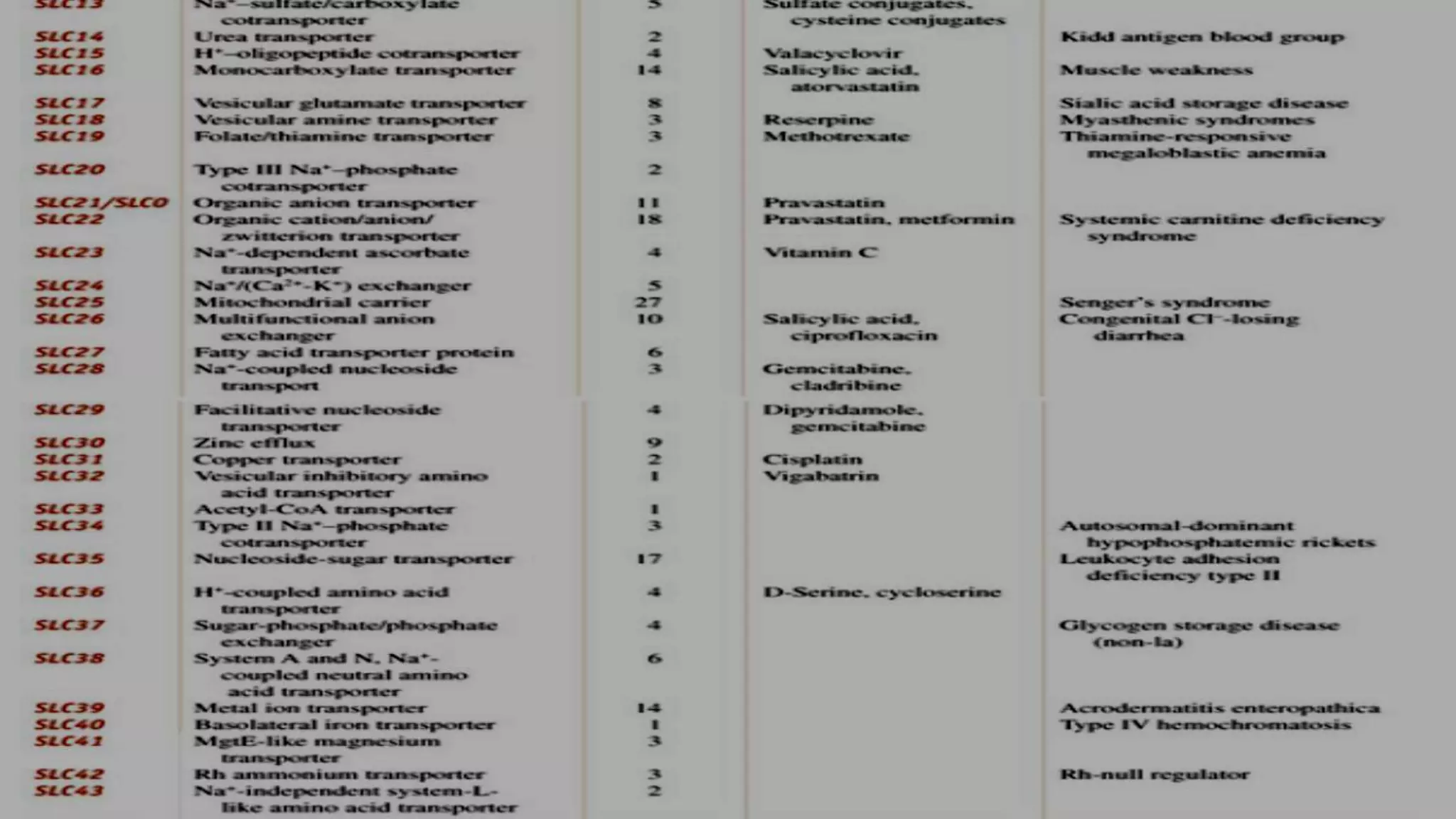
These are membrane proteins that are present in all organisms.
Approximately 2000 genes in the human genome (6%) code for transporters or
transporter related proteins.
These proteins control the uptake of essential nutrients and ions and the efflux of cellular
waste, environmental toxins, drugs and other xenobiotics.
Also play significant roles in determining the bioavailability, therapeutic efficacy, and
pharmacokinetics of a variety of drugs.
Roles of membrane transporters in pharmacokinetic pathways
5
Membrane transporters principal sites
6
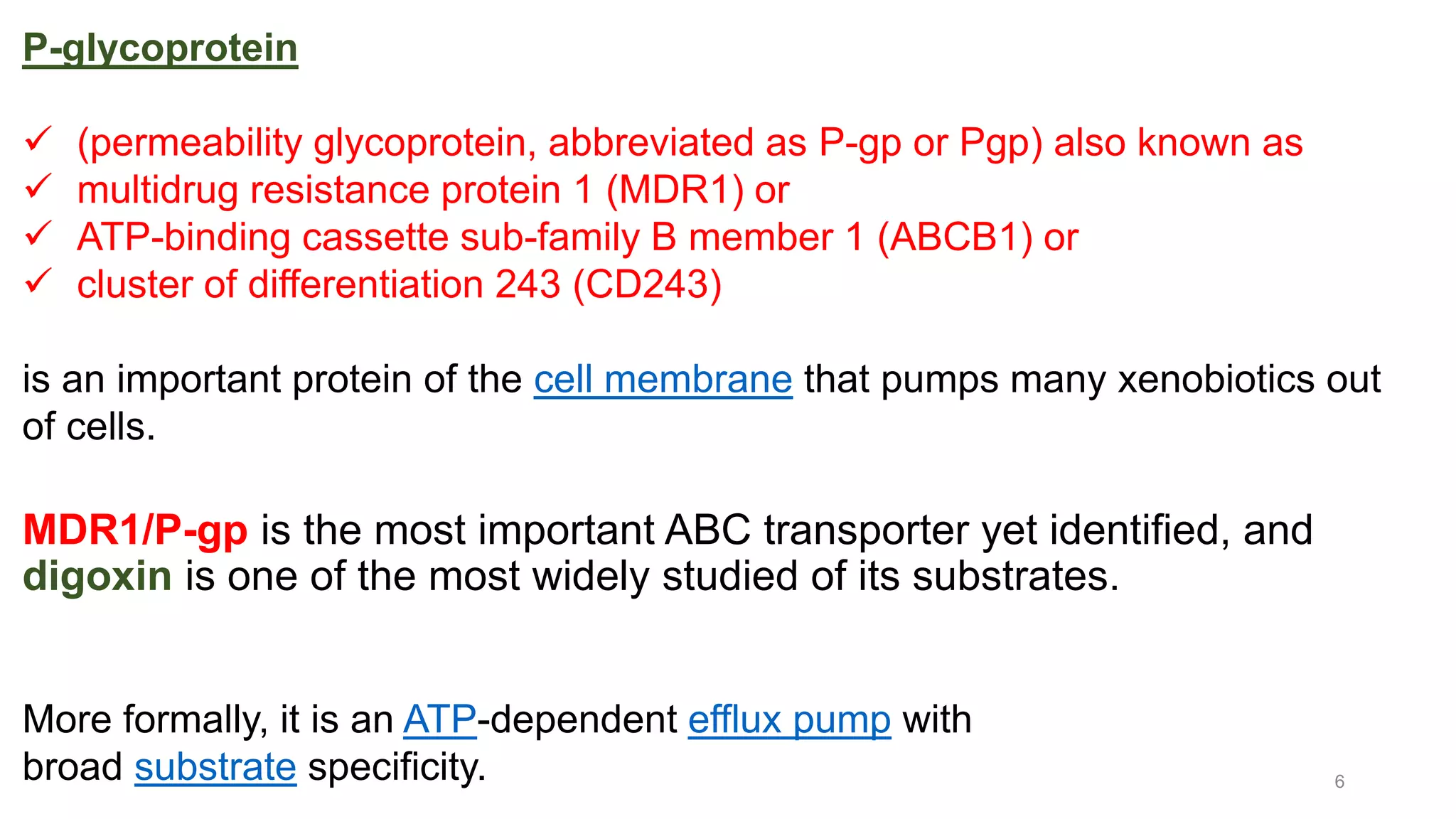
P-glycoprotein
 (permeability glycoprotein, abbreviated as P-gp or Pgp) also known as
 multidrug resistance protein 1 (MDR1) or
 ATP-binding cassette sub-family B member 1 (ABCB1) or
 cluster of differentiation 243 (CD243)
is an important protein of the cell membrane that pumps many xenobiotics out
of cells.
MDR1/P-gp is the most important ABC transporter yet identified, and
digoxin is one of the most widely studied of its substrates.
More formally, it is an ATP-dependent efflux pump with
broad substrate specificity.
Some examples
• Loperamide (substrate for P-gp in brain)
+
Quinidine (P-gp inhibitor in brain)
Respiratory Depression
Some examples-contd.
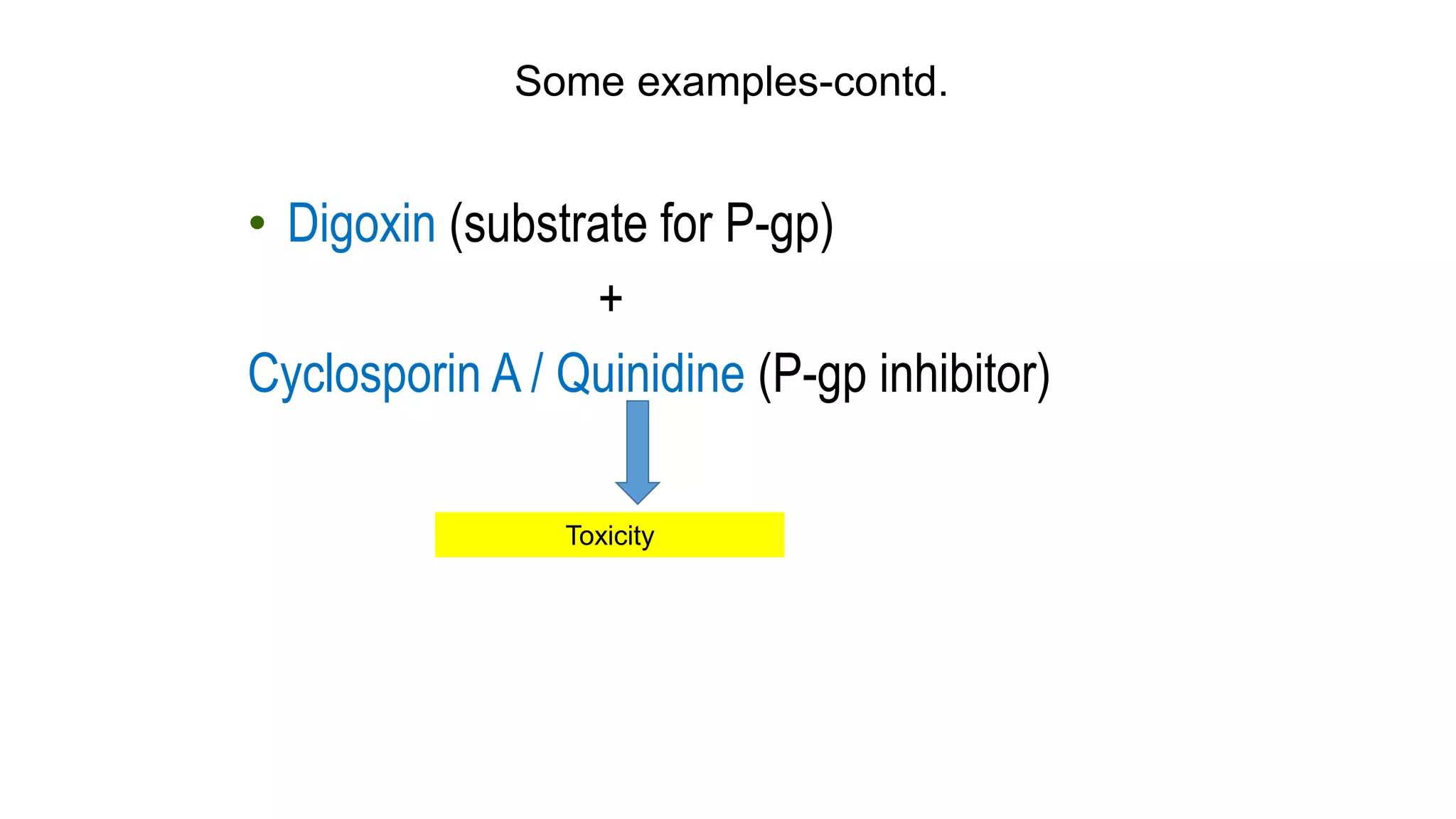
• Digoxin (substrate for P-gp)
+
Cyclosporin A / Quinidine (P-gp inhibitor)
Toxicity
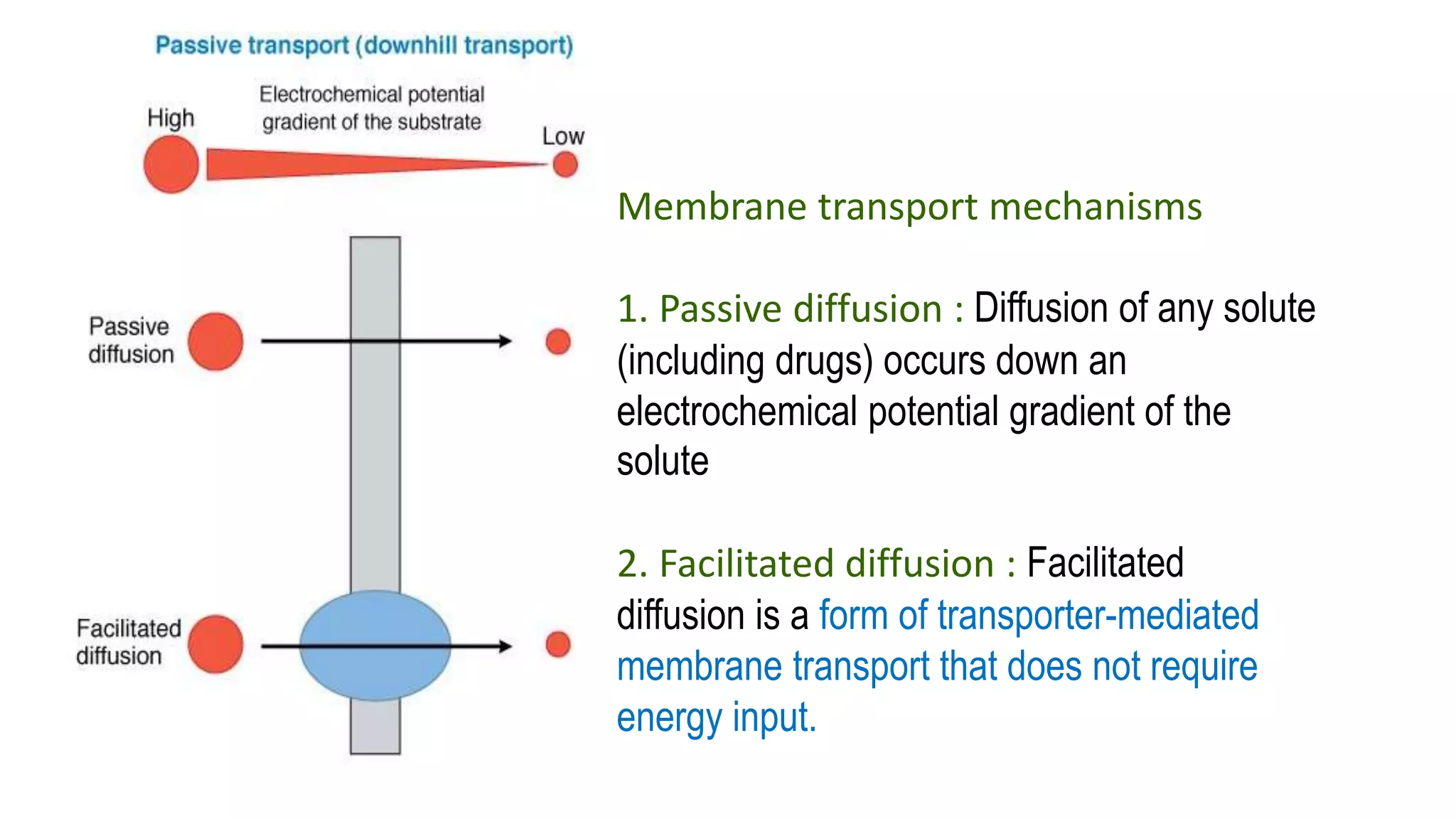
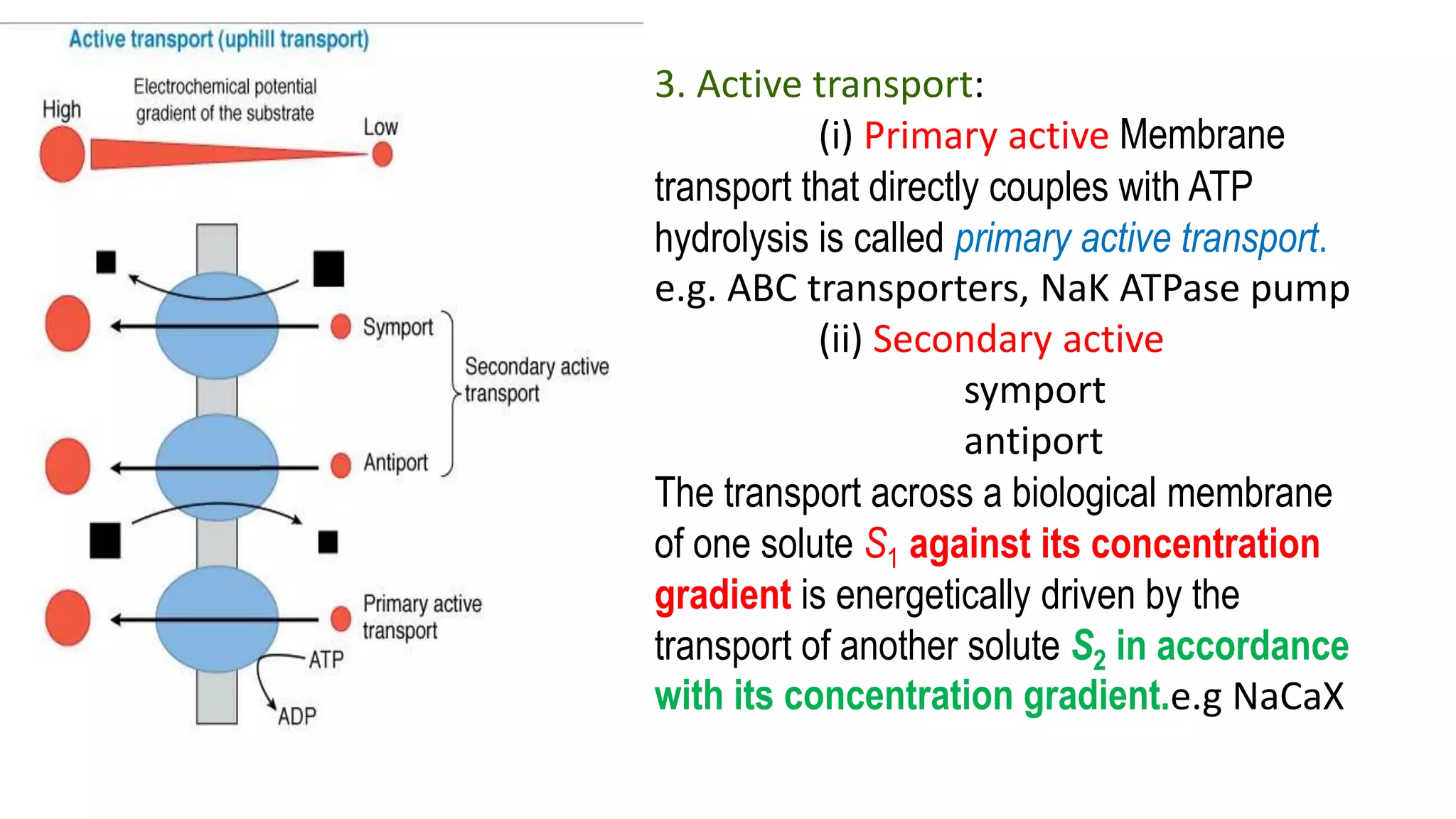
Membrane transport mechanisms
1. Passive diffusion : Diffusion of any solute
(including drugs) occurs down an
electrochemical potential gradient of the
solute
2. Facilitated diffusion : Facilitated
diffusion is a form of transporter-mediated
membrane transport that does not require
energy input.
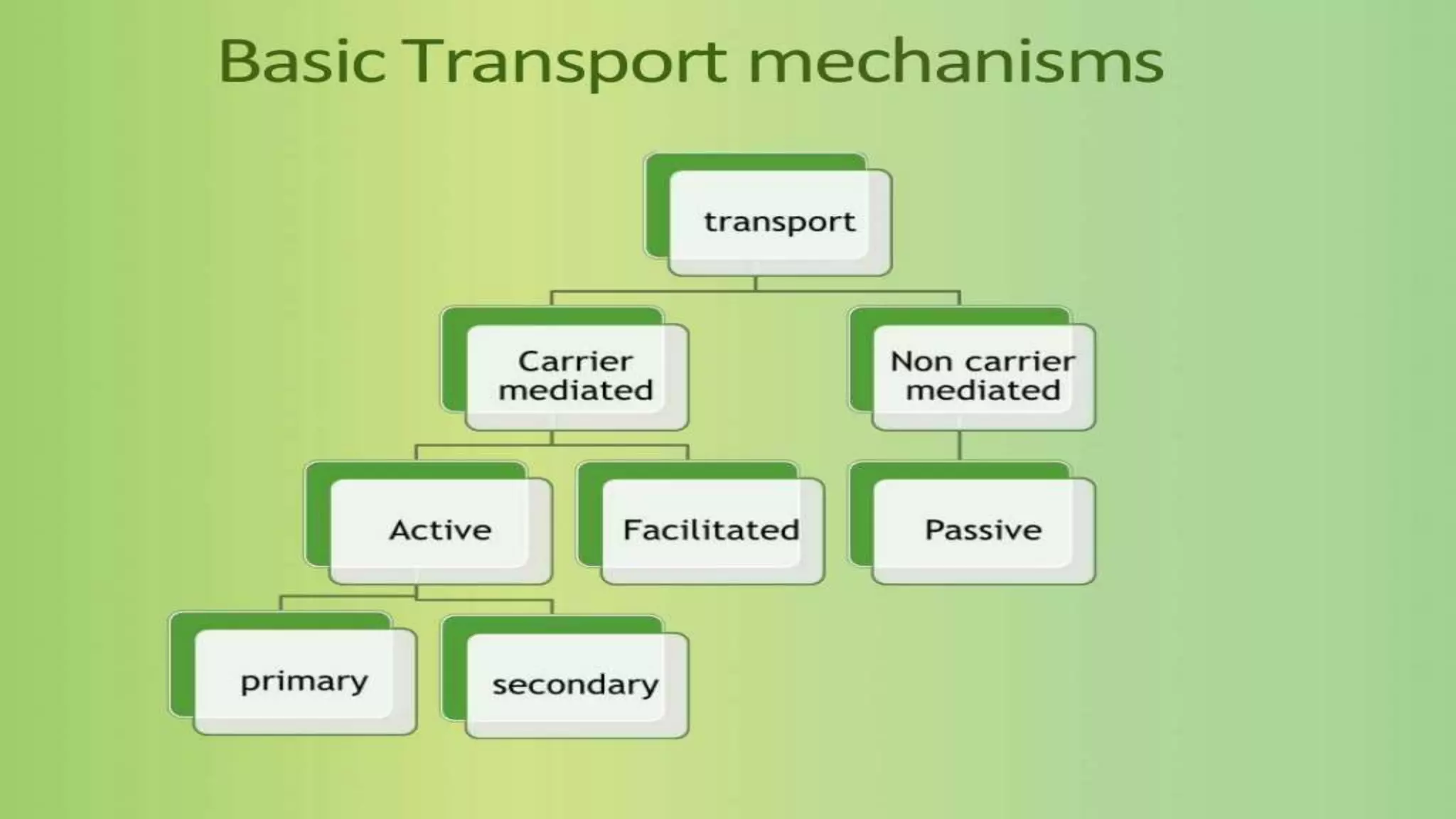
3. Active transport:
(i) Primary active Membrane
transport that directly couples with ATP
hydrolysis is called primary active transport.
e.g. ABC transporters, NaK ATPase pump
(ii) Secondary active
symport
antiport
The transport across a biological membrane
of one solute S1 against its concentration
gradient is energetically driven by the
transport of another solute S2 in accordance
with its concentration gradient.e.g NaCaX
12
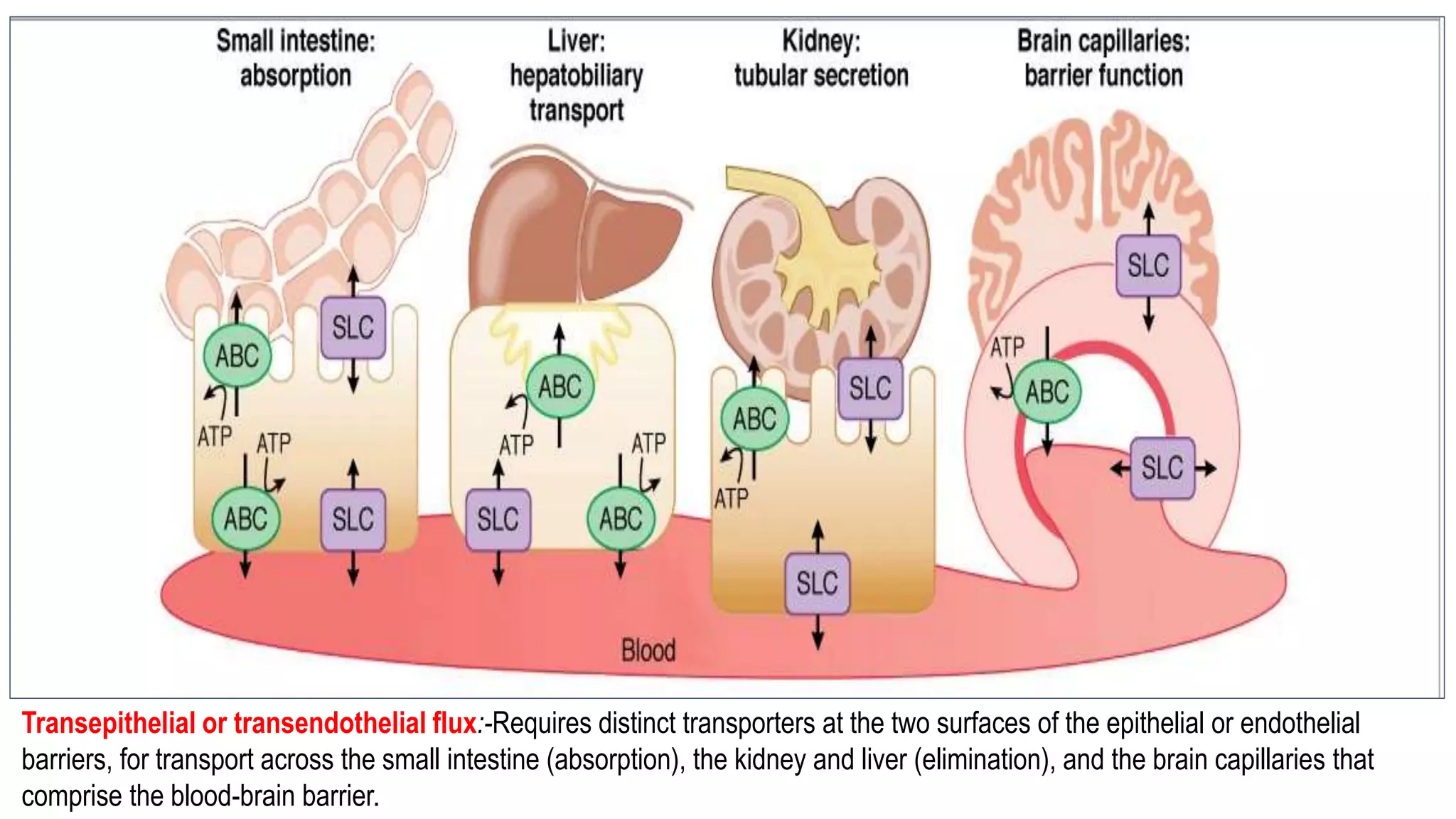
Vectorial Transport
Defn: Asymmetrical transport across a monolayer of polarized cells, such
as epithelial and endothelial cells of brain capillaries
- Important for absorption of nutrients and bile acids in the intestine.
- For lipophilic agents, ABC transporters alone are able to achieve
vectorial transport.
Transepithelial or transendothelial flux:-Requires distinct transporters at the two surfaces of the epithelial or endothelial
barriers, for transport across the small intestine (absorption), the kidney and liver (elimination), and the brain capillaries that
comprise the blood-brain barrier.
14
Transporter superfamilies in the human genome
Only two major gene superfamilies
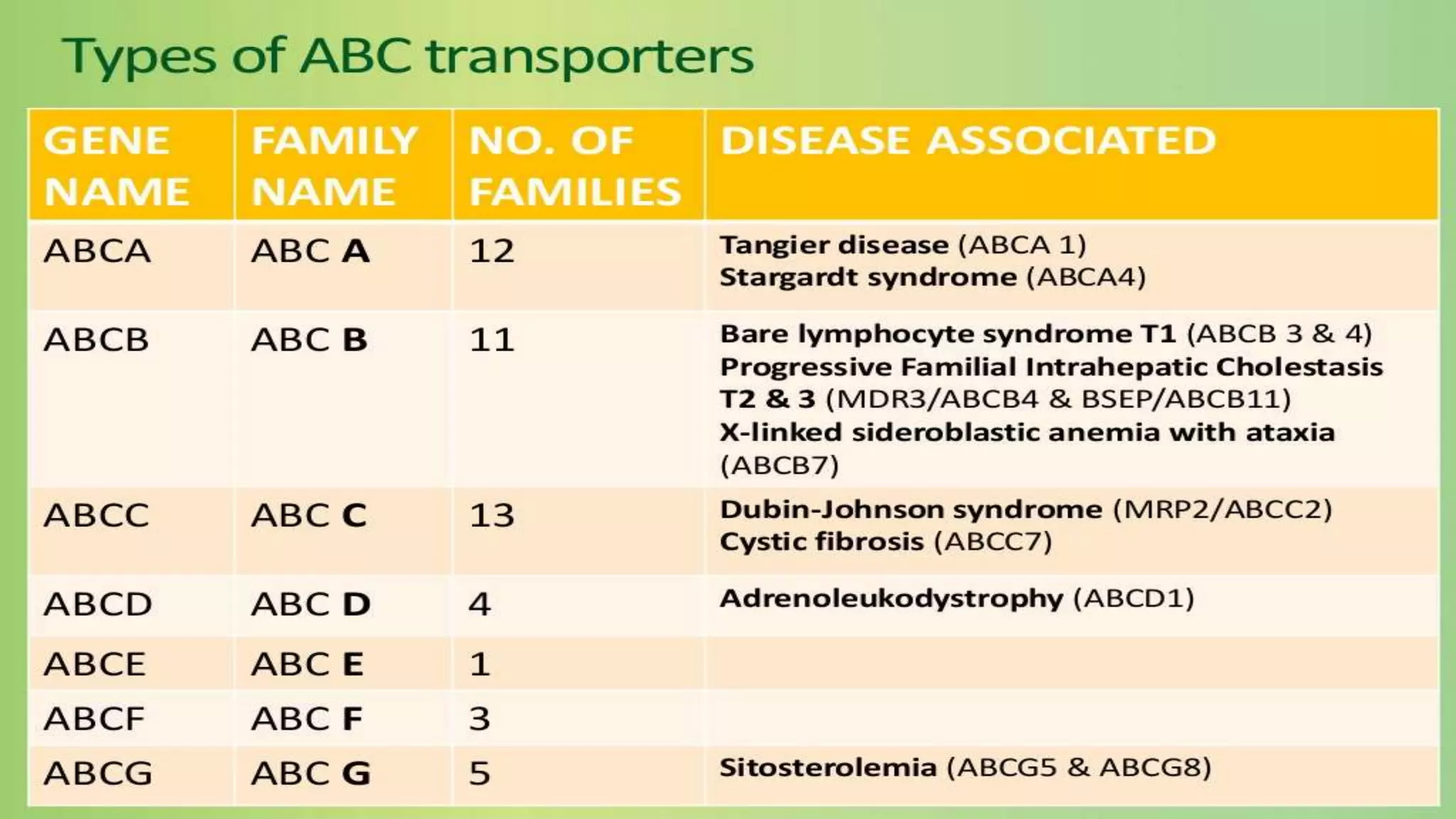
ATP Binding Cassette (ABC)
49 genes
Solute Linked Carrier
(SLC)
300 genes
7 subclasses:
Primary active transporters
ABC-A to ABC-G
e.g. P-gp/MDR1/ABC-B1
CFTR ABCC7
43 family/classes:
Secondary active Transporters
(facilitated/ion coupled)
e.g. SERT, SLC6A4
DAT SLC6A3
ATP Binding Cassette (ABC)
49 genes- 7 families
In 1976, Juliano and Ling reported that overexpression of a membrane protein in
colchicine-resistant Chinese hamster ovary cells also resulted in acquired
resistance to many structurally unrelated drugs (i.e., multidrug resistance)
Since the cDNA cloning of this first mammalian ABC protein (P-
glycoprotein/MDR1/ABCB1), knowledge of the ABC superfamily has grown to
include 49 genes, each containing one or two conserved ABC regions
Physiological Roles of ABC Transporters is illustrated by studies involving
knockout animals or patients with genetic defects in these transporters.
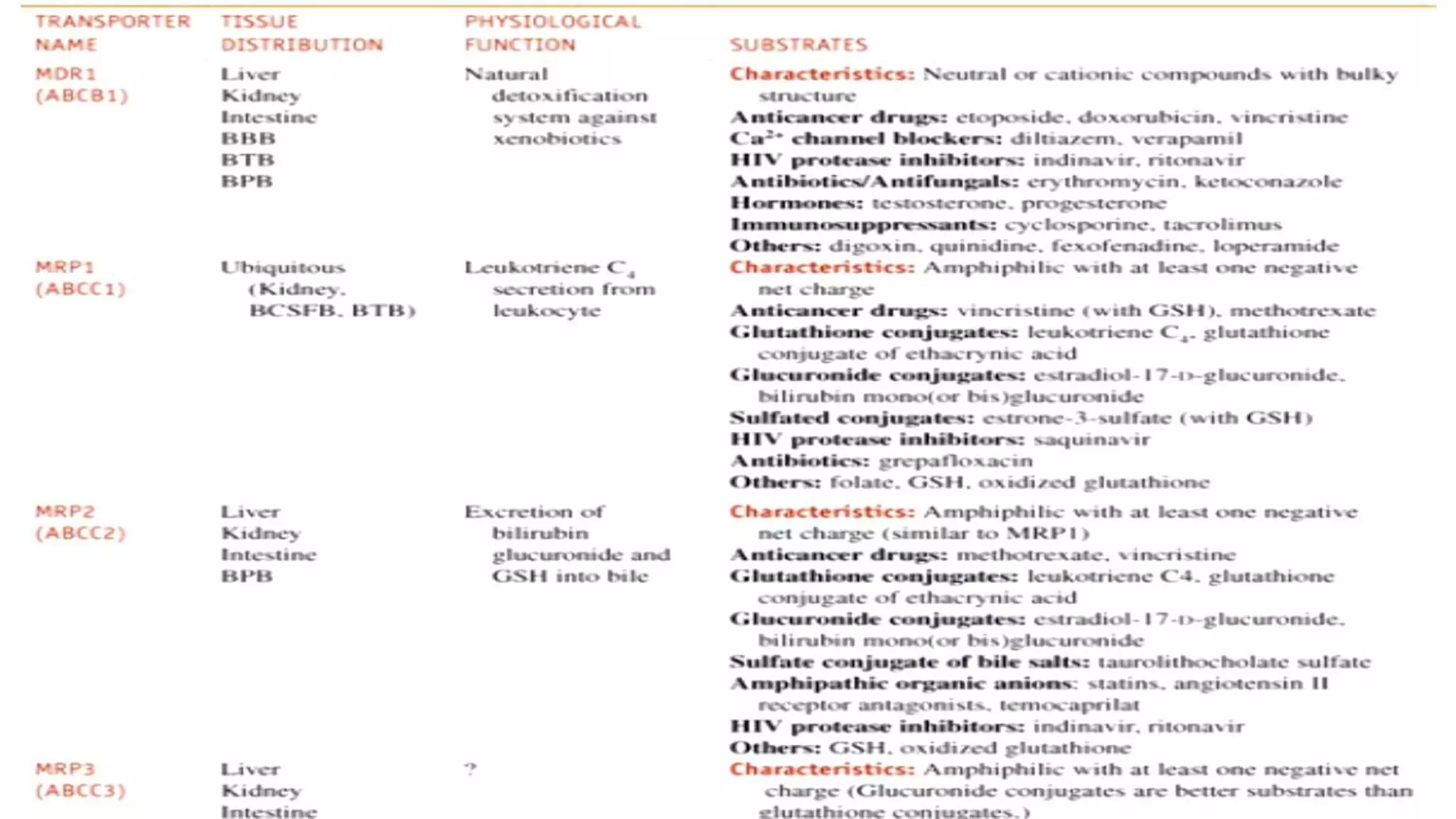
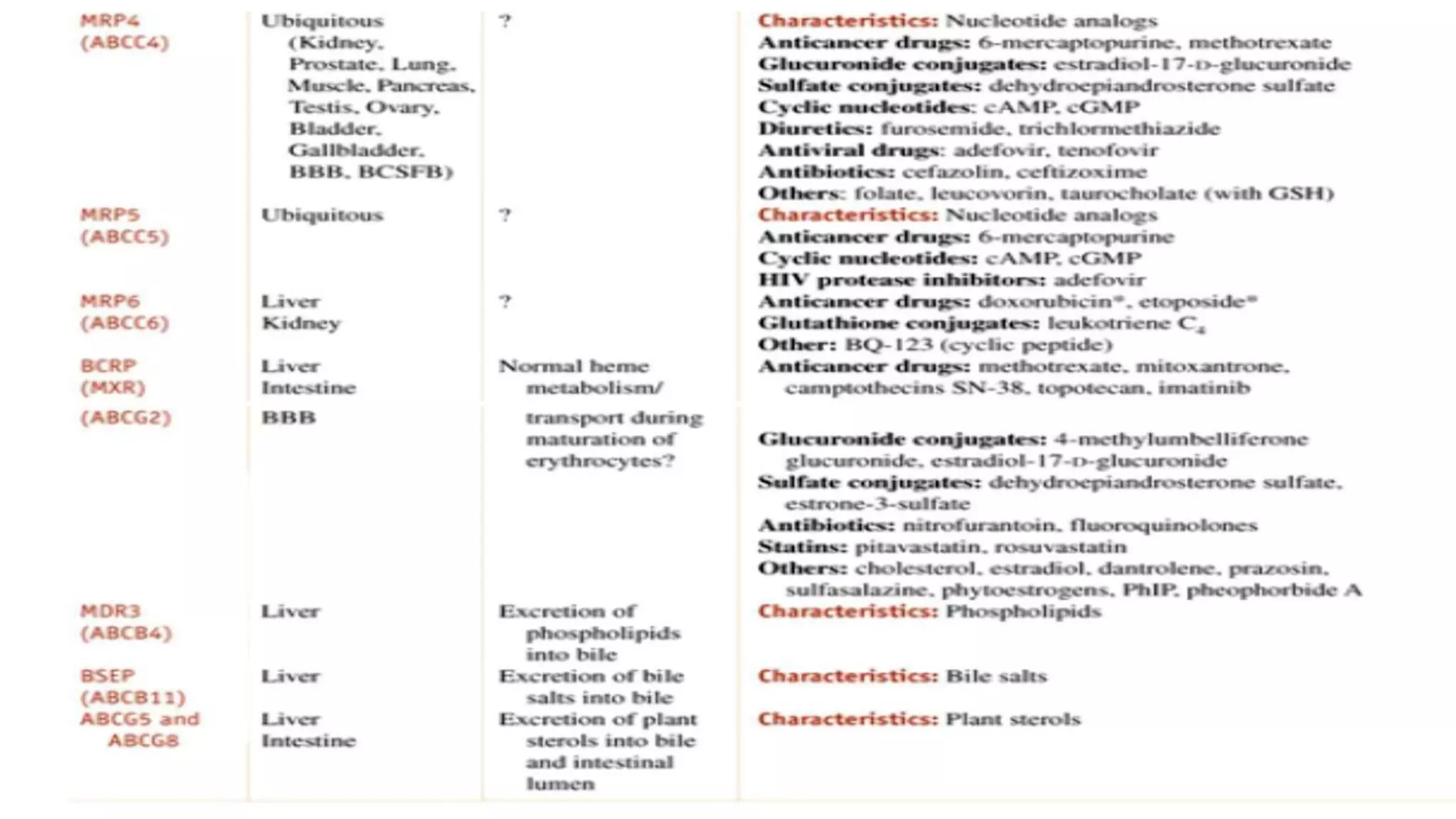
Tissue Distribution of Drug-Related ABC Transporters
ABC Transporters in Drug Absorption and Elimination
 Alteration of MDR1 activity by inhibitors (drug-drug interactions) affects oral absorption and
renal clearance.
 Drugs with narrow therapeutic windows should be used cautiously if MDR1-based drug-
drug interactions are likely.
 In the intestine, MRP3 can mediate the intestinal absorption in conjunction with uptake
transporters.
 Dysfunction of MRP3 results in a shortening of the elimination half-life.
 MRP4 substrates transported by the OAT family transporters on the basolateral membrane
of the epithelial cells in the kidney.
 Dysfunction of MRP4 enhances the renal concentration.
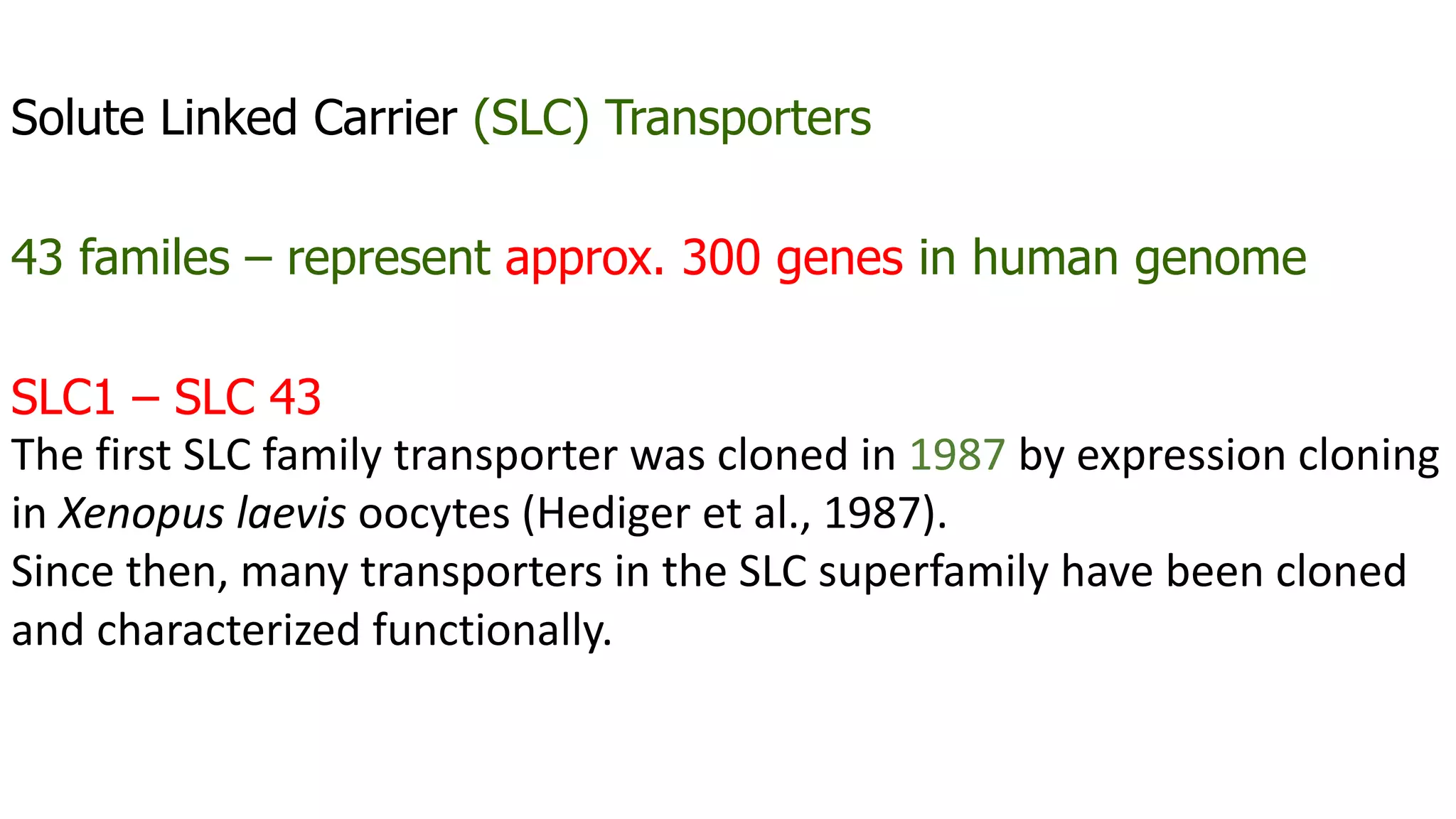
Solute Linked Carrier (SLC) Transporters
43 familes – represent approx. 300 genes in human genome
SLC1 – SLC 43
The first SLC family transporter was cloned in 1987 by expression cloning
in Xenopus laevis oocytes (Hediger et al., 1987).
Since then, many transporters in the SLC superfamily have been cloned
and characterized functionally.
28
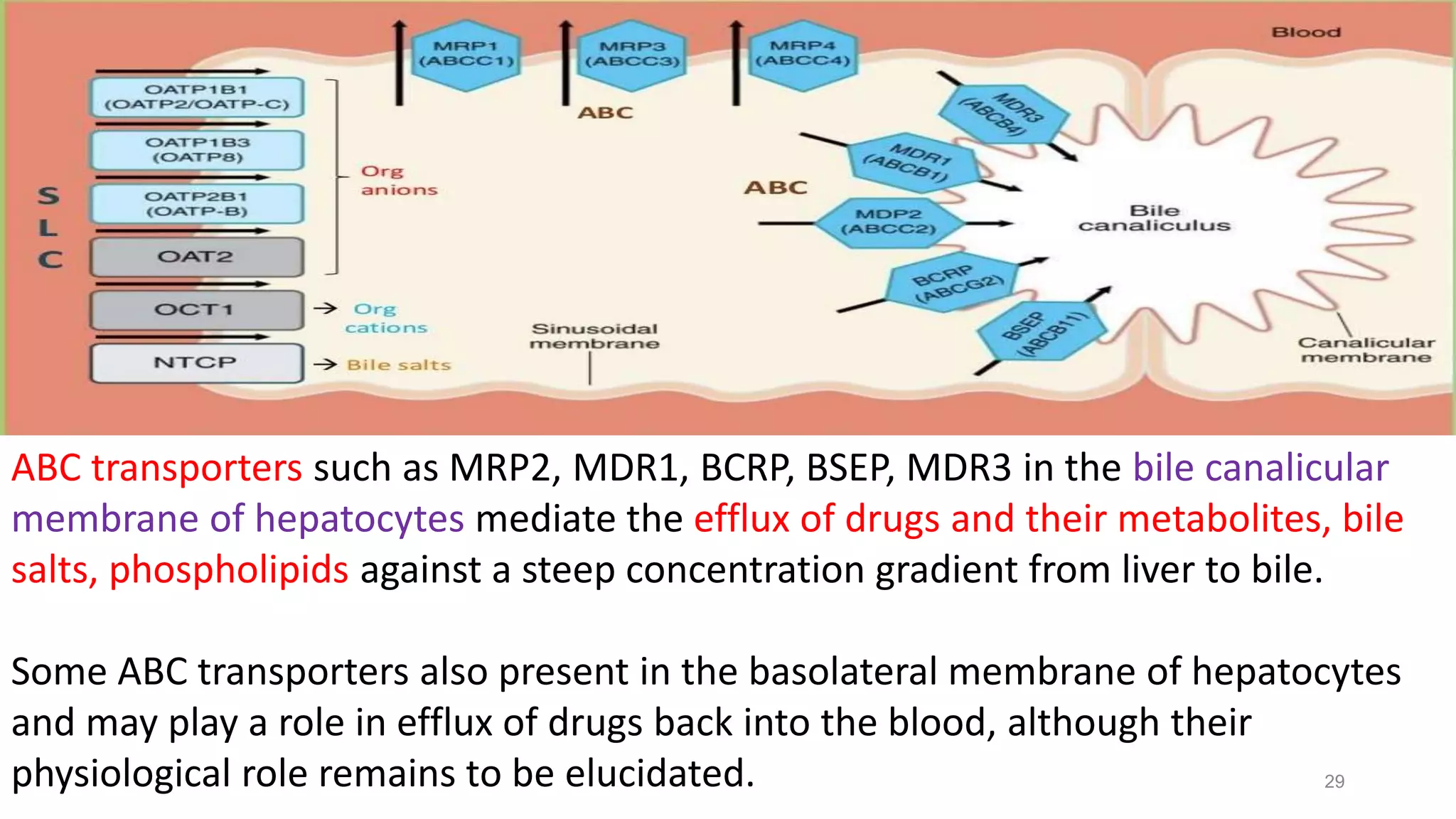
1. Hepatic Transporters
• Hepatic uptake of organic anions ( drugs, leukotrienes, bilirubin), cations, and
bile salts is mediated by SLC – type transporters in the sinusoidal membrane of
hepatocytes: OATs, OCTs, NTCP.
Transporters in the hepatocyte that function in the uptake and efflux of drugs across the sinusoidal membrane and efflux of drugs into
the bile across the canalicular membrane
29
ABC transporters such as MRP2, MDR1, BCRP, BSEP, MDR3 in the bile canalicular
membrane of hepatocytes mediate the efflux of drugs and their metabolites, bile
salts, phospholipids against a steep concentration gradient from liver to bile.
Some ABC transporters also present in the basolateral membrane of hepatocytes
and may play a role in efflux of drugs back into the blood, although their
physiological role remains to be elucidated.
1. HMG CoA Reductase inhibitors:
Statins reversibly inhibit HMG CoA Reductase
Most of the statins in the acid form are substrates of uptake transporters, so they
are taken up efficiently by the liver and undergo enterohepatic circulation.
OATP1B1 – hepatic uptake transporters
MRP2- efflux transporters act cooperatively to produce vectorial transport of
bisubstrates in the liver.
2. Temocapril: ACE inhibitor – Prodrug – Temocaprilat. (excreted both in bile and
urine by liver and kidney respectively, whereas other ACE inhibitors are excreted
mainly in urine). Temocaprilat is a bisubstrate of the OATP family and MRP2,
whereas other ACE inhibitors are not good substrates for MRP2.
3. Irinotecan: Irinotecan hydrochloride (CPT-11) is a potent anticancer
drug but late onset gastrointestinal side effects make it difficult to use
safely.
After iv administration – SN-38 – conjugated with glucuronic acid –
excreted into bile by MRP2.
Some studies have shown that the inhibition of MRP2 mediated
biliary excretion of SN38 by coadministration of probenecid decreases
drug induced diarrhea, at least in rats.
4. Angiotensin II Receptor Antagonists.
Angiotensin II receptor antagonists are used for the treatment of
hypertension, acting on AT 1 receptors expressed in vascular smooth
muscle, proximal tubule, and adrenal medullary cells, and elsewhere.
For most of these drugs, hepatic uptake and biliary excretion are important
factors for their pharmacokinetics as well as pharmacological effects.
Telmisartan is taken up into human hepatocytes in a saturable manner,
predominantly via OATP1B3.
On the other hand, both OATPs 1B1 and 1B3 are responsible for the
hepatic uptake of valsartan and olmesartan, although the relative
contributions of these transporters are unclear.
5. Repaglinide and Nateglinide
Repaglinide is a meglitinide analog anti-diabetic drug.
Although it is eliminated almost completely by the metabolism mediated by
CYPs 2C8 and 3A4, transporter-mediated hepatic uptake is one of the
determinants of its elimination rate.
In subjects with SLCO1B1 (gene code for OATP1B1) 521CC genotype, a
significant change in the pharmacokinetics of repaglinide was observed.
Genetic polymorphism in SLCO1B1 521T>C results in altered
pharmacokinetics of nateglinide, suggesting OATP1B1 is a determinant of
its elimination, although it is subsequently metabolized by CYPs 2C9,
3A4, and 2D6.
6. Fexofenadine
Fexofenadine, a histamine H1 receptor antagonist, is taken up in the liver by
OATP1B1 and OATP1B3 and excreted in the bile via transporters
including MRP2 and BSEP.
Patients with genetic polymorphism in SLCO1B1 521T>C, show altered
pharmacokinetics.
7. Bosentan
Bosentan is an endothelin antagonist used to treat pulmonary arterial
hypertension.
It is taken up in the liver by OATP1B1 and OATP1B3, and subsequently
metabolized by CYP2C9 and CYP3A4.
Transporter-mediated hepatic uptake can be a determinant of elimination of
bosentan, and the inhibition of hepatic uptake by cyclosporin A, rifampicin,
and sildenafil can affect its pharmacokinetics.
36
2. Renal transporters
Specificity of secretory pathways in nephron were well characterized
using variety of physiological techniques
Isolated perfused nephrons and kidneys
Micropuncture techniques
Cell culture methods
Isolated renal plasma membrane vesicles
During the past decade, molecular studies have identified and
characterized the renal transporters that play a role in drug
elimination, toxicity and response.
1. Organic cation transporter:
Many secreted organic cations are Endogenous compounds – choline,
dopamine, N methylnicotinamide.
primary function is to rid the body of xenobiotics like +vely charged drugs and
their metabolites like nicotine, ranitidine, metformin, procainamide etc.
Model of organic cation secretory
transporters In the proximal tubule
• Organic cations that are secreted by the
kidney may be either hydrophobic or
hydrophilic.
Hydrophilic organic drug cations generally
have molecular weights < 400 daltons.
For the transepithelial flux of a compound (e.g., secretion), the compound
must traverse two membranes sequentially, the basolateral membrane
facing the blood side and the apical membrane facing the tubular lumen.
Distinct transporters on each membrane mediate each step of transport.
Organic cations appear to cross the basolateral membrane in human
proximal tubule by two distinct transporters in the SLC family 22 (SCL22):
OCT2 (SLC22A2) and OCT3 (SLC22A3).
Organic cations are transported across this membrane down an
electrochemical gradient.
The recent discovery of a new transporter family, SLC47A, multidrug and
toxin extrusion family (MATEs), has provided the molecular identities of the
previously characterized electroneutral proton–organic cation antiport
mechanism.
Transporters in the MATE family, assigned to the apical membrane of the
proximal tubule, appear to play a key role in moving hydrophilic organic
cations from tubule cell to lumen. In addition, novel organic cation
transporters (OCTNs), located on the apical membrane, appear to
contribute to organic cation flux across the proximal tubule.
2. Organic anion transporter:
removal of weak acidic drugs like pravastatin, captopril, PAH, penicillines,
ochratoxin etc.
Model of organic anion secretory
transporters In the proximal tubule
Rectangle – transporters in SLC 22 family
Rectangle – transporters in ABC superfamily
OA – organic anion
aKG – alpha ketoglutarate
OAT1 (SLC22A6)
OAT1 was cloned from rat kidney.
This transporter is > 30% identical to OCTs in the SLC22 family.
Mouse, human, pig, and rabbit orthologs have been cloned and are ∼80% identical to
human OAT1.
The gene for the human OAT1 is mapped to chromosome 11 and is found in an SLC22
cluster that includes OAT3 and OAT4.
In humans, rat, and mouse OAT1 is expressed primarily in the kidney with some
expression in brain and skeletal muscle.
Immunohistochemical studies suggest that OAT1 is expressed on the basolateral
membrane of the proximal tubule in human and rat, with highest expression in the middle
segment, S2.
Based on quantitative PCR, OAT1 is expressed at a third of the level of OAT3.
• OAT2 (SLC22A7)-present in both kidney and liver. In the kidney, the transporter is
localized to the basolateral membrane of the proximal tubule, and function as a transporter
for nucleotides, particularly guanine nucleotides such as cyclic GMP .
• OAT3 (SLC22A8)-Human OAT3 consists of two variants, one of which transports a wide
variety of organic anions, including model compounds, PAH and estrone sulfate, as well as
many drug products (e.g., pravastatin, cimetidine, 6-mercaptopurine, and methotrexate)
• OAT4 (SLC22A9)-OAT4 is expressed in human kidney and placenta. The specificity of
OAT4 includes the model compounds estrone sulfate and PAH, as well as zidovudine,
tetracycline, and methotrexate
Other Anion Transporters.
URAT1 (SLC22A12), first cloned from human kidney, is a kidney-specific transporter
confined to the apical membrane of the proximal tubule.
NPT1 (SLC17A1), cloned originally as a phosphate transporter in humans, is expressed
in abundance on the luminal membrane of the proximal tubule as well as in the brain.
NPT1 transports PAH, probenecid, and penicillin G.
MRP2 (ABCC2), an ABC transporter, initially called the GS-X pump, has been
considered to be the primary transporter involved in efflux of many drug conjugates such
as glutathione conjugates across the canalicular membrane of the hepatocyte.
MRP4 (ABCC4) is found on the apical membrane of the proximal tubule and transports a
wide array of conjugated anions, including glucuronide and glutathione conjugates.
46
Thank You
breast cancer resistance protein (BCRP), and
multidrug resistance-associated proteins (MRPs),
multidrug resistance protein 4 (MRP4)
bile salt export pump (BSEP, ABCB11)
Na+-taurocholate cotransporting polypeptide (NTCP)
nucleotide binding domains (NBDs)
the major facilitator superfamily (MFS) and
two neurotransmitter transporter families:-
 the neurotransmitter; sodium symporter (NSS, or SLC6) and
the dicarboxylate/amino acid:cation (Na+ or H+) symporter (DAACS, or SLC1) family.
URAT1 (urate transporter 1)
Sodium-dependent phosphate transport protein 1 NPT
Single nucleotide polymorphisms, frequently called SNPs (pronounced “snips”), are the most
common type of genetic variation among people.
NTCP (sodium/taurocholate cotransporting polypeptide)
Cystic fibrosis transmembrane conductance regulator (CFTR)
PEPT1 (peptide transporter 1)
48
conformation
change
conformation
change
Carrier-mediated solute transport
Basic membrane Transport Mechanisms
Channels vs Transporters
Vesicular monoamine/amine transporter - SLC 18
VMAT-2 inhibitors
RESERPINE – Not used now
TETRABENAZINE – Huntingtons chorea
DEUTETRABENAZINE - Huntingtons chorea
VALBENAZINE – Tardive dyskinesia
Transporters

Transporters

  • 1.
    Transporters in Pharmacokinetics DrBaheti Ashishkumar JR1, MD Pharmacology MGIMS,Sevagram 9/12/2019
  • 2.
    1. INTRODUCTION 2. PRINCIPALSITES 3. MECHANISM 4. TYPES OF TRANSPORTERS 5. HEPATIC TRANSPORTERS 6. RENAL TRANSPORTERS 7. CONCLUSION
  • 3.
    3 INTRODUCTION These are membraneproteins that are present in all organisms. Approximately 2000 genes in the human genome (6%) code for transporters or transporter related proteins. These proteins control the uptake of essential nutrients and ions and the efflux of cellular waste, environmental toxins, drugs and other xenobiotics. Also play significant roles in determining the bioavailability, therapeutic efficacy, and pharmacokinetics of a variety of drugs.
  • 4.
    Roles of membranetransporters in pharmacokinetic pathways
  • 5.
  • 6.
    6 P-glycoprotein  (permeability glycoprotein,abbreviated as P-gp or Pgp) also known as  multidrug resistance protein 1 (MDR1) or  ATP-binding cassette sub-family B member 1 (ABCB1) or  cluster of differentiation 243 (CD243) is an important protein of the cell membrane that pumps many xenobiotics out of cells. MDR1/P-gp is the most important ABC transporter yet identified, and digoxin is one of the most widely studied of its substrates. More formally, it is an ATP-dependent efflux pump with broad substrate specificity.
  • 7.
    Some examples • Loperamide(substrate for P-gp in brain) + Quinidine (P-gp inhibitor in brain) Respiratory Depression
  • 8.
    Some examples-contd. • Digoxin(substrate for P-gp) + Cyclosporin A / Quinidine (P-gp inhibitor) Toxicity
  • 10.
    Membrane transport mechanisms 1.Passive diffusion : Diffusion of any solute (including drugs) occurs down an electrochemical potential gradient of the solute 2. Facilitated diffusion : Facilitated diffusion is a form of transporter-mediated membrane transport that does not require energy input.
  • 11.
    3. Active transport: (i)Primary active Membrane transport that directly couples with ATP hydrolysis is called primary active transport. e.g. ABC transporters, NaK ATPase pump (ii) Secondary active symport antiport The transport across a biological membrane of one solute S1 against its concentration gradient is energetically driven by the transport of another solute S2 in accordance with its concentration gradient.e.g NaCaX
  • 12.
    12 Vectorial Transport Defn: Asymmetricaltransport across a monolayer of polarized cells, such as epithelial and endothelial cells of brain capillaries - Important for absorption of nutrients and bile acids in the intestine. - For lipophilic agents, ABC transporters alone are able to achieve vectorial transport.
  • 13.
    Transepithelial or transendothelialflux:-Requires distinct transporters at the two surfaces of the epithelial or endothelial barriers, for transport across the small intestine (absorption), the kidney and liver (elimination), and the brain capillaries that comprise the blood-brain barrier.
  • 14.
    14 Transporter superfamilies inthe human genome Only two major gene superfamilies ATP Binding Cassette (ABC) 49 genes Solute Linked Carrier (SLC) 300 genes 7 subclasses: Primary active transporters ABC-A to ABC-G e.g. P-gp/MDR1/ABC-B1 CFTR ABCC7 43 family/classes: Secondary active Transporters (facilitated/ion coupled) e.g. SERT, SLC6A4 DAT SLC6A3
  • 15.
    ATP Binding Cassette(ABC) 49 genes- 7 families In 1976, Juliano and Ling reported that overexpression of a membrane protein in colchicine-resistant Chinese hamster ovary cells also resulted in acquired resistance to many structurally unrelated drugs (i.e., multidrug resistance) Since the cDNA cloning of this first mammalian ABC protein (P- glycoprotein/MDR1/ABCB1), knowledge of the ABC superfamily has grown to include 49 genes, each containing one or two conserved ABC regions Physiological Roles of ABC Transporters is illustrated by studies involving knockout animals or patients with genetic defects in these transporters.
  • 19.
    Tissue Distribution ofDrug-Related ABC Transporters
  • 21.
    ABC Transporters inDrug Absorption and Elimination  Alteration of MDR1 activity by inhibitors (drug-drug interactions) affects oral absorption and renal clearance.  Drugs with narrow therapeutic windows should be used cautiously if MDR1-based drug- drug interactions are likely.  In the intestine, MRP3 can mediate the intestinal absorption in conjunction with uptake transporters.  Dysfunction of MRP3 results in a shortening of the elimination half-life.  MRP4 substrates transported by the OAT family transporters on the basolateral membrane of the epithelial cells in the kidney.  Dysfunction of MRP4 enhances the renal concentration.
  • 22.
    Solute Linked Carrier(SLC) Transporters 43 familes – represent approx. 300 genes in human genome SLC1 – SLC 43 The first SLC family transporter was cloned in 1987 by expression cloning in Xenopus laevis oocytes (Hediger et al., 1987). Since then, many transporters in the SLC superfamily have been cloned and characterized functionally.
  • 25.
    28 1. Hepatic Transporters •Hepatic uptake of organic anions ( drugs, leukotrienes, bilirubin), cations, and bile salts is mediated by SLC – type transporters in the sinusoidal membrane of hepatocytes: OATs, OCTs, NTCP. Transporters in the hepatocyte that function in the uptake and efflux of drugs across the sinusoidal membrane and efflux of drugs into the bile across the canalicular membrane
  • 26.
    29 ABC transporters suchas MRP2, MDR1, BCRP, BSEP, MDR3 in the bile canalicular membrane of hepatocytes mediate the efflux of drugs and their metabolites, bile salts, phospholipids against a steep concentration gradient from liver to bile. Some ABC transporters also present in the basolateral membrane of hepatocytes and may play a role in efflux of drugs back into the blood, although their physiological role remains to be elucidated.
  • 27.
    1. HMG CoAReductase inhibitors: Statins reversibly inhibit HMG CoA Reductase Most of the statins in the acid form are substrates of uptake transporters, so they are taken up efficiently by the liver and undergo enterohepatic circulation. OATP1B1 – hepatic uptake transporters MRP2- efflux transporters act cooperatively to produce vectorial transport of bisubstrates in the liver. 2. Temocapril: ACE inhibitor – Prodrug – Temocaprilat. (excreted both in bile and urine by liver and kidney respectively, whereas other ACE inhibitors are excreted mainly in urine). Temocaprilat is a bisubstrate of the OATP family and MRP2, whereas other ACE inhibitors are not good substrates for MRP2.
  • 28.
    3. Irinotecan: Irinotecanhydrochloride (CPT-11) is a potent anticancer drug but late onset gastrointestinal side effects make it difficult to use safely. After iv administration – SN-38 – conjugated with glucuronic acid – excreted into bile by MRP2. Some studies have shown that the inhibition of MRP2 mediated biliary excretion of SN38 by coadministration of probenecid decreases drug induced diarrhea, at least in rats.
  • 29.
    4. Angiotensin IIReceptor Antagonists. Angiotensin II receptor antagonists are used for the treatment of hypertension, acting on AT 1 receptors expressed in vascular smooth muscle, proximal tubule, and adrenal medullary cells, and elsewhere. For most of these drugs, hepatic uptake and biliary excretion are important factors for their pharmacokinetics as well as pharmacological effects. Telmisartan is taken up into human hepatocytes in a saturable manner, predominantly via OATP1B3. On the other hand, both OATPs 1B1 and 1B3 are responsible for the hepatic uptake of valsartan and olmesartan, although the relative contributions of these transporters are unclear.
  • 30.
    5. Repaglinide andNateglinide Repaglinide is a meglitinide analog anti-diabetic drug. Although it is eliminated almost completely by the metabolism mediated by CYPs 2C8 and 3A4, transporter-mediated hepatic uptake is one of the determinants of its elimination rate. In subjects with SLCO1B1 (gene code for OATP1B1) 521CC genotype, a significant change in the pharmacokinetics of repaglinide was observed. Genetic polymorphism in SLCO1B1 521T>C results in altered pharmacokinetics of nateglinide, suggesting OATP1B1 is a determinant of its elimination, although it is subsequently metabolized by CYPs 2C9, 3A4, and 2D6.
  • 31.
    6. Fexofenadine Fexofenadine, ahistamine H1 receptor antagonist, is taken up in the liver by OATP1B1 and OATP1B3 and excreted in the bile via transporters including MRP2 and BSEP. Patients with genetic polymorphism in SLCO1B1 521T>C, show altered pharmacokinetics. 7. Bosentan Bosentan is an endothelin antagonist used to treat pulmonary arterial hypertension. It is taken up in the liver by OATP1B1 and OATP1B3, and subsequently metabolized by CYP2C9 and CYP3A4. Transporter-mediated hepatic uptake can be a determinant of elimination of bosentan, and the inhibition of hepatic uptake by cyclosporin A, rifampicin, and sildenafil can affect its pharmacokinetics.
  • 32.
    36 2. Renal transporters Specificityof secretory pathways in nephron were well characterized using variety of physiological techniques Isolated perfused nephrons and kidneys Micropuncture techniques Cell culture methods Isolated renal plasma membrane vesicles During the past decade, molecular studies have identified and characterized the renal transporters that play a role in drug elimination, toxicity and response.
  • 33.
    1. Organic cationtransporter: Many secreted organic cations are Endogenous compounds – choline, dopamine, N methylnicotinamide. primary function is to rid the body of xenobiotics like +vely charged drugs and their metabolites like nicotine, ranitidine, metformin, procainamide etc. Model of organic cation secretory transporters In the proximal tubule • Organic cations that are secreted by the kidney may be either hydrophobic or hydrophilic. Hydrophilic organic drug cations generally have molecular weights < 400 daltons.
  • 34.
    For the transepithelialflux of a compound (e.g., secretion), the compound must traverse two membranes sequentially, the basolateral membrane facing the blood side and the apical membrane facing the tubular lumen. Distinct transporters on each membrane mediate each step of transport. Organic cations appear to cross the basolateral membrane in human proximal tubule by two distinct transporters in the SLC family 22 (SCL22): OCT2 (SLC22A2) and OCT3 (SLC22A3). Organic cations are transported across this membrane down an electrochemical gradient.
  • 35.
    The recent discoveryof a new transporter family, SLC47A, multidrug and toxin extrusion family (MATEs), has provided the molecular identities of the previously characterized electroneutral proton–organic cation antiport mechanism. Transporters in the MATE family, assigned to the apical membrane of the proximal tubule, appear to play a key role in moving hydrophilic organic cations from tubule cell to lumen. In addition, novel organic cation transporters (OCTNs), located on the apical membrane, appear to contribute to organic cation flux across the proximal tubule.
  • 36.
    2. Organic aniontransporter: removal of weak acidic drugs like pravastatin, captopril, PAH, penicillines, ochratoxin etc. Model of organic anion secretory transporters In the proximal tubule Rectangle – transporters in SLC 22 family Rectangle – transporters in ABC superfamily OA – organic anion aKG – alpha ketoglutarate
  • 37.
    OAT1 (SLC22A6) OAT1 wascloned from rat kidney. This transporter is > 30% identical to OCTs in the SLC22 family. Mouse, human, pig, and rabbit orthologs have been cloned and are ∼80% identical to human OAT1. The gene for the human OAT1 is mapped to chromosome 11 and is found in an SLC22 cluster that includes OAT3 and OAT4. In humans, rat, and mouse OAT1 is expressed primarily in the kidney with some expression in brain and skeletal muscle. Immunohistochemical studies suggest that OAT1 is expressed on the basolateral membrane of the proximal tubule in human and rat, with highest expression in the middle segment, S2. Based on quantitative PCR, OAT1 is expressed at a third of the level of OAT3.
  • 38.
    • OAT2 (SLC22A7)-presentin both kidney and liver. In the kidney, the transporter is localized to the basolateral membrane of the proximal tubule, and function as a transporter for nucleotides, particularly guanine nucleotides such as cyclic GMP . • OAT3 (SLC22A8)-Human OAT3 consists of two variants, one of which transports a wide variety of organic anions, including model compounds, PAH and estrone sulfate, as well as many drug products (e.g., pravastatin, cimetidine, 6-mercaptopurine, and methotrexate) • OAT4 (SLC22A9)-OAT4 is expressed in human kidney and placenta. The specificity of OAT4 includes the model compounds estrone sulfate and PAH, as well as zidovudine, tetracycline, and methotrexate
  • 39.
    Other Anion Transporters. URAT1(SLC22A12), first cloned from human kidney, is a kidney-specific transporter confined to the apical membrane of the proximal tubule. NPT1 (SLC17A1), cloned originally as a phosphate transporter in humans, is expressed in abundance on the luminal membrane of the proximal tubule as well as in the brain. NPT1 transports PAH, probenecid, and penicillin G. MRP2 (ABCC2), an ABC transporter, initially called the GS-X pump, has been considered to be the primary transporter involved in efflux of many drug conjugates such as glutathione conjugates across the canalicular membrane of the hepatocyte. MRP4 (ABCC4) is found on the apical membrane of the proximal tubule and transports a wide array of conjugated anions, including glucuronide and glutathione conjugates.
  • 41.
  • 42.
    breast cancer resistanceprotein (BCRP), and multidrug resistance-associated proteins (MRPs), multidrug resistance protein 4 (MRP4) bile salt export pump (BSEP, ABCB11) Na+-taurocholate cotransporting polypeptide (NTCP) nucleotide binding domains (NBDs) the major facilitator superfamily (MFS) and two neurotransmitter transporter families:-  the neurotransmitter; sodium symporter (NSS, or SLC6) and the dicarboxylate/amino acid:cation (Na+ or H+) symporter (DAACS, or SLC1) family. URAT1 (urate transporter 1) Sodium-dependent phosphate transport protein 1 NPT Single nucleotide polymorphisms, frequently called SNPs (pronounced “snips”), are the most common type of genetic variation among people. NTCP (sodium/taurocholate cotransporting polypeptide) Cystic fibrosis transmembrane conductance regulator (CFTR) PEPT1 (peptide transporter 1)
  • 43.
    48 conformation change conformation change Carrier-mediated solute transport Basicmembrane Transport Mechanisms Channels vs Transporters
  • 46.
    Vesicular monoamine/amine transporter- SLC 18 VMAT-2 inhibitors RESERPINE – Not used now TETRABENAZINE – Huntingtons chorea DEUTETRABENAZINE - Huntingtons chorea VALBENAZINE – Tardive dyskinesia

Editor's Notes

  • #2 50 transporters, Pgp – ABC 350 genes
  • #4 The functions of membrane transporters may be facilitated or active.
  • #5 Membrane transporters (T) play roles in pharmacokinetic pathways (drug absorption, distribution, metabolism, and excretion), thereby setting systemic drug levels. Drug levels often drive therapeutic and adverse drug effects.
  • #6 NTCP (sodium/taurocholate cotransporting polypeptide) PEPT1 (peptide transporter 1)
  • #8 Another example of transporter control of drug exposure can be seen in the interactions of loperamide and quinidine. Loperamide is a peripheral opioid used in the treatment of diarrhea and is a substrate of P-glycoprotein. Co-administration of loperamide and the potent P-glycoprotein inhibitor quinidine results in significant respiratory depression, an adverse response to the loperamide (Sadeque et al., 2000). Because plasma concentrations of loperamide are not changed in the presence of quinidine, it has been suggested that quinidine inhibits P-glycoprotein in the BBB, resulting in an increased exposure of the CNS to loperamide and bringing about the respiratory depression. Inhibition of P-glycoprotein-mediated efflux in the BBB thus would cause an increase in the concentration of substrates in the CNS and potentiate adverse effects.
  • #9 Transporters in toxicological target organs or at barriers to such organs affect exposure of the target organs to drugs. Transporters expressed in tissues that may be targets for drug toxicity (e.g., brain) or in barriers to such tissues (e.g., the blood-brain barrier [BBB]) can tightly control local drug concentrations and thus control the exposure of these tissues to the drug (Figure 5–3, middle panel). For example, to restrict the penetration of compounds into the brain, endothelial cells in the BBB are closely linked by tight junctions, and some efflux transporters are expressed on the blood-facing (luminal) side. The importance of the ABC transporter multidrug resistance protein (ABCB1, MDR1; P-glycoprotein, P-gp) in the BBB has been demonstrated in mdr1a knockout mice (Schinkel et al., 1994). The brain concentrations of many P-glycoprotein substrates, such as digoxin, used in the treatment of heart failure (Chapter 28), and cyclosporin A (Chapter 35), an immunosuppressant, are increased dramatically in mdr1a(–/–) mice, whereas their plasma concentrations are not changed significantly.
  • #11 Classification of membrane transport mechanisms exp--Red circles depict the substrate. Size of the circles is proportional to the concentration of the substrate. Arrows show the direction of flux. Black squares represent the ion that supplies the driving force for transport (size is proportional to the concentration of the ion). Blue ovals depict transport proteins
  • #12 Diagram exp--Red circles depict the substrate. Size of the circles is proportional to the concentration of the substrate. Arrows show the direction of flux. Black squares represent the ion that supplies the driving force for transport (size is proportional to the concentration of the ion). Blue ovals depict transport proteins. NaG symporter NaCa exchanger
  • #13 SLC – either drug uptake or efflux ABC – only unidirectional efflux
  • #14 Asymmetrical transport across a monolayer of polarized cells, such as the epithelial and endothelial cells of brain capillaries, is called vectorial transport (Figure 5–5). Vectorial transport is important in the efficient transfer of solutes across epithelial or endothelial barriers. For example, vectorial transport is important for the absorption of nutrients and bile acids in the intestine. From the viewpoint of drug absorption and disposition, vectorial transport plays a major role in hepatobiliary and urinary excretion of drugs from the blood to the lumen and in the intestinal absorption of drugs. In addition, efflux of drugs from the brain via brain endothelial cells and brain choroid plexus epithelial cells involves vectorial transport. The ABC transporters mediate only unidirectional efflux, whereas SLC transporters mediate either drug uptake or efflux. For lipophilic compounds that have sufficient membrane permeability, ABC transporters alone are able to achieve vectorial transport without the help of influx transporters (Horio et al., 1990). For relatively hydrophilic organic anions and cations, coordinated uptake and efflux transporters in the polarized plasma membranes are necessary to achieve the vectorial movement of solutes across an epithelium. Common substrates of coordinated transporters are transferred efficiently across the epithelial barrier (Cui et al., 2001; Sasaki et al., 2002). In the liver, a number of transporters with different substrate specificities are localized on the sinusoidal membrane (facing blood). These transporters are involved in the uptake of bile acids, amphipathic organic anions, and hydrophilic organic cations into the hepatocytes. Similarly, ABC transporters on the canalicular membrane (facing bile) export such compounds into the bile. Multiple combinations of uptake (OATP1B1, OATP1B3, OATP2B1) and efflux transporters (MDR1, MRP2, and BCRP) are involved in the efficient transcellular transport of a wide variety of compounds in the liver by using a model cell system called "doubly transfected cells," which express both uptake and efflux transporter on each side (Ishiguro et al., 2008; Kopplow et al., 2005; Matsushima et al., 2005). In many cases, overlapping substrate specificities between the uptake transporters (OATP family) and efflux transporters (MRP family) make the vectorial transport of organic anions highly efficient. Similar transport systems also are present in the intestine, renal tubules, and endothelial cells of the brain capillaries (Figure 5–5).
  • #15 ABC genes are divided into seven distinct subfamilies (ABC1, MDR/TAP, MRP, ALD, OABP, GCN20, White). MDR – Multi Drug Resistance
  • #16 (Borst and Elferink, 2002).
  • #18 ABC transporters involved in ADME
  • #20 Despite the broad substrate specificity and distinct localization of MRP2 and BCRP in drug-handling tissues (both are expressed on the canalicular membrane of hepatocytes and the brush-border membrane of enterocytes), there has been little integration of clinically relevant information. Part of the problem lies in distinguishing the biliary transport activities of MRP2 and BCRP from the contribution of the hepatic uptake transporters of the OATP family. Most MRP2 or BCRP substrates also can be transported by the OATP family transporters on the sinusoidal membrane. The rate-limiting process for systemic elimination is uptake in most cases. Under such conditions, the effect of drug-drug interactions (or genetic variants) in these biliary transporters may be difficult to identify. Despite such practical difficulties, there is a steady increase in the information about genetic variants and their effects on transporter expression and activity in vitro. Variants of BCRP with high allele frequencies (0.184 for V12M and 0.239 for Q141K) have been found to alter the protein expression in cellular assays. One variant is associated with greater oral availability of rosuvastatin and sulfasalazine following oral administration although the impact of the variant on the intestinal absorption and biliary excretion has not been separately evaluated (Yamasaki et al., 2008; Zhang et al., 2006c).
  • #25  Drugs with narrow therapeutic windows (such as the cardiac glycoside digoxin and the immunosuppressants cyclosporine and tacrolimus) should be used with great care if MDR1-based drug-drug interactions are likely.
  • #27 99
  • #28 199
  • #29 Na+-taurocholate cotransporting polypeptide (NTCP) OATP1B1 (organic anion transporting polypeptide 1B1)
  • #31 Temocapril (also known as temocaprilum [Latin]; brand name Acecol) is an ACE inhibitor. It was not approved for use in the US. It was patented in 1984 and approved for medical use in 1994
  • #33 Studies using doubly transfected cells with hepatic uptake transporters and biliary excretion transporters have clarified that MRP2 plays the most important role in the biliary excretion of valsartan and olmesartan.
  • #34 single-nucleotide polymorphism (SNP) 
  • #35 BSEP - (bile salt export pump)
  • #40 In the reuptake mode, the transporters function as Na+ cotransporters, relying on the inwardly driven Na+ gradient created by Na+,K+-ATPase to move carnitine from tubular lumen to cell. In the secretory mode, the transporters appear to function as proton–organic cation exchangers. That is, protons move from tubular lumen to cell interior in exchange for organic cations, which move from cytosol to tubular lumen. The inwardly directed proton gradient (from tubular lumen to cytosol) is maintained by transporters in the SLC9 family, which are Na+/H+ exchangers (NHEs, antiporters). Of the two steps involved in secretory transport, transport across the luminal membrane appears to be rate-limiting.
  • #42 There are four splice variants in human tissues, termed OAT1-1, OAT1-2, OAT1-3, and OAT1-4. OAT1-2, which includes a 13-amino-acid deletion, transports PAH at a rate comparable with OAT1-1. These two splice variants use the alternative 5′-splice sites in exon 9. OAT1-3 and OAT1-4, which result from a 132-bp (44-aminoacid) deletion near the carboxyl terminus of OAT1, do not transport PAH.
  • #43 OAT1 exhibits saturable transport of organic anions such as PAH. This transport is trans-stimulated by other organic anions, including α-ketoglutarate. Thus, the inside negative-potential difference drives the efflux of the dicarboxylate α-ketoglutarate, which, in turn, supports the influx of monocarboxylates such as PAH. Regulation of expression levels of OAT1 in the kidney appears to be controlled by sex steroids. OAT1 generally transports small-molecular-weight organic anions that may be endogenous (e.g., PGE2 and urate) or ingested drugs and toxins.
  • #44 Data suggest that URAT1 is primarily responsible for urate reabsorption, mediating electroneutral urate transport that can be trans-stimulated by Cl− gradients. The mouse ortholog of URAT1 is involved in the renal secretory flux of organic anions including benzylpenicillin and urate. Sodium-dependent phosphate transport protein 1 NPT Sodium-dependent phosphate transport protein 1 NPT
  • #45 Polypharmacy is the concurrent use of multiple medications by a patient
  • #49 Channels – open and closed stochastic phenomenon – determined randomly. Transporters – intermediate complex with substrate - translocation