Flow
 Introduction
 Definition
 Circadian rhythm
 Subdivisions
 Conclusion
Introduction
• Medicine has traditionally viewed healthy body as a homeostatic
steady state.
• It is really an integrated, rhythmic flow of
• Hormones
• Neurotransmitters
• Enzymes
• Receptors
• Internal functions that affect every cell in the body.
Circadian Rhythm
Chronobiology :-Study of biological rhythms:
Circadian = (~24h)
Infradian = (>24h)
Ultradian = ( <24h)
• Human sleep-wake cycle has a period of 1 day.
• Circadian rhythms, like sleep-wake cycles, are generated by an internal clock
that is synchronized to light-dark cycles in environment & other daily cues.
• Circadian comes from the Latin word
Circa
="around“
dies ="day“
Biological rhythms
• Innately determined self sustaining
oscillation with the duration of time
between successive repetitions (i.e.
the period).
Circadian rhythms
• Self-sustaining, endogenous
oscillations exhibiting periodicities
of about 1 day.
• Circadian rhythms : - Synchronised according to body’s pacemaker clock located
in Suprachiasmatic nucleus of hypothalamus.
• Sleep/wake
• Digestion
• Temperature
• Hormones
• Circadian rhythms endogenously generated and can be
entrained by external factors called zeitgebers.
• LD light-darkness
• EF eating-fasting
• SI social contact-isolation
• NQ noise-quiet
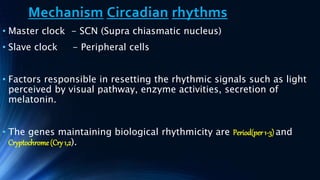
Mechanism Circadian rhythms
• Master clock - SCN (Supra chiasmatic nucleus)
• Slave clock - Peripheral cells
• Factors responsible in resetting the rhythmic signals such as light
perceived by visual pathway, enzyme activities, secretion of
melatonin.
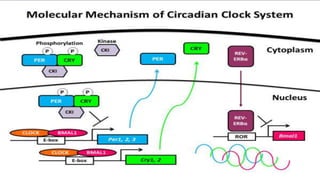
• The genes maintaining biological rhythmicity are Period(per 1-3) and
Cryptochrome (Cry 1,2).
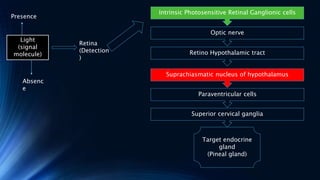
Light
(signal
molecule)
Presence
Absenc
e
Retina
(Detection
)
Optic nerve
Intrinsic Photosensitive Retinal Ganglionic cells
Retino Hypothalamic tract
Paraventricular cells
Suprachiasmatic nucleus of hypothalamus
Superior cervical ganglia
Target endocrine
gland
(Pineal gland)
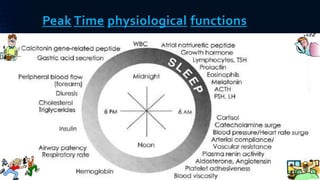
Peak Time physiological functions
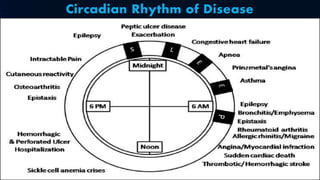
Circadian Rhythm of Disease
ChronoPharmacology
• It is defined as a branch of chronobiology concerned with the
effects of drugs upon the timing of biological events and
rhythms and the relation of biological timing to the effects of
drugs.
• Focused on 2 areas
• Biological rhythm dependencies of drugs & underlying mechanisms.
• Effect of timing pharmacotherapy on biologic time structure & relationships
among rhythms.
Aim of ChronoPharmacology
• To control the time of administration, which, among others, cannot only
responsible for variations of drug kinetics but also may explain chrono-
pharmacological effects observed with certain drugs.
• To investigate the effects/side effects of drugs upon temporal changes in
biological functions/symptoms of a disease and drug effects as a
function of biologic timing.
• To optimize the therapeutic effect and control or reduce the ADR
without altering the functioning of the drug in the body.
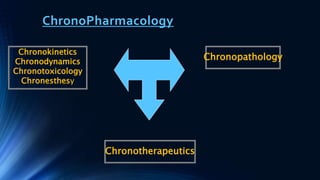
ChronoPharmacology
Chronopathology
Chronokinetics
Chronodynamics
Chronotoxicology
Chronesthesy
Chronotherapeutics
Chronokinetics
• Dosing-time, i.e. Rhythm-dependent, differences in the absorption,
distribution, metabolism, and elimination of medications.
 Drug dissolution : circadian rhythms in gastrointestinal ph.
• Drug absorption : circadian rhythms in gastric emptying, motility, blood flow.
• Drug biotransformation and metabolism : circadian rhythms in hepatic blood
flow and enzyme activity.
• Drug elimination : circadian rhythms in hepatic bile function and flow as well
as renal blood flow, glomerular filtration, and tubular function.
Why to Study Chronopharmacokinetics?
• PK – PD varies with time:
• Gastric motility is double in day time in comparison to night.
• Plasma protein concentration are higher in day than night.
• Hepatic blood flow is highest at 8 a.m. and the metabolism to be reduced at
night.
• When symptoms of a disease are circadian phase dependent , e.g.
Angina, MI, Gastric ulcers etc, treatment should be based on
ChronoPK feature of drug.
• Its also necessary for reducing drug toxicity by administering drug at a
Chronokinetic variations
Anti-asthmatic drugs
• Theophylline concentration peak height is greater and time to peak
is shorter with dosing 8:00hrs than at 20:00hrs
• Leukotriene receptor antagonist concentration maximum at night.
Antibiotics
• Ampicillin: Biliary and renal clearances were significantly higher
during the active cycle of rats than during the sleep cycle.
• Ciprofloxacin: In humans, elimination in urine was greater when the
drug was administered at 10:00 h than when it was given at 22:00
h.
Anticancer
• 5 -flurouracil is better tolerated between 00:00 and 4:00 hrs.
• Cisplatin are better tolerated between 16:00hrs and 20:00hrs.
• Methotrexate - highest clearance at mid dark and the lowest one at mid light in
mice.
Antiulcer drugs
• H2 blockers should be taken in evening or early night when acid secretion is
increasing.
• Proton pump inhibitors should be dosed in morning.
Anti-migraine drugs
• Sumatriptan mean peak concentration is higher in morning .
NSAIDS
• Ketoprofen: the rate of absorption was higher when it was administered in the
morning.
• Indomethacin: markedly higher and earlier peak concentrations were obtained
when the drug was given at 07:00 or 11:00 h than at 15:00, 19:00 or 23:00 h.
Antihypertensive drugs (Propranolol, Nifedipine, Verapamil )
• Cmax was higher after morning than evening dosing.
Opioid analgesics
• Stronger analgesic effect observed with tramadol when dose in the evening.
Chronodynamics
• Dosing-time, i.e. Rhythm-dependent, differences in the effects of medications.
• Both the desired/beneficial and undesired/adverse effects of medications can
vary significantly according to their administration time.
• Due to rhythms in the free-to-bound drug fraction, number and conformation
of drug-specific receptors, second messenger and ion channel dynamics, and
rate limiting steps in metabolic pathways.
• Rats treated at 01:00 h for 3 days with gentamicin (20mg/kg) showed a
significantly lower number of bacteria in their kidneys than did all other
groups.
• Lower toxicity : when the drug was injected during the activity period.
Heparin
• Patients of deep-vein thrombosis (DVT) .
• Profound circadian difference with heparin .
• Anticoagulant effect is too great overnight (risk of hemorrhage).
• While same dose in the morning in the same patients can be sub-therapeutic
(risk of further aggravation of the DVT condition).
Chronotoxicology
• An aspect of Chronodynamics.
• Dosing-time, i.e. Rhythm-dependent, differences in the manifestation
and severity of adverse effects and thus intolerance of patients to
medications.
• Classes of medications that have high risk of adverse effects and
relatively narrow therapeutic range.
Glucocorticoids
• Major adverse effect — adrenocortical suppression.
• Significantly attenuated if correctly timed to circadian rhythms.
• Best tolerated when ingested as a single daily dose in the morning
at start of the daily activity span.
• Moderate dose in evening between dinner and bedtime , risk of
adrenocortical suppression is heightened, even after a few days of
treatment.
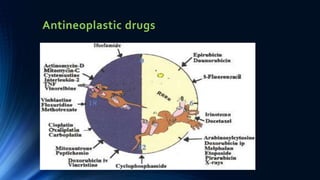
Antineoplastic drugs
Chronesthesy
• It’s circadian or other systemic changes in the susceptibility or sensitivity of
the target system towards drug.
• Sometimes great differences is found in the effects of drugs with different
biological times of application, even through the pharmacokinetics and
dynamics are the same.
• Mechanisms : unknown.
• Possible : Rhythms in receptor number and conformation, second messenger
dynamics, membrane permeability, or rate-limiting steps of metabolic
pathways in drug-targeted tissues.
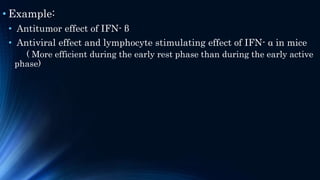
• Example:
• Antitumor effect of IFN- β
• Antiviral effect and lymphocyte stimulating effect of IFN- α in mice
( More efficient during the early rest phase than during the early active
phase)
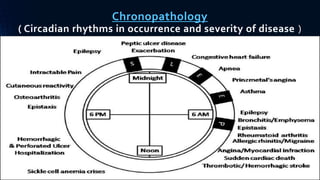
Chronopathology
( Circadian rhythms in occurrence and severity of disease )
Chronotherapeutics
• The purposeful delivery of medications in unequal amounts over time.
• To determine the drug-delivery pattern, dose, and administration time
to optimize desired and/or minimize adverse effects.
• The first application was during the 1960s;
• Morning -daily as opposed to multiple-daily dosing of methylprednisolone tablets
reduces the risk of hypothalamic-pituitary-adrenal suppression and improves the
treatment of severe inflammatory conditions.
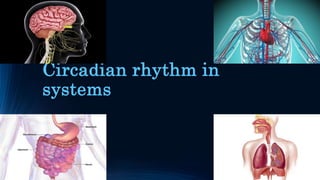
Circadian rhythm in
systems
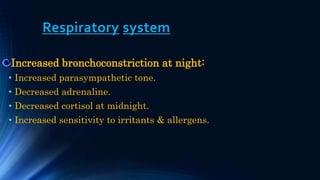
Respiratory system
Increased bronchoconstriction at night:
• Increased parasympathetic tone.
• Decreased adrenaline.
• Decreased cortisol at midnight.
• Increased sensitivity to irritants & allergens.
Chronotherapy in BA
Sudden : peak at 4am.
Bronchial patency: max. 4pm & min. 4am
Increase resistance during sleep:
• Decrease in inspiratory muscle Tone
• Decrease in pulmonary Compliance
• Airway narrowing
Long –term oral corticosteroid at 8am & 3pm.
Theo-24
Use of a timed-release formulation of theophylline achieved therapeutic drug
concentrations during the night and avoided toxic levels during the day.
Cardiovascular System
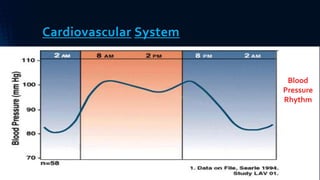
Blood Pressure:
• 2 peaks: 9-11am & 6-7pm.
• Decreases at afternoon (slight), & at night (profound dip) . Blood
Pressure
Rhythm
Chronotherapy in CVS
• Before- bedtime administration of VERAPAMIL as a unique controlled onset
- extended release 24 hr. dosage form to optimize the treatment of patients
with ischemic heart disease/ essential hypertension.
• CONVINCE (controlled onset verapamil investigation of cardiovascular end
points) trial.
Enalapril
• Greater effect on daytime BP when dosed once per day in the
morning.
• Greater effect on night time BP when dosed once per day in the
evening.
Ramipril
• A morning once-per-day dosing schedule reduces sleep-time BP in a
moderate amount, whereas an evening one reduces it excessively.
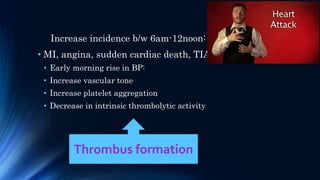
Increase incidence b/w 6am-12noon:
• MI, angina, sudden cardiac death, TIA etc.
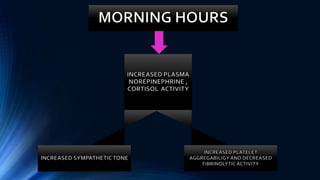
• Early morning rise in BP:
• Increase vascular tone
• Increase platelet aggregation
• Decrease in intrinsic thrombolytic activity
Thrombus formation
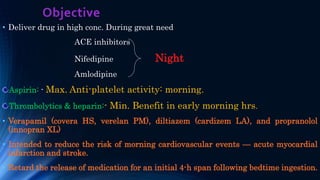
Objective
• Deliver drug in high conc. During great need
ACE inhibitors
Nifedipine Night
Amlodipine
Aspirin: - Max. Anti-platelet activity: morning.
Thrombolytics & heparin:- Min. Benefit in early morning hrs.
• Verapamil (covera HS, verelan PM), diltiazem (cardizem LA), and propranolol
(innopran XL)
• Intended to reduce the risk of morning cardiovascular events — acute myocardial
infarction and stroke.
• Retard the release of medication for an initial 4-h span following bedtime ingestion.
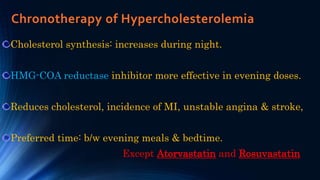
Chronotherapy of Hypercholesterolemia
Cholesterol synthesis: increases during night.
HMG-COA reductase inhibitor more effective in evening doses.
Reduces cholesterol, incidence of MI, unstable angina & stroke,
Preferred time: b/w evening meals & bedtime.
Except Atorvastatin and Rosuvastatin
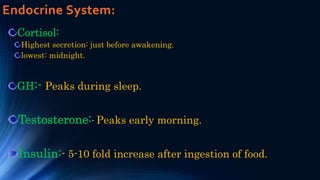
Endocrine System:
Cortisol:
Highest secretion: just before awakening.
lowest: midnight.
GH:- Peaks during sleep.
Testosterone:- Peaks early morning.
Insulin:- 5-10 fold increase after ingestion of food.
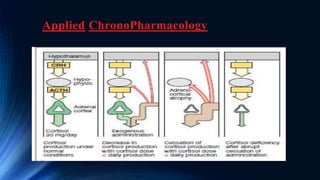
Applied ChronoPharmacology
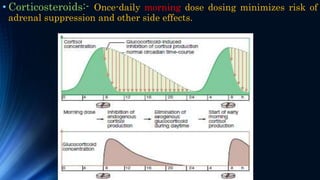
• Corticosteroids:- Once-daily morning dose dosing minimizes risk of
adrenal suppression and other side effects.
• Chronotherapy for Addison's disease:-
• Asymmetrical morning high and late-afternoon low dose
corticosteroid substitution best corrects fatigue and abnormal
circadian time structure.
• Bedtime ADH analogue dosing helps to alleviate nocturnal
bedwetting in children and nocturia in adults.
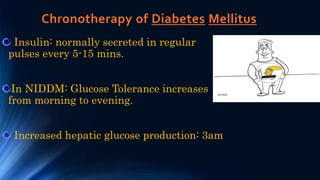
Chronotherapy of Diabetes Mellitus
Insulin: normally secreted in regular
pulses every 5-15 mins.
In NIDDM: Glucose Tolerance increases
from morning to evening.
Increased hepatic glucose production: 3am
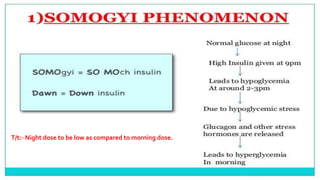
T/t:- Night dose to be low as compared to morning dose.
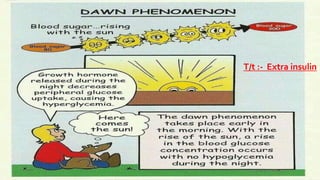
T/t :- Extra insulin
Gastrointestinal system
Acid secretion:
• 2-3 times>> b/w 10pm & 2am
• Eating & drinking: immediately stimulate
• Peptic ulcer disease pain and perforation of gastric and duodenal ulcers
are more common at night, administration of these drugs at bedtime is
more effective.
• Nocturnal administration not only reduces acid secretion more
effectively but also promotes ulcer healing and reduces ulcer
recurrence.
• H2 blockers should taken in evening or early night when acid secretion
is increasing.
• Proton pump inhibitors should dosed in morning.
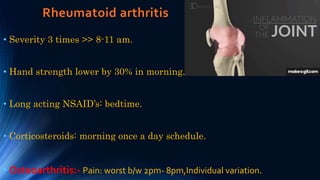
Rheumatoid arthritis
• Severity 3 times >> 8-11 am.
• Hand strength lower by 30% in morning.
• Long acting NSAID’s: bedtime.
• Corticosteroids: morning once a day schedule.
• Osteoarthritis:- Pain: worst b/w 2pm- 8pm,Individual variation.
• Rheumatoid arthritis : Long-acting NSAIDS at
bedtime optimizes their therapeutic effect and
minimizes their side effects.
• Osteoarthritis : Morning or evening dose depending
on peak pain time.
Chronotherapy of Cancer
Doxorubicin:- Max. Activity: before normal daily awakening.
Cisplatin:- More toxicity: in morning.
Combined therapy: Separate by 12 hrs., Doxorubicin at 6am while
cisplatin at 6pm.
Fluorouracil (5FU):- Best time: rest phase (mid sleep- 2 hrs prior
awakening).
Chronotherapy of skin disorders
• Proliferation of epidermal cells: max. Midnight.
• Oil production by skin glands: twice at noon.
• Skin more acidic: during sleep & midday.
• Psoriasis : cell proliferation rate
• max. B/w 9pm- 3am & least b/w 9-11am
• Inflammatory activity: max. At night.
• Atopic dermatitis – Itching most intense in late evening.
• Lignocaine cream – Twice taken up at 11:00 am than at 8:00 am.
• Corticosteroid cream – Greater activity in afternoon.
Chronotherapy of sleep disorders
• Melatonin secretion: peaks during night
• Rotating shift work:
• Impaired physical & mental performance d/t sleep deprivation
• Highest no. Of accidents- in late night hrs Peak 2 am- 4 am.
• Delayed sleep phase syndrome (DSPS):-Pt. Sleep at 4am & wake up at
12noon
• Treatment: Improve sleep habits, Bright light therapy , Behavioural technique
• Advanced sleep phase syndrome (ASPS):Pt. Sleep before sunset &
wake up at 4am.
Jet lag:
• Sleep disturbance during 1st night after transmeridian flight.
• Resynchronization requires 24hrs.
• Symptoms: Insomnia, fatigue, irritability, GI disturbances, delayed
ovulation, mental disturbances.
• T/t: Melatonin 0.5mg/day, Light therapy.
• or Ramelteon 8mg ,30 mins before bed time.
Chrono-Drug delivery system (DDS)
• Advances in chronobiology and global market constraints changes the traditional
goal of pharmaceutics such as a constant drug release rate.
• The technologies in chrono-pharmaceutics includes:
• Timed-released formulation .
• Physicochemical modification of the active ingredient .
• Diffucaps.
• Chronomodulating infusion pumps.
• Timerx.
• Three-dimensional printing.
• Controlled-release erodible polymer.
• Controlled release microchip strategies.
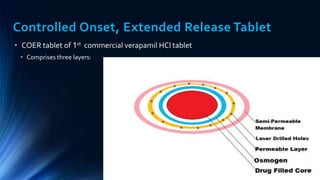
• COER tablet of 1st commercial verapamil HCl tablet
• Comprises three layers:
Controlled Onset, Extended Release Tablet
58
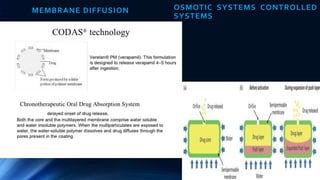
MEMBRANE DIFFUSION OSMOTIC SYSTEMS CONTROLLED
SYSTEMS
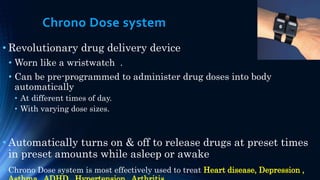
Chrono Dose system
• Revolutionary drug delivery device
• Worn like a wristwatch .
• Can be pre-programmed to administer drug doses into body
automatically
• At different times of day.
• With varying dose sizes.
• Automatically turns on & off to release drugs at preset times
in preset amounts while asleep or awake
• Chrono Dose system is most effectively used to treat Heart disease, Depression ,
Conclusion
• Evolving branch of pharmacology aimed at increasing the efficacy of
pharmacotherapy by administering drugs at times during which they are
best tolerated.
• Need of more and more clinical studies during drug development to explore
chrono- pharmacological aspects of the drug .
• Need of long term studies of currently available chrono-drug delivery
systems.
• Marked benefit from Chronotherapeutics will be possible from the use of
rhythmic delivery to the individual features of the circadian timing system
References
• Maurya k.K et al, chronopharmacology: A tool for therapy of diseases, IRJP 2012,3(5).
• P. Rathi, ashima hooda et al. A biological rhythm-guided approach to drug delivery:
chronotherapeutics, IJIPL, 2011,1(2).
• Rupali singh et al, review of chronotherapeutics- a new remedy in the treatment of various diseases,
european journal of biological sciences 2010, 67-76,2(3).
• M.K.Daga,k.Prabash. Chronobiology & chronotherapy:current perspective. Japi 2000;48(6):617-23.
• Martin rj, banks-schlegel s. Chronobiology of asthma. Am J respir crit care med 1998;158(3):1002-12
• Z.Kmietowicz,chemotherapy better tolerated when matched to bodys rhythm. Bmj 1997;315:623-28.
• Levi f, zidani r, brienza s, et al. Cancer. 1999;85:2532–2540
• CONVINCE (controlled onset verapamil investigation of cardiovascular end points) trial (black et al
JAMA 2003;289:2073-82)
Thank
you..!

Chronopharmacology

  • 2.
    Flow  Introduction  Definition Circadian rhythm  Subdivisions  Conclusion
  • 3.
    Introduction • Medicine hastraditionally viewed healthy body as a homeostatic steady state. • It is really an integrated, rhythmic flow of • Hormones • Neurotransmitters • Enzymes • Receptors • Internal functions that affect every cell in the body.
  • 4.
    Circadian Rhythm Chronobiology :-Studyof biological rhythms: Circadian = (~24h) Infradian = (>24h) Ultradian = ( <24h) • Human sleep-wake cycle has a period of 1 day. • Circadian rhythms, like sleep-wake cycles, are generated by an internal clock that is synchronized to light-dark cycles in environment & other daily cues. • Circadian comes from the Latin word Circa ="around“ dies ="day“
  • 5.
    Biological rhythms • Innatelydetermined self sustaining oscillation with the duration of time between successive repetitions (i.e. the period). Circadian rhythms • Self-sustaining, endogenous oscillations exhibiting periodicities of about 1 day. • Circadian rhythms : - Synchronised according to body’s pacemaker clock located in Suprachiasmatic nucleus of hypothalamus. • Sleep/wake • Digestion • Temperature • Hormones
  • 6.
    • Circadian rhythmsendogenously generated and can be entrained by external factors called zeitgebers. • LD light-darkness • EF eating-fasting • SI social contact-isolation • NQ noise-quiet
  • 7.
    Mechanism Circadian rhythms •Master clock - SCN (Supra chiasmatic nucleus) • Slave clock - Peripheral cells • Factors responsible in resetting the rhythmic signals such as light perceived by visual pathway, enzyme activities, secretion of melatonin. • The genes maintaining biological rhythmicity are Period(per 1-3) and Cryptochrome (Cry 1,2).
  • 8.
    Light (signal molecule) Presence Absenc e Retina (Detection ) Optic nerve Intrinsic PhotosensitiveRetinal Ganglionic cells Retino Hypothalamic tract Paraventricular cells Suprachiasmatic nucleus of hypothalamus Superior cervical ganglia Target endocrine gland (Pineal gland)
  • 11.
  • 12.
  • 13.
    ChronoPharmacology • It isdefined as a branch of chronobiology concerned with the effects of drugs upon the timing of biological events and rhythms and the relation of biological timing to the effects of drugs. • Focused on 2 areas • Biological rhythm dependencies of drugs & underlying mechanisms. • Effect of timing pharmacotherapy on biologic time structure & relationships among rhythms.
  • 14.
    Aim of ChronoPharmacology •To control the time of administration, which, among others, cannot only responsible for variations of drug kinetics but also may explain chrono- pharmacological effects observed with certain drugs. • To investigate the effects/side effects of drugs upon temporal changes in biological functions/symptoms of a disease and drug effects as a function of biologic timing. • To optimize the therapeutic effect and control or reduce the ADR without altering the functioning of the drug in the body.
  • 15.
  • 16.
    Chronokinetics • Dosing-time, i.e.Rhythm-dependent, differences in the absorption, distribution, metabolism, and elimination of medications.  Drug dissolution : circadian rhythms in gastrointestinal ph. • Drug absorption : circadian rhythms in gastric emptying, motility, blood flow. • Drug biotransformation and metabolism : circadian rhythms in hepatic blood flow and enzyme activity. • Drug elimination : circadian rhythms in hepatic bile function and flow as well as renal blood flow, glomerular filtration, and tubular function.
  • 17.
    Why to StudyChronopharmacokinetics? • PK – PD varies with time: • Gastric motility is double in day time in comparison to night. • Plasma protein concentration are higher in day than night. • Hepatic blood flow is highest at 8 a.m. and the metabolism to be reduced at night. • When symptoms of a disease are circadian phase dependent , e.g. Angina, MI, Gastric ulcers etc, treatment should be based on ChronoPK feature of drug. • Its also necessary for reducing drug toxicity by administering drug at a
  • 18.
    Chronokinetic variations Anti-asthmatic drugs •Theophylline concentration peak height is greater and time to peak is shorter with dosing 8:00hrs than at 20:00hrs • Leukotriene receptor antagonist concentration maximum at night.
  • 19.
    Antibiotics • Ampicillin: Biliaryand renal clearances were significantly higher during the active cycle of rats than during the sleep cycle. • Ciprofloxacin: In humans, elimination in urine was greater when the drug was administered at 10:00 h than when it was given at 22:00 h.
  • 20.
    Anticancer • 5 -flurouracilis better tolerated between 00:00 and 4:00 hrs. • Cisplatin are better tolerated between 16:00hrs and 20:00hrs. • Methotrexate - highest clearance at mid dark and the lowest one at mid light in mice. Antiulcer drugs • H2 blockers should be taken in evening or early night when acid secretion is increasing. • Proton pump inhibitors should be dosed in morning. Anti-migraine drugs • Sumatriptan mean peak concentration is higher in morning .
  • 21.
    NSAIDS • Ketoprofen: therate of absorption was higher when it was administered in the morning. • Indomethacin: markedly higher and earlier peak concentrations were obtained when the drug was given at 07:00 or 11:00 h than at 15:00, 19:00 or 23:00 h. Antihypertensive drugs (Propranolol, Nifedipine, Verapamil ) • Cmax was higher after morning than evening dosing. Opioid analgesics • Stronger analgesic effect observed with tramadol when dose in the evening.
  • 22.
    Chronodynamics • Dosing-time, i.e.Rhythm-dependent, differences in the effects of medications. • Both the desired/beneficial and undesired/adverse effects of medications can vary significantly according to their administration time. • Due to rhythms in the free-to-bound drug fraction, number and conformation of drug-specific receptors, second messenger and ion channel dynamics, and rate limiting steps in metabolic pathways. • Rats treated at 01:00 h for 3 days with gentamicin (20mg/kg) showed a significantly lower number of bacteria in their kidneys than did all other groups. • Lower toxicity : when the drug was injected during the activity period.
  • 23.
    Heparin • Patients ofdeep-vein thrombosis (DVT) . • Profound circadian difference with heparin . • Anticoagulant effect is too great overnight (risk of hemorrhage). • While same dose in the morning in the same patients can be sub-therapeutic (risk of further aggravation of the DVT condition).
  • 24.
    Chronotoxicology • An aspectof Chronodynamics. • Dosing-time, i.e. Rhythm-dependent, differences in the manifestation and severity of adverse effects and thus intolerance of patients to medications. • Classes of medications that have high risk of adverse effects and relatively narrow therapeutic range.
  • 25.
    Glucocorticoids • Major adverseeffect — adrenocortical suppression. • Significantly attenuated if correctly timed to circadian rhythms. • Best tolerated when ingested as a single daily dose in the morning at start of the daily activity span. • Moderate dose in evening between dinner and bedtime , risk of adrenocortical suppression is heightened, even after a few days of treatment.
  • 26.
  • 27.
    Chronesthesy • It’s circadianor other systemic changes in the susceptibility or sensitivity of the target system towards drug. • Sometimes great differences is found in the effects of drugs with different biological times of application, even through the pharmacokinetics and dynamics are the same. • Mechanisms : unknown. • Possible : Rhythms in receptor number and conformation, second messenger dynamics, membrane permeability, or rate-limiting steps of metabolic pathways in drug-targeted tissues.
  • 28.
    • Example: • Antitumoreffect of IFN- β • Antiviral effect and lymphocyte stimulating effect of IFN- α in mice ( More efficient during the early rest phase than during the early active phase)
  • 29.
    Chronopathology ( Circadian rhythmsin occurrence and severity of disease )
  • 30.
    Chronotherapeutics • The purposefuldelivery of medications in unequal amounts over time. • To determine the drug-delivery pattern, dose, and administration time to optimize desired and/or minimize adverse effects. • The first application was during the 1960s; • Morning -daily as opposed to multiple-daily dosing of methylprednisolone tablets reduces the risk of hypothalamic-pituitary-adrenal suppression and improves the treatment of severe inflammatory conditions.
  • 31.
  • 32.
    Respiratory system Increased bronchoconstrictionat night: • Increased parasympathetic tone. • Decreased adrenaline. • Decreased cortisol at midnight. • Increased sensitivity to irritants & allergens.
  • 33.
    Chronotherapy in BA Sudden: peak at 4am. Bronchial patency: max. 4pm & min. 4am Increase resistance during sleep: • Decrease in inspiratory muscle Tone • Decrease in pulmonary Compliance • Airway narrowing Long –term oral corticosteroid at 8am & 3pm. Theo-24 Use of a timed-release formulation of theophylline achieved therapeutic drug concentrations during the night and avoided toxic levels during the day.
  • 34.
    Cardiovascular System Blood Pressure: •2 peaks: 9-11am & 6-7pm. • Decreases at afternoon (slight), & at night (profound dip) . Blood Pressure Rhythm
  • 35.
    Chronotherapy in CVS •Before- bedtime administration of VERAPAMIL as a unique controlled onset - extended release 24 hr. dosage form to optimize the treatment of patients with ischemic heart disease/ essential hypertension. • CONVINCE (controlled onset verapamil investigation of cardiovascular end points) trial. Enalapril • Greater effect on daytime BP when dosed once per day in the morning. • Greater effect on night time BP when dosed once per day in the evening. Ramipril • A morning once-per-day dosing schedule reduces sleep-time BP in a moderate amount, whereas an evening one reduces it excessively.
  • 36.
    Increase incidence b/w6am-12noon: • MI, angina, sudden cardiac death, TIA etc. • Early morning rise in BP: • Increase vascular tone • Increase platelet aggregation • Decrease in intrinsic thrombolytic activity Thrombus formation
  • 38.
    Objective • Deliver drugin high conc. During great need ACE inhibitors Nifedipine Night Amlodipine Aspirin: - Max. Anti-platelet activity: morning. Thrombolytics & heparin:- Min. Benefit in early morning hrs. • Verapamil (covera HS, verelan PM), diltiazem (cardizem LA), and propranolol (innopran XL) • Intended to reduce the risk of morning cardiovascular events — acute myocardial infarction and stroke. • Retard the release of medication for an initial 4-h span following bedtime ingestion.
  • 39.
    Chronotherapy of Hypercholesterolemia Cholesterolsynthesis: increases during night. HMG-COA reductase inhibitor more effective in evening doses. Reduces cholesterol, incidence of MI, unstable angina & stroke, Preferred time: b/w evening meals & bedtime. Except Atorvastatin and Rosuvastatin
  • 40.
    Endocrine System: Cortisol: Highest secretion:just before awakening. lowest: midnight. GH:- Peaks during sleep. Testosterone:- Peaks early morning. Insulin:- 5-10 fold increase after ingestion of food.
  • 41.
  • 42.
    • Corticosteroids:- Once-dailymorning dose dosing minimizes risk of adrenal suppression and other side effects.
  • 43.
    • Chronotherapy forAddison's disease:- • Asymmetrical morning high and late-afternoon low dose corticosteroid substitution best corrects fatigue and abnormal circadian time structure. • Bedtime ADH analogue dosing helps to alleviate nocturnal bedwetting in children and nocturia in adults.
  • 44.
    Chronotherapy of DiabetesMellitus Insulin: normally secreted in regular pulses every 5-15 mins. In NIDDM: Glucose Tolerance increases from morning to evening. Increased hepatic glucose production: 3am
  • 45.
    T/t:- Night doseto be low as compared to morning dose.
  • 46.
    T/t :- Extrainsulin
  • 47.
    Gastrointestinal system Acid secretion: •2-3 times>> b/w 10pm & 2am • Eating & drinking: immediately stimulate
  • 48.
    • Peptic ulcerdisease pain and perforation of gastric and duodenal ulcers are more common at night, administration of these drugs at bedtime is more effective. • Nocturnal administration not only reduces acid secretion more effectively but also promotes ulcer healing and reduces ulcer recurrence. • H2 blockers should taken in evening or early night when acid secretion is increasing. • Proton pump inhibitors should dosed in morning.
  • 49.
    Rheumatoid arthritis • Severity3 times >> 8-11 am. • Hand strength lower by 30% in morning. • Long acting NSAID’s: bedtime. • Corticosteroids: morning once a day schedule. • Osteoarthritis:- Pain: worst b/w 2pm- 8pm,Individual variation.
  • 50.
    • Rheumatoid arthritis: Long-acting NSAIDS at bedtime optimizes their therapeutic effect and minimizes their side effects. • Osteoarthritis : Morning or evening dose depending on peak pain time.
  • 51.
    Chronotherapy of Cancer Doxorubicin:-Max. Activity: before normal daily awakening. Cisplatin:- More toxicity: in morning. Combined therapy: Separate by 12 hrs., Doxorubicin at 6am while cisplatin at 6pm. Fluorouracil (5FU):- Best time: rest phase (mid sleep- 2 hrs prior awakening).
  • 52.
    Chronotherapy of skindisorders • Proliferation of epidermal cells: max. Midnight. • Oil production by skin glands: twice at noon. • Skin more acidic: during sleep & midday. • Psoriasis : cell proliferation rate • max. B/w 9pm- 3am & least b/w 9-11am • Inflammatory activity: max. At night.
  • 53.
    • Atopic dermatitis– Itching most intense in late evening. • Lignocaine cream – Twice taken up at 11:00 am than at 8:00 am. • Corticosteroid cream – Greater activity in afternoon.
  • 54.
    Chronotherapy of sleepdisorders • Melatonin secretion: peaks during night • Rotating shift work: • Impaired physical & mental performance d/t sleep deprivation • Highest no. Of accidents- in late night hrs Peak 2 am- 4 am. • Delayed sleep phase syndrome (DSPS):-Pt. Sleep at 4am & wake up at 12noon • Treatment: Improve sleep habits, Bright light therapy , Behavioural technique • Advanced sleep phase syndrome (ASPS):Pt. Sleep before sunset & wake up at 4am.
  • 55.
    Jet lag: • Sleepdisturbance during 1st night after transmeridian flight. • Resynchronization requires 24hrs. • Symptoms: Insomnia, fatigue, irritability, GI disturbances, delayed ovulation, mental disturbances. • T/t: Melatonin 0.5mg/day, Light therapy. • or Ramelteon 8mg ,30 mins before bed time.
  • 56.
    Chrono-Drug delivery system(DDS) • Advances in chronobiology and global market constraints changes the traditional goal of pharmaceutics such as a constant drug release rate. • The technologies in chrono-pharmaceutics includes: • Timed-released formulation . • Physicochemical modification of the active ingredient . • Diffucaps. • Chronomodulating infusion pumps. • Timerx. • Three-dimensional printing. • Controlled-release erodible polymer. • Controlled release microchip strategies.
  • 57.
    • COER tabletof 1st commercial verapamil HCl tablet • Comprises three layers: Controlled Onset, Extended Release Tablet 58
  • 58.
    MEMBRANE DIFFUSION OSMOTICSYSTEMS CONTROLLED SYSTEMS
  • 59.
    Chrono Dose system •Revolutionary drug delivery device • Worn like a wristwatch . • Can be pre-programmed to administer drug doses into body automatically • At different times of day. • With varying dose sizes. • Automatically turns on & off to release drugs at preset times in preset amounts while asleep or awake • Chrono Dose system is most effectively used to treat Heart disease, Depression ,
  • 60.
    Conclusion • Evolving branchof pharmacology aimed at increasing the efficacy of pharmacotherapy by administering drugs at times during which they are best tolerated. • Need of more and more clinical studies during drug development to explore chrono- pharmacological aspects of the drug . • Need of long term studies of currently available chrono-drug delivery systems. • Marked benefit from Chronotherapeutics will be possible from the use of rhythmic delivery to the individual features of the circadian timing system
  • 61.
    References • Maurya k.Ket al, chronopharmacology: A tool for therapy of diseases, IRJP 2012,3(5). • P. Rathi, ashima hooda et al. A biological rhythm-guided approach to drug delivery: chronotherapeutics, IJIPL, 2011,1(2). • Rupali singh et al, review of chronotherapeutics- a new remedy in the treatment of various diseases, european journal of biological sciences 2010, 67-76,2(3). • M.K.Daga,k.Prabash. Chronobiology & chronotherapy:current perspective. Japi 2000;48(6):617-23. • Martin rj, banks-schlegel s. Chronobiology of asthma. Am J respir crit care med 1998;158(3):1002-12 • Z.Kmietowicz,chemotherapy better tolerated when matched to bodys rhythm. Bmj 1997;315:623-28. • Levi f, zidani r, brienza s, et al. Cancer. 1999;85:2532–2540 • CONVINCE (controlled onset verapamil investigation of cardiovascular end points) trial (black et al JAMA 2003;289:2073-82)
  • 65.

Editor's Notes

  • #5 biological rhythm--- self-sustained cyclic change in a physiological process or behavioural function of an organism that repeats at regular intervals. Circadian a self-sustained biological rhythm which in an organism's natural environment normally has a period of approximately 24 hours Ultradian: which are cycles shorter than a day (for example, the milliseconds it takes for a neuron to fire, or a 90-minute sleep cycle) heartbeat, breath Circadian: which last about 24 hours (such as sleeping and waking patterns) Infradian: referring to cycles longer than 24 hours (for example menstrual cycle )
  • #6 Circadian is independent of external factors.
  • #7 At noon there is high intensity in the blue light region & Late afternoon sun is red and orange light [600-700 nm]. The human eye is constantly exposed to environmental light and dark Zeitgebers or synchronizers
  • #8 SCN controls or drives the message of time to the peripheral cells through autonomic neuronal and humoral signals .
  • #10 Entire cycle is of 24 hours.
  • #27 Cell proliferation also is likely to be one mechanism involved because cells that are engaged into DNA synthesis usually display an increased susceptibility to antimetabolites or intercalating agents. The proportion of bone marrow, gut, skin, and oral mucosa cells engaged in the S-phase of the cell division cycle vary by 50% along the 24-hour time scale in healthy human subjects. For all these tissues, lower mean values occur between midnight and 4 a.m., and higher mean values are reported to occur between 8 a.m. and 8 p.m.
  • #29 Resting Gap 0 G 0A phase where the cell has left the cycle and has stopped dividing. InterphaseGap 1 G1 Cells increase in size in Gap 1. The G1 checkpoint control mechanism ensures that everything is ready for DNA synthesis. SynthesisSDNA replication occurs during this phase. Gap 2 G2During the gap between DNA synthesis and mitosis, the cell will continue to grow. The G2 checkpoint control mechanism ensures that everything is ready to enter the M (mitosis) phase and divide. Cell divisionMitosis M Cell growth stops at this stage and cellular energy is focused on the orderly division into two daughter cells. A checkpoint in the middle of mitosis (Metaphase Checkpoint) ensures that the cell is ready to complete cell division.
  • #39 The non-delivered amount, of medication during this 4- h interval is redistributed to the morning and afternoon to achieve higher drug concentration than conventional constant-release systems. PAI -1 (plasminogen activity inhibitor) more in morning hours.
  • #47 Relatively normal glucose until about 3 am then glucose level begin to rise. Hyperglycaemia is present on awakening in the morning due to release of counter regulatory hormones in the pre-dawns hours. Cause: Less insulin in body ,Spurt in GH, cortisol.
  • #57 Drug release by new drug delivery system which increase the efficacy and safety of drugs by proportioning their peak plasma concentrations during the 24 hours in synchrony with biological rhythm.
  • #58  delivers drug at desired site and desired time. Ditiazem consists of polymer-coated, compressed beads and creates a lag time in tablet dissolution, allowing for detectable plasma concentrations within 3 to 4 hours and maximal concentrations within 11 to 18 hours post-dose.which can match the normal biological rhythm of CV diseases
  • #59 The outermost layer is a semi-permeable membrane that regulates penetration of water into tablet; the second layer continues to absorb water from GIT and allows penetrating to third layer. The third layer consists of osmogen, which osmotically expands, delivering drug through laser-drilled holes at outer layer at a constant rate for programmed period (24-hour). The second layer between the active drug core and the semi-permeable membrane enables release to be delayed.
  • #61 multiparticulate systems that provide optimum release profiles for single or combination drugs By incorporating beads of different drug release profiles into hard gelatin capsules, combination release profiles can be achieved . The Diffucaps/Surecaps systems offer flexibility by enabling the combination of different types of release profiles into one dosage form as combination of sustained release, pulsatile release and immediate release profiles depending on the specific needs of the . Equasym XL™ (methylphenidate), utilizes Eurand’s novel Diffucaps technology to achieve a bi-phasic release profile that allows for school-day-long control of ADHD (attention deficit hyperactivity disorder) symptoms. Controll of symtom s during school hrs