ITC PRESENTATION
 MEDIUM OF TRANSMISSION DATA
 TWISTED PAIR CABLS
 COAXIAL CABLES
 FIBER OPTICS
 MICROWAVE
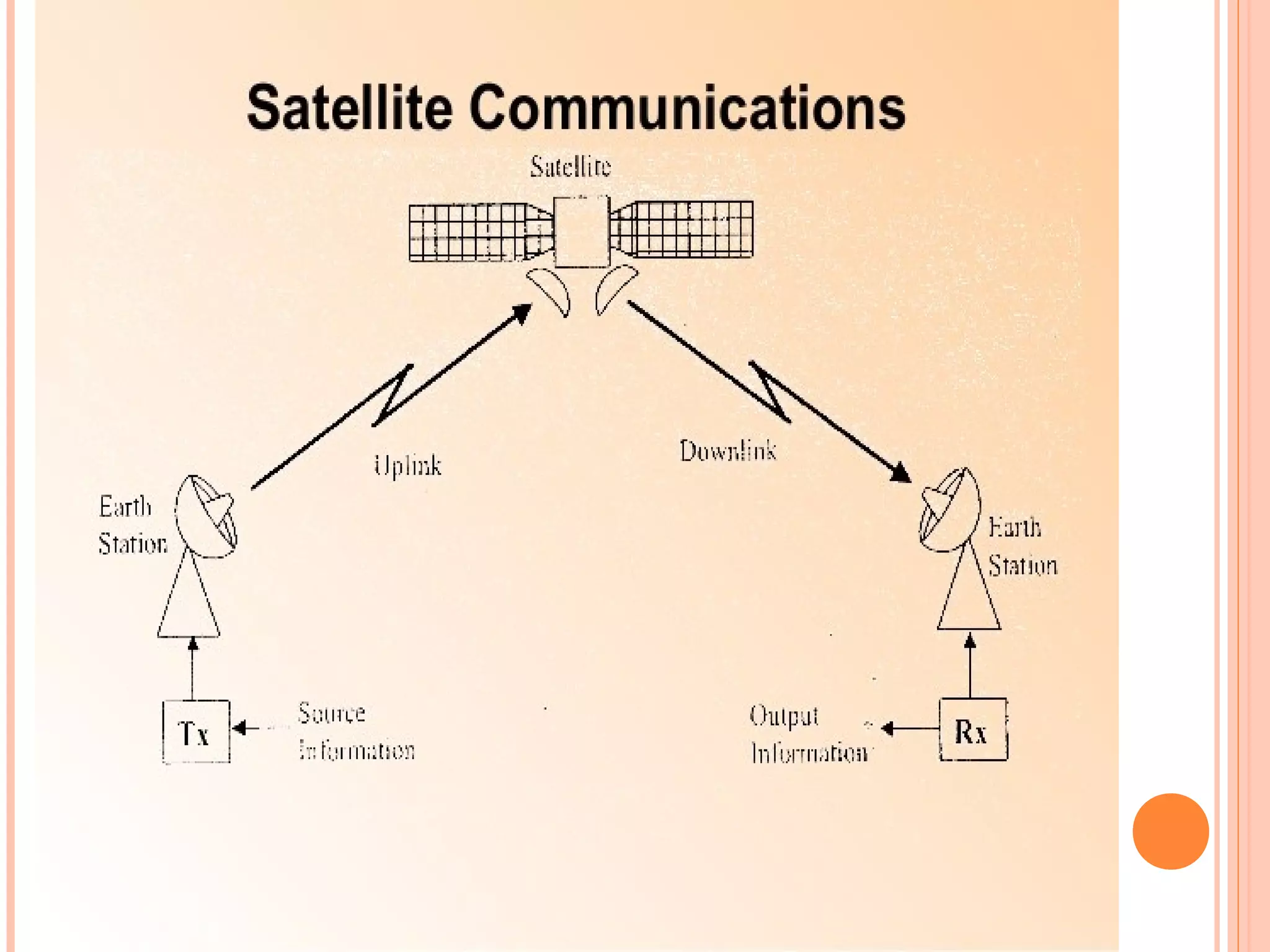
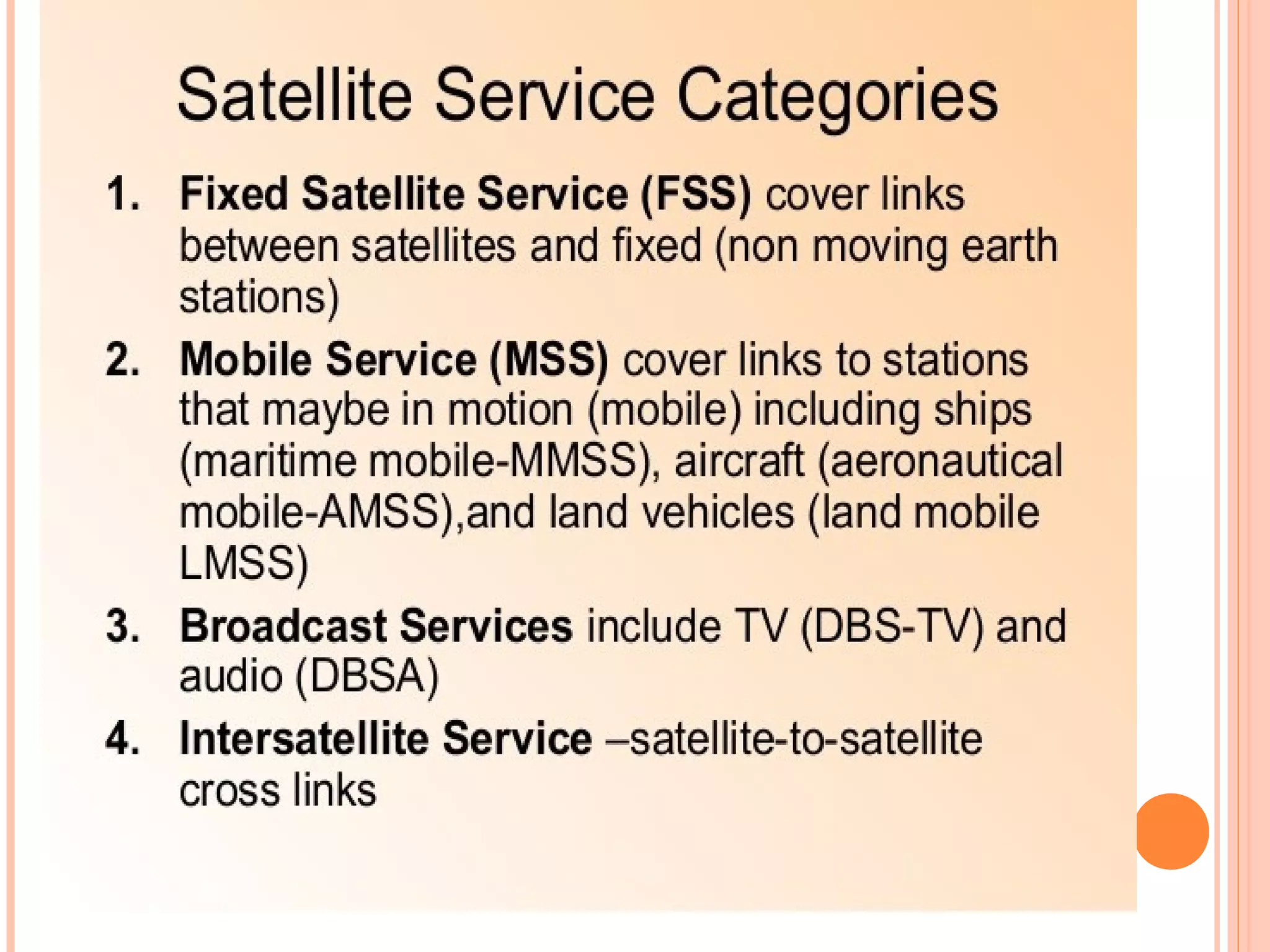
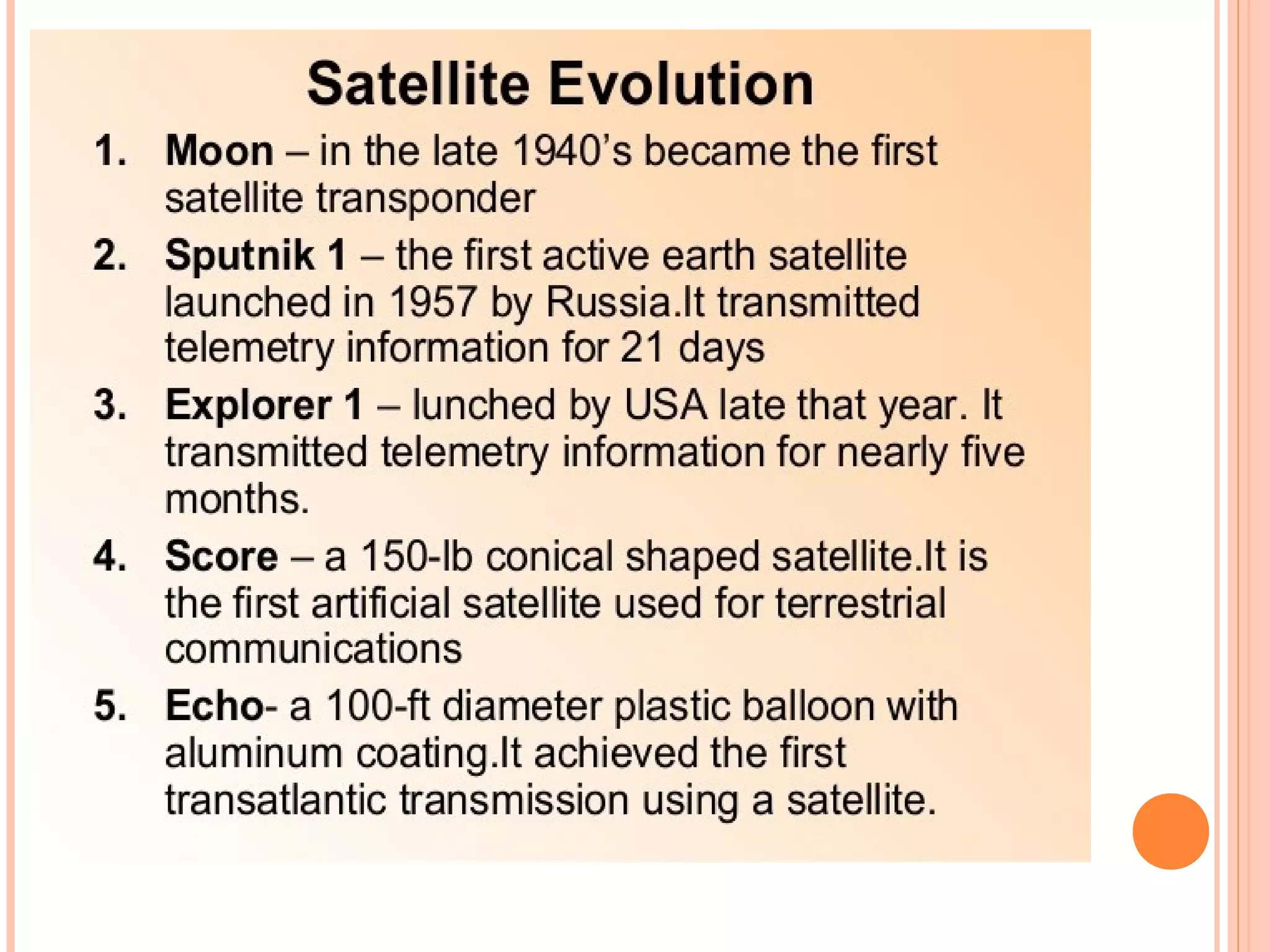
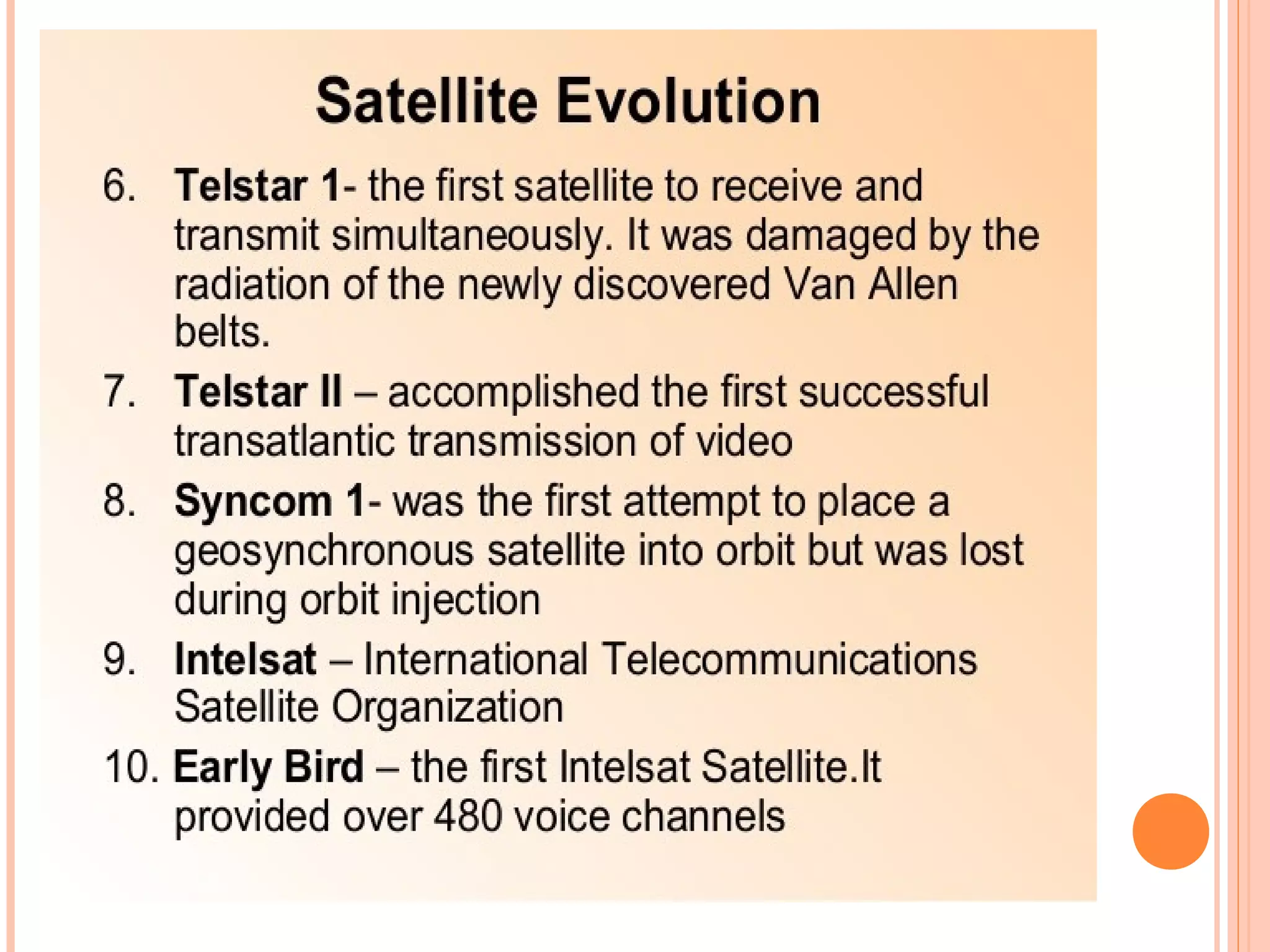
 SATELLITE
TRANSMISSION MEDIA
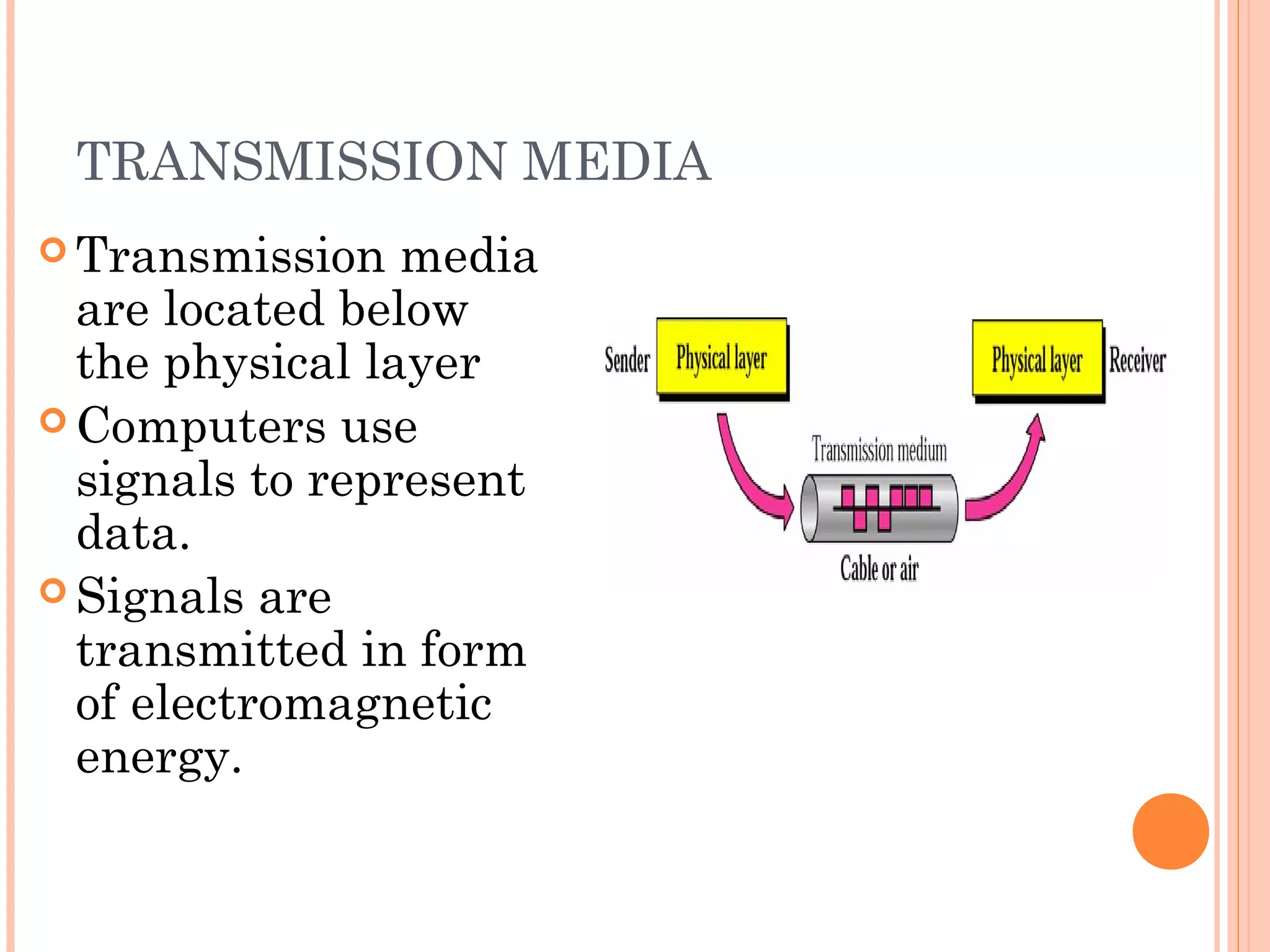
 Transmission media
are located below
the physical layer
 Computers use
signals to represent
data.

 Signals are
transmitted in form
of electromagnetic
energy.
TRANSMISSION MEDIA
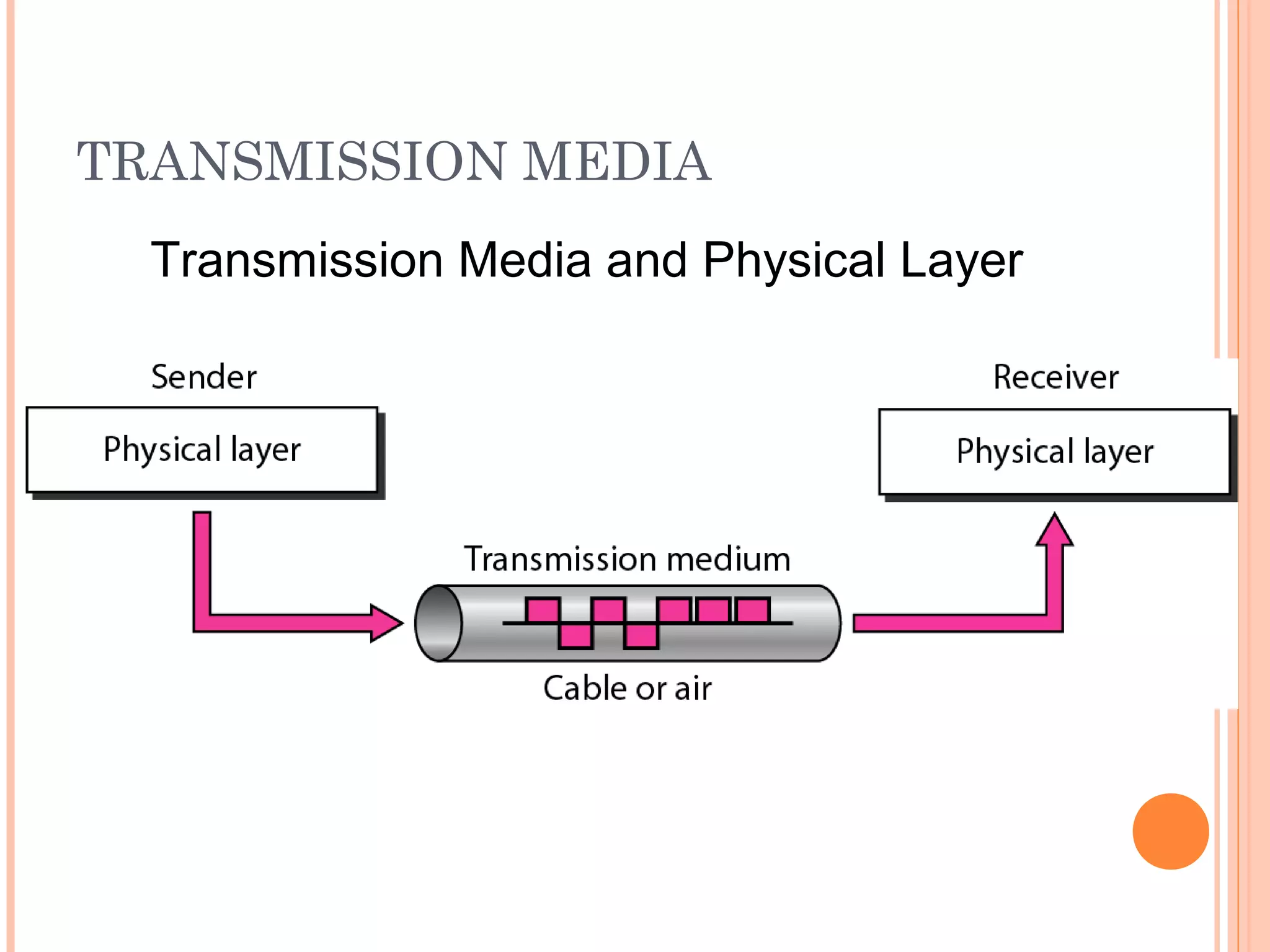
Transmission Media and Physical Layer
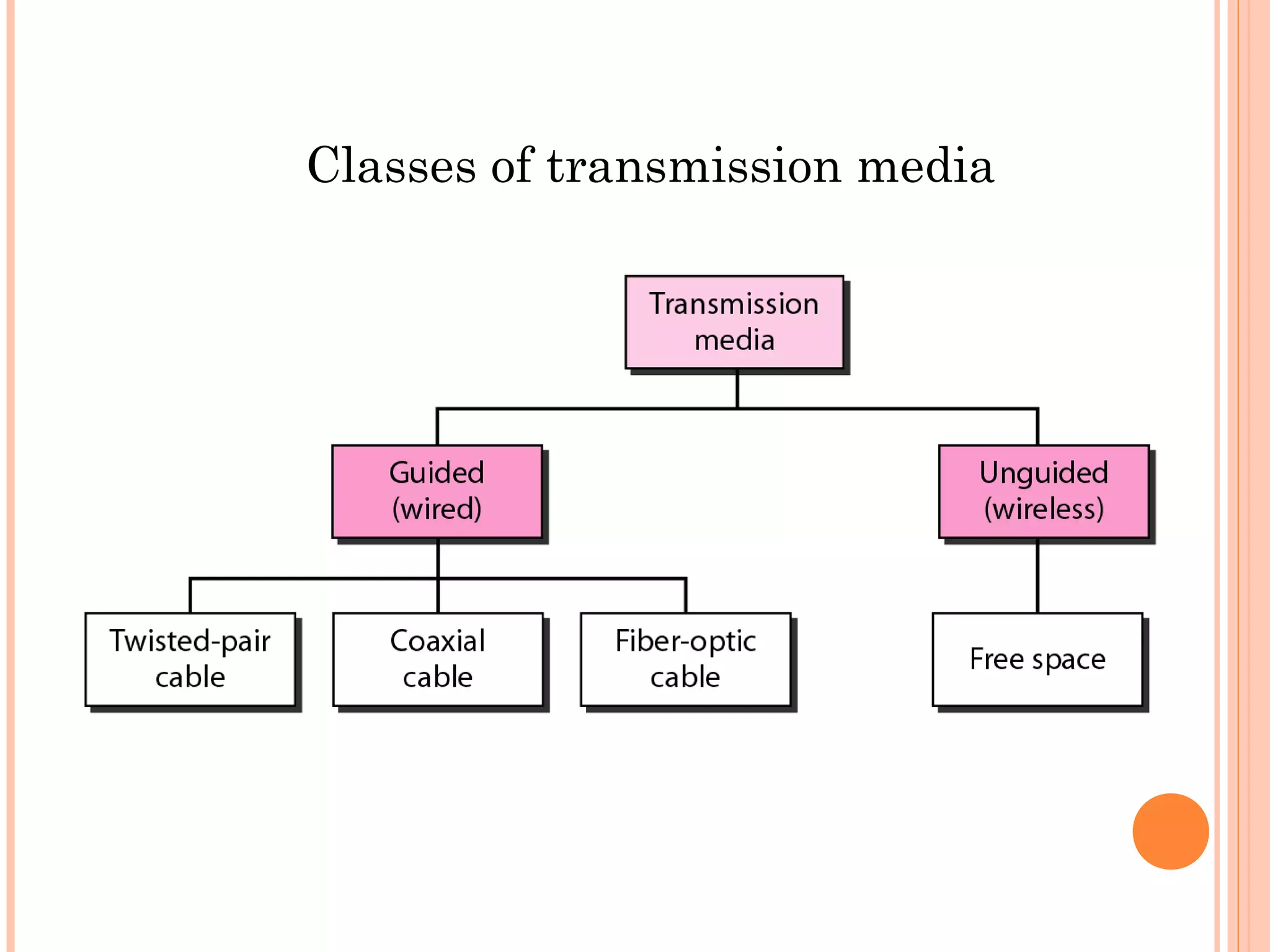
Classes of transmission media
FACTORS TO BE CONSIDERED WHILE
CHOOSING TRANSMISSION MEDIUM
 Transmission Rate
 Cost and Ease of Installation
 Resistance to Environmental Conditions
 Distances
GUIDED MEDIAGUIDED MEDIA
Guided media, which are those that provide a
conduit from one device to another, include
twisted-pair cable, coaxial cable, and fiber-optic
cable.
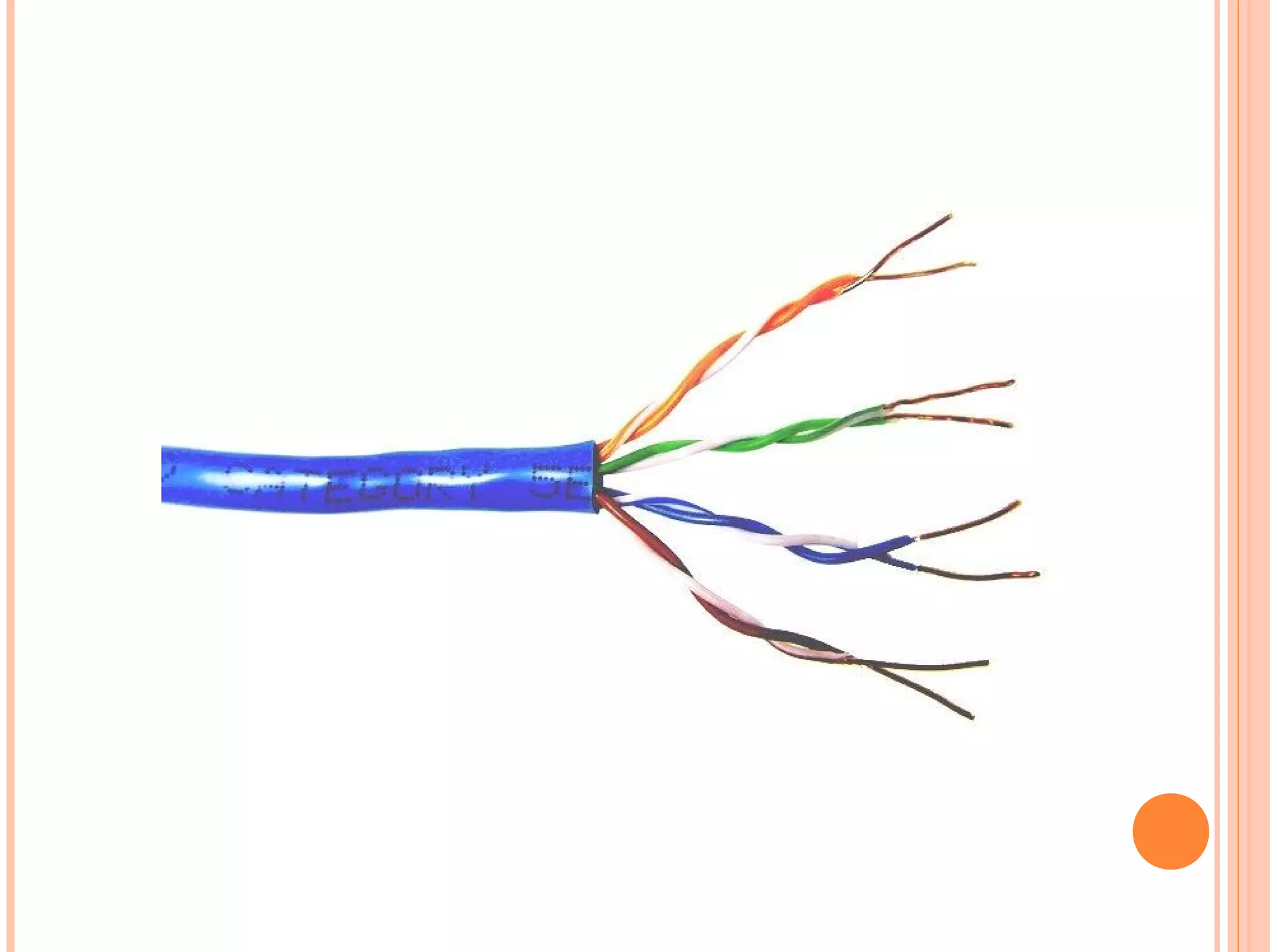
TWISTED PAIR CABLE
 This cable is the most commonly used and is
cheaper than others. It is lightweight, cheap, can
be installed easily, and they support many
different types of network
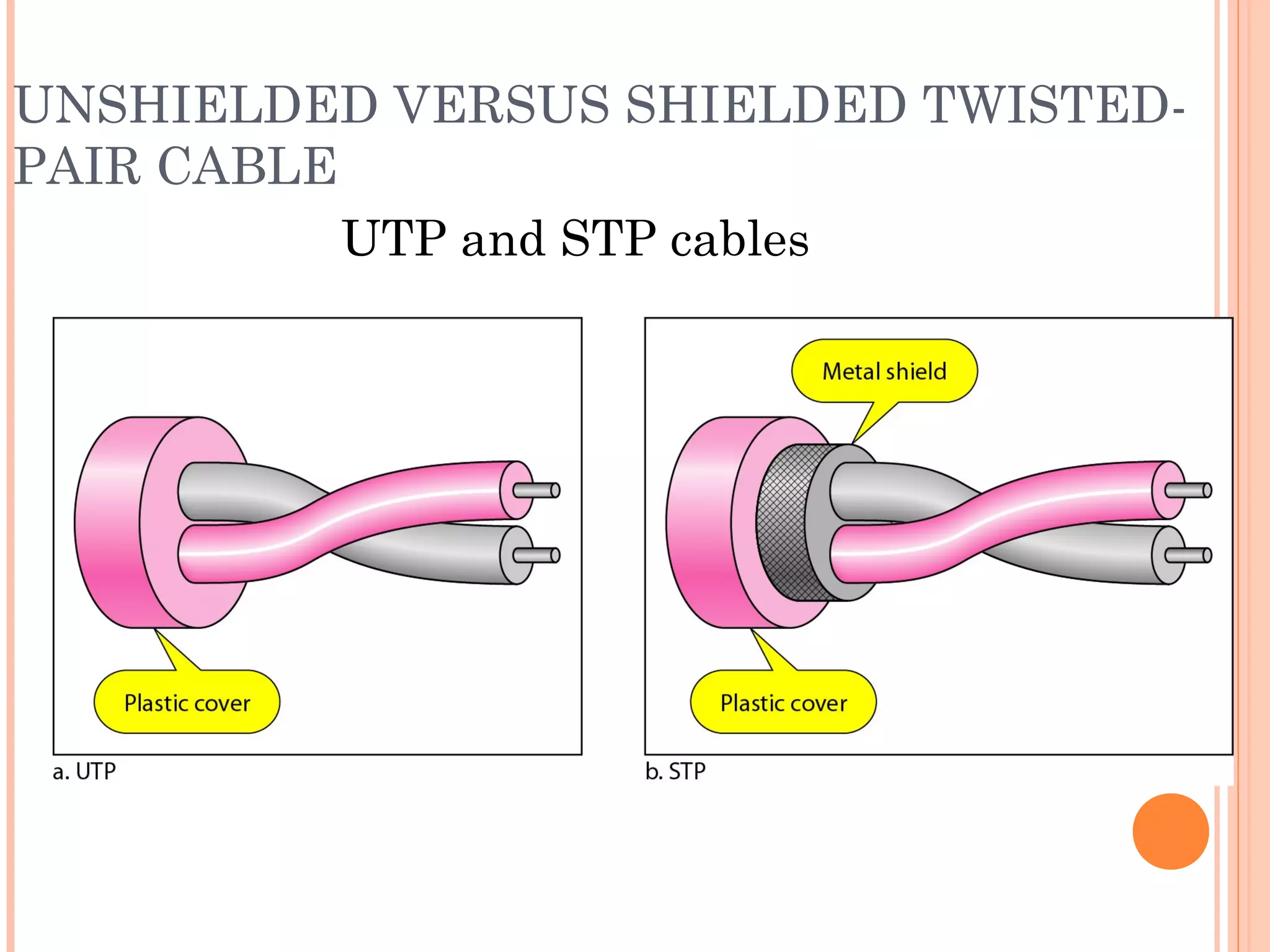
Twisted Pair is of two types :
 Unshielded Twisted Pair (UTP)
 Shielded Twisted Pair (STP)
UNSHIELDED VERSUS SHIELDED TWISTED-
PAIR CABLE
UTP and STP cables
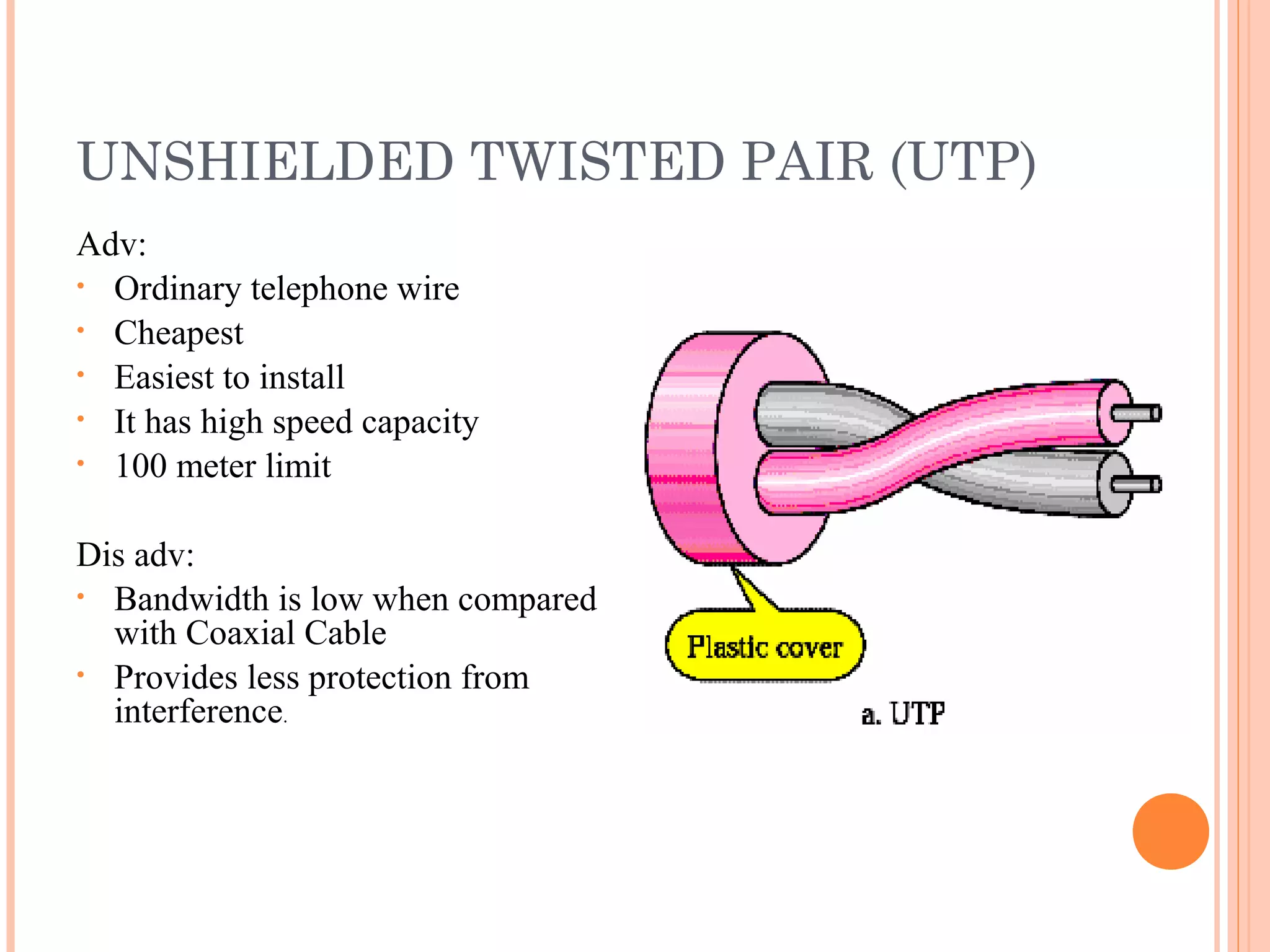
UNSHIELDED TWISTED PAIR (UTP)
Adv:
• Ordinary telephone wire
• Cheapest
• Easiest to install
• It has high speed capacity
• 100 meter limit
Dis adv:
• Bandwidth is low when compared
with Coaxial Cable
• Provides less protection from
interference.
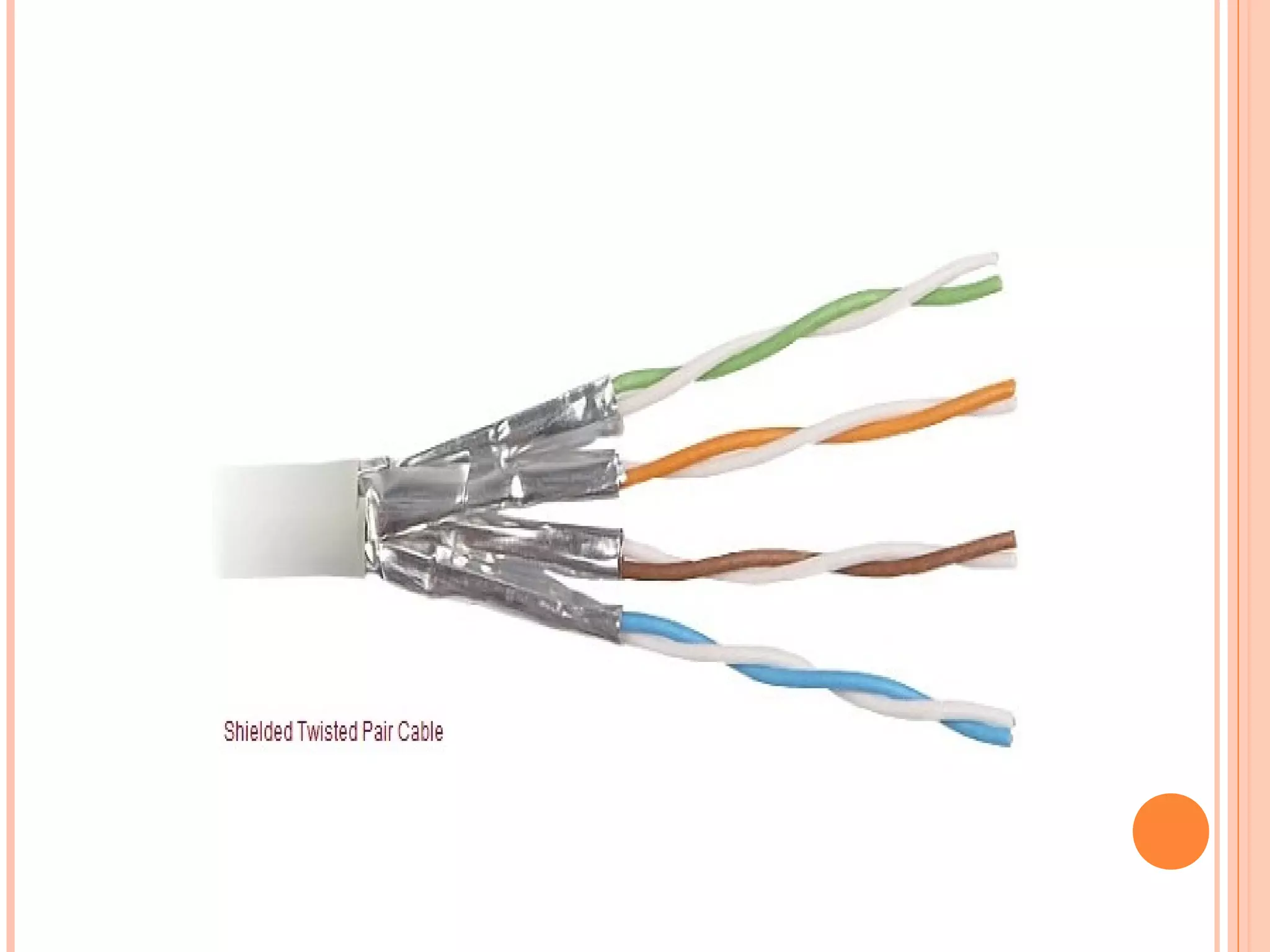
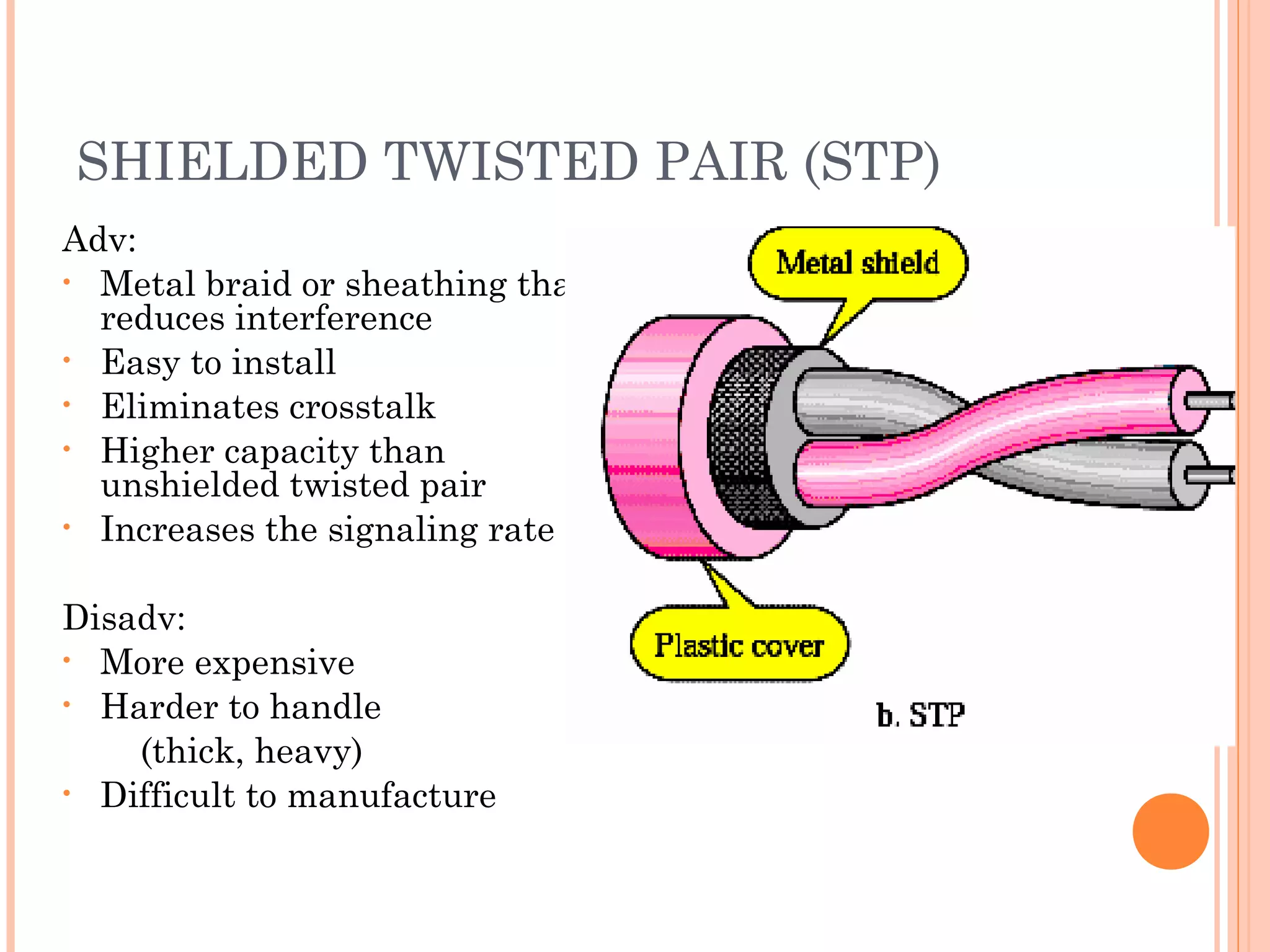
SHIELDED TWISTED PAIR (STP)
Adv:
• Metal braid or sheathing that
reduces interference
• Easy to install
• Eliminates crosstalk
• Higher capacity than
unshielded twisted pair
• Increases the signaling rate
Disadv:
• More expensive
• Harder to handle
(thick, heavy)
• Difficult to manufacture
GUIDED MEDIA - UTP
 Applications:
 Telephone lines connecting subscribers to the
central office
 DSL lines
 LAN – 10Base-T and 100Base-T
TWISTED PAIR - APPLICATIONS
 Most common medium
 Telephone network
 Within buildings
 For local area networks (LAN)
TWISTED PAIR - PROS AND CONS
 Cheap
 Easy to work with
 Low data rate
 Short range
GUIDED MEDIA – COAXIAL
CABLE
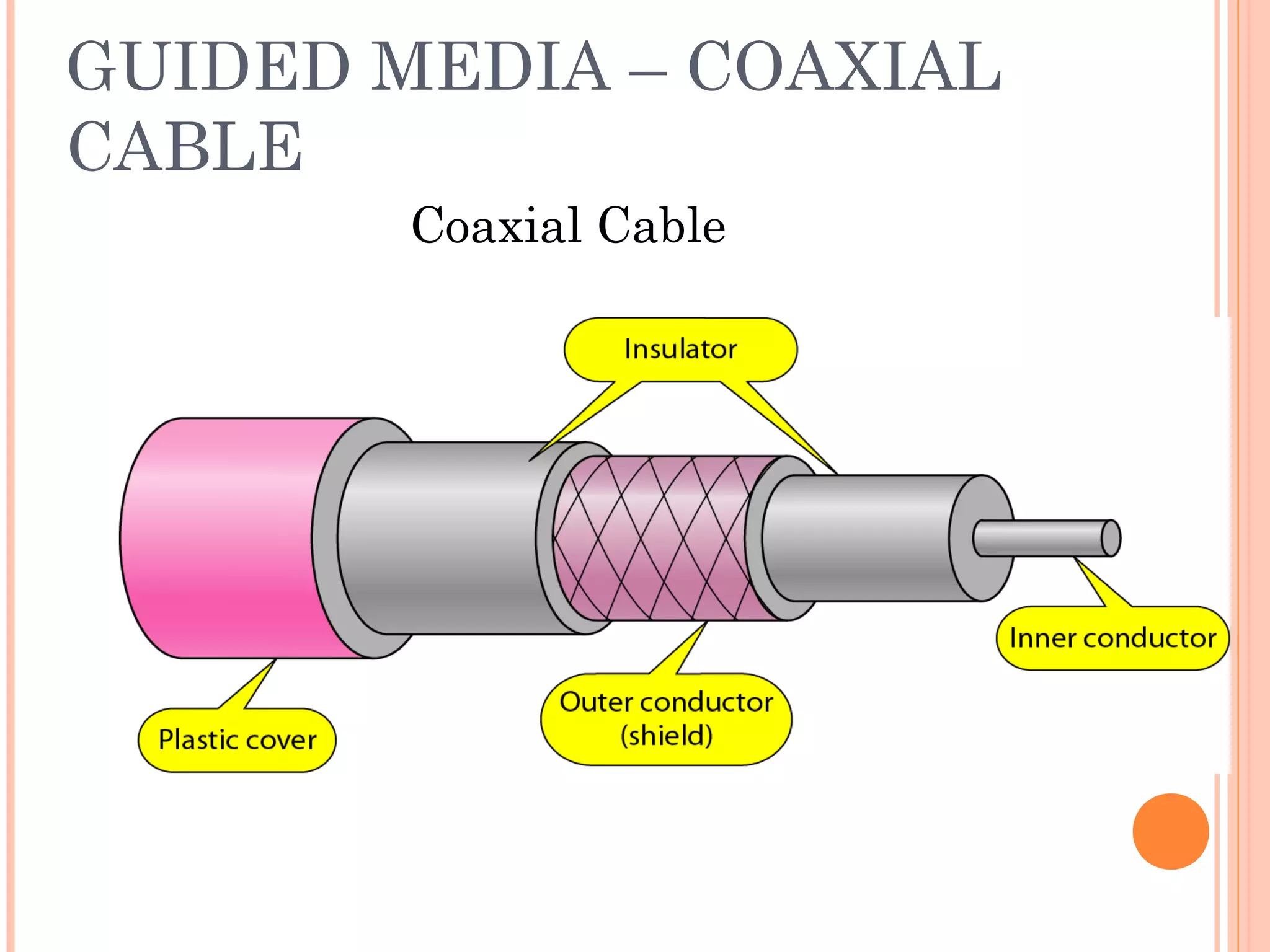
Coaxial Cable
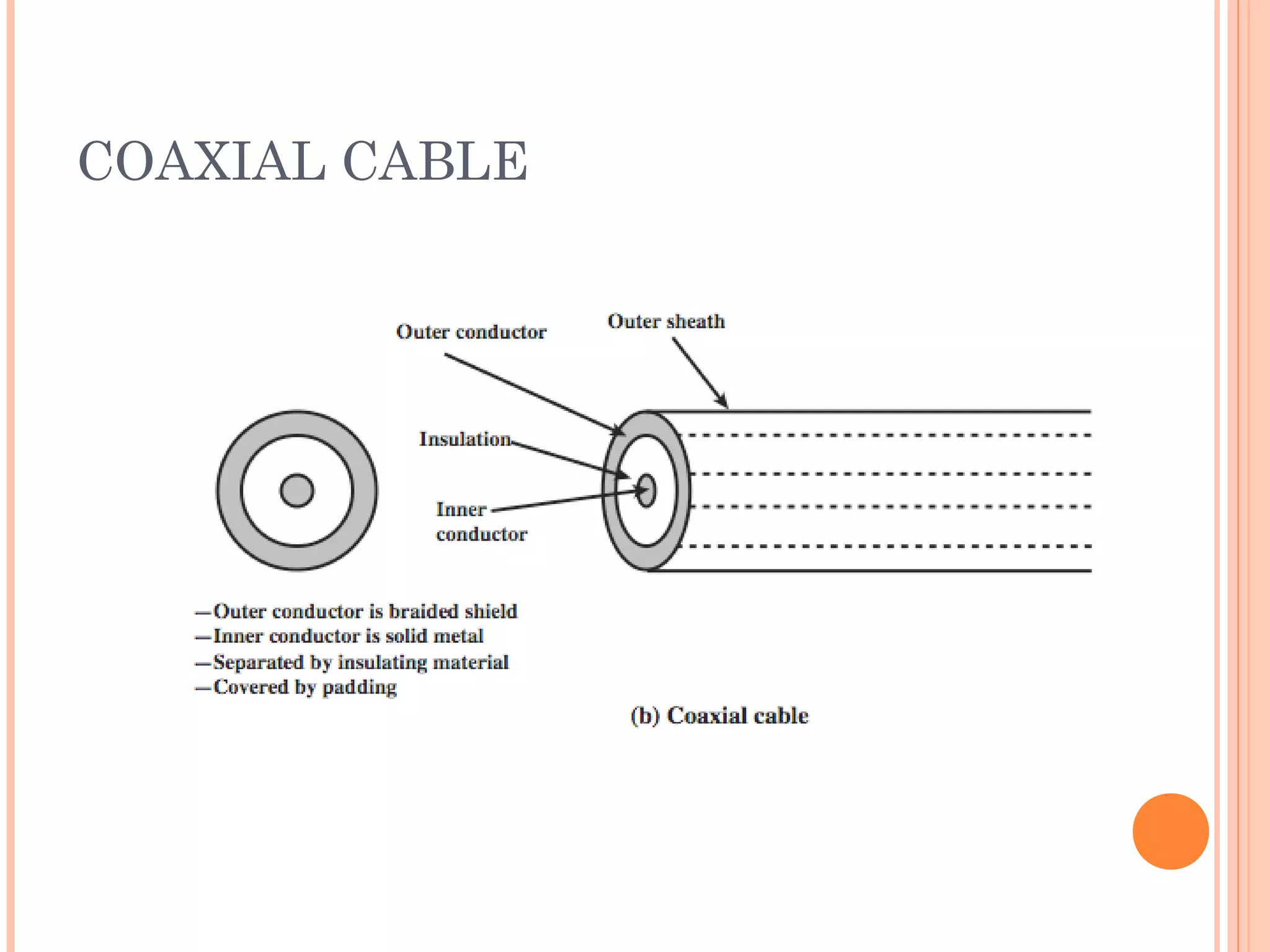
COAXIAL CABLE
COAXIAL CABLE
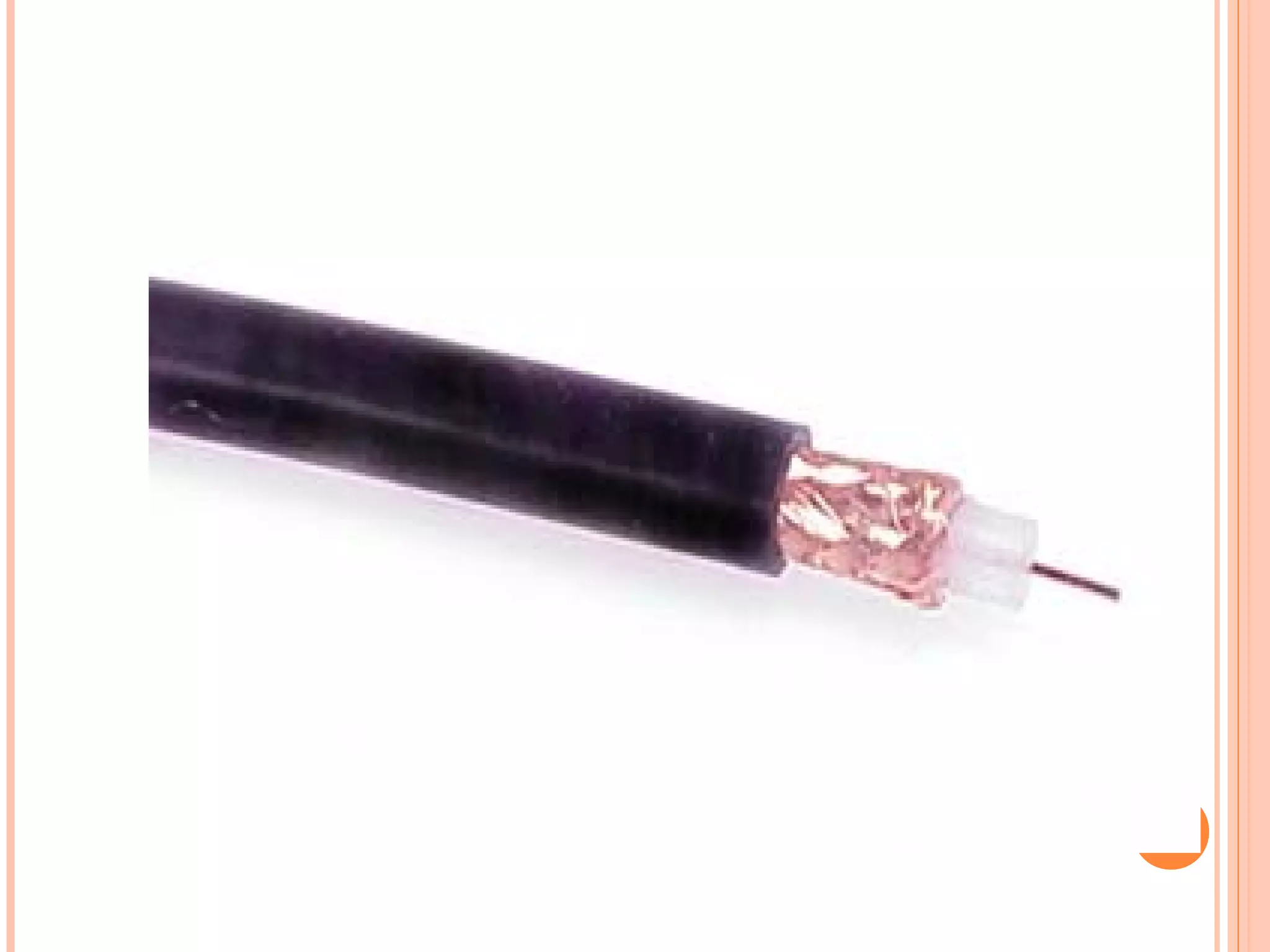
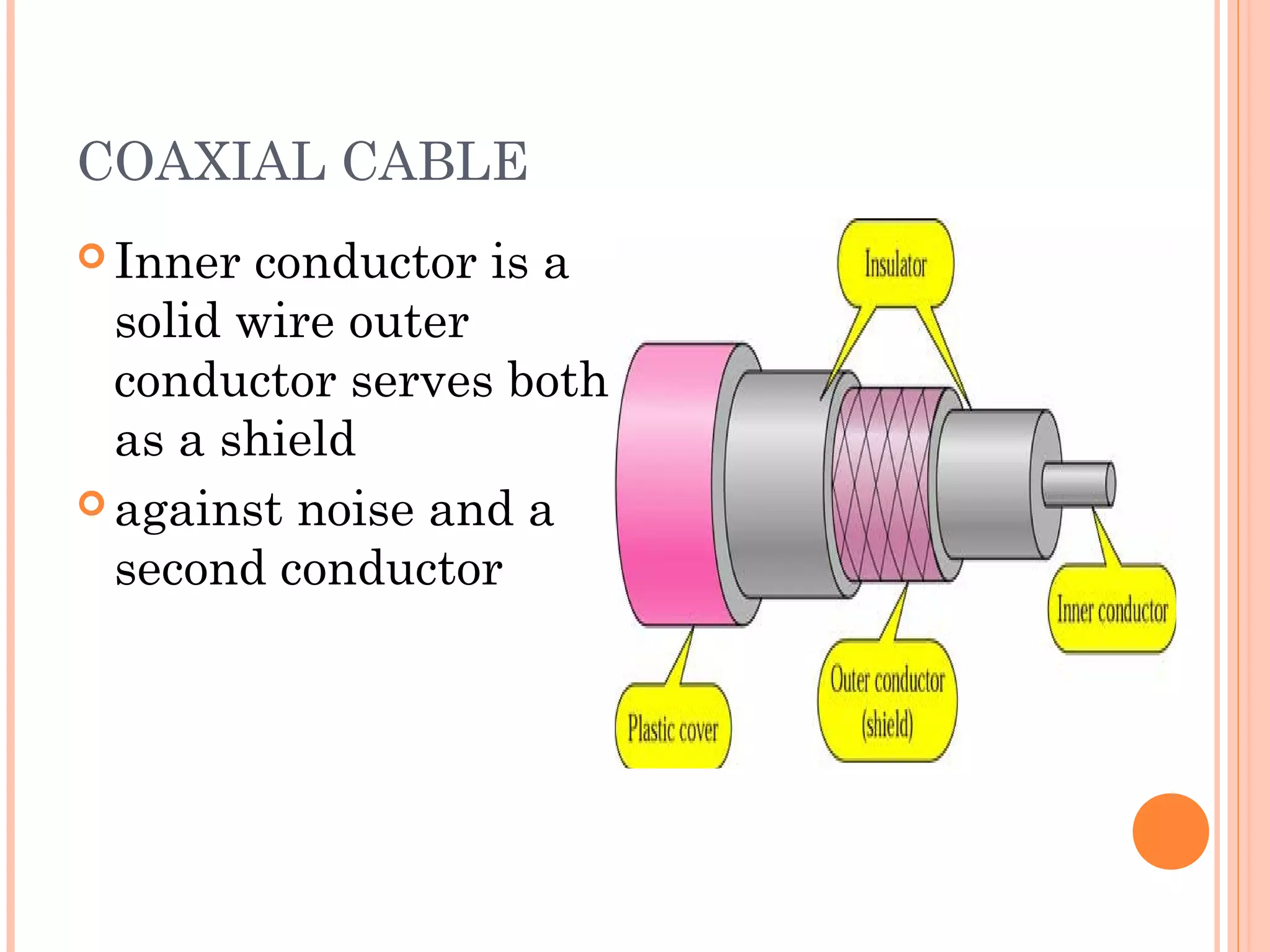
 Inner conductor is a
solid wire outer
conductor serves both
as a shield
 against noise and a
second conductor
TYPES OF COAXIAL CABLES 
 Baseband : Which is used for digital transmission. It is
mostly used for LAN’s. Baseband transmits a single
signal at a time with very high speed.
 Broadband : This uses analog transmission on standard
cable television cabling. It transmits several
simultaneous signal using different frequencies.
COAXIAL CABLE ADVANTAGES
 Bandwidth is high
 Used in long distance telephone lines.
 Television distribution
 Can carry 10,000 voice calls simultaneously
 Short distance computer systems links
 Local area networks
 Data transmission without distortion.
DISADVANTAGE
 Single cable failure can fail the entire network.
 Difficult to install and expensive when compared
with twisted pair.
GUIDED MEDIA – COAXIAL
CABLE
 Applications:
 Analog telephone networks
 Cable TV networks
 Traditional Ethernet LAN – 10Base2, 10Base5
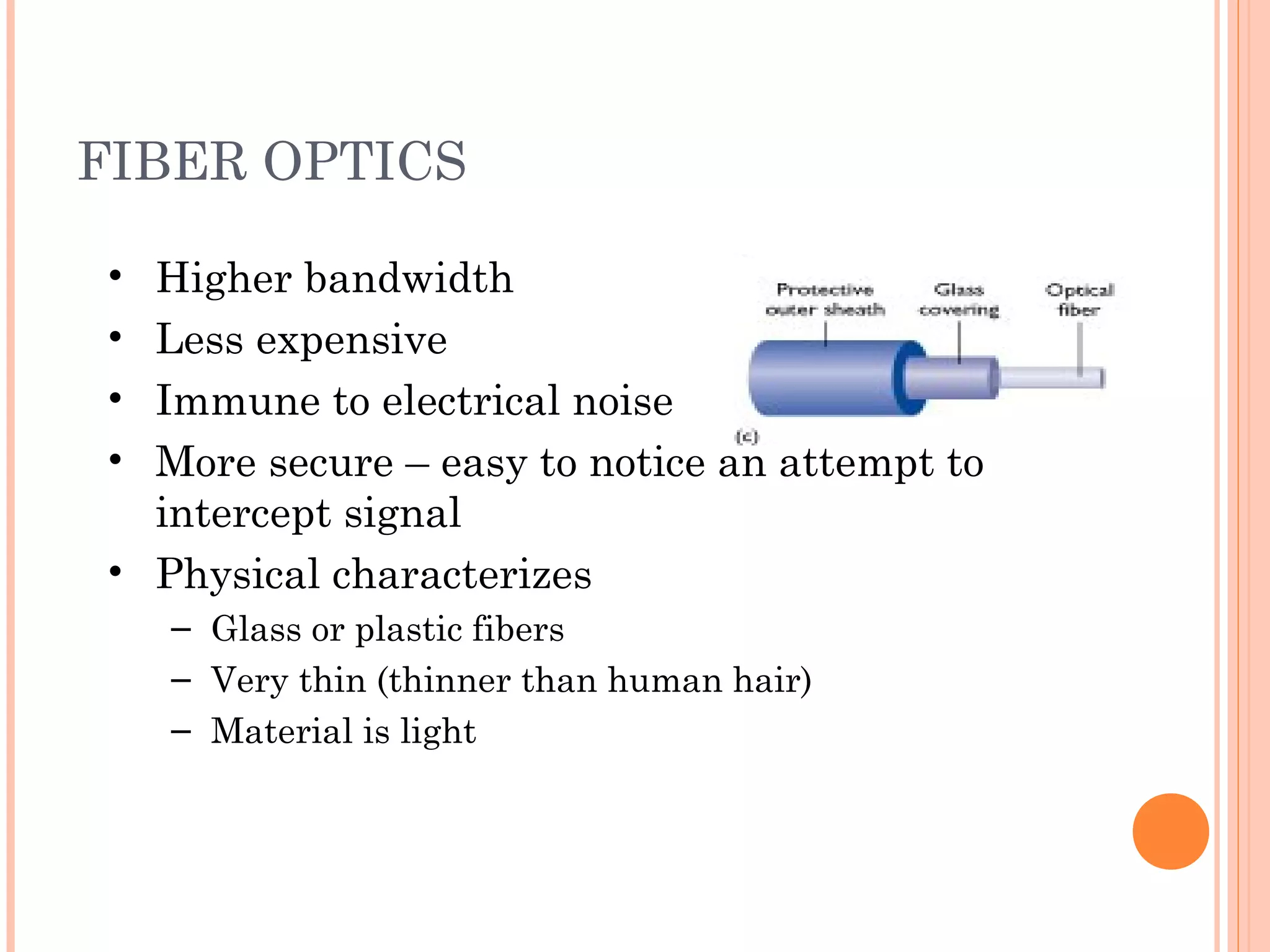
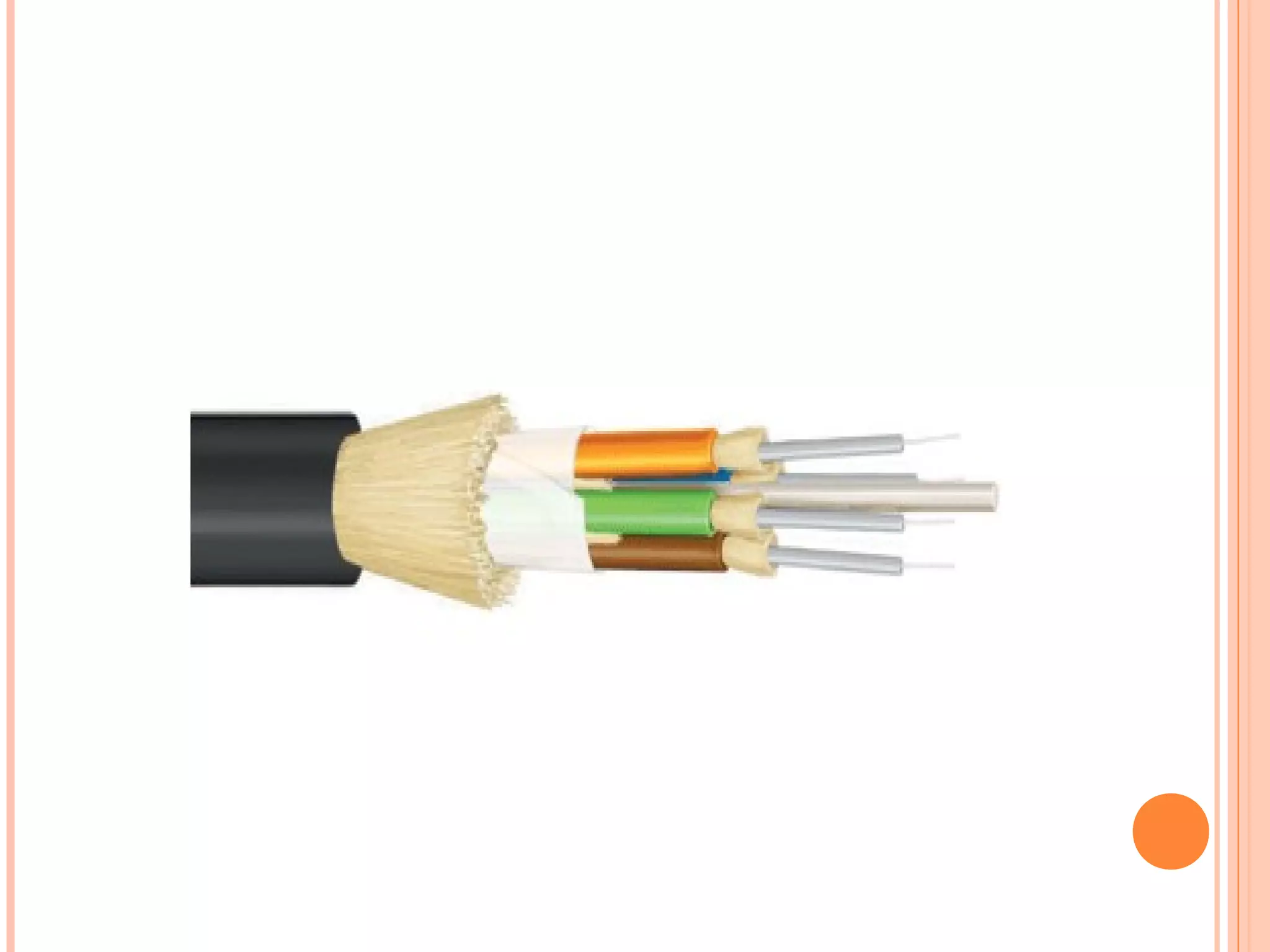
FIBER OPTICS
• Higher bandwidth
• Less expensive
• Immune to electrical noise
• More secure – easy to notice an attempt to
intercept signal
• Physical characterizes
– Glass or plastic fibers
– Very thin (thinner than human hair)
– Material is light
OPTICAL FIBER - PROS
• greater capacity
– data rates of hundreds of Gbps
• smaller size & weight
• lower attenuation(Reduction in signal)
• Used for both analog and digital signals.
CONS
 It is expensive.
 Difficult to install.
 Maintenance is expensive and difficult
GUIDED MEDIA – OPTICAL FIBER
CABLE
 Applications:
 Backbone networks – SONET
 Cable TV – backbone
 LAN
 100Base-FX network (Fast Ethernet)
 100Base-X
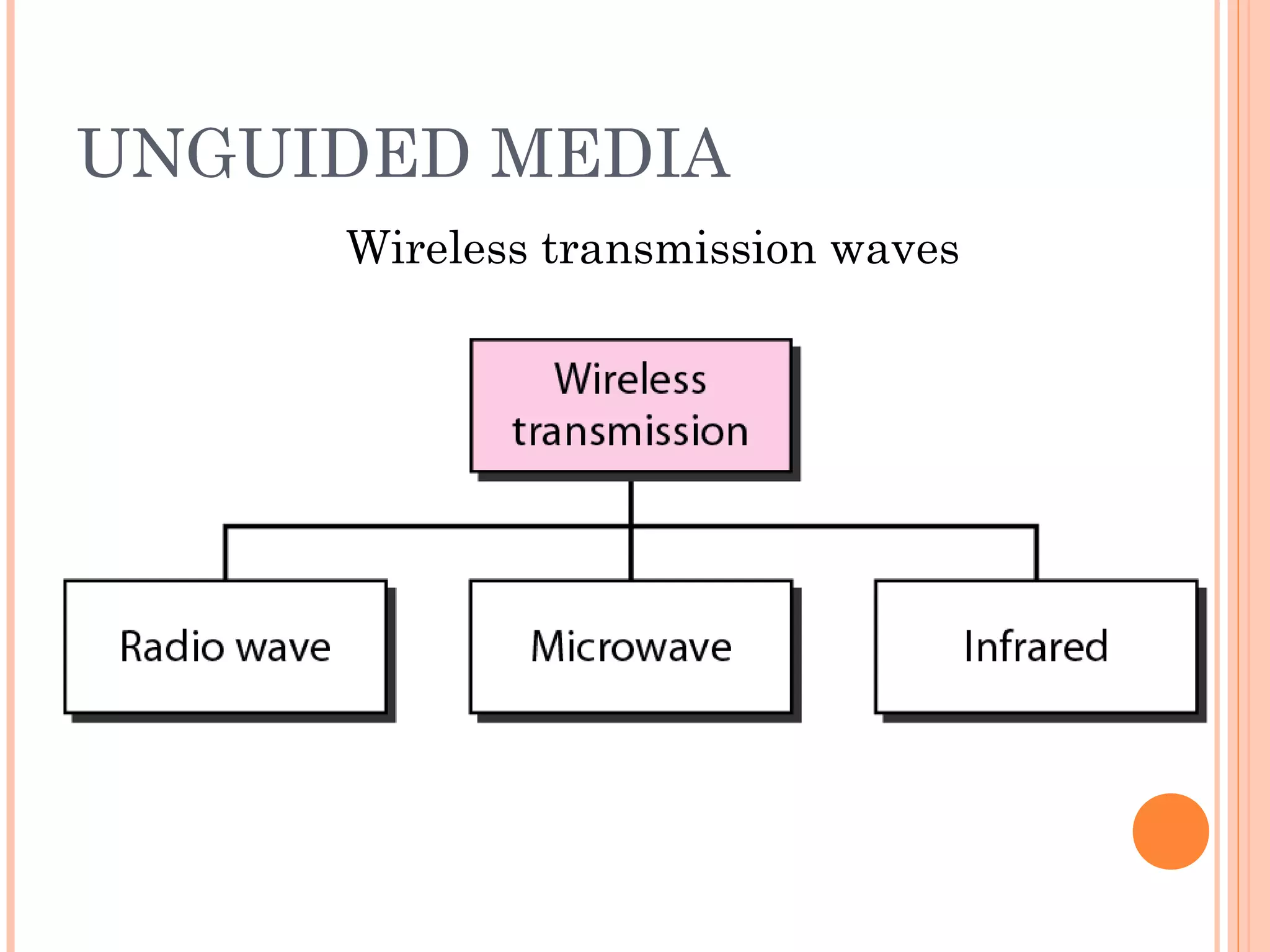
UNGUIDED MEDIA
Wireless transmission waves
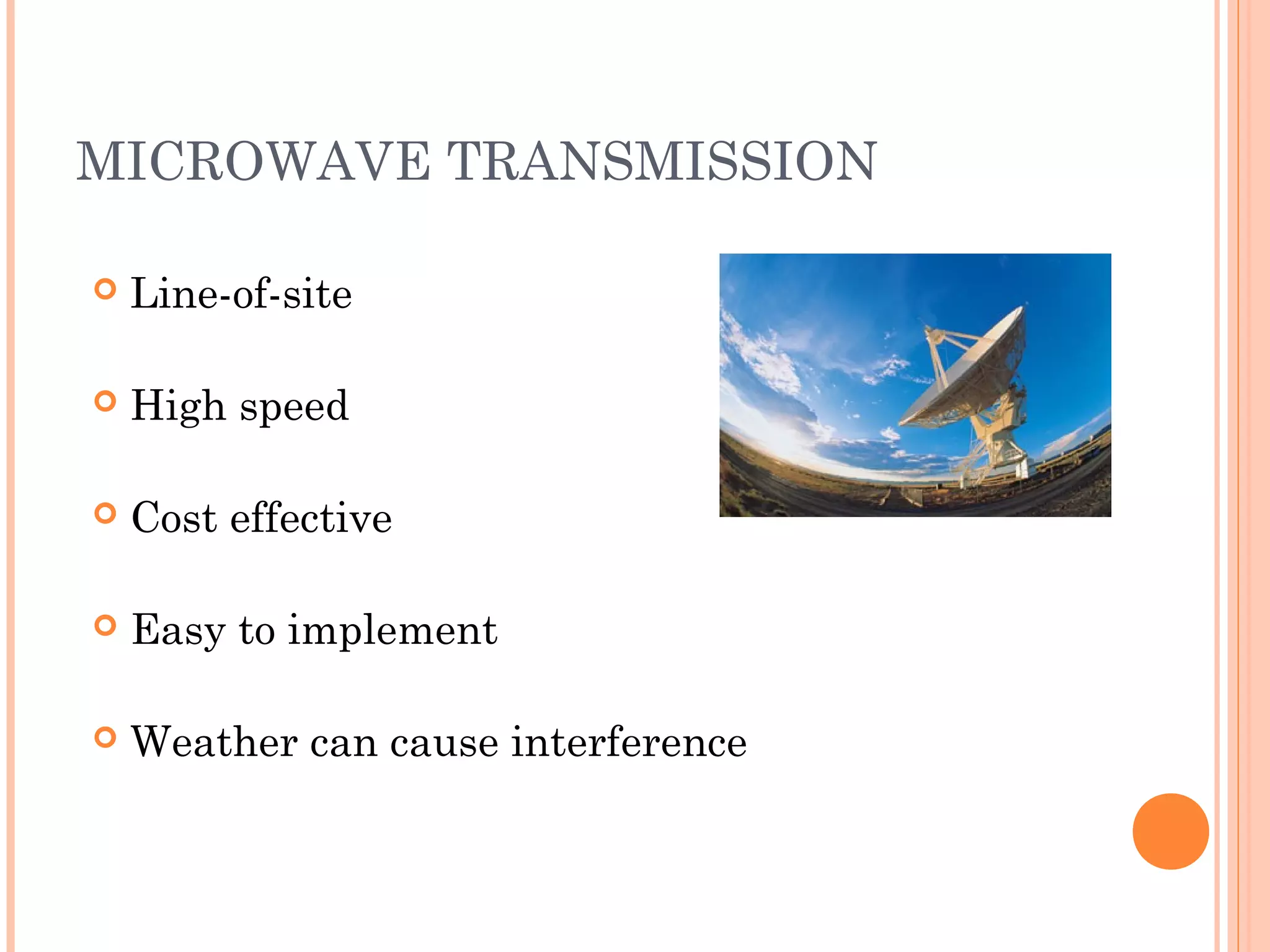
MICROWAVE TRANSMISSION
 Line-of-site
 High speed
 Cost effective
 Easy to implement
 Weather can cause interference
Medium of transmission data by marwan inayat

Medium of transmission data by marwan inayat

  • 2.
    ITC PRESENTATION  MEDIUMOF TRANSMISSION DATA  TWISTED PAIR CABLS  COAXIAL CABLES  FIBER OPTICS  MICROWAVE  SATELLITE
  • 3.
    TRANSMISSION MEDIA  Transmissionmedia are located below the physical layer  Computers use signals to represent data.  Signals are transmitted in form of electromagnetic energy.
  • 4.
  • 5.
  • 6.
    FACTORS TO BECONSIDERED WHILE CHOOSING TRANSMISSION MEDIUM  Transmission Rate  Cost and Ease of Installation  Resistance to Environmental Conditions  Distances
  • 7.
    GUIDED MEDIAGUIDED MEDIA Guidedmedia, which are those that provide a conduit from one device to another, include twisted-pair cable, coaxial cable, and fiber-optic cable.
  • 8.
    TWISTED PAIR CABLE This cable is the most commonly used and is cheaper than others. It is lightweight, cheap, can be installed easily, and they support many different types of network Twisted Pair is of two types :  Unshielded Twisted Pair (UTP)  Shielded Twisted Pair (STP)
  • 10.
    UNSHIELDED VERSUS SHIELDEDTWISTED- PAIR CABLE UTP and STP cables
  • 11.
    UNSHIELDED TWISTED PAIR(UTP) Adv: • Ordinary telephone wire • Cheapest • Easiest to install • It has high speed capacity • 100 meter limit Dis adv: • Bandwidth is low when compared with Coaxial Cable • Provides less protection from interference.
  • 13.
    SHIELDED TWISTED PAIR(STP) Adv: • Metal braid or sheathing that reduces interference • Easy to install • Eliminates crosstalk • Higher capacity than unshielded twisted pair • Increases the signaling rate Disadv: • More expensive • Harder to handle (thick, heavy) • Difficult to manufacture
  • 14.
    GUIDED MEDIA -UTP  Applications:  Telephone lines connecting subscribers to the central office  DSL lines  LAN – 10Base-T and 100Base-T
  • 15.
    TWISTED PAIR -APPLICATIONS  Most common medium  Telephone network  Within buildings  For local area networks (LAN)
  • 16.
    TWISTED PAIR -PROS AND CONS  Cheap  Easy to work with  Low data rate  Short range
  • 17.
    GUIDED MEDIA –COAXIAL CABLE Coaxial Cable
  • 19.
  • 20.
    COAXIAL CABLE  Innerconductor is a solid wire outer conductor serves both as a shield  against noise and a second conductor
  • 21.
    TYPES OF COAXIALCABLES   Baseband : Which is used for digital transmission. It is mostly used for LAN’s. Baseband transmits a single signal at a time with very high speed.  Broadband : This uses analog transmission on standard cable television cabling. It transmits several simultaneous signal using different frequencies.
  • 22.
    COAXIAL CABLE ADVANTAGES Bandwidth is high  Used in long distance telephone lines.  Television distribution  Can carry 10,000 voice calls simultaneously  Short distance computer systems links  Local area networks  Data transmission without distortion.
  • 23.
    DISADVANTAGE  Single cablefailure can fail the entire network.  Difficult to install and expensive when compared with twisted pair.
  • 24.
    GUIDED MEDIA –COAXIAL CABLE  Applications:  Analog telephone networks  Cable TV networks  Traditional Ethernet LAN – 10Base2, 10Base5
  • 25.
    FIBER OPTICS • Higherbandwidth • Less expensive • Immune to electrical noise • More secure – easy to notice an attempt to intercept signal • Physical characterizes – Glass or plastic fibers – Very thin (thinner than human hair) – Material is light
  • 27.
    OPTICAL FIBER -PROS • greater capacity – data rates of hundreds of Gbps • smaller size & weight • lower attenuation(Reduction in signal) • Used for both analog and digital signals.
  • 28.
    CONS  It isexpensive.  Difficult to install.  Maintenance is expensive and difficult
  • 29.
    GUIDED MEDIA –OPTICAL FIBER CABLE  Applications:  Backbone networks – SONET  Cable TV – backbone  LAN  100Base-FX network (Fast Ethernet)  100Base-X
  • 30.
  • 31.
    MICROWAVE TRANSMISSION  Line-of-site High speed  Cost effective  Easy to implement  Weather can cause interference

Editor's Notes

  • #20 Coaxial cable, like twisted pair, consists of two conductors, but is constructed differently to permit it to operate over a wider range of frequencies. It consists of a hollow outer cylindrical conductor that surrounds a single inner wire conductor (Stallings DCC8e Figure 4.2b). The inner conductor is held in place by either regularly spaced insulating rings or a solid dielectric material. The outer conductor is covered with a jacket or shield. A single coaxial cable has a diameter of from 1 to 2.5 cm. Coaxial cable can be used over longer distances and support more stations on a shared line than twisted pair. Coaxial cable is a versatile transmission medium, used in a wide variety of applications, including: •Television distribution - aerial to TV & CATV systems •Long-distance telephone transmission - traditionally used for inter-exchange links, now being replaced by optical fiber/microwave/satellite •Short-run computer system links •Local area networks
  • #28 The following characteristics distinguish optical fiber from twisted pair or coaxial cable: •Greater capacity: The potential bandwidth, and hence data rate, of optical fiber is immense; data rates of hundreds of Gbps over tens of kilometers have been demonstrated. Compare this to the practical maximum of hundreds of Mbps over about 1 km for coaxial cable and just a few Mbps over 1 km or up to 100 Mbps to 10 Gbps over a few tens of meters for twisted pair. •Smaller size and lighter weight: Optical fibers are considerably thinner than coaxial cable or bundled twisted-pair cable. For cramped conduits in buildings and underground along public rights-of-way, the advantage of small size is considerable. The corresponding reduction in weight reduces structural support requirements. •Lower attenuation: Attenuation is significantly lower for optical fiber than for coaxial cable or twisted pair, and is constant over a wide range. •Electromagnetic isolation: Optical fiber systems are not affected by external electromagnetic fields. Thus the system is not vulnerable to interference, impulse noise, or crosstalk. By the same token, fibers do not radiate energy, so there is little interference with other equipment and there is a high degree of security from eavesdropping. In addition, fiber is inherently difficult to tap. •Greater repeater spacing: Fewer repeaters mean lower cost and fewer sources of error. The performance of optical fiber systems from this point of view has been steadily improving. Repeater spacing in the tens of kilometers for optical fiber is common, and repeater spacings of hundreds of kilometers have been demonstrated.