1

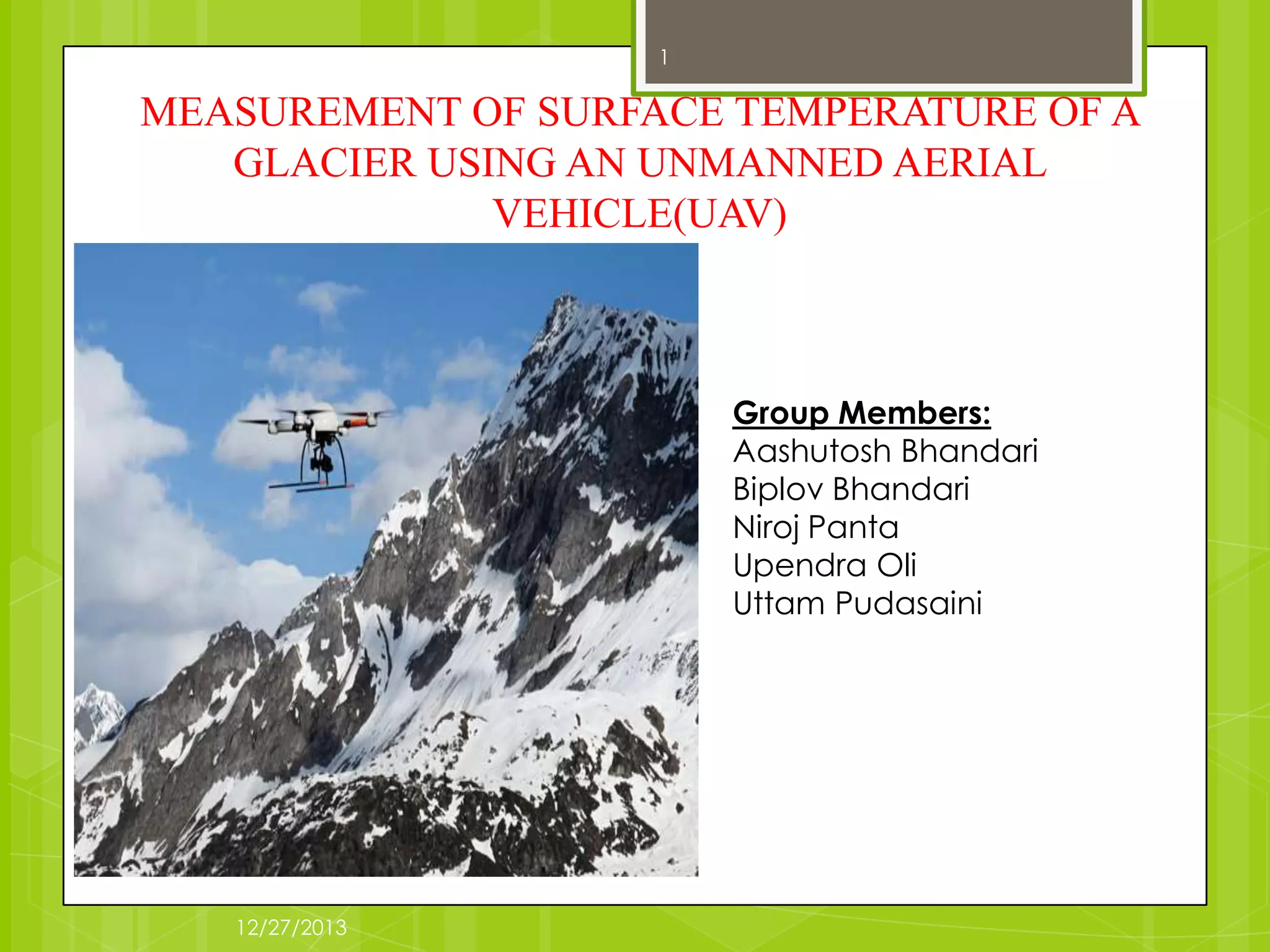
MEASUREMENT OF SURFACE TEMPERATURE OF A
GLACIER USING AN UNMANNED AERIAL
VEHICLE(UAV)

Group Members:
Aashutosh Bhandari
Biplov Bhandari
Niroj Panta
Upendra Oli
Uttam Pudasaini

12/27/2013
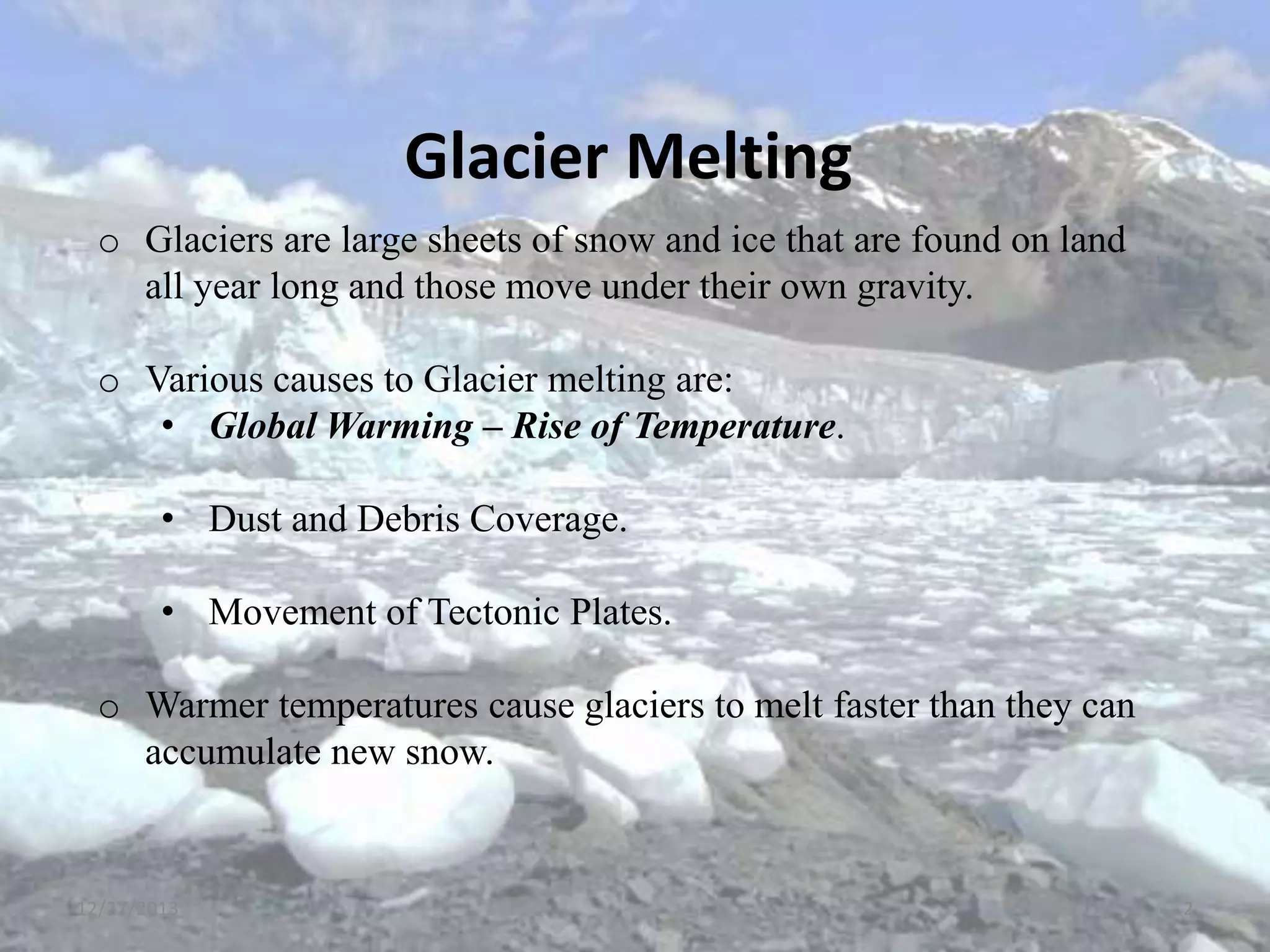
Glacier Melting
o Glaciers are large sheets of snow and ice that are found on land
all year long and those move under their own gravity.
o Various causes to Glacier melting are:
• Global Warming – Rise of Temperature.
• Dust and Debris Coverage.
• Movement of Tectonic Plates.
o Warmer temperatures cause glaciers to melt faster than they can
accumulate new snow.

12/27/2013

2
3

12/27/2013

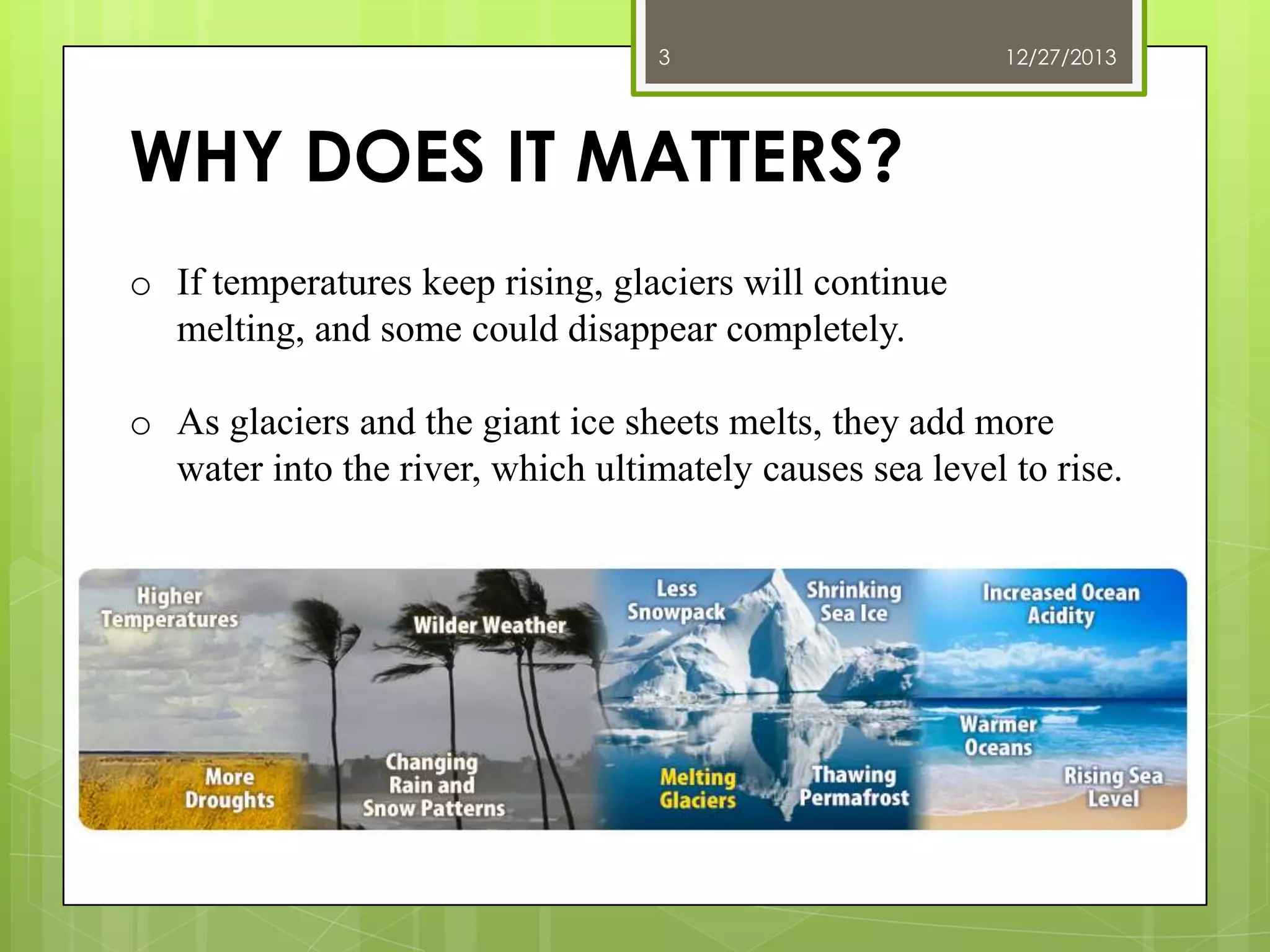
WHY DOES IT MATTERS?
o If temperatures keep rising, glaciers will continue
melting, and some could disappear completely.
o As glaciers and the giant ice sheets melts, they add more
water into the river, which ultimately causes sea level to rise.
4

12/27/2013

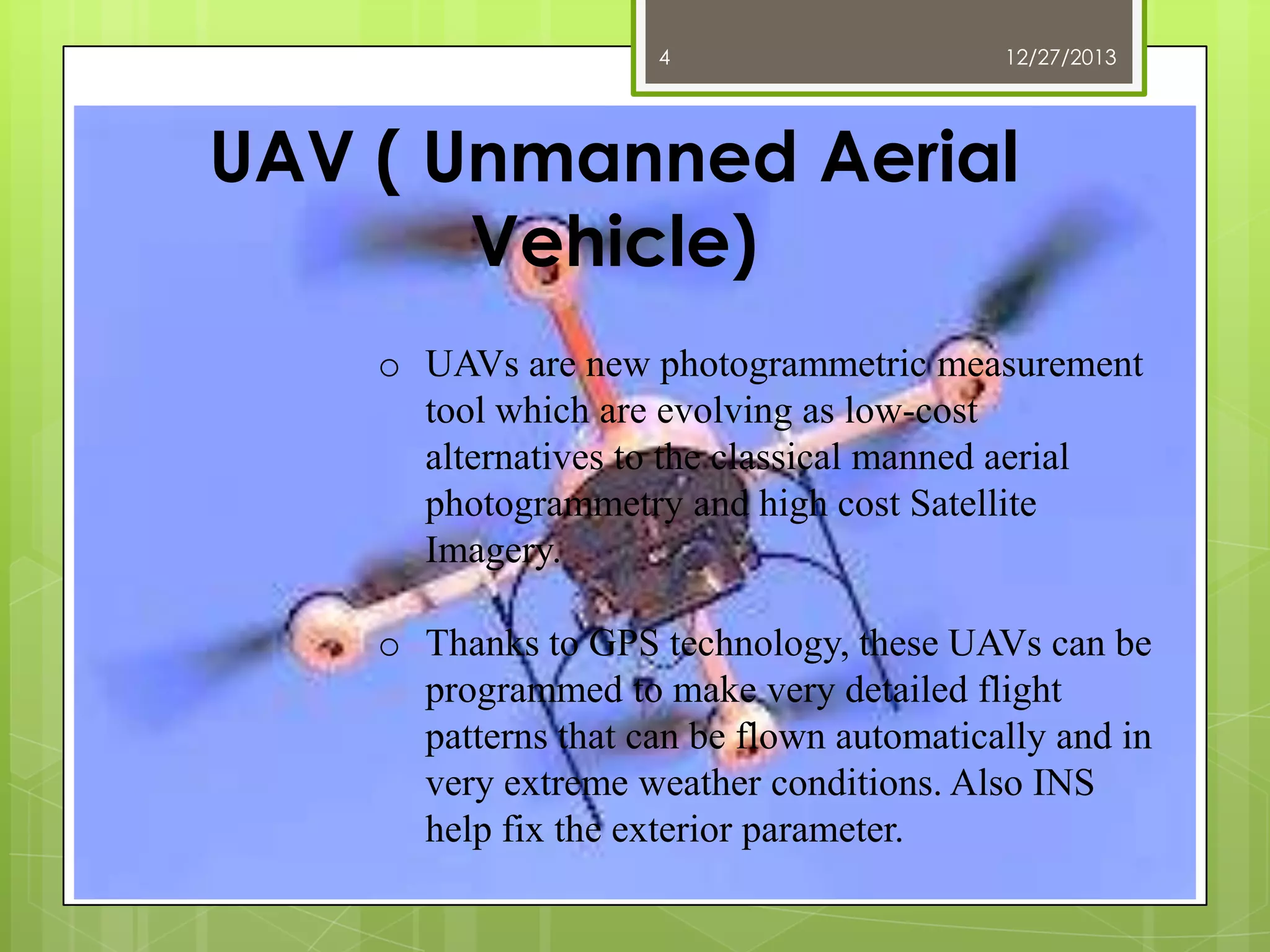
UAV ( Unmanned Aerial
Vehicle)
o UAVs are new photogrammetric measurement
tool which are evolving as low-cost
alternatives to the classical manned aerial
photogrammetry and high cost Satellite
Imagery.
o Thanks to GPS technology, these UAVs can be
programmed to make very detailed flight
patterns that can be flown automatically and in
very extreme weather conditions. Also INS
help fix the exterior parameter.
GROWING USE OF UAV

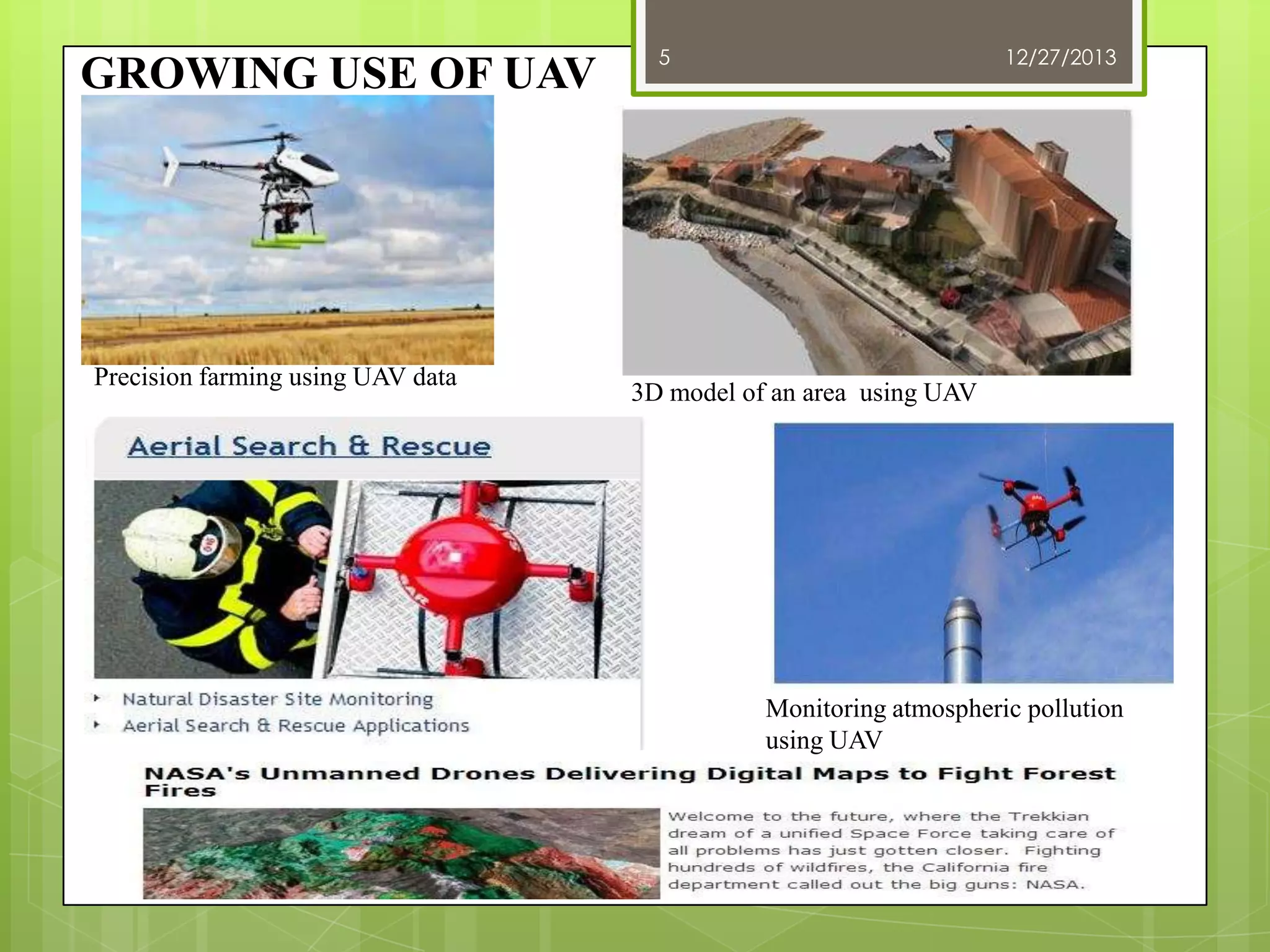
Precision farming using UAV data

5

12/27/2013

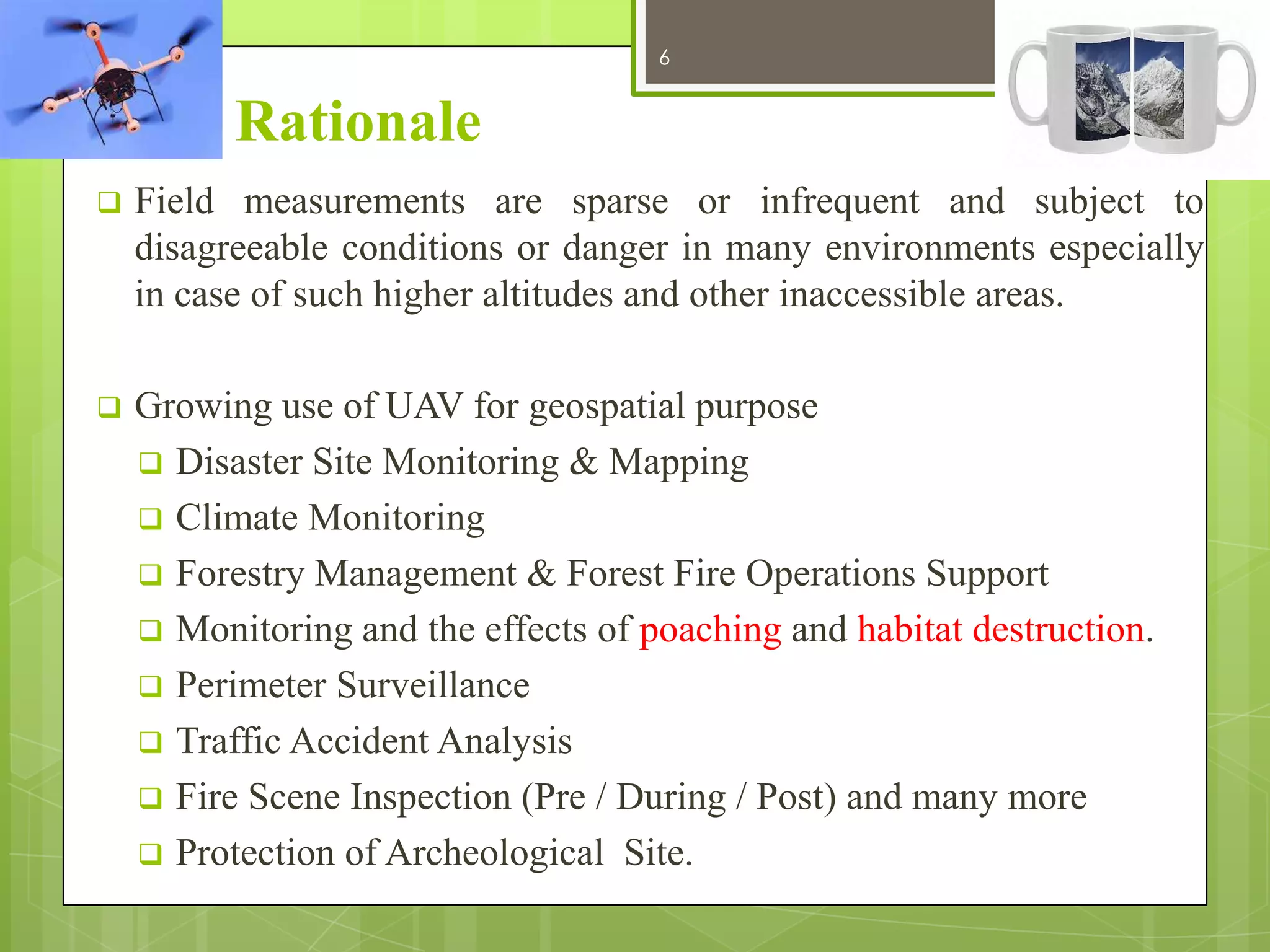
3D model of an area using UAV

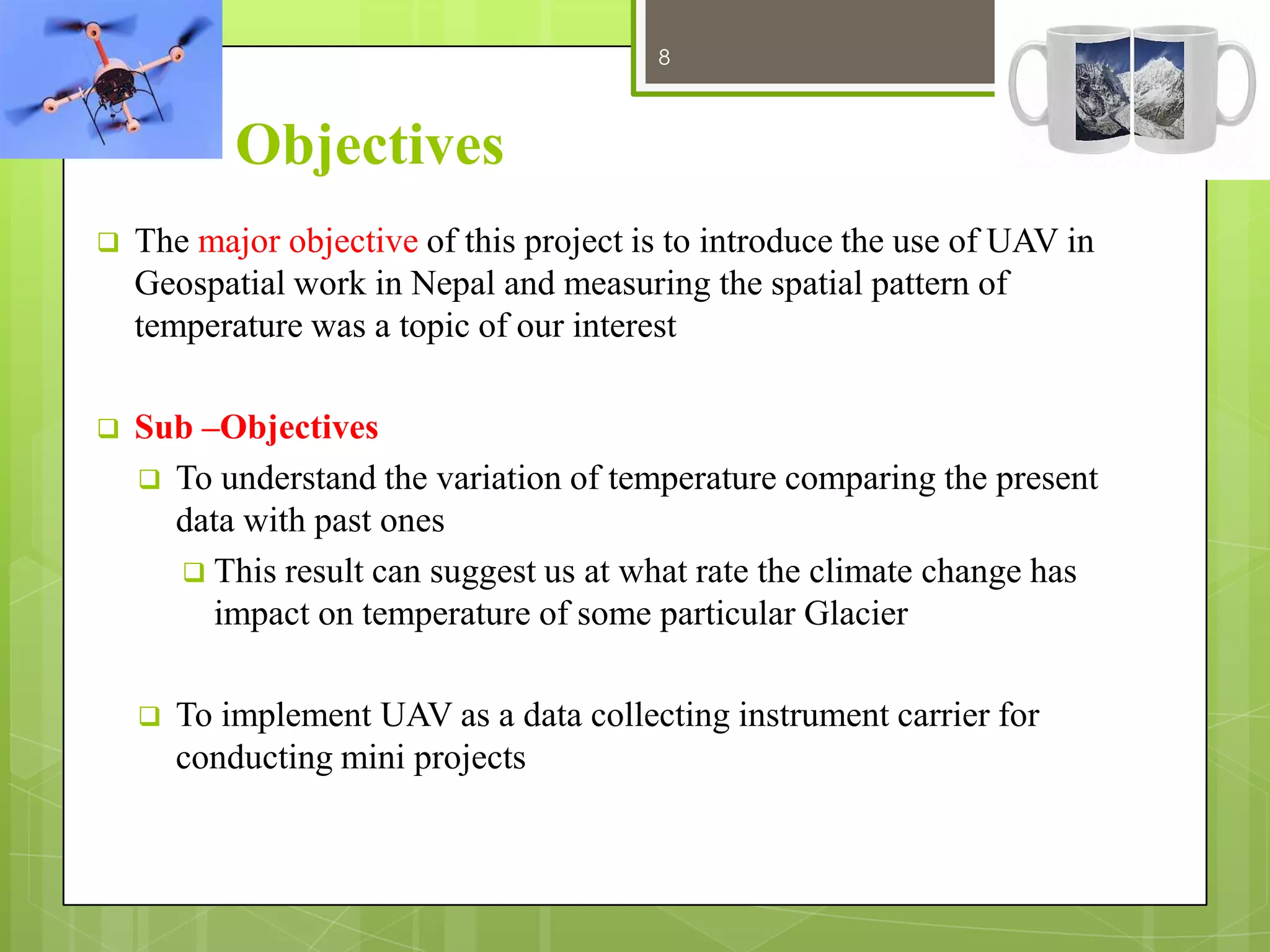
Monitoring atmospheric pollution
using UAV
6

12/27/2013

Rationale


Field measurements are sparse or infrequent and subject to
disagreeable conditions or danger in many environments especially
in case of such higher altitudes and other inaccessible areas.



Growing use of UAV for geospatial purpose
 Disaster Site Monitoring & Mapping
 Climate Monitoring
 Forestry Management & Forest Fire Operations Support
 Monitoring and the effects of poaching and habitat destruction.
 Perimeter Surveillance
 Traffic Accident Analysis
 Fire Scene Inspection (Pre / During / Post) and many more
 Protection of Archeological Site.
7

12/27/2013

Real-time capability and the ability
for fast and low cast data acquisition
while transmitting the image, video
and orientation data in real time to the
ground control station makes them
more popular.
8

12/27/2013

Objectives


The major objective of this project is to introduce the use of UAV in
Geospatial work in Nepal and measuring the spatial pattern of
temperature was a topic of our interest



Sub –Objectives
 To understand the variation of temperature comparing the present
data with past ones
 This result can suggest us at what rate the climate change has
impact on temperature of some particular Glacier


To implement UAV as a data collecting instrument carrier for
conducting mini projects
9

12/27/2013

Methodologies
1.Instrumentation


UAV platform that can fly with a sensor load + Flight Control System:
GPS + INS ( Inertial Navigation System) for accurate positioning of
Camera center for image calibration/ georeferencing + Battery type

Infrared sensor



of particular thermal band

Camera mount, Ready to fly (RTF),Wind resistance, Camera mount with
automatic tilting
10

12/27/2013

2.Flight planning
Altitude of the flight of drone
 Distribution pattern of Ground Control Points (GCP)
 Area to be covered ,Size and number of images
 Flying height and flying speed
 No of flight sessions and interval between the exposure
 Focal length of sensors
 Pixel size on image/Ground sampling distance (GSD)
 Terrain Topography
 Weather/season

11

12/27/2013

3.Field works
 Conducting the flight over the area
 Recording the temperature from the ground stations as well


This data can be compared later with the information obtained from
UAV during work validation

4.Data Processing and Documentation




Obtain past data from concerned authorities and study the pattern
considering the present collected data
To validate the data collected using UAV with the information given
by ground stations
To visualise the pattern of temperature change for the past 30 years
12

12/27/2013

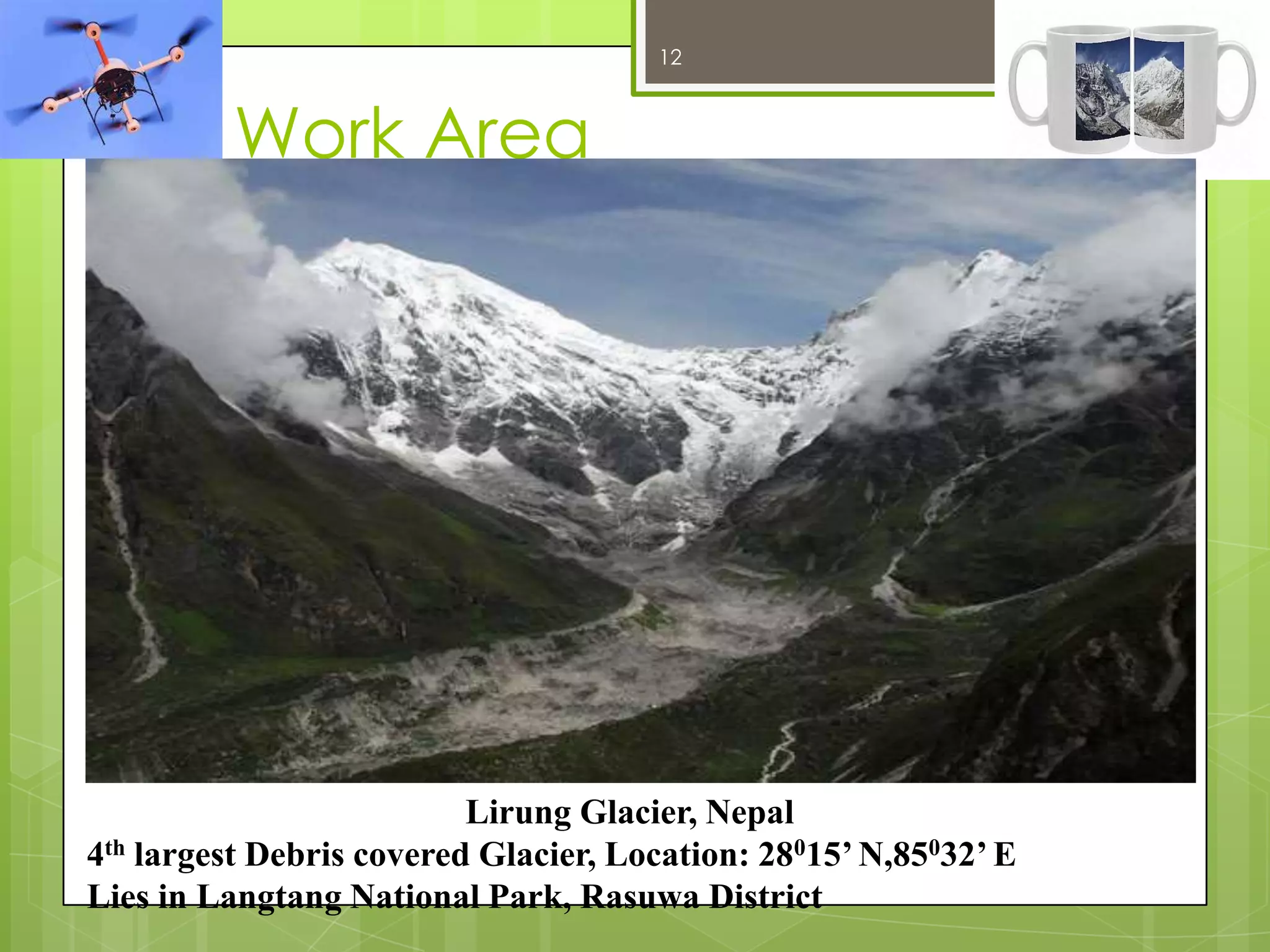
Work Area

Lirung Glacier, Nepal
4th largest Debris covered Glacier, Location: 28015’ N,85032’ E
Lies in Langtang National Park, Rasuwa District
Cost estimation

13

12/27/2013

Purchase instruments like


UAV platform that can fly with a sensor load range of 500gms to
1000gms



Flight Control System: GPS + INS ( Inertial Navigation System) for
accurate positioning of Camera center for image calibration/
georeferencing



Camera mount: With automatic tilting system so that camera can be
focused to a particular direction; Nadir for example
14

12/27/2013

 Ready To

Fly (RTF): for manual control and flight. RF
signal depending on project area

 Wind
 Way


resistance: If yes, it would be better for stability

point Navigation System for Autonomous flight

Flight time: Depending on project area, 20+ minutes.
This depends on payload and battery type

 Battery

type and rating: LIPO ( lithium polymer battery)
eg. 3S 4250mAh / 4S 4250mAh / 4S 100000mAh i.e
Battery with higher mAh has longer flight time.
Conclusion

15

12/27/2013

 Traditionally

such
projects
presuppose
aerial
photography, LIDAR and remote sensing techniques from
large manned aircrafts and satellites, which was not
economically justified

 This

project is an attempt in NEPAL to introduce the use of
UAV as a data acquisition platform to monitor an effect of
climate change i.e. rise of temperature
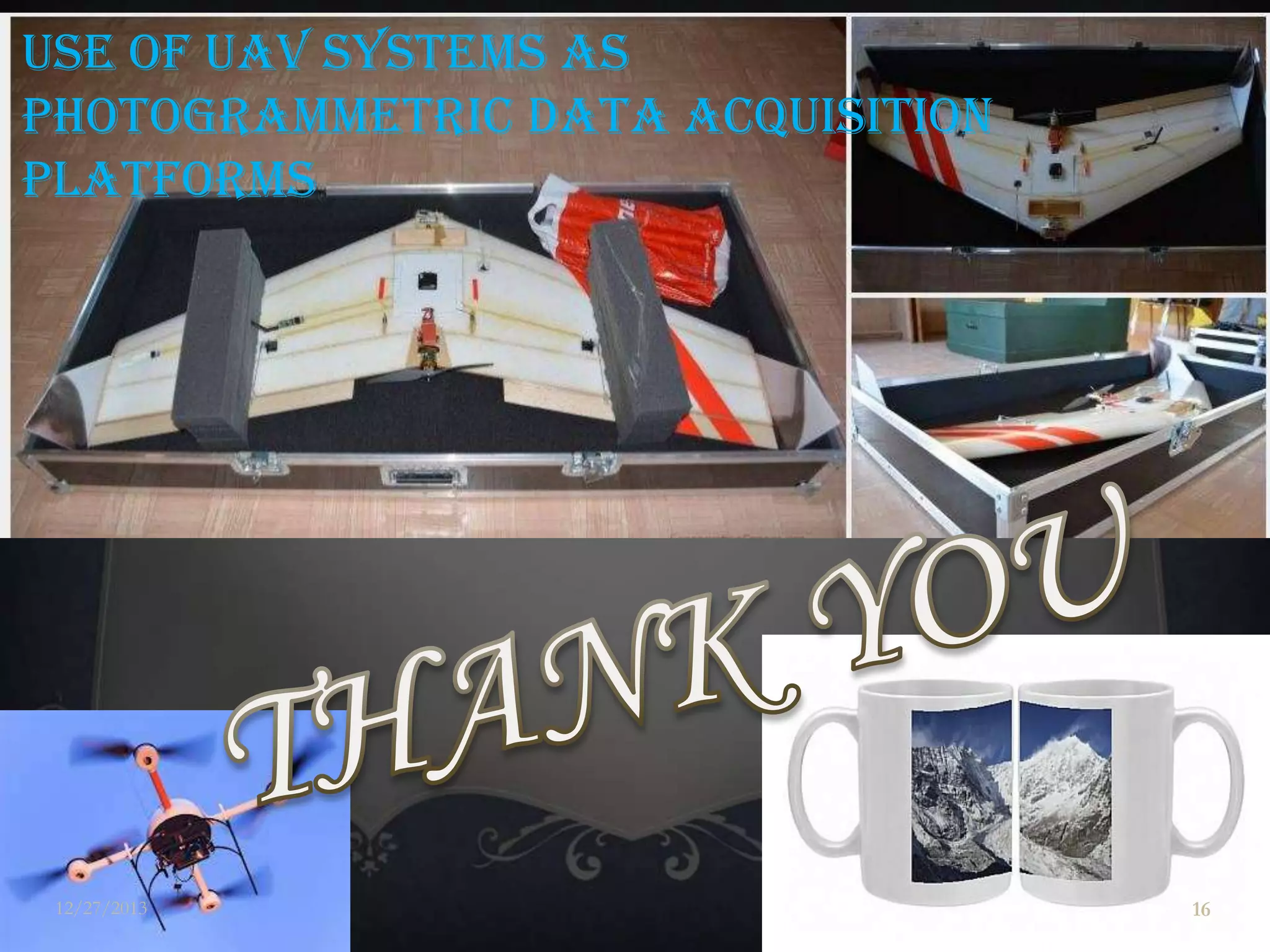
Use of UAV systems as
photogrammetric data acquisition
platforms

12/27/2013

16

MEASUREMENT OF SURFACE TEMPERATURE OF A GLACIER USING AN UNMANNED AERIAL VEHICLE(UAV)

  • 1.
    1 MEASUREMENT OF SURFACETEMPERATURE OF A GLACIER USING AN UNMANNED AERIAL VEHICLE(UAV) Group Members: Aashutosh Bhandari Biplov Bhandari Niroj Panta Upendra Oli Uttam Pudasaini 12/27/2013
  • 2.
    Glacier Melting o Glaciersare large sheets of snow and ice that are found on land all year long and those move under their own gravity. o Various causes to Glacier melting are: • Global Warming – Rise of Temperature. • Dust and Debris Coverage. • Movement of Tectonic Plates. o Warmer temperatures cause glaciers to melt faster than they can accumulate new snow. 12/27/2013 2
  • 3.
    3 12/27/2013 WHY DOES ITMATTERS? o If temperatures keep rising, glaciers will continue melting, and some could disappear completely. o As glaciers and the giant ice sheets melts, they add more water into the river, which ultimately causes sea level to rise.
  • 4.
    4 12/27/2013 UAV ( UnmannedAerial Vehicle) o UAVs are new photogrammetric measurement tool which are evolving as low-cost alternatives to the classical manned aerial photogrammetry and high cost Satellite Imagery. o Thanks to GPS technology, these UAVs can be programmed to make very detailed flight patterns that can be flown automatically and in very extreme weather conditions. Also INS help fix the exterior parameter.
  • 5.
    GROWING USE OFUAV Precision farming using UAV data 5 12/27/2013 3D model of an area using UAV Monitoring atmospheric pollution using UAV
  • 6.
    6 12/27/2013 Rationale  Field measurements aresparse or infrequent and subject to disagreeable conditions or danger in many environments especially in case of such higher altitudes and other inaccessible areas.  Growing use of UAV for geospatial purpose  Disaster Site Monitoring & Mapping  Climate Monitoring  Forestry Management & Forest Fire Operations Support  Monitoring and the effects of poaching and habitat destruction.  Perimeter Surveillance  Traffic Accident Analysis  Fire Scene Inspection (Pre / During / Post) and many more  Protection of Archeological Site.
  • 7.
    7 12/27/2013 Real-time capability andthe ability for fast and low cast data acquisition while transmitting the image, video and orientation data in real time to the ground control station makes them more popular.
  • 8.
    8 12/27/2013 Objectives  The major objectiveof this project is to introduce the use of UAV in Geospatial work in Nepal and measuring the spatial pattern of temperature was a topic of our interest  Sub –Objectives  To understand the variation of temperature comparing the present data with past ones  This result can suggest us at what rate the climate change has impact on temperature of some particular Glacier  To implement UAV as a data collecting instrument carrier for conducting mini projects
  • 9.
    9 12/27/2013 Methodologies 1.Instrumentation  UAV platform thatcan fly with a sensor load + Flight Control System: GPS + INS ( Inertial Navigation System) for accurate positioning of Camera center for image calibration/ georeferencing + Battery type Infrared sensor  of particular thermal band Camera mount, Ready to fly (RTF),Wind resistance, Camera mount with automatic tilting
  • 10.
    10 12/27/2013 2.Flight planning Altitude ofthe flight of drone  Distribution pattern of Ground Control Points (GCP)  Area to be covered ,Size and number of images  Flying height and flying speed  No of flight sessions and interval between the exposure  Focal length of sensors  Pixel size on image/Ground sampling distance (GSD)  Terrain Topography  Weather/season 
  • 11.
    11 12/27/2013 3.Field works  Conductingthe flight over the area  Recording the temperature from the ground stations as well  This data can be compared later with the information obtained from UAV during work validation 4.Data Processing and Documentation    Obtain past data from concerned authorities and study the pattern considering the present collected data To validate the data collected using UAV with the information given by ground stations To visualise the pattern of temperature change for the past 30 years
  • 12.
    12 12/27/2013 Work Area Lirung Glacier,Nepal 4th largest Debris covered Glacier, Location: 28015’ N,85032’ E Lies in Langtang National Park, Rasuwa District
  • 13.
    Cost estimation 13 12/27/2013 Purchase instrumentslike  UAV platform that can fly with a sensor load range of 500gms to 1000gms  Flight Control System: GPS + INS ( Inertial Navigation System) for accurate positioning of Camera center for image calibration/ georeferencing  Camera mount: With automatic tilting system so that camera can be focused to a particular direction; Nadir for example
  • 14.
    14 12/27/2013  Ready To Fly(RTF): for manual control and flight. RF signal depending on project area  Wind  Way  resistance: If yes, it would be better for stability point Navigation System for Autonomous flight Flight time: Depending on project area, 20+ minutes. This depends on payload and battery type  Battery type and rating: LIPO ( lithium polymer battery) eg. 3S 4250mAh / 4S 4250mAh / 4S 100000mAh i.e Battery with higher mAh has longer flight time.
  • 15.
    Conclusion 15 12/27/2013  Traditionally such projects presuppose aerial photography, LIDARand remote sensing techniques from large manned aircrafts and satellites, which was not economically justified  This project is an attempt in NEPAL to introduce the use of UAV as a data acquisition platform to monitor an effect of climate change i.e. rise of temperature
  • 16.
    Use of UAVsystems as photogrammetric data acquisition platforms 12/27/2013 16