Meander Formation
 
 
Learning Outcomes You will be able to explain the sequence involved in the formation of a meander. You will be able to explain the sequence using the key terminology. KEY WORDS –  helicoidal flow sinousity thalweg centripetal force
 
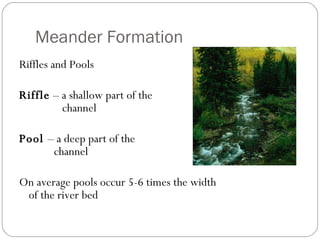
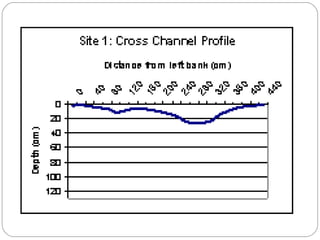
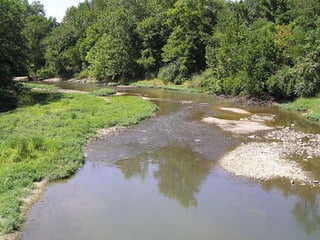
Meander Formation Riffles and Pools Riffle  – a shallow part of the      channel Pool  – a deep part of the         channel On average pools occur 5-6 times the width of the river bed
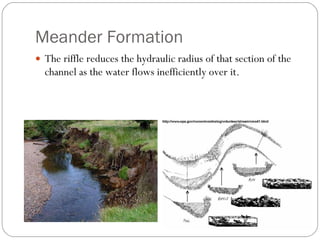
Meander Formation The riffle reduces the hydraulic radius of that section of the channel as the water flows inefficiently over it.
 
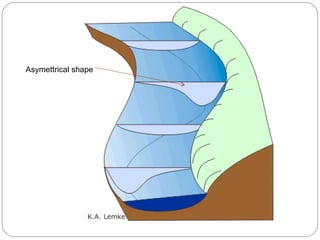
Asymettrical shape
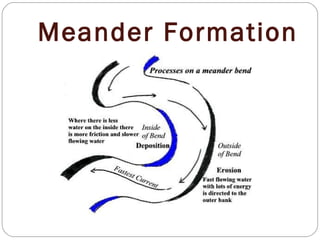
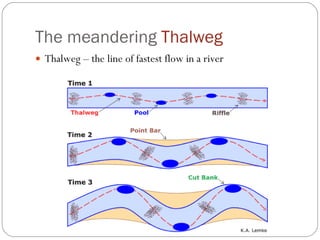
The meandering  Thalweg Thalweg – the line of fastest flow in a river
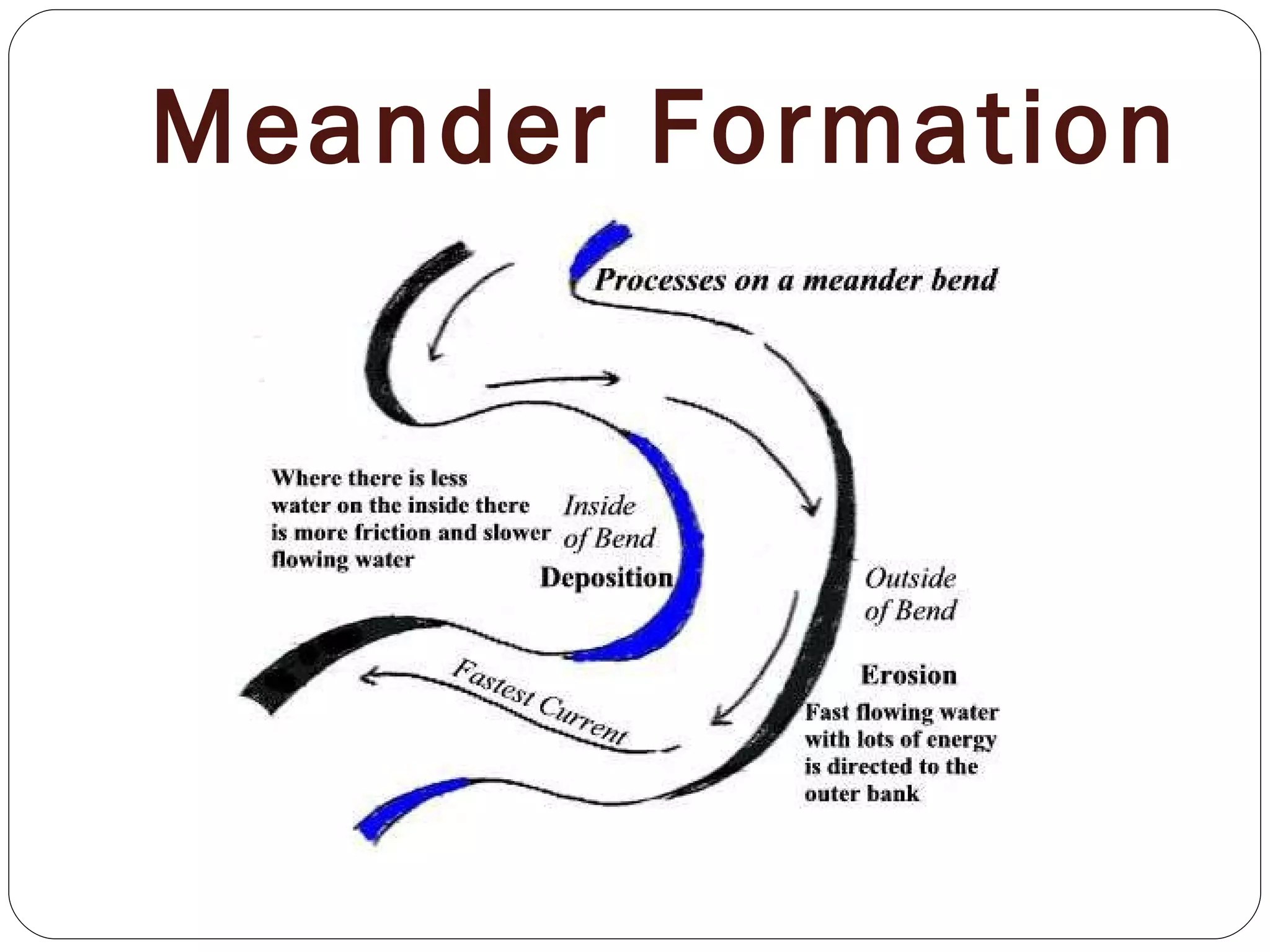
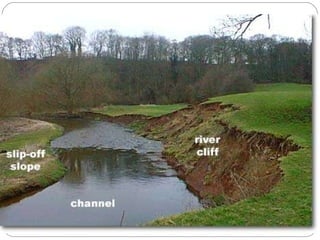
Centripetal Force At times of high flow the water is thrown around the riffles and is thrown to the edge by centripetal force eroding and undercutting it.  (MAINLY ABRASION AND HYDRAULIC ACTION)
Deposition Slower flow on the inside of the bend leads to depostion there. It is slower because the reduction in the rivers efficiency being reduced due to the frictional contact with the river bed.
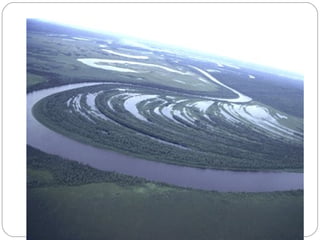
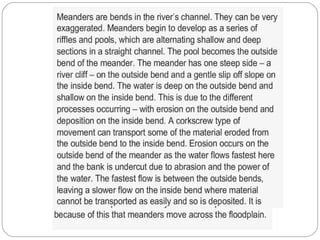
Helicoidal Flow The movement of water in a meander has been found to move from the outside to the inside. This helicoidal flow allows material eroded from the outer bank to be moved to the point bar on the inside of the next meander downstream.
Helicoidal Flow Corkscrew motion In bends, water forced to outside of bend hits bank with force Water piles-up on outside of bend Forced downward along river cliff, back towards point bar Transfers and reverses motion around next alternating bend
 
Exiting the meander As the water exits the meander the channel becomes shallower.  This reduces the hydraulic radius thus increasing deposition. As such new riffles are created.
 
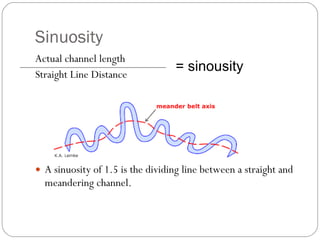
Sinuosity Actual channel length Straight Line Distance A sinuosity of 1.5 is the dividing line between a straight and meandering channel. = sinousity
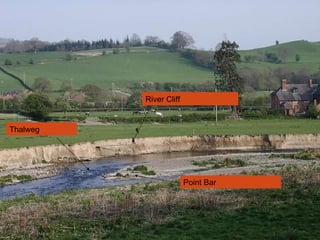
Point Bar River Cliff Thalweg
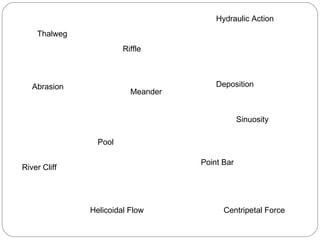
Thalweg Deposition Point Bar Helicoidal Flow River Cliff Abrasion Hydraulic Action Riffle Pool Sinuosity Meander Centripetal Force
Explain the formation of a meander (8 marks)
 
 
Meander Formation Explain the formation of a meander using helicoidal flow sinousity thalweg centripetal force

Meander Formation

  • 1.
  • 2.
  • 3.
  • 4.
    Learning Outcomes Youwill be able to explain the sequence involved in the formation of a meander. You will be able to explain the sequence using the key terminology. KEY WORDS – helicoidal flow sinousity thalweg centripetal force
  • 5.
  • 6.
    Meander Formation Rifflesand Pools Riffle – a shallow part of the channel Pool – a deep part of the channel On average pools occur 5-6 times the width of the river bed
  • 7.
    Meander Formation Theriffle reduces the hydraulic radius of that section of the channel as the water flows inefficiently over it.
  • 8.
  • 9.
  • 10.
    The meandering Thalweg Thalweg – the line of fastest flow in a river
  • 11.
    Centripetal Force Attimes of high flow the water is thrown around the riffles and is thrown to the edge by centripetal force eroding and undercutting it. (MAINLY ABRASION AND HYDRAULIC ACTION)
  • 12.
    Deposition Slower flowon the inside of the bend leads to depostion there. It is slower because the reduction in the rivers efficiency being reduced due to the frictional contact with the river bed.
  • 13.
    Helicoidal Flow Themovement of water in a meander has been found to move from the outside to the inside. This helicoidal flow allows material eroded from the outer bank to be moved to the point bar on the inside of the next meander downstream.
  • 14.
    Helicoidal Flow Corkscrewmotion In bends, water forced to outside of bend hits bank with force Water piles-up on outside of bend Forced downward along river cliff, back towards point bar Transfers and reverses motion around next alternating bend
  • 15.
  • 16.
    Exiting the meanderAs the water exits the meander the channel becomes shallower. This reduces the hydraulic radius thus increasing deposition. As such new riffles are created.
  • 17.
  • 18.
    Sinuosity Actual channellength Straight Line Distance A sinuosity of 1.5 is the dividing line between a straight and meandering channel. = sinousity
  • 19.
    Point Bar RiverCliff Thalweg
  • 20.
    Thalweg Deposition PointBar Helicoidal Flow River Cliff Abrasion Hydraulic Action Riffle Pool Sinuosity Meander Centripetal Force
  • 21.
    Explain the formationof a meander (8 marks)
  • 22.
  • 23.
  • 24.
    Meander Formation Explainthe formation of a meander using helicoidal flow sinousity thalweg centripetal force