Mastoor Al Kaboody
Northern Arizona University
Motivation

Motivation “provides the primary impetus to initiate
learning the second language and later the driving force
to sustain the long and often tedious learning process”
(Dörnyei, 1998, p. 117).
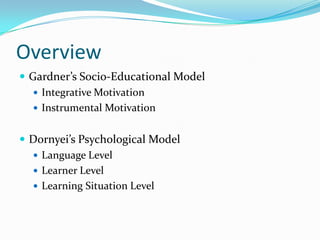
Overview
 Gardner’s Socio-Educational Model
    Integrative Motivation
    Instrumental Motivation


 Dornyei’s Psychological Model
   Language Level
   Learner Level
   Learning Situation Level
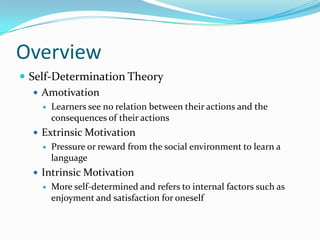
Overview
 Self-Determination Theory
    Amotivation
       Learners see no relation between their actions and the
        consequences of their actions
   Extrinsic Motivation
       Pressure or reward from the social environment to learn a
        language
   Intrinsic Motivation
       More self-determined and refers to internal factors such as
        enjoyment and satisfaction for oneself
The Role of Teachers in Learner’s
Motivation
 Many studies on motivation conclude that L2 teachers
  play one of the most influential roles to help students
  engage and persist in the long process of second
  language acquisition.
(Kikuchi, 2009; Sakai & Kikuchi, 2009; Tanak, 2005)
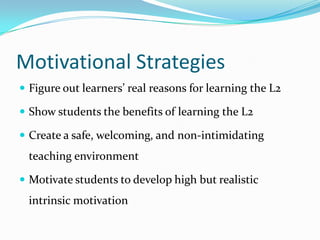
Motivational Strategies
 Figure out learners’ real reasons for learning the L2

 Show students the benefits of learning the L2

 Create a safe, welcoming, and non-intimidating
  teaching environment

 Motivate students to develop high but realistic
  intrinsic motivation
Motivational Strategies
 Set a personal behavior example

 Present task properly to the learners

 Have good teacher-student relationships

 Work on increasing learners’ self-confidence
Motivational Strategies
 Ensure that language class is interesting to the
 students

 Promote learners’ autonomy as much as possible

 Personalize the learning process

 Make sure that learners are familiar with the target
 language culture
Maintaining and Protecting
Motivation
 “The natural tendency to lose sight of the goal, to get
  tired or bored of the activity, and to give way to
  attractive distractions or competing action tendencies
  will result in initial motivation gradually petering out”
  (Dornyei & Ushioda, 2011, p. 118).
How to Protect Motivation?
 Make the learning experience enjoyable and
 stimulating

 Make the task challenging but achievable

 Help learners demonstrate a positive social image and
 show their strength

 Foster learners’ autonomy
The End
Thank You!

Second Language Motivation

  • 1.
    Mastoor Al Kaboody NorthernArizona University
  • 2.
    Motivation Motivation “provides theprimary impetus to initiate learning the second language and later the driving force to sustain the long and often tedious learning process” (Dörnyei, 1998, p. 117).
  • 3.
    Overview  Gardner’s Socio-EducationalModel  Integrative Motivation  Instrumental Motivation  Dornyei’s Psychological Model  Language Level  Learner Level  Learning Situation Level
  • 4.
    Overview  Self-Determination Theory  Amotivation  Learners see no relation between their actions and the consequences of their actions  Extrinsic Motivation  Pressure or reward from the social environment to learn a language  Intrinsic Motivation  More self-determined and refers to internal factors such as enjoyment and satisfaction for oneself
  • 5.
    The Role ofTeachers in Learner’s Motivation  Many studies on motivation conclude that L2 teachers play one of the most influential roles to help students engage and persist in the long process of second language acquisition. (Kikuchi, 2009; Sakai & Kikuchi, 2009; Tanak, 2005)
  • 6.
    Motivational Strategies  Figureout learners’ real reasons for learning the L2  Show students the benefits of learning the L2  Create a safe, welcoming, and non-intimidating teaching environment  Motivate students to develop high but realistic intrinsic motivation
  • 7.
    Motivational Strategies  Seta personal behavior example  Present task properly to the learners  Have good teacher-student relationships  Work on increasing learners’ self-confidence
  • 8.
    Motivational Strategies  Ensurethat language class is interesting to the students  Promote learners’ autonomy as much as possible  Personalize the learning process  Make sure that learners are familiar with the target language culture
  • 9.
    Maintaining and Protecting Motivation “The natural tendency to lose sight of the goal, to get tired or bored of the activity, and to give way to attractive distractions or competing action tendencies will result in initial motivation gradually petering out” (Dornyei & Ushioda, 2011, p. 118).
  • 10.
    How to ProtectMotivation?  Make the learning experience enjoyable and stimulating  Make the task challenging but achievable  Help learners demonstrate a positive social image and show their strength  Foster learners’ autonomy
  • 11.