How to get it back into your
classroom
Presented by Ryan Brux
English Language Fellow
BNC – El Cultural,Tarapoto, Peru
•Derived from the Latin “movere” meaning “to move”
•Motivation is a learned skill
•The most intelligent students can be outperformed by less
bright students with higher motivation
•If a student is motivated enough he/she can accomplish
any learning of any scale
The goal is for our students to be intrinsically motivated!!
Think About it…
Psychoanalytical (Freud)
Social DevelopmentTheory (Vygotsky)
Hierarchy of Human Needs (Maslow)
PsychosocialTheory of Development (Erikson)
Affective Filter (Krashen)
Make your classroom environment as inviting
and comfortable as possible for students.
Activities should be neither too easy
nor too hard.
Social Interaction is important!
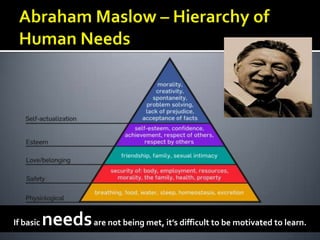
If basic needsare not being met, it’s difficult to be motivated to learn.
Communicate that you
respect and value all
cultures, and emphasize
the contributions that
cultural differences make
to learning.
Reduce the
Anxiety
Increase
Motivation
Provide both oral and written instructions when possible.
Provide activities that are interesting and intriguing.
Provide materials that relate to the students' real lives.
Allow for jokes and relaxed conversation at certain times
Refrain from orally correcting students.
Don’t expect perfection!
http://suite101.com/article/understanding-stephen-krashens-affective-filter-hypothesis-a366178
Young learners Teens Adults Large Classes
Motivating Young Learners
Keep yourself motivated
Encourage
Play games
Get Your Hands Dirty
Get Moving!!!
Vary the Pace
http://www.eslbase.com/articles/motivating-children
MotivatingTeens
•Reference pop culture
•Have friendly competition
•Play songs
•Use video
•Integrate technology
•Play games
•Use real life objects http://busyteacher.org/3644-how-to-
motivate-esl-students.html
Survival
Job Enhancement
Education
Social Interaction
If the class fails to satisfy the needs, goals
and interests that have motivated them
to come, they will simply stop coming!
Why Are Adults Motivated to Learn English?
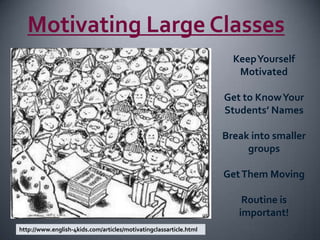
Motivating Large Classes
KeepYourself
Motivated
Get to KnowYour
Students’ Names
Break into smaller
groups
GetThem Moving
Routine is
important!
http://www.english-4kids.com/articles/motivatingclassarticle.html
 Teach your classes in a dynamic, enthusiastic and
energetic way. Students can be engaged simply by
the energy and dedication shown by their teachers.
 Gestures, facial expressions, emotions, actions
 Model desired action or have other students model
the action (the dialogues, stories, etc.)
 EmployTotal Physical Response (TPR) techniques.
Use these techniques in a pair work or group work
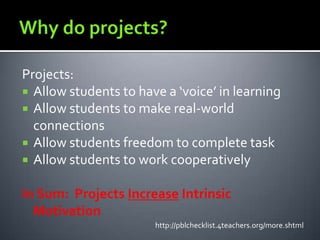
Projects:
 Allow students to have a ‘voice’ in learning
 Allow students to make real-world
connections
 Allow students freedom to complete task
 Allow students to work cooperatively
In Sum: Projects Increase Intrinsic
Motivation
http://pblchecklist.4teachers.org/more.shtml
What is Your Vision?
What are your Goals?
Do you have Support?
Learn from your
mistakes.
http://busyteacher.org/5731-what-motivates-esl-teachers-motivation-ideas.html
Ryan Brux
English Language Fellow
BNC – El Cultural
ryanbrux@gmail.com

Motivation powerpoint

  • 1.
    How to getit back into your classroom Presented by Ryan Brux English Language Fellow BNC – El Cultural,Tarapoto, Peru
  • 4.
    •Derived from theLatin “movere” meaning “to move” •Motivation is a learned skill •The most intelligent students can be outperformed by less bright students with higher motivation •If a student is motivated enough he/she can accomplish any learning of any scale
  • 7.
    The goal isfor our students to be intrinsically motivated!! Think About it…
  • 8.
    Psychoanalytical (Freud) Social DevelopmentTheory(Vygotsky) Hierarchy of Human Needs (Maslow) PsychosocialTheory of Development (Erikson) Affective Filter (Krashen)
  • 9.
    Make your classroomenvironment as inviting and comfortable as possible for students.
  • 10.
    Activities should beneither too easy nor too hard. Social Interaction is important!
  • 11.
    If basic needsarenot being met, it’s difficult to be motivated to learn.
  • 12.
    Communicate that you respectand value all cultures, and emphasize the contributions that cultural differences make to learning.
  • 13.
  • 14.
    Provide both oraland written instructions when possible. Provide activities that are interesting and intriguing. Provide materials that relate to the students' real lives. Allow for jokes and relaxed conversation at certain times Refrain from orally correcting students. Don’t expect perfection! http://suite101.com/article/understanding-stephen-krashens-affective-filter-hypothesis-a366178
  • 15.
    Young learners TeensAdults Large Classes
  • 16.
    Motivating Young Learners Keepyourself motivated Encourage Play games Get Your Hands Dirty Get Moving!!! Vary the Pace http://www.eslbase.com/articles/motivating-children
  • 17.
    MotivatingTeens •Reference pop culture •Havefriendly competition •Play songs •Use video •Integrate technology •Play games •Use real life objects http://busyteacher.org/3644-how-to- motivate-esl-students.html
  • 18.
    Survival Job Enhancement Education Social Interaction Ifthe class fails to satisfy the needs, goals and interests that have motivated them to come, they will simply stop coming! Why Are Adults Motivated to Learn English?
  • 19.
    Motivating Large Classes KeepYourself Motivated Getto KnowYour Students’ Names Break into smaller groups GetThem Moving Routine is important! http://www.english-4kids.com/articles/motivatingclassarticle.html
  • 20.
     Teach yourclasses in a dynamic, enthusiastic and energetic way. Students can be engaged simply by the energy and dedication shown by their teachers.  Gestures, facial expressions, emotions, actions  Model desired action or have other students model the action (the dialogues, stories, etc.)  EmployTotal Physical Response (TPR) techniques. Use these techniques in a pair work or group work
  • 22.
    Projects:  Allow studentsto have a ‘voice’ in learning  Allow students to make real-world connections  Allow students freedom to complete task  Allow students to work cooperatively In Sum: Projects Increase Intrinsic Motivation http://pblchecklist.4teachers.org/more.shtml
  • 24.
    What is YourVision? What are your Goals? Do you have Support? Learn from your mistakes. http://busyteacher.org/5731-what-motivates-esl-teachers-motivation-ideas.html
  • 25.
    Ryan Brux English LanguageFellow BNC – El Cultural ryanbrux@gmail.com

Editor's Notes

  • #3 This is how I was feeling when I was beginning to put this PPT together.
  • #4 Is this an effective lesson? Are students motivated? Why/Why not?
  • #10 Students may be initially quiet as they try to figure out the classroom…if the classroom feels safe, they may soon feel like participating and become motivated.
  • #14 Students are nervous…have anxiety…
  • #24 Is this an effective lesson? Are students motivated? Why/Why not?