Segmenting a Market
Segmenting the Market Suppose this class represents a larger market.  How would you segment the class into smaller market segments? With your group, decide on one characteristic that can be used to segment the class into smaller markets.
Market Segmentation The process of dividing a large market into smaller parts is called  market segmentation. Each smaller part is called a  market segment. Each market segment is made of customers with similar wants and needs for a specific product.
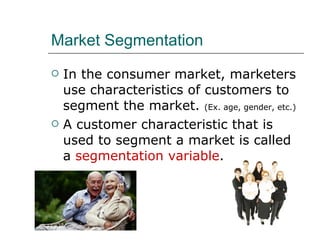
Market Segmentation In the consumer market, marketers use characteristics of customers to segment the market.  (Ex. age, gender, etc.) A customer characteristic that is used to segment a market is called a  segmentation variable .
Market Segmentation Imagine that $100 is available to spend.  How might the following spend the money?: A teenaged male A teenaged female A 30-year-old parent with two children A wealthy 40-year-old A retired person on a very small fixed income
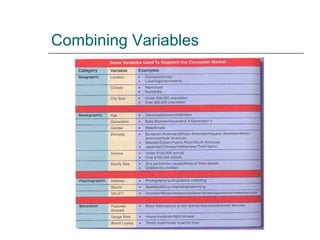
Market Segmentation There are over 25 different variables that marketers use to segment the consumer market. Marketers have organized these variables into four categories: Geographic Demographic Psychographic Behavioral
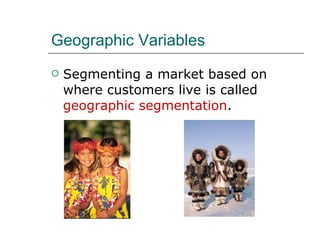
Geographic Variables Segmenting a market based on where customers live is called  geographic segmentation .
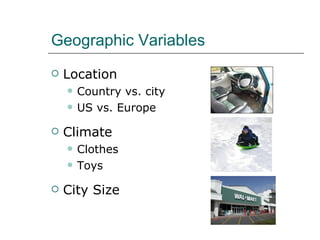
Geographic Variables Location Country vs. city US vs. Europe Climate Clothes Toys City Size
Geographic Variables With your partner: Choose a geographic variable. Think of a product that can be segmented based on that variable. Name the product and the geographic variable. Then describe the market segment.
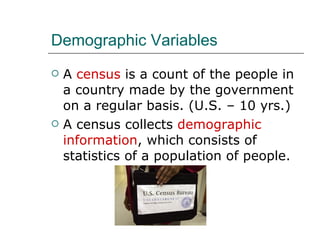
Demographic Variables A  census  is a count of the people in a country made by the government on a regular basis. (U.S. – 10 yrs.) A census collects  demographic information , which consists of statistics of a population of people.
Demographic Variables The categories that this information is divided into are called  demographic variables. Segmenting a market based on demographic variables is called  demographic segmentation . Demographic variables commonly used by marketers include age, gender, ethnicity, income, and family size.
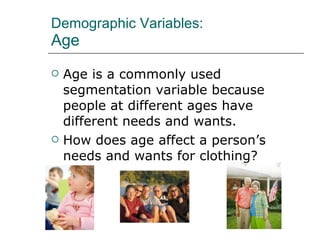
Demographic Variables: Age Age is a commonly used segmentation variable because people at different ages have different needs and wants. How does age affect a person’s needs and wants for clothing?
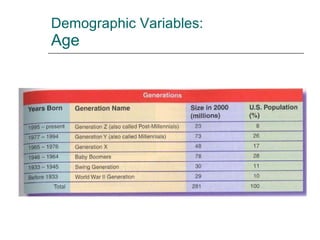
Demographic Variables: Age A  generation  is a group of people born during a particular period of history. The period that group of people grew up in has a major affect on their attitudes, wants, and needs. Ex. – Baby Boomers (1946-1964)
Demographic Variables: Age
Demographic Variables: Gender Men and women differ in their wants and needs for many products.  (Shocking, I know…) Marketers use these differences to develop products that meet the specific needs of men or women.
Demographic Variables: Ethnicity Many marketers have found success by segmenting the market based on ethnicity.  They develop products to meet the needs of a specific ethnic group and the wants of people interested in that ethnic group.
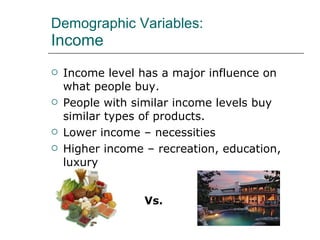
Demographic Variables: Income Income level has a major influence on what people buy. People with similar income levels buy similar types of products. Lower income – necessities Higher income – recreation, education, luxury Vs.
Demographic Variables: Income There are two categories of income that marketers are interested in: Disposable income  – income a person has available to spend (dispose of) after taxes have been taken out. Usually spent on necessities Discretionary income  – left after taxes and necessities have been paid for. Spent however you want
Demographic Variables: Income With your partner, name the types of businesses that would be interested in the amount of disposable income customers have. Then, name the types of businesses that would be interested in the amount of discretionary income customer have.
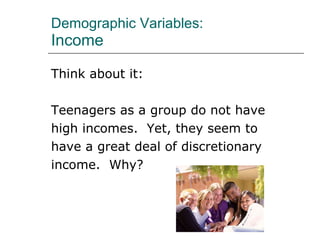
Demographic Variables: Income Think about it: Teenagers as a group do not have high incomes.  Yet, they seem to have a great deal of discretionary income.  Why?
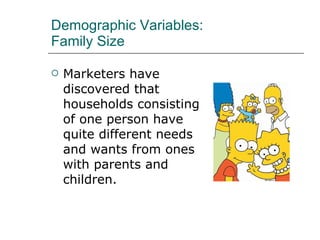
Demographic Variables: Family Size Marketers have discovered that households consisting of one person have quite different needs and wants from ones with parents and children.
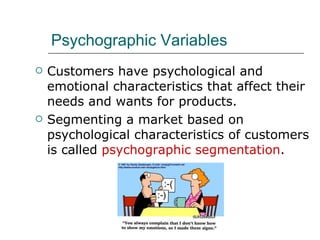
Psychographic Variables Customers have psychological and emotional characteristics that affect their needs and wants for products. Segmenting a market based on psychological characteristics of customers is called  psychographic segmentation .
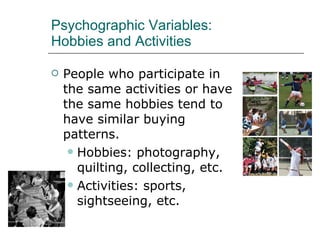
Psychographic Variables:  Hobbies and Activities People who participate in the same activities or have the same hobbies tend to have similar buying patterns. Hobbies: photography, quilting, collecting, etc. Activities: sports, sightseeing, etc.
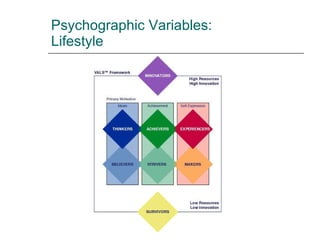
Psychographic Variables:  Lifestyle Lifestyle and values are often difficult to measure and define. Surveys are given that ask participants to agree or disagree with  AIO statements  (activities, interests, opinions). SRI Consulting Business is well known for its psychographic research. Their survey is called the  VALS Survey .
Psychographic Variables:  Lifestyle
Psychographic Variables:  Lifestyle Take the VALS Survey! http://www.sricbi.com/VALS/presurvey.shtml
Behavioral Variables Segmenting a market based on the way customers use a product or behave toward a product is called  behavioral segmentation .
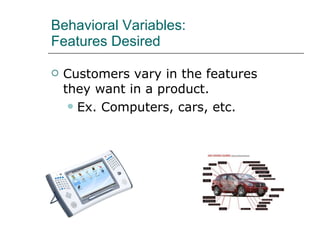
Behavioral Variables: Features Desired Customers vary in the features they want in a product. Ex. Computers, cars, etc.
Behavioral Variables: Usage Rate Research shows that for many businesses, 80 percent of the sales come from 20 percent of the customers –  80/20 rule Marketers often segment the market based on how often the customer uses or buys the product ( usage rate ). Categories include heavy, moderate, light, and nonuser.
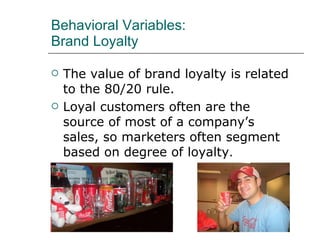
Behavioral Variables: Brand Loyalty The value of brand loyalty is related to the 80/20 rule. Loyal customers often are the source of most of a company’s sales, so marketers often segment based on degree of loyalty .
Combining Variables
Market Segment Profile Once marketers have divided a market into segments, they must choose the segment or segments to target. A  market segment profile  is a detailed description of the typical consumer in a market segment. Includes geographic location, demographics, psychographics, and behavior.

Market Segmentation Slides2

  • 1.
  • 2.
    Segmenting the MarketSuppose this class represents a larger market. How would you segment the class into smaller market segments? With your group, decide on one characteristic that can be used to segment the class into smaller markets.
  • 3.
    Market Segmentation Theprocess of dividing a large market into smaller parts is called market segmentation. Each smaller part is called a market segment. Each market segment is made of customers with similar wants and needs for a specific product.
  • 4.
    Market Segmentation Inthe consumer market, marketers use characteristics of customers to segment the market. (Ex. age, gender, etc.) A customer characteristic that is used to segment a market is called a segmentation variable .
  • 5.
    Market Segmentation Imaginethat $100 is available to spend. How might the following spend the money?: A teenaged male A teenaged female A 30-year-old parent with two children A wealthy 40-year-old A retired person on a very small fixed income
  • 6.
    Market Segmentation Thereare over 25 different variables that marketers use to segment the consumer market. Marketers have organized these variables into four categories: Geographic Demographic Psychographic Behavioral
  • 7.
    Geographic Variables Segmentinga market based on where customers live is called geographic segmentation .
  • 8.
    Geographic Variables LocationCountry vs. city US vs. Europe Climate Clothes Toys City Size
  • 9.
    Geographic Variables Withyour partner: Choose a geographic variable. Think of a product that can be segmented based on that variable. Name the product and the geographic variable. Then describe the market segment.
  • 10.
    Demographic Variables A census is a count of the people in a country made by the government on a regular basis. (U.S. – 10 yrs.) A census collects demographic information , which consists of statistics of a population of people.
  • 11.
    Demographic Variables Thecategories that this information is divided into are called demographic variables. Segmenting a market based on demographic variables is called demographic segmentation . Demographic variables commonly used by marketers include age, gender, ethnicity, income, and family size.
  • 12.
    Demographic Variables: AgeAge is a commonly used segmentation variable because people at different ages have different needs and wants. How does age affect a person’s needs and wants for clothing?
  • 13.
    Demographic Variables: AgeA generation is a group of people born during a particular period of history. The period that group of people grew up in has a major affect on their attitudes, wants, and needs. Ex. – Baby Boomers (1946-1964)
  • 14.
  • 15.
    Demographic Variables: GenderMen and women differ in their wants and needs for many products. (Shocking, I know…) Marketers use these differences to develop products that meet the specific needs of men or women.
  • 16.
    Demographic Variables: EthnicityMany marketers have found success by segmenting the market based on ethnicity. They develop products to meet the needs of a specific ethnic group and the wants of people interested in that ethnic group.
  • 17.
    Demographic Variables: IncomeIncome level has a major influence on what people buy. People with similar income levels buy similar types of products. Lower income – necessities Higher income – recreation, education, luxury Vs.
  • 18.
    Demographic Variables: IncomeThere are two categories of income that marketers are interested in: Disposable income – income a person has available to spend (dispose of) after taxes have been taken out. Usually spent on necessities Discretionary income – left after taxes and necessities have been paid for. Spent however you want
  • 19.
    Demographic Variables: IncomeWith your partner, name the types of businesses that would be interested in the amount of disposable income customers have. Then, name the types of businesses that would be interested in the amount of discretionary income customer have.
  • 20.
    Demographic Variables: IncomeThink about it: Teenagers as a group do not have high incomes. Yet, they seem to have a great deal of discretionary income. Why?
  • 21.
    Demographic Variables: FamilySize Marketers have discovered that households consisting of one person have quite different needs and wants from ones with parents and children.
  • 22.
    Psychographic Variables Customershave psychological and emotional characteristics that affect their needs and wants for products. Segmenting a market based on psychological characteristics of customers is called psychographic segmentation .
  • 23.
    Psychographic Variables: Hobbies and Activities People who participate in the same activities or have the same hobbies tend to have similar buying patterns. Hobbies: photography, quilting, collecting, etc. Activities: sports, sightseeing, etc.
  • 24.
    Psychographic Variables: Lifestyle Lifestyle and values are often difficult to measure and define. Surveys are given that ask participants to agree or disagree with AIO statements (activities, interests, opinions). SRI Consulting Business is well known for its psychographic research. Their survey is called the VALS Survey .
  • 25.
  • 26.
    Psychographic Variables: Lifestyle Take the VALS Survey! http://www.sricbi.com/VALS/presurvey.shtml
  • 27.
    Behavioral Variables Segmentinga market based on the way customers use a product or behave toward a product is called behavioral segmentation .
  • 28.
    Behavioral Variables: FeaturesDesired Customers vary in the features they want in a product. Ex. Computers, cars, etc.
  • 29.
    Behavioral Variables: UsageRate Research shows that for many businesses, 80 percent of the sales come from 20 percent of the customers – 80/20 rule Marketers often segment the market based on how often the customer uses or buys the product ( usage rate ). Categories include heavy, moderate, light, and nonuser.
  • 30.
    Behavioral Variables: BrandLoyalty The value of brand loyalty is related to the 80/20 rule. Loyal customers often are the source of most of a company’s sales, so marketers often segment based on degree of loyalty .
  • 31.
  • 32.
    Market Segment ProfileOnce marketers have divided a market into segments, they must choose the segment or segments to target. A market segment profile is a detailed description of the typical consumer in a market segment. Includes geographic location, demographics, psychographics, and behavior.