Ramji D Poddar
Admission -44973
Class – B .com 3 year (Applied)
Subject – Principle Of Management
INTRODUCTION
Businesses may not get a chance to satisfy all of
their consumers every time. It will be always hard to
meet the exact expectations of individual customers.
The needs and deeds of people will change with
everyone so that they do not possess any identical
preferences. One product can only satisfy a certain
group. Therefore, many organizations usually adopt
a method called market segmentation. This method
involves dividing the market into smaller segments,
which will help the organization to address the
requirements of diverse individuals. Based on this
segmentation tool, products and services will be
offered. This article lets us understand the
Importance of Market Segmentation.
WHAT IS MARKET
SEGMENTATION?
Market segmentation is a logical strategy that is used
to divide the target market into vivid and smaller
categories. These market segments can be an
organization, groups, or a bunch of individuals. The
consumer segments may possess similar
requirements and needs. The businesses should
determine the needs of customers and serve them
by categorizing and distinguishing their segments
inappropriate ways.
Market Segmentation is completely a consumer-
related approach that is employed by most
organizations. Segmentation of market is carried out
based on factors such as common interests,
common needs, lifestyles, or even location. Different
segments of market segmentation require diverse
Diverse individuals are targeted through different
offerings, promotional strategies, prices, or some
other variables of marketing. For example,
phone companies launching mobile phones in
different price range and with various
specifications is the market segmenting strategy
they are using not to lose diverse consumers
Customers would have their own preferences,
some will focus on good quality services, some
will be price-sensitive, and so on. Businesses
should keep a track of customer preference and
want to perform the segmenting of
markets wisely. The overall aim of this market
segmenting is to find the most yielding segment.
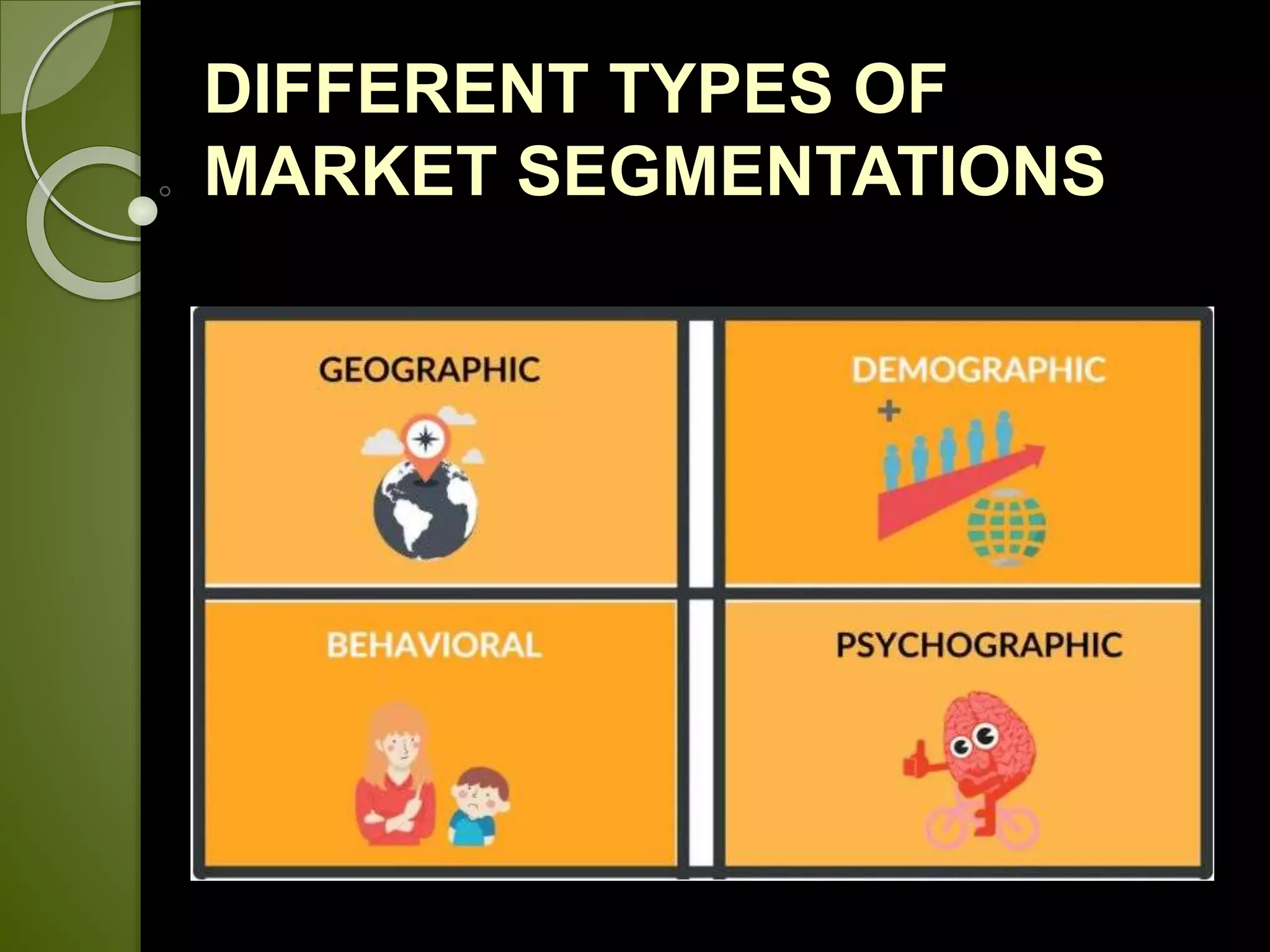
DIFFERENT TYPES OF
MARKET SEGMENTATIONS
Geographic Segmentation
This involves portioning of the market into
segments based on consumer locations. Even though it is
the basic form of market segmentation it is highly
effective. The Geographic variables depend on factors
such as climate, population density, terrain, and natural
resources.
While dividing market segments based on the location,
marketers need to be even more specific with targeting
and messaging. They need to focus more on the
language of locality while marketing, to attract more local
people. By following the location of customers, companies
can target their customers with location-specific ads.
In location specified segmentation, it will be easier to find
customer preferences and perform segmentation. For
example, the people in snowy locations will choose sunny
locations for tours. This information can yield a better
Demographic
Segmentation
Demographic Segmentation divides the market into
real-world and physical segments. The target
audience will be divided based on factors such as
age, gender, occupation, education, income,
nationality, religion, family size, and marital status.
These factors are easier to measure, hence it is a
popular way of market segmentation
Tracking demographic variables is a lot more
profitable compared to other market segment
strategies. They can be easily obtained which will
specifically reduce the expanses of segmenting.
For example, a product such as perfume, while they
undergo segmentation based on demographic
variables, a separate perfume for men and women
will evolve.
Behavioral Segmentation
Behavioral Segmentation is the process
of dividing market segments based on consumer
purchase behaviors. It depends on some factors
such as certain purchase behavior, shopping
frequency, and volume of purchase. a company
can segment their market based on consumer’s
behaviors. Dividing your target audience based
on their behavioral trends will help the
organizations to perform marketing strategies
such as sending special emails and messages
regarding their favorite brand sale, discounts,
etc.
Psychographic
Segmentation
Psychographic segmentation could be used
to segment markets based on personality traits,
values, lifestyles, and interests. Psychographic
variables are mainly used when the consumer
purchase behavior is related to the attitude or
lifestyle of the consumer. It deals with the mental
and emotional attributes of customers. Diverse
customers will address marketing strategies
differently. The way of responding of a common
man and a millionaire will be totally different
WHAT ARE THE
ADVANTAGES OF MARKET
SEGMENTATION?
Market segmentation will make it easier for
marketing teams to develop highly targeted and
effective marketing campaigns and plans. The
following are the several benefits of market
segmentation.
Greater Company Focus
When an organization differentiates
specific market segments, it will help them to
focus on what segments they want to target in
the case of specific products and services. If the
consumers accept a certain product a lot
compared to others, an organization can yield a
good amount of profit from manufacturing that
most wanted one.
Betterment in serving
customer’s needs and wants
Having defined segments enables an
organization to satisfy customer needs by
providing different offers (such as buy one get
one offer). Different promotional activities can be
carried out for different segments based on that
segment’s requirement and acceptance
Product Designing
Market segmentation will help the organization to
fetch the consumer expectations and needs so
that the organization can build new products
based on customer needs. It will make the
organization more accepted.
Market Expansion
With geographic market segmentation, market
expansion is possible within no time. When a
company understands its segments and
marketing role in a particular location, it can
expand its business immediately to another
location. If segmentation is based on
demographics variables, then once the
organization finds out their demographic market
segments, they can expand the sales of that
specific product based on that.
Efficient Use of Resources
Once the organization realizes the market trends
with market segmentation tool, they can
effectively make use of marketing resources
such as workforce and money in more yielding
segments.
CONCLUSION
Market Segmentation is the identification of customer
groups who share similar characteristics. This
process has several advantages and enables a
marketing manager to design an effective plan for
each segment. Usually, most companies segment
their market by using demographic, geographic,
psychographic, behavioral variables extensively for
better sales. It is virtually impossible to satisfy all
customers, so it is up to the company to select the
specific parts of the market which they can best
serve. Therefore, businesses could identify market
segments, select a few profitable segments, and
develop products and marketing mixes aimed at
particular customers. Market segmentations play a
vital the organization’s growth and create a positive
impact among the consumers.
Thank You.

Principle of management

  • 1.
    Ramji D Poddar Admission-44973 Class – B .com 3 year (Applied) Subject – Principle Of Management
  • 2.
    INTRODUCTION Businesses may notget a chance to satisfy all of their consumers every time. It will be always hard to meet the exact expectations of individual customers. The needs and deeds of people will change with everyone so that they do not possess any identical preferences. One product can only satisfy a certain group. Therefore, many organizations usually adopt a method called market segmentation. This method involves dividing the market into smaller segments, which will help the organization to address the requirements of diverse individuals. Based on this segmentation tool, products and services will be offered. This article lets us understand the Importance of Market Segmentation.
  • 3.
    WHAT IS MARKET SEGMENTATION? Marketsegmentation is a logical strategy that is used to divide the target market into vivid and smaller categories. These market segments can be an organization, groups, or a bunch of individuals. The consumer segments may possess similar requirements and needs. The businesses should determine the needs of customers and serve them by categorizing and distinguishing their segments inappropriate ways. Market Segmentation is completely a consumer- related approach that is employed by most organizations. Segmentation of market is carried out based on factors such as common interests, common needs, lifestyles, or even location. Different segments of market segmentation require diverse
  • 4.
    Diverse individuals aretargeted through different offerings, promotional strategies, prices, or some other variables of marketing. For example, phone companies launching mobile phones in different price range and with various specifications is the market segmenting strategy they are using not to lose diverse consumers Customers would have their own preferences, some will focus on good quality services, some will be price-sensitive, and so on. Businesses should keep a track of customer preference and want to perform the segmenting of markets wisely. The overall aim of this market segmenting is to find the most yielding segment.
  • 5.
  • 6.
    Geographic Segmentation This involvesportioning of the market into segments based on consumer locations. Even though it is the basic form of market segmentation it is highly effective. The Geographic variables depend on factors such as climate, population density, terrain, and natural resources. While dividing market segments based on the location, marketers need to be even more specific with targeting and messaging. They need to focus more on the language of locality while marketing, to attract more local people. By following the location of customers, companies can target their customers with location-specific ads. In location specified segmentation, it will be easier to find customer preferences and perform segmentation. For example, the people in snowy locations will choose sunny locations for tours. This information can yield a better
  • 7.
    Demographic Segmentation Demographic Segmentation dividesthe market into real-world and physical segments. The target audience will be divided based on factors such as age, gender, occupation, education, income, nationality, religion, family size, and marital status. These factors are easier to measure, hence it is a popular way of market segmentation Tracking demographic variables is a lot more profitable compared to other market segment strategies. They can be easily obtained which will specifically reduce the expanses of segmenting. For example, a product such as perfume, while they undergo segmentation based on demographic variables, a separate perfume for men and women will evolve.
  • 8.
    Behavioral Segmentation Behavioral Segmentationis the process of dividing market segments based on consumer purchase behaviors. It depends on some factors such as certain purchase behavior, shopping frequency, and volume of purchase. a company can segment their market based on consumer’s behaviors. Dividing your target audience based on their behavioral trends will help the organizations to perform marketing strategies such as sending special emails and messages regarding their favorite brand sale, discounts, etc.
  • 9.
    Psychographic Segmentation Psychographic segmentation couldbe used to segment markets based on personality traits, values, lifestyles, and interests. Psychographic variables are mainly used when the consumer purchase behavior is related to the attitude or lifestyle of the consumer. It deals with the mental and emotional attributes of customers. Diverse customers will address marketing strategies differently. The way of responding of a common man and a millionaire will be totally different
  • 10.
    WHAT ARE THE ADVANTAGESOF MARKET SEGMENTATION? Market segmentation will make it easier for marketing teams to develop highly targeted and effective marketing campaigns and plans. The following are the several benefits of market segmentation.
  • 11.
    Greater Company Focus Whenan organization differentiates specific market segments, it will help them to focus on what segments they want to target in the case of specific products and services. If the consumers accept a certain product a lot compared to others, an organization can yield a good amount of profit from manufacturing that most wanted one.
  • 12.
    Betterment in serving customer’sneeds and wants Having defined segments enables an organization to satisfy customer needs by providing different offers (such as buy one get one offer). Different promotional activities can be carried out for different segments based on that segment’s requirement and acceptance
  • 13.
    Product Designing Market segmentationwill help the organization to fetch the consumer expectations and needs so that the organization can build new products based on customer needs. It will make the organization more accepted.
  • 14.
    Market Expansion With geographicmarket segmentation, market expansion is possible within no time. When a company understands its segments and marketing role in a particular location, it can expand its business immediately to another location. If segmentation is based on demographics variables, then once the organization finds out their demographic market segments, they can expand the sales of that specific product based on that.
  • 15.
    Efficient Use ofResources Once the organization realizes the market trends with market segmentation tool, they can effectively make use of marketing resources such as workforce and money in more yielding segments.
  • 16.
    CONCLUSION Market Segmentation isthe identification of customer groups who share similar characteristics. This process has several advantages and enables a marketing manager to design an effective plan for each segment. Usually, most companies segment their market by using demographic, geographic, psychographic, behavioral variables extensively for better sales. It is virtually impossible to satisfy all customers, so it is up to the company to select the specific parts of the market which they can best serve. Therefore, businesses could identify market segments, select a few profitable segments, and develop products and marketing mixes aimed at particular customers. Market segmentations play a vital the organization’s growth and create a positive impact among the consumers.
  • 17.