Prof Prashant Kumar Gupta
Jain College Of MBA and MCA
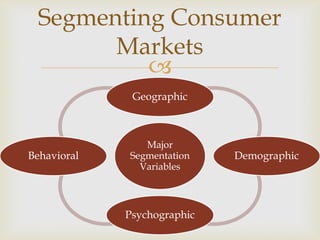
Segmenting Consumer
Markets

Geographic

Behavioral

Major
Segmentation
Variables

Psychographic

Demographic
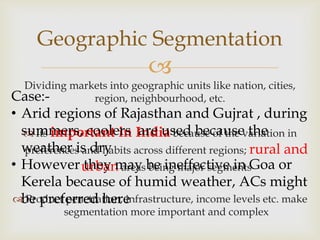
Geographic Segmentation


Dividing markets into geographic units like nation, cities,
Case:region, neighbourhood, etc.

• Arid regions of Rajasthan and Gujrat , during
summers, coolers India because of the variation in
 Its important in are used because the
weather is dry
preferences and habits across different regions; rural and
• However urban areasbe ineffective in Goa or
they may being major segments
Kerela because of humid weather, ACs might
be preferred here
Product penetration, infrastructure, income levels etc. make
segmentation more important and complex
Demographic Segmentation


Psychographic Segmentation


 Psychographics is the science of using psychology and
demographics to better understand consumers
 Segmented on the basis of psychological/personality traits,
lifestyle or values

 Values and lifestyles significantly affect the product and
brand choices
 Religion has significant affect

 Eg: McDonald’s struck off beef from its offerings in India
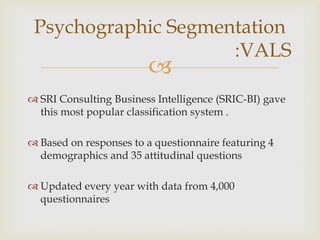
Psychographic Segmentation
:VALS



 SRI Consulting Business Intelligence (SRIC-BI) gave
this most popular classification system .
 Based on responses to a questionnaire featuring 4
demographics and 35 attitudinal questions
 Updated every year with data from 4,000
questionnaires
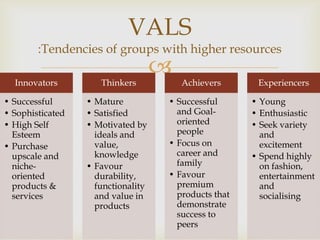
VALS

:Tendencies of groups with higher resources
Innovators

Thinkers

• Successful
• Sophisticated
• High Self
Esteem
• Purchase
upscale and
nicheoriented
products &
services

• Mature
• Satisfied
• Motivated by
ideals and
value,
knowledge
• Favour
durability,
functionality
and value in
products



Achievers

Experiencers

• Successful
and Goaloriented
people
• Focus on
career and
family
• Favour
premium
products that
demonstrate
success to
peers

• Young
• Enthusiastic
• Seek variety
and
excitement
• Spend highly
on fashion,
entertainment
and
socialising
VALS

:Tendencies of groups with lower resources



Believers
• Conservative
• Conventional
• Traditional
• Favour
familiar
products and
are loyal to
established
brands

Strivers
• Trendy
• Fun Loving
• Are resource
constrained
• Favour
stylish
products

Makers
• Practical
• Down to
Earth
• Self sufficient
• Favour
products with
practical or
functional
purpose

Survivors
• Elderly
people
• Passive
People
• Loyal to
favourite
brands
Behavioural Segmentations


Divided into groups based on their knowledge of, attitude
towards, use of, or response to a product
 Decision Roles: Initiator
Influencer
Decider
Buyer
User

 Behavioural Variables:

Occasion
Benefits
User Status
Usage Rate
Loyalty Stage
Attitude
Behavioural Variables

LOYALTY STATUS
• Hard Core Loyals: One brand all the time
USER STATUS
OCCASION
Identify strength
Can be definedex-users, of time ofusers,week, etc or
Classified as in terms potential day, first time
• Split Loyals: Loyal to 2-3 brands
events in a regular users
users or consumer’s life
•
Find competitive products
• Shifting Loyals: Shift from one brand to another
USAGE RATE
BENEFITS
•
Find Weakness
•• Classified as per benefits consumers seek
Light, medium and heavy product users
• Switchers: Show no loyalty
• •Same product with different in number but have
Heavy users might be less benfits like Clinic All
significant share in consumption
Clear and Sunsilk
ATTITUDE
Enthusiastic, postive, indifferent and negative
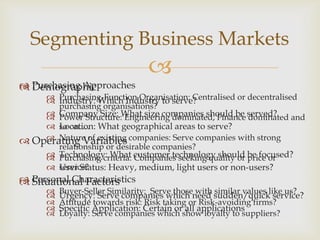
Segmenting Business Markets


 Purchasing Approaches
 Demographic

 Purchasing-Function Organisation: Centralised or decentralised
 Industry: Which Industry to serve?
purchasing organisations?
 Company Size: What size companies should be served?
 Power Structure: Engineering dominated, Finance dominated and
 Location: What geographical areas to serve?
so on….
 Nature of existing
 Operating Variables companies: Serve companies with strong
relationship or desirable companies?
 Technology: What customer technology should be focused?
 Purchasing criteria: Companies seeking quality or price or
service?
 User Status: Heavy, medium, light users or non-users?

 Personal Characteristics
 Situational Factors






Buyer-Seller Similarity: Serve those with similar values like us?
Urgency: Serve companies which need sudden/quick service?
Attitude towards risk: Risk taking or Risk-avoiding firms?
Specific Application: Certain or all applications
Loyalty: Serve companies which show loyalty to suppliers?
Effective Segmentation Criteria


Measurable
Substantial
Accessible
Differentiable
Actionable
Home Work

 Find what is conversion model (Attitude)


THANK YOU…!

Market Segmentation

  • 1.
    Prof Prashant KumarGupta Jain College Of MBA and MCA
  • 2.
  • 3.
    Geographic Segmentation  Dividing marketsinto geographic units like nation, cities, Case:region, neighbourhood, etc. • Arid regions of Rajasthan and Gujrat , during summers, coolers India because of the variation in  Its important in are used because the weather is dry preferences and habits across different regions; rural and • However urban areasbe ineffective in Goa or they may being major segments Kerela because of humid weather, ACs might be preferred here Product penetration, infrastructure, income levels etc. make segmentation more important and complex
  • 4.
  • 5.
    Psychographic Segmentation   Psychographicsis the science of using psychology and demographics to better understand consumers  Segmented on the basis of psychological/personality traits, lifestyle or values  Values and lifestyles significantly affect the product and brand choices  Religion has significant affect  Eg: McDonald’s struck off beef from its offerings in India
  • 6.
    Psychographic Segmentation :VALS   SRIConsulting Business Intelligence (SRIC-BI) gave this most popular classification system .  Based on responses to a questionnaire featuring 4 demographics and 35 attitudinal questions  Updated every year with data from 4,000 questionnaires
  • 7.
    VALS :Tendencies of groupswith higher resources Innovators Thinkers • Successful • Sophisticated • High Self Esteem • Purchase upscale and nicheoriented products & services • Mature • Satisfied • Motivated by ideals and value, knowledge • Favour durability, functionality and value in products  Achievers Experiencers • Successful and Goaloriented people • Focus on career and family • Favour premium products that demonstrate success to peers • Young • Enthusiastic • Seek variety and excitement • Spend highly on fashion, entertainment and socialising
  • 8.
    VALS :Tendencies of groupswith lower resources  Believers • Conservative • Conventional • Traditional • Favour familiar products and are loyal to established brands Strivers • Trendy • Fun Loving • Are resource constrained • Favour stylish products Makers • Practical • Down to Earth • Self sufficient • Favour products with practical or functional purpose Survivors • Elderly people • Passive People • Loyal to favourite brands
  • 9.
    Behavioural Segmentations  Divided intogroups based on their knowledge of, attitude towards, use of, or response to a product  Decision Roles: Initiator Influencer Decider Buyer User  Behavioural Variables: Occasion Benefits User Status Usage Rate Loyalty Stage Attitude
  • 10.
    Behavioural Variables  LOYALTY STATUS •Hard Core Loyals: One brand all the time USER STATUS OCCASION Identify strength Can be definedex-users, of time ofusers,week, etc or Classified as in terms potential day, first time • Split Loyals: Loyal to 2-3 brands events in a regular users users or consumer’s life • Find competitive products • Shifting Loyals: Shift from one brand to another USAGE RATE BENEFITS • Find Weakness •• Classified as per benefits consumers seek Light, medium and heavy product users • Switchers: Show no loyalty • •Same product with different in number but have Heavy users might be less benfits like Clinic All significant share in consumption Clear and Sunsilk ATTITUDE Enthusiastic, postive, indifferent and negative
  • 11.
    Segmenting Business Markets  Purchasing Approaches  Demographic  Purchasing-Function Organisation: Centralised or decentralised  Industry: Which Industry to serve? purchasing organisations?  Company Size: What size companies should be served?  Power Structure: Engineering dominated, Finance dominated and  Location: What geographical areas to serve? so on….  Nature of existing  Operating Variables companies: Serve companies with strong relationship or desirable companies?  Technology: What customer technology should be focused?  Purchasing criteria: Companies seeking quality or price or service?  User Status: Heavy, medium, light users or non-users?  Personal Characteristics  Situational Factors      Buyer-Seller Similarity: Serve those with similar values like us? Urgency: Serve companies which need sudden/quick service? Attitude towards risk: Risk taking or Risk-avoiding firms? Specific Application: Certain or all applications Loyalty: Serve companies which show loyalty to suppliers?
  • 12.
  • 13.
    Home Work   Findwhat is conversion model (Attitude)
  • 14.