Management of Fiber Optics
For Utilities
Agenda
 Introductions

 Informal Poll
 Business Drivers
 Desired Solution
 Logical Provisioning
 Online Solution
 Business Benefits
Introductions
Skye Perry | SSP Innovations
 Founder & Principal Consultant
 Esri & Schneider Electric Technical Architect
 SSP provides solutions for Electric, Gas, Water, & Telecom
 Certified Fiber Manager Implementer
 Architect of Logical Circuit Provisioning Extension
Informal Poll
How many utilities in the room own telecom infrastructure?
How many sell broadband for private or commercial use?
How many use GIS to track their telecom assets?
Does anyone use Schneider Electric Fiber Manager?
How many track logical circuit provisioning?
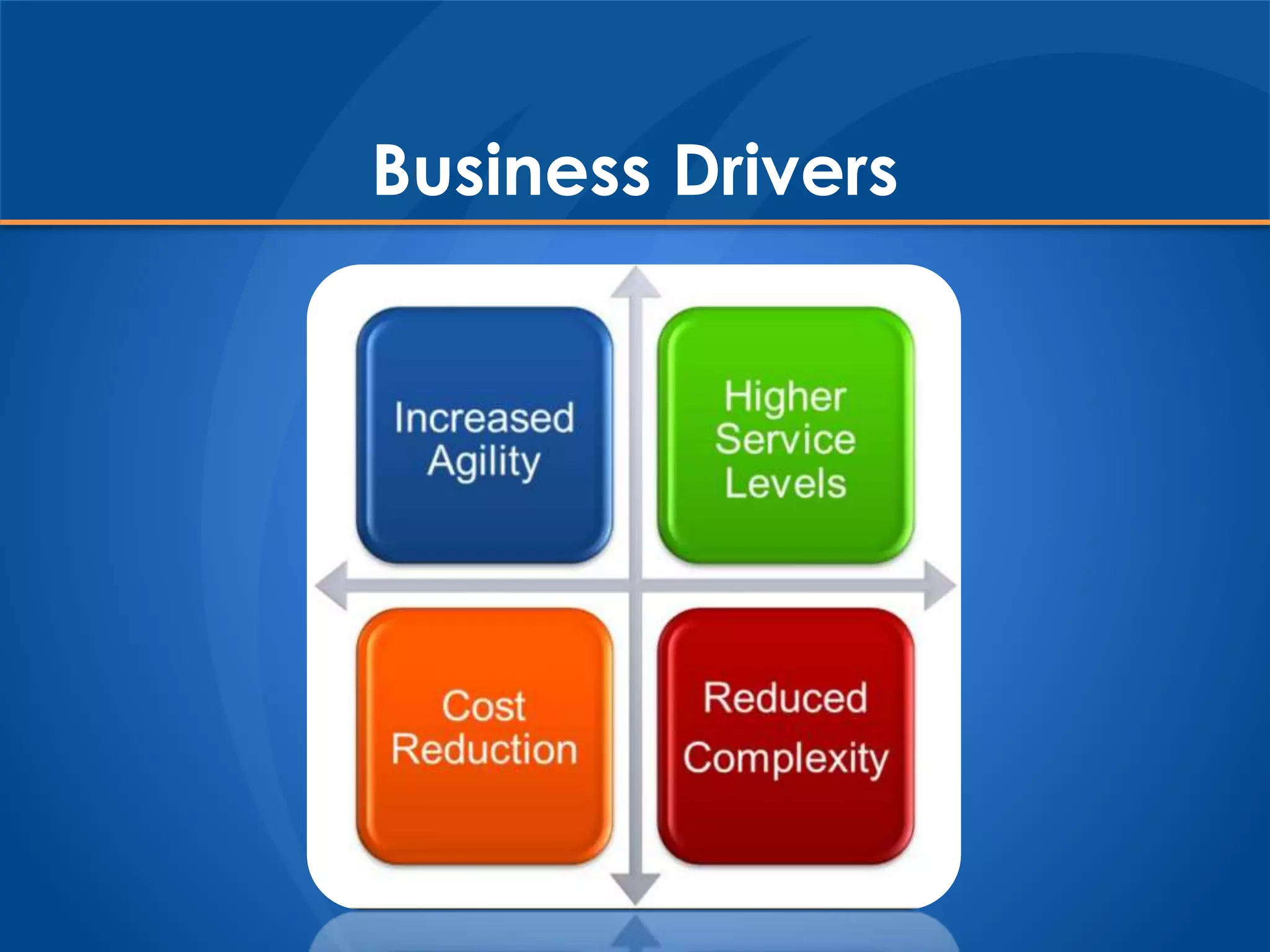
Business Drivers
Why Use GIS for Fiber Management?
Utility installation, provisioning, management and
maintenance of fiber optic networks is at an all time
high and growing.
Common Tasks / Roles at a Utility
 Engineering and design of telecom network
 Managing installation of fiber optic cables
 Managing 3rd party users of utility’s telecom network
 Managing utility’s use of 3rd party networks
 Managing leased capacity on carrier networks
 Managing the profit center (sales, marketing, delivery) for resale
 Manage installation and maintenance of all telecom assets and
equipment
High Volume of Telecom Assets
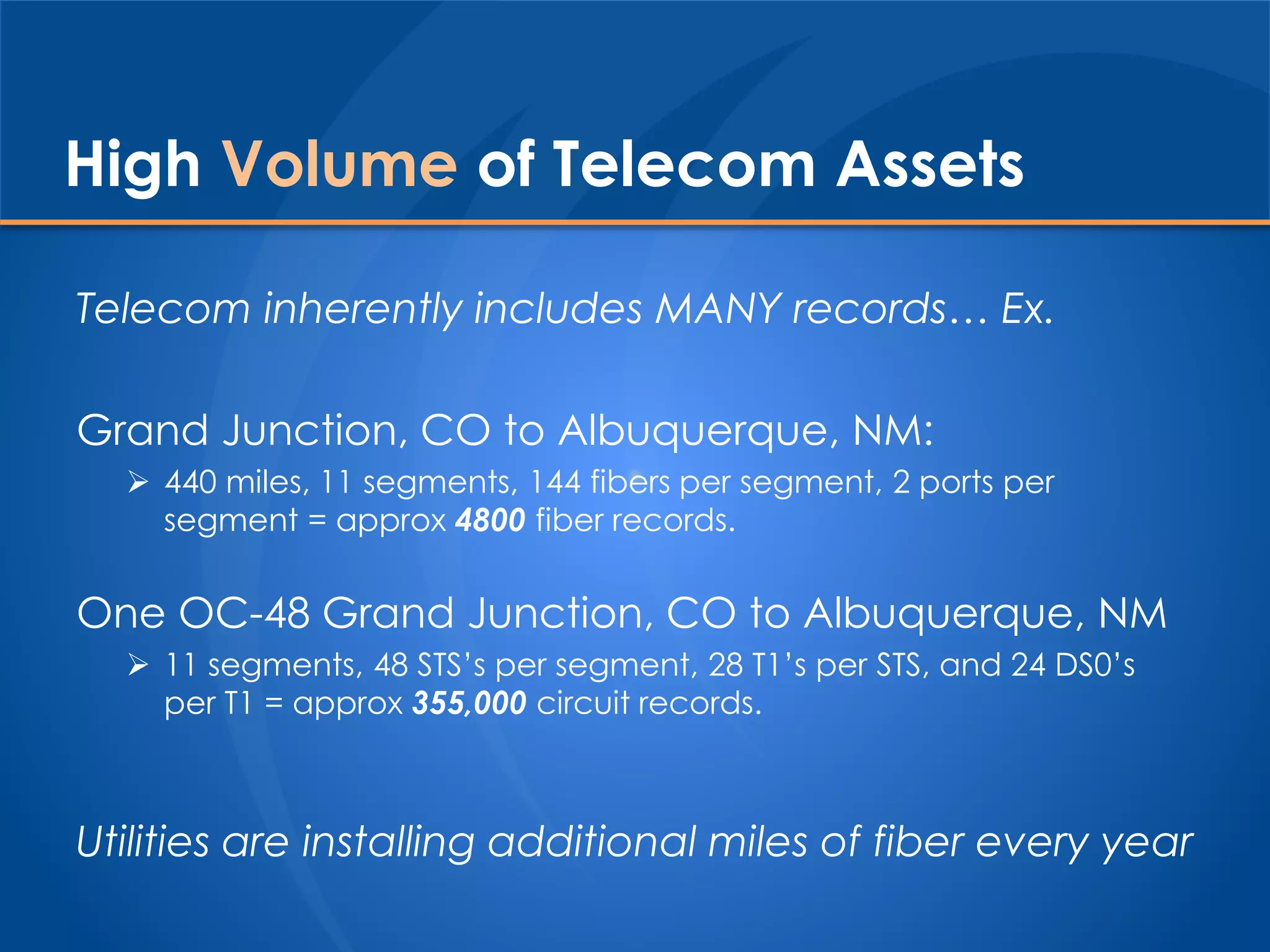
Telecom inherently includes MANY records… Ex.
Grand Junction, CO to Albuquerque, NM:
 440 miles, 11 segments, 144 fibers per segment, 2 ports per
segment = approx 4800 fiber records.
One OC-48 Grand Junction, CO to Albuquerque, NM
 11 segments, 48 STS’s per segment, 28 T1’s per STS, and 24 DS0’s
per T1 = approx 355,000 circuit records.
Utilities are installing additional miles of fiber every year
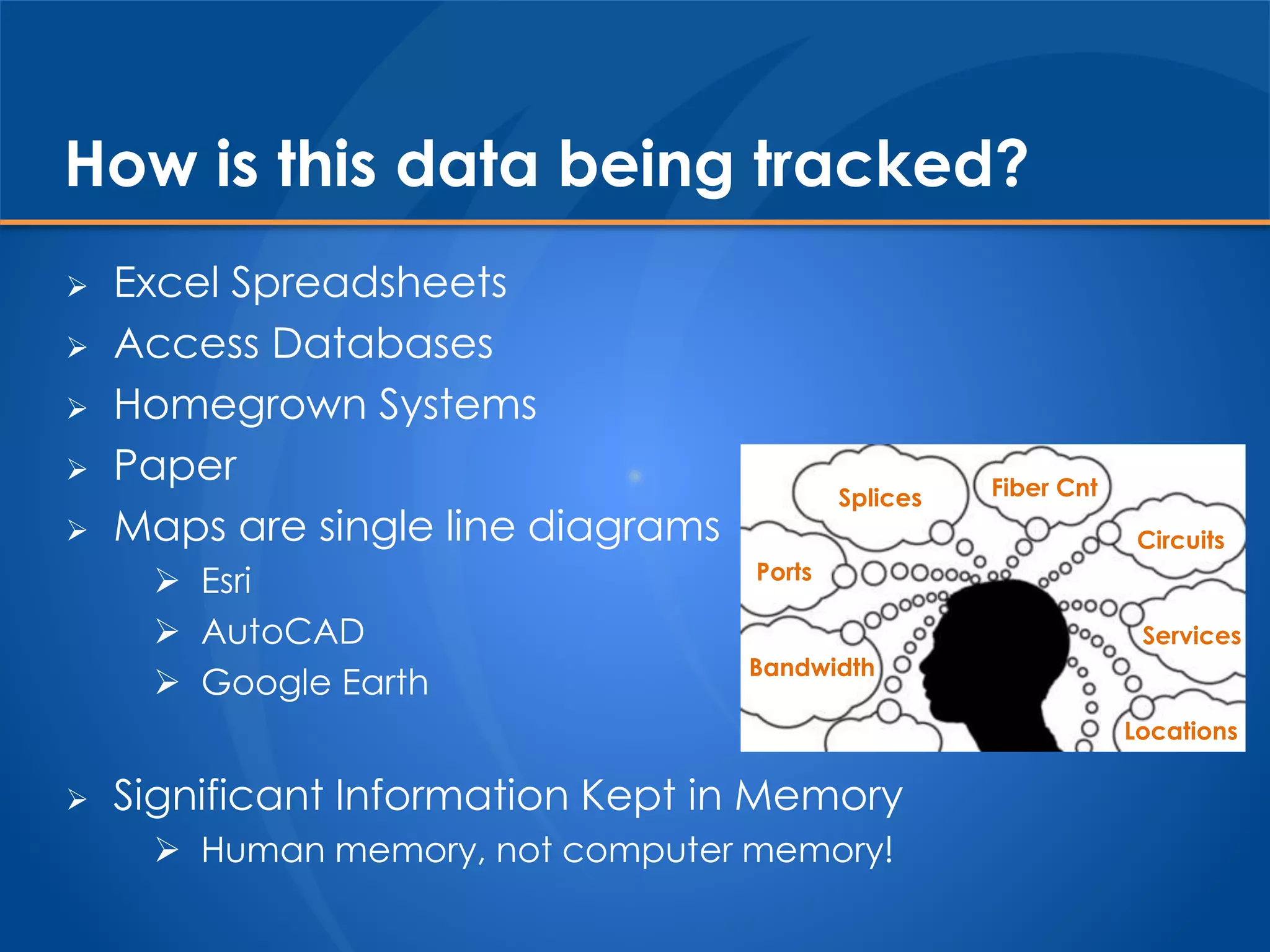
How is this data being tracked?
 Excel Spreadsheets
 Access Databases
 Homegrown Systems
 Paper
 Maps are single line diagrams
 Esri
 AutoCAD
 Google Earth
 Significant Information Kept in Memory
 Human memory, not computer memory!
Splices
Circuits
Bandwidth
Fiber Cnt
Locations
Ports
Services
Business Drivers
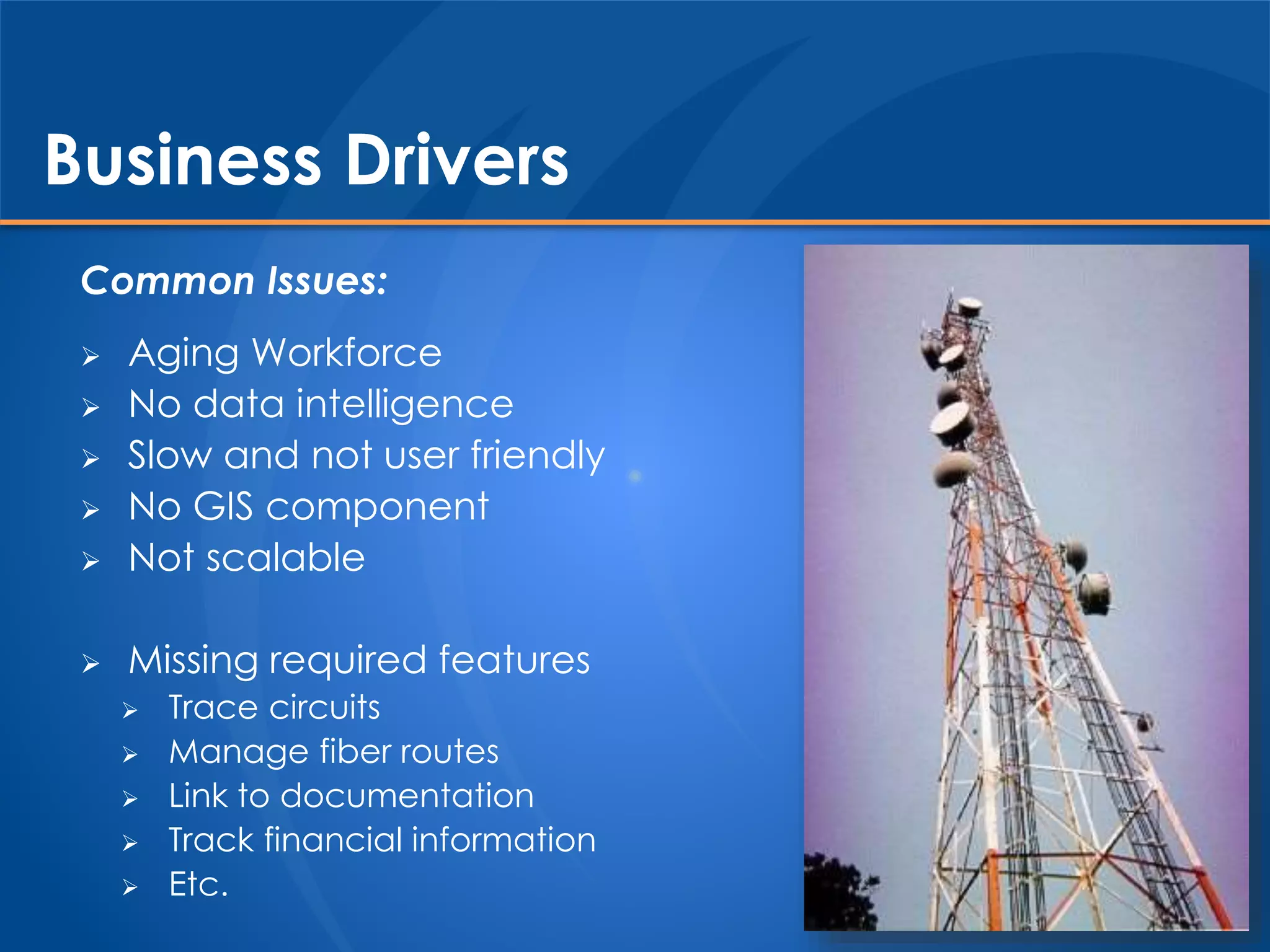
Common Issues:
 Aging Workforce
 No data intelligence
 Slow and not user friendly
 No GIS component
 Not scalable
 Missing required features
 Trace circuits
 Manage fiber routes
 Link to documentation
 Track financial information
 Etc.
Desired Solution
GIS-Based Application
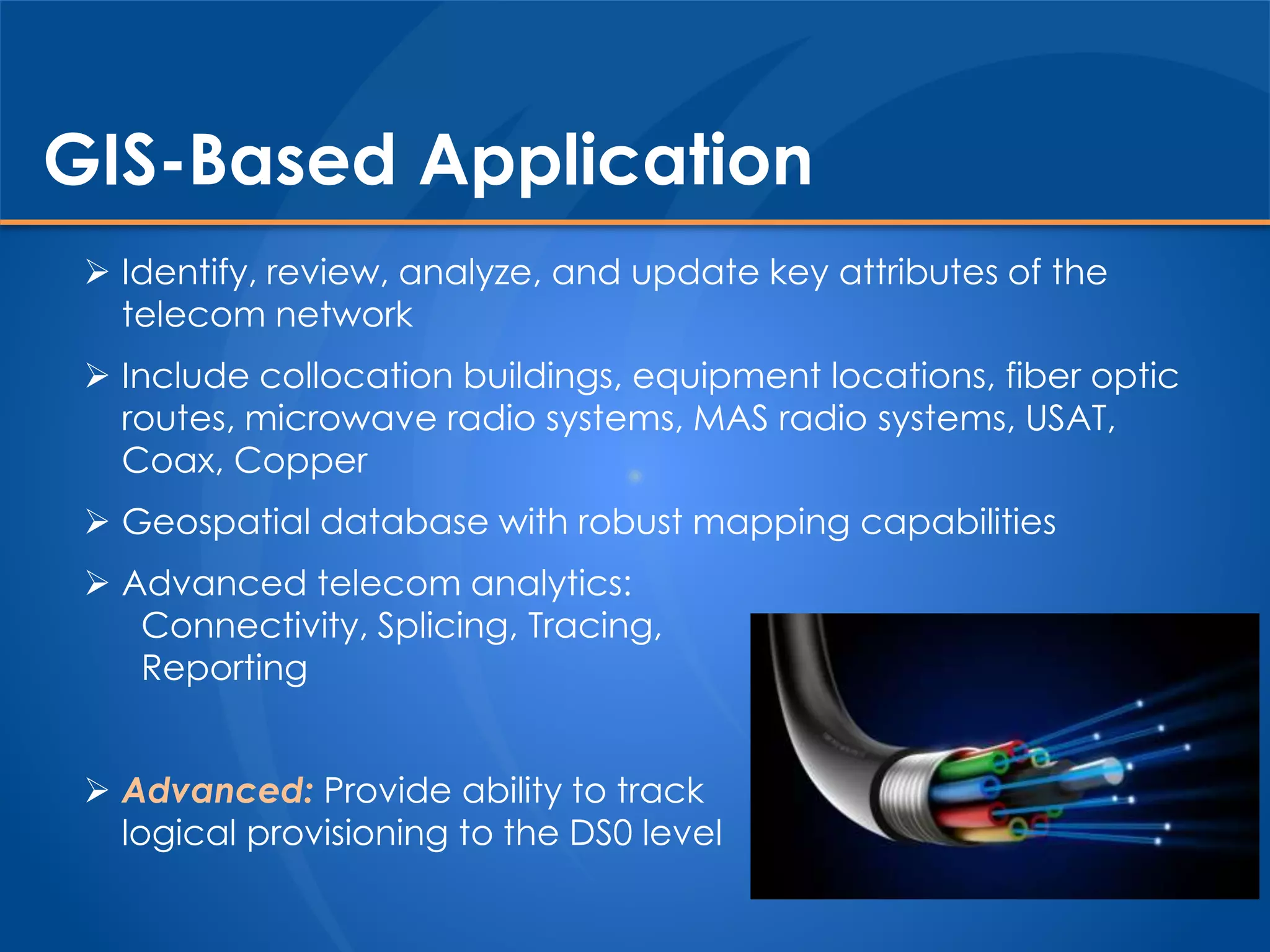
 Identify, review, analyze, and update key attributes of the
telecom network
 Include collocation buildings, equipment locations, fiber optic
routes, microwave radio systems, MAS radio systems, USAT,
Coax, Copper
 Geospatial database with robust mapping capabilities
 Advanced telecom analytics:
Connectivity, Splicing, Tracing,
Reporting
 Advanced: Provide ability to track
logical provisioning to the DS0 level
GIS-Based Telecom Asset Management
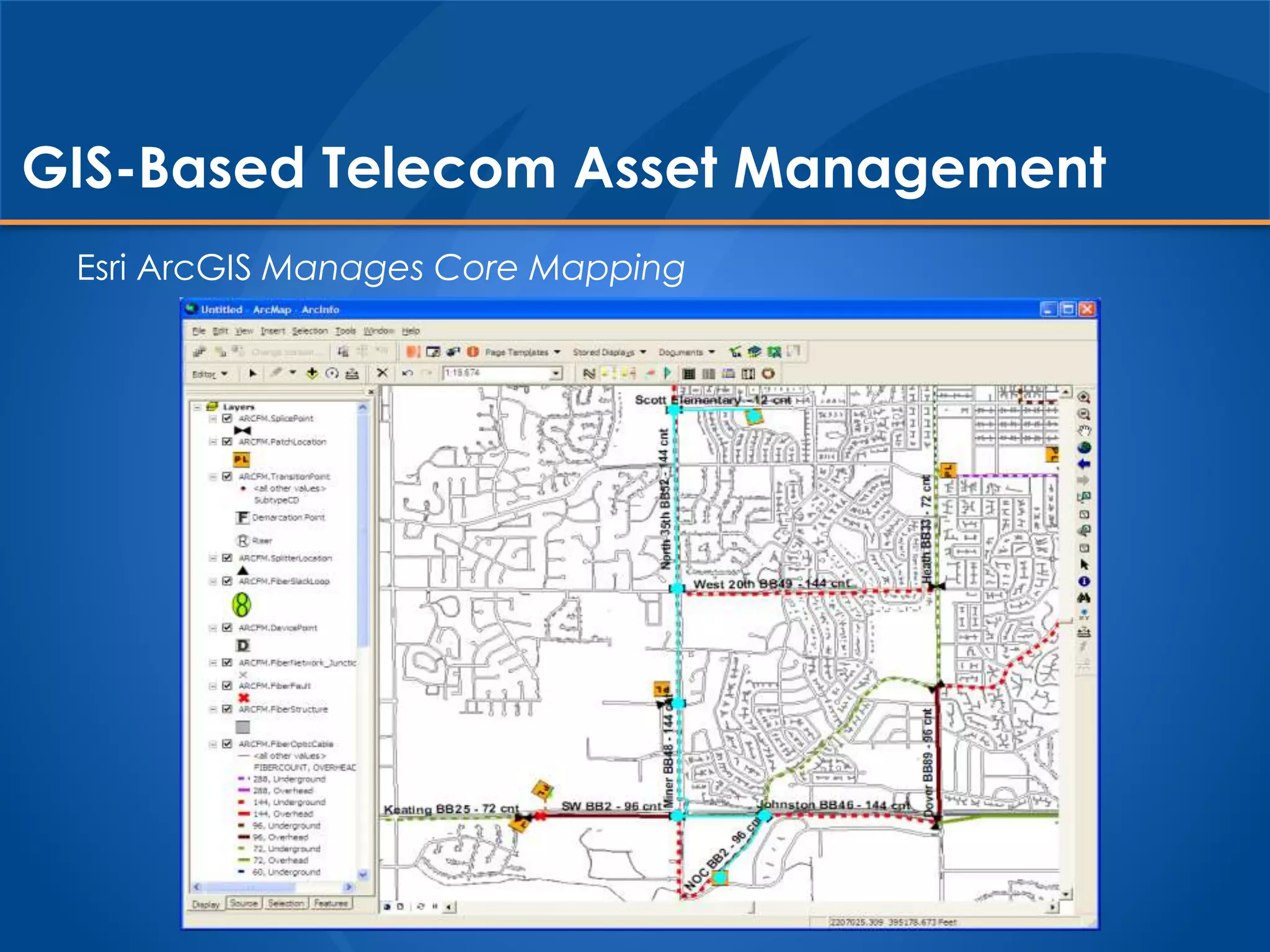
Esri ArcGIS Manages Core Mapping
GIS-Based Telecom Asset Management
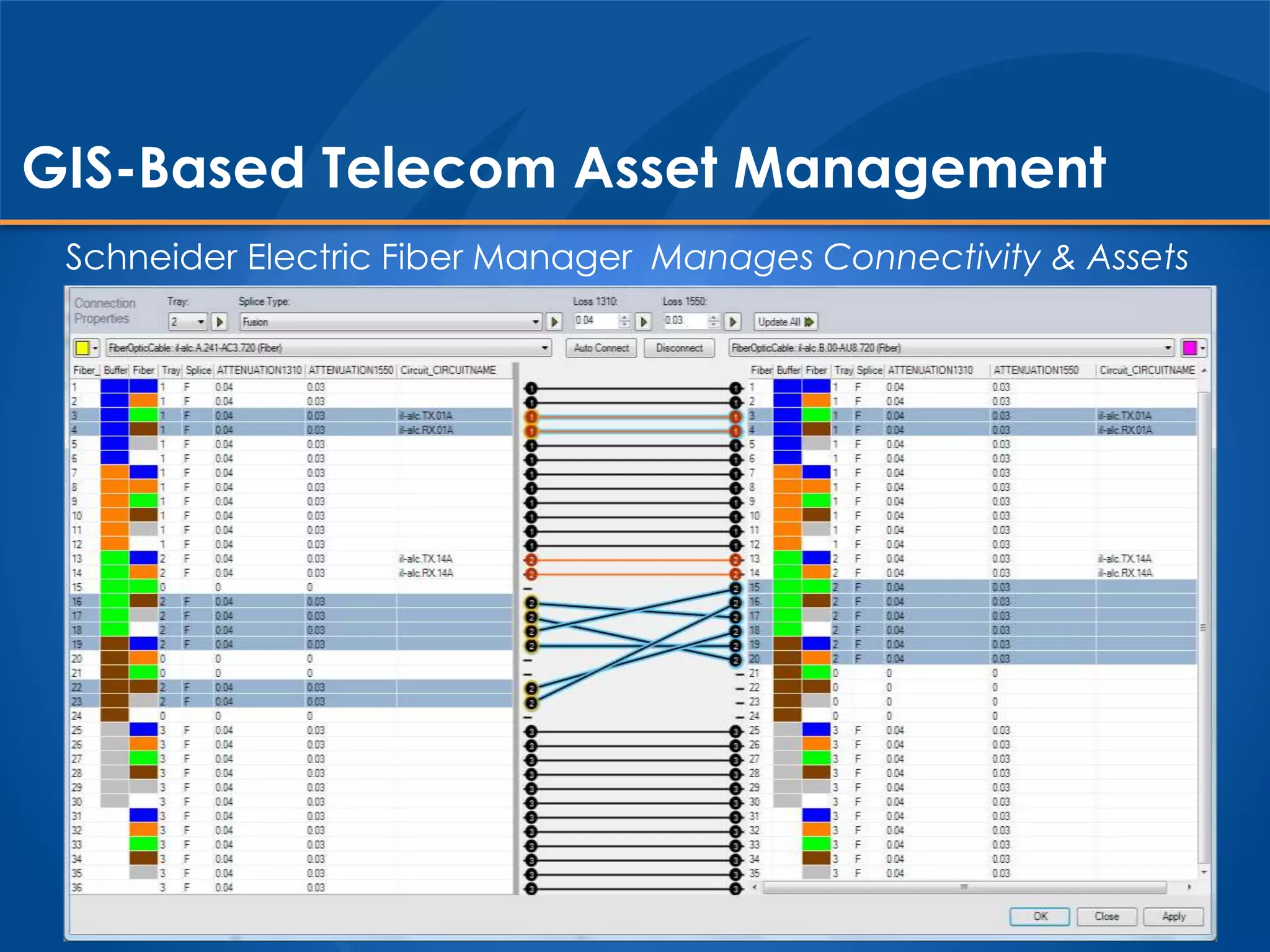
Schneider Electric Fiber Manager Manages Connectivity & Assets
Fiber Manager
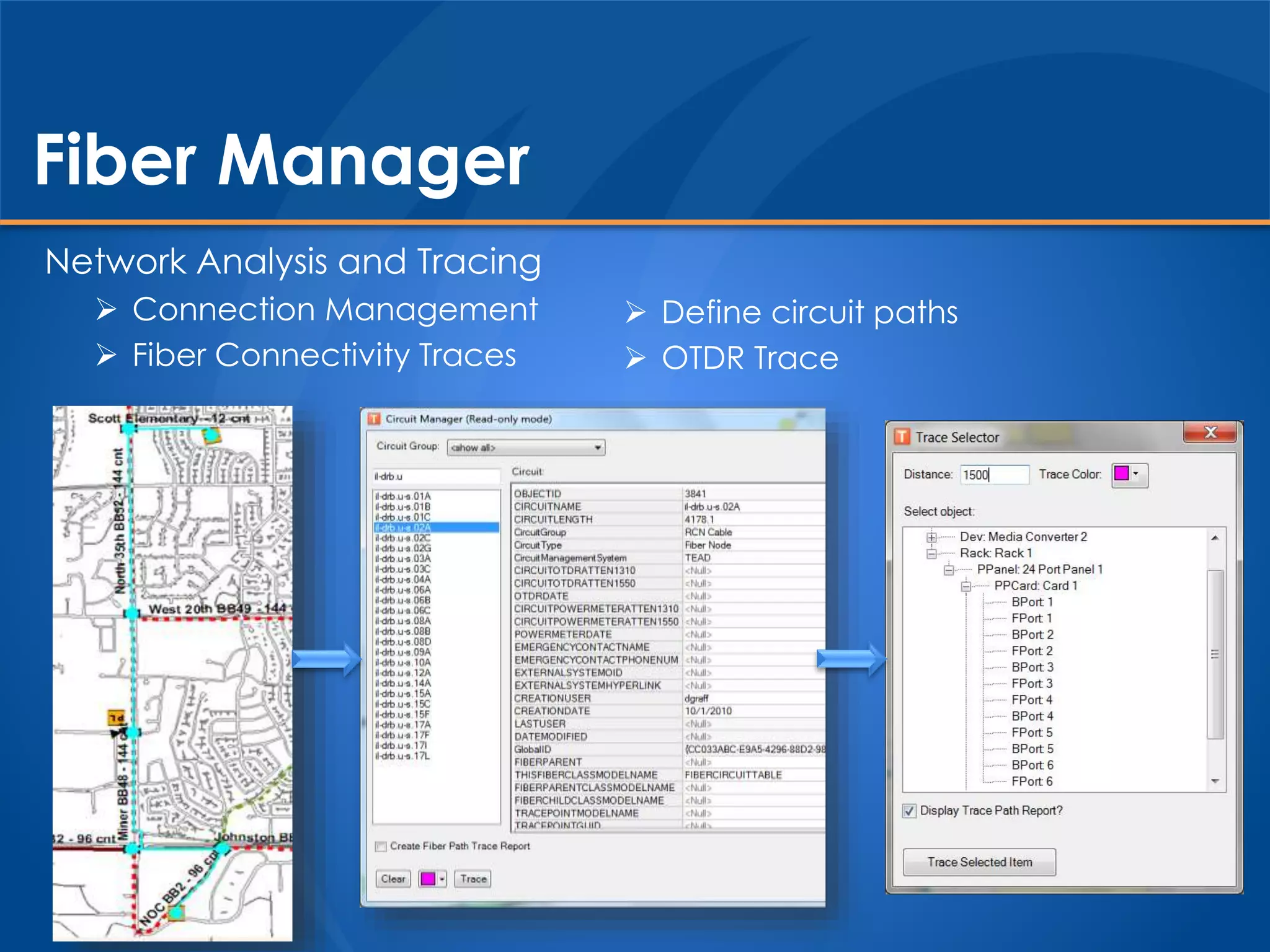
Network Analysis and Tracing
 Connection Management
 Fiber Connectivity Traces
 Define circuit paths
 OTDR Trace
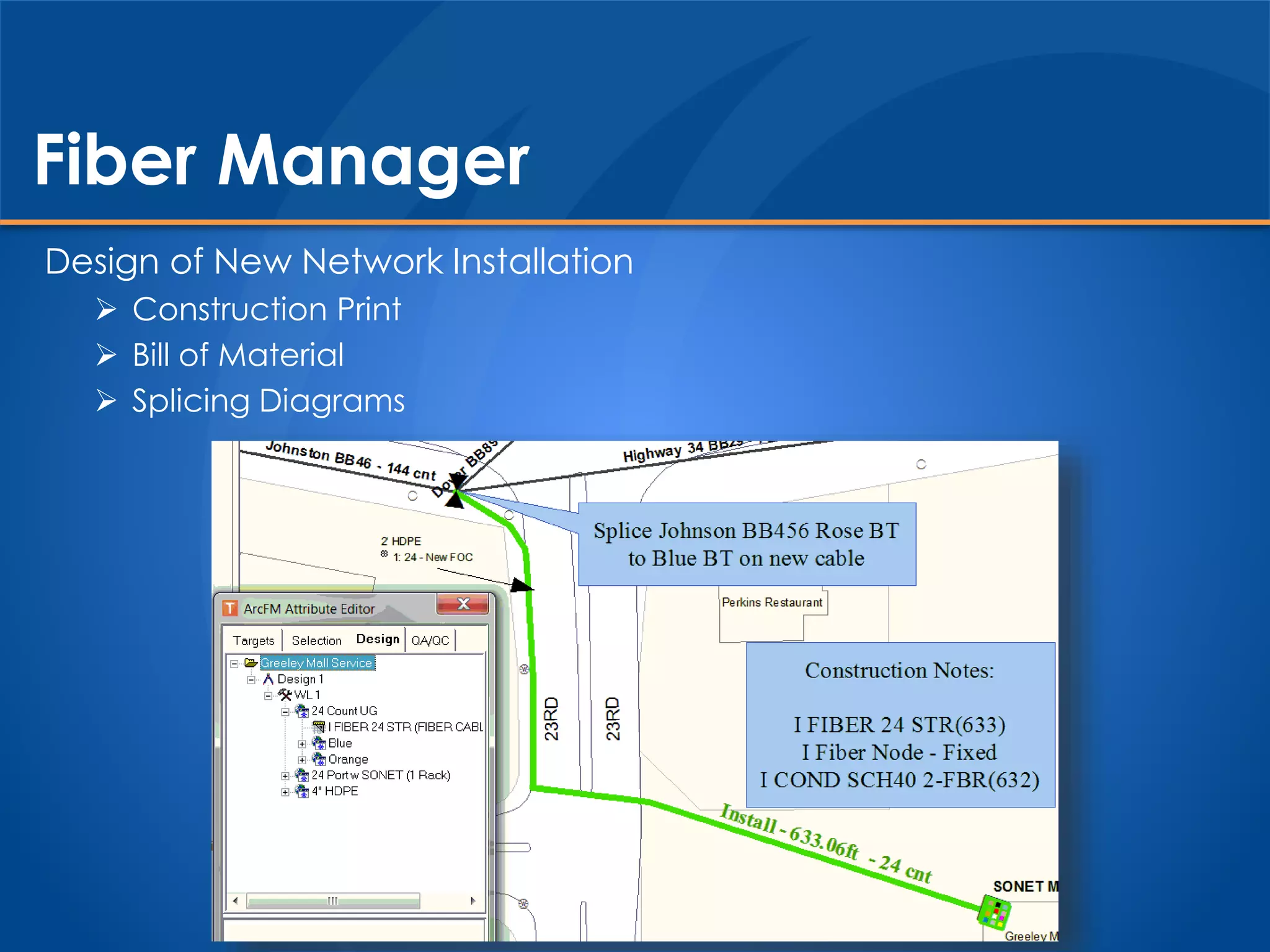
Design of New Network Installation
 Construction Print
 Bill of Material
 Splicing Diagrams
Fiber Manager
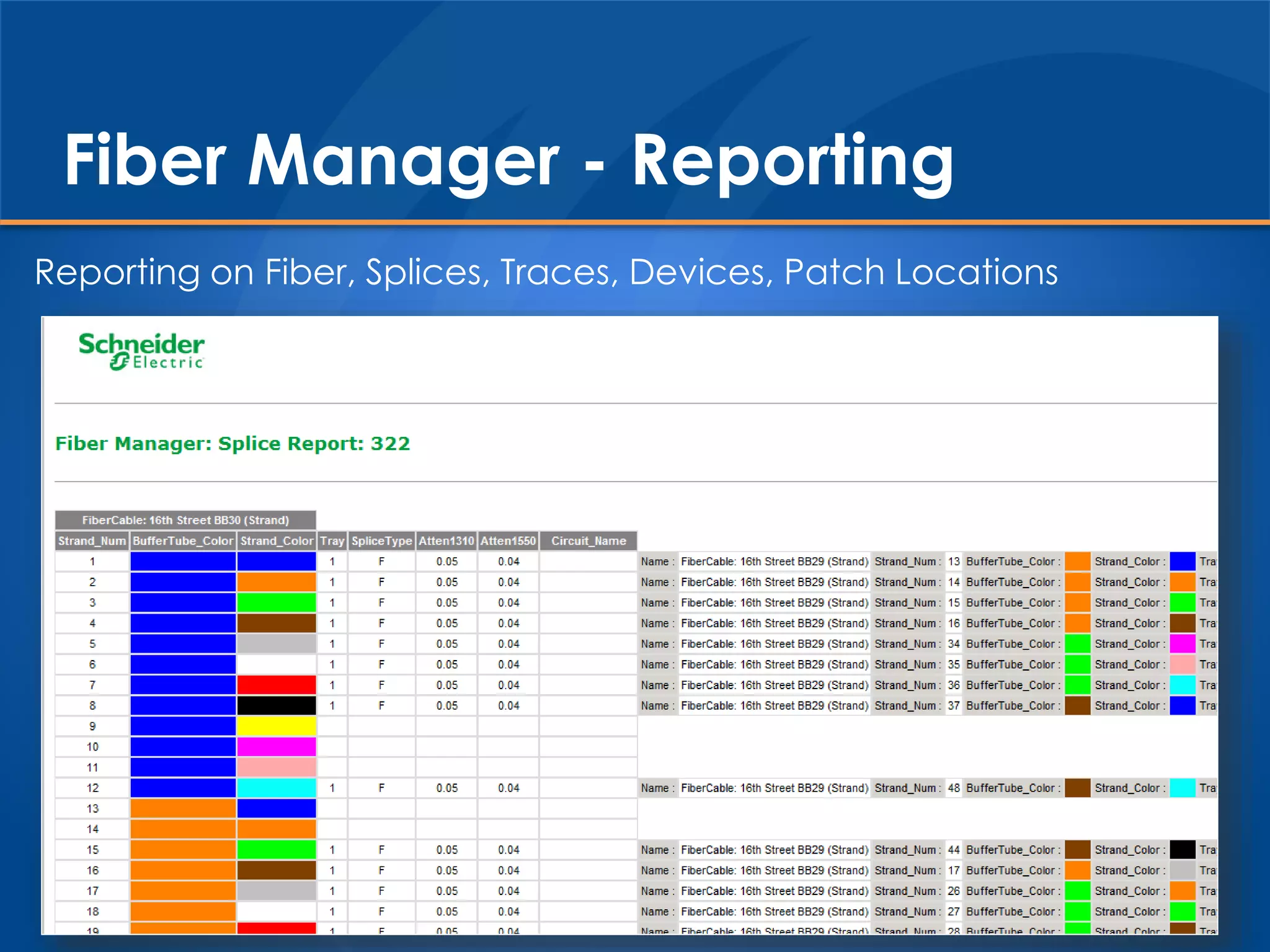
Reporting on Fiber, Splices, Traces, Devices, Patch Locations
Fiber Manager - Reporting
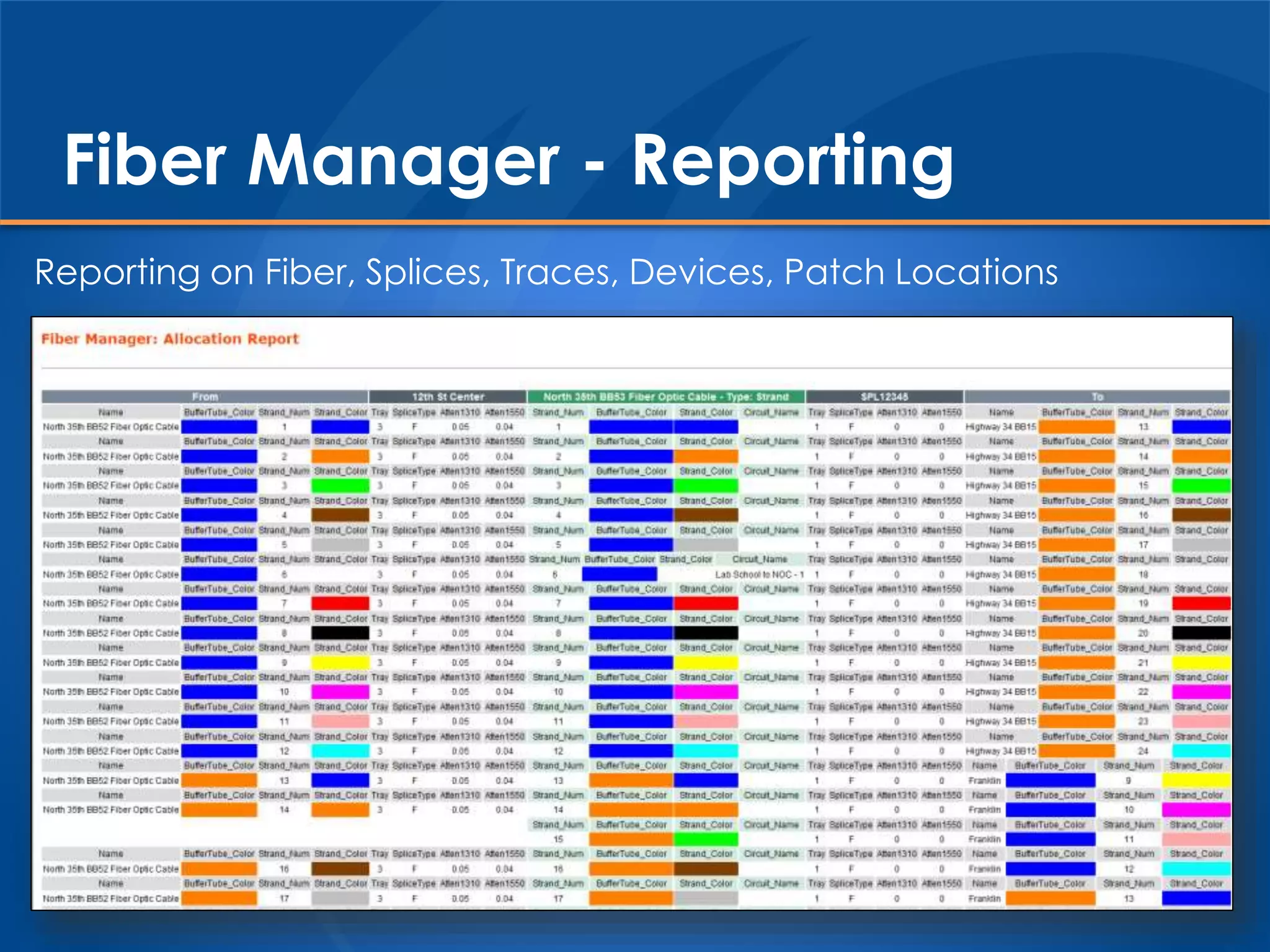
Reporting on Fiber, Splices, Traces, Devices, Patch Locations
Fiber Manager - Reporting
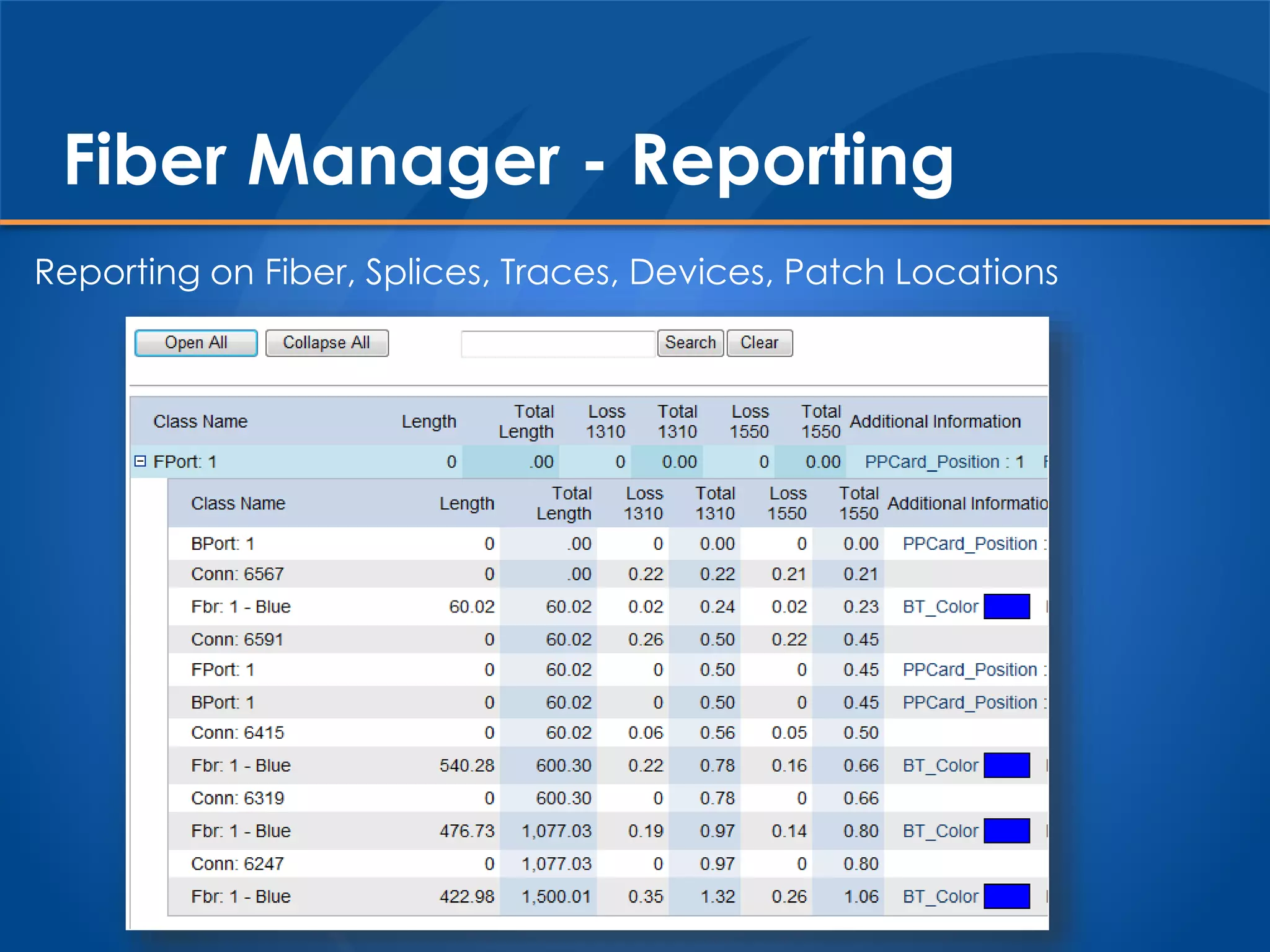
Reporting on Fiber, Splices, Traces, Devices, Patch Locations
Fiber Manager - Reporting
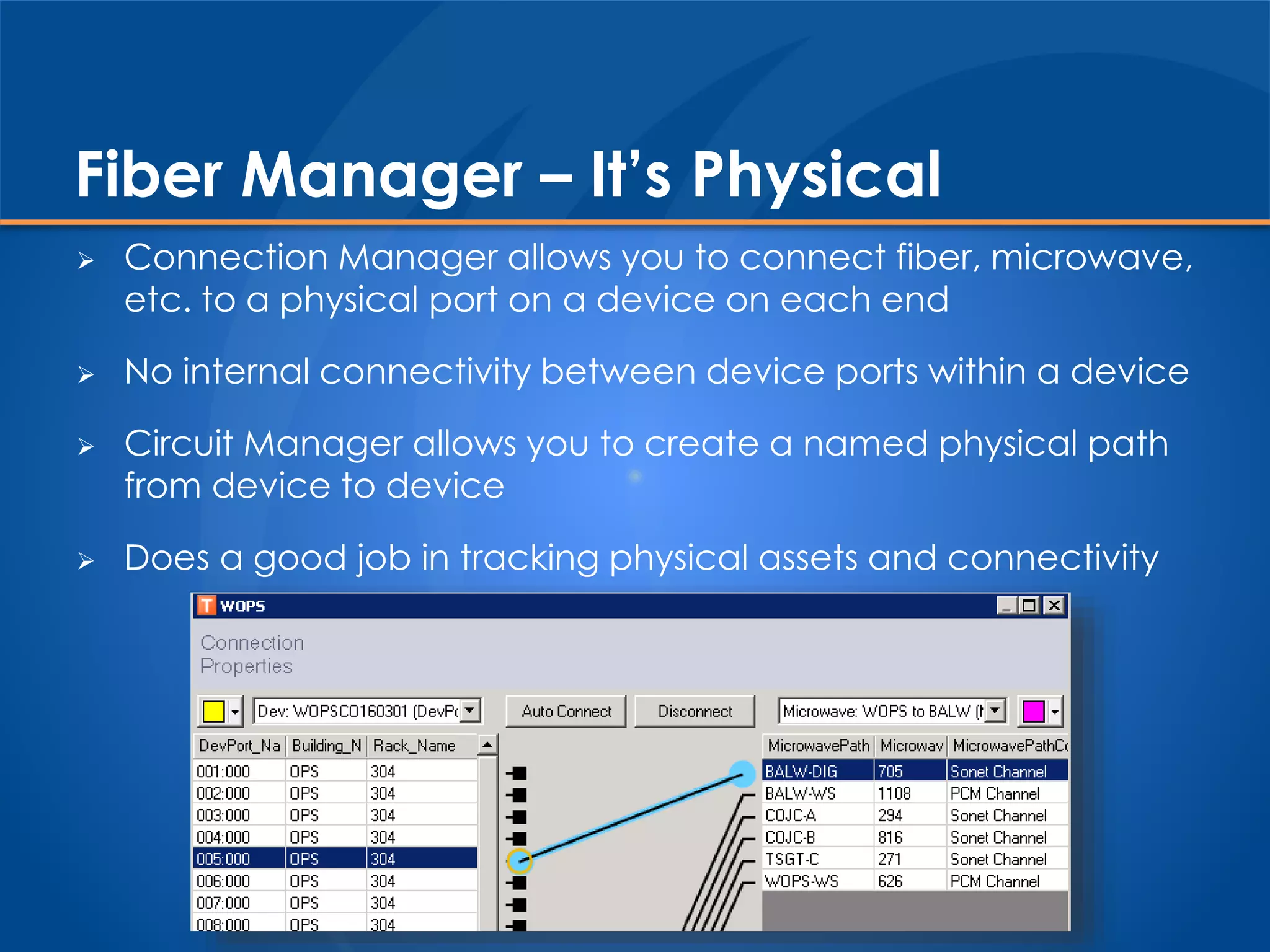
Fiber Manager – It’s Physical
 Connection Manager allows you to connect fiber, microwave,
etc. to a physical port on a device on each end
 No internal connectivity between device ports within a device
 Circuit Manager allows you to create a named physical path
from device to device
 Does a good job in tracking physical assets and connectivity
Logical Provisioning…
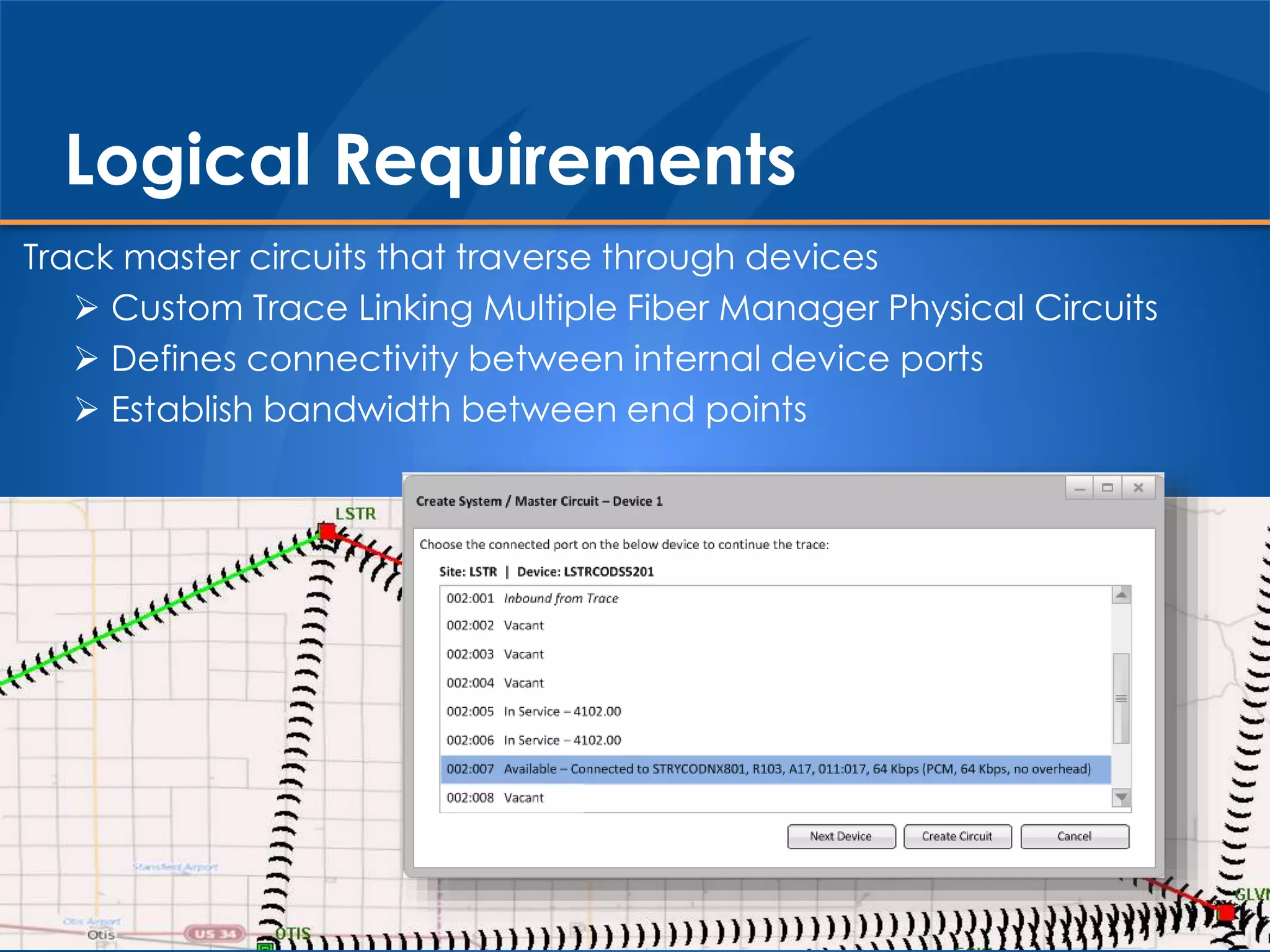
Track master circuits that traverse through devices
 Custom Trace Linking Multiple Fiber Manager Physical Circuits
 Defines connectivity between internal device ports
 Establish bandwidth between end points
Logical Requirements
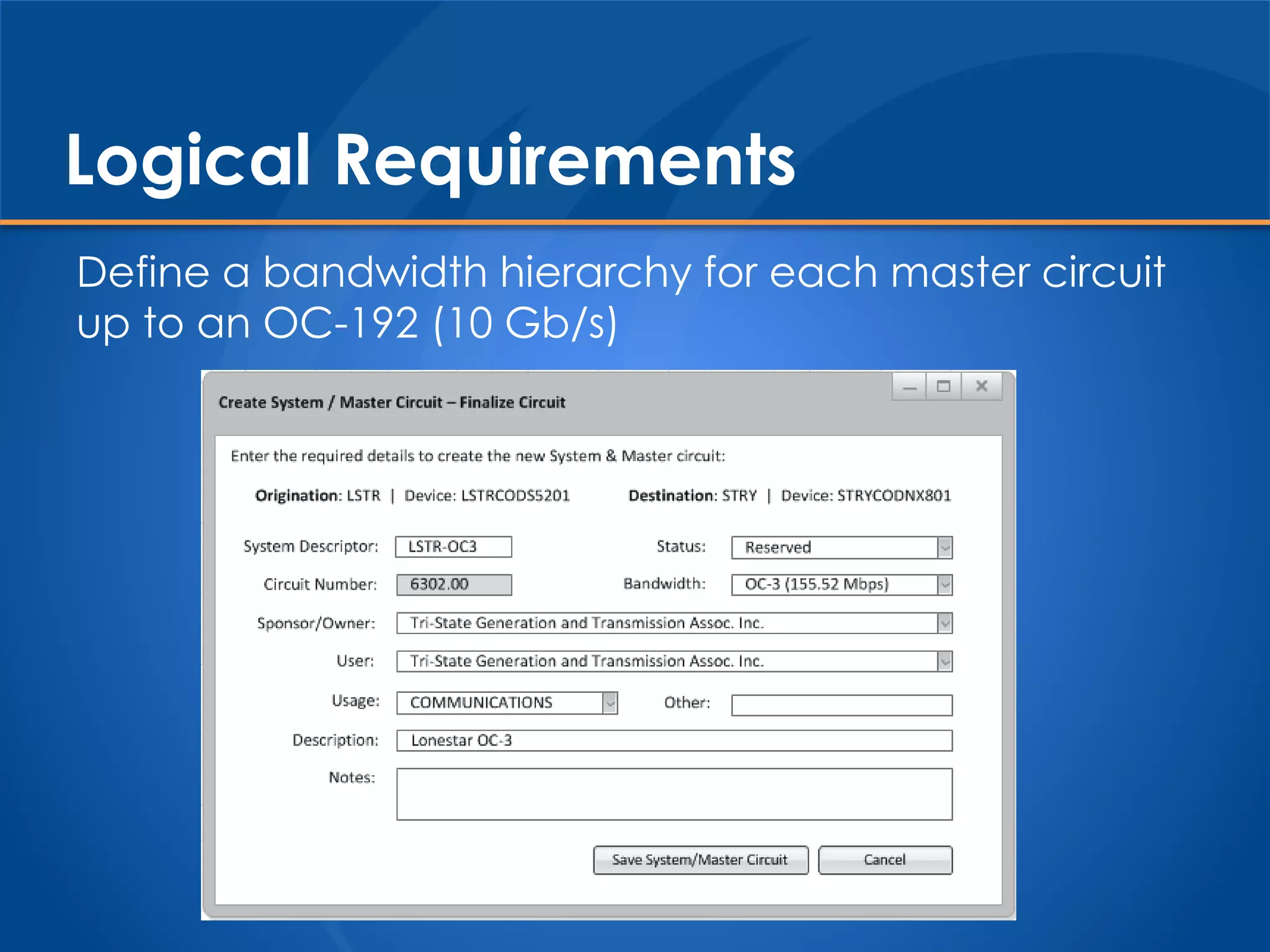
Define a bandwidth hierarchy for each master circuit
up to an OC-192 (10 Gb/s)
Logical Requirements
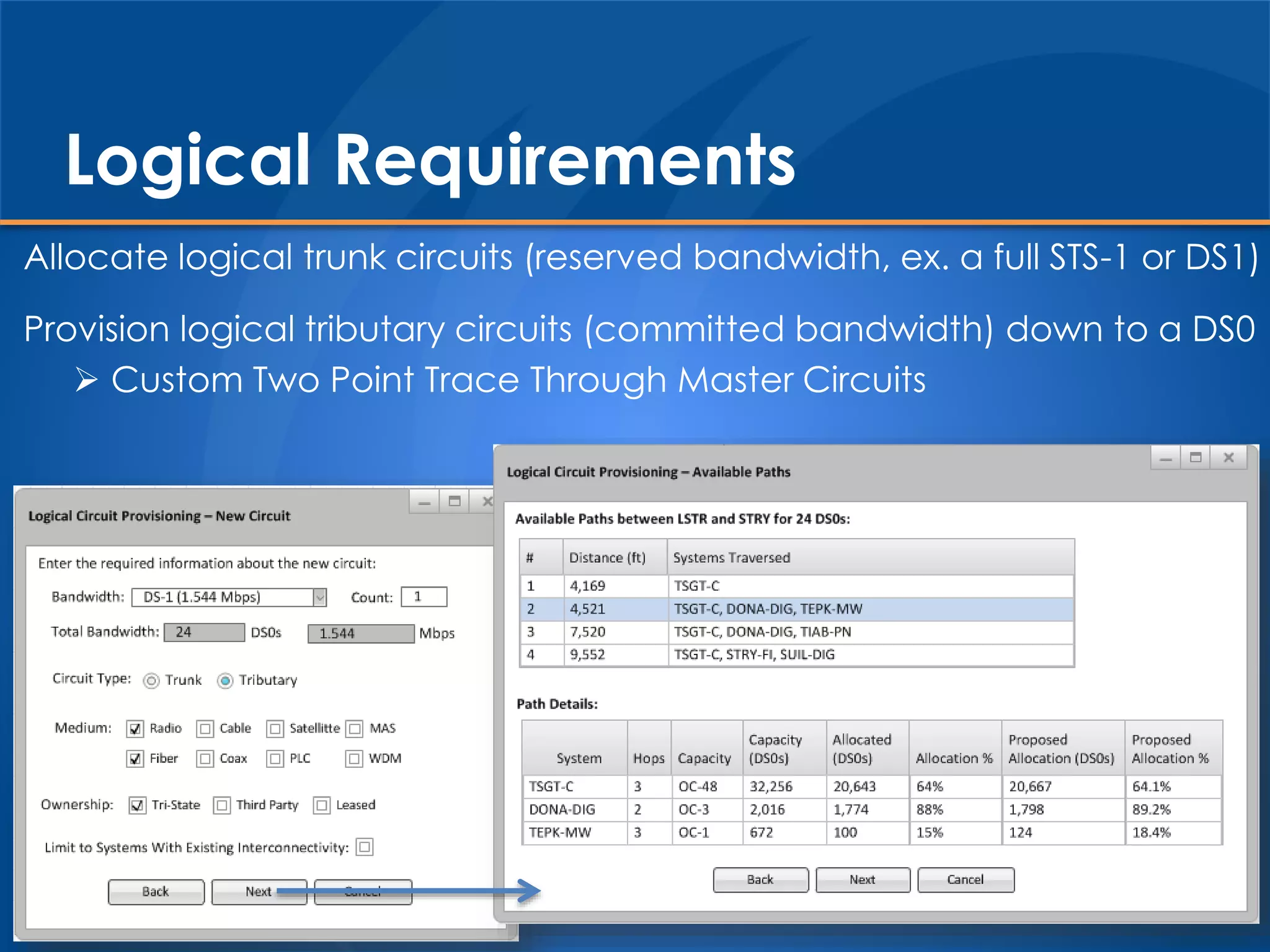
Allocate logical trunk circuits (reserved bandwidth, ex. a full STS-1 or DS1)
Provision logical tributary circuits (committed bandwidth) down to a DS0
 Custom Two Point Trace Through Master Circuits
Logical Requirements
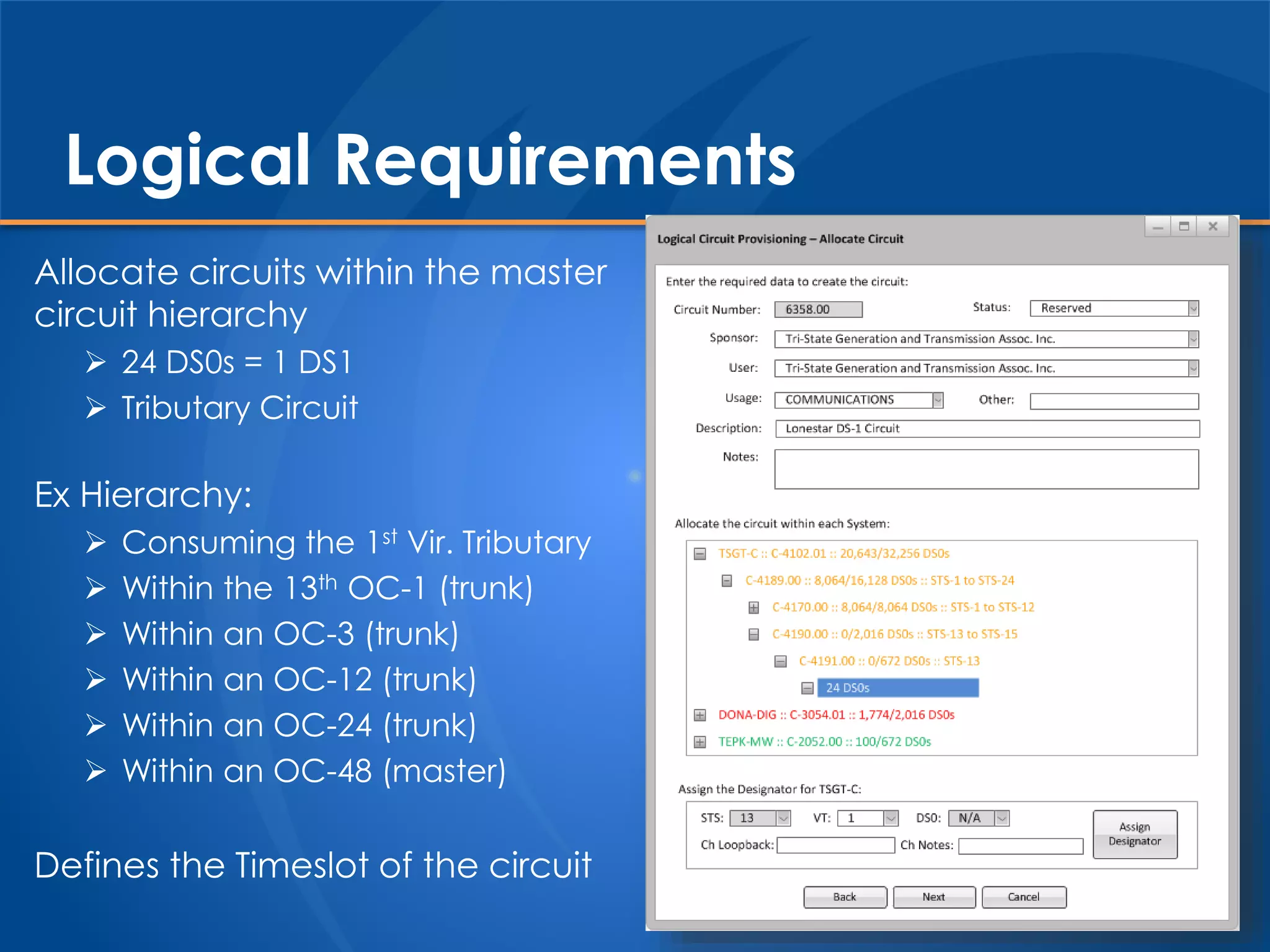
Allocate circuits within the master
circuit hierarchy
 24 DS0s = 1 DS1
 Tributary Circuit
Ex Hierarchy:
 Consuming the 1st Vir. Tributary
 Within the 13th OC-1 (trunk)
 Within an OC-3 (trunk)
 Within an OC-12 (trunk)
 Within an OC-24 (trunk)
 Within an OC-48 (master)
Defines the Timeslot of the circuit
Logical Requirements
Take it online…
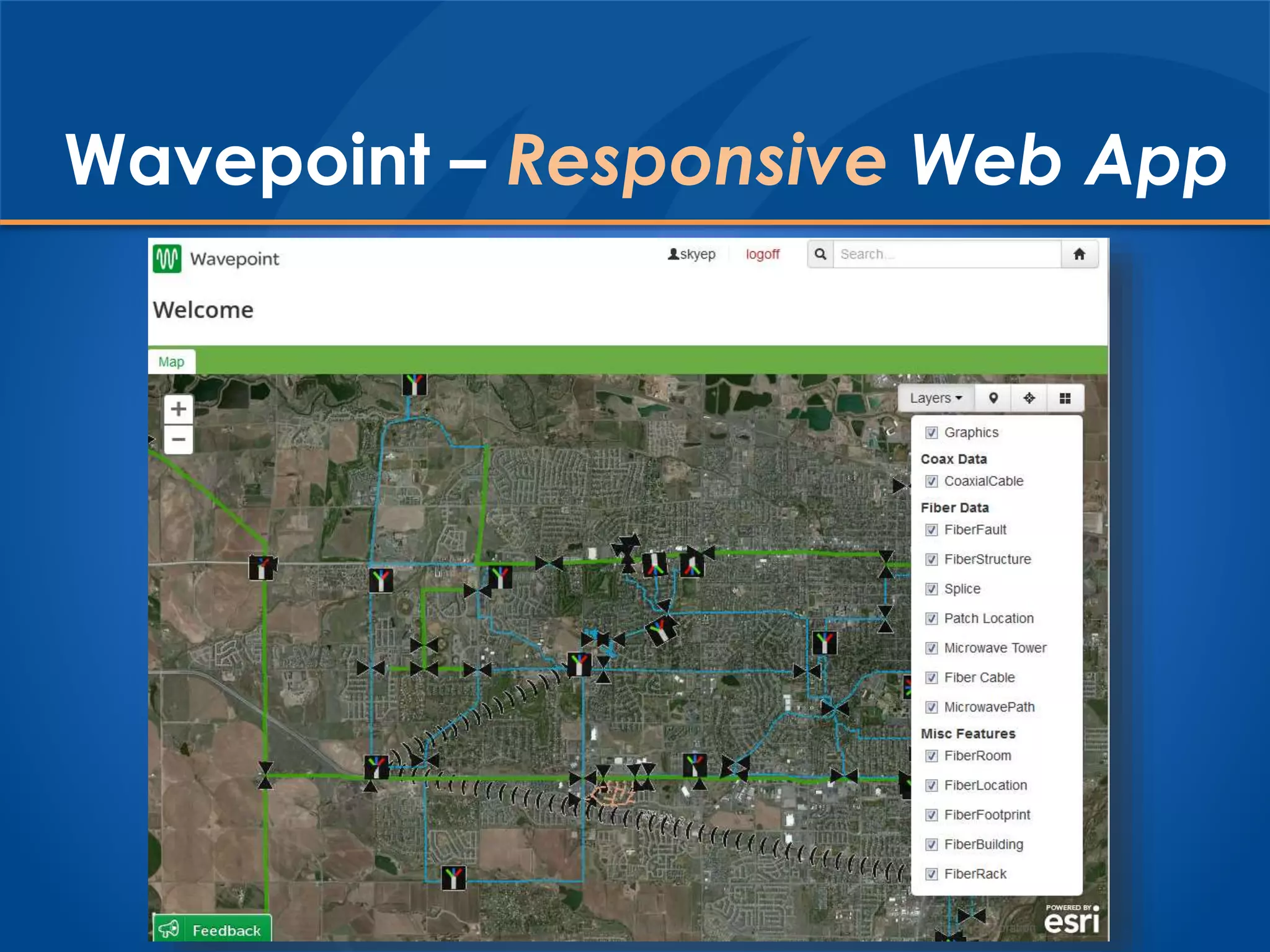
Wavepoint – Responsive Web App
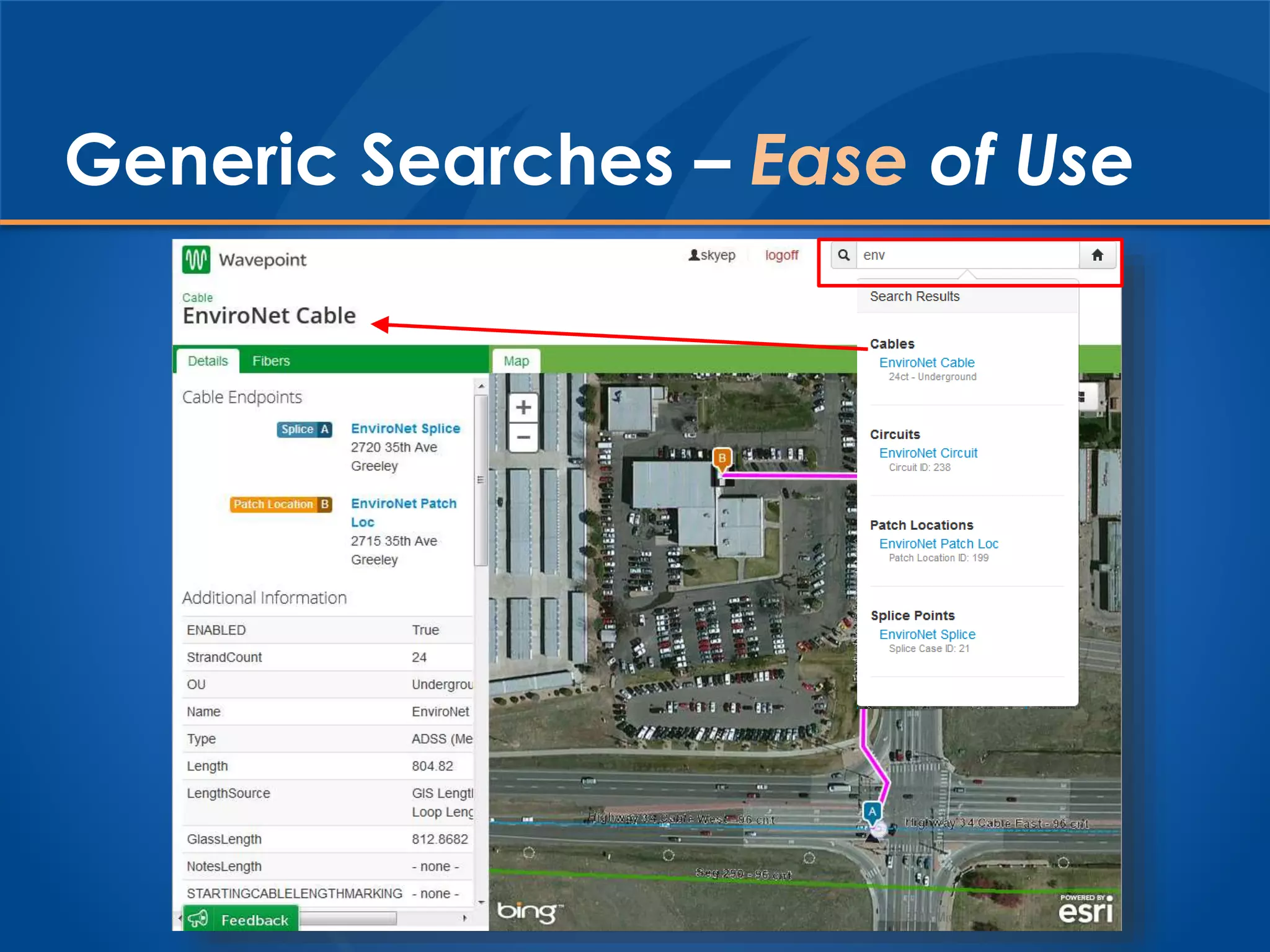
Generic Searches – Ease of Use
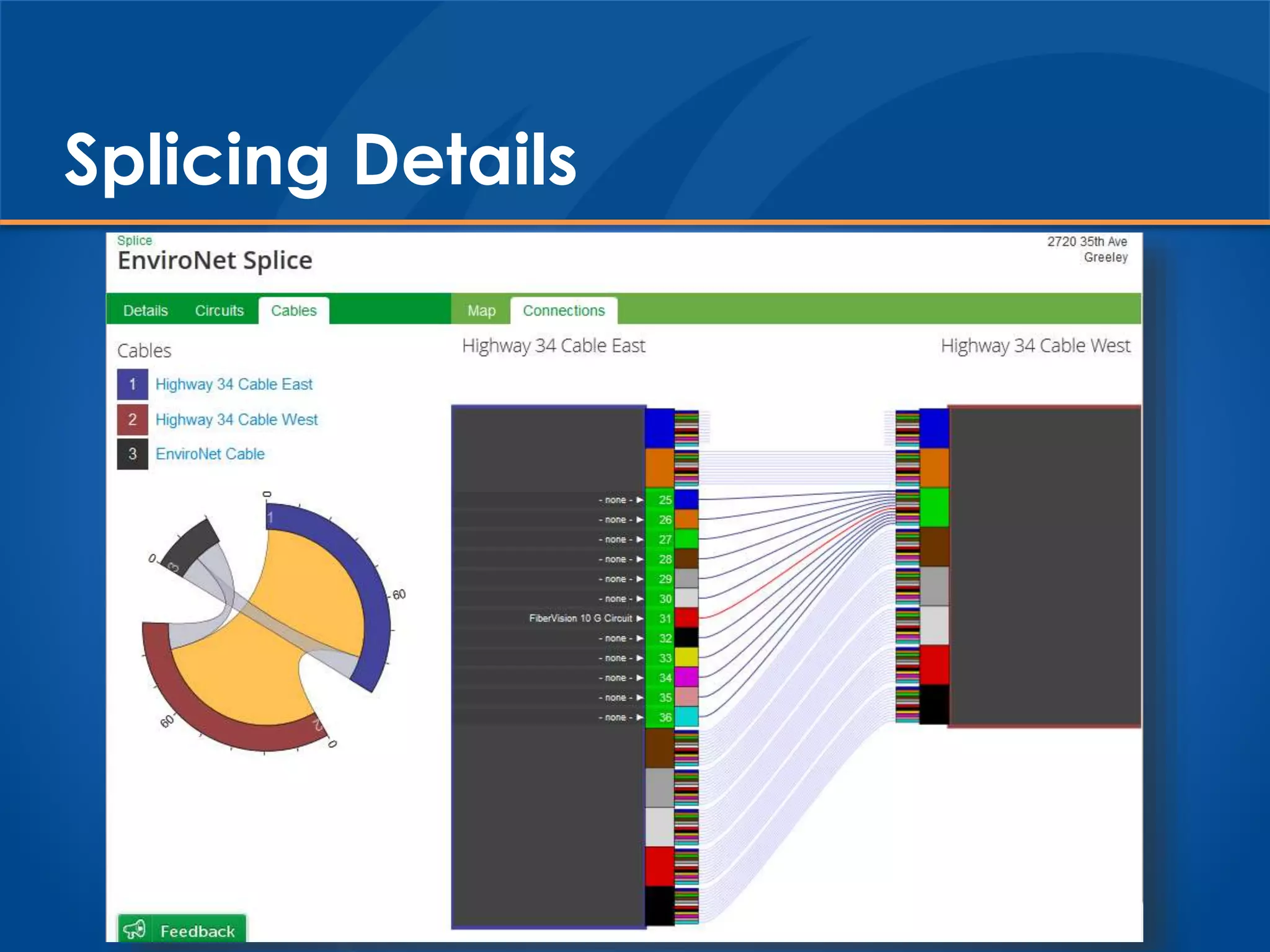
Splicing Details
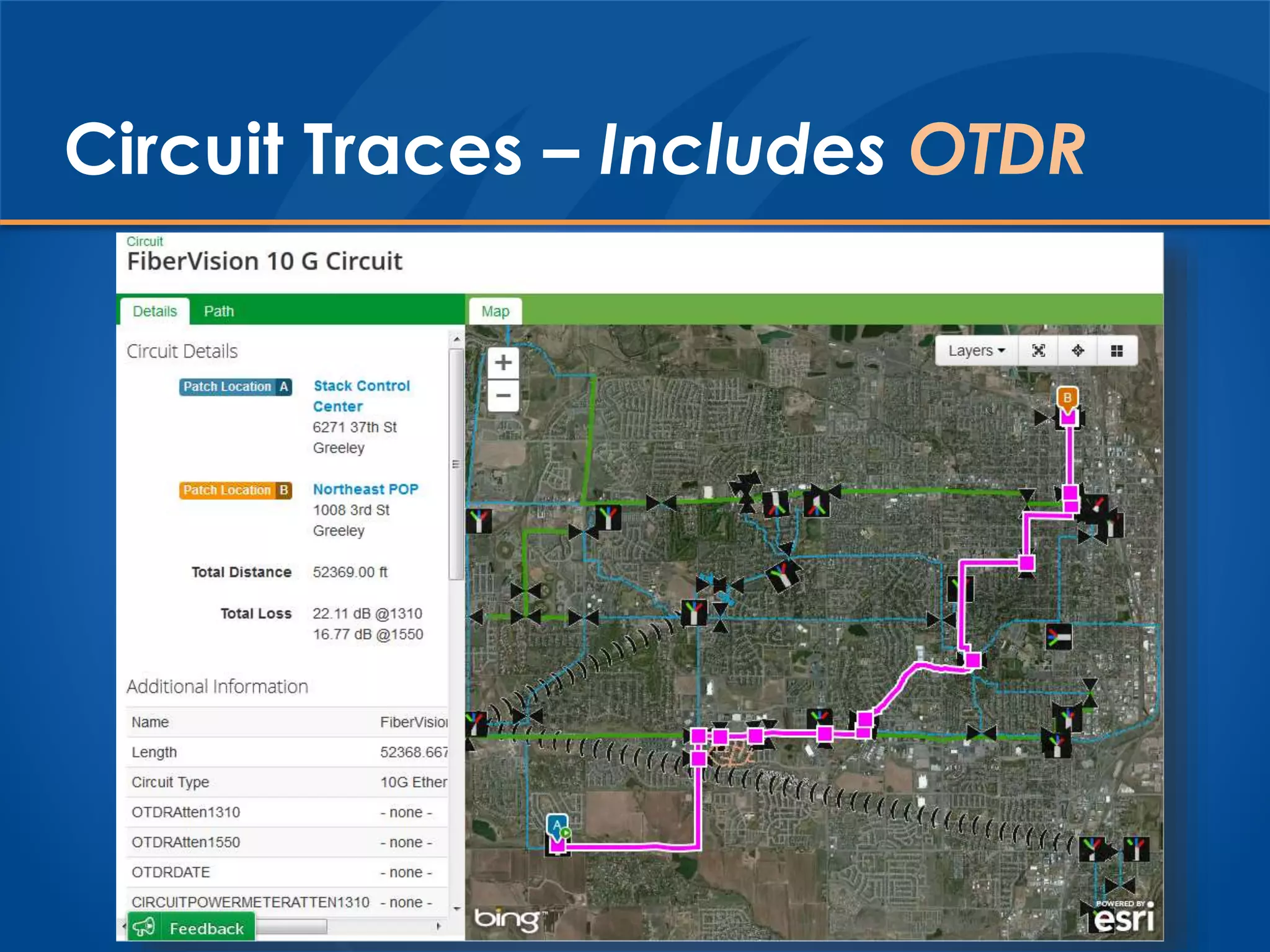
Circuit Traces – Includes OTDR
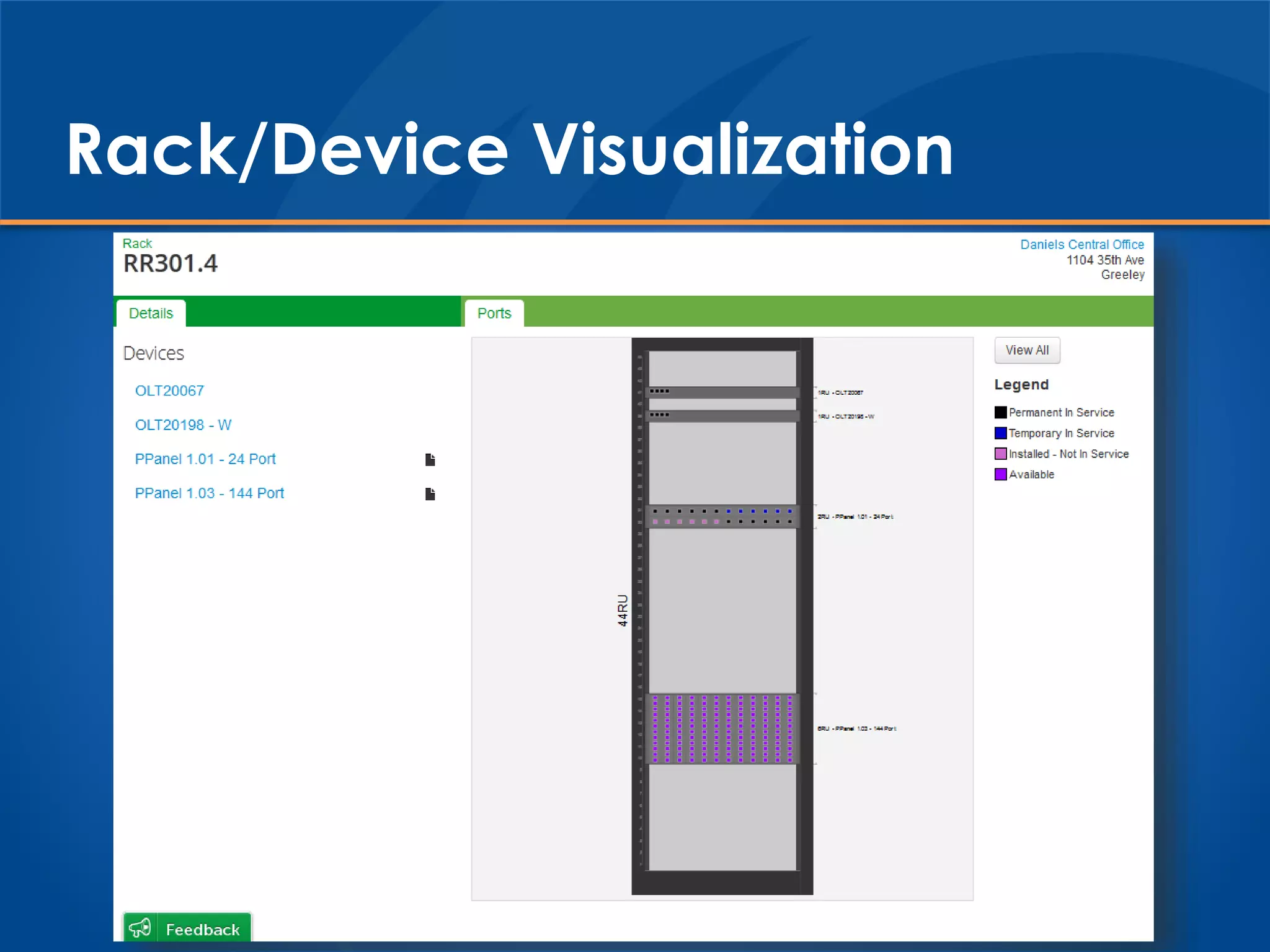
Rack/Device Visualization
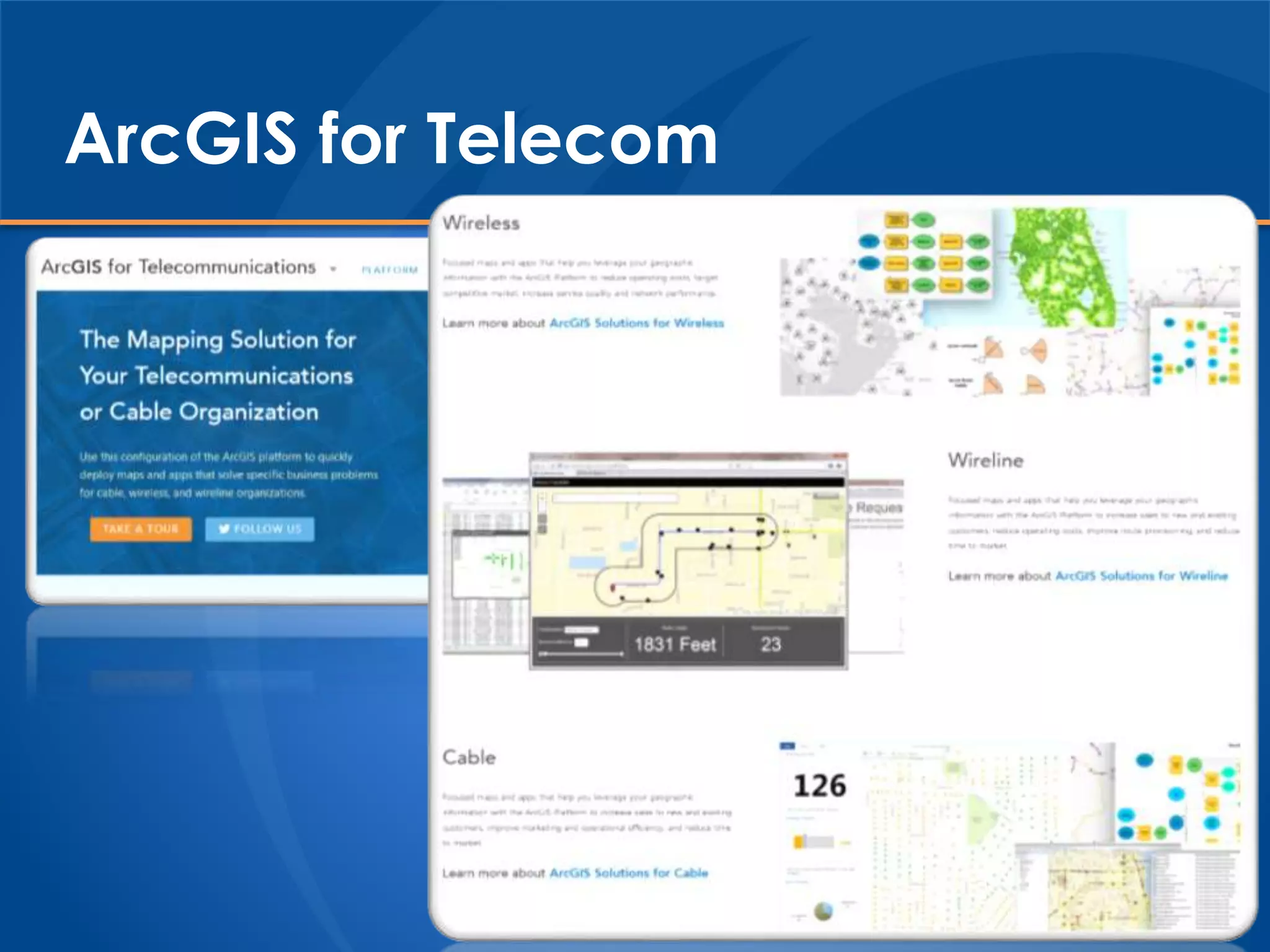
ArcGIS for Telecom
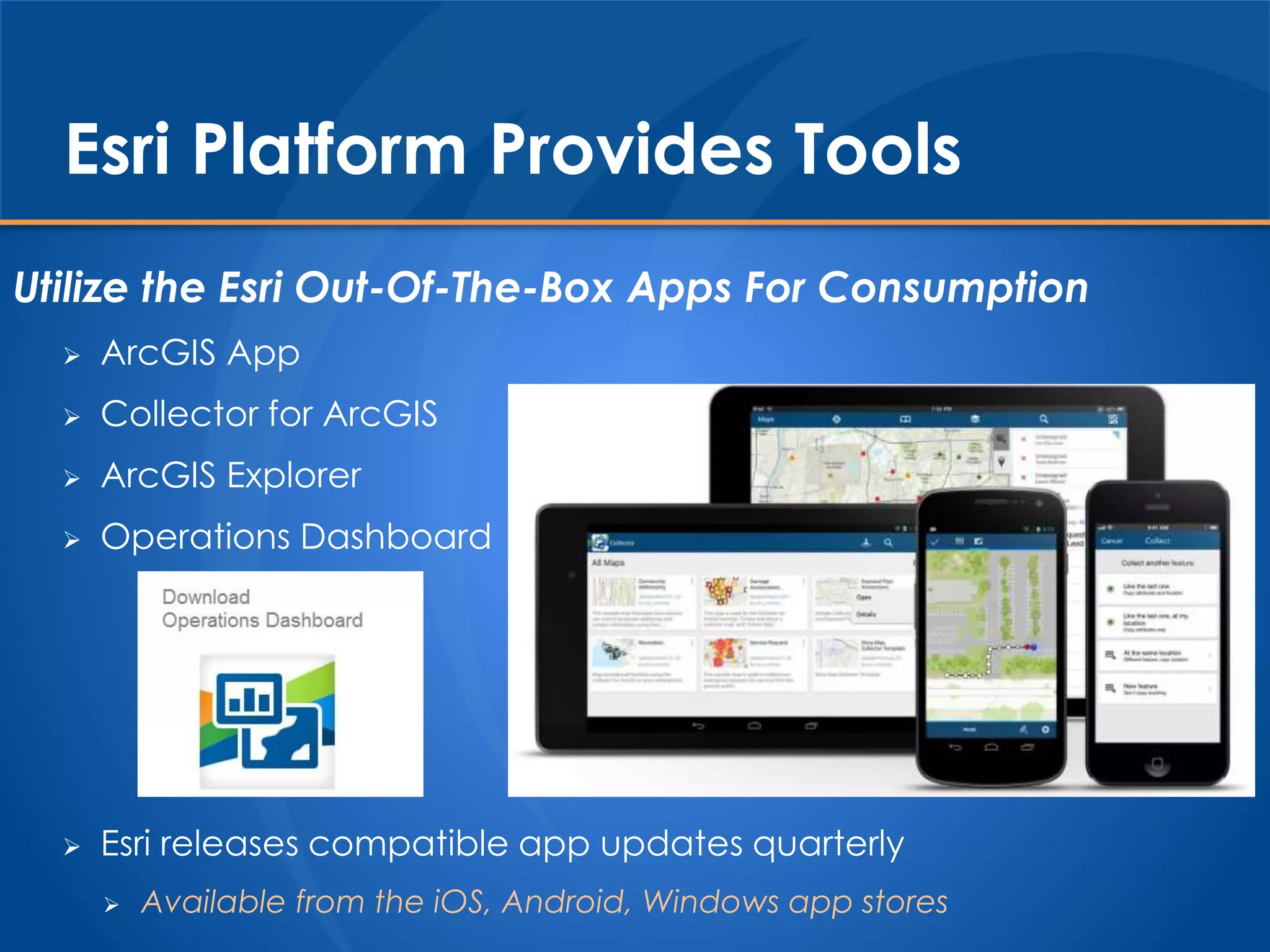
Esri Platform Provides Tools
Utilize the Esri Out-Of-The-Box Apps For Consumption
 ArcGIS App
 Collector for ArcGIS
 ArcGIS Explorer
 Operations Dashboard
 Esri releases compatible app updates quarterly
 Available from the iOS, Android, Windows app stores
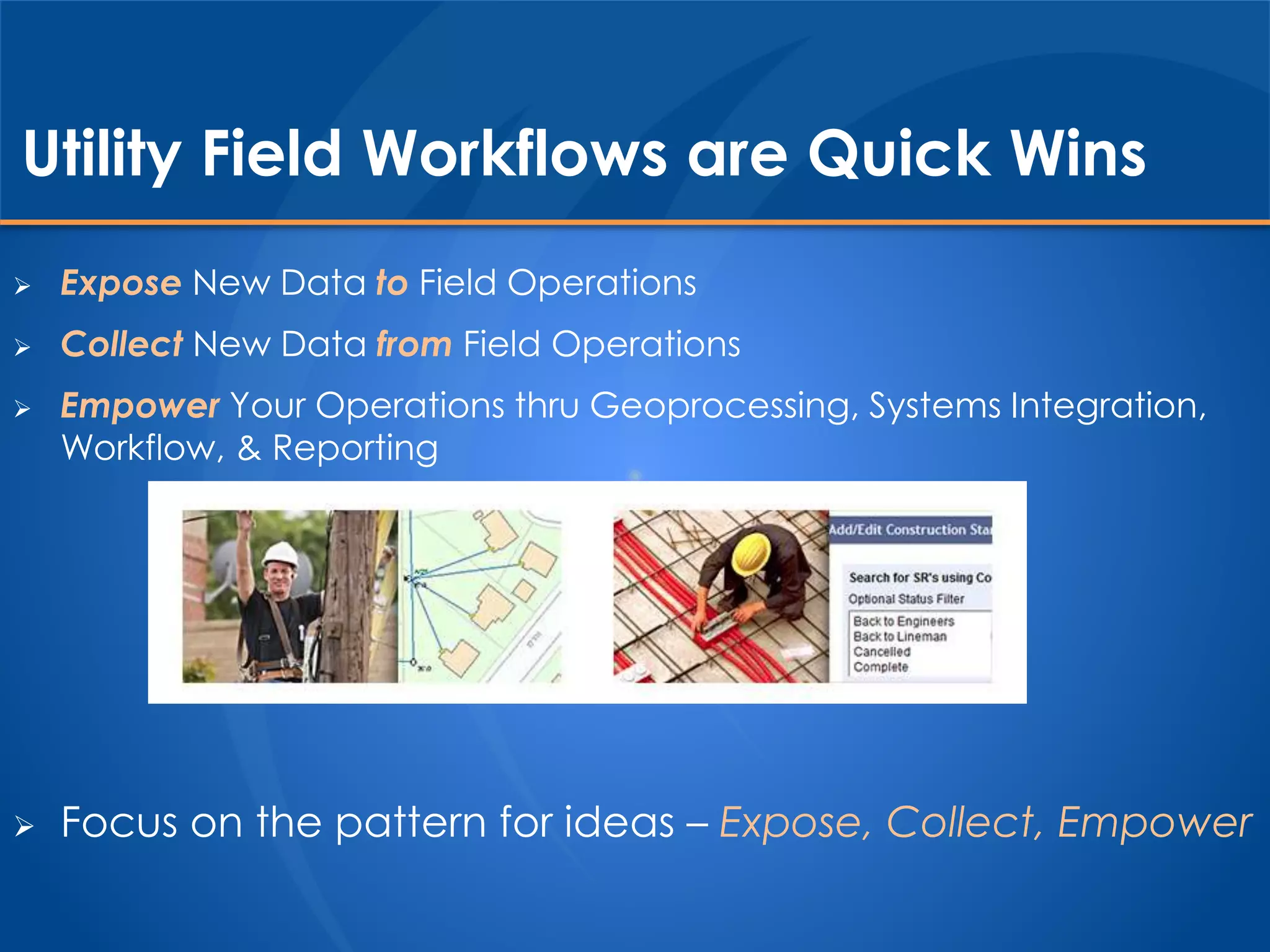
Utility Field Workflows are Quick Wins
 Expose New Data to Field Operations
 Collect New Data from Field Operations
 Empower Your Operations thru Geoprocessing, Systems Integration,
Workflow, & Reporting
 Focus on the pattern for ideas – Expose, Collect, Empower
Business Benefits
 Recommend circuit provisioning based on available timeslots
 Track allocated bandwidth vs. capacity at all points on network
 Create a GIS heat map showing bottlenecks
 Drive capital planning for network expansion
 Poke the network at any point to see:
 Hierarchy of the master circuit(s)
 Which logical circuits are present
 The use of each logical circuit (down
to the DS0)
 Result is a scalable system
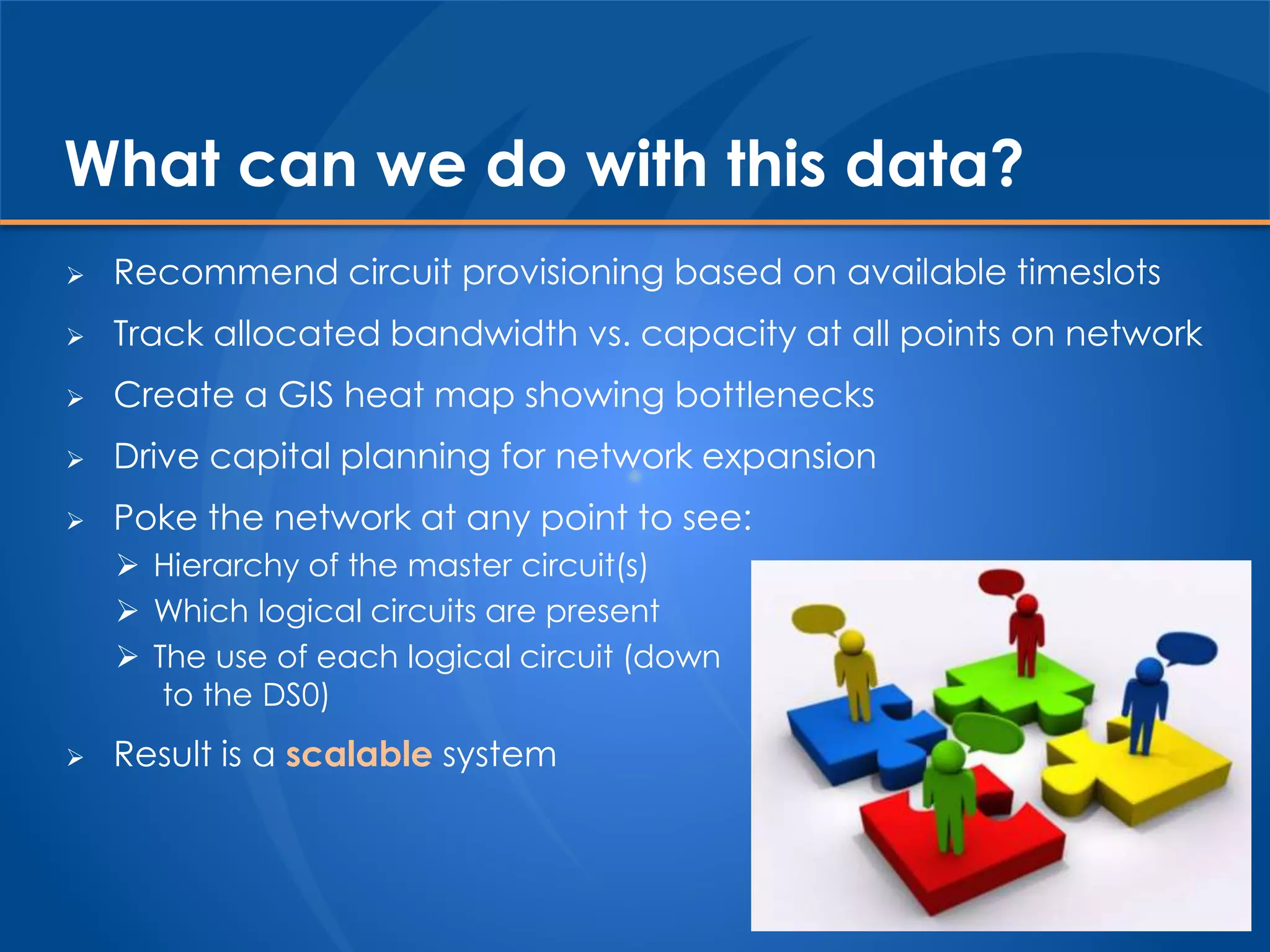
What can we do with this data?
Business Benefits
 Reduces time required to manage circuit/fiber design and
installation
 Exposes significant new GIS capabilities around telecom
 Consolidates several systems into one platform (Telecom
Database, AutoCAD drawings, Excel Spreadsheets, etc.)
 Standardizes work flow and processes
Business Benefits
 Eliminates a portion of drawing packages and paper
documentation
 Reduce time to troubleshoot and locate outages
 Greater data integrity and access for field maintenance
 Enhanced reporting functions
 Track 3rd Party usage of the telecom network
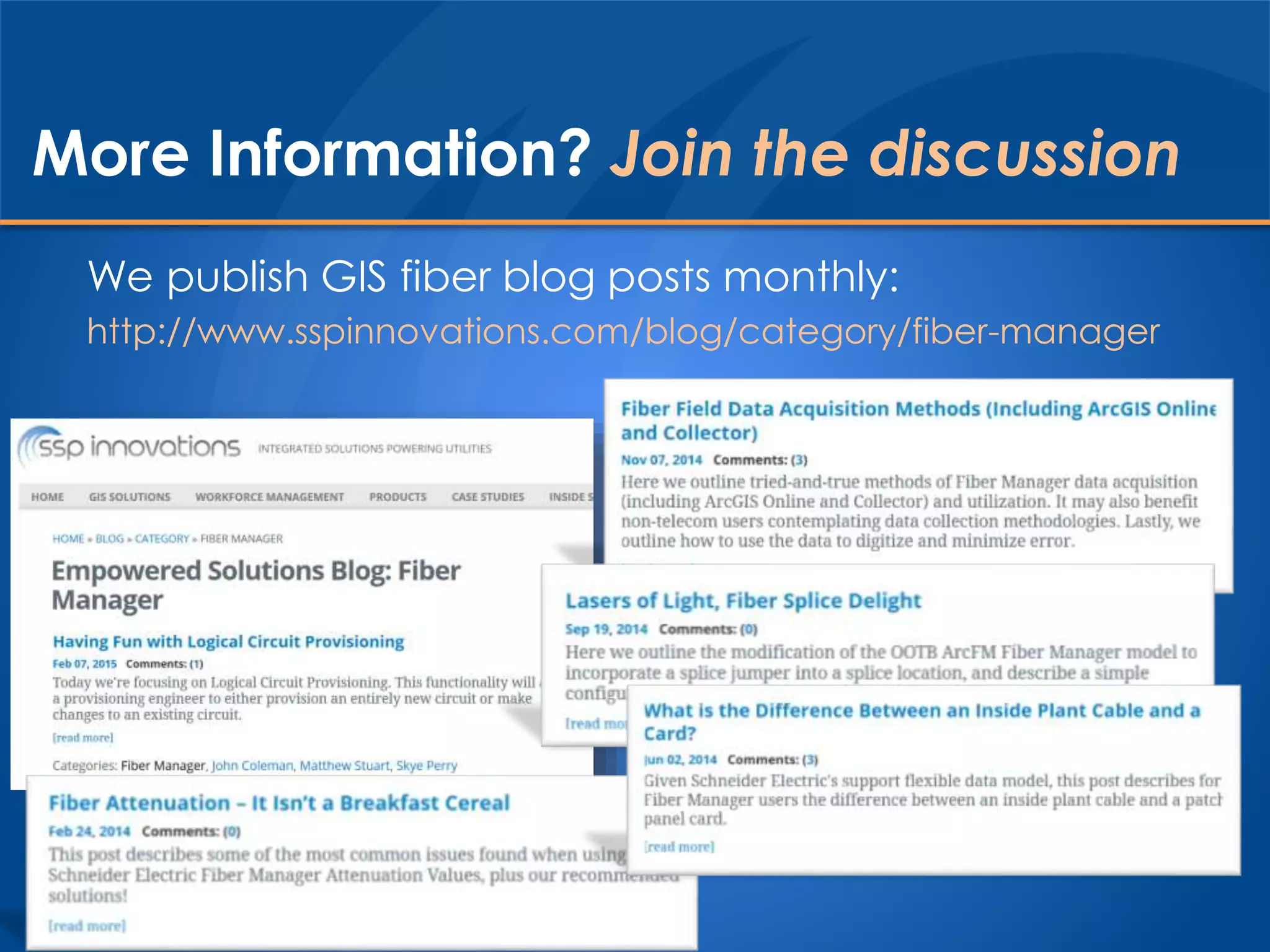
More Information? Join the discussion
We publish GIS fiber blog posts monthly:
http://www.sspinnovations.com/blog/category/fiber-manager
Questions?
Skye Perry
Founder & Principal Consultant
SSP Innovations
skye.perry@sspinnovations.com

Management of Fiber Optics for Utilities

  • 1.
    Management of FiberOptics For Utilities
  • 2.
    Agenda  Introductions  InformalPoll  Business Drivers  Desired Solution  Logical Provisioning  Online Solution  Business Benefits
  • 3.
    Introductions Skye Perry |SSP Innovations  Founder & Principal Consultant  Esri & Schneider Electric Technical Architect  SSP provides solutions for Electric, Gas, Water, & Telecom  Certified Fiber Manager Implementer  Architect of Logical Circuit Provisioning Extension
  • 4.
    Informal Poll How manyutilities in the room own telecom infrastructure? How many sell broadband for private or commercial use? How many use GIS to track their telecom assets? Does anyone use Schneider Electric Fiber Manager? How many track logical circuit provisioning?
  • 5.
  • 6.
    Why Use GISfor Fiber Management? Utility installation, provisioning, management and maintenance of fiber optic networks is at an all time high and growing. Common Tasks / Roles at a Utility  Engineering and design of telecom network  Managing installation of fiber optic cables  Managing 3rd party users of utility’s telecom network  Managing utility’s use of 3rd party networks  Managing leased capacity on carrier networks  Managing the profit center (sales, marketing, delivery) for resale  Manage installation and maintenance of all telecom assets and equipment
  • 7.
    High Volume ofTelecom Assets Telecom inherently includes MANY records… Ex. Grand Junction, CO to Albuquerque, NM:  440 miles, 11 segments, 144 fibers per segment, 2 ports per segment = approx 4800 fiber records. One OC-48 Grand Junction, CO to Albuquerque, NM  11 segments, 48 STS’s per segment, 28 T1’s per STS, and 24 DS0’s per T1 = approx 355,000 circuit records. Utilities are installing additional miles of fiber every year
  • 8.
    How is thisdata being tracked?  Excel Spreadsheets  Access Databases  Homegrown Systems  Paper  Maps are single line diagrams  Esri  AutoCAD  Google Earth  Significant Information Kept in Memory  Human memory, not computer memory! Splices Circuits Bandwidth Fiber Cnt Locations Ports Services
  • 9.
    Business Drivers Common Issues: Aging Workforce  No data intelligence  Slow and not user friendly  No GIS component  Not scalable  Missing required features  Trace circuits  Manage fiber routes  Link to documentation  Track financial information  Etc.
  • 10.
  • 11.
    GIS-Based Application  Identify,review, analyze, and update key attributes of the telecom network  Include collocation buildings, equipment locations, fiber optic routes, microwave radio systems, MAS radio systems, USAT, Coax, Copper  Geospatial database with robust mapping capabilities  Advanced telecom analytics: Connectivity, Splicing, Tracing, Reporting  Advanced: Provide ability to track logical provisioning to the DS0 level
  • 12.
    GIS-Based Telecom AssetManagement Esri ArcGIS Manages Core Mapping
  • 13.
    GIS-Based Telecom AssetManagement Schneider Electric Fiber Manager Manages Connectivity & Assets
  • 14.
    Fiber Manager Network Analysisand Tracing  Connection Management  Fiber Connectivity Traces  Define circuit paths  OTDR Trace
  • 15.
    Design of NewNetwork Installation  Construction Print  Bill of Material  Splicing Diagrams Fiber Manager
  • 16.
    Reporting on Fiber,Splices, Traces, Devices, Patch Locations Fiber Manager - Reporting
  • 17.
    Reporting on Fiber,Splices, Traces, Devices, Patch Locations Fiber Manager - Reporting
  • 18.
    Reporting on Fiber,Splices, Traces, Devices, Patch Locations Fiber Manager - Reporting
  • 19.
    Fiber Manager –It’s Physical  Connection Manager allows you to connect fiber, microwave, etc. to a physical port on a device on each end  No internal connectivity between device ports within a device  Circuit Manager allows you to create a named physical path from device to device  Does a good job in tracking physical assets and connectivity
  • 20.
  • 21.
    Track master circuitsthat traverse through devices  Custom Trace Linking Multiple Fiber Manager Physical Circuits  Defines connectivity between internal device ports  Establish bandwidth between end points Logical Requirements
  • 22.
    Define a bandwidthhierarchy for each master circuit up to an OC-192 (10 Gb/s) Logical Requirements
  • 23.
    Allocate logical trunkcircuits (reserved bandwidth, ex. a full STS-1 or DS1) Provision logical tributary circuits (committed bandwidth) down to a DS0  Custom Two Point Trace Through Master Circuits Logical Requirements
  • 24.
    Allocate circuits withinthe master circuit hierarchy  24 DS0s = 1 DS1  Tributary Circuit Ex Hierarchy:  Consuming the 1st Vir. Tributary  Within the 13th OC-1 (trunk)  Within an OC-3 (trunk)  Within an OC-12 (trunk)  Within an OC-24 (trunk)  Within an OC-48 (master) Defines the Timeslot of the circuit Logical Requirements
  • 25.
  • 26.
  • 27.
  • 28.
  • 29.
    Circuit Traces –Includes OTDR
  • 30.
  • 31.
  • 32.
    Esri Platform ProvidesTools Utilize the Esri Out-Of-The-Box Apps For Consumption  ArcGIS App  Collector for ArcGIS  ArcGIS Explorer  Operations Dashboard  Esri releases compatible app updates quarterly  Available from the iOS, Android, Windows app stores
  • 33.
    Utility Field Workflowsare Quick Wins  Expose New Data to Field Operations  Collect New Data from Field Operations  Empower Your Operations thru Geoprocessing, Systems Integration, Workflow, & Reporting  Focus on the pattern for ideas – Expose, Collect, Empower
  • 34.
  • 35.
     Recommend circuitprovisioning based on available timeslots  Track allocated bandwidth vs. capacity at all points on network  Create a GIS heat map showing bottlenecks  Drive capital planning for network expansion  Poke the network at any point to see:  Hierarchy of the master circuit(s)  Which logical circuits are present  The use of each logical circuit (down to the DS0)  Result is a scalable system What can we do with this data?
  • 36.
    Business Benefits  Reducestime required to manage circuit/fiber design and installation  Exposes significant new GIS capabilities around telecom  Consolidates several systems into one platform (Telecom Database, AutoCAD drawings, Excel Spreadsheets, etc.)  Standardizes work flow and processes
  • 37.
    Business Benefits  Eliminatesa portion of drawing packages and paper documentation  Reduce time to troubleshoot and locate outages  Greater data integrity and access for field maintenance  Enhanced reporting functions  Track 3rd Party usage of the telecom network
  • 38.
    More Information? Jointhe discussion We publish GIS fiber blog posts monthly: http://www.sspinnovations.com/blog/category/fiber-manager
  • 39.
    Questions? Skye Perry Founder &Principal Consultant SSP Innovations skye.perry@sspinnovations.com

Editor's Notes

  • #5 Skye… I always love to throw a little poll into the middle of my presentations – it wakes them up and gets a little participation (as well as gives us some decent intelligence on our audience).
  • #8 Jonathan… I like this slide, definitely focus in on the number of circuits that Tri-State tracks all the way down to the DS0 level. Point out that this is just one example – LOTS o’ data.
  • #9 Jonathan… Talk to the current system – hard to understand by anyone but engineers, no GIS component, and LOTS of accumulated data
  • #10 Jonathan… Explain the basic goals of the project, I included the third bullet (you can certainly change it) to show the goals of replacing CSMGMT.
  • #12 Jonathan… Explain the basic goals of the project, I included the third bullet (you can certainly change it) to show the goals of replacing CSMGMT.
  • #13 Skye… Managing your fiber in a geospatial system allows you to create maps of your infrastructure, perform spatial analysis, and answer questions that could not otherwise be answered. Esri ArcGIS is the worldwide leader in GIS and specifically within utilities. Describe the mapping platform based on the understanding in the room…
  • #14 Skye… Fiber Manager is an extension on top of the Esri ArcGIS platform that allows the map to manage telecom connected assets. Instead of just showing the lines and points on a map, this tool digs into the physical connectivity to allow you to specify connections at the port, splice, fiber, or frequency level across your assets. This is an example of the Connection Manager which is showing a splice between two fibers. The same tool is used to connect all the other types of telecom assets via configuration.
  • #15 Skye… Once the telecom connectivity is built into the GIS the product allows you to do network analysis and tracing. Connection management was shown on the previous slide. Once connections are established, end to end fiber connectivity traces can be performed. These dedicated physical paths can be used to created named circuits. And we can then conduct OTDR tracing and other analysis based on that connectivity.
  • #16 Skye… The GIS and fiber manager can also be used to drive design of new telecom build out.
  • #17 Skye… And finally the product includes usable reports that instantaneously provide value. The fiber allocation report is run on a fiber segment and shows connectivity for each stand on either end. The splice report shows spliced connectivity between multiple fibers at any splice point. And the trace and OTDB reports show connected assets along with corresponding length/distance.
  • #18 Skye… And finally the product includes usable reports that instantaneously provide value. The fiber allocation report is run on a fiber segment and shows connectivity for each stand on either end. The splice report shows spliced connectivity between multiple fibers at any splice point. And the trace and OTDB reports show connected assets along with corresponding length/distance.
  • #19 Skye… And finally the product includes usable reports that instantaneously provide value. The fiber allocation report is run on a fiber segment and shows connectivity for each stand on either end. The splice report shows spliced connectivity between multiple fibers at any splice point. And the trace and OTDB reports show connected assets along with corresponding length/distance.
  • #20 Skye… I will talk to the physical nature of fiber manager and why it matters in this discussion.
  • #21 Skye… Explain the analysis requirements for what we can do with all this detailed data…
  • #22 Skye…
  • #23 Skye…
  • #24 Skye…
  • #25 Skye…
  • #26 Skye… Explain the analysis requirements for what we can do with all this detailed data…
  • #27 Skye… Explain the analysis requirements for what we can do with all this detailed data…
  • #28 Skye… Explain the analysis requirements for what we can do with all this detailed data…
  • #29 Skye… Explain the analysis requirements for what we can do with all this detailed data…
  • #36 Skye… Explain the analysis requirements for what we can do with all this detailed data…
  • #37 Jonathan…
  • #38 Jonathan…
  • #40 Jonathan…